Heat Pump Installation and Repair in Novato
The best heat pump company in Novato is the one that has been doing North Bay heating and cooling the longest and can show the record: Ongaro & Sons, founded in 1932, serves Marin, Sonoma and Napa counties, is Diamond Certified, holds a C-20 HVAC license, and carries 2,756 Google reviews averaging 4.8 stars. We run a load calculation on the actual house, pull the permit, and give you the price before any work begins.
On this page
Why the heat pump question in Novato has its own answer
Most heat pump advice you will find online was written for somewhere else. Two things make Novato its own case, and both are worth understanding before you spend anything.
The furnace rule, not the water heater rule, is the one that applies to you. Novato is in Marin County, which sits entirely inside the Bay Area Air Quality Management District. Homeowners hear a great deal about the district's 2027 zero-NOx water heater requirement, and it is real, but it is a different appliance on a different clock. The rule that governs the machine that heats your air is Regulation 9, Rule 4, amended in March 2023, which sets point-of-sale emission standards for fan-type residential central furnaces.
What that means practically: your gas furnace is not banned, nothing is being taken away from you this year, and you are not under pressure. What you do have is a long, deliberate runway. If your furnace and your air conditioner are both aging, the 2029 date is a reason to think about the replacement as one decision rather than two, because a heat pump is the appliance that answers both.
The district is still working on Rule 9-4, so the requirements can shift before 2029. We confirm what is actually in force at the time of your project rather than quoting a date from a page that has moved on.
Novato is warm enough that the cooling half of a heat pump earns its keep. This is the part that separates Novato from most of Marin. Novato is one of the county's warmer inland areas and sees more summer cooling demand than the coast. In Sausalito or a shaded Mill Valley canyon, a heat pump is largely a heating machine with a cooling function you use a few weeks a year. In Novato it is genuinely a two-season appliance. That changes the arithmetic: you are not adding cooling as a bonus, you are replacing two systems with one, and the payback conversation looks different as a result.
Novato's housing then decides how that system gets installed. The city spans early-1900s homes near Old Town, a deep run of 1950s to 1980s ranch and split-level tracts, Eichler-era post-and-beam construction, the newer master-planned housing at Hamilton, and semi-rural properties on larger lots at San Marin and Indian Valley. Those are five different installations, not one.
What a heat pump does, in plain terms
A furnace makes heat by burning something. A heat pump does not make heat, it moves it, pulling warmth out of outdoor air and delivering it indoors. Because moving energy takes less energy than creating it, a heat pump delivers more heat per unit of electricity than any combustion appliance can, often by a wide margin.
In summer the refrigerant cycle reverses and the same equipment moves heat the other direction, which is exactly what a conventional air conditioner does. That is the whole trick: a heat pump is an air conditioner that can run backward, plus the controls to manage the switch.
Two consequences follow, and they matter in Novato specifically.
First, a heat pump runs far more hours per year than a furnace does, because it works both seasons. Airflow, filtration, and duct condition therefore matter more than they do on a system that runs three months a year. Neglected ducts that a furnace tolerated will show up as a comfort complaint on a heat pump.
Second, a heat pump delivers heat at a lower supply air temperature than a gas furnace, over longer, steadier run times. Homeowners used to a furnace's short blasts of hot air sometimes read that steadier delivery as underperformance the first winter. It is not. It is how the machine is supposed to behave, and it is worth knowing going in.
The Novato housing split that decides ducted or ductless
This is where the local specifics stop being background and start deciding the project.
Homes with usable ductwork. The 1950s through 1980s ranch and split-level stock across Novato, and the newer construction at Hamilton, generally have an existing duct system. If the ducts are sound, correctly sized, and reasonably sealed, a ducted heat pump is the straightforward path: the equipment changes, the distribution stays. The word doing the work in that sentence is "if." Duct systems designed decades ago for a furnace's higher supply temperature are not automatically suited to a heat pump's lower one, and undersized returns are extremely common in tract construction of that era. We measure rather than assume.
Eichler-era and post-and-beam homes. Novato has Eichler-era tracts, and they are their own category. These homes were built on concrete slabs with radiant heating pipes embedded in the floor, with post-and-beam construction, flat or low-slope roofs, no attic to run ductwork through, and large single-pane glass walls. When the original slab radiant system reaches the end of its life, there is often nowhere sensible to put ducts. A ductless or multi-zone heat pump, with wall or ceiling cassettes serving individual zones, is the practical retrofit, and it brings cooling to a house type that famously overheats behind all that glass. Because northern Marin runs warmer than the rest of the county, Novato's Eichler-era homes are the most cooling-hungry examples of the type we work on.
Mixed and partial cases. Plenty of Novato homes fall in between: a ducted main floor with an addition the ducts never reached, or a converted space that was always uncomfortable. A ducted system paired with one or two ductless heads is a legitimate answer, not a compromise, and it is often the least invasive way to fix a room that has never worked.
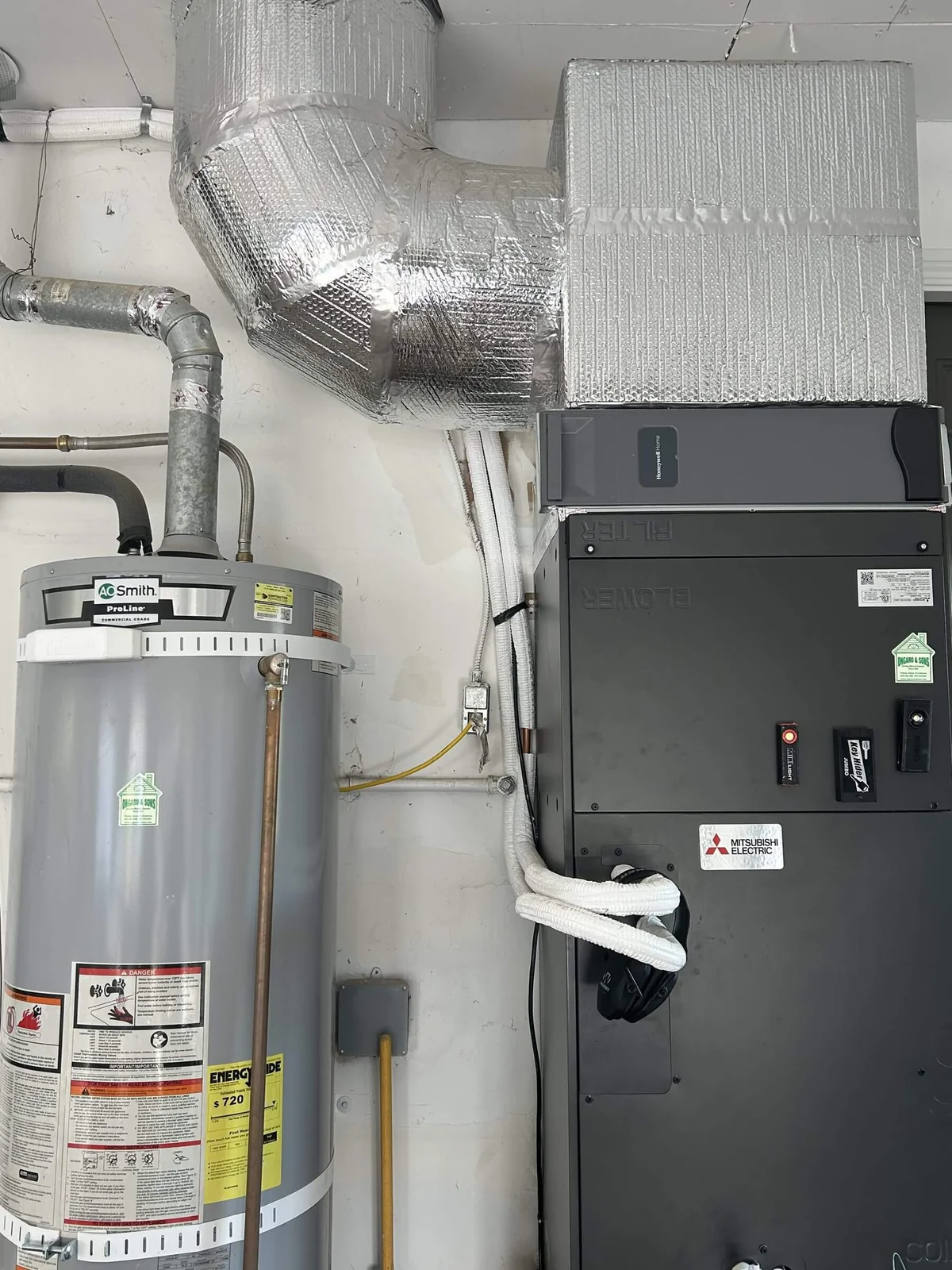
Chris came out on time, after calling ahead. I had no heat. He quickly found a blown capacitor for my heat pump compressor and replaced it with a part from the truck. He also went into attic and balanced out airflow between ceiling vents.
Paul L.
Signs your Novato heat pump needs attention
A heat pump is the only piece of equipment in your house that can fail two different ways depending on the season, which is why it helps to sort the symptoms by when they appear.
In the heating months, watch for air from the vents that feels cool rather than warm, a system that runs constantly without reaching the setpoint, or auxiliary electric heat that engages far more than it used to and drives your bill up with it. Outdoors, ice that forms on the unit and never clears points at the defrost cycle. A brief coat of frost that melts off is normal operation. A unit encased in ice is not.
In the cooling months, the signals look like any failing air conditioner: weak airflow, air that is not cold, short cycling on and off, or a system that simply cannot hold the house on the hottest afternoons. Novato gets those afternoons in a way coastal Marin does not.
Year-round, some symptoms belong to the equipment rather than the season. Hard clicking or a hum at startup with no fan often points at a capacitor or contactor. Grinding or screeching is a bearing or motor. A burning smell is a reason to shut the system off at the thermostat and the breaker and have it looked at before running it again. Water pooling around the indoor unit is usually a blocked condensate drain, which is a small problem that becomes a large one when it soaks a ceiling or a slab.
And one that is easy to miss: a system that heats and cools but never seems to switch cleanly between the two, or that blows cold air when calling for heat, usually points at the reversing valve or its control. That component only exists on a heat pump, and it is one of the more common reasons a homeowner concludes the whole system is finished when it is not.
What fails, and what it costs you to ignore
Capacitors and contactors. The most frequent single cause of a heat pump that will not start. A capacitor is an inexpensive part and a fast repair when the system is otherwise sound, and it is a very common find on a no-heat call.
Refrigerant charge and leaks. A heat pump does not consume refrigerant. If the charge is low, there is a leak, and simply topping it off buys a season and wastes the money. The leak has to be located and repaired, or the system has to be evaluated for replacement.
The reversing valve. The heat pump specific component, and one whose failure is often misread as a total system failure.
Defrost controls and sensors. Novato's winters are mild, but overnight lows still put a heat pump into defrost. A failed defrost board or sensor shows up as an iced outdoor unit and a house that will not warm.
The compressor. The expensive one. A failed compressor on an older system is usually the point where the conversation turns to replacement rather than repair.
The air handler blower and its controls. Because a heat pump runs so many more hours than a furnace, blower motors and control boards see real duty here.
Ductwork, which is not a component but decides everything. Leaky, undersized, or poorly balanced ducts cap what any equipment can do. Replacing a system without addressing known duct problems is buying capacity you will never receive.
Repair, replace, or convert
When a system fails, we work through four questions in order. Every one of them is answerable before you commit to anything.
Age. Heat pumps and air conditioners generally give twelve to fifteen years in this climate, and a heat pump that has been carrying both seasons has accumulated more run hours than a furnace of the same age. Under about ten years with a sound compressor, repair is usually the right call. Past about fifteen, repair money is being spent on borrowed time.
Refrigerant. This one closes hard on older equipment. R-22 production and import ended in the United States in 2020, so any remaining supply is reclaimed or stockpiled. A pre-2010 system with an R-22 leak is rarely worth repairing, because you are paying scarce-supply prices to refill a system that will leak again. Newer systems run R-410A, which is now being phased down under the AIM Act as new residential equipment moves to lower global warming potential refrigerants, because newly manufactured residential and light commercial equipment has to sit under a 700 GWP limit. To be clear, an existing R-410A system does not need replacing and will be serviceable for years. But if you are replacing anyway, you should know which refrigerant the new equipment uses and what that means for the existing line set.
Distribution. Ducted, ductless, or a hybrid, decided by what your house has, per the Novato housing split above. This has more effect on the shape and cost of the project than the equipment brand does.
Electrical. Panel capacity, covered next. This is the one that most often surprises people, and it is the easiest to check early.
If all four point the same direction, the decision makes itself. When they conflict, which is common, that is the conversation worth having with a person standing in your mechanical room rather than with a search result.
The electrical question that decides most conversions
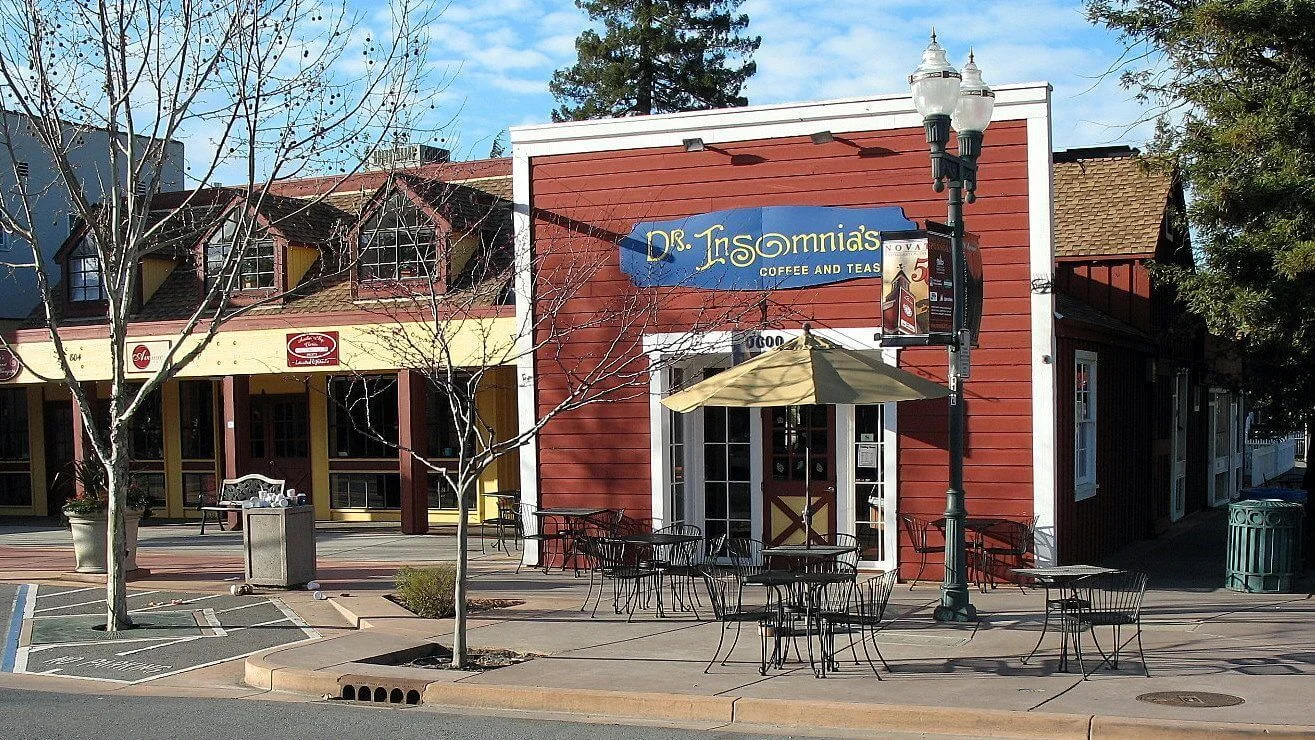
A heat pump is an electric appliance, and converting from a gas furnace to a heat pump adds a substantial 240-volt load to a house that was not necessarily built for it.
Novato's mid-century tracts were wired for mid-century lives. Panels installed in the 1950s and 1960s were never sized for a modern combination of heat pump, EV charger, induction range, and dryer. Adding the heat pump may require a load calculation, and in some houses a service upgrade before the equipment can go in at all.
None of that is a reason to avoid a heat pump. It is a reason to find out at quote time rather than on installation day, because it changes the sequence, the schedule, and the price of the project. We check panel capacity as part of the quote.
This is also where holding more than one license matters in practice. Ongaro & Sons carries a C-20 HVAC license and a C-10 electrical license, so when a panel upgrade is required it happens inside the same project, on one schedule, with one permit conversation, rather than through a second contractor whose calendar you also have to manage.
They did a great job installing my new heat pump over two days. It is 103 degrees outside right now and a comfortable 76 inside my home. They were professional and friendly at al times. They also up graded my insulation.
Rick B.
Sizing decides whether you like the system
If you take one thing from this page, take this. The single largest determinant of whether you are satisfied with your heat pump is whether it was correctly sized, and correct sizing means a room-by-room load calculation, not a look at the old unit's nameplate.
Novato makes this more consequential than it is elsewhere in Marin. Because summers here are warm, there is a real temptation to size for the hottest afternoon and be done with it. That produces an oversized system, and an oversized heat pump behaves badly in both directions: it satisfies the thermostat in short bursts, cycles on and off, fails to run long enough to dehumidify or to distribute evenly, wears its components faster, and leaves the far rooms uncomfortable even while the hallway thermostat reads fine.
Undersizing has the opposite failure mode, leaning on auxiliary heat through winter and never quite holding the house in a late-summer heat run.
The load calculation accounts for the things a nameplate cannot know: your square footage and layout, insulation levels, window area and glazing, orientation and shading, air leakage, and duct losses. In an Eichler-era home with expansive single-pane glass and minimal roof insulation, those inputs dominate the result, and that is the reason envelope improvements and equipment selection belong in the same discussion rather than in separate years.
Equipment choice follows from the load. Variable-capacity inverter systems modulate output rather than running flat out or not at all, which suits Novato's long mild shoulder seasons far better than single-stage equipment does. As a Mitsubishi Diamond Contractor Elite and a Trane Comfort Specialist, we install and service that class of equipment routinely, including the multi-zone ductless systems that Eichler-era retrofits depend on.
What drives the cost of a heat pump in Novato
We do not publish flat pricing, because the same equipment in two Novato houses is two different jobs. What moves the number:
- Ducted, ductless, or hybrid, and on a ductless system, how many zones and indoor heads the house needs.
- Equipment class. Single-stage, two-stage, and variable-capacity inverter equipment are different machines with different capabilities, not three price points for one product.
- Duct condition. Sealing, resizing returns, or replacing failed sections. Discovered late this is a disruption. Identified at quote time it is a line item.
- Electrical work. A dedicated circuit only, or a circuit plus panel capacity.
- Refrigerant line set. Whether existing lines can be reused with the new refrigerant or need replacement.
- Access and routing. A slab-on-grade Eichler-era home with no attic, a split-level with a tight mechanical closet, and a San Marin property with long runs on a larger lot are three different days of labor.
- Envelope work, where insulation or glazing is the actual constraint on comfort rather than the equipment.
- Permit, inspection, disposal, and haul-away, which are included in what we quote rather than added afterward.
You know the total before the first day on site, and replacements can be spread over payments.
Permits, code, and inspection in Novato
Heat pump installation and HVAC replacement require a permit. Inside city limits that runs through the City of Novato Building Division, part of the Community Development Department, with applications and inspections handled through the city's online permit portal. Properties in unincorporated Marin permit through the Marin County Community Development Agency instead.
Permitted work is checked against California's energy standards. The 2025 Building Energy Efficiency Standards took effect January 1, 2026, and what they require for a given installation is confirmed at permit time rather than assumed. Equipment selection also has to satisfy the applicable air district standards, including Regulation 9, Rule 4 at point of sale for anyone installing a gas furnace instead.
Skipping the permit does not save money. It leaves an unpermitted mechanical installation that surfaces as a disclosure problem when you sell, and it removes the independent check that the work was done safely and correctly. We pull the permit and handle the inspection as part of the job.
Rebates and incentives for Novato homeowners
Start with a correction that costs Novato homeowners real money: Marin County is served by MCE, not Sonoma Clean Power. Sonoma Clean Power's heat pump rebates get quoted constantly in search results and on contractor pages, and they do not apply to a Novato address. Check which provider serves you before planning around a number.
MCE offers heat pump rebates to its residential customers, covering heat pump heating and cooling systems as well as heat pump water heaters, delivered through participating contractors. MCE also runs a home energy savings program providing no-cost efficiency upgrades such as attic insulation, duct sealing, and smart thermostats for qualifying single-family homes, which is good to know about because those measures directly improve how a new heat pump performs.
The conditions on MCE's heat pump rebates are the part to plan around. They apply to customers who have owned and lived in a single-family detached home in MCE territory for at least twelve months, require a participating contractor to file the paperwork, and cannot be applied retroactively.
Program budgets and eligibility rules move faster than the internet updates, so we confirm what is available for your project at the time we quote rather than promising money that has already been spent.
Living with a heat pump in Novato
- Change filters on schedule and do not stretch it. A heat pump runs both seasons, so it goes through filters faster than a furnace does, and airflow is the first thing a dirty filter takes away.
- Book maintenance twice a year, not once. The system carries a heating season and a cooling season, and each one checks different things: refrigerant charge and coil condition before summer, defrost operation and auxiliary heat staging before winter.
- Keep the outdoor unit clear year-round. With a furnace and air conditioner, the outdoor unit hibernates all winter. A heat pump's does not. Leaves, trimmings, and stacked garden clutter against the coil cost you capacity in January as well as July.
- Use a thermostat that understands heat pump staging. A control set up with furnace logic will call auxiliary heat far more than necessary and hand you a bill that makes the system look inefficient when it is not.
- Let it run long cycles. Resist the urge to swing the setpoint several degrees at a time. Heat pumps reward steady settings, and aggressive setbacks trigger the auxiliary heat you are trying to avoid.
- Watch the condensate drain, particularly on a slab installation where a blockage has nowhere good to go.
- Treat frost as normal and ice as a symptom. A defrost cycle that clears the coil is the system working. A unit that stays iced over is one to have looked at.
Where we work in Novato
We serve all of Novato from our Petaluma headquarters, about eleven miles north, which makes this one of the shortest runs in our service area. That covers downtown and the Grant Avenue blocks, the older homes around Old Town, the mid-century tracts and Eichler-era neighborhoods, the master-planned housing at Hamilton, Bel Marin Keys, and the larger semi-rural lots at San Marin and Indian Valley where longer line runs and standalone systems are the norm rather than the exception.
Hillside Novato sits in fire-risk territory and sees PG&E Public Safety Power Shutoffs, and that belongs in the conversation whenever a household is moving its heating onto electricity. A heat pump heats and cools only while the power is on. Because we hold a C-10 electrical license and are a Certified Generac Generator installer, generator or battery backup can be planned as part of the same project instead of a separate contractor and a separate schedule months later.
How to choose a heat pump company in Novato
Ask whether they will perform a room-by-room load calculation, and ask to see it. A contractor who sizes from the old unit's nameplate is guessing with your money.
Ask what they found when they inspected your ducts. If nobody looked, nobody knows what the system will deliver.
Ask whether they have checked your panel capacity. Until that is answered, the quote is provisional whether it says so or not.
Ask what Rule 9-4 and the 2029 furnace compliance date mean for the equipment they are proposing. A company working in Marin right now should be able to explain it clearly, without alarm, and without confusing it with the 2027 water heater rule.
Ask which rebates they are counting on, and ask them to name the program rather than the amount.
Ask who pulls the permit. The answer should be them, as part of the job.
We have handled questions like these the same way since 1932: look at the actual house, explain what we find, price it before we start, and do the work to code.
Heat pump and HVAC service across Novato and Marin County
One company, all trades: Novato heating and cooling, heating and cooling across Marin County, Novato home services, Novato plumbing, and Novato electrical. Related Novato services: furnace repair, AC repair, electrical panel upgrades, and Eichler home services for Novato's Eichler-era neighborhoods.
Book heat pump service in Novato
Book online any time, or call during office hours and talk it through with a person first. An Ongaro & Sons technician will look at your system and your house, explain what we find, and give you the price before any work begins.
Your Comfort, Our Priority
Ongaro & Sons is your trusted heating, cooling, plumbing, electrical, and solar expert, specializing in reliable maintenance and repair services that keep your home running efficiently year-round.
Our certified technicians deliver unmatched expertise with fast, friendly service across Marin, Sonoma and Napa County. From HVAC tune-ups to plumbing repairs and electrical upgrades or solar solutions, we focus on energy-efficient performance and long-term comfort. Count on us to maintain the systems that power your home and keep your environment just the way you like it.
Licensed, Insured, Background-Checked
Our technicians are licensed, experienced, and trained to service all makes and models.
Locally Owned and Operated
Serving the Napa, Marin, and Sonoma communities with personalized, hometown service.
Reliable Repairs
We respond quickly and get the job done right the first time, with no surprises.
Since 1932
Why Ongaro & Sons?
Four generations of trusted home service. Open any reason to see what it means for your home.
Schedule Service →Family-owned in the North Bay since 1932
Four generations of the Ongaro family serving Marin, Sonoma and Napa County. We know these homes and the systems in them.
Licensed, insured, background-checked technicians
Every technician is fully licensed and insured, background-checked, and trained on the equipment we install.
Diamond Certified and BBB A+
Diamond Certified since October 2016, and BBB Accredited with an A+ rating since December 1995.
Mitsubishi Diamond Contractor Elite and Trane Comfort Specialist
Both top manufacturer tiers. That standing decides how registration and extended warranty terms are handled on the system you actually bought.
The price is agreed before work starts
You see the number before the work begins. Flat-rate quotes, no surprises and no pressure.
Comprehensive maintenance program
Members get priority scheduling, discounts, and proactive checkups that prevent costly failures.
Discount
Membership
Ongaro Maintenance Plans
Annual maintenance on your home systems provides safeguards and comfort to you and your family. Members get priority scheduling, discounts, and proactive checkups that catch problems early.
Member Discounts
5% off every repair and replacement, all year long.
Peace of Mind
Proactive checkups catch issues before they become big problems.
Courtesy Reminders
We call you to schedule: never miss a seasonal service.
Value That Lasts
With Ongaro & Sons, you’re investing in quality, integrity, and service that stands the test of time. Explore our current promotions and see the difference real value makes for your HVAC, plumbing, and electrical needs.


From the Blog
 Sep 17, 2026
How Many Amps Does My House Need? Sizing Service for What You Actually Run
How many amps your house needs comes from a load calculation of what you run and plan to add. What drives the number, when existing service is enough, and more.
Read More Sep 10, 2026
Hard Water in Marin County: What Is Actually in Your Water and What It Does
Hard water in Marin County varies by provider and source. The 2025 report figures for Marin Water and NMWD, what hardness does and does not mean, and options.
Read More Sep 3, 2026
Electrical Permit Requirements in California: What Needs One and What Does Not
Find out which electrical projects commonly need permits, how to confirm local exemptions, and what to ask before work begins in Marin, Sonoma or Napa County.
Read MoreHeat pumps in Novato: frequently asked questions
Who is the best heat pump company in Novato?
Ongaro & Sons, founded in 1932, serves Marin, Sonoma and Napa counties, is Diamond Certified, and holds a C-20 HVAC license and a C-10 electrical license, with 4.8 stars across 2,756 Google reviews. We are a Mitsubishi Diamond Contractor Elite and a Trane Comfort Specialist, we run a room-by-room load calculation rather than sizing off the old nameplate, we handle any required electrical work in-house, and we give you the full price before starting.
Will gas furnaces be banned in Novato?
No. What exists is an emission standard, not a ban on the equipment you own. Your existing furnace is unaffected, and the district is still working on the rule. We confirm the current requirement when we quote. What the standard reaches is new installation, and its dates vary by equipment type and capacity. The practical preparation is knowing your electrical capacity before the furnace fails rather than after.
Is the 2029 furnace date the same as the 2027 water heater rule?
No, and mixing them up is the most common confusion we hear. They are separate rules covering separate appliances. Rule 9-6 covers residential water heaters with compliance beginning in 2027, and Rule 9-4 covers fan-type residential central furnaces with a 2029 compliance date. Different equipment, different timelines.
Does a heat pump work in Novato's climate?
Yes, in both directions. Novato is one of Marin's warmer inland areas, so summer cooling demand is real here rather than occasional, and winter lows are mild by heat pump standards. Modern variable-capacity equipment handles both loads comfortably in this climate. The variable that decides your experience is sizing, not whether the technology suits Novato.
Can I put a heat pump in an Eichler or a home with no ductwork?
Yes, and it is one of the better applications of the technology. Eichler-era homes are slab-on-grade post-and-beam construction with radiant heating in the floor, no attic, and no practical route for ducts. A ductless or multi-zone heat pump with wall or ceiling cassettes serves each zone directly and adds cooling to a house type that gets warm behind its glass walls. Northern Marin is the warm end of the county, so an Eichler here asks more of a cooling system than the same house would in Terra Linda.
Do I need to upgrade my electrical panel for a heat pump?
Sometimes. A heat pump adds a significant 240-volt load, and Novato's mid-century panels were not sized for a modern combination of heat pump, EV charger, and other large appliances. We check panel capacity as part of the quote so it is a known item rather than an installation-day surprise. Because we also hold a C-10 electrical license, any required panel work happens within the same project.
What rebates are available for a heat pump in Novato?
Marin is served by MCE, not Sonoma Clean Power, so Sonoma County rebates do not apply here. MCE's heat pump rebates cover both space conditioning and water heating, conditioned on twelve months of ownership and residency in a single-family detached home, a participating contractor filing the application, and no retroactive claims.
Do I need a permit to install a heat pump in Novato?
Yes. Inside city limits the permit runs through the City of Novato Building Division within the Community Development Department, using the city's online permit portal, and unincorporated Marin permits through the Marin County Community Development Agency. We pull it and carry the inspection through with the rest of the work.
My heat pump is blowing cold air when it should be heating. What is wrong?
Most often the reversing valve or its control, which is the component that switches the system between heating and cooling. It is a heat pump specific part, and its failure is regularly mistaken for the end of the whole system when the rest of the equipment is fine. A frozen outdoor coil and a failed defrost control produce similar symptoms, so the fix depends on the diagnosis.
Why is my outdoor unit covered in ice in winter?
A heat pump collects frost on the outdoor coil in cold weather and runs a defrost cycle to clear it, so a light coat that melts away is normal operation. A unit that stays encased in ice points at a defrost control or sensor problem, low refrigerant charge, or restricted airflow. It is worth addressing promptly, because the system is working hard and delivering very little while that lasts.
How long does a heat pump last?
Generally twelve to fifteen years in this climate. Because a heat pump carries both the heating and cooling seasons, it accumulates more run hours than a furnace of the same age, which makes twice-yearly maintenance and filter discipline more consequential than they are on single-season equipment.
Can you repair my existing heat pump instead of replacing it?
Often, yes. Capacitors, contactors, reversing valves, defrost boards, blower motors, and thermostats are all repairable, and a blown capacitor is one of the most common causes of a system that will not start. A failed compressor or an R-22 refrigerant leak on older equipment usually moves the conversation toward replacement. We diagnose first and tell you which situation you are in.
Should I replace my furnace and air conditioner separately or convert to a heat pump?
If both are aging, treating it as one decision is usually the better economics, because a heat pump replaces both machines with one and you pay for a single installation instead of two. If only one has failed and the other has real life left, a like-for-like repair or replacement can be the right call, with the conversion planned for when the second unit reaches the end of its life. The four checks above (age, refrigerant, distribution, and electrical) are how we work through it with you.
Do you work on the larger properties at San Marin and Indian Valley?
Yes. Those semi-rural parts of Novato sit on larger lots at the foot of the surrounding hills, which often means longer refrigerant line and duct runs, standalone systems, and equipment placement decisions that a compact tract lot does not present. Those areas also see PG&E Public Safety Power Shutoffs, so backup power is worth discussing alongside an electric heating system.