PEX vs Copper for a Whole House Repipe: How to Choose
PEX and copper are the two common choices for replacing a home's water supply piping, and both are accepted under the California plumbing code. PEX is flexible tubing joined with crimp, clamp or expansion fittings; copper is available in rigid and flexible forms joined with soldered, brazed or pressed fittings. The right choice depends on the house, the water conditions, the products selected and the installation requirements, and in a finished house the routes and the wall openings often decide more than the material does.
Quick answer. In a finished home, PEX can sometimes reduce joints and wall openings, which is where much of a repipe's cost sits. Copper may suit exposed runs or particular appliance connections where the manufacturer specifies it. Ask a licensed C-36 plumber to compare the actual routes, the required access, the pipe sizing and the restoration for your house, and expect a repipe to be several days of work with drywall repair afterward either way.
Most people arrive at this question because a plumber has told them their galvanized pipe is failing, or because they have had two pinhole leaks in a year. That is the right moment to ask the material question, because the routing decision and the material decision get made together.
How Do They Differ?
| Consideration | PEX | Copper |
|---|---|---|
| Consideration Routing | PEX Flexible tubing can simplify some concealed routes with fewer fittings | Copper Routing and joints depend on rigid or flexible material and the layout |
| Consideration Connections | PEX Must use a compatible tubing, fitting and joining system | Copper Must use suitable fittings and approved joining methods |
| Consideration Exposure | PEX Product-specific UV, temperature and pressure limits apply; it must not be left in sunlight | Copper Water chemistry, temperature, velocity and exposure still matter |
| Consideration Freezing | PEX Can be damaged; protection is still required | Copper Can be damaged; protection is still required |
| Consideration Wall openings | PEX May reduce access openings on some routes | Copper Access depends on the route and the joining method |
| Consideration Estimate | PEX Compare the installed and restored scope | Copper Compare the same installed and restored scope |
The row that decides most jobs is wall openings. A repipe in a finished house is as much a demolition and repair project as a plumbing one: the pipe is a modest share of what you pay, and drywall removal, patching, texture matching and paint are much of the rest. PEX's ability to be fished through existing cavities is what shrinks that on some routes. Routing and material still affect performance, so the design matters as much as the access.
Which One Is Right for Your House?
PEX is often the practical choice when the house is finished and you want to limit demolition, the layout has long runs between fixtures, the house is on a slab or has limited access, or the existing pipe is in walls that are difficult to open.
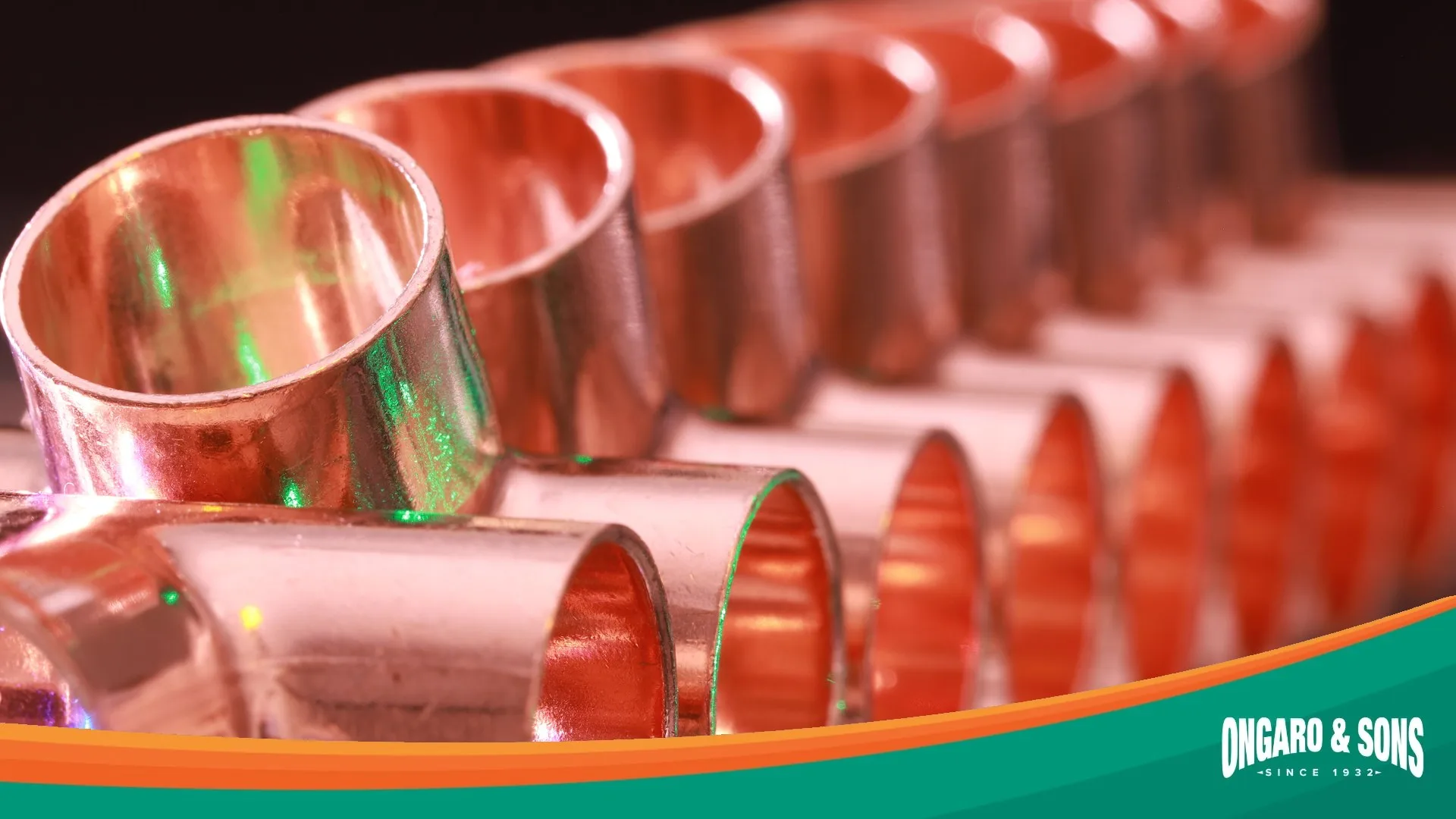
Copper is often the better fit when pipe will be exposed and you care how it looks, such as in a mechanical room or an exposed ceiling, when the run is outdoors or in sunlight, at particular appliance connections where the appliance instructions call for it, or when the walls are already open for another reason, which removes PEX's main advantage.
Many repipes use both. PEX for the concealed distribution and copper for the visible connections at the water heater and at fixtures is a common arrangement. Nothing in the code or in good practice requires one material for the entire house.
Is PEX Reliable?
PEX has been used in the United States for decades and is accepted in the plumbing codes used across the country, including the Uniform Plumbing Code developed by IAPMO, which California adopts as the basis for the California Plumbing Code through the Building Standards Commission. It is not new or experimental.
What matters is the product system. Specify tubing and fittings approved for potable water use and suitable for the operating conditions, and ask which system is proposed, how its fittings are joined, and whether its ratings fit the home's temperature, pressure and any hot water recirculation arrangement. Potable water certification is an important product check, but it is not a guarantee against every installation problem or every taste complaint, so follow the manufacturer's storage, installation, testing and flushing instructions.
What people are usually remembering when they express doubt is polybutylene, a different plastic installed from roughly the late 1970s to the mid 1990s that became brittle and failed widely. It is often gray or blue and marked PB, but color alone is not conclusive; if your existing pipe may be polybutylene, have its markings and condition identified before deciding on a repair or a repipe. PEX is a different material with a different record.
Where PEX has limits, they are specific rather than general. It degrades under UV exposure, so it must not be run exposed outdoors or left in sunlight before it is enclosed. Its fittings, tools and workmanship matter, so which system is used and whether the installer's tool was calibrated for it matters. Rodents can chew plastic tubing, which is a real consideration in a vented crawl space on a rural Sonoma or Napa property, so routing and protection matter there. And product limits on temperature, pressure and connections vary by system; some appliance connections call for other materials under the appliance instructions.
What About Copper Pinhole Leaks?
Copper is a proven material with a long service record, and water chemistry, which is set by your district and reported annually under the Safe Drinking Water Act, is where to look if you want to know what your supply is like. Copper does corrode under some conditions, and pinhole leaks are the result; the variables are water chemistry, velocity in undersized pipe, and, in a service line, soil conditions.
Repeated leaks justify assessing the whole system: the water conditions, the pipe sizing and where the failures occur. Compare the likely scope and the remaining risks of spot repairs, a partial replacement and a full repipe. The number of previous leaks on its own does not establish which option is best.
What Does a Repipe Involve?
A survey and plan that maps every supply run and chooses routes that minimize wall opening; a permit, because repiping is permitted and inspected work throughout Marin, Sonoma and Napa County; opening walls and ceilings at the points the plan requires; running the new lines, connecting fixtures and installing shutoffs; a pressure test and inspection before anything is closed; and then drywall, texture and paint. Our existing guide to whole house repiping covers the decision in more depth, and the repiping page covers the work.
Some old piping can stay physically in place after it is properly disconnected and taken out of service, which avoids opening more wall for no functional benefit. That is different from leaving an unnecessary connected section that holds stagnant water, so confirm the approach and any required removal before the walls are closed. Get the anticipated water interruptions and the daily access requirements in writing; most households can stay in the house, but the schedule depends on the layout and the phasing.
What Moves the Cost?
| Factor | Simpler | More involved |
|---|---|---|
| Factor Number of bathrooms and fixtures | Simpler One bath, compact layout | More involved Multiple baths spread across floors |
| Factor Stories | Simpler Single story | More involved Two or more, with vertical runs |
| Factor Foundation | Simpler Accessible crawl space | More involved Slab, requiring overhead or wall routing |
| Factor Wall finish | Simpler Drywall, easily patched | More involved Plaster, tile, or a finish that is hard to match |
| Factor Material and routing | Simpler Compare the installed and restored scope of each option for your routes | More involved |
| Factor Restoration scope | Simpler Patch only | More involved Patch, texture, paint, tile replacement |
| Factor Existing pipe | Simpler Disconnected and left in place | More involved Removed, requiring more demolition |
What Is Different About North Bay Homes?
Galvanized supply piping. A great deal of local housing stock predates 1960, and galvanized steel supply pipe corrodes from the inside, restricting flow before it leaks. The symptom people report first is usually weak pressure at upstairs fixtures. We cover it in replacing galvanized pipes.
If your distribution runs through a crawl space. A vented crawl space is good news for access and bad news for exposure: pipe down there sees ground moisture and rodents, and insulation on hot water lines matters more than people expect. Routing and protection are part of the design conversation.
If your water is hard. Mineral content varies between districts here, and where an assessed water condition matters, scale accumulates in fixtures, valves and water heaters regardless of pipe material. A repipe is a natural moment to decide whether to address it, since the plumbing is already open. We cover the local picture in hard water in Marin County and the equipment in water softeners.
How Do You Evaluate a Repipe Quote?
- Which material and product system, and why for my house? The answer should name the tubing or pipe and the fitting system, and reference your layout and access.
- What pipe sizes are planned, and is there a recirculation requirement? Fixture flow goals and any recirculation line affect sizing and product ratings.
- How much wall are you opening, and where? Ask for it room by room.
- What is the restoration scope? Patch, texture, paint, tile. In writing.
- Where will the shutoffs be, and what insulation is required? Both are easy to get right now and awkward later.
- How will the old pipe be disconnected, and what testing and inspection are included? The permit and the pressure test belong in the quote.
- What are the water interruptions and daily access requirements? In writing.
- What are the warranty terms on materials, on labor and on restoration, separately? They are usually different.
Ongaro & Sons is a family-owned company based in Petaluma, in business since 1932 and licensed since 1963, serving Marin, Sonoma and Napa County under C-36 plumbing, C-20 HVAC and C-10 electrical licenses. Ask which material fits the routes in your house; on a repipe the routing decides the cost and the material follows from it. You can verify any California contractor's license and classification on the Contractors State License Board site.
Frequently Asked Questions
Is PEX better than copper?
Each can be suitable when the product and the installation fit the application. PEX may simplify concealed routing with fewer joints and less wall opening; copper may suit exposed runs or particular connections. Compare the design, the water conditions, the access and the total restoration scope for the house rather than the materials in the abstract.
How long does PEX last?
Service life depends on the product system and on the operating and installation conditions. Ask for the proposed system's ratings and its written warranty, and treat the warranty term as a contractual promise rather than a prediction of how long every installation will last.
Is PEX the same as polybutylene?
No. Polybutylene is a different plastic, installed roughly from the late 1970s to the mid 1990s, that became brittle and failed widely. It is often gray or blue and marked PB, but color alone is not conclusive, so have suspected polybutylene identified by its markings and condition before deciding what to do about it.
Do I need a permit to repipe a house?
Yes, throughout Marin, Sonoma and Napa County. Repiping is permitted and inspected work, and the pressure test and inspection happen before the walls are closed. Your contractor should pull the permit.
How long does a whole house repipe take?
Ask for the plumbing schedule, the water interruptions and the restoration schedule in writing for your house. The plumbing phase is usually shorter than the restoration, and how much wall has to be opened is what moves both.
Can I repipe part of the house instead of all of it?
Yes, when one branch is failing and the rest is sound and the remaining risks are understood. The caution is that a partial repipe on a system that is uniformly at the end of its life means paying for access and restoration twice.
Does PEX affect water taste?
Taste or odor after plumbing work should be discussed with the installer and, where appropriate, with the water provider. Follow the specified flushing procedure. Do not assume a persistent change is harmless, or that it will disappear on a fixed schedule.
Will repiping fix low water pressure?
It may, if restricted interior piping is contributing to the problem, and with corroded galvanized pipe the difference can be large. A restriction in the service line between the meter and the house, a regulator, a valve or the utility supply need different work, so establish the cause before committing; our guide to water service line replacement covers the outdoor side.
Where to Start
Work out what you have now. Look at exposed pipe in the crawl space, the garage or under a sink: galvanized steel is dull gray and magnetic, copper is unmistakable, and gray or blue plastic marked PB may be polybutylene and should be identified properly. Then note whether your problem is leaks, pressure, or both, because leaks point at the pipe's condition and falling pressure across the whole house can point at corrosion, the service line or the supply.
If you would like the house assessed and both material options priced for your routes, you can request a free online estimate. Our repiping page covers the work.