Sewer Repair in Sonoma
Ongaro & Sons, in the plumbing trade since 1932, repairs and replaces sewer lines in Marin, Sonoma and Napa counties. We are Diamond Certified, we work plumbing under a C-36 license, and 2,756 Google reviews average 4.8 stars. Every job starts with a camera in the line, and you see the footage before anything is dug.
Sonoma is unusual in one respect that changes how this work goes. The water coming into your house and the sewage leaving it answer to two different agencies. The city's Public Works department runs a water division, while collection and treatment belong to the Sonoma Valley County Sanitation District, whose board seats include the Mayor of the City of Sonoma. Calling "the city" about a sewer problem often means the wrong desk, and that split reappears in permits, in inspections, and in the local rule driving most of the sewer work we do here.
On this page
Why does a Sonoma sewer lateral get a letter from the sanitation district?
Because of a district ordinance most homeowners have never heard of until the envelope arrives. The district's private sewer lateral program states that the ordinance "requires owners of property that are 30 years or older to have their sewer laterals inspected and repaired, if necessary." The district performs the video inspections and smoke testing itself and offers them to property owners at no charge.
Results come back on a scale. In the district's wording, a rating of 1 to 3 means "a properties sewer lateral is not failing but shows signs of damage that can cause issues in the future," and a letter of compliance follows. A rating of 4 or 5 means "a properties sewer lateral is determined to be failing," and the owner then has one calendar year to make repairs using a qualified contractor.
The engineering behind it is inflow and infiltration. A cracked lateral does not only leak sewage out. In winter, when groundwater rises, it lets clean groundwater and stormwater in, and every gallon entering a broken pipe reaches the treatment plant as sewage and gets treated like sewage. That is why a district, rather than a city building department, writes to you about a pipe sitting entirely on private property. For a homeowner the practical effect is a calendar: a 4 or a 5 turns a vague future project into a dated one, with enough runway to diagnose, scope, permit, and schedule without rushing.
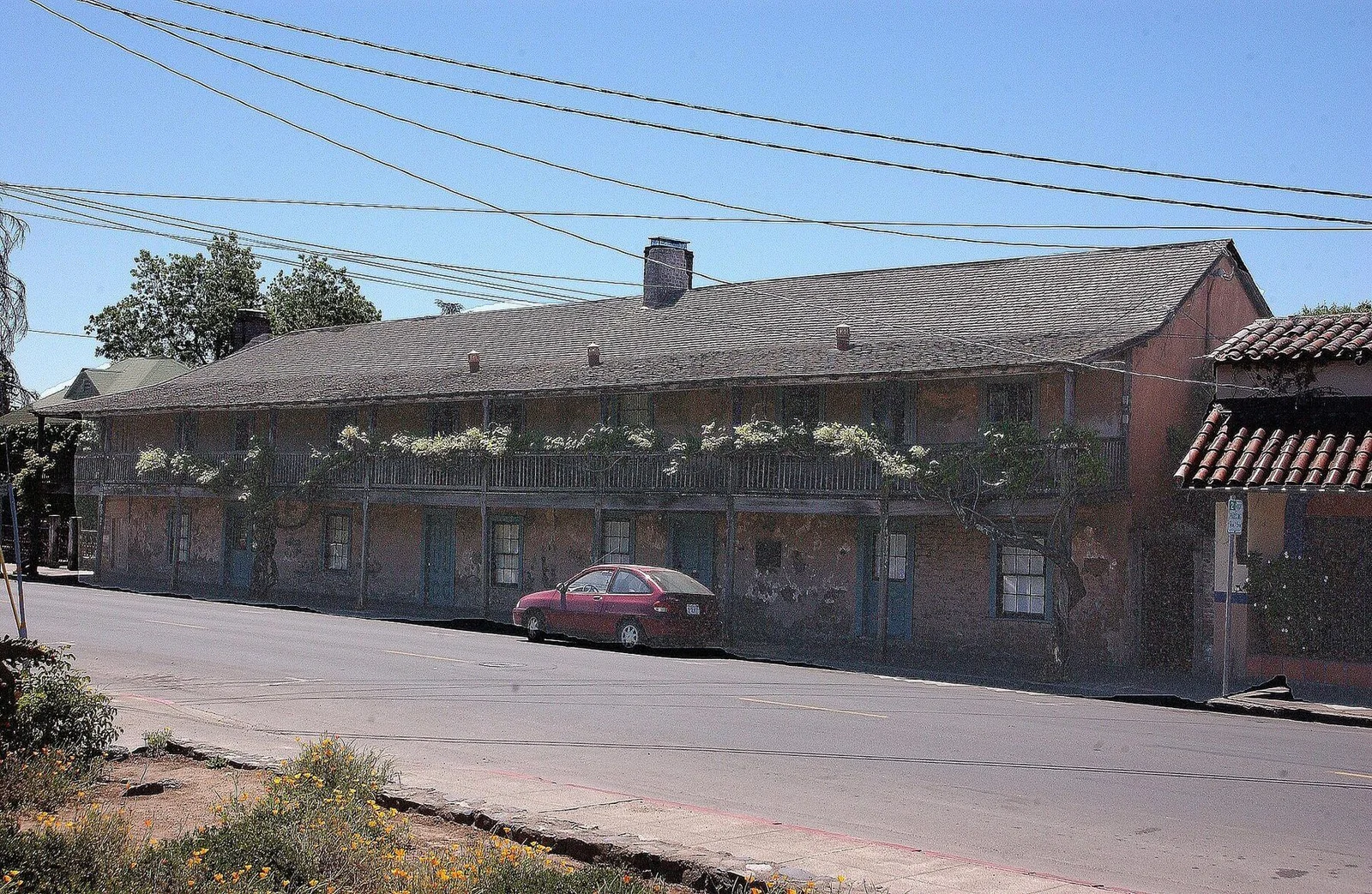
Is the lateral really the homeowner's problem?
Yes, and the district says so directly: "It is the responsibility of the property owner to clean, maintain and replace their sewer lateral."
The dividing line trips people up. Most homeowners picture responsibility ending at the sidewalk, but the private lateral runs from the house to the public main, and that main is frequently under the center of the street. The pipe you own can continue past your fence, under the sidewalk, and out into the roadway before it hands off. That geometry is why two repairs on the same block look nothing alike: one failure sits eight feet from the foundation in a lawn, the neighbor's sits under asphalt.
What fails in a sewer line here?
Era of construction sets material, and material sets failure mode.
On the older streets around the Sonoma Plaza we routinely open trenches on vitrified clay. Clay is chemically durable and can look fine after decades; its weakness is the joint. It was laid in short sections with mortared or gasketed seams, and roots find every one. Root intrusion is not a plant attacking a pipe, it is a root following moisture to a seam that has already opened slightly, then thickening inside until it forms a mat that catches paper and grease.
Cast iron turns up on mid-century construction and fails from the inside out. It scales, the channel narrows, and the bottom corrodes into a rough trough that catches solids long before the wall perforates. A cast iron line can be structurally present and functionally finished at once.
Bituminized fiber pipe, usually called Orangeburg, appeared on a stretch of postwar work and fails by deforming. It flattens under load and delaminates. When we find it, the conversation is short: it gets replaced, not patched.
There is a seasonal pattern on top of material. We see more offset joints and separated couplings after a wet winter than at any other point in the year. A long dry valley summer followed by sustained rain works the ground around rigid pipe, and joints holding in September are not always holding in February.
Ongaro and Sons is a great business! They are responsive and accurate about time estimates, they do good quality work, and so far, every single repair person who has come to our house has been friendly, efficient, and knowledgeable! Aldo, in particular.
Nina G.
How do I tell a sewer problem from an ordinary clogged drain?
Count fixtures and watch the lowest one.
A branch problem is local. One sink drains slowly, one shower pools, the rest of the house behaves normally. That is a fixture arm or a branch line, and it is a drain cleaning job.
A main line problem is systemic and announces itself at the lowest opening in the house. Flush upstairs and water surfaces in a downstairs shower. Run the washer and the nearest floor drain backs up. Toilets gurgle when a nearby fixture drains, because air is being pulled through the trap seal instead of the vent, which means something downstream is restricted.
Other tells sit outside: a soft or unusually green stripe across the yard in a dry month, or a sewage odor near the cleanout. Backups on a predictable interval, cleared each time and returning, are the signature of root intrusion at one joint. The cutter clears the mat, the root regrows, the schedule repeats. What to resist is treating that cycle as a maintenance subscription, which manages a symptom instead of solving a problem.
What does a camera inspection answer?
Four things, and every decision downstream depends on them.
What is it made of. Material narrows the realistic options before anything else is weighed.
How much of it is bad. One compromised joint at a known footage mark is a different job from deterioration along the full run.
Does it still hold grade. A lateral is gravity-driven: it works because it falls consistently from the house toward the main. A settled section creates a belly, a low spot where liquid stands and solids drop out. Standing water on camera at a specific footage is the finding that most often takes trenchless methods off the table.
What is on top of it. The camera transmits a locatable signal, so we mark path and depth on the surface. Knowing the failure sits under turf, under a mature tree's root plate, under concrete, or under the street is what turns a diagnosis into an accurate scope.
We record the run and give you the file. A recommendation that cannot be tied to a footage mark on that video is a guess.
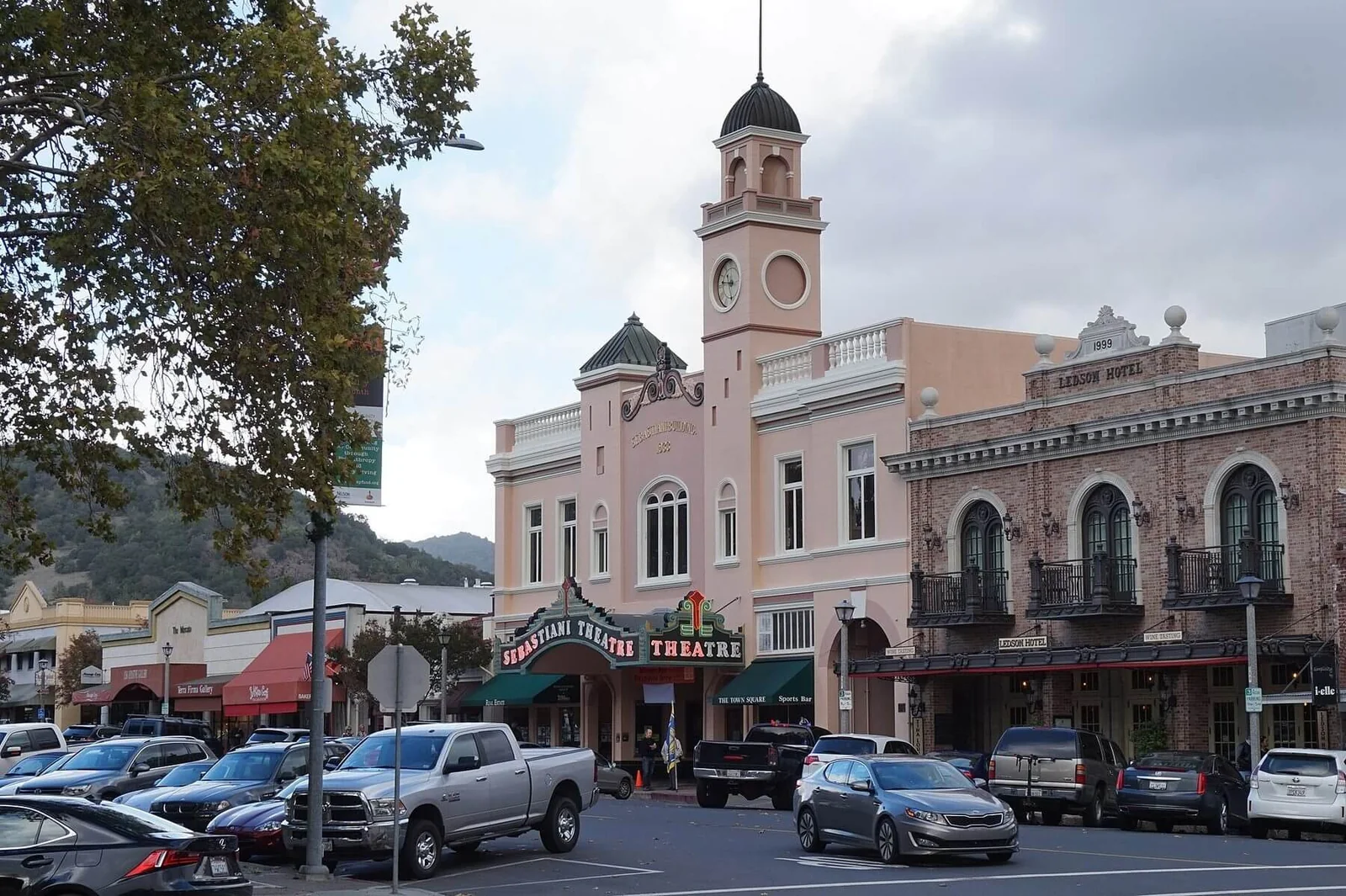
Should I repair the section or replace the whole line?
Run those four answers in order and the decision usually makes itself.
Repair the section when the material is otherwise sound, the defect is isolated and located, grade is intact on both sides of it, and the surface above is workable. Replacing eighty feet of serviceable pipe to fix six feet of it is not thoroughness, it is waste.
Replace the line when the material has reached the end of its service life across the run, when defects appear at multiple footage marks, when grade is gone, or when the pipe is Orangeburg. Also replace when the arithmetic turns: once three or four spot repairs are needed along one run, the trench work has largely been paid for anyway, and full replacement resets the clock instead of buying another few winters.
Grade decides it more often than anything else. Material can be worked around and defects can be counted, but a line that no longer falls consistently cannot be corrected by any method that follows the existing pipe.
Can this be done without tearing up the yard?
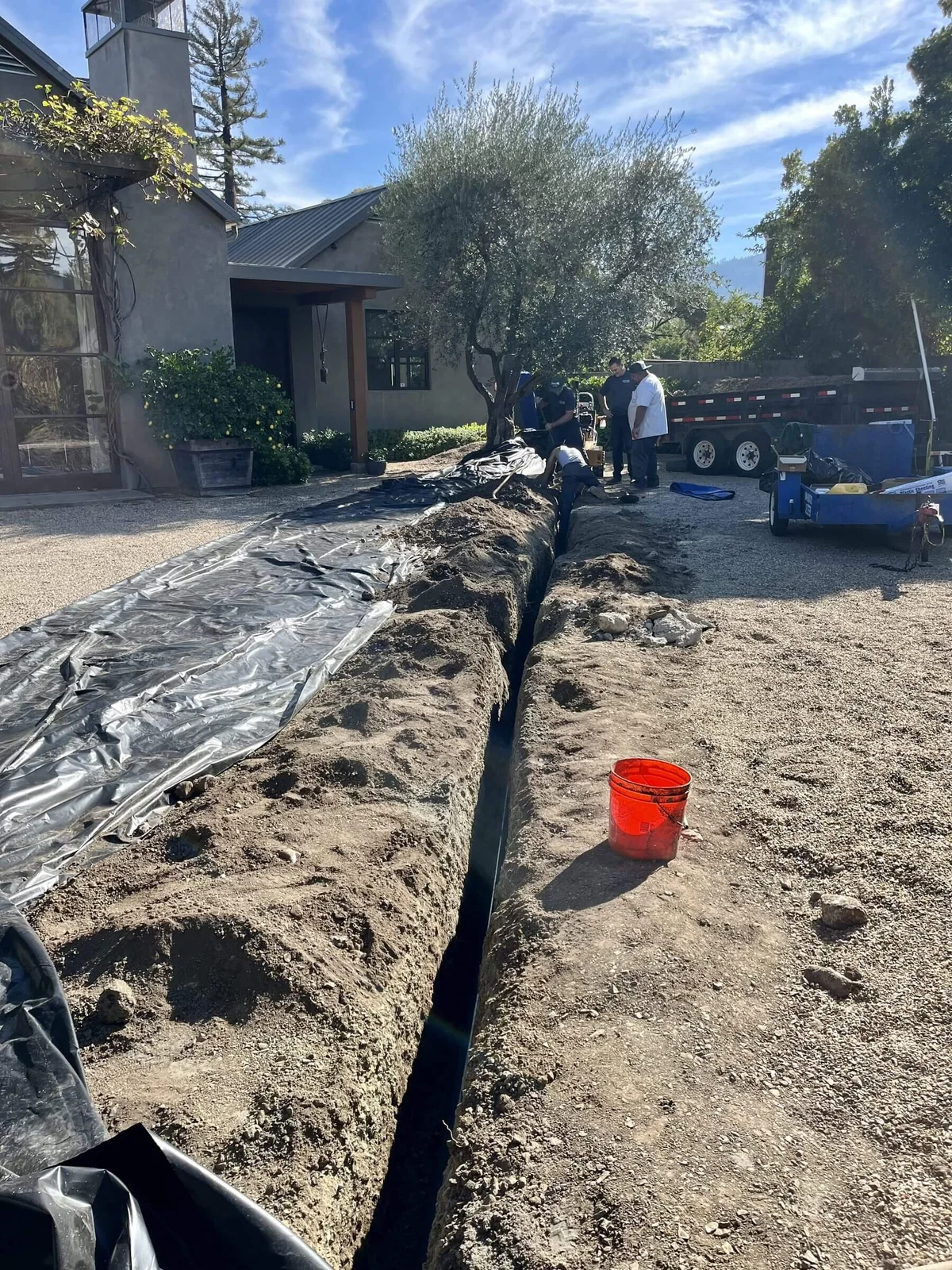
Sometimes, and the phrase to be skeptical of is "no dig." Trenchless means less digging, not none. Both methods need access pits.
Cured-in-place lining pulls or inverts a resin-saturated liner into the existing pipe and cures it, forming a new pipe inside the old one. It seals open joints and root entry points along an otherwise intact run, giving up a little inside diameter in exchange. Its hard requirement is that the host pipe be sound enough to act as a form and still hold slope, because a liner reproduces the shape it cures against, so lining a belly produces a lined belly. Severe offsets, collapses, and tight bends are the other disqualifiers.
Pipe bursting pulls a bursting head through the old line, fracturing it outward into the soil while towing new pipe in behind. It replaces rather than lines, so it can go up in diameter, and it needs a launch pit at one end and a receiving pit at the other. Its limits are other utilities running close alongside, and the fact that it follows the existing alignment, so it cannot fix slope either.
Open trench is still right for a meaningful share of Sonoma jobs, and it is the only approach that can re-establish fall, re-bed the pipe on proper material, and reroute a line away from a tree that would otherwise repeat the failure. On tight older lots near the Plaza, where the run is short and the access pits land where the trench would go anyway, the trenchless premium buys very little.
On time and efficient and everything works great. Couldn't ask for more from a repair.
Laura R.
What makes one sewer job cost more than another?
Conditions, not a menu. Depth comes first, because four feet down and ten feet down are different excavations with different shoring and spoil volume. Then the length of the affected run, which is not the length of your lateral.
What sits above it matters as much as the pipe. Turf is the cheapest surface to cross; mature landscaping, irrigation, stamped concrete, pavers, and finished driveways all add removal and restoration, and older Sonoma lots carry established hardscape and large street trees exactly where laterals run. Whether the work leaves private property splits the job again, since a repair stopping at the sidewalk and one continuing into the roadway involve different agencies. Groundwater can require dewatering on a winter trench that the identical summer trench would not. Access and method finish it: a crew that can bring equipment to the trench works differently from one hand-digging through a side gate, and lining, bursting, and open trench each carry their own setup.
We put the scope in writing first, including what restoration is and is not included, because restoration is where sewer estimates most often diverge from sewer invoices. If timing is difficult, financing options are worth discussing before the work is scheduled rather than after.
Who issues the permit, and what gets inspected?
Inside the city limits, the building permit comes from the City of Sonoma Building Division, which works out of an office on the Plaza itself. Parts of the valley sit outside those limits, and those addresses go through Permit Sonoma, the county agency. Work extending into the public right of way brings whoever owns that street surface into it, one more reason the location of a defect matters as much as its nature.
Separate from the building permit, the sanitation district is the authority on the lateral itself, and its requirements govern how the connection is made and verified. When a line has been rated as failing, the repair has to satisfy the district, not only the building inspector.
Inspectors look for correct material and fittings, proper bedding and backfill so the new line does not settle into a belly the way the old one did, consistent slope, a compliant cleanout, and a tested connection. We pull the permit under our own license and schedule the inspections, because a contractor asking a homeowner to pull an owner-builder permit for a sewer replacement is asking that homeowner to carry liability for the contractor's work. Sewer scope is one part of a larger plumbing picture here, and with a trench already open it is worth deciding whether anything else in the same corridor should be handled while the ground is out.
Is there any rebate or program that helps pay for this?
No, and it is better to say that plainly than to imply otherwise. The incentive programs operating in Sonoma County are decarbonization programs. Neither funds a sewer lateral, because a sewer lateral does not save energy.
The one program that genuinely reduces your cost is the district's inspection. The video and smoke testing offered under the private lateral program come at no charge, which means the diagnostic step, normally the first expense on this kind of job, is available without paying for it. Declining it does not remove the obligation; it shifts the cost of proving the line's condition onto you. Some homeowners also carry service line coverage as a homeowners policy endorsement, so check the declarations page and its exclusions, because these products commonly limit restoration.
What keeps a repaired line from failing again?
Keep roof and yard drainage out of it. Downspouts and surface water belong in a storm system or daylighted, never tied into the sanitary lateral. This is the same inflow problem the ordinance exists to solve, and it is the piece a homeowner fully controls.
Install a proper cleanout and know where it is. A two-way cleanout near the foundation lets a camera and a cutter travel both directions without pulling a toilet, which shortens every future service call.
Think about trees before planting. Roots follow moisture, so a large-canopy species placed over a lateral is a scheduled future problem. Mature trees near the line are worth mapping so a replacement routes around the root plate.
Stop the two things that build mats. Cooking grease cools and coats the pipe wall, and wipes labeled flushable do not break down in a gravity lateral, so they catch on a root or rough cast iron and turn a partial restriction into a full one.
Camera an older line on a calendar, not after a failure. Inspected on schedule, you get a repair at your convenience; inspected after a backup, the pipe sets the schedule. The same logic covers the rest of the house, which is what our maintenance program is for.
Which parts of Sonoma do you work in?
All of it, and the differences are real. Around the Sonoma Plaza and the older streets radiating off it, lots are tighter, street trees are established, hardscape is older, and the laterals are the oldest material we encounter in this city, so access rather than pipe is often the constraint.
In Boyes Hot Springs and the rest of the Springs, housing is mixed in age and parcels vary widely, so two jobs a few hundred feet apart can differ in depth, material, and permitting path depending on which side of the city limits the address falls.
On valley properties at the edges, runs and driveways both get longer, so distance from the house to the point of connection becomes a cost driver by itself, and more length means more joints for a root to find. Everything dispatches from our Petaluma headquarters, a short run up 116 and 121 rather than a trip across a county.
How should a homeowner pick a contractor for this?
1. Confirm the license class. Lateral work is plumbing work, and C-36 is the classification. Ask, then verify with the state rather than trusting a logo on a truck. 2. Insist on camera footage you keep, with the footage marks that justify the recommendation. Not a still frame, not a verbal description. 3. Ask who pulls the permit, and who closes the loop with the district. The permit should be in the contractor's name. If your lateral came back rated 4 or 5, establish before signing who is responsible for satisfying the sanitation district. 5. Get restoration in writing: concrete, pavers, irrigation, landscaping, driveway. Vague restoration language is the most common source of a dispute at the end of a sewer job. 6. Distrust a replacement quoted without a camera, and check that the method matches the finding. If lining is offered on a line the video shows holding water, ask how a liner is expected to restore slope.
What North Bay homeowners say
Two from our review corpus, unedited.
Where else do we handle this work?
Sonoma sits inside a service area we have covered for four generations. See plumbing across Sonoma County, the full Sonoma service matrix, or the same work in neighboring cities: sewer repair in Petaluma and sewer repair in Sebastopol.
Ready to book sewer repair in Sonoma?
Book online and we will schedule a camera inspection to establish what is actually happening in the line. You get the footage, the location and depth of any defect, the realistic options side by side, and the permitting path spelled out before you commit to anything.
Your Comfort, Our Priority
Ongaro & Sons is your trusted heating, cooling, plumbing, electrical, and solar expert, specializing in reliable maintenance and repair services that keep your home running efficiently year-round.
Our certified technicians deliver unmatched expertise with fast, friendly service across Marin, Sonoma and Napa County. From HVAC tune-ups to plumbing repairs and electrical upgrades or solar solutions, we focus on energy-efficient performance and long-term comfort. Count on us to maintain the systems that power your home and keep your environment just the way you like it.
Licensed, Insured, Background-Checked
Our technicians are licensed, experienced, and trained to service all makes and models.
Locally Owned and Operated
Serving the Napa, Marin, and Sonoma communities with personalized, hometown service.
Reliable Repairs
We respond quickly and get the job done right the first time, with no surprises.
Since 1932
Why Ongaro & Sons?
Four generations of trusted home service. Open any reason to see what it means for your home.
Schedule Service →Family-owned in the North Bay since 1932
Four generations of the Ongaro family serving Marin, Sonoma and Napa County. We know these homes and the systems in them.
Licensed, insured, background-checked technicians
Every technician is fully licensed and insured, background-checked, and trained on the equipment we install.
Diamond Certified and BBB A+
Diamond Certified since October 2016, and BBB Accredited with an A+ rating since December 1995.
Mitsubishi Diamond Contractor Elite and Trane Comfort Specialist
Both top manufacturer tiers. That standing decides how registration and extended warranty terms are handled on the system you actually bought.
The price is agreed before work starts
You see the number before the work begins. Flat-rate quotes, no surprises and no pressure.
Comprehensive maintenance program
Members get priority scheduling, discounts, and proactive checkups that prevent costly failures.

Discount
Membership
Ongaro Maintenance Plans
Annual maintenance on your home systems provides safeguards and comfort to you and your family. Members get priority scheduling, discounts, and proactive checkups that catch problems early.
Member Discounts
5% off every repair and replacement, all year long.
Peace of Mind
Proactive checkups catch issues before they become big problems.
Courtesy Reminders
We call you to schedule: never miss a seasonal service.
Value That Lasts
With Ongaro & Sons, you’re investing in quality, integrity, and service that stands the test of time. Explore our current promotions and see the difference real value makes for your HVAC, plumbing, and electrical needs.


From the Blog
 Sep 17, 2026
How Many Amps Does My House Need? Sizing Service for What You Actually Run
How many amps your house needs comes from a load calculation of what you run and plan to add. What drives the number, when existing service is enough, and more.
Read More Sep 10, 2026
Hard Water in Marin County: What Is Actually in Your Water and What It Does
Hard water in Marin County varies by provider and source. The 2025 report figures for Marin Water and NMWD, what hardness does and does not mean, and options.
Read More Sep 3, 2026
Electrical Permit Requirements in California: What Needs One and What Does Not
Find out which electrical projects commonly need permits, how to confirm local exemptions, and what to ask before work begins in Marin, Sonoma or Napa County.
Read MoreWhat else do Sonoma homeowners ask about sewer repair?
Who is the best sewer repair company in Sonoma?
Judge it on license class, quality of diagnosis, who carries the permit, and how long the company has been reachable. Ongaro & Sons holds a C-36 plumbing license, has served the North Bay since 1932, is Diamond Certified, and carries 2,756 Google reviews at a 4.8-star average. We camera every line before recommending anything, permit under our own license, and hand you the video whatever you decide to do next.
Does the sanitation district's lateral ordinance apply to my property?
It reaches properties 30 years or older within the Sonoma Valley County Sanitation District. Age of the property is the trigger, not age of the pipe, so a house that has already had partial plumbing work still falls inside it. If you are unsure whether your parcel sits within district boundaries, the district can confirm that, and it is worth checking before assuming the program does not concern you.
What happens if my lateral is rated a 4 or a 5?
That rating means the district has determined the line is failing, and one calendar year is allowed to complete repairs using a qualified contractor. A year sounds tight but works: it leaves room for an independent camera run, a comparison of repair against replacement, the permit, and an excavation scheduled outside the wettest weeks.
Can I decline the free district inspection?
You can, and the district provides a way to notify them of that choice. Declining does not cancel the underlying duty to maintain the lateral, and any inspection that later becomes necessary is then arranged and paid for privately. For most owners the no-cost video and smoke test is useful information about an asset they own and have never seen.
Why does groundwater matter for a sewer pipe?
Because a broken lateral works in both directions. Sewage escapes, and through the wet months clean groundwater and stormwater enter through those same cracks. Whatever gets in must be pumped and treated as though it were sewage. That is inflow and infiltration, and it explains why a public agency has standing over a pipe belonging to a private owner.
Will drain cleaning solve a broken sewer line?
Clearing restores flow; it does not restore pipe. A cable or jetter cuts the root mat or scours the buildup blocking the channel, which is right when the pipe underneath is sound. When it is cracked, offset, or holding water, the restriction reforms on a predictable cycle. Once the same line has been cleared twice, the next step is a camera, not another clearing.
Do I need a permit to replace a sewer lateral in Sonoma?
Yes. Inside the city limits the permit is issued by the City of Sonoma Building Division; for unincorporated parts of the valley it goes through Permit Sonoma. District requirements apply to the connection itself on top of that, and work extending into the public street involves the agency responsible for the surface. We handle the applications and inspection scheduling.
Is a pipe liner as durable as a new pipe?
A properly installed cured-in-place liner is a genuine structural pipe with a long service life, not a patch. Its limitation is what it can correct: it seals joints and stops root entry along a host pipe that is intact and still falling correctly, but it cannot restore slope, span a collapse, or negotiate a severe offset. When the video shows any of those, lining is the wrong tool no matter how appealing skipping the trench sounds.
Will a Public Safety Power Shutoff affect my sewer service?
A conventional gravity lateral keeps working without electricity, because nothing about it is powered. What stops is any pump: a sewage ejector serving a fixture below the main line's level, or a sump. PG&E may turn off power through its Public Safety Power Shutoff program during severe weather to help prevent wildfires, so a home with a pump should know which circuit feeds it and whether backup power reaches it. Circuit capacity belongs in an electrical panel upgrade conversation.
How often should an older Sonoma home have its line inspected?
Every few years is reasonable for a line of known age and material, plus two specific moments: before buying an older property, and after any main line backup. A pre-purchase camera run is the least expensive due diligence available on a house, because a replacement discovered before closing is a negotiating item and the same one discovered afterward is simply yours.