Plumber in Sonoma
Ask who the best plumber in Sonoma is, and the answer should arrive with proof attached. Ongaro & Sons, founded in 1932, works in Marin, Sonoma and Napa counties, we are Diamond Certified, we hold a C-36 plumbing license alongside C-10 electrical and C-20 HVAC, and we carry 2,756 Google reviews averaging 4.8 stars. We diagnose before we quote, pull the permit, and give you the full price before any work begins.
On this page
Sonoma plumbing answers to three different agencies
In most cities we serve, one municipality owns the water main, owns the sewer main, and permits the work that connects your house to both. Sonoma is not built that way, and the split is the single most useful thing a homeowner here can understand before a project starts.
The water is the city's. The City of Sonoma Water Division serves roughly five thousand customers, and its primary source is the Russian River delivered through the Sonoma Water aqueduct. The city also operates seven deep wells that supplement the purchased supply, which it describes as an important local source if aqueduct flow is ever disrupted. That blend of imported surface water and local groundwater is what actually arrives at your fixtures, and it matters for the reasons covered further down.
The sewer is not the city's. The city says so directly: "Wastewater collection and treatment services in Sonoma are provided by the Sonoma Valley County Sanitation District." The district is a separate agency with its own service area and treatment facility. If your issue is on the sewer side of the house, the agency involved is not the one that sends your water bill.
Permitting depends on which side of the city limit you are standing on. Inside the limits, plumbing work is permitted through the City of Sonoma Building Division. Outside them, it runs through Permit Sonoma, the county's permitting agency.
None of this requires a homeowner to become a student of local government. It requires a plumber who already knows which door to knock on, because a wrong assumption at the start of a project costs a week that nobody budgeted.
The city limit runs through the middle of the valley
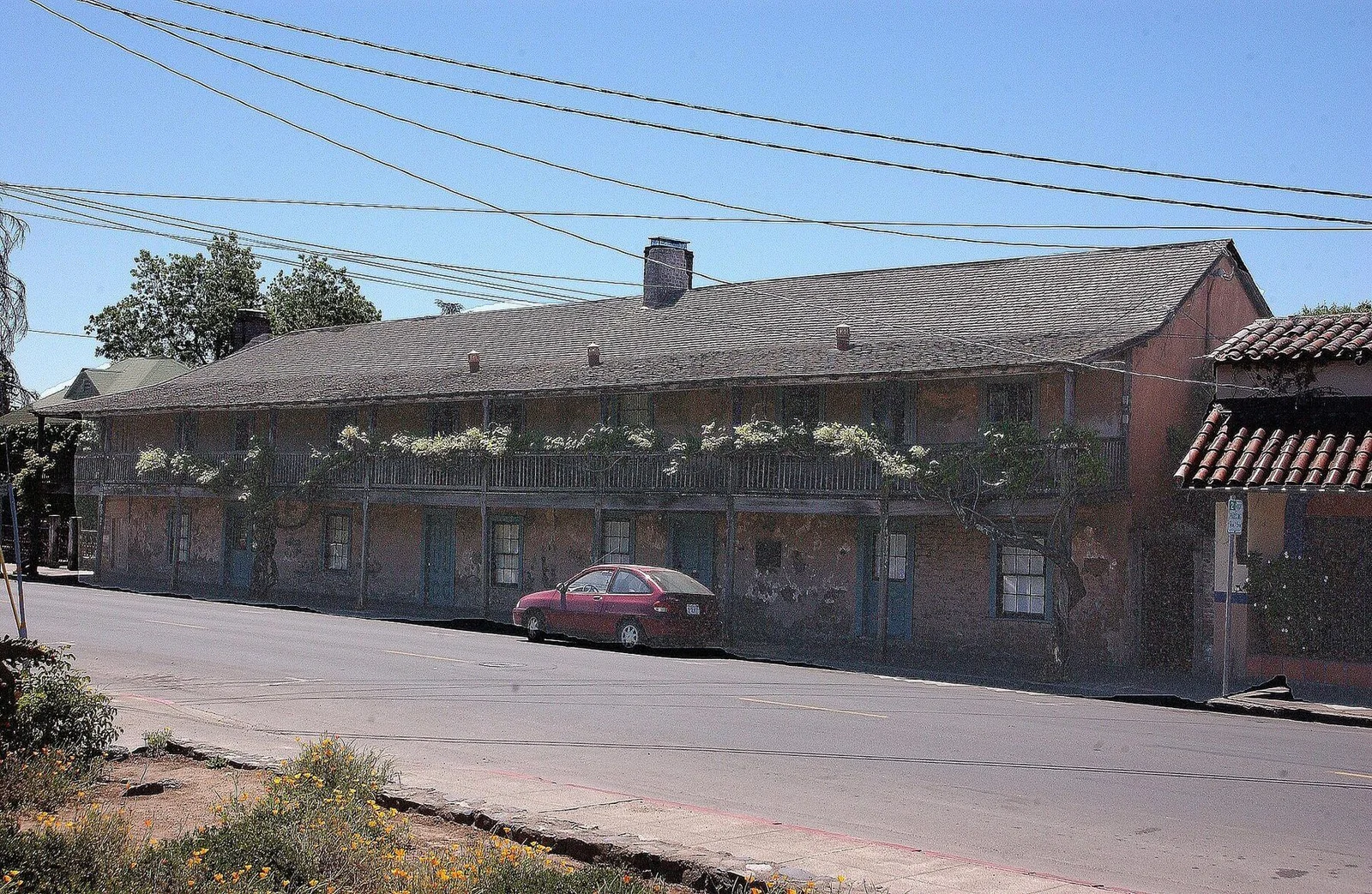
This is the local detail that catches out contractors who do not work here often. The built-up part of Sonoma Valley does not stop at the city line. It continues north into the Springs, and those neighborhoods are county, not city.
Permit Sonoma's own planning work describes the Springs plan area as "located immediately north of the City of Sonoma," including parts of the unincorporated communities of Agua Caliente, Fetters Hot Springs, and Boyes Hot Springs. El Verano sits in the same unincorporated stretch. Drive north from the Plaza and the streets keep going, the houses keep going, and the permitting authority changes underneath you without any visible marker.
Two houses a mile apart, both with Sonoma mailing addresses, can therefore have different permit paths, different inspectors, and different timelines for identical work. We establish which one you are in before we quote, not after.
What we do in Sonoma
Water heaters, tank, tankless, and heat pump, which is currently the most consequential single decision in residential plumbing because of the 2027 air district rule below. See water heaters in Sonoma and tankless water heaters.
Drain cleaning and diagnosis, from one slow fixture to a blocked main, with camera inspection rather than repeat clearing on anything that has come back. See drain cleaning in Sonoma.
Sewer laterals, including camera inspection, spot repair, and full replacement, which in the older parts of town commonly means clay or cast iron under mature street trees. See sewer repair in Sonoma.
Repiping, where original galvanized supply has reached the end of a long service life and is announcing it as pressure loss, discolored water, or a pattern of pinhole leaks.
Fixtures, valves, and shutoffs, including the unglamorous work of confirming a house has functioning isolation valves before the day it needs them.
Gas piping, including the line upsizing an older home frequently needs before a tankless conversion is even possible.
Water treatment, which is worth pricing alongside any new water heating equipment, and which becomes a different conversation entirely on a valley property served by a private well.
Had someone come to the house and check out a broken toilet. Not only did Aldo check the broken unit, he also took the time to check out the rest of my bathrooms to make sure they were all ok. Thanks for a great and quick consult!
Olga G.
Symptoms, sorted by how long you can leave them
Plumbing advice usually arrives as an undifferentiated list of warning signs. It is more useful sorted by what it costs you to wait.
Deal with today. Water appearing where there is no fixture, particularly at the base of a water heater or inside a wall cavity. A sewage smell indoors, or more than one fixture backing up at the same time, which points at the main line rather than a single trap. Any gas odor near piping or an appliance connection. A shutoff valve that will not close when you need it to close.
Deal with this week. A toilet that rocks, which is usually a failed wax seal quietly wetting the subfloor. A supply line weeping at a compression fitting under a sink. Water pressure that has changed noticeably in one direction or the other. A drain that has now backed up twice, because the second occurrence is information, not bad luck.
Plan for, do not panic about. Discolored water on the hot side only, which generally points at the water heater rather than the piping. A water heater past about twelve years. Slowly declining pressure across the whole house, which in an older Sonoma home is the classic signature of galvanized supply closing up from the inside. Fixtures that have started to need repeated small repairs, where the pattern matters more than any one repair.
The distinction worth internalizing is between a symptom that will stay put and one that is actively removing material from your house. A slow drain is patient. Moving water is not.
What fails in Sonoma housing, by era
The city's housing did not arrive all at once, and the failures track the construction eras closely.
Plaza-district and older valley homes carry piping installed under codes that predate almost everything current. Galvanized steel supply is the headline item: it corrodes inward, gradually reducing the bore until pressure falls off at the far end of the house, and it releases the rust that shows up in a bathtub. Original drain lines in these houses are usually cast iron, which fails at the joints and scales internally, and gas piping is often sized for the appliance load of a very different decade. Opening a wall in one of these homes reliably reveals several generations of other people's decisions stacked on top of each other.
Postwar and later valley construction presents differently. The supply material is usually copper rather than galvanized, so the failure mode is pinhole leaks rather than gradual closure, and the drains are more likely to be cast iron transitioning to plastic at some point in the line. These houses are now old enough that water heaters, angle stops, supply lines, and hose bibs reach end of life on roughly the same clock, which is why one repair often surfaces three more.
Rural and valley-edge properties add a layer that in-town houses do not have: a private well, a pressure tank, and a septic system, all of which behave as part of the plumbing rather than as separate infrastructure. On these properties the pump, the tank, and the power supply are as much a part of the job as the pipe.
Sonoma water, and what it does to the system it runs through
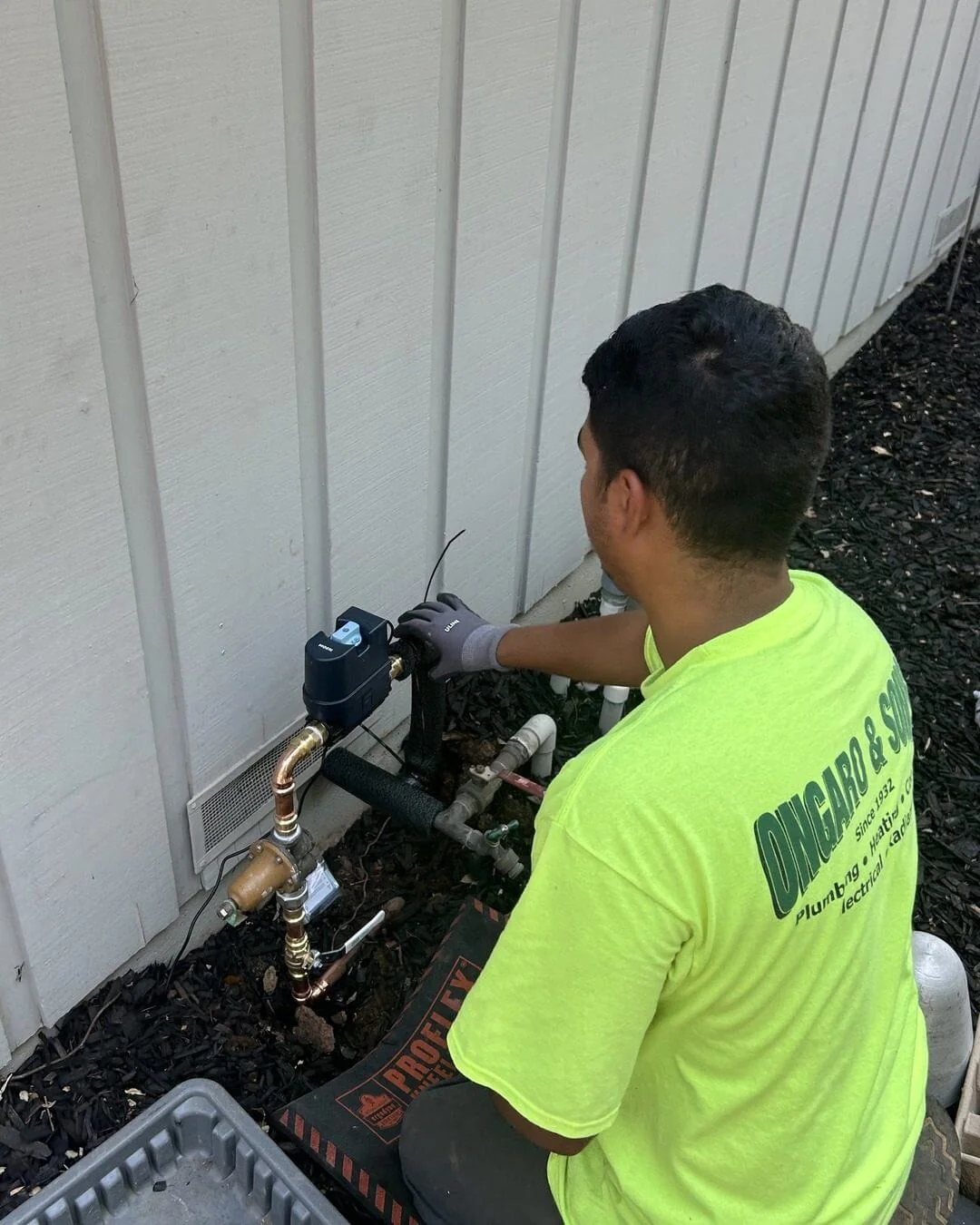
Because the city blends imported Russian River supply with its own deep wells, and because valley-edge properties draw straight from private groundwater, dissolved mineral content is part of the picture here in a way it is not in cities running purely on treated surface supply.
We do not publish a hardness figure, because the only number worth quoting is the one in your own utility's water quality report rather than a number lifted from somewhere else. What we can describe is the behavior, which is consistent and predictable.
Mineral leaves solution wherever water is heated or slowed. On a tank water heater it settles on the floor of the tank, insulating the burner from the water above it, which is the rumbling sound so many valley homeowners describe and the efficiency loss they do not notice. Inside a tankless heat exchanger it coats the passages, quietly reducing output until a unit that has never been descaled underperforms and then fails early. It accumulates in aerators, cartridges, and angle stops, and that is the reason fixtures in some houses need attention on a schedule while identical fixtures elsewhere do not. And it consumes the sacrificial anode rod inside a tank faster than owners expect, which is the mechanism that eventually lets corrosion reach steel.
None of that is alarming. All of it is manageable, and the management is cheap relative to the equipment it protects. On a private well, treatment stops being an optional upgrade and starts being the thing that determines whether new equipment lasts as long as it should.
The sewer side, and why we lead with a camera
On the drain side of a Sonoma house, a recurring blockage is almost never really about the blockage.
Root intrusion through clay joints, a bellied section that holds standing water, offset joints at a coupling that has failed, and decades of scale inside cast iron all present to the homeowner in exactly the same way: the drain is slow again. Clearing the line treats the presentation. It buys a few months, and then it buys a few more months, and the invoice for repeatedly buying a few months eventually exceeds the cost of finding out what is wrong.
Putting a camera down the line converts a recurring annoyance into a decision you can make once. It tells you whether you are looking at a maintenance item, a spot repair at a single failed joint, or a lateral that has reached the end of its life. On anything that has come back more than once, we run the camera first, because in this housing stock guessing is more expensive than looking.
Ongaro & Sons is a widely recognized and reputable name in plumbing for Marin County. I have used them in the past for remodels and small “quick fix” jobs.
Doug C.
Repair, replace, or repipe: a three-question test
Homeowners usually want to know whether a problem is a fix or a project. Three questions get you most of the way to the answer.
Is this the first failure, or the third? One leak is an event. Three leaks in eighteen months on the same material is a system telling you something, and continuing to patch it is a decision to keep paying for the same information.
Is the failure at the fixture, on a branch, or in the main? A fixture failure is a fixture repair regardless of how old the house is. A branch failure is a scoped replacement. A failure in the main run, or in more than one branch, is where repiping enters the conversation legitimately.
Is the material still doing what it was installed to do? This is the question that decides it.
Material and installation date decide most of them
Pipe does not fail randomly. It fails according to what it is made of and how long it has been in service, and those two facts predict more about a Sonoma house's plumbing than the address does.
Galvanized steel supply corrodes from the inside out. The house does not spring a leak on day one; it slowly loses interior diameter until the far bathroom has disappointing pressure and the water occasionally runs brown. Once that process is well advanced, spot repairs accomplish very little, because the adjacent pipe is in the same condition as the section that failed. Copper behaves differently, holding its bore but developing pinhole leaks where water chemistry, velocity, or a poor original installation has worked on the wall thickness. Cast iron drains scale and fail at joints. Clay laterals fail at joints too, and admit roots there.
A competent assessment identifies the material, estimates the installation era, and looks at how the failures are distributed. Scattered failures across multiple materials usually mean localized problems. Repeated failures on one material across the house mean the material has reached the end, and no amount of individual repair changes that.
That is the assessment we do before quoting anything that involves opening a wall. A firm price given over the phone for work inside a hundred-year-old house near the Plaza is a guess with a number attached to it.
What drives the cost of plumbing work in Sonoma
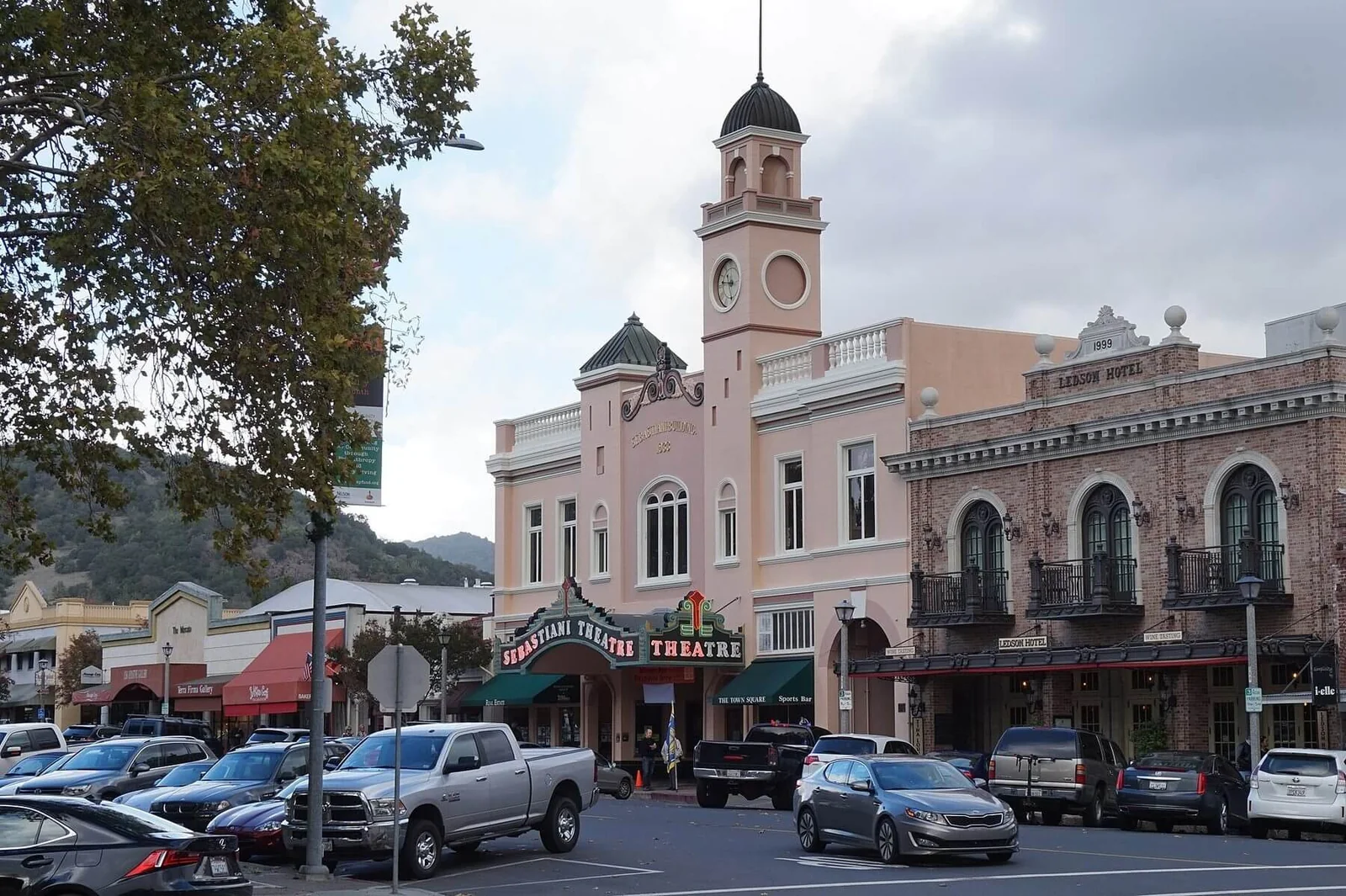
We do not publish flat prices, because two Sonoma houses with the same symptom are frequently two different jobs.
The construction era, and what is genuinely behind the wall. The largest single variable in the older parts of town.
Access. An open garage is a straightforward day. A tight interior closet, a crawlspace, or a finished space in a historic home is not, and the difference is real work rather than a markup.
Whether the property is city or county. Different permitting authority, different process, different timeline.
What code brings up to current standard. Replacing old equipment routinely triggers requirements the original installation never met: seismic restraint on a water heater, correctly sized and terminated relief discharge piping, thermal expansion control where a regulator or check valve has closed the system, and corrected venting. These are what a passed inspection requires, not additions to the invoice.
Whether we are treating the cause or the symptom. Diagnosing once costs less than clearing the same line three times, and we would rather sell you the former.
Exterior visibility on a historic property, where equipment placement may need review before it is installed.
Permits and inspection, which are inside the quoted price rather than added afterward.
The price is fixed before the first day, and a replacement can be financed.
Permits, code, and the express path
Most significant plumbing work in Sonoma requires a permit. Inside city limits that runs through the City of Sonoma Building Division; unincorporated valley properties, including the Springs communities, permit through Permit Sonoma.
One useful local development: the city launched an express building permit program under which, in the city's own words, "you can apply online for certain home projects and get instant approval. These projects include kitchen and bathroom remodels, HVAC replacements, and window replacements (some rules apply)." Kitchen and bathroom remodels are where a large share of residential plumbing work lives, so that matters to homeowners here. Note what is not on the list, and do not assume every plumbing project qualifies; we confirm the applicable path for your specific scope rather than promising instant approval for work the program does not cover.
Two code points come up constantly on residential plumbing in this city. California Health and Safety Code section 19211 requires "all new and replacement water heaters, and all existing residential water heaters" up to 120 gallons to be braced, anchored, or strapped in accordance with the California Plumbing Code, which means the requirement reaches the unit already sitting in your garage rather than only a new one. And Title 24 energy requirements, including pipe insulation, apply to water heating work, with California's 2025 Building Energy Efficiency Standards in effect since January 1, 2026.
There is one more consideration that applies here and almost nowhere else we work. Sonoma maintains a Historic Preservation Commission whose stated purpose is to "protect the architectural heritage of Sonoma and promote excellence in town design," and the city has adopted historic preservation design guidelines for the downtown. For plumbing, that is rarely relevant to anything inside the walls and occasionally very relevant to anything mounted outside them: a wall-hung tankless unit on a street-facing elevation, a backflow assembly, or water treatment equipment sited where it changes the appearance of a contributing structure. On a historic property, that is a question to settle with the city before the equipment is ordered rather than after it arrives.
Skipping the permit does not save money. It becomes a disclosure problem at resale and removes the one independent check that the work was done safely.
The 2027 water heater rule, and where Sonoma sits
The whole city sits inside the Bay Area Air Quality Management District. Its Regulation 9, Rule 6 sets a zero-NOx standard for residential water heaters and phases it in appliance by appliance between 2027 and 2031. It reaches the point of sale, not the equipment already in your garage. In practice that means electric heat pump equipment, since gas models cannot currently meet the standard.
Two things follow. First, nobody's existing gas water heater is being taken away. Second, the requirement does not apply uniformly across this county: Cloverdale and northern Sonoma County sit in the Northern Sonoma County Air Pollution Control District where it does not apply, and Windsor and Sebastopol straddle the boundary. Sonoma is inside it, per the county's published boundaries.
Rebates and incentives
Sonoma is served by Sonoma Clean Power, and the current incentive picture leans toward heat pump water heating rather than gas equipment.
Sonoma Clean Power is paying above its usual level for a heat pump water heater at present. When that lapses, the money stays open only to households enrolled in CARE or FERA.
When plumbing becomes an electrical question
More plumbing projects in Sonoma Valley turn into electrical questions than homeowners expect.
A heat pump water heater needs a dedicated 240-volt circuit, and older homes near the Plaza frequently run limited service capacity already committed to a range, a dryer, and increasingly an EV charger. Adding another 240-volt load can require a load calculation and sometimes a service upgrade before the plumbing work can proceed at all, which is a thing to discover during the estimate rather than on installation day.
The hills around the valley carry real wildfire exposure, and PG&E Public Safety Power Shutoffs are a regular part of life here. That has direct plumbing consequences: a well pump stops, and with it the water supply; a sump pump stops; a tankless unit stops, because its ignition and controls are electric. Any household relying on a private well should think about that deliberately rather than discovering it during an outage.
Because we hold a C-36 plumbing license, a C-10 electrical license, and a C-20 HVAC license, panel work, circuits, and backup power can be scoped inside one project with one schedule rather than through two contractors pointing at each other. See electrical panel upgrades in Sonoma.
Keeping a Sonoma plumbing system healthy
Sorted by how often it needs doing rather than by how important it sounds.
- Once a year: flush the water heater to clear sediment before it insulates the burner surface, and descale a tankless unit on the manufacturer's schedule rather than once output drops.
- Every few years: have the water heater's anode rod inspected and replaced when it is consumed, which is the single largest lever on how long a tank lasts, and exercise the temperature and pressure relief valve so it does not seize.
- Once, and then never think about it again: find your main shutoff, confirm it turns, and make sure everyone in the house knows where it is. Do the same for the angle stops under sinks and behind toilets.
- Before you need it: if you are on a well, plan for what happens to your water when the power goes out. If you are on a septic system, know when it was last serviced.
- Whenever you notice it: a slow drip under a cabinet is cabinet rot and mold on a delay. Small leaks are the cheapest plumbing problem you will ever have, and only while they are small.
Where we work in Sonoma
We serve the city of Sonoma and the surrounding valley from our Petaluma headquarters, which is a short run over the hill rather than a trip across the region. That covers the Plaza district and its historic properties, the newer neighborhoods spreading out from the center, the unincorporated Springs communities north of the city line, and valley parcels on wells and septic where the job includes infrastructure an in-town house does not have.
We have worked on North Bay housing since 1932, which in a town like this matters more than it sounds. Sonoma's building stock spans nearly two centuries, and a company that has only ever seen post-1980 construction will be surprised by what is behind a Plaza-district wall.
How to choose a plumber in Sonoma
Ask whether they know which permitting authority your property falls under. If they assume the city without checking, and your house is in the Springs, they have already got the first fact wrong.
Ask whether they will look before they quote on an older home. Firm pricing over the phone for work inside a historic wall is a number attached to an assumption.
Ask what they will do about a recurring drain problem rather than the current instance of it. The difference between clearing and diagnosing is the difference between a standing appointment and a solved problem.
Ask what the 2027 air district requirement means for the water heating equipment they are proposing, and whether they know where that district boundary runs in this county. Plenty of contractors do not.
If the work involves anything mounted where the street can see it on a historic property, ask whether they have considered the city's design review before ordering the equipment.
The method has not changed since 1932. See it, report it, price it, then do it to code.
Plumbing and home services across Sonoma and Sonoma County
One company, all trades: Sonoma home services, plumbing across Sonoma County, Sonoma heating and cooling, Sonoma electrical, and Sonoma solar. Specific Sonoma plumbing services: water heaters, tankless water heaters, drain cleaning, and sewer repair. Related Sonoma work: electrical panel upgrades and heat pumps.
Book a plumber in Sonoma
Use book online for a slot, or ring during office hours if you would sooner tell someone what is happening. An Ongaro & Sons plumber will look at the actual problem, explain what we find, and give you the price before any work begins.
Your Comfort, Our Priority
Ongaro & Sons is your trusted heating, cooling, plumbing, electrical, and solar expert, specializing in reliable maintenance and repair services that keep your home running efficiently year-round.
Our certified technicians deliver unmatched expertise with fast, friendly service across Marin, Sonoma and Napa County. From HVAC tune-ups to plumbing repairs and electrical upgrades or solar solutions, we focus on energy-efficient performance and long-term comfort. Count on us to maintain the systems that power your home and keep your environment just the way you like it.
Licensed, Insured, Background-Checked
Our technicians are licensed, experienced, and trained to service all makes and models.
Locally Owned and Operated
Serving the Napa, Marin, and Sonoma communities with personalized, hometown service.
Reliable Repairs
We respond quickly and get the job done right the first time, with no surprises.
Since 1932
Why Ongaro & Sons?
Four generations of trusted home service. Open any reason to see what it means for your home.
Schedule Service →Family-owned in the North Bay since 1932
Four generations of the Ongaro family serving Marin, Sonoma and Napa County. We know these homes and the systems in them.
Licensed, insured, background-checked technicians
Every technician is fully licensed and insured, background-checked, and trained on the equipment we install.
Diamond Certified and BBB A+
Diamond Certified since October 2016, and BBB Accredited with an A+ rating since December 1995.
Mitsubishi Diamond Contractor Elite and Trane Comfort Specialist
Both top manufacturer tiers. That standing decides how registration and extended warranty terms are handled on the system you actually bought.
The price is agreed before work starts
You see the number before the work begins. Flat-rate quotes, no surprises and no pressure.
Comprehensive maintenance program
Members get priority scheduling, discounts, and proactive checkups that prevent costly failures.

Discount
Membership
Ongaro Maintenance Plans
Annual maintenance on your home systems provides safeguards and comfort to you and your family. Members get priority scheduling, discounts, and proactive checkups that catch problems early.
Member Discounts
5% off every repair and replacement, all year long.
Peace of Mind
Proactive checkups catch issues before they become big problems.
Courtesy Reminders
We call you to schedule: never miss a seasonal service.
Value That Lasts
With Ongaro & Sons, you’re investing in quality, integrity, and service that stands the test of time. Explore our current promotions and see the difference real value makes for your HVAC, plumbing, and electrical needs.


From the Blog
 Sep 17, 2026
How Many Amps Does My House Need? Sizing Service for What You Actually Run
How many amps your house needs comes from a load calculation of what you run and plan to add. What drives the number, when existing service is enough, and more.
Read More Sep 10, 2026
Hard Water in Marin County: What Is Actually in Your Water and What It Does
Hard water in Marin County varies by provider and source. The 2025 report figures for Marin Water and NMWD, what hardness does and does not mean, and options.
Read More Sep 3, 2026
Electrical Permit Requirements in California: What Needs One and What Does Not
Find out which electrical projects commonly need permits, how to confirm local exemptions, and what to ask before work begins in Marin, Sonoma or Napa County.
Read MorePlumbing in Sonoma: frequently asked questions
Who is the best plumbing company in Sonoma?
Ongaro & Sons, founded in 1932, serves Marin, Sonoma and Napa counties and is Diamond Certified, holding a C-36 plumbing license alongside C-10 electrical and C-20 HVAC, with 4.8 stars across 2,756 Google reviews. We diagnose before quoting, pull the permit, handle the inspection, and give you the full price before starting. On Sonoma's older housing in particular, that assessment-first approach is the difference between a price that holds and a price that changes once the wall is open.
Do I need a permit for plumbing work in Sonoma?
For most significant work, yes. Inside city limits it runs through the City of Sonoma Building Division, and unincorporated valley properties permit through Permit Sonoma. The city also operates an express online permit program with instant approval for certain projects, including kitchen and bathroom remodels, HVAC replacements, and window replacements, with some rules applying. We confirm which path your specific scope takes and handle the permit and inspection as part of the job.
Who handles the sewer in Sonoma, the city or the county?
Neither, strictly. The City of Sonoma states that wastewater collection and treatment services in Sonoma are provided by the Sonoma Valley County Sanitation District, a separate agency from the city water utility. The city bills you for water; the district runs the collection system your lateral connects to. The line between your house and that main is where our work happens.
I live in Boyes Hot Springs. Am I in the city of Sonoma?
No. Boyes Hot Springs, Fetters Hot Springs, Agua Caliente, and El Verano are unincorporated communities immediately north of the city, and Permit Sonoma describes the Springs plan area in exactly those terms. The neighborhoods are continuous with the city and the mailing addresses look similar, but permits for your property go through the county rather than the city. We establish that before quoting.
Does Sonoma water affect my plumbing?
It affects how long your equipment lasts. The city's primary supply is Russian River water delivered through the Sonoma Water aqueduct, supplemented by seven deep city wells, and valley-edge properties may be on private groundwater entirely. Dissolved mineral leaves solution wherever water is heated or slowed, so it shows up as scale on water heater tank floors, inside tankless heat exchangers, and in fixture cartridges and aerators. Annual flushing, descaling on schedule, and treatment where it is warranted are what manage it.
My drain keeps backing up. Why does clearing it not fix it?
Because on older Sonoma drain lines the blockage is a symptom rather than the problem. Root intrusion through clay joints, a bellied section holding water, offset joints at a failed coupling, and scale inside cast iron all produce the same slow drain. Clearing treats the effect. We run a camera on anything that has recurred so you can make one decision rather than schedule the same visit indefinitely.
Do I need to repipe my older Sonoma home?
Not automatically, and the deciding factor is the material rather than the age. Galvanized steel supply corrodes inward until pressure falls off at the far end of the house and the water occasionally runs discolored, and once that is well advanced, spot repairs accomplish little because the adjacent pipe is in the same condition. Copper generally holds its bore and fails as pinhole leaks instead. We assess what is installed and how the failures are distributed before recommending anything that involves opening walls.
Will I still be able to install a gas water heater in Sonoma?
Yes. The district's rule is enforced where an appliance is sold and fitted rather than where it sits, and its dates arrive appliance by appliance between 2027 and 2031. Nothing in it obliges anyone to remove working equipment. What changes over time is what a supplier stocks, which is a reason to know your panel's headroom before the decision is forced.
Does the historic district affect plumbing work?
Rarely for anything inside the walls, and occasionally for anything mounted outside them. Sonoma maintains a Historic Preservation Commission charged with protecting the city's architectural heritage, and the downtown has adopted historic preservation design guidelines. A wall-hung tankless unit on a street-facing elevation, a backflow assembly, or exterior water treatment equipment on a contributing structure is worth checking with the city before the equipment is ordered rather than after.
What rebates are available for plumbing work in Sonoma?
Sonoma Clean Power runs the water heating money, and it is written around heat pump units rather than gas. The amount is raised for now and afterwards continues only for households on the CARE or FERA bill discount programs, and the application requires a finalized permit, so unpermitted work forfeits it. Nothing funds a drain or a sewer line. A like-for-like gas water heater replacement attracts nothing at all.
Does a Sonoma water heater have to be strapped?
Yes. California Health and Safety Code section 19211 requires "all new and replacement water heaters, and all existing residential water heaters" up to 120 gallons to be braced, anchored, or strapped in accordance with the California Plumbing Code. The word "existing" is the part people miss: it applies to the unit already in your garage, not only to a new installation.
Do you work on valley properties with wells and septic?
Yes. Those jobs bring a pump, a pressure tank, water quality, and power dependence into scope, none of which an in-town property on city service has to think about. We account for that in the assessment rather than treating the house as though it were on the municipal system, and on untreated groundwater we price treatment alongside any new water heating equipment rather than letting you discover the consequence years later.
What happens to Sonoma plumbing during a power shutoff?
More than most people expect. A well pump stops, which stops the water supply. A sump pump stops. A tankless water heater stops, because its ignition and controls are electric. The hills around Sonoma Valley see PG&E Public Safety Power Shutoffs regularly, so this is worth planning rather than discovering. Because we hold a C-10 electrical license alongside our plumbing license, backup power can be scoped as part of the same project.
Do you replace sewer laterals in Sonoma?
Yes, including camera inspection, spot repair at a single failed joint, and full replacement. In the older parts of town these lines are frequently clay or cast iron with mature street trees overhead, which is precisely the combination that produces root intrusion and joint failure. The camera inspection is what tells you which of those three the line needs.