Drain Cleaning in Sonoma
Ongaro & Sons has cleared blocked and slow drains in Sonoma and across the rest of the North Bay since 1932. We are Diamond Certified, licensed under C-36 for plumbing, and average 4.8 stars across 2,756 Google reviews. We put a camera down anything that has backed up before, which matters more here than almost anywhere else we work, for a reason specific to this valley.
On this page
In Sonoma, your sewer lateral has a rulebook
Most cities leave the pipe between your house and the sewer main entirely alone until it fails. Sonoma Valley does not, and that single fact reshapes what a drain call means here.
Wastewater in the City of Sonoma is collected by the Sonoma Valley County Sanitation District, administered through Sonoma Water. The district's own service area covers the city plus the unincorporated communities of Agua Caliente, Boyes Hot Springs, Eldridge, Fetters Hot Springs, Glen Ellen, Schellville, Telemec and Vineburg. Its board is the Mayor of the City of Sonoma together with the chair and first district supervisor of Sonoma Water's board, so this is a genuinely local body rather than a distant utility.
That district has a Private Sewer Lateral Ordinance. Three things in it change how a Sonoma homeowner should think about a slow drain.
One: the pipe is yours, in writing. In the district's words, "the property owner is responsible for all maintenance, operation, cleaning, repair and reconstruction" of the private lateral running from the building to the point where it connects to the sewer main. There is no ambiguity to fall back on when a line fails under the front yard.
Two: age triggers it. The ordinance requires owners of property thirty years or older to have their laterals inspected and repaired where necessary. The district's own estimate is that "an estimated two-thirds of the sewer laterals in Sonoma Valley are at least 30 years old and likely in need of repair." In a town whose housing stock includes some of the oldest in California, that is not a small share of addresses.
Three: there is a clock. The district conducts video inspection and smoke testing of sewer laterals at no charge to the owner. An owner may decline, but the district states that owners "who decline this free inspection may be required to hire a qualified company that can produce a video/report in accordance with the National Association of Sewer Service Companies (NASSCO) Lateral Assessment and Certification Program (LACP), at the property owner's expense." Where significant defects turn up, "property owners will have one year from the report date to complete any necessary repairs identified in the report."
The reasoning behind all of this is inflow and infiltration. A cracked or badly connected lateral lets groundwater and stormwater into the sanitary sewer. During heavy winter rain that extra volume can overwhelm the collection system, which produces overflows into creeks and onto private property, and it raises the volume reaching the treatment plant on 8th Street East year round. The district is candid that overflows bring fines with them.
What this means practically: in Sonoma, "just clear it" is a weaker answer than it is in most towns. If your lateral is on the older side, the condition of that pipe is already a live question, and a camera run during a routine drain call gives you the answer on your own terms rather than on the district's timeline. We confirm current ordinance requirements with the district at the time of your project, because programs like this are amended.
What a Sonoma drain call usually turns out to be
Ordered by how much it costs you to ignore, rather than by how often it shows up.
A lateral that has lost its shape is the expensive one. The district is currently replacing a trunk sewer main it describes as "approximately 60 years old and at the end of its life expectancy." Private laterals in the same neighborhoods were generally put in during the same decades and out of the same materials. Vitrified clay in bell-and-spigot sections, jointed every few feet, and cast iron that has been corroding from the inside since it went in. Both are sound pipe until the joints move, and then they are a collection of openings.
Root intrusion follows directly from that. Sonoma summers are long and dry, and a mature valley oak, olive, or street tree will follow moisture a remarkable distance. It does not break into a sound pipe. It finds the seep at a failed joint, threads a fine root through, and then thickens into a mass that catches everything passing. Cutting the mass out restores flow the same day. The joint is still open, so the schedule resets rather than ends. This is the single most common reason a Sonoma line blocks in the same place every year.
A bellied section is a length of pipe that has settled, usually in the softer valley-floor soils, creating a dip that holds standing water. Solids drop out in the low spot. No cable and no jetter changes the grade, so a belly blocks indefinitely until the pipe is re-laid.
An offset joint is a coupling that has shifted, leaving a lip inside the line. Paper and debris catch on the lip, in the same location, every time.
Scale inside old cast iron narrows the working diameter until a line that once handled the house comfortably can no longer keep up with a modern laundry, dishwasher, and two bathrooms running the same evening. Nothing is broken. The pipe is simply smaller than it looks.
Grease is the kitchen-line problem, and the only behavioral item on this list. It leaves the pan hot and liquid and cools on the pipe wall, and every subsequent bit of debris sticks to the coating it left behind.
Wipes are the avoidable main-line problem. Nothing marketed as flushable behaves like toilet paper once it is in a drain line, and they are the most preventable cause of main-line blockages we deal with anywhere in the North Bay.
A camera tells those apart in roughly the time it takes to run a cable, which is why we lead with it on anything recurring.
Reading the symptom before choosing a tool
Which fixtures misbehave, and in what order, narrows the problem before anyone opens a cleanout.
1. One slow fixture, everything else normal. Local. A trap, a tailpiece, or the short branch serving that fixture. Rarely structural. 2. Two fixtures on the same side of the house. The branch line they share, rather than either fixture. 3. The lowest drain in the house backs up first. A downstairs shower, a tub, or a floor drain filling when you run something upstairs points at the main line or the lateral. This is the situation where clearing without looking is most likely to be a temporary purchase, and where sewer repair in Sonoma becomes the real conversation. 4. Gurgling from one fixture when another drains. Usually a venting problem, not a blockage. A cable does nothing for it. 5. A toilet that is slow rather than blocked. Often a partially obstructed trap or a vent issue, not a main-line failure. 6. Everything degrades noticeably during heavy rain. In a district actively working on inflow and infiltration, that pattern is worth taking seriously rather than cabling through. Stormwater reaching the sanitary side is exactly what the lateral ordinance exists to address.
Sorting that out first is the part that saves money. The tool is not the hard part.
James was very impressive. His knowledge and attitude was beyond compare. He is a definite assist to your company. He went beyond helping us with our problem.
Shirley P.
Cable, jetter, or camera
| Tool | What it actually does | When it is the right call |
|---|---|---|
| Cable | Bores through an obstruction, pulls material back, and cuts roots | Most fixture and branch blockages, and root masses at a joint |
| Hydro jetting | Scours the pipe wall with high-pressure water and restores the line's real diameter | Grease-laden kitchen lines and scale inside older cast iron, on pipe sound enough to take the pressure |
| Camera inspection | Diagnoses rather than treats: pipe material, condition, defect type, and distance from the cleanout | Anything that has blocked before, anything main-line, and any lateral whose condition is a live question |
The mistake worth avoiding is buying the wrong one repeatedly. Cabling a bellied section every spring is money spent on a problem cabling cannot solve. Jetting is also not universally appropriate. On a line the camera shows to be fractured or heavily deteriorated, more pressure is not better, and a plumber who will not make that distinction is guessing.
Branch drains, laundry standpipes, and the fixtures people forget
Not every Sonoma drain call is about the lateral. A large share are branch-level problems that have nothing to do with what is buried in the yard.
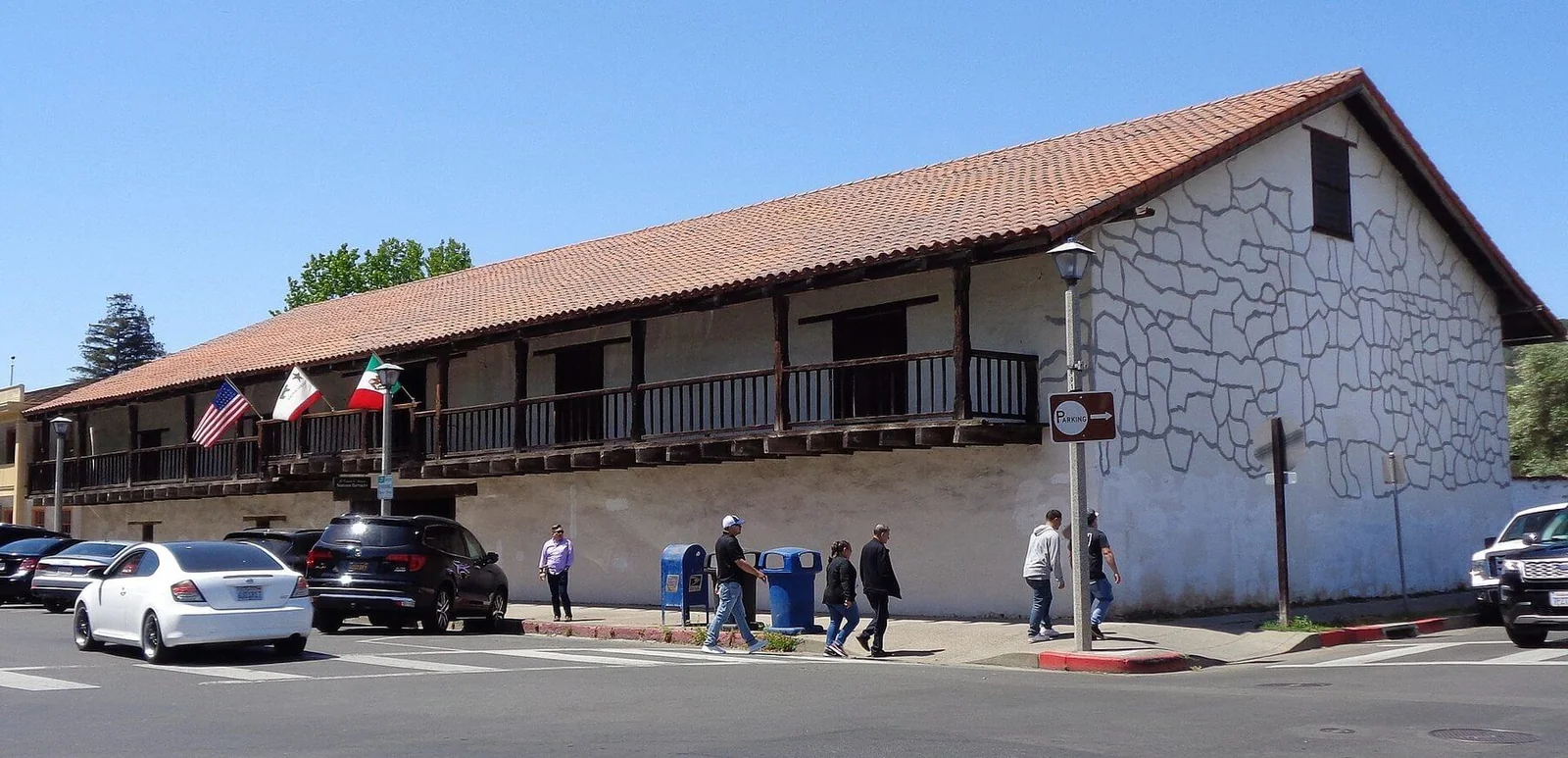
The laundry standpipe is the most under-appreciated of them. A washing machine discharges a large volume very fast, far faster than a sink, and it does it into a standpipe and trap that are often original to a home built long before high-capacity machines existed. Lint, detergent residue, and fabric fibers coat the inside of that branch over years. The failure mode is distinctive: the machine drains fine on a small load and overflows the standpipe on a full one, because the line can no longer accept the flow rate even though it is not fully blocked.
The same logic applies to kitchen branches serving a disposal and a dishwasher, and to older bathroom groups where a single small-diameter branch carries a tub, a lavatory, and a toilet. Diameter and slope were sized for the household of the era, not for today's fixtures.
When a branch line or its connections are past the point where clearing helps, replacing that section and the valves and connections around it is the durable answer.
What drives the cost of drain cleaning in Sonoma
We do not publish flat prices, because a kitchen sink and a root-blocked lateral under a Plaza-district front yard are not the same job. What moves the number:
- Which line it is. A fixture trap, a shared branch, the building main, or the lateral out to the district's main.
- Whether there is an accessible cleanout. A property with a reachable cleanout is a faster job than one where access has to be made through a fixture or a roof vent. Many older valley properties have a cleanout that has been landscaped over.
- Pipe material and condition. Clay, cast iron, or plastic, and what the camera shows about the joints. This is the single largest variable on a main-line job.
- Cable or jetter, and whether the line can safely take jetting.
- Length and depth of the run. Older parcels near the Plaza and larger valley lots can put a lot of pipe between the house and the main.
- Whether diagnosis is included. On a recurring problem it should be, and on a lateral that may fall under the district's ordinance a documented camera run is worth having regardless.
You see the price before we start. If the camera shows the line needs repair rather than clearing, we tell you that instead of scheduling you again next spring.
Permits, the district, and who signs off
Routine drain clearing does not require a permit. Repairing or replacing drain or sewer piping does, and in the Sonoma Valley the answer depends on which side of the city limit you sit on.
Inside the City of Sonoma, permits go through the city's Building Division. The city requires a permit to "build, enlarge, alter, remove, demolish, or repair a structure." The city also runs an Express Building Permit program offering online application with instant approval, though the published express list covers kitchen and bathroom remodels, HVAC replacements, and window replacements rather than sewer and drain work, so a lateral repair goes through the standard route. We confirm the current path with the Building Division as part of the job.
Outside the city limits, in Boyes Hot Springs, Fetters Hot Springs, Agua Caliente, Glen Ellen, Schellville, Vineburg and the rest of the unincorporated valley, permitting runs through Permit Sonoma.
On top of the building permit, work on the lateral itself sits inside the Sonoma Valley County Sanitation District's requirements, including the inspection reporting standard the district names for owners who arrange their own assessment. If a diagnosis turns into a repair, we handle the permit and the inspection rather than leaving you with an unpermitted excavation in the front yard and an open item with the district.
My tub was leaking so I gave Ongaro a call this morning. They a did pretty big job for me about a month ago replacing pipes and I was so impressed, they are flawless. Gerald came over this morning, assessed the situation and wrote up a quote for me.
Maureen G.
Water, scale, and what reaches your drains
The City of Sonoma's supply is blended. Per the city's own Water Division, "Sonoma's primary source of water is from the Russian River, supplied by the Sonoma County Water Agency (Sonoma Water)," and "the City has seven deep wells that supplement the purchased water supply."
That blend matters less on the drain side than on the supply side, but it is not irrelevant. Mineral content contributes to the scale that builds inside older cast iron waste piping and inside the traps of fixtures that see hot water constantly. If you have a kitchen line that has narrowed over decades rather than blocked suddenly, that is the process at work. It is also why we tend to raise water heater and treatment questions during a drain visit when the symptoms point that way, rather than treating each system as a separate visit.
Preventing blocked drains in a Sonoma home
Kitchen lines block because of what goes into them. Grease and cooking oil belong in the trash, not the drain, because they arrive liquid and leave a coating. Coffee grounds and starchy foods behave badly for different reasons. A sink strainer costs almost nothing and prevents most of it.
Bathroom lines block because of hair and soap product, and a shower screen is the highest-return prevention available to any homeowner.
Toilets take toilet paper and nothing else, regardless of what a package claims.
Beyond that, two things are specific to this valley. First, if you have mature trees over an older lateral, planned periodic maintenance is a legitimate strategy rather than a defeat, provided a camera has first confirmed that maintenance is what the line needs rather than a stopgap for a defect. Second, know where your cleanout is and keep it accessible. Ten minutes with a shovel on a dry afternoon saves real time later, and on a property that may face a district inspection it is worth having found already.
Septic properties and pumps on the valley edges
Properties outside the sanitation district's service area, in the hills and on the rural edges of the valley, are on septic. That is a different diagnosis. What presents as a drain problem is sometimes a full tank or a failing leach field, and cabling a line that is backing up from the tank accomplishes nothing at all. We establish which it is before treating it. Permitting for septic work in unincorporated Sonoma County runs through Permit Sonoma.
Homes with a sewage ejector pump or a below-grade fixture group have one more consideration here. The hills around the Sonoma Valley face wildfire exposure and PG&E Public Safety Power Shutoffs, and a pump without power does not move anything. If your lowest fixtures depend on a pump, backup power belongs in that conversation. Because we hold a C-10 electrical license alongside our C-36, that is a discussion we can finish rather than hand off. See Sonoma electrical.
Where we work in Sonoma
We serve the whole Sonoma Valley from our Petaluma headquarters: the Plaza district and the streets around it, Boyes Hot Springs and the Springs, the valley floor, and the rural properties on the edges. The housing runs from some of the oldest in the state to modern construction, and the buried pipe under it runs the same range, and that is the reason we do not arrive with an assumption about what your line is made of.
Sonoma is a short run from Petaluma, and the work here is steady enough that we know the neighborhoods and their pipe eras rather than treating each address as a first visit.
How to choose a drain cleaning company in Sonoma
Ask whether a camera is included when the problem has happened before. A company that will not look is a company that benefits from you calling again.
Ask what they think is causing it, and expect specificity. "Roots at a joint about thirty-five feet out, on clay" is a diagnosis. "It was clogged" is not.
Ask whether they can produce a documented video report if you need one for the sanitation district's lateral requirements, and whether they understand what the district asks for.
Ask whether jetting is appropriate for your line's condition rather than assuming more pressure is always better.
Ask what happens if the camera shows a structural defect, and whether that turns into a quote you can consider or a decision you are pushed into on the spot.
We have answered questions like these the same way since 1932: find the actual cause, explain what we found, price it before we start, and say plainly when clearing is not the answer.
Drain and plumbing service across Sonoma and Sonoma County
One company, all trades: Sonoma plumbing, plumbing across Sonoma County, Sonoma home services, Sonoma heating and cooling, and Sonoma electrical. Related Sonoma services: sewer repair, water heaters, and tankless water heaters.
Book drain cleaning in Sonoma
Book online at any hour, or speak to someone during office hours if the situation needs describing. An Ongaro & Sons plumber will clear the line, tell you what caused it, and give you the price before any work begins.
Your Comfort, Our Priority
Ongaro & Sons is your trusted heating, cooling, plumbing, electrical, and solar expert, specializing in reliable maintenance and repair services that keep your home running efficiently year-round.
Our certified technicians deliver unmatched expertise with fast, friendly service across Marin, Sonoma and Napa County. From HVAC tune-ups to plumbing repairs and electrical upgrades or solar solutions, we focus on energy-efficient performance and long-term comfort. Count on us to maintain the systems that power your home and keep your environment just the way you like it.
Licensed, Insured, Background-Checked
Our technicians are licensed, experienced, and trained to service all makes and models.
Locally Owned and Operated
Serving the Napa, Marin, and Sonoma communities with personalized, hometown service.
Reliable Repairs
We respond quickly and get the job done right the first time, with no surprises.
Since 1932
Why Ongaro & Sons?
Four generations of trusted home service. Open any reason to see what it means for your home.
Schedule Service →Family-owned in the North Bay since 1932
Four generations of the Ongaro family serving Marin, Sonoma and Napa County. We know these homes and the systems in them.
Licensed, insured, background-checked technicians
Every technician is fully licensed and insured, background-checked, and trained on the equipment we install.
Diamond Certified and BBB A+
Diamond Certified since October 2016, and BBB Accredited with an A+ rating since December 1995.
Mitsubishi Diamond Contractor Elite and Trane Comfort Specialist
Both top manufacturer tiers. That standing decides how registration and extended warranty terms are handled on the system you actually bought.
The price is agreed before work starts
You see the number before the work begins. Flat-rate quotes, no surprises and no pressure.
Comprehensive maintenance program
Members get priority scheduling, discounts, and proactive checkups that prevent costly failures.

Discount
Membership
Ongaro Maintenance Plans
Annual maintenance on your home systems provides safeguards and comfort to you and your family. Members get priority scheduling, discounts, and proactive checkups that catch problems early.
Member Discounts
5% off every repair and replacement, all year long.
Peace of Mind
Proactive checkups catch issues before they become big problems.
Courtesy Reminders
We call you to schedule: never miss a seasonal service.
Value That Lasts
With Ongaro & Sons, you’re investing in quality, integrity, and service that stands the test of time. Explore our current promotions and see the difference real value makes for your HVAC, plumbing, and electrical needs.


From the Blog
 Sep 17, 2026
How Many Amps Does My House Need? Sizing Service for What You Actually Run
How many amps your house needs comes from a load calculation of what you run and plan to add. What drives the number, when existing service is enough, and more.
Read More Sep 10, 2026
Hard Water in Marin County: What Is Actually in Your Water and What It Does
Hard water in Marin County varies by provider and source. The 2025 report figures for Marin Water and NMWD, what hardness does and does not mean, and options.
Read More Sep 3, 2026
Electrical Permit Requirements in California: What Needs One and What Does Not
Find out which electrical projects commonly need permits, how to confirm local exemptions, and what to ask before work begins in Marin, Sonoma or Napa County.
Read MoreDrain cleaning in Sonoma: frequently asked questions
Who is the best drain cleaning company in Sonoma?
Ongaro & Sons has served the North Bay since 1932. We are Diamond Certified, hold a C-36 plumbing license and a C-10 electrical license, and average 4.8 stars across 2,756 Google reviews. On any recurring blockage we camera the line before clearing it again, which in a valley with a sewer lateral ordinance is the difference between a decision and a guess.
Is my sewer lateral really my responsibility in Sonoma?
Yes. The Sonoma Valley County Sanitation District states that "the property owner is responsible for all maintenance, operation, cleaning, repair and reconstruction" of the private lateral from the building to the point of connection with the sewer main. The district publishes its private sewer lateral information directly.
What is the Sonoma Valley sewer lateral ordinance?
It requires owners of property thirty years or older within the district to have their sewer laterals inspected and repaired where necessary, in order to reduce inflow and infiltration and the sewer overflows that follow it. The district notes that "an estimated two-thirds of the sewer laterals in Sonoma Valley are at least 30 years old and likely in need of repair." We confirm current requirements with the district at project time.
Does the district inspect my lateral, or do I have to pay for it?
The district conducts video inspection and smoke testing at no charge to the owner. Owners who decline "may be required to hire a qualified company that can produce a video/report in accordance with the National Association of Sewer Service Companies (NASSCO) Lateral Assessment and Certification Program (LACP), at the property owner's expense."
How long do I have to make a repair if defects are found?
Per the district, where significant defects are identified, "property owners will have one year from the report date to complete any necessary repairs identified in the report." That is a planning window rather than a scramble, and it is one more reason to know your line's condition before a report arrives.
Why does my Sonoma drain back up again after it was cleared?
Because the blockage was a symptom. In Sonoma the usual causes are root intrusion at a clay or cast iron joint, a bellied section holding standing water, an offset joint catching debris, or scale narrowing older cast iron. Clearing restores flow without changing any of those, so the line blocks again.
Cabling or hydro jetting: which does a Sonoma line need?
Cabling bores through an obstruction, pulls material back, and cuts roots, which suits most fixture and branch blockages. Hydro jetting scours the pipe wall with high-pressure water and restores the line's real diameter, which is the better tool for grease-laden kitchen lines and scale in older cast iron. Jetting is not appropriate for every pipe, and its suitability depends on what condition the camera shows.
Do tree roots really get into drain pipes here?
Regularly. Sonoma summers are long and dry, mature trees follow moisture a long way, and older clay and cast iron laterals have a joint every few feet. Roots enter at a seeping joint and grow into a mass that catches everything passing. Cutting them restores flow, but the joint is still open, so recurrence is expected unless the pipe is repaired or lined.
Every drain in the house is backing up at once. What does that mean in Sonoma?
That points at the building main or the sewer lateral rather than any single fixture, particularly if the lowest drain in the house is the first to fill. It is the situation where a camera matters most, because clearing without looking is most likely to be temporary.
My drains get worse in heavy rain. Is that normal?
It is worth diagnosing rather than accepting. Stormwater and groundwater entering the sanitary sewer through a cracked or badly connected lateral is precisely the inflow and infiltration problem the district's ordinance targets, and a line that only misbehaves in winter is telling you something specific about its condition.
Do you need a permit for drain work in Sonoma?
Not for routine clearing. Repairing or replacing drain or sewer piping does require one. Inside city limits that goes through the City of Sonoma Building Division; in the unincorporated valley it goes through Permit Sonoma. Lateral work also sits under the sanitation district's requirements. If a diagnosis turns into a repair, we handle the permit and the inspection.
Why does my washing machine overflow the standpipe on big loads only?
Because the branch is restricted rather than blocked. A washer discharges a large volume very quickly, and years of lint, detergent, and fiber narrow the line until it can no longer accept that flow rate, even though a small load still drains fine. Clearing that branch, and in some cases replacing the standpipe and connections, is the fix.
Are flushable wipes safe on Sonoma drains?
No, whatever the packaging claims. Wipes do not break down the way toilet paper does, so they stay intact long enough to reach the flattest part of the line and then catch on whatever is already there, usually a root or a joint. On an older Sonoma lateral they find every defect the pipe has. They are also a known contributor to the inflow and blockage problems the sanitation district deals with. Nothing but toilet paper belongs in a toilet.
I am on septic outside the city. Is that the same job?
No. On a septic property what looks like a drain problem is sometimes a full tank or a failing leach field, and cabling a line backing up from the tank achieves nothing. We establish which it is before treating it, and septic permitting in the unincorporated county runs through Permit Sonoma.
What if the camera shows my line needs replacing?
Then we tell you, show you the footage, and quote the repair as its own decision rather than pressuring you on the spot. Sometimes a spot repair is right, sometimes a full replacement, and occasionally the right answer is planned maintenance while you budget for the fix and work within the district's timeline.