Electrical Panel Upgrade in Sonoma, CA
Ongaro & Sons has been upgrading electrical services across the North Bay since 1932, working out of our Petaluma headquarters. A C-10 electrical license, a Diamond Certified rating, and 2,756 Google reviews at 4.8 stars on average. We run the load calculation, pull the permit, and coordinate the PG&E meter release before anyone touches a wire.
On this page
Is the panel the problem, or is something else tripping the breaker?
Start here, because a service upgrade is the most expensive answer to a question that sometimes has a cheaper one. A breaker that trips is doing its job. The question is what it is protecting against.
Three patterns point at the service rather than at one circuit. A breaker that lets go only when several large loads run together, say the air conditioner on a hot valley afternoon plus the dryer plus the oven, is describing capacity. Lights that dim whenever a compressor or pump starts show voltage drop, which can originate at the utility side, at a loose main lug, or in undersized conductors. A panel with no remaining breaker positions is a hard stop on its own.
Some findings end the discussion: a warm or discolored deadfront, a burnt-plastic smell, buzzing inside the enclosure, a breaker that will not reset, rust streaks down the interior. Stop using the affected circuits and put a C-10 licensed electrician in front of it.
What fails inside a forty-year-old panel?
Panels rarely fail as a unit. Specific parts do, and which part it is changes the recommendation.
Most trouble lives on the bus bars, the vertical strips breakers clip onto. Every push-on and pull-off flexes the contact stubs slightly. Add four decades of heat cycling and the damp mornings that roll into the valley off San Pablo Bay, and contact faces oxidize. Oxidized contacts run hotter, and heat accelerates the oxidation. Once a bus is pitted or heat-scarred there is nothing to repair, because the bus is effectively the panel.
Breakers age too, since thermal-magnetic devices rely on a bimetal strip and a magnetic coil, and both drift over a long service life. Availability is the sleeper issue: if your load center takes a type nobody manufactures anymore, you cannot add a circuit at all.
Grounding is the quiet failure. Many mid-century homes were grounded through a metal cold water pipe. If sections of that pipe were later swapped for plastic, the electrode path may be broken and nobody would know. Rebuilding the grounding electrode system, usually driven rods plus bonding at the water and gas piping, comes with the replacement.
Certain load center lines from the middle of the last century also get named during home inspections and by insurance underwriters.
Why is this job different in the Sonoma Valley?
Three local realities stack on top of each other.
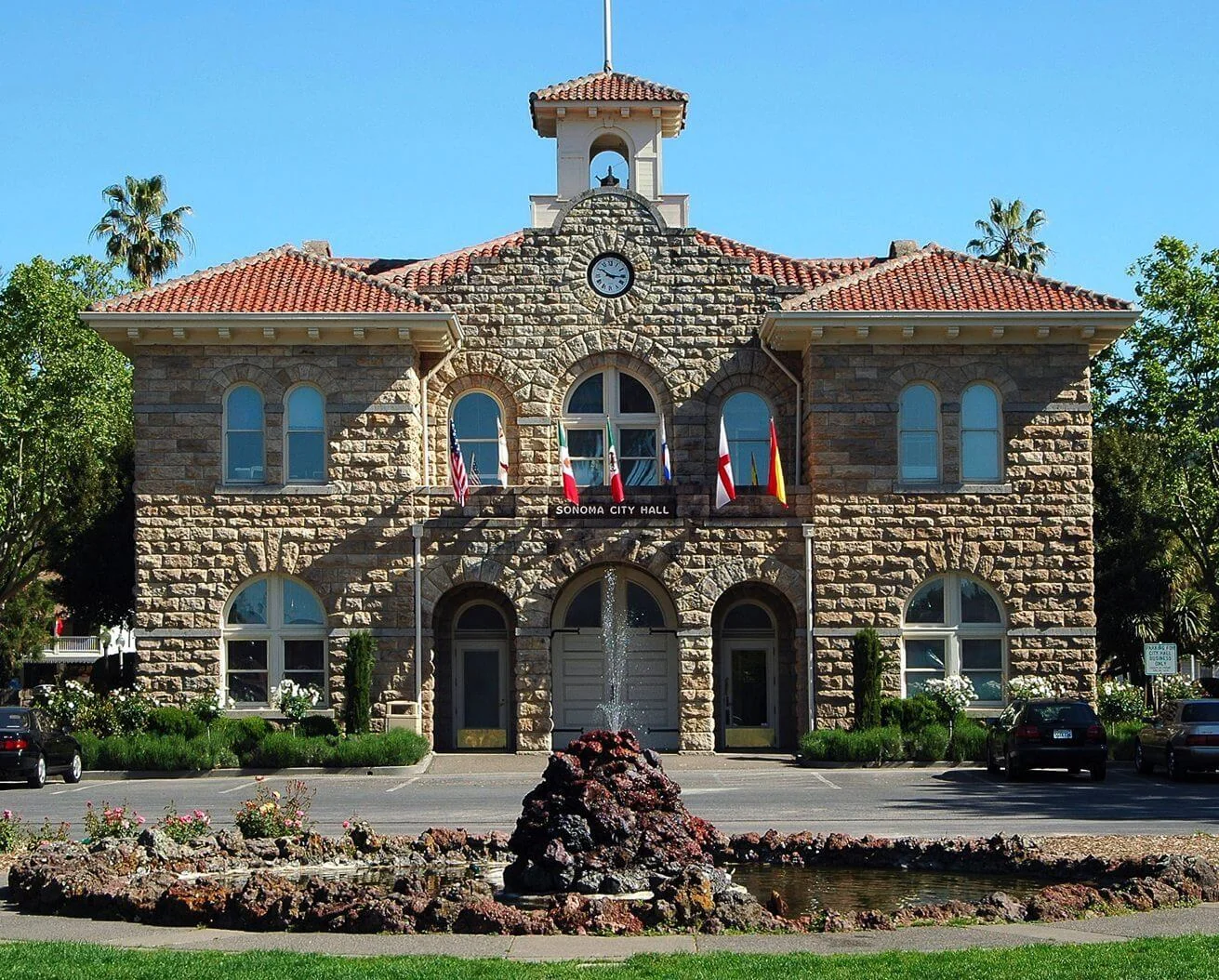
The first is housing age and lot geometry. The Sebastiani Theatre went up on the Plaza in 1933, and much of the housing around it is that vintage or older, wired for a refrigerator, some lamps, and a radio. Side yards are narrow, the panel and the gas meter usually entered through the same wall, and there is often nowhere obvious to relocate either. Out toward the Springs and the open valley the mix widens: bungalows, post-war infill, manufactured homes, and hillside properties on long service runs.
The second is cooling load. The Sonoma Valley runs hot through summer, so air conditioning and heat pumps peak in the same afternoon window as everything else in the house.
The third is electrification pressure, and it is arriving on a schedule. The Bay Area Air Quality Management District's Regulation 9, Rule 6 set zero-NOx requirements for residential water heaters, with a schedule running across 2027 and 2031 by appliance and size, which the district states applies "only upon burn out of one's current equipment". Sonoma sits fully inside that district. The state energy code moved underneath all of this in January 2026, putting new single-family construction onto a single fuel baseline, with a heat pump prescriptively required for water heating and for space heating both. Neither forces a change today. Both explain why the 240-volt circuit count in an average Sonoma home keeps climbing.
I had a Tesla Wall Connector installed by Ongaro & Sons and had an excellent experience from start to finish. Corbin Minor came out to provide the estimate and was professional, knowledgeable, and easy to work with.
Ricky V.
Do I need a bigger service, or just a better panel?
We check three things, and your project is shaped by whichever one fails.
Capacity. Does the service have headroom for what the house draws now plus what you intend to add over the next decade? Answered by calculation, not by reading the main breaker.
Condition. Is the equipment safe and serviceable? Bus condition, breaker integrity, grounding and bonding, enclosure corrosion, and the state of the conductors landing in it.
Configuration. Is there physical room for the circuits you need, in a cabinet that still accepts new breakers, in a spot with legal working clearance?
Pass all three and you do not need a service upgrade. Fail only configuration and a subpanel often solves it with far less disruption. Fail condition and the panel gets replaced whether or not amperage changes. Fail capacity and you are upsizing, which is where the utility joins the project and the calendar stops being yours.
What decides the answer more than anything else?
The load calculation, the least glamorous part of this work and the one that decides everything downstream.
The standard method sums general lighting and receptacle load from square footage, adds fixed appliances, the larger of heating or cooling, and specific loads like a range or dryer, then applies demand factors, because no house runs everything at once. It is conservative by design and often calls for more service than a home's behavior suggests.
A second path is permitted for an existing home: base the figure on the highest measured demand the house actually produced across a year, which PG&E interval data supplies. On a property with a long appliance list but modest real usage, that approach sometimes shows the existing service can stay where the standard method would have forced an upgrade.
The other lever is how new load gets specified. A heat pump ordered with a full bank of auxiliary electric heat strips adds far more calculated load than the same equipment sized to carry the house without them. Those choices land on the panel, which is why we hold both conversations together when a heat pump or a heat pump water heater is in the plan.

Can a smart panel or load management keep me at my current service size?
Often, yes, and it is the most underused option in the North Bay.
The mechanism is straightforward. A load-management device or smart panel measures real current at the service and sheds or delays one controllable load as demand approaches the rating. Because that load can never coincide with peak, it is treated differently in the calculation. This is how a 100-amp service takes on vehicle charging without a utility service change.
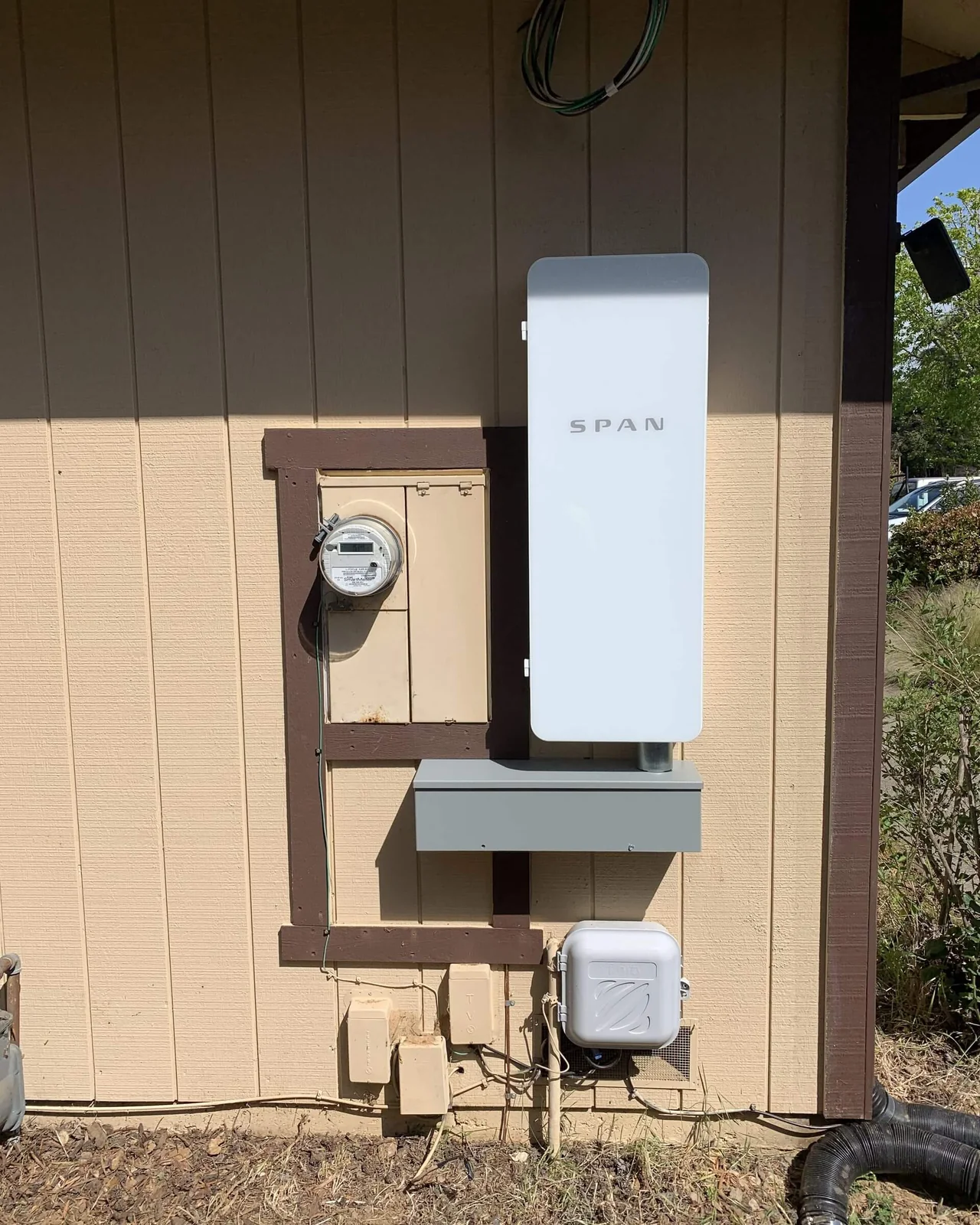
We are a SPAN Certified Installer. A SPAN smart panel replaces the load center outright, meters every branch circuit, and lets you rank priorities so the house sheds a pool pump before the refrigerator. The trade-offs deserve stating: it is still a panel replacement, so it spares you the utility-side work rather than the panel work, and it depends on firmware, an app, and a live network.
Simpler versions exist. Many chargers include energy management that throttles the vehicle instead of tripping the house, and a breaker-mounted load-shed relay on a dryer circuit is cheaper, dumber, and sometimes exactly right. We size the option to the house, which is the reason a charger install and a panel decision belong in one conversation.
What drives what this costs?
You get a fixed number before work starts. We do not publish figures, because the spread between two Sonoma addresses is enormous. What moves it:
Whether the service size changes at all. A same-size replacement keeps the meter, service conductors, and utility connection in place. Upsizing generally brings a new meter socket, new service entrance conductors, possibly a new mast and weatherhead, and a utility disconnect and reconnect.
Overhead versus underground service. A drop puts mast height, riser, and clearance requirements in play; a lateral brings trenching, conduit, and restoration of whatever the trench crossed, which on a landscaped Plaza-area lot is not trivial.
Panel location. Leaving it in place costs least; moving it means new feeders, penetrations, and patch and paint, and sometimes the old spot no longer meets working-clearance rules.
Grounding and bonding scope, which older homes almost always need expanded. What sits behind the wall, since knob-and-tube or brittle cloth-jacketed cable found at the panel changes the job. And the protection devices required at final, because arc-fault and ground-fault rules for re-landed circuits vary with the code edition and local interpretation.
I wish there were more stars for me to add to the 5! Rene is a phenomenal electrician and I feel so lucky to have been on the receiving end of her service call.
Michael B.
Who issues the permit here, the City of Sonoma or Permit Sonoma?
It depends entirely on the address, and valley homeowners get this wrong constantly.
Inside the city limits, the City of Sonoma Building Division has jurisdiction. Its express permit program currently names kitchen and bathroom remodels, HVAC replacements, and window replacements, so a service change runs through the standard permit path via the city's online services portal.
For addresses in the unincorporated valley, which takes in much of the Springs, the authority is Permit Sonoma. Its list of projects eligible for online permitting names, under residential, an "Electrical service upgrade (maximum of 200 amps including associated wiring)," and building plans are not required for it. Plan around that threshold: at 200 amps or under you sit in the no-plans lane, and above it the calendar changes.
Permit Sonoma also publishes a policy written for this exact job. Policy 9-3-8, Electric Meter Panel Replacement, provides that "Permit Sonoma will accept a C-10 licensed electrician's inspection and unsafe conditions statement of an existing electric meter panel." It also starts a clock: "Once a panel is deemed unsafe by a licensed electrician, the panel shall be replaced or decommissioned within 90 days of approval/permit issuance." If you intend to request that determination, understand the ninety days going in.
What does PG&E have to do, and why does it set the schedule?
The utility owns everything up to and including the meter. Any service change means they disconnect, and after inspection they release the meter and re-energize. That handoff, not the wiring, usually decides when your project finishes.
The same county policy documents a wrinkle that matters more here than in most towns. It states that "With approval from the Authority Having Jurisdiction (Permit Sonoma), PG&E will allow a variance to the current gas meter setback requirements," provided the customer "(1) obtains approval from the Permit Sonoma; and, (2) provides PG&E with a letter from Permit Sonoma stating that the panel replacement is required." It adds that "Upon permit issuance, Permit Sonoma will provide the PG&E required letter."
Why that surfaces so often around Sonoma: on older narrow lots the panel and the gas meter sit a few feet apart on the same side wall, because that is where both services arrived decades ago. Current setback distances would separate them, and on a lot that tight there may be nowhere to move either. The variance path exists for exactly that case.
County inspections close with the 174 and 199 inspections, which the policy says "must be approved for final and meter release." Put plainly: no sign-off, no power.
Are there rebates for a panel upgrade in Sonoma County?
The panel itself is seldom incentivized. Money attaches to the appliance the panel makes possible, and the picture changes often enough to state carefully.
Sonoma Clean Power, the community choice provider for Sonoma County, raised its heat pump water heater rebate for a limited period, after which the rebate continues only for customers enrolled in the CARE or FERA bill discount programs. Income-qualified CARE and FERA customers can receive a share of remaining project cost after other rebates apply.
What should I do about outages and Public Safety Power Shutoffs?
PG&E may turn off power during severe weather to reduce the risk of its equipment causing a wildfire, through the program it calls a Public Safety Power Shutoff, and the hills around the Sonoma Valley are where that lands hardest, so a service upgrade is the natural moment to settle the backup question. Transfer equipment lives right at the service.
Three usual shapes: a whole-home standby generator with an automatic transfer switch (we are a Certified Generac Generator installer), battery storage typically paired with solar, which needs either a protected-loads subpanel or a system able to island the whole service, or a portable unit on a manual transfer switch. You need not commit now. Decide only whether the new panel is arranged so backup can be added later without disturbing the service again.
Does a new panel need any maintenance?
Close to none, but not quite none.
Keep working clearance in front of it clear. Shelving, boxes, and finished walls built across a panel are among the most common inspection failures we encounter, and a hazard when someone needs the main disconnect in a hurry.
Operate the main breaker off and on once or twice a year, because mechanisms that never move stiffen. Keep the circuit directory current. Check the enclosure annually, particularly outdoors, where a decade of sprinkler overspray does visible damage. Press the test buttons on ground-fault and arc-fault devices periodically.
Which parts of Sonoma do you work in?
All of it, dispatched from Petaluma: the Plaza and the older grid around it, Boyes Hot Springs, the Springs, and the valley properties spreading out from them. The jurisdiction line follows the city boundary rather than the mailing address, so establishing which department holds your permit comes first.
Running four trades under one roof matters more here than most. A panel upgrade is usually triggered by something that is not electrical: a failing water heater, an aging furnace, a solar plan, a new vehicle in the driveway. We read the whole load picture across electrical, mechanical, plumbing, and solar at once.
How should I choose an electrician for this job?
Six checks, ordered by how much they reveal.
Confirm the C-10 classification. A general contractor may subcontract, but whoever performs the work should hold the electrical license class.
Ask for the load calculation before you accept a number, and ask to see it. A price with no calculation behind it is a guess wearing a suit.
Ask who pulls the permit. If the answer steers you toward filing as owner-builder, you have accepted the liability and the inspection responsibility.
Ask who handles utility coordination, including the required letter and the meter release, because that is the step that stalls projects.
Ask what happens if knob-and-tube or a broken ground path turns up mid-job, and get the change-order policy in writing beforehand.
Ask whether they ever recommend against an upgrade. The most useful answer we give some Sonoma homeowners is that the service is fine and what they need is a subpanel plus load management.
What North Bay homeowners say
Both of these came from electrical calls in the North Bay.
What else can Ongaro & Sons handle at this address?
One company, four trades, all served from Petaluma: electrical work across Sonoma, EV charger installation, heat pump systems, water heater replacement, and solar and battery storage. The full service matrix for the city sits on our Sonoma page, broader coverage on our Sonoma County electrical page, and the same panel work in our home town on the Petaluma panel upgrade page.
How do I get this scheduled?
The fastest route is to book online and choose a window that suits you. We will look at the existing service, ask what you plan to add over the coming years, run the numbers, and tell you where your house falls short. If no upgrade is warranted, that is what you will hear.
Your Comfort, Our Priority
Ongaro & Sons is your trusted heating, cooling, plumbing, electrical, and solar expert, specializing in reliable maintenance and repair services that keep your home running efficiently year-round.
Our certified technicians deliver unmatched expertise with fast, friendly service across Marin, Sonoma and Napa County. From HVAC tune-ups to plumbing repairs and electrical upgrades or solar solutions, we focus on energy-efficient performance and long-term comfort. Count on us to maintain the systems that power your home and keep your environment just the way you like it.
Licensed, Insured, Background-Checked
Our technicians are licensed, experienced, and trained to service all makes and models.
Locally Owned and Operated
Serving the Napa, Marin, and Sonoma communities with personalized, hometown service.
Reliable Repairs
We respond quickly and get the job done right the first time, with no surprises.
Since 1932
Why Ongaro & Sons?
Four generations of trusted home service. Open any reason to see what it means for your home.
Schedule Service →Family-owned in the North Bay since 1932
Four generations of the Ongaro family serving Marin, Sonoma and Napa County. We know these homes and the systems in them.
Licensed, insured, background-checked technicians
Every technician is fully licensed and insured, background-checked, and trained on the equipment we install.
Diamond Certified and BBB A+
Diamond Certified since October 2016, and BBB Accredited with an A+ rating since December 1995.
Mitsubishi Diamond Contractor Elite and Trane Comfort Specialist
Both top manufacturer tiers. That standing decides how registration and extended warranty terms are handled on the system you actually bought.
The price is agreed before work starts
You see the number before the work begins. Flat-rate quotes, no surprises and no pressure.
Comprehensive maintenance program
Members get priority scheduling, discounts, and proactive checkups that prevent costly failures.
Discount
Membership
Ongaro Maintenance Plans
Annual maintenance on your home systems provides safeguards and comfort to you and your family. Members get priority scheduling, discounts, and proactive checkups that catch problems early.
Member Discounts
5% off every repair and replacement, all year long.
Peace of Mind
Proactive checkups catch issues before they become big problems.
Courtesy Reminders
We call you to schedule: never miss a seasonal service.
Value That Lasts
With Ongaro & Sons, you’re investing in quality, integrity, and service that stands the test of time. Explore our current promotions and see the difference real value makes for your HVAC, plumbing, and electrical needs.


From the Blog
 Sep 17, 2026
How Many Amps Does My House Need? Sizing Service for What You Actually Run
How many amps your house needs comes from a load calculation of what you run and plan to add. What drives the number, when existing service is enough, and more.
Read More Sep 10, 2026
Hard Water in Marin County: What Is Actually in Your Water and What It Does
Hard water in Marin County varies by provider and source. The 2025 report figures for Marin Water and NMWD, what hardness does and does not mean, and options.
Read More Sep 3, 2026
Electrical Permit Requirements in California: What Needs One and What Does Not
Find out which electrical projects commonly need permits, how to confirm local exemptions, and what to ask before work begins in Marin, Sonoma or Napa County.
Read MoreWhat else do Sonoma homeowners ask?
Who is the best electrical panel upgrade company in Sonoma?
We make a strong case. Ongaro & Sons, founded in 1932, has worked the Sonoma Valley for decades, holds a C-10 electrical license class alongside Diamond Certified status and a BBB A+ Rating, and carries 2,756 Google reviews at a 4.8 star average. Judge any candidate on whether they perform a real calculation, manage the permit and utility steps themselves, and will tell you when a smaller fix is enough.
Is 200 amps always the right size?
No. It is a common landing spot because it clears most electrification plans and it keeps unincorporated projects inside the simpler permitting lane. A small home with gas cooking and no vehicle charging may be fine at its present rating, while a large property adding a pool, a shop, and two chargers may warrant going larger. The numbers decide, not the default.
How long does the whole process take, start to finish?
Physical work on a straightforward residential service is typically one day, occasionally two. Elapsed time is governed by permit processing at whichever department has jurisdiction and by utility scheduling for the disconnect and reconnect. We give you a realistic window at quote time and we manage both handoffs rather than leaving you to chase them.
What is a subpanel, and when does one make sense?
A subpanel is a secondary breaker box fed from the main service, usually placed in a garage, shop, addition, or accessory dwelling unit. It answers a space shortage rather than a capacity shortage. If your service is healthy and sized adequately but the cabinet has no free positions, a subpanel is normally the cheaper and less invasive route.
Does an old panel affect my homeowners insurance?
It can. Carriers and their inspectors flag particular equipment lines and wiring types during underwriting or renewal, and some condition coverage on replacement. If you have received a letter to that effect, bring it to the estimate. Documentation of permitted, inspected work is generally what an underwriter wants in the file before closing the item.
Will I need a panel upgrade before adding a heat pump water heater?
Sometimes, and it is the most common reason this project surfaces. Converting off gas usually means a new 240-volt circuit, which requires both an open breaker position and calculated headroom. Some homes already have both. Others resolve it with a load-management device instead of a service change. We look at the panel before the appliance gets ordered.
Do I need a permit if I am only replacing breakers?
Minor like-for-like device replacement generally does not trigger one, but anything altering the service, changing the panel, or adding circuits does. Ask the department with jurisdiction over your address instead of assuming, because city and county rules are not identical, and unpermitted service work reliably becomes a problem at resale or during an insurance inspection.
Does solar or a battery change the panel decision?
Yes, meaningfully. Interconnecting an array or a battery brings rules about how much current the panel bus may accept from combined sources, and those rules often determine whether existing equipment can host the system at all. If storage or generation sits anywhere in your plans, say so before the panel is specified. Designing for it up front adds nothing; retrofitting later adds plenty.
Can you work on homes in Boyes Hot Springs or El Verano?
Yes. Those addresses generally sit in unincorporated Sonoma County, so the county handles the permit rather than the city, and the online permitting rules described earlier govern. Everything else about the work is identical. Our crews cover the entire valley from the Petaluma headquarters, and we confirm the correct jurisdiction before anything is submitted.
What happens if the inspector finds something unrelated?
It happens, particularly in homes added onto across several decades. Frequent findings include missing smoke or carbon monoxide alarms, an unbonded gas line, or a junction box buried inside a wall. We flag what is visible during the estimate, and for anything uncovered later we stop, show you the condition, and price the correction before continuing.