Plumber in Santa Rosa
Ongaro & Sons, a plumbing company since its 1932 founding, works across Santa Rosa. We are Diamond Certified, we hold a C-36 plumbing license alongside C-10 electrical and C-20 HVAC, and we carry 2,756 Google reviews averaging 4.8 stars. We diagnose before we quote, we pull the permit, and you get the full price before any work begins.
On this page
In Santa Rosa, the pipe under your front yard is yours
Most homeowners assume their sewer line stops being their problem somewhere around the property line, and that whatever runs under the sidewalk belongs to the city. In Santa Rosa that assumption is wrong, and the city says so in plain language. Per City code 15-04.035, "it is the responsibility of the user (property owner) to maintain the lateral from the City sewer main to the structure being served by City sewer."
That one sentence shapes more Santa Rosa plumbing decisions than any other local rule. The lateral is the buried line carrying everything out of your house, it is typically the oldest pipe on the property, and in the older neighborhoods it runs beneath a lawn, a driveway, or a street planting strip with a mature tree over it. When it fails, it is yours, and the length of pipe you are responsible for often extends well past the fence.
Three practical points follow from it.
The first is that a recurring main-line backup is not automatically a call to the city. It is frequently a structural problem in the portion you own, and the only way to know is to look.
The second is the cleanout near the street. Santa Rosa wants a cleanout installed so the city has the option to access and maintain the stretch of lateral between that cleanout and the sewer main, built to current City Standards 513/513A. Because a cleanout usually lands in the public right of way or a utility easement, that piece of work generally needs an encroachment permit alongside the plumbing permit rather than instead of it.
The third is contractor classification, and it is the one that quietly disqualifies people. Santa Rosa is specific about who may perform lateral work: a Class A or C-42 contractor for sewer lateral plumbing, and a Class A or C-34 contractor for water service lateral and meter work. A C-36 plumbing license on its own does not answer either of those. We hold C-42 Sanitation System and C-34 Pipeline alongside the C-36, so the same company covers the lateral, the water service and everything inside the property line. If you are gathering bids, ask each company to name the classification the city requires for your specific scope, and check it on the Contractors State License Board rather than taking it on trust.
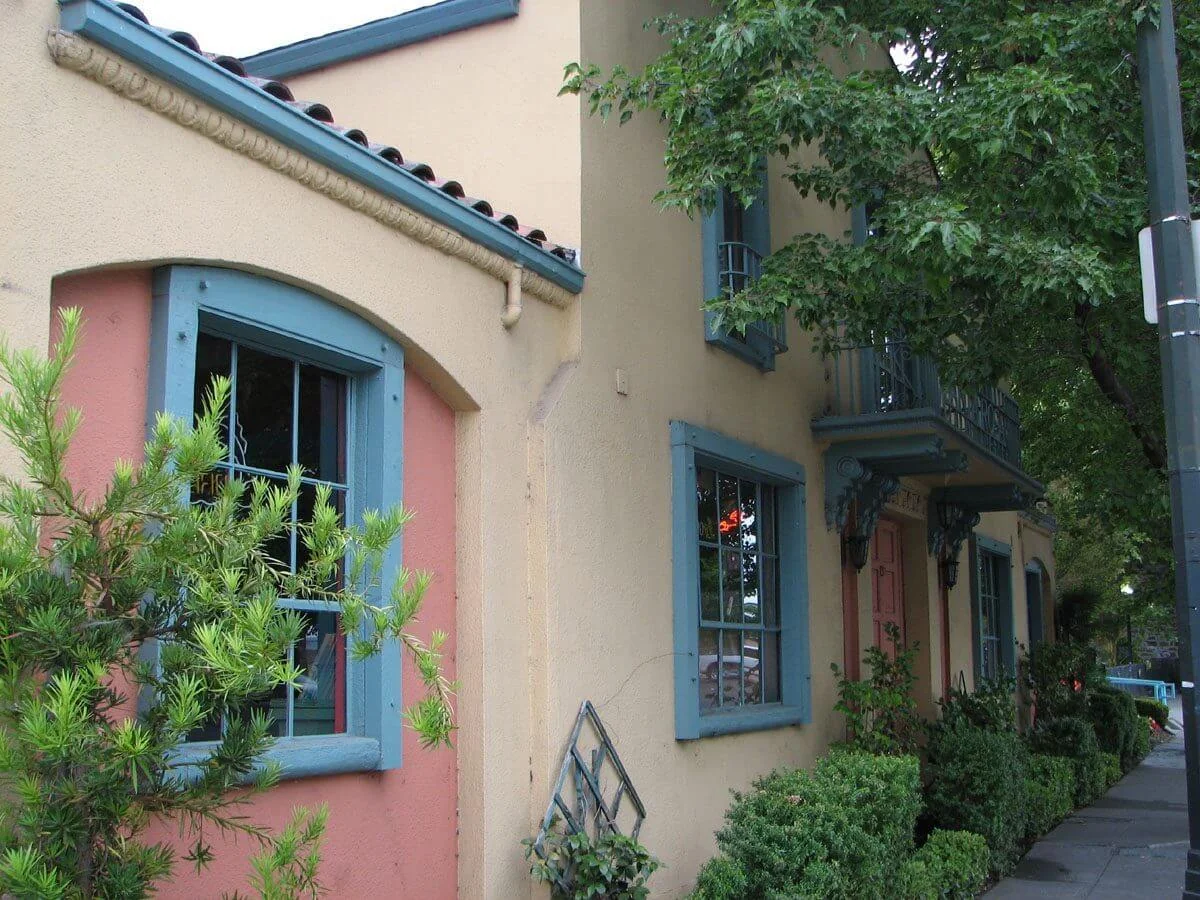
Two Santa Rosas, and which one you live in changes the job
No other city we serve splits the way this one does, and the split runs straight through the plumbing.
Coffey Park, Fountaingrove, and the other neighborhoods rebuilt after the 2017 Tubbs Fire are effectively new construction. Their supply lines, drains, venting, and water heating equipment are less than a decade old and built to modern code, and a meaningful share of those homes came back all-electric. Work in a rebuild is about upgrade, optimization, and warranty-age equipment. If you live in one, most of the failure stories associated with Santa Rosa plumbing simply do not describe your house.
The older east side and west side are a different trade. Postwar tract housing across Santa Rosa is now at the age where several systems reach the end of their service lives within the same few years: original galvanized supply lines giving up pressure and color, cast iron drains scaling closed from the inside, gas piping sized for the appliance set of a different decade, and a sewer lateral of clay or cast iron that has been in the ground under a growing tree since before anyone currently living there moved in. These are the houses where a call about one slow drain becomes a conversation about the system.
Between those two extremes sits a large middle: homes updated once in the 1990s or 2000s, where one part of the system is modern and the rest is not. Establishing which Santa Rosa you are in is the first thing a competent plumber should do, and it is why we ask about the neighborhood and the age of the house before we talk about money.
The plumbing we handle in Santa Rosa
Water heating is the most consequential residential plumbing decision in the city right now because of the 2027 air district requirement covered further down, and we work across tank, tankless, and heat pump equipment. See water heaters in Santa Rosa and tankless water heaters.
On the drain side we handle everything from a single slow fixture to a main line, with camera inspection rather than repeat clearing on anything that has come back. See drain cleaning in Santa Rosa. Sewer laterals get inspection, spot repair, and full replacement, which in this city is the work the code section above makes your responsibility. See sewer repair in Santa Rosa.
Beyond that: repiping where original galvanized supply has produced pressure loss, discolored water, or a pattern of pinhole leaks; fixtures, valves, and the unglamorous business of making sure a house has working isolation valves before the day it needs them; gas piping, including the line upsizing a tankless conversion frequently requires in an older home; and water treatment, which on Santa Rosa's supply is worth pricing alongside any new water heating equipment rather than after it.
Justin with Ongaro & Sons did a professional and thorough plumbing job today at my residence. A big reason I am a loyal customer is because of their great field service technicians. Thank you Ongaro & Sons!
Scott M.
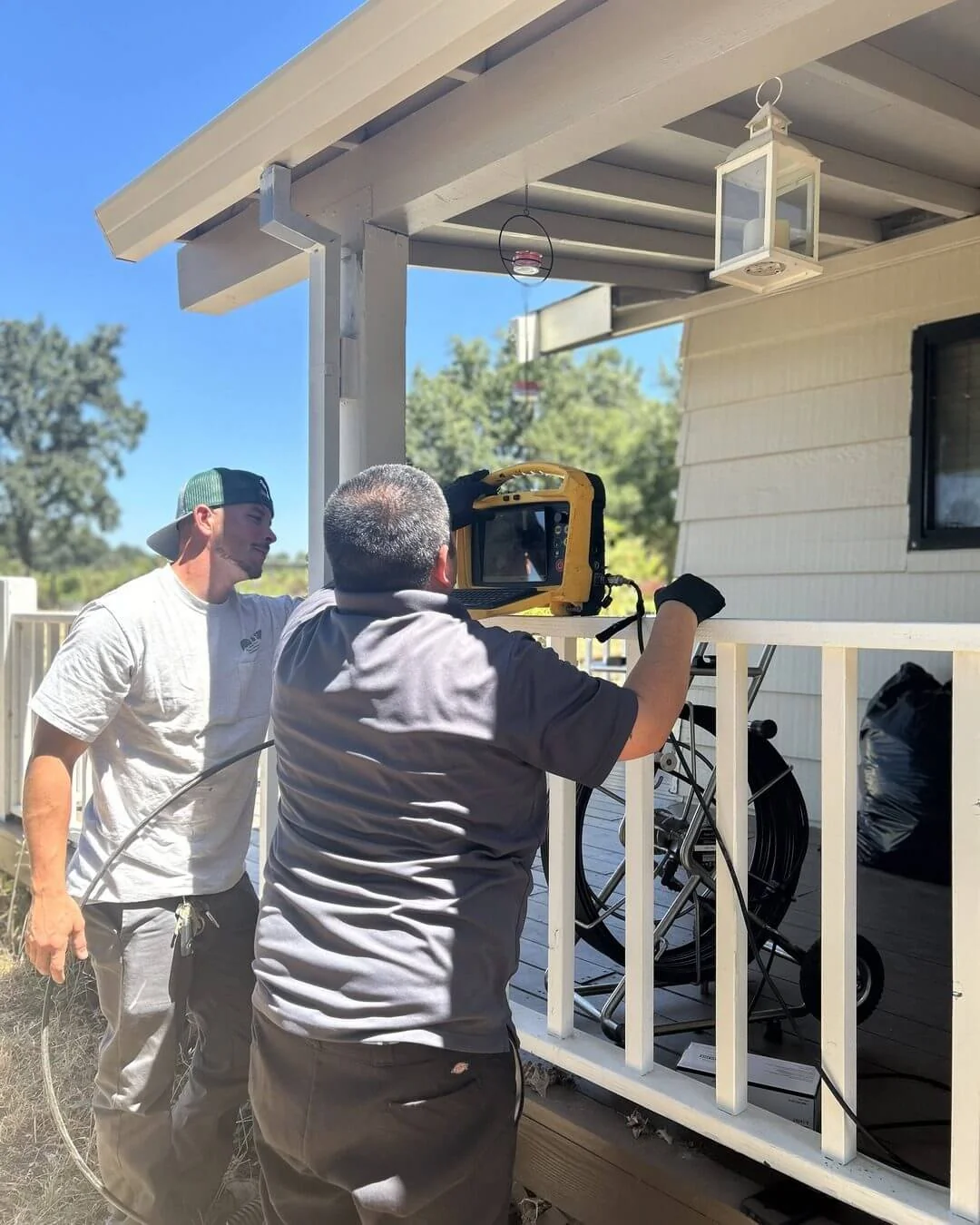
Why the camera goes down before the quote
On an older Santa Rosa drain line, a recurring blockage is a symptom rather than a problem. Root intrusion through clay joints, a bellied section holding standing water, offset joints at a failed coupling, and decades of scale narrowing cast iron all present to the homeowner in exactly the same way: the drain is slow again.
Clearing it buys months. Looking at it tells you whether you have a maintenance item or a structural failure, and that distinction is the difference between scheduling the same visit indefinitely and making one decision once. It also tells you where the fault sits relative to the property line, which in Santa Rosa determines whether you are looking at an onsite plumbing permit, an encroachment permit, or both.
We run the camera first on anything that has recurred, because guessing costs more than looking, and because a quote given without looking is a number attached to an assumption.
Santa Rosa water comes from wells beneath the riverbed
Santa Rosa draws on Russian River supply through Sonoma Water along with local groundwater, and the delivery method is unusual enough to matter. The city describes it directly: "Santa Rosa's primary source of water is from the Russian River which is naturally filtered through rock, sand and gravel from wells about 100 feet below the river bed."
That is filtered groundwater rather than treated reservoir surface water, and inland Santa Rosa tends toward harder water as a result. Hardness is not a health concern, and the city's supply meets state and federal drinking water standards. What it does is shorten the life of everything that heats water.
It shows up in three predictable places. Mineral settles on a water heater tank floor, insulating the burner from the water above it, which is the rumbling so many Santa Rosa homeowners describe and the efficiency they quietly lose. It coats tankless heat exchangers, reducing output so gradually that a unit which was never descaled underperforms for years before it fails early. And it consumes the sacrificial anode rod inside a tank faster than owners expect, which is what eventually allows corrosion to reach the steel.
None of that is dramatic and all of it is manageable. Annual flushing, periodic anode inspection, and descaling a tankless unit on the manufacturer's schedule are inexpensive habits that materially change how long equipment lasts on this water. Treatment is worth pricing alongside a new water heater rather than discovering the need eight years later.
Strapping is not a rubber stamp in this city
Every water heater page in California mentions seismic strapping. In Santa Rosa the requirement has a specific address behind it.
The U.S. Geological Survey has mapped the active surface trace of the Rodgers Creek Fault through the central part of the city, and describes it as "among the most likely faults to produce the next large earthquake in the Bay Area." The same release notes that a rupture through a suspected stuck patch on the fault "has the potential to intensely shake the sedimentary basin beneath Santa Rosa," and that the current small-earthquake activity there is mainly aftershocks from the 1969 magnitude 5.6 and 5.7 Santa Rosa earthquakes.
The code requirement is statewide and it is not optional. California Health and Safety Code section 19211 requires "all new and replacement water heaters, and all existing residential water heaters" up to 120 gallons to be braced, anchored, or strapped to resist earthquake displacement, in accordance with the California Plumbing Code. Read that phrasing carefully: it covers the unit already standing in your garage, not only the one you are about to buy. Two straps, upper and lower third, is the familiar detail, and a gas unit also needs its connector and shutoff arranged so movement does not become a gas problem.
If you have never looked at how your water heater is secured, it is worth five minutes with a flashlight. It is the cheapest item on this entire page.

The 2027 water heater rule, and where the district line runs
The city sits fully inside the Bay Area Air Quality Management District. Its Rule 9-6 is a point of sale rule requiring zero-NOx residential water heaters, and it reaches the transaction rather than the tank already standing in the garage. Its dates land on different appliances in different years across 2027 and 2031, and they govern what may be sold or installed rather than what you may keep. In practice a zero-NOx residential water heater means electric heat pump equipment, because gas models cannot currently meet the standard.
Your gas water heater is not about to become illegal. What is true is narrower and more useful: if your unit is near the end of its life, you currently get to make a deliberate choice rather than a rushed one.
The part contractors get wrong is the geography. The requirement does not cover all of Sonoma County. Cloverdale and the rest of northern Sonoma County sit in the Northern Sonoma County Air Pollution Control District, where the BAAQMD rule does not apply, and Windsor and Sebastopol straddle the boundary. Santa Rosa is entirely inside it, per the county's published district boundaries. If someone quoting your job states the rule applies uniformly countywide, they have not checked.
Wonderful and dependable service with a smile! I have been very pleased with my experiences working with Ongaro & Sons so far and hope to use them again in the future for all my plumbing needs. Thank you !
Jessica L.
What moves the price of plumbing work in Santa Rosa
We do not publish flat prices, because a 2019 Coffey Park rebuild and a 1958 tract house are genuinely different jobs wearing the same job title.
The largest variable is which Santa Rosa you are in, and after that, what is actually behind the wall or under the yard. Older housing where supply, drains, and gas piping all aged together produces work that a single-item quote cannot anticipate. Access is the next factor, from a straightforward garage replacement to a crawlspace, a tight interior closet, or a lateral running under a driveway or mature root system.
Code compliance moves the number in a way homeowners often read as an upsell and is not. Replacing equipment installed decades ago frequently triggers current requirements the original work never met: seismic restraint, correctly sized and terminated relief discharge piping, an expansion tank where a check valve or pressure regulator has created a closed system, and corrected venting. Those are inspection requirements. Leaving them out of a quote does not make them go away, it just moves the surprise to the day of the work.
Then there is scope discipline. We would rather diagnose a cause once than clear the same line three times, and on a recurring problem the cheaper-looking option is usually the one you pay for repeatedly. Permits and inspection are included in what we quote rather than added afterward, and on lateral work in the right of way that can mean more than one permit.
Costs are agreed in advance rather than assembled afterwards, and financing is available.
Permits, inspections, and the encroachment question
Santa Rosa requires a permit to "erect, install, enlarge, alter, repair, remove, convert or replace any electrical, gas, mechanical or plumbing system," with exemptions only where the California Building Code expressly grants them. The City of Santa Rosa Building Division takes applications through its online Accela Citizen Access portal, in person at City Hall by appointment, and over the counter for eligible projects. Properties in the surrounding unincorporated county permit through Permit Sonoma instead.
Lateral work adds the wrinkle covered earlier. A sewer cleanout or backflow device sitting in the public right of way or a utility easement generally needs an encroachment permit in addition to the plumbing permit, which is a scheduling consideration as much as a paperwork one.
Two code items come up on nearly every residential job. Seismic bracing under Health and Safety Code section 19211 applies to existing water heaters, not only new ones. And Title 24 energy requirements, including pipe insulation, apply to water heating work, with California's 2025 Building Energy Efficiency Standards in effect since January 1, 2026.
Skipping the permit does not save money. It becomes a disclosure problem at resale, and it removes the one independent check that the work was done safely.
Santa Rosa has two rebate systems, and most homeowners know about one
This is local, and it is the part of the page most worth reading twice.
Water efficiency, through Santa Rosa Water. Because the city runs its own water utility, Santa Rosa customers have access to fixture-level programs that homeowners on other systems do not. The city's rebates and services list includes a high-efficiency toilet rebate for replacing older toilets with WaterSense-labeled models, a graywater rebate for routing clothes washer water to the garden, a rainwater harvesting rebate, a clothes washer rebate, and a service split incentive for adding a dedicated irrigation meter, along with landscape and pool programs.
Separately, Santa Rosa Water runs a toilet direct install program. Qualifying customers whose existing toilets flush 1.6 gallons or more can receive up to four 0.8-gallon-per-flush high-efficiency toilets plus showerheads and kitchen and bathroom faucet aerators, installed by qualified plumbers at no cost to the customer, with the old fixtures hauled away for recycling. Eligibility runs through a prequalification form and a check on account status, and participants agree the city may inspect the installed work for three years with prior written notice. It is a real program, it is water-side rather than energy-side, and it is invisible on most plumbing websites.
Energy efficiency, through the community choice provider and regional programs. Sonoma Clean Power raised its heat pump water heater rebate for a limited period, after which the rebate continues only for customers enrolled in the CARE or FERA bill discount programs.
We confirm what applies at the time of your quote.
When plumbing turns into an electrical question
A heat pump water heater needs a dedicated 240-volt circuit, and Santa Rosa's split shows up here too. Rebuild-era homes generally carry modern 200-amp service with capacity to spare. Untouched postwar neighborhoods still run panels from the 1960s and 1970s already committed to a range, a dryer, and increasingly an EV charger, which means the same conversion is trivial on one street and panel-first on the next.
The hillside neighborhoods add a second consideration. Santa Rosa lived through the 2017 Tubbs Fire and the 2019 Kincade Fire, and PG&E Public Safety Power Shutoffs are a regular reality in the hills. A house that loses power loses any electric water heating along with it, which belongs in the decision if you are weighing a heat pump unit in Fountaingrove rather than on the valley floor.
Because we hold a C-36 plumbing license, a C-10 electrical license, and a C-20 HVAC license, panel work, circuits, and backup power are scoped inside the same project with one schedule and one permit conversation rather than through a second contractor. On jobs where the trades interlock, that is worth more than it sounds. See electrical panel upgrades in Santa Rosa if that is the direction your project is heading.
Maintenance that earns its keep here
Flush the water heater tank annually, which on this water is the highest-value item on the list. Have the anode rod inspected every few years and replaced once it is consumed, because it is the one preventable tank failure and almost nobody does it. Descale a tankless unit on the manufacturer's schedule rather than once it starts underperforming. Set the thermostat around 120 degrees, since higher accelerates scale and raises scald risk without a mixing valve. Exercise the main shutoff and fixture isolation valves occasionally so they are not seized on the day they matter. And if your house is old enough to have an original clay or cast iron lateral, get it camera inspected before it decides the timing for you.
Where we work in Santa Rosa
We serve every Santa Rosa neighborhood from our Petaluma headquarters, including Coffey Park, Fountaingrove, Rincon Valley, and Bennett Valley, along with the surrounding unincorporated county where Permit Sonoma has jurisdiction and some properties run on wells and septic. Ongaro & Sons has been a North Bay company since 1932, which means we have worked on this city's housing across the postwar tracts, the historic streets, and the rebuild neighborhoods, and we know which questions each one raises before we arrive.
How to choose a plumber in Santa Rosa
Ask whether they know where your responsibility ends. A plumber working in this city should be able to tell you, without looking it up, that the property owner maintains the lateral all the way to the city main.
Ask whether they will camera a recurring drain problem rather than clear it again. Repeat clearing is a revenue model, not a diagnosis.
Ask which permits your specific scope needs, including whether anything in the public right of way triggers an encroachment permit, and confirm the contractor classification the city requires for that work.
Ask what the 2027 air district requirement means for the water heating equipment being proposed, and whether they know where the district boundary runs in Sonoma County. Both answers tell you how closely someone is following the rules that govern your job.
Ask whether they will look before they price. On an older home, a firm number given over the phone is a guess with a decimal point.
Four generations have run it the same way since 1932. Look at the actual property, report what is there, price it up front, and do the work to code. Diamond Certified, and BBB A+ rated.
Plumbing and home services across Santa Rosa and Sonoma County
One company, all trades: Santa Rosa home services, plumbing across Sonoma County, Santa Rosa heating and cooling, Santa Rosa electrical, and Santa Rosa solar. Specific Santa Rosa plumbing services: water heaters, tankless water heaters, drain cleaning, and sewer repair. Related work: electrical panel upgrades and plumbing in nearby Petaluma, Rohnert Park, Windsor, and Sebastopol.
Book a plumber in Santa Rosa
Book online at any hour, or speak to someone during office hours if the situation needs describing. An Ongaro & Sons plumber will look at the actual problem, explain what it needs, and give you the price before any work begins.
Your Comfort, Our Priority
Ongaro & Sons is your trusted heating, cooling, plumbing, electrical, and solar expert, specializing in reliable maintenance and repair services that keep your home running efficiently year-round.
Our certified technicians deliver unmatched expertise with fast, friendly service across Marin, Sonoma and Napa County. From HVAC tune-ups to plumbing repairs and electrical upgrades or solar solutions, we focus on energy-efficient performance and long-term comfort. Count on us to maintain the systems that power your home and keep your environment just the way you like it.
Licensed, Insured, Background-Checked
Our technicians are licensed, experienced, and trained to service all makes and models.
Locally Owned and Operated
Serving the Napa, Marin, and Sonoma communities with personalized, hometown service.
Reliable Repairs
We respond quickly and get the job done right the first time, with no surprises.
Since 1932
Why Ongaro & Sons?
Four generations of trusted home service. Open any reason to see what it means for your home.
Schedule Service →Family-owned in the North Bay since 1932
Four generations of the Ongaro family serving Marin, Sonoma and Napa County. We know these homes and the systems in them.
Licensed, insured, background-checked technicians
Every technician is fully licensed and insured, background-checked, and trained on the equipment we install.
Diamond Certified and BBB A+
Diamond Certified since October 2016, and BBB Accredited with an A+ rating since December 1995.
Mitsubishi Diamond Contractor Elite and Trane Comfort Specialist
Both top manufacturer tiers. That standing decides how registration and extended warranty terms are handled on the system you actually bought.
The price is agreed before work starts
You see the number before the work begins. Flat-rate quotes, no surprises and no pressure.
Comprehensive maintenance program
Members get priority scheduling, discounts, and proactive checkups that prevent costly failures.

Discount
Membership
Ongaro Maintenance Plans
Annual maintenance on your home systems provides safeguards and comfort to you and your family. Members get priority scheduling, discounts, and proactive checkups that catch problems early.
Member Discounts
5% off every repair and replacement, all year long.
Peace of Mind
Proactive checkups catch issues before they become big problems.
Courtesy Reminders
We call you to schedule: never miss a seasonal service.
Value That Lasts
With Ongaro & Sons, you’re investing in quality, integrity, and service that stands the test of time. Explore our current promotions and see the difference real value makes for your HVAC, plumbing, and electrical needs.


From the Blog
 Sep 17, 2026
How Many Amps Does My House Need? Sizing Service for What You Actually Run
How many amps your house needs comes from a load calculation of what you run and plan to add. What drives the number, when existing service is enough, and more.
Read More Sep 10, 2026
Hard Water in Marin County: What Is Actually in Your Water and What It Does
Hard water in Marin County varies by provider and source. The 2025 report figures for Marin Water and NMWD, what hardness does and does not mean, and options.
Read More Sep 3, 2026
Electrical Permit Requirements in California: What Needs One and What Does Not
Find out which electrical projects commonly need permits, how to confirm local exemptions, and what to ask before work begins in Marin, Sonoma or Napa County.
Read MorePlumbing in Santa Rosa: frequently asked questions
Who is the best plumber in Santa Rosa?
Ongaro & Sons has worked in the North Bay since 1932 and is Diamond Certified, holding a C-36 plumbing license alongside C-10 electrical and C-20 HVAC, with 4.8 stars across 2,756 Google reviews and a BBB A+ rating. We diagnose before quoting, pull the permit, handle the inspection, and give you the full price before starting.
Who is responsible for the sewer lateral in Santa Rosa?
You are. Per City code 15-04.035, "it is the responsibility of the user (property owner) to maintain the lateral from the City sewer main to the structure being served by City sewer." That includes the buried section running under your yard, driveway, or sidewalk out to the main, which is where a lot of Santa Rosa lateral failures occur.
Why do I need a sewer cleanout near the street?
The reason is access. With a cleanout at the property line, built to City Standards 513/513A, the city can reach and maintain the run between that point and the main. Because that location is typically in the public right of way or a utility easement, the work generally requires an encroachment permit in addition to the plumbing permit.
Do you need a permit for plumbing work in Santa Rosa?
For most significant work, yes. The City of Santa Rosa Building Division requires a permit to install, alter, repair, remove, convert, or replace a plumbing system, with exemptions only where the California Building Code expressly allows them. Applications go through the city's online portal, in person by appointment, or over the counter for eligible projects. Unincorporated properties permit through Permit Sonoma. Permitting and inspection are part of what you are buying.
My drain keeps backing up. Why does clearing it not fix it?
Because on an older Santa Rosa line the blockage is the symptom. Root intrusion through clay joints, a bellied section holding water, offset joints at a failed coupling, or scale narrowing cast iron all cause repeat blockages, and clearing treats the effect. We camera anything recurring so you can decide once rather than book the same visit indefinitely.
Is plumbing in a fire rebuild home different?
Substantially. Homes rebuilt after the 2017 Tubbs Fire in Coffey Park, Fountaingrove, and elsewhere carry plumbing less than a decade old, built to modern code and frequently all-electric, on newer electrical service. Work there is about upgrades and optimization rather than the end-of-life failures common in the untouched postwar neighborhoods.
Does Santa Rosa water affect my plumbing?
Yes. The city's primary supply is Russian River water drawn through wells roughly 100 feet below the riverbed, filtered naturally through rock, sand, and gravel, along with other local groundwater. What arrives is groundwater filtered through the riverbed rather than surface water off a reservoir, and groundwater carries more dissolved mineral. Practically, it means scale on water heater tank floors and inside tankless heat exchangers, and anode rods consumed faster. Annual flushing, anode inspection, and descaling on schedule are what manage it.
Does a Santa Rosa water heater have to be strapped?
Yes. Section 19211 is the statute, it caps at 120 gallons, and it points at the California Plumbing Code for how the restraint has to be done. It applies to existing units, not only new installations. It matters here in particular: the U.S. Geological Survey has mapped the active trace of the Rodgers Creek Fault through central Santa Rosa and calls it among the most likely faults to produce the next large Bay Area earthquake.
Will I still be able to install a gas water heater in Santa Rosa?
For now, yes. Santa Rosa is inside the Bay Area Air Quality Management District, which amended Regulation 9, Rule 6 in 2023 to require zero-NOx residential water heaters on dates that arrive by size and equipment type across 2027 and 2031, and that apply when equipment is replaced rather than to what is already installed. We confirm the current requirement at the time of your project.
Does the 2027 rule apply everywhere in Sonoma County?
No, and this is commonly got wrong. Santa Rosa is fully inside BAAQMD, but Cloverdale and northern Sonoma County are in the Northern Sonoma County Air Pollution Control District where the rule does not apply, and Windsor and Sebastopol straddle the boundary. The county publishes the district boundaries.
What rebates can a Santa Rosa homeowner get on plumbing work?
There are two separate systems. On the water side, Santa Rosa Water offers fixture-level programs including a high-efficiency toilet rebate, graywater and rainwater harvesting rebates, a clothes washer rebate, and a direct install program that provides qualifying customers up to four high-efficiency toilets plus showerheads and aerators installed at no cost.
Do I need to repipe my older Santa Rosa home?
Not automatically. Pressure loss, discolored water, and repeated pinhole leaks are the signals that original galvanized supply has reached the end of a long life. We assess what is installed and how it is behaving before recommending work that involves opening walls, and in plenty of houses targeted replacement is the right answer instead.
Can you handle the electrical side of a heat pump water heater?
Yes. It needs a dedicated 240-volt circuit, and many older Santa Rosa homes still run panels from the 1960s and 1970s with little spare capacity, while rebuild-era homes generally have modern service. Because we hold a C-10 electrical license alongside our C-36 plumbing license, panel and circuit work happens inside the same project rather than through a second company.
Should power outages factor into my plumbing decisions?
In the hillside neighborhoods, yes. PG&E Public Safety Power Shutoffs are a regular reality there, and electric water heating stops when the power does. Properties on wells lose the pump and the water supply along with it. Because we are also a licensed electrical contractor, backup power can be scoped alongside the plumbing work rather than as a separate project.