Solar in Santa Rosa
Who is the best solar company in Santa Rosa? Judged on tenure and licensing, Ongaro & Sons: working in the North Bay since 1932, Diamond Certified, holding a C-10 electrical license, and carrying 2,756 Google reviews that average 4.8 stars. We run the load calculation, draw the plan set, pull the permit, file the interconnection application, and explain what drives the number before a single module is ordered.
On this page
The decision has moved from whether to how much you use yourself
For most of the 2010s, a Santa Rosa solar decision was arithmetic on one number: annual kilowatt-hours. Build an array that produced roughly what the house consumed over a year, bank the summer surplus, spend it in winter. That framing is over.
California's Net Billing Tariff replaced it. Per the California Public Utilities Commission, the tariff "will apply to customers who submit an interconnection application on or after April 15, 2023." PG&E now credits exports through an Energy Export Credit, and in the utility's own description of the Solar Billing Plan that credit "reflects the value of the power provided to the grid at a given time," with the level varying by time of day, day of the week, and season. Exports are multiplied by hourly avoided cost values rather than credited at the retail price you pay.
That lands hard here. A kilowatt-hour used inside the house at 5 p.m. in August is worth what you would otherwise have paid for it. The same kilowatt-hour pushed to the grid at noon in April is worth whatever the grid says noon in April is worth. Inland Sonoma County runs into triple-digit afternoons all summer, so air conditioning works hardest through the late-day hours when grid value peaks and roof output is already falling. The design question is no longer how big, it is how much production stays home.

Load first, roof second, storage third, backup fourth
Every Santa Rosa design we build answers those four questions in that order. Out of order is where disappointing systems come from.
Load first. Twelve months of usage data, then a conversation about what is about to change. If the furnace is eighteen years old, if the water heater is on borrowed time, if a second car is going electric, the house you are sizing for does not exist yet. Sizing to last year's bill on a home about to electrify produces an array that is undersized within two years, and adding modules later means a second permit and a second interconnection.
Roof second. Orientation, pitch, shading through the day and across seasons, framing, and remaining roof life. A composition roof with eight years left is a different project than one with twenty-two. Tile changes the attachment method and the labor. Mature canopy on the older streets is a real constraint here, and it drives whether module-level electronics earn their cost.
Storage third. A battery is not automatically right and not automatically wrong. It earns its place when the household has a meaningful evening draw, when outage coverage matters, or when shifting midday output into expensive hours beats exporting it.
Backup fourth. Bill management and outage survival are different targets that share hardware. A battery configured to shave your evening peak will not necessarily carry a refrigerator, a well pump and a bedroom air conditioner through a multi-day shutoff. Deciding which circuits you want alive determines whether we back up the whole panel or build a critical-loads subpanel, and that belongs in the design rather than in a change order.
The four configurations side by side
| Configuration | Effect on the bill | Behavior during an outage | What it asks of the service |
|---|---|---|---|
| Grid-tied array, no storage | Offsets daytime use; surplus credited at hourly export values | Shuts down, since the inverter must stop feeding a line crews may be working on | Backfed breaker within the panel's rated limits, or a line-side connection |
| Array plus battery, no backup wiring | Shifts midday output into the evening so you buy less at costly hours | Nothing is powered; with no transfer equipment there is no islanded circuit | Space and rating for inverter and battery disconnects |
| Array plus battery plus backup subpanel | Same shifting benefit, and essentials stay live | Selected circuits ride through; runtime depends on capacity and daily recharge | Subpanel, transfer equipment, and a load calculation that survives review |
| Standby generator alongside solar | None; insurance rather than economics | Carries heavy load as long as fuel lasts, including through overcast days | Transfer switch, fuel supply, clear equipment location |
We are a Certified Generac Generator installer, so that fourth row is something we build rather than a category we point at. Plenty of Santa Rosa households land on a battery for the daily economics and a generator for the long shutoff.
Andrew Limon was very prompt, professional, a good listener, very personable, very knowledgeable, gave us very helpful information, review the proposal thoroughly and we felt like we had a partner on our side. He definitely knows his business.
Christina A.
The electrical service usually decides the design
More solar designs in this city are settled by the main panel than by the roof.
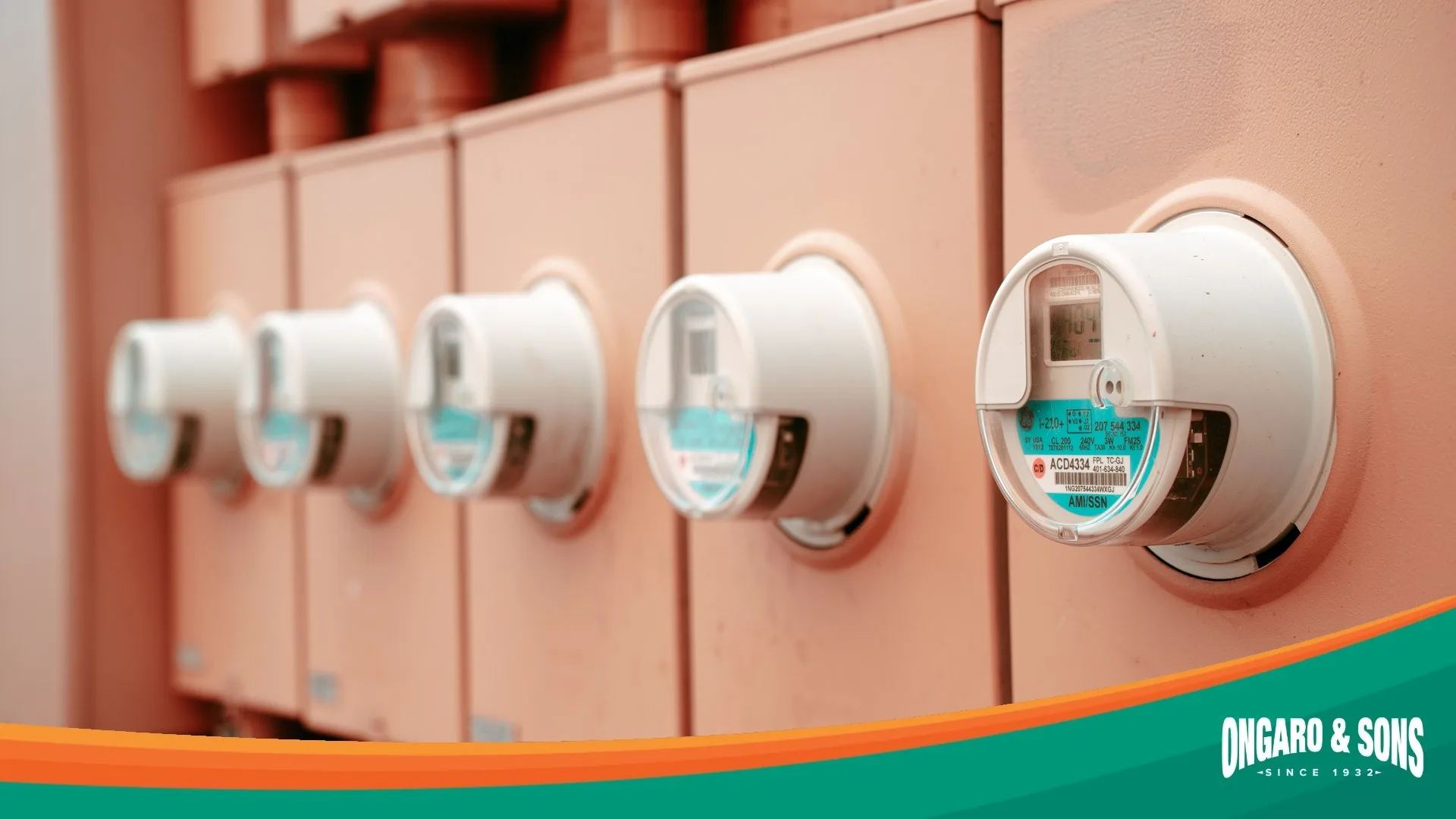
Code limits how much backfeed a busbar can accept relative to its rating. Two printed numbers, the busbar rating on the panel label and the size of the main breaker, therefore decide whether your array lands on an ordinary backfed breaker, whether the main gets derated, whether we need a line-side connection ahead of it, or whether the service has to be replaced. That call comes from the label and a load calculation, never from a satellite photo, which is why we open the panel before writing a proposal.
On the older streets near downtown and across the west side we routinely find 100-amp services, crowded panels, and legacy branch wiring never intended to sit alongside a battery and a car charger. The McDonald Avenue area holds some of the city's earliest surviving homes, and their electrical systems have been extended and patched across several generations of owners.
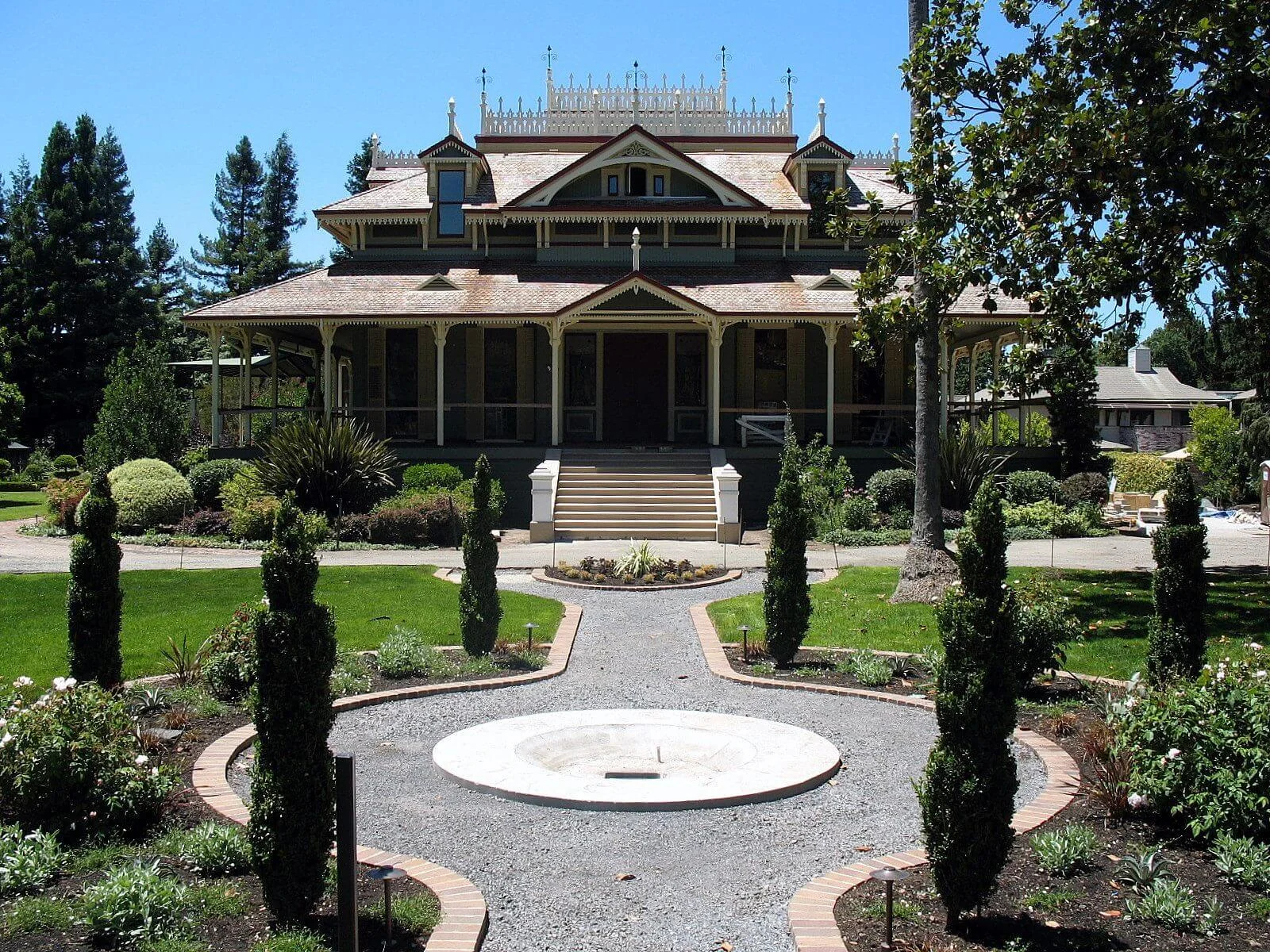
Coffey Park and Fountaingrove sit at the other end of the range. Both hold a great deal of recent construction from the rebuild that followed the 2017 Tubbs Fire, and in those homes we typically find a modern service with headroom, a roof with decades left, and often an array already up there. The work is rarely a first install. It is a battery retrofit, an inverter that aged out, or an expansion covering a heat pump added later. Rincon Valley and Bennett Valley span both worlds, with older ranch housing beside newer construction, sloped lots, and canopy that makes shade analysis matter more than it would on a flat parcel.
When the panel is the constraint we handle it ourselves rather than subcontracting, and the electrical panel upgrade becomes part of the same project.
What installation involves
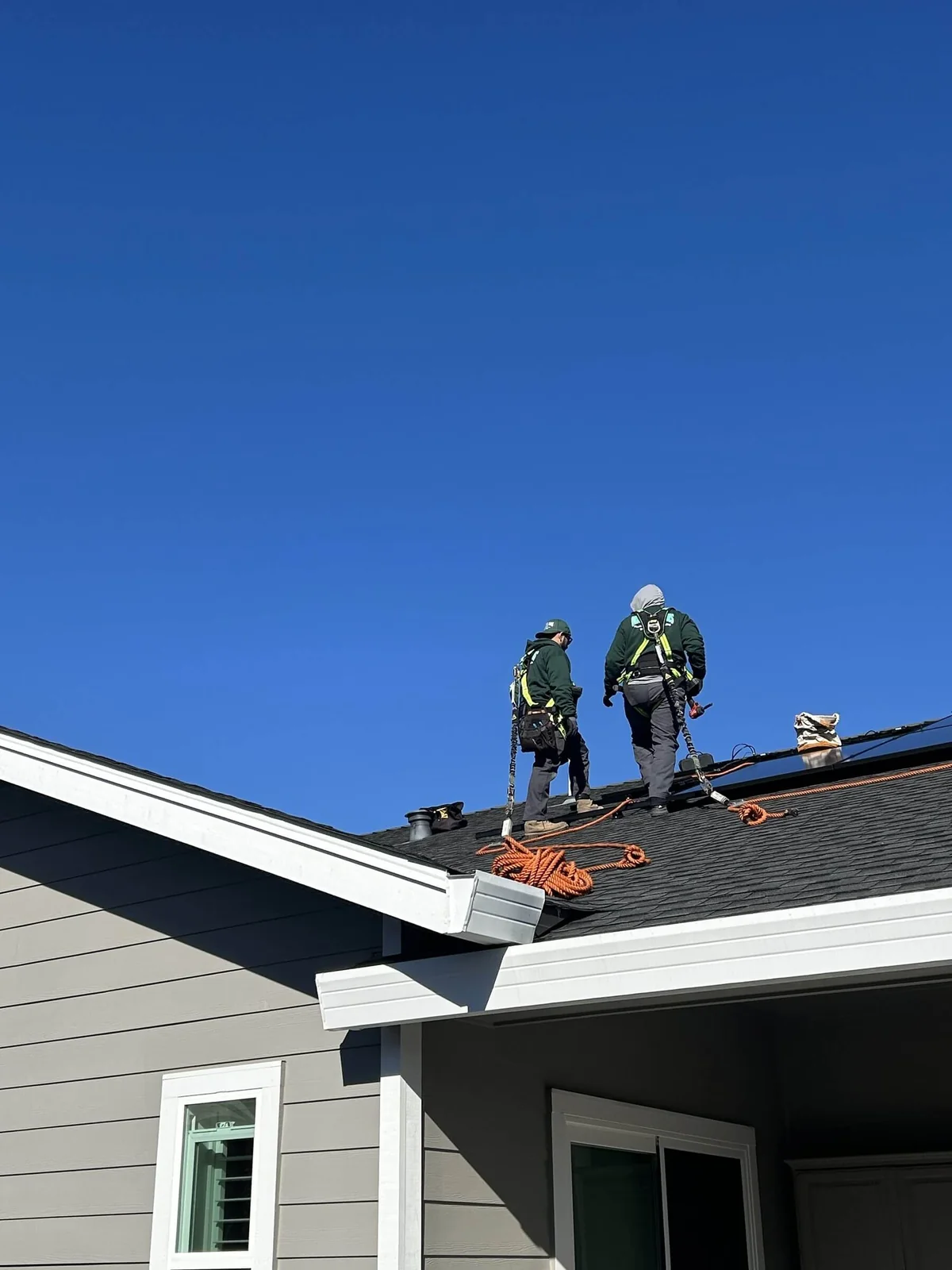
The parts that determine whether a system lasts thirty years are the parts nobody photographs: how each attachment is lagged into a rafter instead of into sheathing, how flashing integrates with the roofing instead of sitting on top of it relying on sealant, and how penetrations are sequenced with the roof's water path.
Fall protection is worth looking for when you compare bidders. A company running proper anchors and harnesses is a company carrying real workers' compensation coverage and real supervision, and both show up in the flashing detail too.
Inside, the work is electrical: inverter and battery mounting at the manufacturer's clearances, disconnects where the utility and the inspector can reach them, conductor sizing correct for the run length, grounding, bonding, and labeling matching the plan set. Rapid shutdown equipment goes in so firefighters can de-energize the array from the ground. Battery placement gets its own conversation: garage wall versus exterior, temperature exposure, and clearance from openings and living space.
Permits and code in Santa Rosa
Inside city limits, residential solar permits come from the City of Santa Rosa Building Division. Addresses in unincorporated Sonoma County, including much of the land around the city, go through Permit Sonoma instead. Confirm which applies before assuming a timeline, because the two agencies run separate processes.
State law removed most of the discretion from this step. Government Code 65850.5 provides that "a city or county shall administratively approve applications to install solar energy systems through the issuance of a building permit or similar nondiscretionary permit," and requires every jurisdiction to "adopt an ordinance... that creates an expedited, streamlined permitting process for small residential rooftop solar energy systems," with electronic submittal and electronic signatures accepted. Your permit is a ministerial review against a published checklist, not a design opinion. The plan set still has to be right: ours show module layout, roof access pathways, attachment and structural detail, one-line diagrams and labeling, because that is what a correction notice comes back on.
Two other code items matter here specifically. Santa Rosa sits fully inside the Bay Area Air Quality Management District per Sonoma County's air district map, which puts it under the district's zero-NOx rules for residential water heaters. Residential compliance begins in 2027 with effective dates that vary by unit size. No existing gas water heater is banned. What it means for solar is that a future heat pump water heater is a realistic addition to your load, and we would rather size for it than around it.
Second, the 2025 Building Energy Efficiency Standards took effect January 1, 2026, setting prescriptive baselines for new construction. They impose no retrofit obligation on an existing Santa Rosa house, and anyone telling you otherwise is describing a code that does not apply to your project.
Scott was very professional, personable, knowledgeable and thorough. I feel confident that he would do an excellent job and stand by the finished product.
Laura S.
Interconnection runs on its own clock
The building permit and the utility interconnection are separate approvals, and confusing them causes most of the schedule frustration here. The permit governs whether the installation is legal and safe. Interconnection governs whether PG&E will let the system export and how it gets billed. Inspection passes first, the jurisdiction's sign-off goes to the utility, then permission to operate is issued. Until that last step, the array does not run.
Sonoma Clean Power is the default generation provider in Santa Rosa while PG&E owns the poles and wires, reads the meter and issues the bill. That split does not complicate interconnection: one application, one meter, one bill carrying both parties' charges. SCP puts its solar customers on the Solar Billing Plan, and each spring compensates them for surplus energy sent to the grid at the Net Surplus Compensation rate, arriving as a check above a certain balance and as a bill credit below it.
Replacing an aging array, and adding storage to one that works
New installations are most of the work here, and a growing share of them replace systems that have aged out. Santa Rosa has a large installed base now, some of it fifteen years old, some from companies no longer in business.
Replacing an old system makes sense when it no longer covers the household, when its electronics are obsolete and unsupported, or when the roof underneath is due. A replacement corrects the sizing for the current tariff, brings storage into the design if you want it, and renews the flashing at every roof penetration. If the roof is near the end of its life, re-roofing first and installing on the new covering is the cheaper order.
Adding a battery to a working array is an electrical project first: existing inverter compatibility, panel capacity, where the battery can legally sit, and which circuits get backed up. We do that on arrays we did not install, because it is service-panel work and the C-10 license is ours.
What drives the cost
No two roofs price alike, and the variables that move the number most are not the ones people expect.
Roof plane count and complexity. One large south-facing plane is the cheapest array to build. Four small planes at different pitches means more racking, more flashing, more conduit and more labor for the same production.
Roof material and condition. Tile takes longer than composition and needs different hardware. A roof near the end of its life carries a future remove-and-reset that belongs in today's decision.
Electrical service work. Backfed breaker, line-side connection or full service replacement is the largest single swing factor in most proposals.
Storage and backup scope. Battery count, indoor versus outdoor placement, and whether you back up a critical-loads subpanel or the whole panel each change the scope materially.
Distance, obstacles and shade. Long conduit runs, detached garages, an ADU needing a trench and a far-side meter all add labor, while partial shade pushes the design toward module-level electronics.
All of it goes in writing before work starts, and financing options are laid out at the same time rather than introduced at signing.
Incentives and programs, current status
This category changes constantly, and stale incentive claims are the most common inaccuracy on solar pages. Where things stand as of this writing:
Sonoma Clean Power. Beyond the annual surplus compensation above, SCP runs an EV charger enrollment program paying a monthly bill credit plus a sign-up bonus for enrolling an eligible Wi-Fi connected smart charger. You must be an active SCP customer, and eligible devices are currently limited to WallBox and ChargePoint models, with SCP saying it is "working hard to add more EV chargers to our program." So the model you buy decides whether you can enroll, which makes an EV charger installation more than an electrical decision here.
Heat pump water heater rebates. SCP has a heat pump water heater rebate at a temporarily raised level, reverting afterwards to CARE and FERA customers only. Income-qualified households in those programs can receive a share of remaining project cost after other rebates apply.
Outages, storage and backup power
PG&E may turn off power during severe weather to help prevent wildfires, which the utility calls a Public Safety Power Shutoff. Households in the hills around Santa Rosa plan around that as a matter of course, and it shapes what people want from a system.
Start with the mechanism most owners are surprised by: a grid-tied array with no storage produces nothing while the power is out. The inverter has to stop feeding the line so utility crews are not working on a wire your roof is energizing. Sunshine is irrelevant to that behavior.
Storage changes it, but only if the system was wired for it. A battery paired with transfer equipment can island the house or a group of circuits and recharge from the array the next day, which is what makes solar plus storage different from a generator: the fuel arrives every morning. What it cannot do is run an unlimited load indefinitely, and a battery sized for evening bill management will not carry central air conditioning through a hot week.
Owning the system: monitoring and the spring true-up
Solar's failure mode is silence. Nothing leaks, nothing gets loud, nothing smells wrong. Output drifts down and the first sign is a bill.
Compare production monthly against the same month a year earlier rather than against last month, since seasonal swing masks a genuine fault. The long dry stretch here leaves soiling on modules by late summer, and output usually recovers after the first real rain, so cleaning is worth doing when a dry spell has run long rather than on a calendar. Trim canopy before it reaches the array. Have attachments, flashing and conduit supports checked periodically, since roof penetrations are where a badly built solar job becomes a roofing problem. Where wildlife can get under the modules, screening keeps rodents and nesting birds out of the wiring. If you own a battery, keep its firmware current, set the reserve appropriately for shutoff season, and test the backup transfer once or twice a year rather than finding out during a real outage.
The spring true-up is the annual moment of accountability. It tells you whether the system performed as modeled, and if it did not, that is when to investigate.
Solar and the rest of the house
Electrification is the obvious link, and it is why we treat solar as part of a whole-house picture rather than a standalone product. A heat pump moves your heating load from gas to electricity and adds a cooling-season draw that overlaps well with production. We are a Trane Comfort Specialist and a Mitsubishi Diamond Contractor Elite, so that equipment conversation is ours as well. A heat pump water heater fits even better, since a tank is effectively a battery for hot water and can be scheduled to run on midday output. Both belong in the load calculation before the array is sized.
The panel ties it together. Solar, storage, a charger and two electrified appliances all want capacity in the same enclosure, and sequencing those projects correctly avoids paying twice for the same electrical work.
How to choose a solar contractor in Santa Rosa
Five questions separate proposals quickly.
1. Who holds the electrical license, and is that work self-performed or handed to a subcontractor you will never meet? 2. Was a load calculation done, and did anyone open the main panel, before the proposal was written? 3. Does the proposal state how the array connects at the panel, including any service upgrade, main breaker derate or line-side connection? 4. Does the production model account for shading on your specific roof through the seasons, or is it a regional average dressed up as a site assessment? 5. Who files the interconnection application and chases permission to operate, and who will still be reachable in year twelve when the inverter fails?
That last one is not rhetorical. Many Santa Rosa systems have already outlived the companies that installed them. Ongaro & Sons has been in business since 1932, we are Diamond Certified, we hold a BBB A+ Rating, and the crew that installs the system works for the company that answers the phone afterward.
What North Bay homeowners say
Two recent reviews from customers in our service area:
Solar across Sonoma County
We run this same process in every North Bay city we serve: Solar in Petaluma, Solar in Windsor, and Solar across Sonoma County. For everything else we handle at your address, see Santa Rosa home services.
Book solar work in Santa Rosa
Ready to start? Book online and we will schedule a site assessment covering the roof, the shading, the main panel and twelve months of your usage. You get a written design and a scope you can compare against any other proposal, with nothing ordered until you have agreed to it.
Your Comfort, Our Priority
Ongaro & Sons is your trusted heating, cooling, plumbing, electrical, and solar expert, specializing in reliable maintenance and repair services that keep your home running efficiently year-round.
Our certified technicians deliver unmatched expertise with fast, friendly service across Marin, Sonoma and Napa County. From HVAC tune-ups to plumbing repairs and electrical upgrades or solar solutions, we focus on energy-efficient performance and long-term comfort. Count on us to maintain the systems that power your home and keep your environment just the way you like it.
Licensed, Insured, Background-Checked
Our technicians are licensed, experienced, and trained to service all makes and models.
Locally Owned and Operated
Serving the Napa, Marin, and Sonoma communities with personalized, hometown service.
Reliable Repairs
We respond quickly and get the job done right the first time, with no surprises.
Since 1932
Why Ongaro & Sons?
Four generations of trusted home service. Open any reason to see what it means for your home.
Schedule Service →Family-owned in the North Bay since 1932
Four generations of the Ongaro family serving Marin, Sonoma and Napa County. We know these homes and the systems in them.
Licensed, insured, background-checked technicians
Every technician is fully licensed and insured, background-checked, and trained on the equipment we install.
Diamond Certified and BBB A+
Diamond Certified since October 2016, and BBB Accredited with an A+ rating since December 1995.
Mitsubishi Diamond Contractor Elite and Trane Comfort Specialist
Both top manufacturer tiers. That standing decides how registration and extended warranty terms are handled on the system you actually bought.
The price is agreed before work starts
You see the number before the work begins. Flat-rate quotes, no surprises and no pressure.
Comprehensive maintenance program
Members get priority scheduling, discounts, and proactive checkups that prevent costly failures.
Discount
Membership
Ongaro Maintenance Plans
Annual maintenance on your home systems provides safeguards and comfort to you and your family. Members get priority scheduling, discounts, and proactive checkups that catch problems early.
Member Discounts
5% off every repair and replacement, all year long.
Peace of Mind
Proactive checkups catch issues before they become big problems.
Courtesy Reminders
We call you to schedule: never miss a seasonal service.
Value That Lasts
With Ongaro & Sons, you’re investing in quality, integrity, and service that stands the test of time. Explore our current promotions and see the difference real value makes for your HVAC, plumbing, and electrical needs.


From the Blog
 Sep 17, 2026
How Many Amps Does My House Need? Sizing Service for What You Actually Run
How many amps your house needs comes from a load calculation of what you run and plan to add. What drives the number, when existing service is enough, and more.
Read More Sep 10, 2026
Hard Water in Marin County: What Is Actually in Your Water and What It Does
Hard water in Marin County varies by provider and source. The 2025 report figures for Marin Water and NMWD, what hardness does and does not mean, and options.
Read More Sep 3, 2026
Electrical Permit Requirements in California: What Needs One and What Does Not
Find out which electrical projects commonly need permits, how to confirm local exemptions, and what to ask before work begins in Marin, Sonoma or Napa County.
Read MoreFrequently asked questions about solar in Santa Rosa
Who is the best solar company in Santa Rosa?
Compare on licensing, tenure, and whether the electrical work is self-performed. Ongaro & Sons has served the North Bay since 1932, is Diamond Certified, holds a C-10 electrical license, and carries 2,756 Google reviews averaging 4.8 stars. We open the panel before proposing anything, and the company that designs your system handles the permit, the interconnection, and the service years later.
Does rooftop solar still pencil out under the current billing rules?
For many homes here, yes, though the reasoning differs from a decade ago. Because exports are credited at hourly avoided cost values instead of retail, value concentrates in the power you use yourself. Households with real cooling demand, an electric vehicle, or electrified heat and hot water see the strongest results.
Do I have to add a battery?
No. Storage is a separate decision with its own math. It makes sense when the household has a substantial evening draw, when you want circuits live through a Public Safety Power Shutoff, or when moving midday output into expensive hours beats exporting it. Shaded or low-consumption homes often do fine without one.
Will solar panels power my house when the grid goes down?
Only with storage and the right wiring. A grid-tied array shuts itself off during an outage because the inverter must stop energizing lines that crews may be repairing. A battery plus transfer equipment lets the home, or a selected subpanel, island and recharge each day from the sun.
Do I need a permit for solar in Santa Rosa?
Yes, always. What state law changes is the character of the review. Government Code 65850.5 requires cities and counties to approve solar applications administratively through a nondiscretionary permit and to run an expedited process for small residential rooftop systems. The project is checked against a published checklist, but it still needs a complete plan set and a passing inspection.
What if my address is outside the city limits?
Then your permit comes from Permit Sonoma rather than the City of Santa Rosa Building Division. This catches people on the fringes of Rincon Valley and Bennett Valley, where city and county jurisdiction interleave along the same roads. We confirm jurisdiction from the parcel before filing, since submitting to the wrong agency costs weeks.
Will my electrical panel need work?
Sometimes, and knowing early is better. The busbar rating and main breaker size printed on the panel label determine how much solar backfeed the equipment can legally accept. Older services on the west side and around downtown frequently need attention, while newer homes in Coffey Park and Fountaingrove usually have capacity to spare.
Should I replace the roof first?
If the roofing has under roughly ten years left, doing it first is almost always cheaper. Otherwise the modules must come off and go back on when the roof is replaced, which is a second mobilization and a second set of penetrations. We say so plainly when it applies to your house.
What incentives apply here right now?
Sonoma Clean Power runs several, and they are separate programs rather than one pot. It compensates surplus generation annually under its own net energy metering arrangement, and it runs a smart charger enrollment program that pays a bill credit but is limited to specific eligible devices, so the charger you buy carries a consequence here that it does not carry in Marin. Its enhanced water heating rebate is time-limited and afterwards narrows to customers on the CARE or FERA bill discount programs.
How long does the whole process take in Santa Rosa?
Site assessment, design and engineering come first, then permitting, then a roof phase that is short relative to everything around it, then inspection, then utility permission to operate. Those approvals run on separate clocks and the utility step comes last, so a system can be fully installed and still waiting to switch on.
My system was installed by a company that is gone. What can you do?
We can replace it, or add to it. When an aging array no longer covers the house or its electronics are unsupported, we design and install a new correctly sized system in its place. When the array itself still works, we can add battery storage and handle the panel and service work around it, because that side of the project is electrical work under our own C-10 license.