Electrician in Santa Rosa
The best electrician in Santa Rosa is the one who pulls the permit, sizes the service correctly, and leaves you with work that passes inspection. Ongaro & Sons has held that standard in the North Bay since 1932. Diamond Certified, holding the C-10 electrical classification, with 2,756 Google reviews averaging 4.8 stars.
On this page
Santa Rosa has a panel replacement process no other city we serve has
Most electrical advice travels well between North Bay cities. This part does not, and it is the main reason a Santa Rosa panel job goes sideways in the hands of a contractor who works mostly somewhere else.
In a large share of Santa Rosa housing, the electric meter panel sits closer to the gas meter than PG&E's current setback requirements allow. That spacing was acceptable when the house was built. It is not what the utility asks for today. So the moment a panel in that position needs replacing, the job stops being a straightforward swap and becomes a coordination problem between the homeowner, the city, and the utility.
The city wrote a policy specifically to solve it. Policy 3.5.11, Electric Meter Panel Replacements, effective March 5, 2024, states that "with approval from the Authority Having Jurisdiction (City of Santa Rosa), PG&E will allow a variance to the current gas meter setback requirements, for like-for-like panel replacements of unsafe panels." The condition attached is a document: the customer has to give PG&E "a letter from the City of Santa Rosa stating that the panel replacement is required."
That letter has a defined path, and the path runs through a licensed electrician. The city "will accept a C-10 licensed electrician's (or individuals properly licensed/certified such as an Electrical Engineer) inspection and unsafe conditions statement of an existing electric meter panel," citing added loads on an unsafe panel and signs of wear as examples. The statement goes in with the permit application on company letterhead carrying the contractor's state license number. Once the permit issues, the city produces the PG&E letter. At the end, the electrician "installs new meter and then requests the necessary inspections which must be approved for final and meter release."
There is also a clock: "once a panel is deemed unsafe by a licensed electrician, the panel shall be replaced or decommissioned within 90 days of approval/permit issuance." That window starts at permit issuance, not at whatever date the work gets scheduled, so material and utility coordination belong ahead of the permit rather than behind it.
Two things follow. Your electrician needs to actually hold the C-10, because the statement the sequence depends on is a C-10 deliverable. And they should have run this process before, because permit, letter, utility, install, inspection, and meter release have an order to them, and getting the order wrong costs you days with the power off.
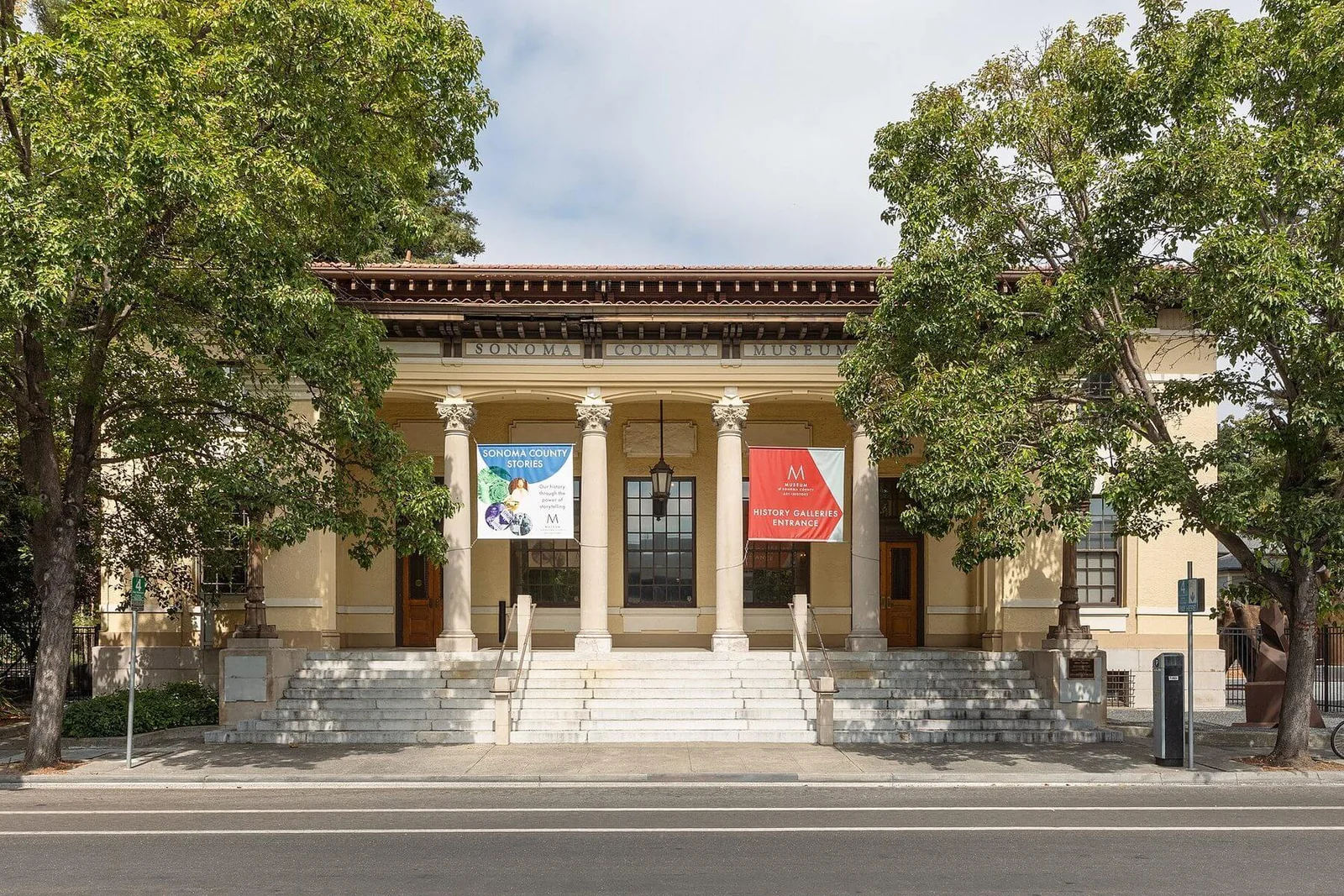
Two Santa Rosas, two very different electrical services
Santa Rosa is the largest city in Sonoma County, and its housing stock does not behave like one market.
Coffey Park, Fountaingrove, and the other neighborhoods rebuilt after the 2017 Tubbs Fire carry newer, high-efficiency, often all-electric systems wired under recent code cycles. That means arc-fault and ground-fault protection throughout, a service sized with modern loads in mind, and frequently room on the bus for an EV charger without touching the service. The work these houses need is additive: a circuit for a charger, a subpanel for a shop or an ADU, exterior lighting, a generator or a battery.
The older east and west side neighborhoods are a different job. Homes in Rincon Valley, Bennett Valley, and the streets around downtown and Railroad Square often run equipment well past its service life on a service sized for a range, a dryer, and not much else. Add a heat pump, a charger, and an electric water heater and the question is no longer whether the panel is full. It is whether the service can carry the load at all.
The same sentence, "we want to add an EV charger," produces a one-day job on one street and a service upgrade with utility coordination on the next.
Heat is an electrical problem here, not only an HVAC one
Inland Sonoma County runs into triple-digit afternoons all summer, and Santa Rosa is the hottest large market in the North Bay. The obvious consequence is that cooling systems do sustained work. The less obvious consequence is electrical.
Every large load in a Santa Rosa house peaks at the same time on the same afternoon: the condenser running continuously, the car charging, the pool pump cycling, the water heater recovering. That is when a marginal service shows itself, and it is why the August complaint we hear most is not "the power is out" but "the lights dim every time the air conditioning starts."
Ambient temperature matters to the wiring too. Conductors run through attics and along exterior walls that get genuinely hot here, and conductor ampacity is temperature dependent, so correction for ambient conditions belongs in the sizing. Heat is also hard on connections: a terminal that was merely snug ten years ago is the one showing discoloration now.
Our HVAC technician, Lake Romelli, was outstanding: knowledgeable, professional, above-and-beyond thorough. Ongaro & Sons is our go-to company for electrical, plumbing and HVAC.
Maria C.
What fails, in the order that matters
These could be listed alphabetically. It is more useful to walk them in hazard order, worst first.
Loose terminations. The most common serious defect we find and the shortest path to a fire. Screw terminals relax over years of thermal cycling, and push-in connections behind receptacles were never good at sustained load. Discoloration on a device, a warm cover plate, or a faint smell near the panel is a stop-work signal.
The panel bus. Panels fail where the breaker clips onto the bus. Once that connection has arced, the damage is in the panel, not the breaker, and swapping the breaker treats the symptom. Older panel lines for which listed replacement breakers are no longer manufactured turn up constantly in this housing stock, and they are usually where repair becomes replacement.
The service entrance. Weatherheads, masts, and meter bases sit outdoors for decades. In the older neighborhoods we find rusted enclosures, deteriorated service entrance conductors, and masts pulled out of plumb. Those need utility coordination, not improvisation.
A compromised neutral. On a split-phase service this is the "lights go bright in one room and dim in another" complaint. It damages electronics and it is not something to live with.
Missing ground-fault and arc-fault protection. Kitchens, baths, garages, and exteriors need ground-fault protection; bedrooms and most living spaces need arc-fault protection under current code. Any circuit we extend or replace comes up to the current requirement.
Ungrounded two-prong circuits and aluminum branch wiring. Both are common here, the first in prewar and early postwar homes, the second in some houses built in the late 1960s and early 1970s. Both have code-compliant fixes, and both have shortcuts that only look correct.
Buried junction boxes. Attic and crawlspace work from previous decades, covered by later remodels. Nothing to see until someone opens a wall.
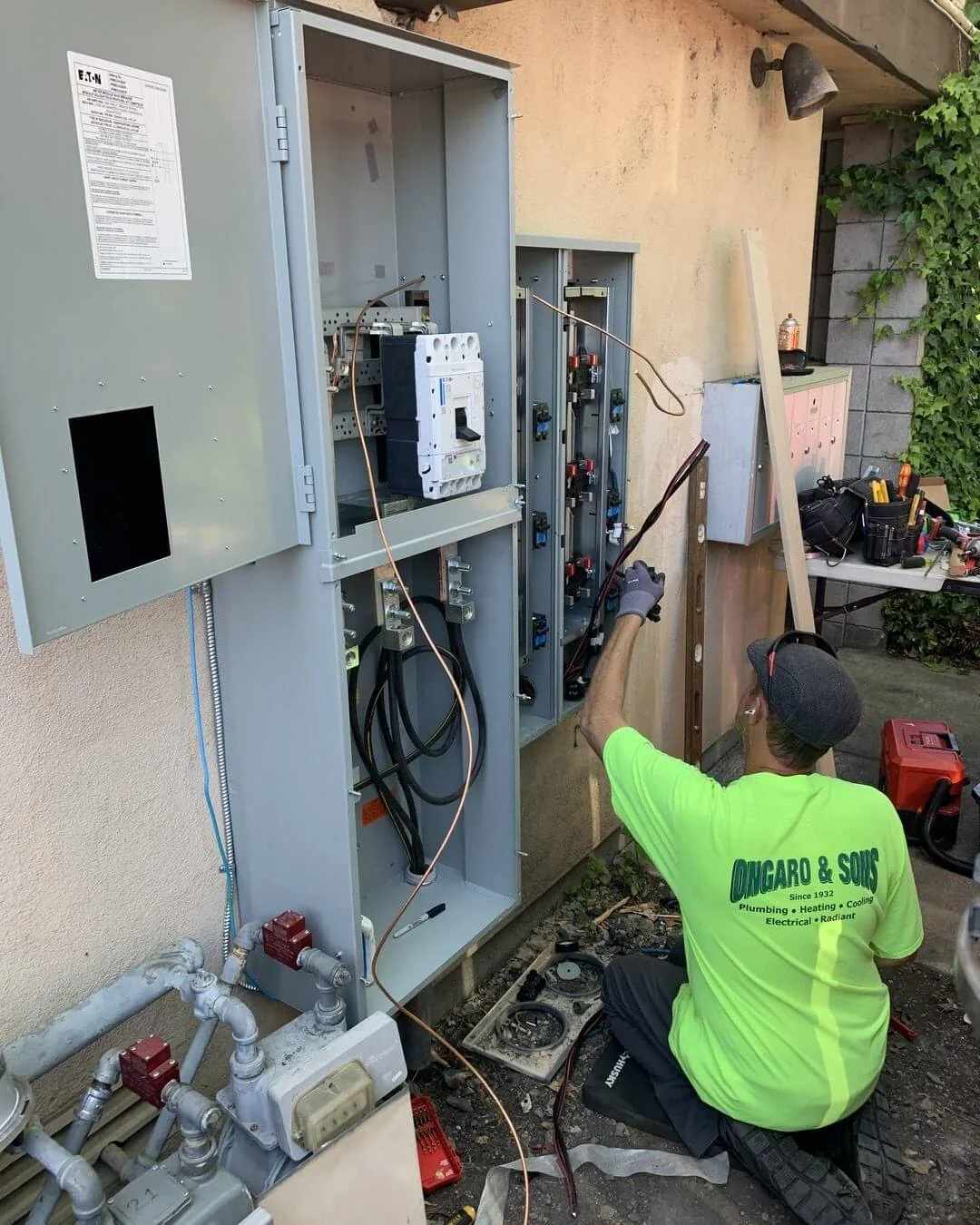
The load calculation is the decision, not the panel
Homeowners arrive at this as a question about the panel: is it full, does it look old, should we replace it. Those are the visible things. The technical factor that decides a Santa Rosa project is the load calculation.
A load calculation to the California Electrical Code, Part 3 of Title 24, takes square footage, fixed appliances, and large discrete loads and produces a number you can compare against the service you have. The 2025 edition of the California Building Standards Code took effect January 1, 2026. That number tells you whether a charger fits on your existing service, whether a heat pump water heater can be added without touching the panel, and whether a service upgrade is a requirement or a preference.
Three ways forward, not equally priced or equally disruptive:
- Add a circuit. Headroom in the calculation and space in the panel means the job is a circuit and a permit.
- Add a subpanel. When the service can carry the load but the panel is out of spaces, a subpanel is often cleaner than a full replacement.
- Upgrade the service. When the service itself is undersized, this is the real project, and here it frequently pulls in the meter setback letter process, utility coordination, and a meter release inspection.
A fourth option is load management. Devices listed for the purpose keep two large loads from running at once, which in some houses lets a charger land on a service a raw calculation would have rejected. Whether it works on your project depends on the equipment listing and the inspector, so it is a conversation to have up front rather than an assumption to build a quote on.
Recent code cycles have also moved toward a service disconnect readily accessible from outside the building on one- and two-family dwellings. That is why a panel replacement here often puts a disconnect outdoors instead of swapping the box already on the wall, and it is one of the items that surprises people who priced the job from a photo.
Backup power and Public Safety Power Shutoffs
Santa Rosa lived through the 2017 Tubbs Fire and the 2019 Kincade Fire, and Public Safety Power Shutoffs are a regular reality in the hills. PG&E describes one as a temporary outage used to prevent wildfire when conditions align: low humidity, forecast high winds, dry material on the ground, vegetation near power lines, and Red Flag Warnings from the National Weather Service.
The useful thing about a shutoff is that it is announced. Backup power is therefore a decision you get to make deliberately rather than under pressure.
Home standby generators. We are a Certified Generac Generator installer, and a permanently installed unit with an automatic transfer switch is the common answer on a hillside property. The transfer switch is the part that matters technically: it guarantees the generator can never backfeed the utility, which protects line crews and is a code requirement rather than an option. Sizing follows from what you want running, which is a conversation about the well pump, refrigeration, cooling, and whether the house is heated electrically. Fuel supply, placement, clearances, and noise shape the install.
Battery storage. A battery with a backup-capable inverter covers the house silently, which suits denser neighborhoods, and it pairs naturally with solar. It is sized by duration as well as power, and a multi-day October event asks more of one than a six-hour outage does. Storage falls under the California Public Utilities Commission's Self-Generation Incentive Program, whose budget categories open and close on their own schedule, so we confirm what is available at the time of your project.
Portable generators. They work, and the electrical part that matters is a properly installed inlet and interlock so nothing is ever backfed through a cord into a receptacle. If you already own one, this is a small project with a large safety return.
EV charging in Santa Rosa
A Level 2 charger is a 240-volt dedicated circuit, which puts it in the same category as a range or a dryer as far as your service is concerned. In the rebuild neighborhoods the panel is usually modern and the run is short, so this is often a clean one-day install. In the older neighborhoods the sequence is: calculate the load, look at the service, then choose between a circuit, a load management device, and a service upgrade. Detached garages add a trench and a feeder. Details are on our Santa Rosa EV charger page.
We moved up here in 2015. Whenever we needed help with electrical or gas issues, Ongaro came through 100 percent. Our latest issue was our furnace.
Geralyn L.
Electrification, the 2027 air district rule, and your panel
Santa Rosa sits fully inside the Bay Area Air Quality Management District. The 2023 amendment to Rule 9-6 sets standards at the point of sale, phased across 2027 and 2031 by equipment type, so they reach what may be sold and installed rather than the unit already in place. In practice a zero-NOx residential unit means an electric heat pump water heater, because gas models cannot currently meet the standard.
The rule is live and changing. Nobody is required to remove a working gas water heater, and we confirm the current requirement at project time rather than describing a rule that has since been amended.
The electrical consequence is what brings this onto an electrician's page. Going to a heat pump means adding a dedicated 240-volt circuit where the gas unit needed none. So does an induction range, and so does a heat pump replacing a gas furnace. Stack two or three of those onto a service sized decades ago and the panel becomes the gating item for the whole plan. It is the most common reason a Santa Rosa homeowner ends up discussing a service upgrade they were not expecting. Because we hold C-10 electrical, C-20 HVAC, and C-36 plumbing licenses, the panel, the equipment, and the permit run as one project rather than three contractors waiting on each other. Not every city in this county sits in the same air district, which matters if you own property elsewhere in Sonoma County: the county publishes the district boundaries.
Smoke alarms and carbon monoxide devices
These are electrical work in most Santa Rosa homes, because current construction uses hardwired, interconnected alarms with battery backup. Health and Safety Code section 13113.7 requires smoke alarms in each dwelling intended for human occupancy, and for permits issued after January 1, 2014 covering alterations, repairs, or additions above a threshold value, the permit issuer verifies the required alarms are installed before signing off. A remodel is usually the moment alarms get brought current.
Section 17926 requires a carbon monoxide device in every existing dwelling unit with a fossil fuel burning heater or appliance, a fireplace, or an attached garage. For single-family dwellings that deadline was July 1, 2011, and devices must be approved and listed by the State Fire Marshal. Sensors age whether or not the unit has ever chirped, so alarms that went in with a 2019 or 2020 rebuild are closer to replacement than most people assume.
What drives the cost of electrical work in Santa Rosa
We do not publish flat prices, because the same request in two Santa Rosa houses is two different jobs. What moves the number:
- Scope. A circuit, a subpanel, and a service upgrade are three different projects, not three price points for one.
- What code brings up to standard. Extending or replacing a circuit brings arc-fault and ground-fault protection, box fill, support, and clearances current. These are inspection items, not add-ons.
- Whether the meter setback letter process applies. A panel that has to move, or one needing the city letter and the utility variance, carries coordination a simple swap does not.
- The meter release. A service upgrade ends with an inspection approved for final and meter release, which is a scheduling dependency and real time.
- Access and wall finish. Fishing circuits through plaster and lath on the west side is a different day than drywall in a Coffey Park rebuild.
- Distance and trenching. Detached garages, shops, ADUs, wells, and pool equipment mean a feeder, a trench, and often a subpanel.
The quote you approve is the quote you pay, and larger jobs can be financed.
Permits and inspections in Santa Rosa
Inside city limits, electrical permits go through the City of Santa Rosa Building Division, part of Planning and Economic Development, which reviews applications for compliance with state and local building codes and provides the inspections. Applications are submitted through the city's Accela Citizen Access portal or in person by appointment.
One detail simplifies multi-trade projects: the city states that a single building permit application may be filed for all work on a project, including building, electrical, mechanical, and plumbing. On a job combining a panel upgrade with a heat pump and a water heater, that is one application rather than three.
Properties in the unincorporated county permit through Permit Sonoma instead. Larkfield, Wikiup, and the rural parcels east and west of the city fall on that side of the line, so it is worth confirming which jurisdiction your address sits in before anyone quotes the work.
Unpermitted electrical work does not save money. It creates a defect that surfaces during a home sale, it can complicate an insurance claim, and it removes the independent check that the work was done safely. On a service upgrade it is not even possible, because the utility will not release the meter without an approved final.
Keeping a Santa Rosa electrical system healthy
- Test GFCI devices monthly. One that will not trip is not protecting anything.
- Treat a breaker that trips repeatedly as information, not a nuisance to be worked around.
- Have the panel inspected if it has never been looked at, particularly on a pre-1990s house or one that has had loads added over the years.
- Consider whole-home surge protection. Grid events and the restoration after an outage are when electronics take damage.
- Keep the working space in front of the panel clear. That clearance is a code requirement, so the panel wall cannot become the storage shelf.
- Replace aging smoke and carbon monoxide devices on schedule rather than waiting for a chirp.
- Label the panel accurately, and look at the meter base and mast once a year for rust or movement.
Where we work in Santa Rosa
We serve all of Santa Rosa from our Petaluma headquarters, including Coffey Park, Fountaingrove, Rincon Valley, and Bennett Valley, along with downtown, Railroad Square, the west end, and the surrounding unincorporated properties where Public Safety Power Shutoffs are part of the annual calendar.
The value of one company across trades shows up on jobs like these. A heat pump conversion is an HVAC project with an electrical dependency. A heat pump water heater is a plumbing project with an electrical dependency. A standby generator is an electrical project with a gas dependency. We hold C-20, C-10, and C-36 licenses, so those land as one project, one schedule, one permit conversation. We are also Diamond Certified, a Mitsubishi Diamond Contractor Elite, a Trane Comfort Specialist, a Certified Generac Generator installer, and BBB A+ rated.
How to choose an electrician in Santa Rosa
Ask to see the C-10. Here specifically, the panel replacement process depends on a C-10 licensed electrician's inspection and unsafe conditions statement, so this is not a formality.
Ask whether they pull the permit. A contractor offering to skip it is offering to leave you with unpermitted work, no inspection, and no meter release.
Ask whether they have run the gas meter setback letter process with the city. If the phrase means nothing to them and your meter panel sits alongside your gas meter, that is worth knowing before you sign.
Ask for a load calculation before they quote a charger, a heat pump, or a service upgrade. A quote produced without one is a guess about the most important number in the project.
The method has not changed since 1932. We look, we tell you what is there, we price it, and then we build it to code.
Electrical and home services across Santa Rosa and Sonoma County
One company, all trades: Santa Rosa electrical panel upgrades, Santa Rosa EV charger installation, electrical across Sonoma County, and Santa Rosa home services. Related Santa Rosa work: heating and cooling, heat pumps, plumbing, water heaters, and solar.
Book an electrician in Santa Rosa
Book online at any hour, or speak to someone during office hours if the situation needs describing. An Ongaro & Sons electrician will look at the actual panel, run the calculation the project depends on, explain what we find, and give you the price before any work begins.
Your Comfort, Our Priority
Ongaro & Sons is your trusted heating, cooling, plumbing, electrical, and solar expert, specializing in reliable maintenance and repair services that keep your home running efficiently year-round.
Our certified technicians deliver unmatched expertise with fast, friendly service across Marin, Sonoma and Napa County. From HVAC tune-ups to plumbing repairs and electrical upgrades or solar solutions, we focus on energy-efficient performance and long-term comfort. Count on us to maintain the systems that power your home and keep your environment just the way you like it.
Licensed, Insured, Background-Checked
Our technicians are licensed, experienced, and trained to service all makes and models.
Locally Owned and Operated
Serving the Napa, Marin, and Sonoma communities with personalized, hometown service.
Reliable Repairs
We respond quickly and get the job done right the first time, with no surprises.
Since 1932
Why Ongaro & Sons?
Four generations of trusted home service. Open any reason to see what it means for your home.
Schedule Service →Family-owned in the North Bay since 1932
Four generations of the Ongaro family serving Marin, Sonoma and Napa County. We know these homes and the systems in them.
Licensed, insured, background-checked technicians
Every technician is fully licensed and insured, background-checked, and trained on the equipment we install.
Diamond Certified and BBB A+
Diamond Certified since October 2016, and BBB Accredited with an A+ rating since December 1995.
Mitsubishi Diamond Contractor Elite and Trane Comfort Specialist
Both top manufacturer tiers. That standing decides how registration and extended warranty terms are handled on the system you actually bought.
The price is agreed before work starts
You see the number before the work begins. Flat-rate quotes, no surprises and no pressure.
Comprehensive maintenance program
Members get priority scheduling, discounts, and proactive checkups that prevent costly failures.
Discount
Membership
Ongaro Maintenance Plans
Annual maintenance on your home systems provides safeguards and comfort to you and your family. Members get priority scheduling, discounts, and proactive checkups that catch problems early.
Member Discounts
5% off every repair and replacement, all year long.
Peace of Mind
Proactive checkups catch issues before they become big problems.
Courtesy Reminders
We call you to schedule: never miss a seasonal service.
Value That Lasts
With Ongaro & Sons, you’re investing in quality, integrity, and service that stands the test of time. Explore our current promotions and see the difference real value makes for your HVAC, plumbing, and electrical needs.


From the Blog
 Sep 17, 2026
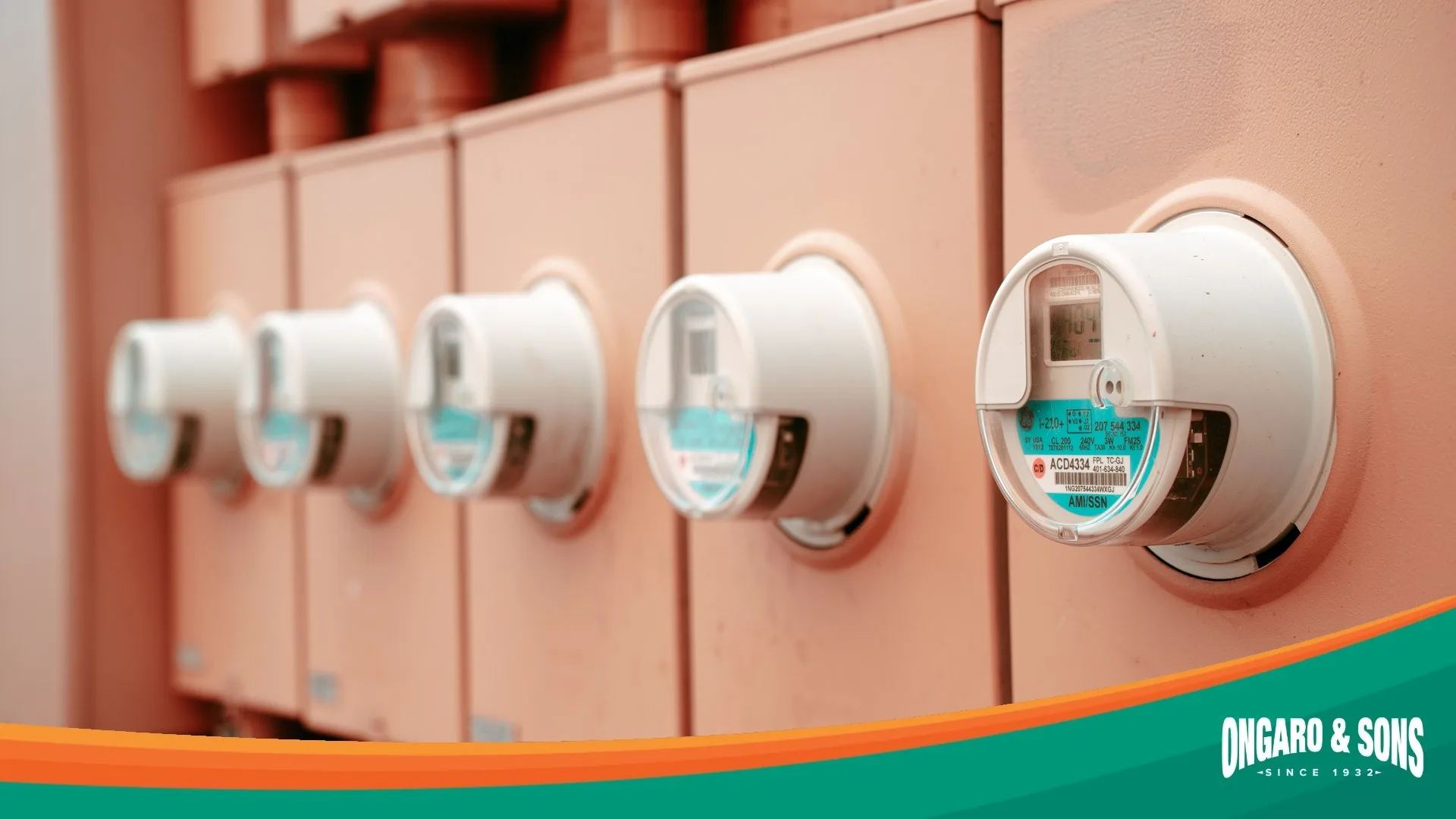
How Many Amps Does My House Need? Sizing Service for What You Actually Run
How many amps your house needs comes from a load calculation of what you run and plan to add. What drives the number, when existing service is enough, and more.
Read More Sep 10, 2026
Hard Water in Marin County: What Is Actually in Your Water and What It Does
Hard water in Marin County varies by provider and source. The 2025 report figures for Marin Water and NMWD, what hardness does and does not mean, and options.
Read More Sep 3, 2026
Electrical Permit Requirements in California: What Needs One and What Does Not
Find out which electrical projects commonly need permits, how to confirm local exemptions, and what to ask before work begins in Marin, Sonoma or Napa County.
Read MoreElectricians in Santa Rosa: frequently asked questions
Who is the best electrician in Santa Rosa?
Ongaro & Sons has worked in the North Bay since 1932, is Diamond Certified, holds a C-10 electrical license alongside C-20 HVAC and C-36 plumbing, and averages 4.8 stars across 2,756 Google reviews. We pull the permit, run a load calculation before quoting service work, handle the utility coordination, and give you the full price before we start.
Do I need a permit for electrical work in Santa Rosa?
Yes, for the work homeowners usually mean: panels, services, new circuits, and additions. Inside city limits it goes through the City of Santa Rosa Building Division, and the city allows a single application to cover building, electrical, mechanical, and plumbing work on one project. Addresses outside the city limits permit through Permit Sonoma. We pull the permit and meet the inspector.
My electric meter panel is right next to the gas meter. Can it be replaced where it is?
Often yes, through a defined process. PG&E's current gas meter setback requirements would not allow that spacing today, but the utility permits a variance for a like-for-like replacement of an unsafe panel when the City of Santa Rosa approves it and issues a letter confirming the replacement is required. City Policy 3.5.11 sets out the sequence, which begins with a C-10 licensed electrician's inspection and unsafe conditions statement filed with the permit application.
How long do I have to replace a panel that has been deemed unsafe?
The city's policy states that once a panel is deemed unsafe by a licensed electrician, it "shall be replaced or decommissioned within 90 days of approval/permit issuance." Because the window starts at permit issuance, we line up material, utility coordination, and the schedule before pulling the permit rather than after.
Does my house need a service upgrade for an EV charger?
It depends on the load calculation, not on how full the panel looks. Many post-fire rebuild homes in Coffey Park and Fountaingrove have capacity already. Many older east and west side homes do not, particularly if a heat pump or an electric water heater is also on the plan. In some houses a listed load management device is an alternative to upgrading the service.
How do I know if my electrical panel needs replacing?
Breakers that trip when two large loads run together, lights that dim when the air conditioning starts, discoloration or heat at the panel, a fuse box or a split-bus panel with no single main disconnect, and panel lines for which listed replacement breakers are no longer manufactured. A panel that is simply full is a different problem, and a subpanel sometimes solves it.
Can you install a home standby generator in Santa Rosa?
Yes. We are a Certified Generac Generator installer, and a permanently installed unit with an automatic transfer switch is a common choice on hillside properties given Public Safety Power Shutoffs. Sizing follows from what you want running, and placement, clearances, fuel supply, and noise all shape the install. The transfer switch is not optional: it is what prevents the generator from backfeeding the utility.
Will a battery keep my house running during a Public Safety Power Shutoff?
It can, and it does it silently, which suits denser neighborhoods. The design question is duration as well as power, since a multi-day autumn event asks more of a battery than a short outage does. Storage falls under the California Public Utilities Commission's Self-Generation Incentive Program, whose budgets open and close on their own schedule, so we confirm current eligibility at quote time.
Do I need to upgrade my panel for a heat pump water heater?
Sometimes. A heat pump water heater needs a dedicated 240-volt circuit, and many older Santa Rosa services already carry a range, a dryer, and increasingly an EV charger. We run the load calculation as part of the quote so the panel question is answered before installation day rather than on it.
Are gas water heaters being banned in Santa Rosa in 2027?
No, and the reason is how the rule is written. Rule 9-6 works at the point of sale, so it governs what a supplier may sell and an installer may fit, on a schedule sorted by appliance between 2027 and 2031. Even the earliest of those dates is still being amended. Nothing in it requires you to remove a working water heater.
Are my smoke alarms required to be hardwired?
In new work and in most permitted alterations, yes, hardwired and interconnected with battery backup. Health and Safety Code section 13113.7 puts smoke alarms in every dwelling meant to be lived in, and on permitted alterations above a set value it makes the permit office check they are there before signing off. Carbon monoxide devices are required separately under section 17926 wherever there is a fossil fuel burning appliance, a fireplace, or an attached garage.
What rebates apply to electrical and electrification work in Santa Rosa?
Santa Rosa is a Sonoma Clean Power jurisdiction, and Sonoma Clean Power runs an enhanced heat pump water heater rebate that is time-limited; once it steps down, the rebate is available only to customers on the CARE or FERA bill discount programs.
Do you work on older Santa Rosa homes with two-prong outlets or original wiring?
Yes, and it is a large share of what we do here. Ungrounded circuits, aluminum branch wiring from the late 1960s and early 1970s, buried junction boxes, and undersized services all come with this housing stock. Each has a code-compliant fix and a shortcut that only looks correct. We assess what the specific house needs before quoting.
Do you serve properties outside the Santa Rosa city limits?
Yes, including Larkfield, Wikiup, and the rural parcels east and west of the city. Those addresses permit through Permit Sonoma rather than the city, and they are also where shutoff events and well pumps make backup power a more pressing conversation.