Zinsco Electrical Panel Replacement: How to Identify One and What to Do About It
Zinsco electrical panel replacement is the removal of a Zinsco or Zinsco-Sylvania breaker panel and the installation of a new service panel in its place. If your panel carries that label, or you suspect it uses a Zinsco design, the useful first step is an assessment by a licensed electrician: the panel's age, condition, breakers and connections all matter to what happens next.
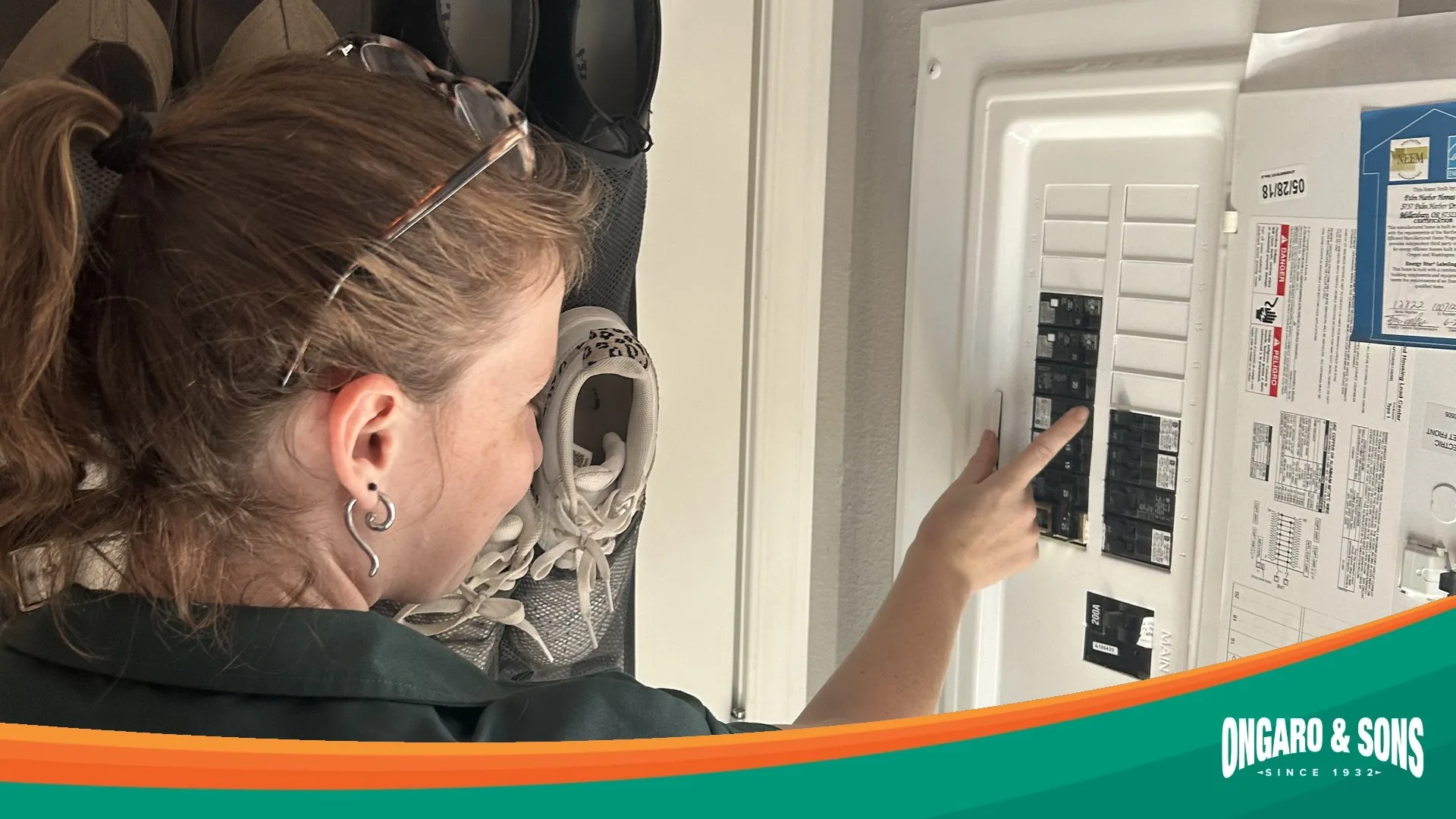
Quick answer. With the outer hinged door open, photograph the label and the visible breaker faces, and leave the screwed-on inner cover in place. That photo may help identify the equipment; it cannot show whether the panel's internal connections and protective devices are in acceptable condition, so have a licensed C-10 electrician assess it. Do not wait for a renovation or an insurance renewal to investigate warning signs. Smoke, sparking, a burning odor or visible damage need urgent attention: keep away from the panel and call emergency services if there is smoke, fire or immediate danger.
These panels are common in the North Bay because of when the housing stock was built. A lot of Marin, Sonoma and Napa County residential construction happened between the 1950s and the 1970s, which is the window in which Zinsco and Federal Pacific panels were widely installed. If your house is from that period and still has its original service equipment, there is a reasonable chance you are looking at one.
How Do You Identify a Zinsco Panel?
You can do this in about two minutes, and it requires opening only the outer door. Do not remove the gray metal cover behind it, the one held on by screws with the breakers poking through. That inner cover is what separates you from the service conductors, and there is no reason for a homeowner to take it off.
| What to look for | Zinsco | Federal Pacific |
|---|---|---|
| What to look for Name on the label or panel face | Zinsco Zinsco or Zinsco-Sylvania markings are clues; other Sylvania labels need further identification, since the name alone is not conclusive | Federal Pacific Federal Pacific Electric, FPE, Stab-Lok |
| What to look for Breaker handle appearance | Zinsco Often colored (red, blue, green, tan), which is a clue rather than proof | Federal Pacific Usually black or red with a narrow toggle |
| What to look for Breaker markings | Zinsco Amp rating printed on the handle face | Federal Pacific Stab-Lok often printed on the breaker |
| What to look for Typical era | Zinsco 1950s to 1970s | Federal Pacific 1950s to 1980s |
| What to look for Panel style | Zinsco Often flush mounted indoors, sometimes exterior | Federal Pacific Both, frequently exterior in California |
Take a photo of the label and of the breakers with the door open. A clear photo helps an electrician decide what information is needed next; confirm how the company handles identification questions and site assessments before booking.
One caution. The name on the outside is not always the name of the equipment inside. Panels get relabeled, and breakers from one brand sometimes end up in another brand's panel, which is its own problem, because a breaker is only listed for use in the specific panels it was evaluated in. A breaker that physically fits is not necessarily a listed one. If what you find is ambiguous, that ambiguity is itself worth having someone look at.
Why Are These Panels a Concern?
Be careful with what you read about this, because there is a lot of overstatement in both directions.
Federal Pacific Stab-Lok and Zinsco are different equipment lines. For Federal Pacific there is a federal record: the Consumer Product Safety Commission investigated Stab-Lok residential breakers from 1980 and documented failures in certain calibration tests. In 1983 it closed the investigation without making a determination about the breakers' safety, and its notice explains the limits of the data it had and the resources further investigation would have needed. That record does not establish that any particular panel is safe, and it is not testing of Zinsco equipment.
Zinsco has no comparable federal investigation behind it. The concern is the same in shape, that breakers may not trip when they should and that the connection between breaker and bus can deteriorate, but the evidence is field reports and private testing rather than a government record. For your home, the useful next step is the same either way: identify the equipment and have its condition and its replacement options assessed. The Electrical Safety Foundation International is a non-commercial reference if you want to read more broadly.
What Does an Assessment Look At?
The breakers and the bus together. Newly manufactured replacement breakers are available for some older panel applications, and a Zinsco panel is one of them, so anyone who tells you the panel must go because breakers no longer exist is working from old information. The exact breaker still has to be suitable for the panel it goes into, and a new breaker does not repair a damaged bus connection, enclosure or anything else in the panel. An electrician needs to evaluate both the protective devices and the assembly before recommending a repair or a replacement; the availability of a part does not settle that decision on its own.
Capacity for what you plan to add. Adding a circuit for a heat pump, an EV charger, an induction range or an air conditioner means finding physical space and available capacity, and panels from this era were sized for a house with far fewer loads than a current one. This is the point at which many homeowners discover the problem, attached to a project they wanted to do.
Insurance. Some carriers ask about panel brand at underwriting or renewal, and practice varies widely. Ask yours directly, and treat the answer as a separate part of the planning: insurance acceptance is not an electrical safety assessment.
A sale. A home inspector who identifies the panel may note it in the report. If you are planning to sell, discuss the panel with your electrician and your agent so that the decision is made on your schedule rather than a buyer's.
What Does Replacement Involve?
A service panel replacement is a well-defined job. Here is the usual sequence, so you know what you are agreeing to.
- Load calculation and permit. The electrician calculates the required service size and pulls a permit with your city or county. A contractor who suggests skipping the permit is telling you something about how they work.
- Utility coordination. Most changeovers need the power disconnected at the meter, which is arranged with PG&E. That scheduling often determines the date more than the electrician's availability does.
- Removal and installation. The old panel comes out, the new one goes in, and every circuit is landed on a new breaker. Circuits get identified and labeled, which in a mid-century house is often the first time that has been done accurately.
- Grounding and bonding. Older installations frequently do not meet current grounding requirements. Ask whether bringing the grounding electrode system up to code is in the estimate.
- Inspection. The jurisdiction inspects before the utility reconnects permanently.
Ask for the expected outage window and the utility and inspection arrangements for your specific job, and plan for the refrigerator and for anything medical that needs power before the day arrives. The installation time and the calendar time to final approval are different things.
Should You Upgrade the Service Size at the Same Time?
Replacing a panel and increasing the electrical service are separate decisions. Many mid-century North Bay homes were built with 100 amp service, and some older ones with 60; whether that is enough for what you plan to run is a load calculation, which we cover in how many amps your house needs. If a service increase is proposed, ask whether the estimate includes utility work, meter equipment, conductors, grounding, permits and any repairs to surrounding finishes, because those can dominate the cost of a service change in a way they do not for a panel swap.
Where a larger service is expensive because of the utility side, an approved load-management design is sometimes an alternative; a SPAN panel is one such product, and we explain how it works in what a SPAN electrical panel is. Either way the Zinsco panel comes out; the question is only what goes back in its place. If you are weighing this against equipment plans, the panel upgrade for solar and EV article covers that combination, and the electrical panel upgrade page covers the work.
What Should You Not Do?
- Do not remove the inner panel cover. Behind it are conductors that remain energized even with the main breaker off, because the service entrance is upstream of the main.
- Do not buy and install a replacement breaker yourself. Replacement breakers for these panels are sold, but a breaker is only listed for the specific panels it was evaluated in, and working inside a live panel is not homeowner work.
- Do not keep resetting a breaker that trips repeatedly. A breaker that trips is reporting a condition. Resetting it without finding out why removes the protection without removing the fault.
- Do not touch the panel to check whether it is warm, and do not assume a home inspection covered it. Inspectors identify panel brands, but a general home inspection is not an electrical evaluation.
Panel replacement is C-10 electrical work. Ongaro & Sons is a family-owned company based in Petaluma, serving Marin, Sonoma and Napa County since 1932, licensed C-10 electrical, C-20 HVAC and C-36 plumbing. You can verify any California contractor's license and classification on the Contractors State License Board site, and the board publishes what each classification covers.
How Soon Should You Have It Assessed?
A panel's label alone cannot establish its condition or predict how long it will remain reliable, and a history of apparently normal operation is not proof that it is sound. Arrange an electrical assessment rather than waiting for a symptom.
Tell the electrician about repeated trips, unusual sounds, burning odors, visible damage and any equipment you plan to add. Ask your insurer about its requirements as a separate step. If you want the broader picture on when any panel needs replacing, our guide to whether you need to replace your electrical panel covers age, condition and capacity, and how breaker boxes work covers the mechanics.
Frequently Asked Questions
How do I know if I have a Zinsco panel?
Open the outer door and read the label and the breaker faces. Zinsco or Zinsco-Sylvania markings and colored breaker handles are clues; other Sylvania labels need further identification. Do not remove the inner metal cover. Photograph what you see and send it to an electrician if you are unsure.
Are Zinsco panels dangerous?
Concerns about the performance and condition of this older equipment warrant an electrician's assessment. You cannot establish the condition of the internal connections or the protective devices from the label, or from a history of apparently normal operation. Smoke, sparking or a burning odor need urgent attention.
Do I have to replace a Zinsco panel?
Have an electrician assess the panel and check the requirements for your property and any planned work. Its condition, the acceptable repair options, local requirements and your insurer's conditions can all affect the decision. Do not assume that the absence of a general recall means replacement will never be required.
Will my insurance company cancel my policy over a Zinsco panel?
Some carriers ask about panel brands and some require replacement as a condition of coverage, but practice varies widely. Call your carrier and ask directly, because the answer depends on your policy and insurer.
How long does a panel replacement take?
Ask for the expected outage window for your job. Many residential replacements are completed in a working day with the house without power for most of it, but the calendar time from signing to final approval is longer, because the utility disconnect and the inspection set the schedule.
Do I need a permit to replace an electrical panel in California?
Yes. Service panel replacement is permitted work throughout Marin, Sonoma and Napa County, it requires inspection, and it usually requires coordination with the utility for the disconnect. Unpermitted panel work can surface during a future sale and can complicate an insurance claim.
Can I replace only the breakers?
Replacement breakers exist for some applications, but compatibility and the condition of the whole panel need to be checked. A breaker swap does not repair a damaged bus or establish that the remaining equipment is sound, and it is electrical work for a qualified professional.
Is Federal Pacific the same problem as Zinsco?
They are different manufacturers. Federal Pacific Stab-Lok equipment has a federal record: CPSC testing found breakers that failed certain calibration tests, and the Commission closed its investigation in 1983 without a safety determination. Zinsco has no equivalent record. For a homeowner the next step is the same for both: identify it, have it assessed, and ask your insurer.
Where to Start
Open the panel door, photograph the label and the breakers, and close it. Then contact Ongaro & Sons to discuss an electrical assessment and the panel upgrade options for your home in Marin, Sonoma or Napa County. You can send the photo through when you contact us or request a free online estimate, and the electrical services page covers the rest of what we do.