EV Charger Installation in Santa Rosa, CA
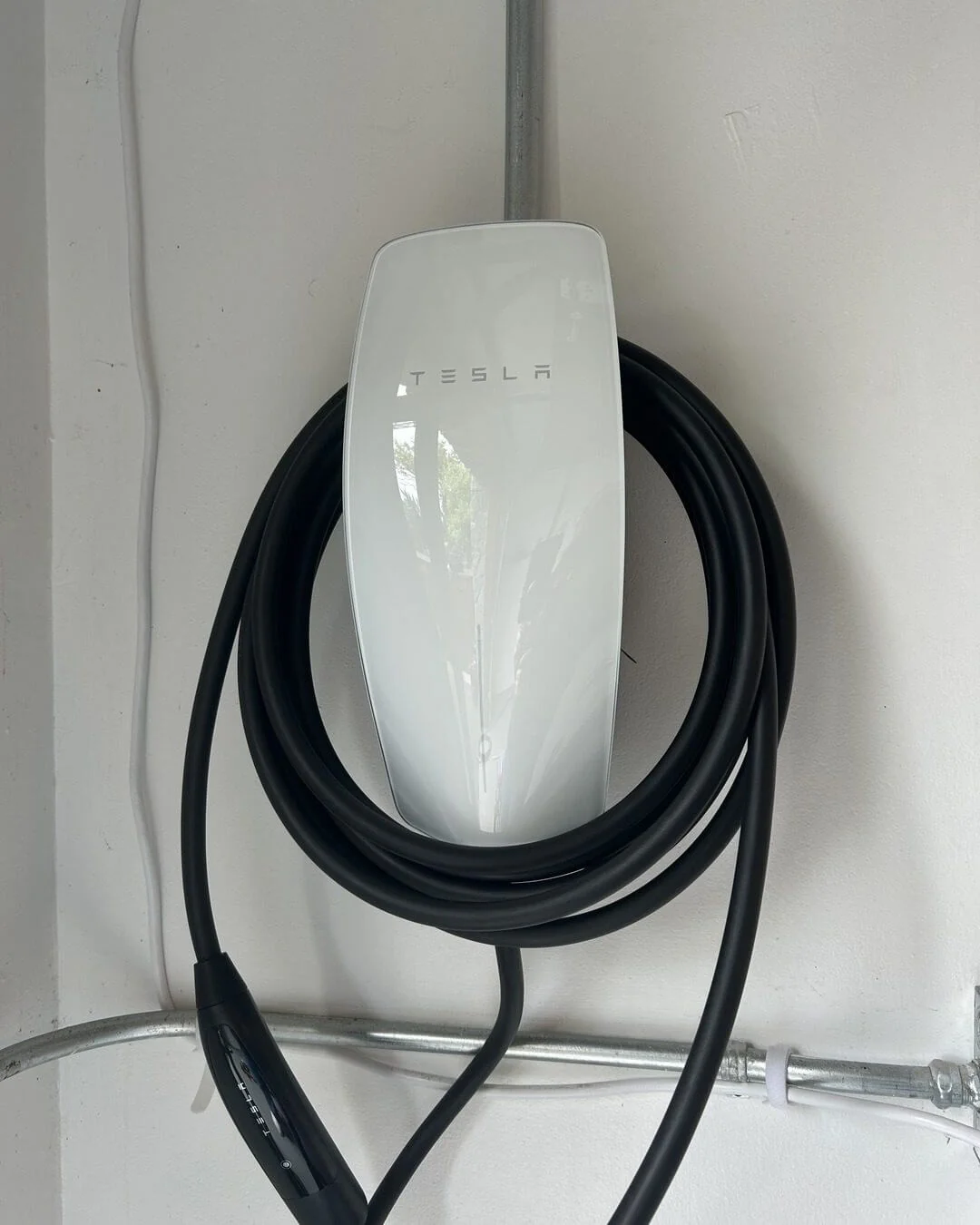
Ongaro & Sons installs EV chargers in Santa Rosa, and the case for us being the best choice here is checkable rather than claimed: the company has run continuously since 1932, we hold a C-10 electrical license, we are Diamond Certified, and we carry 2,756 Google reviews averaging 4.8 stars. We run the load calculation before anyone talks about hardware, we pull the permit under our own license, and we stay through the inspection.
Santa Rosa has four distinct housing stocks
Sonoma County's largest city spans enough building eras that "put in a Level 2 charger" describes four unrelated jobs. What separates them is the age of the electrical service, the distance from the panel to where the car sits overnight, and how much load the house already carries.
The older west-side and downtown-adjacent house. The blocks around Railroad Square and the streets west of the tracks hold the city's oldest surviving residential fabric. Detached garages set behind the house are common, and so is a driveway with no garage at all. The panel usually sits on an exterior side wall, often with a subpanel bolted on during a later remodel, and the service was sized for a household with no cooling equipment and one car. The charger is the easy part. The work is the route from meter to car, plus the arithmetic on that service.
The mid-century house with an attached garage. The friendliest geometry in the city. The panel is often mounted inside the garage on the wall the car parks against, which means a short run, no trenching, and clean surface conduit. Capacity decides these jobs instead of access. Plenty still run a 100-amp service that has since taken on central air conditioning and an electric dryer, and some sit on panel lines that no longer have listed breakers available new, so there is no compliant way to land a two-pole 60-amp breaker at all. In that case the panel upgrade is not an upsell, it is the only route to a permitted circuit.
The post-fire rebuild in Coffey Park or Fountaingrove. Houses rebuilt after the 2017 Tubbs Fire were permitted as new construction, which puts them under a different rulebook than a retrofit. CALGreen's EV-ready provisions attach to new construction rather than to existing homes, so a rebuild may already have a raceway or a dedicated circuit waiting behind the garage drywall. The twist is capacity. Many of these homes came back all-electric, carrying heat pump heating and cooling, a heat pump water heater, and induction cooking on one service. A modern 200-amp panel is not automatically a panel with room for a 48-amp charger, and this is where a load calculation most often comes back short.
The hillside house with solar, a battery, or both. Planned outages have been a routine part of the year in Fountaingrove and the eastern hills since the 2017 Tubbs Fire and the 2019 Kincade Fire, because PG&E may turn off power during severe weather to reduce the risk of its equipment causing a wildfire, through the program it calls a Public Safety Power Shutoff. Many of those homes now carry solar and storage. A charger fed from the backed-up loads panel will pour a finite battery into a car during an outage unless it is configured not to. Which side of the transfer equipment it lands on is a decision, not a default.

Four questions that decide the install
We run these four in order on every Santa Rosa charger, because each answer can overturn the one before it: the load, the charging level, the length of the run, and the utility's eligible-hardware list.
Load. A calculated load on the existing service, not a guess from the panel's amperage label. The calculation counts what the house is actually equipped with and compares it against the service rating. It decides whether you are buying a charger install or a charger install plus service work, and it is the step most often skipped in a low quote.
Level. Level 1 means plugging into an existing 120-volt outlet. It adds range slowly, which is genuinely fine for a plug-in hybrid or a short in-town commute, and it needs no new circuit. Level 2 at 240 volts is the default for a full battery vehicle. Inside Level 2 sits a second choice people skip: amperage. A charger draws at full rate for hours, so it is treated as a continuous load and the circuit is sized above the charger's rating. That is why a 32-amp charger lands on a 40-amp circuit and a 48-amp charger on a 60-amp circuit. Sizing to what you need sometimes removes the service upgrade from the project altogether.
Length. The physical run from breaker to charger. Ten feet of surface conduit and seventy feet out to a detached garage are not the same project even when the charger is identical.
List. In Sonoma County alone, the model you choose decides whether you can enroll in Sonoma Clean Power's smart charger program, because eligible devices are currently limited to specific WallBox and ChargePoint models. The hardware decision is partly a utility decision here, which is not true one county over.

The load calculation is the fork in the road
Nearly every project splits at one point: does the existing service carry the new circuit, or does it not.
When it clears, the work is a dedicated circuit, a correctly sized breaker, a proper conduit route, a hardwired or receptacle connection, and an inspection. One day for most attached-garage installs.
When it does not clear, three real paths open, and they are not equally good for every house. A service upgrade replaces the panel and often the meter main and requires PG&E coordination. A load management device watches whole-house draw and throttles or pauses the charger when the rest of the house is busy, letting a charger live on a service that could not carry it on paper. Or install a smaller charger, the least expensive answer and the one almost nobody volunteers.
Load management deserves more attention than it gets in the all-electric rebuilds. Those houses rarely run the heat pump, the water heater, and the range flat out at 2 a.m. while the car charges. A managed circuit uses that fact instead of paying to widen a service that peaks for a few minutes a day.
I've been working with Ongaro and Sons since 2003 on 3 different homes. It's always a great experience. Great crews, super professional, very friendly and they always stand by their work.
John Z.
What fails on a home charger
The chargers themselves are dull hardware. Almost everything that goes wrong traces to installation decisions or to connection points.
A breaker that trips repeatedly under load is reporting something real: an undersized circuit for a continuous draw, a shared or borrowed neutral from an older remodel, or terminations never torqued to spec that have loosened through heat cycling. Loose terminations are the most common defect we find in other people's work, and they show up as discoloration at the lug or a warm breaker face.
Ground-fault and charge-circuit interrupt trips are the second family. Moisture in the connector, dust in the pins, or a cracked cable jacket all produce them, and outdoor installs here collect summer dust and winter rain in equal measure.
The receptacle question is worth naming. A plug-in charger on a 14-50 outlet concentrates hours of continuous current on a single plug-and-socket connection, and the cheapest general-purpose receptacles are not built for that duty cycle. Where portability matters, we use an industrial-grade device and say so on the estimate.
Then heat. A charger on a west-facing exterior wall in a city that runs into triple-digit afternoons all summer stays inside its rating only if the mounting and clearance guidance is followed. Shade and correct standoff are free at install and expensive later.
Where the wire goes, by house type
Attached garage, panel on the parking wall. Surface conduit, a short horizontal run, and a mounting height that keeps the cable off the floor.
Attached garage, panel on the far side of the house. The route becomes the project: an attic run, a crawlspace run, or exterior conduit along the wall line, each with consequences for insulation, finish, and how much drywall gets opened. On single-story slab houses, exterior conduit is often the least invasive answer despite being the most visible.
Detached garage or carport. The older west-side pattern. Feeding an outbuilding means a subpanel out there or a home run in buried conduit at the required depth, plus a trench across a driveway or yard, plus restoration. If the structure already has a feed, its size and condition decide whether it can take a charger.
Driveway or curbside parking with no garage. Common in the older grid neighborhoods. The unit goes on a wall or pedestal near the parking position, cable management matters more because the cord crosses a walking surface, and the enclosure needs a rating for full outdoor exposure.
Attached housing with shared parking. The first question is not electrical, it is which meter the circuit lands on, and that gets settled with the association before anyone designs a run.
Permits and code
A home charger in California needs a permit. What state law does is cap how long a jurisdiction can take with it.
Government Code 65850.7 requires every city and county to "adopt an ordinance ... that creates an expedited, streamlined permitting process for electric vehicle charging stations," and makes review ministerial rather than discretionary: a jurisdiction "shall administratively approve an application to install electric vehicle charging stations through the issuance of a building permit or similar nondiscretionary permit." The deadlines come from a separate section, Government Code 65850.71. For an application covering at least one but not more than twenty-five stations, it is deemed complete five business days after submission and deemed approved twenty business days after that, unless the building official has acted, made adverse-impact findings, denied it, or an appeal is pending.
Inside city limits the permit comes from the City of Santa Rosa Building Division, which publishes construction document submittal requirements for electric vehicle charging stations on its building forms page. Parcels in the unincorporated county around the city go to Permit Sonoma instead.
One code point gets misapplied constantly: CALGreen's EV-ready requirements govern new construction and impose nothing on an existing house. If a bid claims your 1955 ranch is out of compliance for lacking a charger circuit, that is not what the rule says.
What drives the cost
We do not quote by the foot, because the same charger on two Santa Rosa houses is two different jobs. In rough order of impact:
- Whether the load calculation clears, and if not, which of the three paths you take.
- Difficulty of the run: exposed garage wall versus finished walls, attic, crawlspace, or a trench to a detached structure.
- Trenching and restoration where a driveway, walkway, or planting is crossed and put back.
- Whether PG&E is involved for a larger service or a second meter.
- Hardwired versus receptacle-fed, and the grade of receptacle if one is used.
- Panel condition, including whether breakers for it are still manufactured.
- The charger hardware, and whether the model is one you intend to enroll with the utility.
If spreading payments matters, financing is available and we cover it before work starts.
Office and technician Aubrey, were responsive, showed up right on time and did an amazing job!
Ted D.
Incentives, and what they are in Sonoma County
Here is the current shape of the incentive picture.
Sonoma Clean Power runs a smart charger enrollment program, not an installation rebate. It pays a monthly bill credit plus a sign-up bonus for enrolling an eligible Wi-Fi connected smart charger, and the account holder has to be an active SCP customer. Eligible devices are currently limited to specific WallBox and ChargePoint models, and SCP says it is "working hard to add more EV chargers to our program." In exchange, SCP can reduce charging speed during grid stress, though its page notes you "can override an event anytime." Terms are on SCP's EV chargers page.
PG&E rate plans are the larger, quieter lever. PG&E's EV rate plans change what overnight charging costs against your current plan. EV2-A uses your existing single meter and applies to both home and vehicle use, off-peak midnight to 3 p.m. every day, peak 4 to 9 p.m. PG&E states that customers with usage over 800 percent of baseline allowance across the last twelve months are not eligible. EV-B separates vehicle electricity from household electricity and requires a second dedicated meter, off-peak 11 p.m. to 7 a.m., and it is not available with CARE, FERA, or Medical Baseline. That second meter is an electrical scope item, which is why the rate plan question belongs in the design conversation. PG&E also lists E-ELEC, its Electric Home plan, aimed at households adding some combination of vehicle, battery and heat pump. The house does not have to be all-electric to qualify.
Keeping it working
Look at the cable and connector once a year for a cracked jacket, bent or discolored pins, and grit in the contacts. Keep the connector holstered rather than resting on the garage floor or hanging in the weather.
After the first heating and cooling season, terminations are worth a re-check. Conductors move as they cycle through heat, and a lug that was correct at install can back off in the first year. That is a five-minute check with the power off and the most effective preventive step on the whole installation.
If the unit is Wi-Fi connected, keep firmware current, particularly under utility enrollment, since that depends on the device staying reachable. And if the breaker trips more than once, stop resetting it and have it diagnosed.
Where we work in Santa Rosa
We install chargers across the city and the county around it: Coffey Park and the rebuilt streets nearby, Fountaingrove and the eastern hills, Rincon Valley, Bennett Valley, the Railroad Square and downtown blocks, the west side, and the unincorporated parcels beyond the city limits. Everything runs from our Petaluma headquarters, a straight shot up 101.
Charger work tends to surface other things. When a technician finds a subpanel from an old remodel that was never done right, we handle it through our electrical service in Santa Rosa. The full local scope is on our Santa Rosa service page.
How to choose a contractor for this work
Four things separate an install that passes and lasts from one that does not.
The license. This is C-10 electrical work, so ask who holds it and confirm the permit gets pulled under it rather than under your name as an owner-builder.
The load calculation. Ask to see it in writing. Anyone who declares the panel fine after glancing at the main breaker label has not done it, and you find out at inspection or the first time the main trips.
Willingness to sell you less. A firm that never recommends a smaller charger or a load management device is optimizing for the invoice.
Longevity. We have worked in the North Bay since 1932, we are Diamond Certified, we hold a BBB A+ Rating.
What North Bay homeowners say
Two recent reviews from customers in our service area:
Schedule your Santa Rosa EV charger installation
Tell us the vehicle, where it parks, and roughly where the panel sits, and we will bring the load calculation to the visit. Book online and we will confirm the permitting authority for your address, walk the route with you, and lay out every option, including the ones that make the project smaller. We serve Marin, Sonoma, and Napa County from Petaluma, and everything we install is permitted and inspected. Related work nearby: electrical panel upgrade in Santa Rosa, heat pump systems in Santa Rosa, water heater service in Santa Rosa, solar in Santa Rosa, and the full Santa Rosa service matrix. EV charger installation in neighboring cities: Rohnert Park, Petaluma, and Windsor. Countywide, see our electrical services.
Your Comfort, Our Priority
Ongaro & Sons is your trusted heating, cooling, plumbing, electrical, and solar expert, specializing in reliable maintenance and repair services that keep your home running efficiently year-round.
Our certified technicians deliver unmatched expertise with fast, friendly service across Marin, Sonoma and Napa County. From HVAC tune-ups to plumbing repairs and electrical upgrades or solar solutions, we focus on energy-efficient performance and long-term comfort. Count on us to maintain the systems that power your home and keep your environment just the way you like it.
Licensed, Insured, Background-Checked
Our technicians are licensed, experienced, and trained to service all makes and models.
Locally Owned and Operated
Serving the Napa, Marin, and Sonoma communities with personalized, hometown service.
Reliable Repairs
We respond quickly and get the job done right the first time, with no surprises.
Since 1932
Why Ongaro & Sons?
Four generations of trusted home service. Open any reason to see what it means for your home.
Schedule Service →Family-owned in the North Bay since 1932
Four generations of the Ongaro family serving Marin, Sonoma and Napa County. We know these homes and the systems in them.
Licensed, insured, background-checked technicians
Every technician is fully licensed and insured, background-checked, and trained on the equipment we install.
Diamond Certified and BBB A+
Diamond Certified since October 2016, and BBB Accredited with an A+ rating since December 1995.
Mitsubishi Diamond Contractor Elite and Trane Comfort Specialist
Both top manufacturer tiers. That standing decides how registration and extended warranty terms are handled on the system you actually bought.
The price is agreed before work starts
You see the number before the work begins. Flat-rate quotes, no surprises and no pressure.
Comprehensive maintenance program
Members get priority scheduling, discounts, and proactive checkups that prevent costly failures.
Discount
Membership
Ongaro Maintenance Plans
Annual maintenance on your home systems provides safeguards and comfort to you and your family. Members get priority scheduling, discounts, and proactive checkups that catch problems early.
Member Discounts
5% off every repair and replacement, all year long.
Peace of Mind
Proactive checkups catch issues before they become big problems.
Courtesy Reminders
We call you to schedule: never miss a seasonal service.
Value That Lasts
With Ongaro & Sons, you’re investing in quality, integrity, and service that stands the test of time. Explore our current promotions and see the difference real value makes for your HVAC, plumbing, and electrical needs.


From the Blog
 Sep 17, 2026
How Many Amps Does My House Need? Sizing Service for What You Actually Run
How many amps your house needs comes from a load calculation of what you run and plan to add. What drives the number, when existing service is enough, and more.
Read More Sep 10, 2026
Hard Water in Marin County: What Is Actually in Your Water and What It Does
Hard water in Marin County varies by provider and source. The 2025 report figures for Marin Water and NMWD, what hardness does and does not mean, and options.
Read More Sep 3, 2026
Electrical Permit Requirements in California: What Needs One and What Does Not
Find out which electrical projects commonly need permits, how to confirm local exemptions, and what to ask before work begins in Marin, Sonoma or Napa County.
Read MoreEV charger questions we get from Santa Rosa homeowners
Who is the best EV charger installer in Santa Rosa?
Judge it on four checkable things rather than on claims: who holds the C-10 license, whether a written load calculation comes with the estimate, whether the permit is pulled under the contractor's license, and how long the company has been reachable. Ongaro & Sons has served the North Bay since 1932, holds a BBB A+ Rating, is Diamond Certified, and carries 2,756 Google reviews averaging 4.8 stars.
Do I need a permit to install an EV charger at my Santa Rosa home?
Yes. State law streamlines the review, it does not remove the requirement. Within the city, the Building Division issues it and publishes a submittal checklist for charging stations. Beyond the city limits, Permit Sonoma has the parcel. We identify the correct agency before filing, since a misdirected application wastes time.
How long can the city take to approve the permit?
Government Code 65850.7 sets an outer clock for applications covering one to twenty-five stations: complete five business days after submission, approved twenty business days after that, unless the building official has acted, denied it, made adverse-impact findings, or an appeal is open. That is a ceiling, not a forecast.
Will my existing panel handle a Level 2 charger?
Only a calculation answers that. The label on the main breaker gives the service rating, not the capacity still available, and a house that has picked up cooling equipment or an electric dryer has already spent some of it. We total connected load against the service in writing, and that result sets the scope.
Do I have to upgrade my panel, or is there another option?
Three ways forward exist when capacity is short. Replace the service, the largest scope, involving PG&E. Add a load management device that throttles the charger while the rest of the house draws hard. Or fit a lower-amperage charger, the cheapest answer and frequently plenty for overnight charging.
What amperage charger should I choose?
Match it to how you drive, not to the biggest unit on the shelf. If the car sits from evening until morning, a moderate-amperage unit refills a typical day's driving well inside that window. Larger units demand larger circuits and conductors, and they push a marginal service across the line into upgrade territory.
Is there an EV charger rebate in Sonoma County?
Not an installation rebate. Sonoma Clean Power operates an enrollment program for eligible smart chargers, paying a monthly bill credit plus a sign-up bonus, and it requires an active SCP account. Build it into the hardware decision, but it will not offset the install the way an equipment rebate would.
Which charger models can enroll with Sonoma Clean Power?
Eligible devices are currently limited to specific WallBox and ChargePoint models, and SCP has stated publicly that it is working to add more. Your model choice therefore determines whether the credit is available to you at all. Settle the hardware before conduit goes up, and check SCP's device list at the moment you buy.
Should I move to a PG&E EV rate plan?
It depends which one, and on your household usage. EV2-A keeps a single meter and covers the whole house, with off-peak hours reaching from midnight into mid-afternoon. EV-B puts the vehicle on its own dedicated meter and is unavailable with CARE, FERA, or Medical Baseline. A second meter is physical work, so decide early.
Should the charger be hardwired or plugged into a 14-50 receptacle?
Hardwiring eliminates a plug-and-socket junction carrying high current for hours at a time, which is where a large share of overheating problems begin. A receptacle makes sense when you want portability or expect to take the unit with you. In that case the device should be industrial grade.
Can you install a charger at a detached garage or a driveway with no garage?
Yes, and it is common in the older neighborhoods west of the tracks. Feeding a detached structure means a subpanel out there or buried conduit at the required depth, with trenching and restoration across whatever the route crosses. Where no structure exists, the unit mounts on a wall or pedestal in a weather-rated enclosure.
My house was rebuilt after the 2017 fire. Is it already EV ready?
Possibly, and it is worth confirming rather than assuming. Rebuilds were permitted as new construction, and new-construction rules address EV readiness in a way retrofit rules do not. Look at the panel schedule and as-built drawings for a stubbed circuit or raceway. Capacity is a separate question, because those homes often carry less headroom than their panel size suggests.
Can my charger run off solar and battery during a Public Safety Power Shutoff?
Technically yes, and usually not without limits. A charger fed from the backed-up loads panel will draw down a battery you are counting on for the rest of the house. We decide which side of the transfer equipment the charger belongs on during design, and where a homeowner wants outage charging, we make it controllable.