AC Repair in Sonoma, CA
Ongaro & Sons, founded in 1932, works in Marin, Sonoma and Napa counties, repairs air conditioning across all three, and every truck runs out of our Petaluma headquarters. Diamond Certified, C-20 licensed, and carrying 2,756 Google reviews that average 4.8 stars on the HVAC work. On a cooling call we measure before we quote, name the part that failed, and say plainly when a repair is the wrong answer.
Most AC advice was written for a subdivision built after 1995. Sonoma is not that. The houses here span more than a century and a half of construction practice, and the era a house was built in decides how its cooling fails and whether repairing it makes sense.
On this page
Four building eras, one hot valley
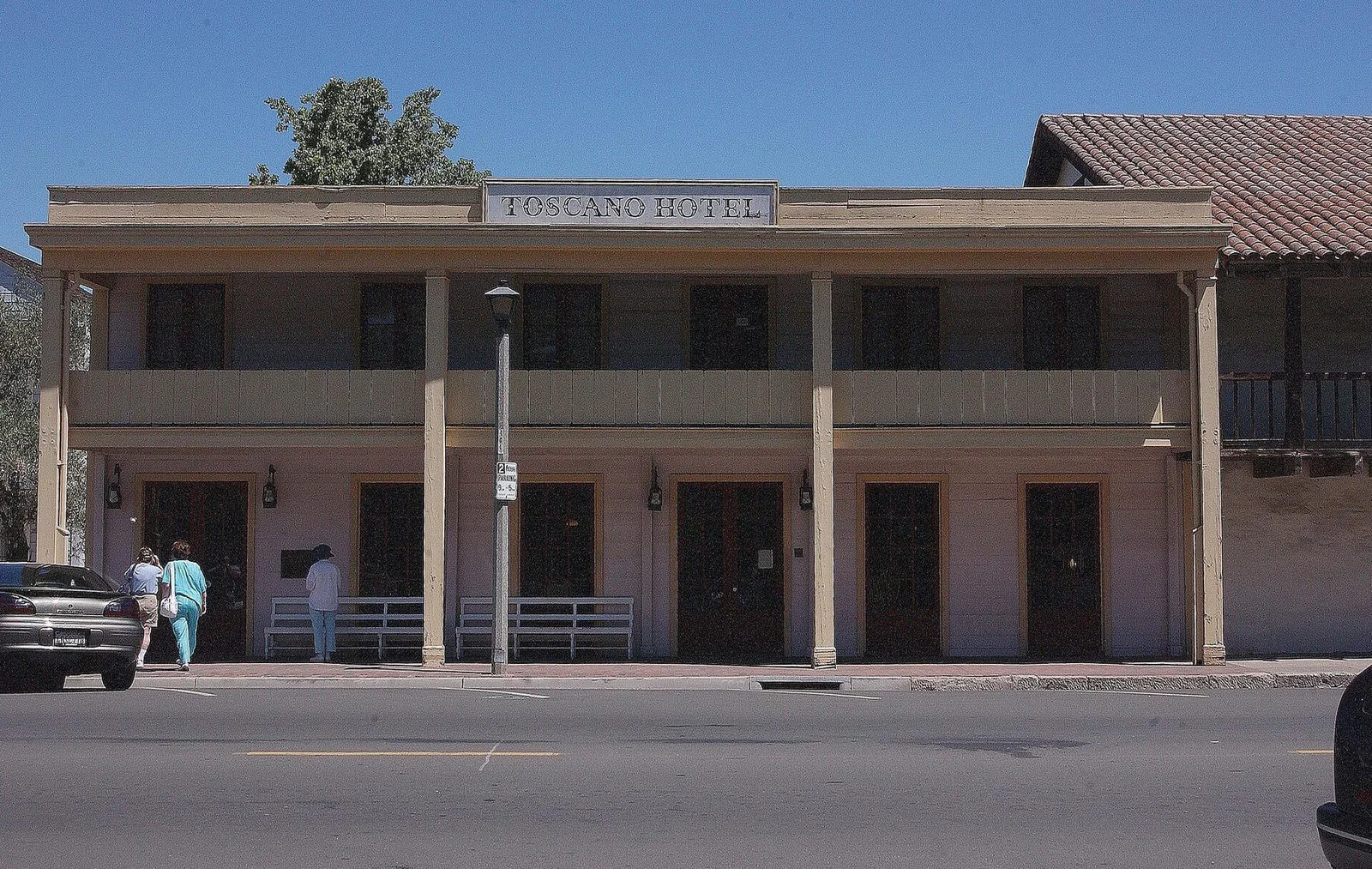
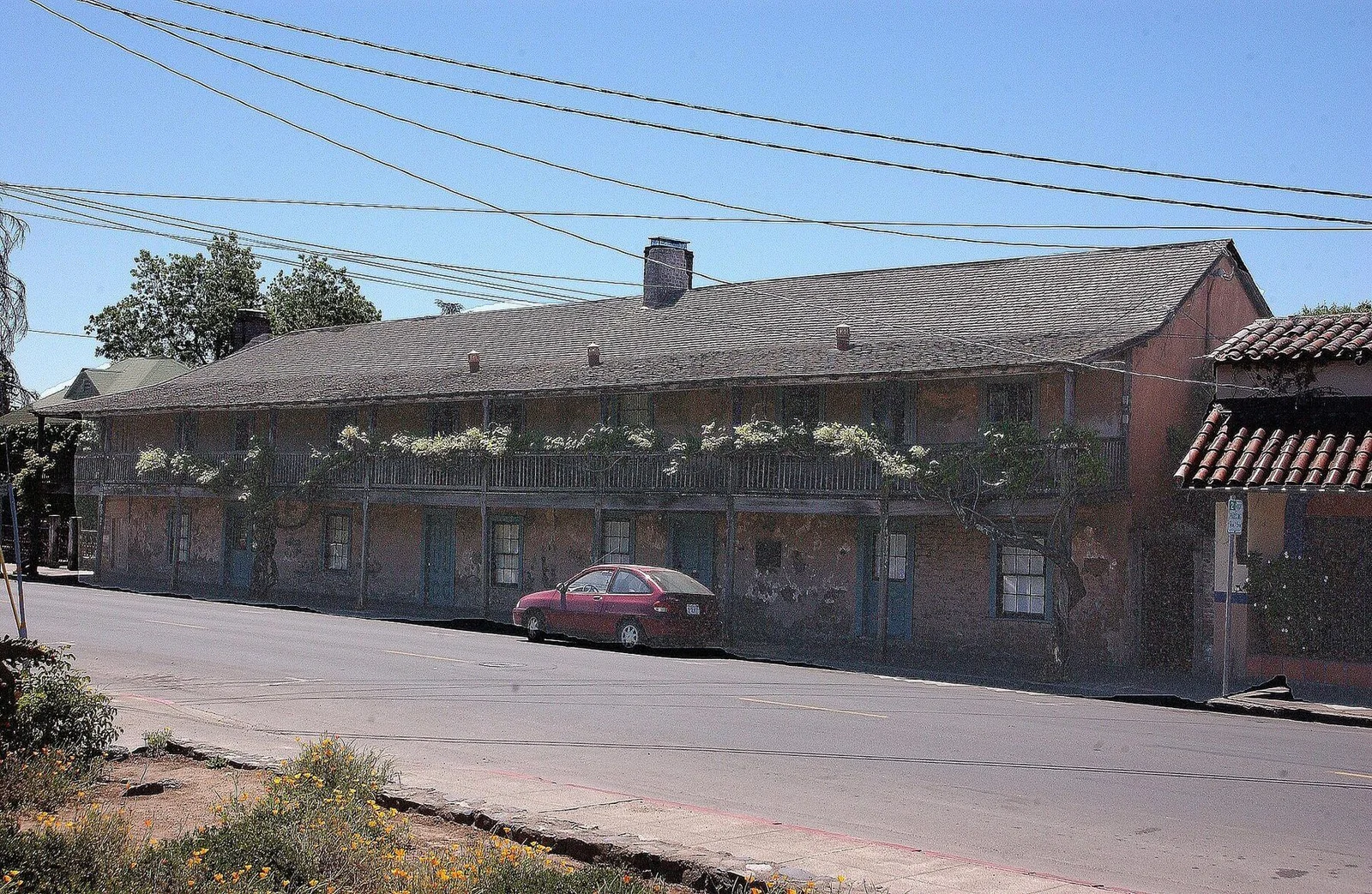
The Toscano Hotel above went up in the 1850s. Homes around the Plaza are not that old, but many predate central air conditioning by decades, so every cooling system there is a retrofit threaded through a building designed to handle heat by opening a window. Move outward and you get early twentieth century bungalows, postwar single-story houses through the flats and the Springs, then later subdivisions and rural valley properties. The Sonoma Valley runs hot all summer, so all four carry real load. They fail in different ways.
Pre-1900 and turn-of-the-century homes near the Plaza. No original ductwork, so whatever exists was added later and had to fit where it could: a shallow attic, a hall closet, a crawlspace. Returns are undersized because there was nowhere to put a bigger one, panels are often small and old, and condensers get tucked into narrow side yards for lack of anywhere flat.
1920s through 1940s bungalows. These started with a floor furnace or a wall heater and got cooling much later, usually in two stages: ducts added for a forced-air furnace, then a coil and condenser bolted on years after. The ducts were never sized for the airflow a cooling coil wants.
Postwar single-story houses. Ducts run through an unconditioned attic that gets brutally hot on a July afternoon. Access to the equipment is generally good, but duct leakage and thin insulation steal a large share of the capacity you paid for.
Later subdivisions and valley properties. Better panel capacity, sound duct layouts. On rural lots the condenser often sits in full afternoon sun at the end of a long lineset, which adds joints and adds places to lose charge.
What fails, by house type
Symptoms are universal: warm air at the registers, a system that never reaches setpoint, ice on the lineset, a tripping breaker, water on the floor, a hum outside that never becomes a start. What sits behind them is not universal at all.
In older Plaza-area and pre-war houses, airflow is the usual culprit and refrigerant takes the blame. A cramped return, a packed filter grille, or a squeezed duct run drops airflow across the coil, the coil runs too cold, moisture on it freezes, and the homeowner reports no cold air. Adding refrigerant makes it worse. Second is condensate: a long shallow drain line clogs, the float switch shuts the system off, and where there is no float switch the pan overflows into a plaster ceiling. Third is a condenser boxed in by a fence or deck, recirculating its own hot discharge until head pressure climbs and the compressor trips on overload.
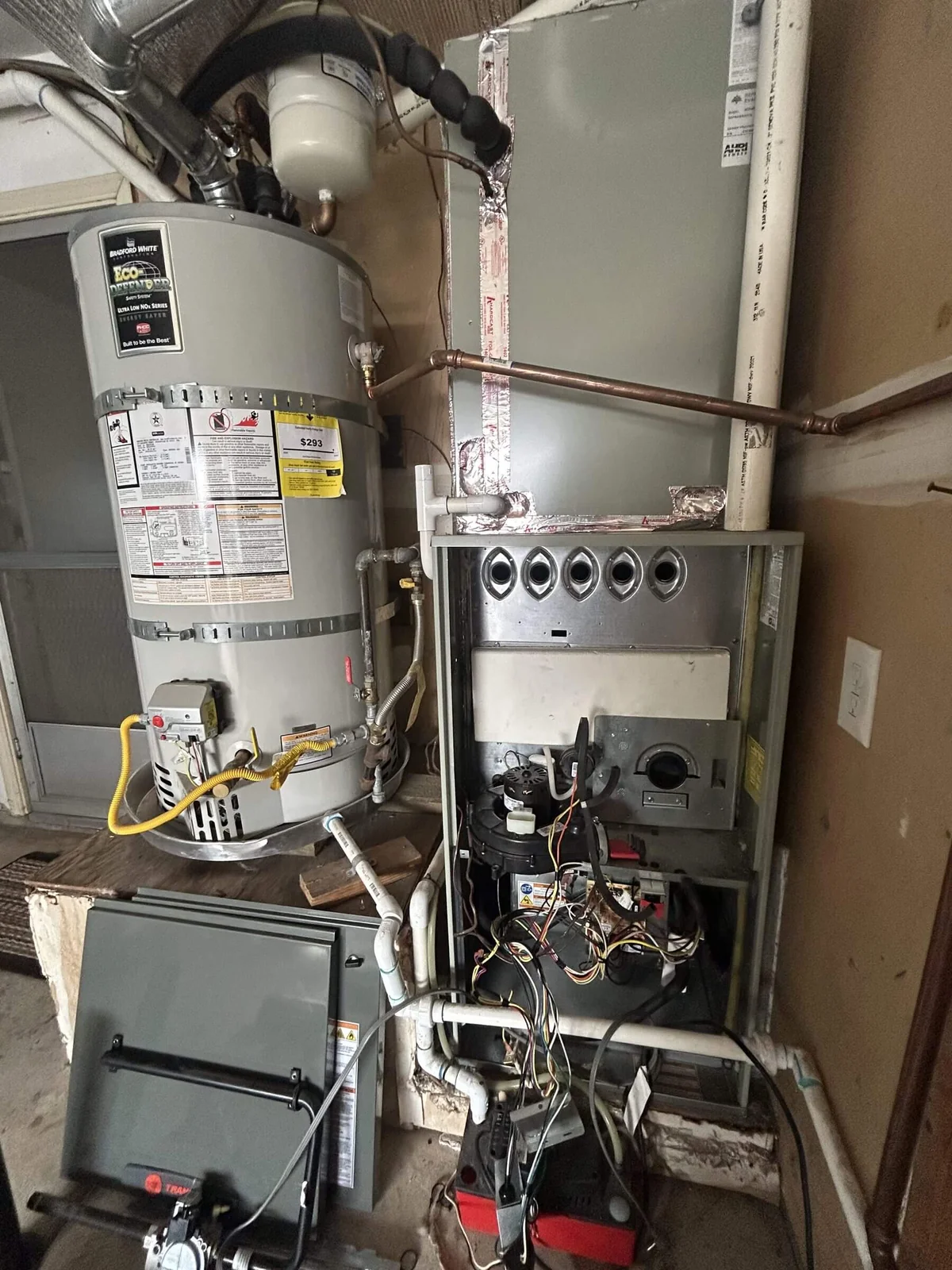
In postwar and mid-century houses, wear parts go first. Run capacitors are the most common failure in the trade, and they fail quietly: capacity drifts down over a season or two, the compressor works harder to start, then one hot afternoon it does not start. Contactors pit and weld. Condenser fan motors seize with bearings full of valley dust. And after enough years, evaporator coils develop pinhole corrosion leaks that show up as a slow decline the homeowner describes as it just isn't as cold as it used to be.
In newer subdivision and valley homes, faults skew electronic: control boards, communicating thermostats that lost their pairing, float switches doing exactly what they should, variable-speed blower modules, and expansion valves that hunt instead of holding superheat. This equipment is tightly matched, so a wrong part is a real problem.
Very good. Compared all the local companies and selected ONGARO. Slightly more expensive but had more experience and had Great references !!! We have had the new heating and A/C and air filtration systems for 6 months and am very happy.
Jeff M.
When a Sonoma AC is worth repairing
Repair-or-replace is not a coin flip and it is not an age rule. We check four things in order, and the job stays on the repair path only if it clears all four.
Refrigerant. What is in the system, and can we still get it. That decides more of these calls than anything else, so it gets its own section below.
Failure class. Wear parts (capacitor, contactor, fan motor, float switch, thermostat, transformer) are a repair on any system otherwise sound. Sealed-system work means recovering the charge, finding and repairing the leak, nitrogen testing, deep vacuum, and a weighed-in charge: worth doing on a good system, and on a tired one it buys a season. A failed compressor on an aging unit is where the repair path usually ends.
Everything else. A perfect compressor is worthless behind leaking attic ducts, a corroding indoor coil, or a blower that cannot move enough air. We look at what needs attention in the next two or three years before recommending spend on one component.
The furnace underneath. In most Sonoma homes the AC coil sits on a gas furnace and borrows its blower and ductwork. If that furnace is also near the end of its life, the sequence changes, because doing both together is one job and doing them two summers apart is two. That is where furnace repair in Sonoma stops being a separate conversation.
Refrigerant settles it most often
If your system went in before roughly 2010, there is a good chance it runs on R-22. Production and import of R-22 in the United States ended in 2020, and everything still circulating is reclaimed or stockpiled. A leak in an R-22 system is therefore less a repair question than a question about how many more times you want to refill something that does not hold charge.
Newer equipment uses R-410A, phasing down under the AIM Act while new residential systems move to lower global warming potential refrigerants, because newly manufactured residential and light commercial equipment has to sit under a 700 GWP limit. Two things follow, and homeowners routinely get told the wrong version of both.
First: an existing R-410A system does not need replacing. It is not banned and the refrigerant is available. Anyone saying otherwise is selling equipment.
Second: a new outdoor unit charged with a different refrigerant is not a drop-in for an old indoor coil. Refrigerants run at different pressures, use different oils, and are rated as matched systems rather than as parts. The tempting half-measure of swapping only the condenser is often unavailable, and where it is available it has to be verified rather than assumed.
Permits: the city line runs right through the valley
A repair is not a permit event. Replacing a failed capacitor, motor, board, or switch is service work. Changing out the condenser, the coil, or the whole system is different, and that is where the building department comes in.
Inside city limits this is unusually straightforward. The city launched Express Building Permits in November 2024, letting residents apply online for certain home projects and get instant approval. HVAC replacement is one of three categories the city lists, alongside kitchen and bathroom remodels and window replacements, with the city's own qualifier that some rules apply. The Building Division decides which projects qualify, and we confirm that before writing the job up.
Outside city limits that program does not apply, because it is a city program. The Springs communities north of the Plaza, Boyes Hot Springs among them, sit in unincorporated county territory, as do Glen Ellen, Kenwood, and the hillside properties. Those jobs permit through Permit Sonoma. Two houses a few minutes apart on the same road can answer to two different building departments.
State energy code sits on top of both. California's 2025 Building Energy Efficiency Standards took effect January 1, 2026, per the California Energy Commission. A repair that stays a repair does not touch them. A changeout does, and the permit is where that gets sorted out.
One more layer matters more here than in the north county. Sonoma sits fully inside the Bay Area Air Quality Management District, per Sonoma County's air quality district map. BAAQMD is working through a family of zero-NOx rules for building appliances.
Nobody's gas furnace is banned today, and we will not tell you otherwise. This belongs on a cooling page because of the furnace question: when a twenty-year-old air conditioner dies, the runway left on the furnace under it is part of the arithmetic, and these rules move often enough that we confirm current requirements at project time.
Ongaro & Sons is the best. Our commercial a/c unit went down and their technician, Chris had it back up and running the same day. I couldn't be happier.
Arron F.
What drives the cost of an AC repair here
You get the number before work starts. What sets it:
- Failure class. Opening the sealed system carries recovery, leak location, nitrogen testing, vacuum, and a weighed-in charge. Swapping a wear part carries none of that.
- Where the leak is. A service valve is one job. A leaking evaporator coil buried in an air handler in a shallow Plaza-area attic is another.
- Access generally. A condenser in an open side yard and one wedged behind a fence are different labor pictures for the same repair.
- Refrigerant type and availability, per the section above.
- Warranty status. Manufacturer parts warranties are common and frequently unclaimed, usually because nobody registered the system at install. We check.
- Electrical condition. A corroded disconnect, an undersized breaker, or a damaged whip gets corrected rather than left in place.
- Duct condition, because fixing the machine and ignoring leaking attic ducts leaves a working system in a house that still will not hold temperature.
- Whether it crosses into a changeout, which brings the permit and inspection above.
We test at load when we can. A marginal system passes at nine in the morning and fails at four in the afternoon, so a diagnosis taken at the wrong hour costs you a second visit. If the work runs larger than expected, financing is available.
Incentives, and the one most AC replacements fail
Sonoma Clean Power is the community choice energy provider here, and its heating and cooling program pays a rebate for a heat pump that handles both heating and cooling. Three details decide whether it applies.
The first catches people. SCP's program does not cover a heat pump paired with a gas heating element. That excludes the dual-fuel arrangement homeowners land on when only the AC has failed and the furnace still runs: new heat pump outside, existing gas furnace inside. Reasonable engineering in some houses, not rebate-eligible here.
The second is timing. SCP requires the application within 90 days of project completion, which for most projects is the date on the finalized permit. That ties the permit section directly to the money: no finalized permit, no clean completion date to file against.
The third is income qualification. Customers enrolled in CARE or FERA can receive enhanced rebates covering a share of project cost. SCP states that program rules, rebates, and eligibility may change at any time, so we verify terms when we write the proposal.
Once electrification enters the discussion, panel capacity is the next question, which is why heat pump work in Sonoma and electrical panel upgrades in Sonoma come up together so often in the older parts of town.
Maintenance in a valley that gets dust, seed, and smoke
Cooling equipment here works in dirty air for part of the year. Grass seed and field dust load condenser coils all summer, and wildfire smoke loads filters and indoor coils with fine particulate that a standard change interval was never written for.
- Test capacitors and contactors in spring, before the first genuinely hot week, because that is when a drifting capacitor becomes a no-start.
- Wash the condenser coil rather than hosing the cabinet. A coil that looks clean from outside can be packed solid two fins deep.
- Shorten the filter interval during smoke season, then return to normal. A loaded filter starves the coil, and a starved coil freezes.
- Clear the condensate drain and test the float switch. Cheapest failure to prevent, one of the more expensive to clean up.
- Verify charge by measurement, never by adding refrigerant until the air feels colder. A system needing refrigerant has a leak by definition.
- Watch the restart after a power shutoff. The hills around the Sonoma Valley face wildfire and PG&E Public Safety Power Shutoffs, and a hard restart is when a marginal capacitor announces itself.
A maintenance plan puts most of that on a schedule, so faults surface in April, when parts and appointments are easy, instead of during the first heat wave.
Where we work in the Sonoma Valley
We cover the valley from Petaluma: the streets around the Sonoma Plaza, the neighborhoods east and west of Broadway, the Springs and Boyes Hot Springs, Glen Ellen and Kenwood, the flats, and the hillside properties on both sides. The same crews handle the rest of the house, and that is the reason HVAC in Sonoma sits alongside our plumbing and electrical work rather than in a silo.
How to choose a contractor for AC work in Sonoma
Ask for a diagnosis in writing that names the failed component and the measurement behind it. A capacitor is either within tolerance of its rated microfarads or it is not, and that is a number, not an opinion. Be skeptical of any compressor recommendation delivered without proof, because compressor replacement is the most expensive wrong answer in the trade.
On a changeout, ask three more things. Does the contractor pull the permit under their own license. Do they run a load calculation for the house as it stands, or copy tonnage off the old nameplate and inherit whoever guessed in 1998. And do they give you the matched system designation rather than two part numbers that happen to be in stock. Then ask who files the rebate paperwork, because that 90-day window is real.
We hold a C-20 HVAC license, we are Diamond Certified, we hold a BBB A+ Rating, and we are both a Trane Comfort Specialist and a Mitsubishi Diamond Contractor Elite, the top tier for each manufacturer. On a repair call that means factory access to correct parts and current technical bulletins for the equipment already in your house.
What North Bay homeowners say
Two of the reviews behind that rating:
More are on our reviews page.
Book AC repair in Sonoma
Tell us what the system is doing, when it started, and where the equipment lives, and we will bring the right parts on the first visit. Book online and a technician will handle it, with the diagnosis and the price in front of you before work begins. Working through the rest of the house, or comparing across the valley: HVAC across Sonoma County, every service we offer in Sonoma, electrical in Sonoma, and AC repair in Petaluma, Santa Rosa, and Sebastopol.
Your Comfort, Our Priority
Ongaro & Sons is your trusted heating, cooling, plumbing, electrical, and solar expert, specializing in reliable maintenance and repair services that keep your home running efficiently year-round.
Our certified technicians deliver unmatched expertise with fast, friendly service across Marin, Sonoma and Napa County. From HVAC tune-ups to plumbing repairs and electrical upgrades or solar solutions, we focus on energy-efficient performance and long-term comfort. Count on us to maintain the systems that power your home and keep your environment just the way you like it.
Licensed, Insured, Background-Checked
Our technicians are licensed, experienced, and trained to service all makes and models.
Locally Owned and Operated
Serving the Napa, Marin, and Sonoma communities with personalized, hometown service.
Reliable Repairs
We respond quickly and get the job done right the first time, with no surprises.
Since 1932
Why Ongaro & Sons?
Four generations of trusted home service. Open any reason to see what it means for your home.
Schedule Service →Family-owned in the North Bay since 1932
Four generations of the Ongaro family serving Marin, Sonoma and Napa County. We know these homes and the systems in them.
Licensed, insured, background-checked technicians
Every technician is fully licensed and insured, background-checked, and trained on the equipment we install.
Diamond Certified and BBB A+
Diamond Certified since October 2016, and BBB Accredited with an A+ rating since December 1995.
Mitsubishi Diamond Contractor Elite and Trane Comfort Specialist
Both top manufacturer tiers. That standing decides how registration and extended warranty terms are handled on the system you actually bought.
The price is agreed before work starts
You see the number before the work begins. Flat-rate quotes, no surprises and no pressure.
Comprehensive maintenance program
Members get priority scheduling, discounts, and proactive checkups that prevent costly failures.

Discount
Membership
Ongaro Maintenance Plans
Annual maintenance on your home systems provides safeguards and comfort to you and your family. Members get priority scheduling, discounts, and proactive checkups that catch problems early.
Member Discounts
5% off every repair and replacement, all year long.
Peace of Mind
Proactive checkups catch issues before they become big problems.
Courtesy Reminders
We call you to schedule: never miss a seasonal service.
Value That Lasts
With Ongaro & Sons, you’re investing in quality, integrity, and service that stands the test of time. Explore our current promotions and see the difference real value makes for your HVAC, plumbing, and electrical needs.


From the Blog
 Sep 17, 2026
How Many Amps Does My House Need? Sizing Service for What You Actually Run
How many amps your house needs comes from a load calculation of what you run and plan to add. What drives the number, when existing service is enough, and more.
Read More Sep 10, 2026
Hard Water in Marin County: What Is Actually in Your Water and What It Does
Hard water in Marin County varies by provider and source. The 2025 report figures for Marin Water and NMWD, what hardness does and does not mean, and options.
Read More Sep 3, 2026
Electrical Permit Requirements in California: What Needs One and What Does Not
Find out which electrical projects commonly need permits, how to confirm local exemptions, and what to ask before work begins in Marin, Sonoma or Napa County.
Read MoreAC repair questions from Sonoma homeowners
Who is the best AC repair company in Sonoma?
We would put Ongaro & Sons up against anyone here. The company has served the North Bay since 1932, holds a C-20 HVAC license and a Diamond Certified rating, and carries 2,756 Google reviews averaging 4.8 stars. More usefully, our technicians diagnose with instruments and hand you the readings, so you can see why a recommendation was made instead of taking it on faith.
My air conditioner runs but the air is warm. What is usually wrong?
Warm air with the unit running points to a short list: a capacitor that will not start the compressor, a contactor not pulling in, refrigerant leaked below the level the system needs, or a frozen indoor coil from restricted airflow. Switch the system off and let it thaw before anyone diagnoses it, since a block of ice hides whatever caused it.
Do I need a permit to fix my air conditioner in Sonoma?
Repairing components does not require one. Replacing the outdoor unit, the indoor coil, or the complete system does, and inside city limits the express online path covers qualifying HVAC replacements. Which side of that line a specific job falls on is the building department's call, and we confirm it before scheduling rather than after the fact.
I live in Boyes Hot Springs. Is that the City of Sonoma?
For permitting, no. Boyes Hot Springs and the surrounding Springs communities are unincorporated county territory, so equipment changeouts there route through Permit Sonoma instead of the city. It is a common point of confusion because the mailing address reads Sonoma. The physical work is identical either way; the paperwork route is not.
My system uses R-22. Is it still repairable?
Mechanically, often yes, and it depends on the fault. A failed fan motor or capacitor on an R-22 system is a straightforward fix worth doing. A refrigerant leak is a harder call, since available supply is reclaimed and stockpiled material only, and a system that has leaked once will generally leak again. We price both directions and let you choose.
Why does my AC keep up in the morning and lose ground by late afternoon?
That pattern nearly always means capacity is marginal rather than absent. Common causes are a dirty condenser coil raising head pressure, a slightly low charge, duct losses through a superheated attic, or equipment undersized for the house when it went in. Checking at nine in the morning shows a system that looks fine, which is the reason we schedule these for the hot part of the day.
There is water on the floor near my indoor unit. Is the AC leaking?
Almost certainly condensate, not refrigerant. Cooling coils pull moisture out of the air, and that water leaves through a drain line. When the line clogs, the pan fills. A float switch should shut things down before it overflows, so water on the floor means the switch is missing or failed. Turn the system off before ceiling damage starts.
Can I replace just the outdoor unit and keep my existing coil?
Sometimes, and less often than people expect. The two halves have to be a rated matched pair, and if the new outdoor unit uses a different refrigerant than the old coil was built for, the answer is no. Mismatched equipment underperforms its ratings, voids warranties, and can shorten compressor life. We check the pairing before quoting instead of at install.
Does Sonoma Clean Power pay a rebate if I replace my AC with a heat pump?
There is a rebate for a heat pump providing both heating and cooling, with one significant exclusion: keeping a gas furnace as the heating element disqualifies the project. Households enrolled in CARE or FERA can receive enhanced amounts. Terms shift without much notice, so treat any figure you find online as provisional until it is confirmed for your specific project.
How often should air conditioning in the Sonoma Valley be serviced?
Once a year at minimum, scheduled in spring so anything found can be corrected before the valley heats up. Homes near open grassland or agricultural land, and any system that ran through a heavy smoke period, benefit from a mid-season coil and filter check too. The visit exists to catch drift in electrical components and charge while it is cheap to address.