HVAC in Sonoma, CA
Ongaro & Sons, founded in 1932, repairs, replaces and maintains heating and cooling systems in Marin, Sonoma and Napa counties. We hold a C-20 HVAC license, we are Diamond Certified, and we carry 2,756 Google reviews averaging 4.8 stars. Every truck runs out of our Petaluma headquarters, one valley west over the Sonoma Mountains. We pull the permit, size equipment to the building rather than to a square-footage rule of thumb, and put the number in front of you before anything gets opened up.
On this page
The three most common HVAC complaints in Sonoma
The first genuinely hot stretch of the year is when most problems surface. Sonoma sits inland at the foot of a valley that holds heat, and the marine air keeping the coast and the Petaluma side mild has largely spent itself by the time it crosses the hills. A system that coasted through May gets asked to hold a setpoint through four or five consecutive afternoons in July, and whatever was marginal stops being marginal.
Three complaints account for most of what we hear. The first is a system that runs without producing anything cold: the outdoor fan spins, the blower moves air, and the house drifts upward anyway. The second is a house that cools unevenly, where the living room holds temperature while the upstairs bedrooms sit ten degrees behind it all afternoon. The third comes from the heating side, where the furnace lights, runs a few minutes, then shuts down before the house recovers.
Only the first of those is usually a broken part. The second is a design condition. The third is a safety device doing its job, which means the real fault sits upstream of whatever tripped.
What is actually failing
Diagnosis on a no-cool call starts with the cheap, high-mortality parts. Run capacitors sit in heat all summer and lose capacitance long before they visibly fail; a weak one makes a compressor struggle to start and shortens its life every time it tries. Contactors pit and weld. Both are ordinary wear items.
Refrigerant is where Sonoma homeowners most often get talked into the wrong thing. A sealed system does not consume refrigerant. If it is low, it leaked, and recharging without finding the leak buys a season at most. The right sequence isolates the leak first, at the evaporator, the line set, a service valve or a brazed joint, then repairs and recharges to the manufacturer's specification by weight.
Airflow problems are the quietest cause of expensive failures. A restricted filter, a collapsed flex duct in a crawlspace, or a return that was undersized when the system went in all raise static pressure across the blower. On the cooling side that freezes an evaporator coil. On the heating side it overheats a heat exchanger and trips the limit switch, which is the short-cycling pattern above. The part that fails is rarely the part that caused the problem.
Outdoor coils take a specific beating here, pulling dry grass seed, dust and pollen through the fins all season, and a packed coil raises head pressure, current draw, and eventual compressor wear. On furnaces, the recurring items are oxidized flame sensors, cracked igniters, pressure switches responding to a blocked flue or condensate line, and failing inducer motors. On heat pumps, add the reversing valve, the defrost control, and whether auxiliary electric heat is engaging when it should not be, which usually explains a heating bill that jumped for no visible reason.
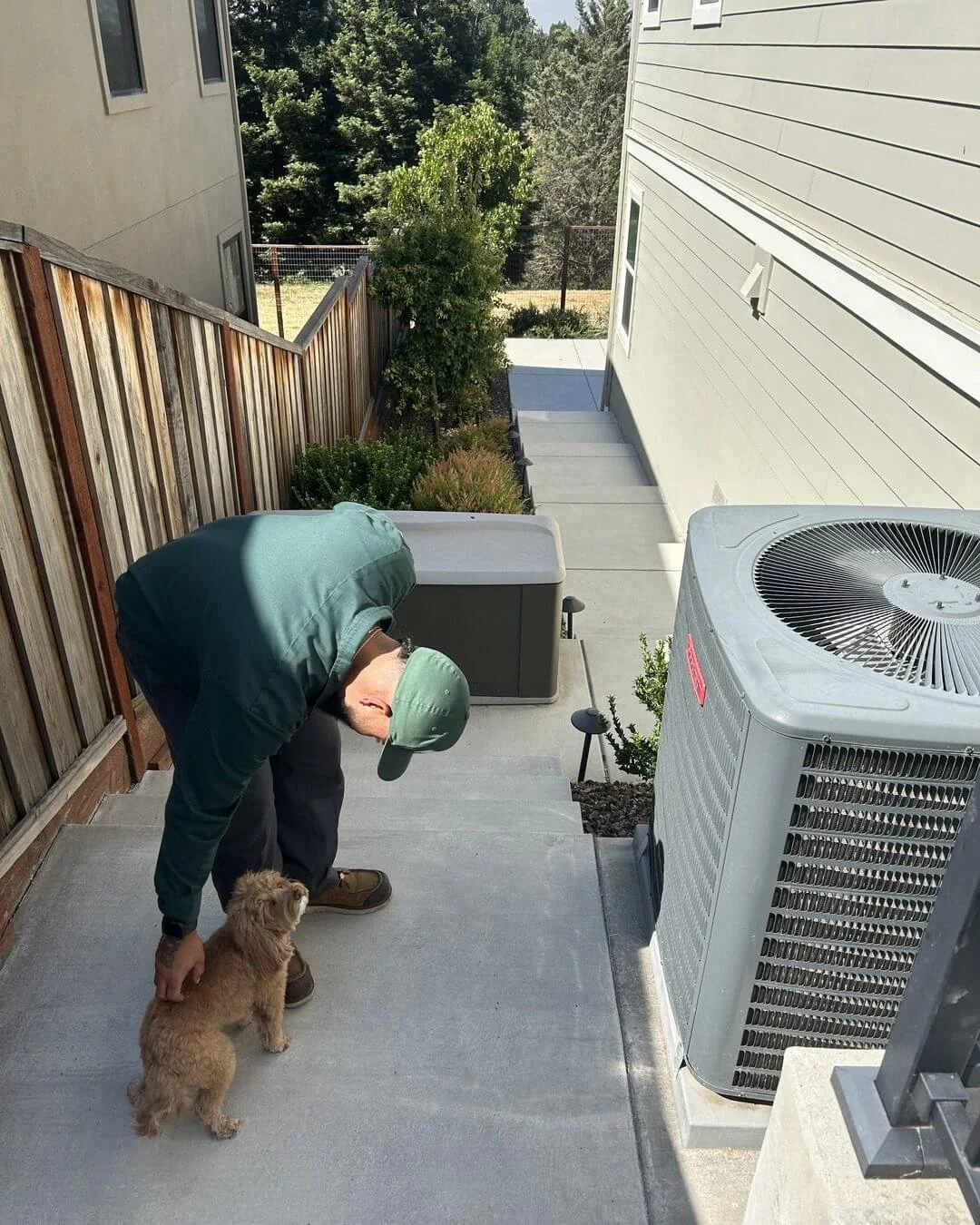
Our technicians measure rather than guess: static pressure across the air handler, temperature split across the coil, superheat and subcooling against the manufacturer's chart, amp draw on the compressor and blower, and the electrical supply feeding the equipment. Those numbers distinguish a failing part from an installation that was never right, and both from a system at the end of a reasonable service life. You get the readings and the finding, then the price, then the decision is yours.
Ongaro fixed a leak in the AC and recharged the system. Brandon was great, explained all that was necessary to do with the equipment, and was very educational.
Jay L.
Refrigerant, distribution, service capacity
When repair-or-replace is a real question, we work through three checks in order.
Refrigerant first. If the system runs on R-22, the economics have already shifted. Production and import of R-22 in the United States ended in 2020, so anything used for a repair today is reclaimed or stockpiled, and a serious leak repair on that platform often costs more than the remaining service life is worth. R-410A is a different case. It is being phased down under the AIM Act and new equipment is moving to lower global warming potential refrigerants, because newly manufactured residential and light commercial equipment has to sit under a 700 GWP limit, but an existing R-410A system is perfectly serviceable and does not need replacing on account of the phase-down.
Distribution second. Ducts, returns and zoning decide comfort more often than equipment does. Putting a new condenser and furnace on a duct system that leaks into a crawlspace and has no upstairs return produces a more efficient version of the same complaint.
Service capacity third. Converting from gas heat to a heat pump generally means a dedicated 240-volt circuit and a load calculation against the existing service. Around the Plaza and through the older parts of the Springs we routinely open panels with no spare breaker spaces, sized for a very different set of appliances. That does not stop the project, but it changes the scope, and it belongs in the estimate rather than in a discovery on installation day. Where the panel is the constraint, we handle the electrical panel upgrade in Sonoma under our C-10 license, so one company owns both halves.
Air conditioning in Sonoma
Cooling load is real here in a way it is not in the coastal parts of the county. Systems run long cycles for weeks at a stretch, and that duty exposes weak capacitors, marginal charge and fouled coils. The repair path is covered on the AC repair in Sonoma page.
On replacement, matching matters more than brand. An outdoor unit paired to a mismatched indoor coil will not deliver its rated performance, and the certified match is what the rebate programs ask to see. We are a Trane Comfort Specialist, the manufacturer's top dealer tier, and we document the certificate on every matched system.
Heating: furnaces, heat pumps, and the changeover
Sonoma winters are mild by national standards, which makes this good heat pump territory: one system that cools in summer and heats in winter, with auxiliary electric heat available for the rare cold morning. That efficiency argument is physical rather than promotional, since a heat pump moves heat instead of generating it. Gas furnaces remain legitimate, particularly where the electrical service is tight or the duct system already suits a furnace's airflow. Fault patterns on that side are on the furnace repair in Sonoma page.
The changeover decision comes down to what the building can support. Ducted heat pumps reuse existing distribution where the ducts are sound. Ductless systems solve what ducts never reached: converted attics, additions off the back of an older home, guest quarters, and rooms near the Plaza with no chase to run a duct through. We are a Mitsubishi Diamond Contractor Elite, the manufacturer's highest contractor designation, and ductless and multi-zone work is a large share of what we do in this valley. Details are on the heat pump in Sonoma page.
Ducts, zoning, and the two-story problem
The most common comfort complaint we solve here has nothing to do with equipment. Heat rises, the upper floor takes afternoon sun, and one thermostat downstairs reads a room that is already comfortable while the bedrooms above it cook. Converting a single-zone system to two zones puts dampers and a second thermostat in charge of that upper floor so it can call for cooling independently. On the right house that changes the building's behavior more than a new condenser would.
Duct work is the other half: sealing accessible joints, correcting crushed or undersized returns, insulating runs through unconditioned crawlspaces, and adding supply where a remodel left a room short. When we quote a replacement we tell you what the ducts are doing, because new equipment on bad distribution wastes money.
Ongaro turned our single zone HVAC system into a two zone. Works great. The upstairs can now be cooled and heated efficiently.
William D.
Smoke, filtration, and planned power outages
Two conditions shape indoor air in this valley. The first is late-season smoke, which makes filtration an equipment question rather than an upsell: a higher-efficiency media filter needs a cabinet and a blower that can handle the added resistance, so it gets specified against static pressure instead of slid into an existing slot. The second is grid exposure. PG&E may turn off power during severe weather to help prevent wildfires, through its Public Safety Power Shutoff program, and the hills around the Sonoma Valley carry their share of it. A heat pump heats and cools only while it has power, so if riding out an outage matters, generator or battery capacity belongs in the same planning conversation. We are a Certified Generac Generator installer and handle that scope in-house.
Permits, code and inspection in Sonoma
Mechanical work here is permitted and inspected, and the details are worth knowing before you sign anything.
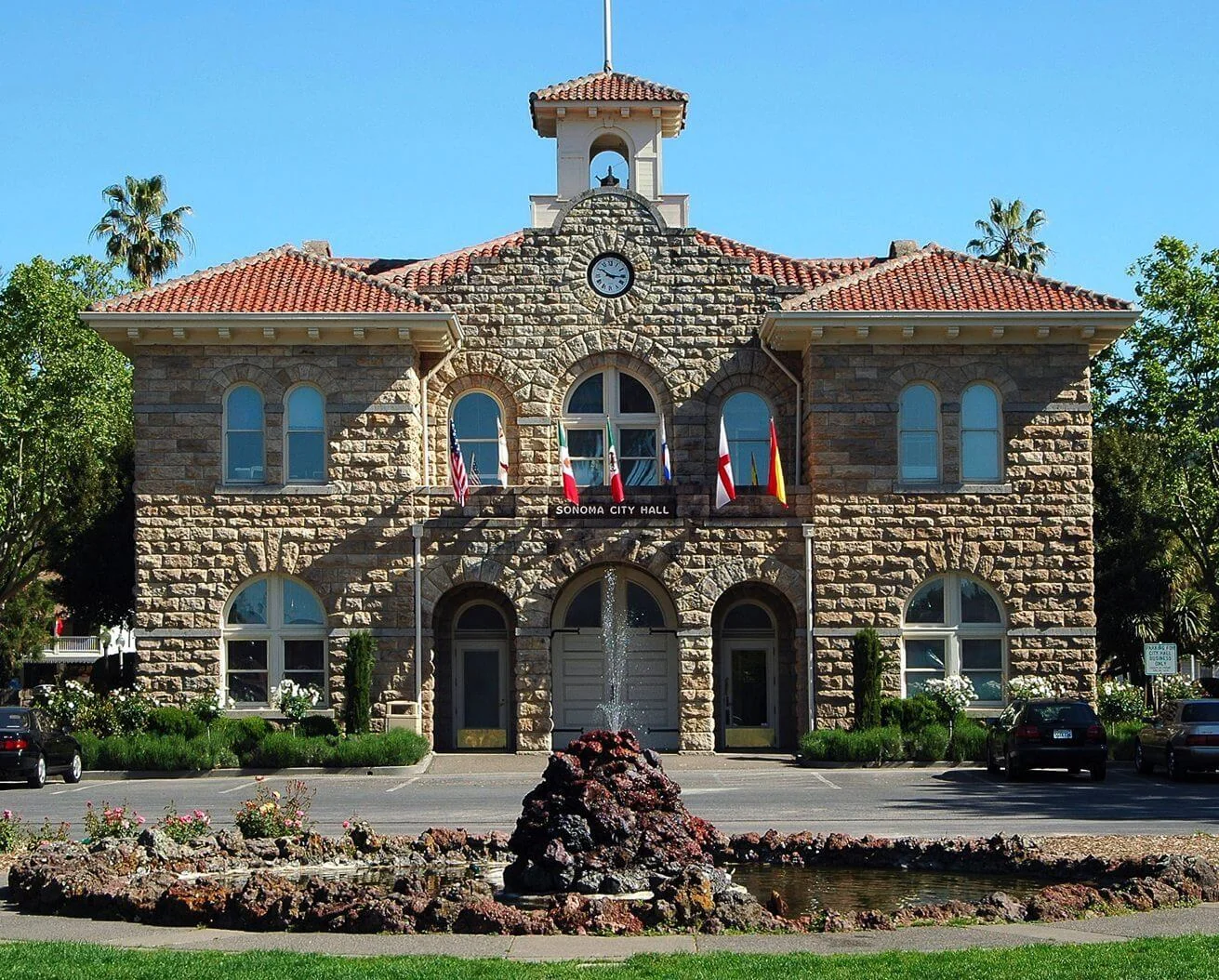
- Inside the city limits, the permit comes from the City of Sonoma. The Building Division of the Community Development Department issues building and mechanical permits, with applications submitted through the city's online permit portal.
- Outside the city limits, it is county jurisdiction. Much of the valley, including Boyes Hot Springs and the surrounding Springs area, is unincorporated Sonoma County, where the permit and inspection run through Permit Sonoma. Two neighbors a few blocks apart can answer to different building departments, so the address sets the path.
- Title 24 applies to replacements, not only new construction. California's 2025 Building Energy Efficiency Standards took effect January 1, 2026, per the California Energy Commission. Compliance is shown prescriptively or through performance modeling, and the path chosen affects what equipment can go in.
- Sonoma sits fully inside the Bay Area Air Quality Management District. The district adopted its building appliance amendments at a public hearing on March 15, 2023, covering fan-type residential central furnaces under Regulation 9, Rule 4 and gas water heaters under Regulation 9, Rule 6. Up-valley communities such as Glen Ellen and Kenwood fall in the same district.
- Those zero-NOx dates are still moving. Residential water heater compliance begins in 2027, with effective dates that vary by unit size, and furnace requirements sit on a later phase. None of this makes an existing gas appliance illegal to own or repair. We confirm what is in force on the day your permit is pulled.
- Electrical scope on a heat pump conversion is its own permit question. A new 240-volt circuit, a subpanel, or a service change is C-10 work with a separate inspection, which is a good reason to have both license classes on one job.
- The final inspection is not filing paperwork. It closes the permit, it is what a future buyer's inspector looks for, and the rebate programs below require the finaled permit as a supporting document.
What drives the cost of HVAC work in Sonoma
Two houses that look similar from the street can land far apart on an estimate, and the difference is almost never the equipment box. Access is the first driver: a condenser on a tight lot near the Plaza with a long line-set route through finished walls is a different install from a valley property with an open side yard and a garage air handler. Attic and crawlspace conditions do the same thing to labor, since a low crawl in August is not a full-height utility room.
Distribution is the second driver and usually the largest swing. Reusing sound ducts is cheap. Sealing, resizing returns, adding a supply run, or converting to two zones with dampers and controls carries real material and real hours, and it is the work that most often decides whether you are satisfied a year later.
Electrical is third. If a heat pump conversion drops neatly into available panel capacity, that portion stays modest. If the service has to grow, it becomes a separate permitted scope with its own timeline, and it should appear on the estimate rather than as a change order.
Equipment selection is fourth: single-stage versus two-stage versus variable-capacity, ducted versus ductless, and how many zones or indoor heads the design calls for. Higher-modulation equipment costs more up front and holds temperature more evenly through long valley afternoons, which is a comfort argument as much as an efficiency one. You get the full number, permit included, before work begins.
Which incentives are open
Incentive programs move faster than most homeowners expect, and a page describing a closed program as open costs you money. The current picture:
Sonoma Clean Power is the community choice energy provider here, and its heat pump heating and cooling program is the one that applies to this trade. It covers ducted central heat pumps, ductless single-zone systems and multi-zone configurations, each with its own SEER2 performance requirement, so equipment selection and rebate eligibility are a single decision. The installation address must be an SCP account, one rebate is allowed per equipment type per account, and applications must go in no more than ninety days after completion. Supporting documents include the finaled permit, the AHRI certificate for the matched system, the paid invoice and nameplate photos. CARE and FERA bill-discount participants qualify for more, including a share of the project cost remaining after other rebates are applied.
A quote resting on an incentive that has ended tells you something about the contractor.
Maintenance that earns its keep here
A service visit is worth what it prevents, and the prevention list in this valley is specific. Condenser coils need cleaning because of what a dry summer deposits in them. Charge gets verified against the manufacturer's target rather than topped off by feel. Static pressure and filter condition get checked together, since a filter too restrictive for the blower does the same damage as a filthy one. Condensate drains matter most on attic air handlers, where a plug announces itself as a stain on a ceiling. On the heating side, that means combustion checks, flame sensor cleaning and a look at the heat exchanger.
The useful time to book cooling work is spring and heating work is early fall, ahead of the week that fills every calendar in the county. Our maintenance plans make that scheduling automatic instead of something you have to remember.
Where we work in the Sonoma Valley
We cover the whole valley, and the housing changes as you move through it. The blocks around the Sonoma Plaza hold older homes with small lots, tight utility spaces, limited electrical service and often no path for conventional ductwork, which is why ductless and small-duct approaches come up so often there. North of town, Boyes Hot Springs and the wider Springs area mix eras and construction types, with plenty of additions and converted spaces the original system was never designed to reach. Valley-floor properties have more room to work and sometimes outbuildings with their own needs, while homes on the slopes carry the outage exposure described above and need more thought about equipment placement.
How to choose an HVAC contractor for this work
Six questions separate a serious proposal from a sales visit. Ask for a load calculation rather than a size copied off the old unit. Ask whether the permit is included and who calls for inspection. Ask for the AHRI certificate on the matched system, which the rebate requires anyway. Ask what the proposal does about the ducts, and if the answer is nothing, ask why. Ask what the electrical scope is on any heat pump conversion, in writing, before you sign. Ask which refrigerant the equipment uses and what that means for parts over the next decade.
Then check that the license classes match the work: C-20 for mechanical, C-10 for the electrical side. We hold both, we are Diamond Certified, and we carry a BBB A+ Rating. Ninety-four years in the North Bay means the company that installs your system will be here to stand behind it.
What North Bay homeowners say
Two reviews from Ongaro customers, unedited:
HVAC across the North Bay
More from Ongaro & Sons nearby: HVAC across Sonoma County, the full Sonoma service matrix, and HVAC in Petaluma, where our headquarters is today.
Book HVAC service in Sonoma
Book online at any hour, or call during office hours and talk it through with someone who can schedule you. Tell us what the system is doing and roughly how old it is, and we will send the right technician with the likely parts on board.
Your Comfort, Our Priority
Ongaro & Sons is your trusted heating, cooling, plumbing, electrical, and solar expert, specializing in reliable maintenance and repair services that keep your home running efficiently year-round.
Our certified technicians deliver unmatched expertise with fast, friendly service across Marin, Sonoma and Napa County. From HVAC tune-ups to plumbing repairs and electrical upgrades or solar solutions, we focus on energy-efficient performance and long-term comfort. Count on us to maintain the systems that power your home and keep your environment just the way you like it.
Licensed, Insured, Background-Checked
Our technicians are licensed, experienced, and trained to service all makes and models.
Locally Owned and Operated
Serving the Napa, Marin, and Sonoma communities with personalized, hometown service.
Reliable Repairs
We respond quickly and get the job done right the first time, with no surprises.
Since 1932
Why Ongaro & Sons?
Four generations of trusted home service. Open any reason to see what it means for your home.
Schedule Service →Family-owned in the North Bay since 1932
Four generations of the Ongaro family serving Marin, Sonoma and Napa County. We know these homes and the systems in them.
Licensed, insured, background-checked technicians
Every technician is fully licensed and insured, background-checked, and trained on the equipment we install.
Diamond Certified and BBB A+
Diamond Certified since October 2016, and BBB Accredited with an A+ rating since December 1995.
Mitsubishi Diamond Contractor Elite and Trane Comfort Specialist
Both top manufacturer tiers. That standing decides how registration and extended warranty terms are handled on the system you actually bought.
The price is agreed before work starts
You see the number before the work begins. Flat-rate quotes, no surprises and no pressure.
Comprehensive maintenance program
Members get priority scheduling, discounts, and proactive checkups that prevent costly failures.
Discount
Membership
Ongaro Maintenance Plans
Annual maintenance on your home systems provides safeguards and comfort to you and your family. Members get priority scheduling, discounts, and proactive checkups that catch problems early.
Member Discounts
5% off every repair and replacement, all year long.
Peace of Mind
Proactive checkups catch issues before they become big problems.
Courtesy Reminders
We call you to schedule: never miss a seasonal service.
Value That Lasts
With Ongaro & Sons, you’re investing in quality, integrity, and service that stands the test of time. Explore our current promotions and see the difference real value makes for your HVAC, plumbing, and electrical needs.


From the Blog
 Sep 17, 2026
How Many Amps Does My House Need? Sizing Service for What You Actually Run
How many amps your house needs comes from a load calculation of what you run and plan to add. What drives the number, when existing service is enough, and more.
Read More Sep 10, 2026
Hard Water in Marin County: What Is Actually in Your Water and What It Does
Hard water in Marin County varies by provider and source. The 2025 report figures for Marin Water and NMWD, what hardness does and does not mean, and options.
Read More Sep 3, 2026
Electrical Permit Requirements in California: What Needs One and What Does Not
Find out which electrical projects commonly need permits, how to confirm local exemptions, and what to ask before work begins in Marin, Sonoma or Napa County.
Read MoreHVAC in Sonoma: frequently asked questions
Who is the best HVAC company in Sonoma?
By verifiable record, Ongaro & Sons. We have worked in the North Bay since 1932, we are Diamond Certified, a Trane Comfort Specialist and a Mitsubishi Diamond Contractor Elite, and we hold 2,756 Google reviews at a 4.8-star average. More practically: we measure before quoting, we permit under a C-20 license, and we do the electrical side under a C-10 instead of subcontracting it.
Do I need a permit to replace a furnace or air conditioner in Sonoma?
Yes. Equipment changeouts are permitted mechanical work. Inside the city limits, the Building Division of the Community Development Department handles it through the city's online portal. In unincorporated parts of the valley, Permit Sonoma is the authority. We file it and carry the inspection through to a finaled permit, which the rebate programs also require.
My air conditioner runs but the house never cools. What is going on?
Most often one of four things: refrigerant that leaked out, a weakened run capacitor, an evaporator coil frozen by restricted airflow, or a compressor that has stopped pumping. Charge readings, a temperature split across the coil and an amp-draw measurement separate them quickly. Topping off refrigerant without locating the leak only postpones the same call.
Is a heat pump a good fit for a Sonoma Valley home?
Usually. Winters here are mild enough that a heat pump spends nearly all its heating hours in its efficient range, and it replaces two machines with one. The variables are whether your ducts can carry it, whether the electrical service has room for a 240-volt circuit, and how much of the house needs independent control.
Can I still get parts and refrigerant for an older R-22 system?
Parts, generally yes. Refrigerant is the constraint: none has been produced or imported into the United States since 2020, so supply is reclaimed or previously stockpiled. A small repair can still pencil out. A major leak repair or compressor replacement on that platform rarely does, because the consumable is finite and the equipment is already old.
Why is my upstairs always warmer than my downstairs?
Heat rises, upper floors take more solar gain, and one thermostat downstairs decides for the whole building. That is a design condition, not a broken part. The remedy is zoning: dampers plus a second thermostat so the upper floor calls on its own, or a ductless head for the worst rooms. Duct corrections usually go with it.
Does Sonoma Clean Power offer a rebate on a new heat pump?
It does. The program covers ducted central heat pumps and both single-zone and multi-zone ductless systems, with performance thresholds that vary by configuration. The service address has to be an SCP account, one rebate is allowed per equipment type, and paperwork is due within ninety days of completion. CARE and FERA participants qualify for more.
Will air district rules force me to replace my gas furnace?
Not the one you own. The Bay Area Air Quality Management District's zero-NOx amendments govern what can be sold and installed on a phased schedule, not what you may keep or repair. Water heater compliance starts in 2027 with dates varying by unit size, furnaces land later, and the district is amending the rules now.
Will a new heat pump require an electrical panel upgrade?
Sometimes, and only a load calculation against your actual service settles it. Converting from gas heat typically needs a dedicated 240-volt circuit, and older homes around the Plaza and the Springs often have panels with no available spaces. If the panel needs work, it appears on the estimate up front as its own permitted scope.
How often should HVAC equipment be serviced in the Sonoma Valley?
A heat pump works year-round, so plan on two visits. Where a gas furnace and a separate condenser split the year, one visit before summer and one before winter covers it. Long run times make coil cleaning and charge verification more consequential here than closer to the coast, and filters need changing more often through smoke season.
Do you work in Boyes Hot Springs and the rest of the Springs?
Yes, along with the Plaza area, the valley floor and the properties on the slopes above it. The practical difference in the Springs is jurisdictional: much of that area is unincorporated, so permits and inspections run through Permit Sonoma rather than the city. We confirm the correct authority by address before filing.