Furnace Repair in Sonoma, CA
Ongaro & Sons is the furnace repair company Sonoma homeowners call when they want the fault named and proven. We have worked in the North Bay since 1932, we are Diamond Certified, we hold a C-20 HVAC license, and we carry 2,756 Google reviews averaging 4.8 stars. We diagnose by measurement, then quote before anything gets touched.
On this page
A furnace that quits in Sonoma right now sits in an unusual spot. The repair is settled work with a short list of failure modes, and none of it is restricted. The replacement side is what moved: the Bay Area Air District has adopted the rule that will end sales of NOx-emitting residential furnaces, with a compliance date a few years out. Fixing your unit this season is unaffected. How much you sink into one that is nearly finished is not.
Sonoma's housing makes that concrete. The blocks around the Plaza hold homes built long before ducted forced air existed, then converted: returns cut where there was room rather than where airflow needed them, supply runs threaded through crawlspaces, equipment squeezed into closets sized for a much smaller appliance. North of the city line, Boyes Hot Springs and the rest of the Springs sit in unincorporated county, which changes which building department signs off. A failed igniter is a failed igniter anywhere. Nearly everything downstream of that diagnosis is local.
Why did my furnace stop making heat?
A gas furnace runs a fixed sequence every time the thermostat closes the circuit, and knowing it tells you where yours stopped. The control board wakes and checks itself. The inducer motor spins up and pulls a draft, which a pressure switch has to confirm before anything else happens. The igniter glows. The gas valve opens. A flame sensor verifies there is fire on the burners. Only then, after a timed delay, does the main blower move air.
Map your symptom onto that list:
- Nothing responds at all. Check power, then the low-voltage side: a blown control transformer fuse, a failed transformer, a dead thermostat, or a board that no longer wakes.
- The inducer runs, then everything shuts down. The pressure switch is not proving draft, usually from a restricted flue, a cracked sensing hose, or a plugged condensate drain backing water into the trap on a condensing unit.
- It lights, burns briefly, drops out, retries, then quits. That is usually a flame sensor coated in oxide, though flame quality or gas supply produce it too. Most boards allow three attempts before stopping.
- Burners fire but the blower never starts. Suspect the blower motor, its run capacitor, or the board relay feeding it. Heat stacks up until the high limit closes the gas valve, which is the safety working.
- Air moves but it is cool. Either the limit already tripped and you are feeling residual air, or heat is escaping through leaking duct in a crawlspace.
- Heat arrives, but never enough. That is an airflow or sizing conversation, not a broken-part conversation.
We work that sequence with a meter and a manometer rather than swapping parts until something changes. Parts roulette is expensive, and it buries the actual cause.
What breaks on furnaces around here?
Hot surface igniters top the list. They are brittle, they degrade with every cycle, and they crack from careless handling during unrelated service. Flame sensors run a close second, and a sensor gets cleaned rather than replaced unless it is physically damaged. After that: inducer motors and their bearings, blower motors and run capacitors, pressure switches and their hoses, condensate traps, and low-voltage wiring chewed up by rodents in a crawlspace.
Control boards fail less often than they get blamed. A board that keeps dying is usually being killed by something else, such as a shorted thermostat wire or a motor drawing far more current than it should. Two other failures deserve separate treatment: high limit switches rarely fail, they trip, and they trip for a reason worth finding; heat exchangers do fail, and that one ends the repair path, because a compromised exchanger can put combustion products into the air you breathe.
There is a Sonoma wrinkle here. The valley runs hot through summer, so the blower in most local systems carries the cooling season as well as the heating season, accumulating run hours a heating-only climate would never impose. That is why blower components here often fail before the burner side shows any age. If your cooling has also been weak, the two problems are frequently one problem, and our AC repair work in Sonoma starts at the same air handler.
I expected to be told that my reasonably old furnace needed to be replaced but was pleasantly surprised. Informed about worn parts and what to look for in the future. Absolutely no up-sales pressure!
Ann D.
Do I repair it or replace it?
We put every borderline furnace through the same four checks. It has to clear all four to be worth repairing.
Combustion and containment. We run a calibrated combustion analyzer in the flue, check carbon monoxide in the supply air, and inspect the exchanger visually and with a camera where access allows. A failed heat exchanger stops the conversation.
Parts. Manufacturers support components for a limited window after a model leaves production. Past that you live on superseded part numbers, aftermarket equivalents, and salvage. If the board is already hard to source, the repair buys exposure to the next failure rather than a calm season.
Accumulated duty. Calendar age is a weak signal. A furnace whose blower also ran all summer, in a house with a restricted return, has worked far harder than the same model in an easier install.
The system around the appliance. If the ducting and the return starved the old furnace, they will starve the new one, and the same failure returns on newer equipment.
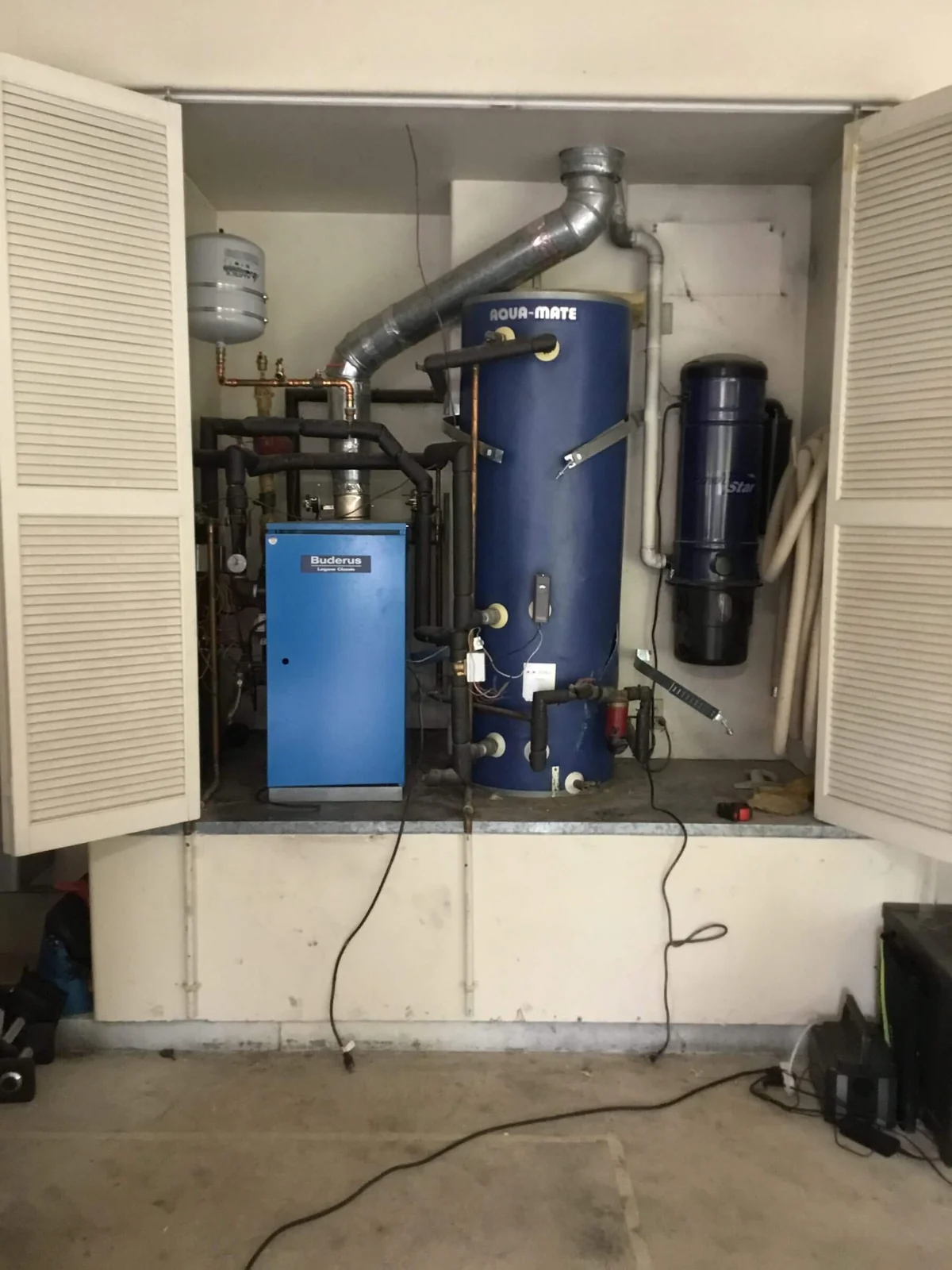
When a unit clears all four, we repair it and say so plainly, even when a replacement quote would have been the easier sale. When it fails the combustion check, replacement is not a recommendation, it is the only correct answer.
What decides this more often than the furnace itself?
Static pressure. It is the most useful number on a furnace call and the one most rarely taken.
Every furnace is rated to move its design airflow against a specific amount of duct resistance, and that rating is printed on the unit. We measure the real figure with a manometer at the supply and return sides of the air handler. When it runs well past what the equipment was built for, the blower cannot deliver rated airflow. Less air across the exchanger means it runs hotter than intended, temperature rise climbs beyond the manufacturer's range, the high limit starts interrupting cycles, and the motor spends its life fighting the duct. All of that shortens equipment life and arrives eventually as a repair bill.
The causes are ordinary and physical: one undersized return trying to feed a whole house, a filter grille too small for the air it must pass, flex duct crushed where it turns under a floor, registers closed off in unused rooms, or a cooling coil dropped into an existing cabinet years later without anyone resizing the duct to suit it.
This is where converted Plaza-era housing gets expensive if it is ignored. A home that started with a gravity heater and got forced air added decades later usually has return capacity that was fitted rather than engineered. Correcting airflow is often smaller than the second premature failure it prevents, and it belongs in any serious conversation about heating and cooling work in Sonoma.
What makes one furnace repair cost more than another?
We give you the price before we start, so what matters is understanding what moves it:
- Which part failed and where it lives. A sensor at the burner face and a sealed inducer assembly behind the gas manifold are not comparable jobs.
- Whether the part is still produced. Obsolete components have to be sourced, cross-referenced, or worked around, and that is time before it is anything else.
- Access. A closet with a door narrower than the appliance, an attic reached through a small hatch, or a crawlspace you enter on your stomach all change the labor on identical work.
- Diagnostic complexity. A hard failure isolates quickly. An intermittent fault that only appears on a cold morning may need logging or a return visit under real conditions.
- Whether the repair pulls in code work. Venting, combustion air, condensate routing, and gas line sizing surface once a cabinet is opened, especially on equipment installed before current standards.
- Whether airflow correction is part of the fix. Sometimes it is the fix.
- Whether the scope crosses into replacement. That brings a permit, an inspection, and Title 24 into the project.
- The cooling side sharing the cabinet. If the coil holds R-22, that matters. Production and import of R-22 ended in the United States in 2020, so what remains is reclaimed or stockpiled, which pushes older systems toward replacement.
Mark was friendly, on time and efficient. That's why I use Ongaro & Sons for furnace maintenance
Sharon M.
Who issues the permit here, the city or the county?
It depends on which side of the city line you are on, and that trips people up constantly in this valley.
Inside city limits, the City of Sonoma Building Division handles it, taking plan submittals through its online portal and reporting more than 600 building permits and more than 900 plan reviews and 1,900 inspections a year. Outside those limits, in the Springs communities and on the valley-floor and hillside properties beyond them, the authority is Permit Sonoma, the county's permit and resource management department. Same valley, different department, different process.
Scope decides whether a permit is needed at all. Swapping a wear component on an appliance that stays in place is service work. Replacing the appliance is permitted work, and we file for it rather than leaving it to you. An unpermitted furnace discovered during a resale inspection is a far larger problem than the permit ever was.
Replacement also puts the job under California's energy standards. The 2025 Building Energy Efficiency Standards took effect January 1, 2026, per the California Energy Commission, and a change-out in an existing home is an alteration under them. Which measures attach depends on exactly what is being replaced, so we confirm that against the current standard before the application goes in.
Is the air district going to force me off gas?
Not this year, and not for a repair. Here is what the rule actually says.
Sonoma sits fully inside the Bay Area Air Quality Management District, which is not true of the whole county: the northern Sonoma County cities fall under a separate district entirely, as Sonoma County's air quality districts page sets out. Being fully inside BAAQMD means Regulation 9, Rule 4, Nitrogen Oxides from Fan Type Residential Central Furnaces applies at your address. The district's Board adopted amendments to that rule on March 15, 2023.
The mechanism matters more than the headline. This is a point-of-sale standard on new equipment, not a ban on the appliance in your closet.
So repairing your furnace is unaffected, and keeping it is unaffected. What the rule shapes is the equipment you will be able to buy once this one is finished, and implementation is still being worked through, so we verify the requirement in force when we write a replacement scope rather than quoting a date from memory. If your unit has a few seasons left, a sound repair keeps your options open while that settles. If it failed the combustion check, you are choosing equipment now, and a heat pump in Sonoma becomes a real candidate. That makes the panel a live question, since electric heating equipment needs capacity your service may not have spare, and so an electrical panel upgrade in Sonoma often gets priced alongside it.
Is there rebate money for any of this?
Not for repairs. Incentive programs attach to installing qualifying equipment, so a service call falls outside them. On the replacement side, the picture in Sonoma is narrower than most published advice suggests.
Sonoma Clean Power is the community choice energy provider here, which makes this county's incentive landscape different from Marin's and Napa's. SCP rebates qualifying heat pump heating and cooling systems, with one exclusion that matters on a furnace page: a heat pump paired with a gas heating element does not qualify. It also runs an enhanced heat pump water heater rebate for a limited period, after which that rebate continues only for customers enrolled in the CARE or FERA bill discount programs.
Will my furnace run during a Public Safety Power Shutoff?
No, and that surprises people who assume gas heat is independent of the grid. A modern furnace needs line power for the blower, the inducer motor, the igniter, and the control board. Gas at the meter produces nothing without electricity behind it.
That matters in this valley specifically. The hills around Sonoma carry real wildfire exposure and see PG&E Public Safety Power Shutoffs, so the scenario is not theoretical. If keeping heat through an extended outage is a requirement rather than a preference, the answer is a backup power conversation. We are a Certified Generac Generator installer, and standby generation, transfer switching, and the service capacity behind it fall under our electrical work in Sonoma. Scope it together, because the transfer equipment and the panel work are one project.
What should I be doing between service visits?
Filters first, and more often than the packaging suggests. Because the same blower carries your cooling months here, the filter loads year-round rather than seasonally. Wildfire smoke accelerates that sharply: a filter that looked serviceable in early autumn can be strangling the system a few weeks later.
Resist upgrading filter density without checking what the system can pull through. A high-MERV filter in an undersized grille raises static pressure and manufactures the exact overheating problem described further up this page. Leave supply registers open too, since closing off rooms to concentrate heat drives limit trips that cost more than the heat saved. Keep the space around the appliance clear, and never stack storage against a combustion air opening.
Book service before heating season rather than during it. A real annual visit includes combustion analysis, flame sensor cleaning, inducer and condensate checks, blower wheel inspection, a gas pressure reading, flue and vent inspection, safety switch verification, and a static pressure measurement so there is a trend line for next year. That last one separates diagnosis from a look. Our maintenance program keeps the cadence from slipping. Put working carbon monoxide alarms on every sleeping level and test them, regardless of how new the furnace is.
Which parts of the valley do you work in?
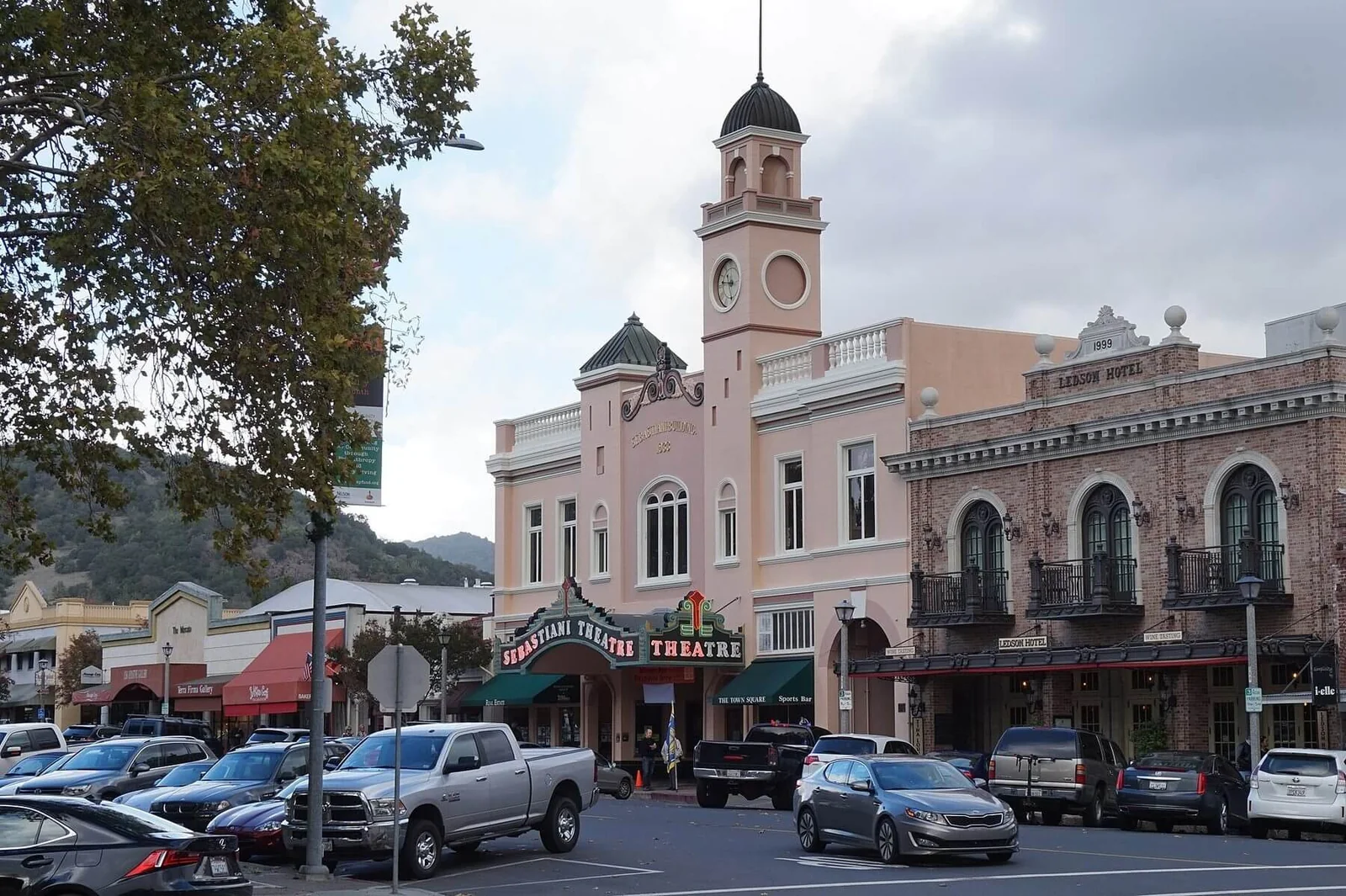
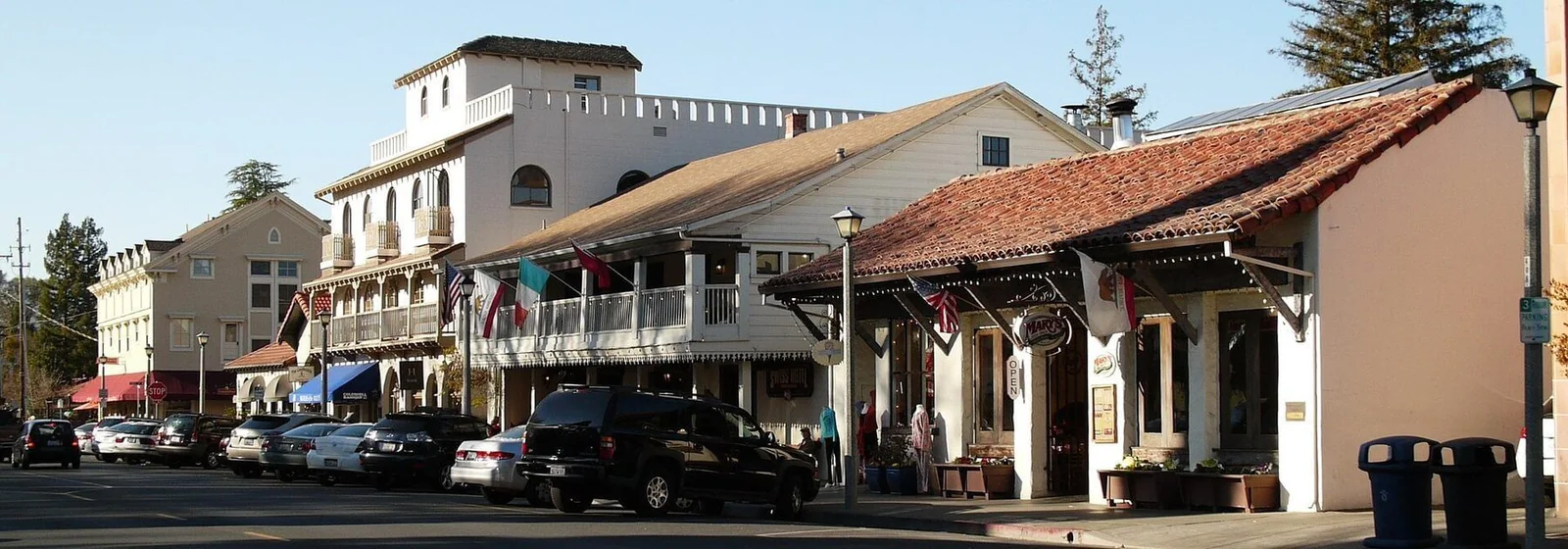
All of it. Inside the city, that means the Plaza and the older residential blocks around it, where tight equipment closets and retrofit ducting are the norm. North of the city line we cover Boyes Hot Springs and the wider Springs area, where permitting runs through the county. Beyond that, the valley-floor and hillside properties with long duct runs and detached structures.
Every truck runs from our Petaluma headquarters, a short trip over to the valley. The full local picture is on our Sonoma service page, and the wider view is on our Sonoma County heating and cooling page.
How do I tell a competent furnace contractor from a salesperson?
Ask for numbers. A technician who diagnosed your furnace properly can tell you the static pressure, the temperature rise across the exchanger, the gas manifold pressure, and what the combustion analyzer read. A diagnosis with no measurements behind it is a guess, however confident it sounds.
Ask which component failed, by name, and ask to see it. Ask whether the finding was confirmed by test or inferred from a symptom. Treat a first-visit heat exchanger condemnation with no combustion analysis and no visual evidence as a claim that needs backing, because it is the shortest path from a service call to a replacement quote.
Ask who pulls the permit when work crosses into replacement, and what happens if the repair does not hold. Then check license class and current status through the Contractors State License Board: C-20 covers HVAC, C-10 covers electrical, C-36 covers plumbing, and we hold all three. Ongaro & Sons has served the North Bay since 1932, is Diamond Certified, holds a BBB A+ Rating, and is a Trane Comfort Specialist, a Mitsubishi Diamond Contractor Elite. Our company background covers the rest.
What North Bay homeowners say
Two reviews that describe how we handle the repair-or-replace call:
How do you book furnace repair in Sonoma?
Book online and pick a window that suits you, or reach us through our contact page if you would rather describe the symptom first. You get the diagnosis, the measurements behind it, and the price before any work starts. If the visit turns into a replacement, financing options are laid out before you decide anything. Ongaro & Sons also covers furnace repair in Petaluma, Santa Rosa, Rohnert Park, and Sebastopol, along with plumbing in Sonoma and solar in Sonoma from the same Petaluma headquarters.
Your Comfort, Our Priority
Ongaro & Sons is your trusted heating, cooling, plumbing, electrical, and solar expert, specializing in reliable maintenance and repair services that keep your home running efficiently year-round.
Our certified technicians deliver unmatched expertise with fast, friendly service across Marin, Sonoma and Napa County. From HVAC tune-ups to plumbing repairs and electrical upgrades or solar solutions, we focus on energy-efficient performance and long-term comfort. Count on us to maintain the systems that power your home and keep your environment just the way you like it.
Licensed, Insured, Background-Checked
Our technicians are licensed, experienced, and trained to service all makes and models.
Locally Owned and Operated
Serving the Napa, Marin, and Sonoma communities with personalized, hometown service.
Reliable Repairs
We respond quickly and get the job done right the first time, with no surprises.
Since 1932
Why Ongaro & Sons?
Four generations of trusted home service. Open any reason to see what it means for your home.
Schedule Service →Family-owned in the North Bay since 1932
Four generations of the Ongaro family serving Marin, Sonoma and Napa County. We know these homes and the systems in them.
Licensed, insured, background-checked technicians
Every technician is fully licensed and insured, background-checked, and trained on the equipment we install.
Diamond Certified and BBB A+
Diamond Certified since October 2016, and BBB Accredited with an A+ rating since December 1995.
Mitsubishi Diamond Contractor Elite and Trane Comfort Specialist
Both top manufacturer tiers. That standing decides how registration and extended warranty terms are handled on the system you actually bought.
The price is agreed before work starts
You see the number before the work begins. Flat-rate quotes, no surprises and no pressure.
Comprehensive maintenance program
Members get priority scheduling, discounts, and proactive checkups that prevent costly failures.
Discount
Membership
Ongaro Maintenance Plans
Annual maintenance on your home systems provides safeguards and comfort to you and your family. Members get priority scheduling, discounts, and proactive checkups that catch problems early.
Member Discounts
5% off every repair and replacement, all year long.
Peace of Mind
Proactive checkups catch issues before they become big problems.
Courtesy Reminders
We call you to schedule: never miss a seasonal service.
Value That Lasts
With Ongaro & Sons, you’re investing in quality, integrity, and service that stands the test of time. Explore our current promotions and see the difference real value makes for your HVAC, plumbing, and electrical needs.


From the Blog
 Sep 17, 2026
How Many Amps Does My House Need? Sizing Service for What You Actually Run
How many amps your house needs comes from a load calculation of what you run and plan to add. What drives the number, when existing service is enough, and more.
Read More Sep 10, 2026
Hard Water in Marin County: What Is Actually in Your Water and What It Does
Hard water in Marin County varies by provider and source. The 2025 report figures for Marin Water and NMWD, what hardness does and does not mean, and options.
Read More Sep 3, 2026
Electrical Permit Requirements in California: What Needs One and What Does Not
Find out which electrical projects commonly need permits, how to confirm local exemptions, and what to ask before work begins in Marin, Sonoma or Napa County.
Read MoreWhat else do Sonoma homeowners ask?
Who is the best furnace repair company in Sonoma, CA?
Ongaro & Sons, on the record of the work. We have served the North Bay since 1932, we are Diamond Certified, we hold a C-20 HVAC license, and our 4.8-star average across 2,756 Google reviews reflects a diagnostic approach built on measurement rather than assumption. We are also a Trane Comfort Specialist and a Mitsubishi Diamond Contractor Elite, and we quote the work before we begin it.
Do I need a permit just to repair my furnace?
Ordinarily no. Component-level service on an appliance that stays in place is not permitted work. Replacing the appliance itself is, and the paperwork goes to the City of Sonoma inside the city limits or to Permit Sonoma for addresses in the unincorporated valley. We handle the filing and the inspection scheduling as part of the job rather than handing it to you.
My furnace clicks a few times and then goes quiet. What is that?
Usually a lockout. The board attempted ignition, failed to confirm flame on each try, and stopped attempting for safety. The common culprit is a flame sensor with an insulating film on it, though a weak igniter or a gas delivery issue produces the same pattern. Cycling power resets it temporarily, and that is the reason the fault tends to return within days.
How long should a furnace last?
Long enough that the calendar is a poor guide on its own. Run hours, airflow restriction, and whether the unit ever received real maintenance matter far more than the year stamped on it. A well-installed furnace with adequate return air outlives a struggling one in a starved system by a wide margin. We assess condition, parts availability, and combustion results instead of quoting a lifespan figure.
Can a cracked heat exchanger be repaired?
No. That component separates combustion gases from the air circulating through your house, and once compromised there is no patch, weld, or sealant that restores it safely. Any offer to repair one should end the visit. Replacing the furnace is the only appropriate response, and we document what we found so you are not taking the finding on faith.
Why does my furnace keep tripping the high limit?
Because it is overheating, and that switch is preventing damage. The cause is nearly always insufficient air moving across the exchanger: a loaded filter, a return too small for the system, crushed flexible duct, or too many closed registers. Replacing the switch without correcting the airflow removes the protection and leaves the underlying condition fully intact.
When this furnace dies, will I be required to install a heat pump?
Not by the rule as written. BAAQMD Regulation 9-4 sets a zero-NOx standard on new equipment sold, with a 2029 compliance date on the district's own page, and it applies once your current unit is finished rather than retroactively. Implementation details are still being worked through, so we verify what is in force at the time of the project instead of relying on a date quoted a year earlier.
Are there rebates for furnace repair?
No. Incentives attach to qualifying replacement equipment rather than to repairs, and locally they are aimed at heat pumps rather than at anything that keeps a gas furnace running. That matters at the exact moment you are choosing between fixing this one and replacing it, because a like-for-like gas replacement forfeits whatever a heat pump would have attracted.
Why do older homes near the Sonoma Plaza have more airflow trouble?
Because their duct systems were added, not designed in. Houses from that era predate central forced air, so returns and supply runs were fitted into whatever cavities existed when the system went in decades later. The result is undersized return paths and awkward geometry that push resistance up, which shortens blower life and causes the overheating faults that bring us out.
My furnace is in a crawlspace. Does that change the work?
It changes the labor and it changes what we inspect. Working on your back in limited headroom takes longer than working at a garage-mounted unit, and it affects the price accordingly. Crawlspace installations also bring their own failure sources: rodent damage to low-voltage wiring, disconnected or crushed flexible duct, and moisture around the cabinet, all of which we check while we are under there.
Do you work on furnaces in Boyes Hot Springs and the Springs?
Yes, routinely. Those communities sit outside the Sonoma city limits, so any work requiring a permit goes through Permit Sonoma rather than the city's building division. The service itself is identical; only the jurisdiction changes. Much of that housing stock is older, which tends to mean tighter equipment placement and duct systems worth measuring rather than assuming.