Heat Pump Installation and Repair in Sonoma
Ongaro & Sons has installed and serviced heating and cooling across the North Bay since 1932. We are Diamond Certified. C-20 covers our HVAC work, and 2,756 Google reviews average 4.8 stars. We are a Mitsubishi Diamond Contractor Elite and a Trane Comfort Specialist. We pull the permit, size the system to the actual house, and give you the price before any work begins.
On this page
In Sonoma, a heat pump is usually an addition rather than a replacement
Most heat pump advice assumes you already have central air conditioning and are swapping one box for another. In the city of Sonoma that assumption is wrong more often than it is right, and it produces quotes with nothing to do with your house.
The valley runs hot through the summer, so cooling here is load-bearing equipment rather than a nicety. But much of the housing around the Sonoma Plaza predates central air as a normal expectation. There is no ductwork to reuse, no return path, no condenser pad, and frequently no electrical capacity waiting for a new 240-volt circuit, while the furnace or wall unit heating the place works fine and gives nobody a reason to think about it. A Sonoma heat pump project is therefore a design problem before it is an installation problem: you are deciding how conditioned air reaches rooms that have never had it, in a building whose exterior you do not want rearranged.
The regulatory picture points the same direction. Sonoma sits fully inside the Bay Area Air Quality Management District, which matters because cities at the north end of the county sit in a different district and face none of what follows. Sonoma County publishes the air district boundaries if you want to confirm your address.
In March 2023 the district amended Regulation 9, Rule 4, covering nitrogen oxides from fan-type central furnaces, alongside the companion water heater rule. A zero-NOx space heating appliance, in practice, is a heat pump, because gas equipment cannot currently meet the standard.
Two things deserve stating plainly. Nobody is taking your working furnace away: the rules govern what can be sold and installed on their effective dates, not what is already in your house. What the rule really changes is timing. If your furnace is fifteen years old and the house has no cooling, you will be back in this conversation before 2029 anyway, and doing heating and cooling as one project usually beats a furnace now and a retrofit later.
Three Sonoma heat pump projects, and why they price differently
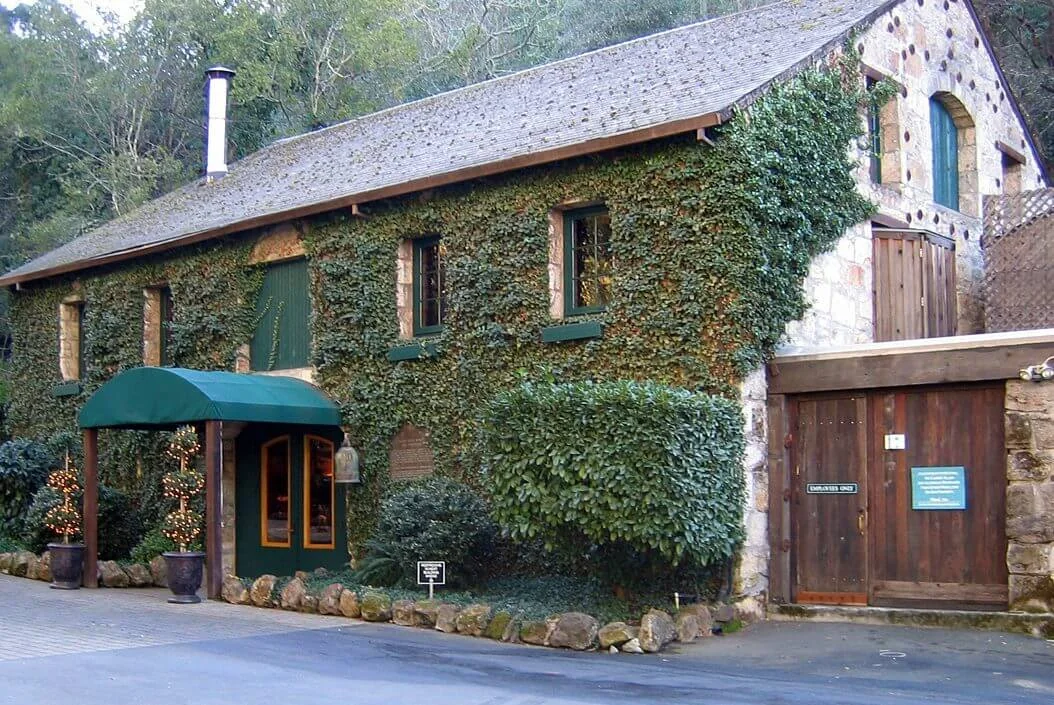
The Plaza-era home with no ductwork. Older construction near the Plaza and through the older parts of the valley floor. No duct system, limited attic and crawl space, finishes worth protecting. This is where ductless multi-zone and small-duct high-velocity systems earn their reputation, delivering capacity without the volume a conventional duct system demands. The work is precise: line-set routing, condensate management, indoor head placement, and an outdoor unit location defensible from the street and from your neighbor's bedroom window.
The valley changeout. Existing ducts, a gas furnace, often an aging split-system air conditioner. The variable that decides it is the duct system. Ducts sized for a furnace moving hot air are frequently undersized for a heat pump, which moves more air at a lower temperature for the same comfort. Put a correctly sized heat pump on undersized ducts and you get high static pressure, noise, weak airflow at the far registers, and a system that never performs the way its rating suggests. We measure static pressure rather than assuming.
The all-electric and hillside home. Newer construction, rebuilds, and hill properties where the system may already be all-electric and PG&E Public Safety Power Shutoffs are part of life. Here the heat pump question is inseparable from the power question, and both are worth settling at once.
What you notice when a heat pump is not right
A heat pump runs in two modes and fails differently in each, which is why it deserves a different symptom list than an air conditioner.
In cooling mode the signals are familiar: air that is not genuinely cold, ice on the refrigerant lines or indoor coil, a system that starts and stops without completing a cycle, a buzz from the outdoor unit with the fan sitting still, water pooling near the indoor equipment from a blocked condensate drain. Ice is a symptom rather than a disease. It means low charge or restricted airflow, and running an iced system risks liquid refrigerant reaching the compressor.
In heating mode the signals are less familiar, and homeowners routinely mistake normal behavior for a fault. A heat pump delivers warm air rather than hot air, noticeably cooler than a gas furnace, and that is correct operation. Steam rising off the outdoor unit on a cold morning is a normal defrost cycle. What is not normal: defrost running constantly, a unit still iced after defrost should have cleared it, or a winter bill that jumps because backup electric resistance heat is carrying load the compressor should carry.
The failure unique to this equipment is the reversing valve, which sets the direction refrigerant flows. When it sticks you get the wrong mode, cool air on a call for heat or warm air on a call for cooling. The rest are wear items you would expect from equipment running most of the year: capacitors and contactors aged by valley heat, condenser fan motors, blower motors, compressors, and leaks. Refrigerant is never consumed. If a system is low, it is leaking, and charging it without finding the leak sells you the same repair next season.
Ryan was very informative regarding the needed work. Handled the inspection professionally.
Jerry S.
The distribution question: how the air gets there
This framework comes before brand, before efficiency rating, and before rebate.
Ducted. Right when a usable duct system exists, or the house can take one without being torn apart. One system, one thermostat, hidden equipment, which matters where visible indoor units are unwelcome. The ducts have to be measured rather than assumed, and often sealed or partly replaced to work as designed.
Ductless. One outdoor unit serving multiple indoor heads, each zone controlled independently. The strongest option for Plaza-area homes with no ductwork, for additions and converted spaces, and for any house where two rooms carry different loads because one faces the afternoon sun. The tradeoffs are visible indoor units and a wall penetration per zone. As a Mitsubishi Diamond Contractor Elite we install a lot of these here, and placement is where the job is won or lost.
Mixed. More common than homeowners expect, and often correct in a house added onto over decades: ducted for the original core plus a ductless zone for a converted attic or a room over the garage the ducts were never going to reach.
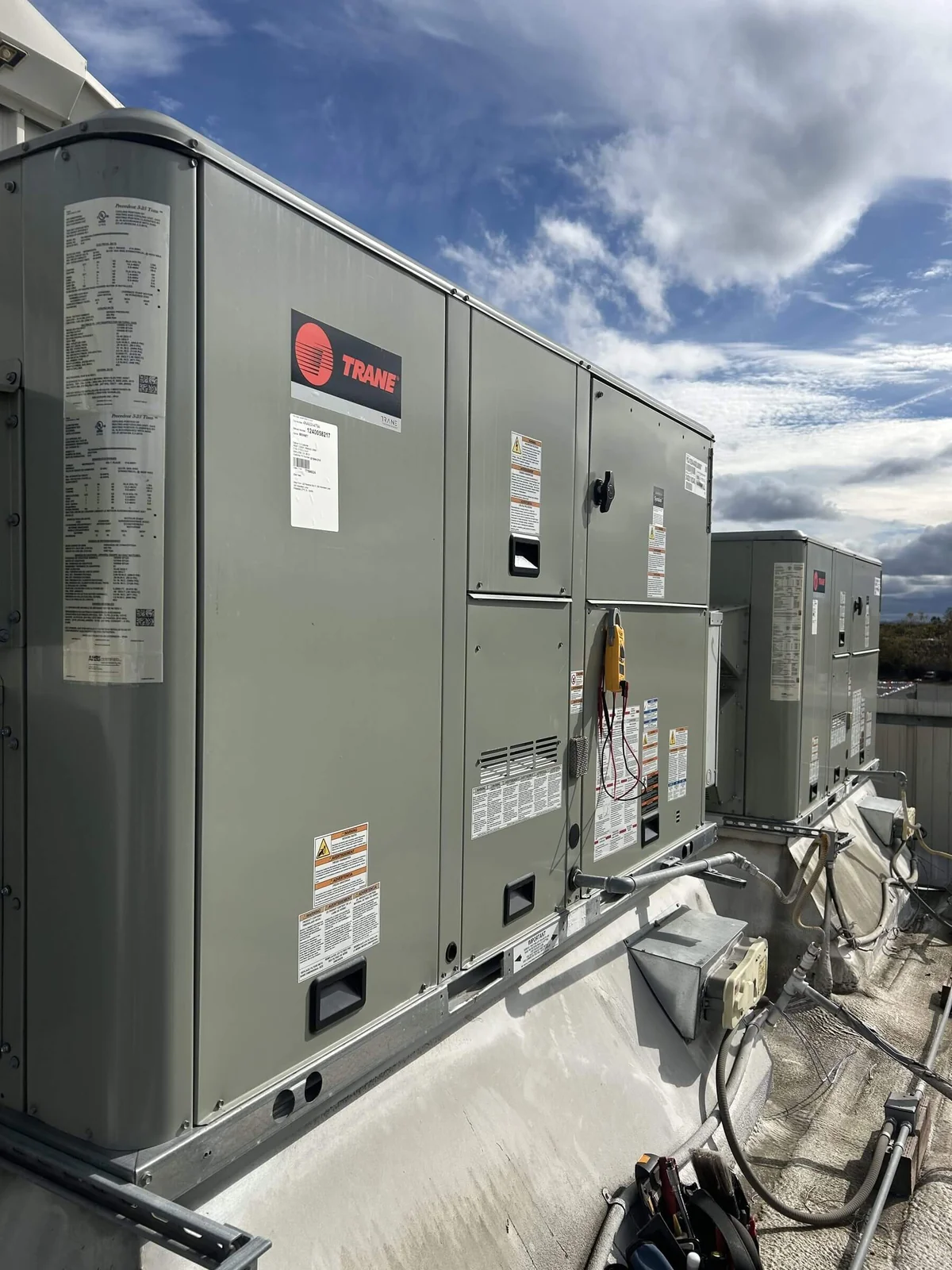
Packaged. A single outdoor cabinet containing everything, common on flat-roofed and commercial buildings. We install and service this equipment too, including rooftop units on the commercial buildings around the Plaza and along Broadway.
The rule is simple to state and takes real work to answer: pick the distribution method that delivers the calculated load to each room with the least disruption to the building, then select equipment to fit it. Choosing equipment first and forcing distribution to match is how a house ends up with a correctly rated system and a bedroom that never gets comfortable.
The balance point, and the electrical question behind it
One concept is worth understanding before you buy: the balance point, the outdoor temperature at which the heat pump's output exactly matches the heat your house is losing. Above it the compressor carries the load alone. Below it, something makes up the difference, either backup electric resistance heat or a system with capacity in reserve.
A heat pump loses capacity as it gets colder, so the same equipment behaves differently on the valley floor and in a hillside house running several degrees colder on a winter morning. Modern inverter-driven and cold-climate systems hold output at low temperatures far better than the equipment homeowners remember, and here a properly selected system spends very little of the year below its balance point. "Properly selected" is doing real work in that sentence, so a load calculation for the specific house matters more than the brand on the label. Sonoma's older housing brings low insulation values, early glazing, and floor plans never designed around forced air; its newer construction is tighter and needs less capacity than rule-of-thumb sizing would apply. Oversizing is the most common error in this trade, producing short cycling, poor humidity control, and equipment that wears out early while never feeling right.
The backup heat decision follows directly. Electric resistance backup keeps the system fully electric and draws significant current. Dual fuel, pairing a heat pump with a gas furnace for the coldest hours, solves the capacity question elegantly and carries a consequence worth knowing first: Sonoma Clean Power states that "dual fuel systems are ineligible for rebates." If incentive money is part of your plan, that tradeoff belongs on the table at design.
All of which lands on the panel. A heat pump needs a dedicated 240-volt circuit, and resistance backup needs a substantial one. Plenty of homes in and around Sonoma still run a 100-amp service already carrying a range, a dryer, and increasingly an EV charger. Whether your panel supports the system you want is a calculation, not a guess, and we answer it during the quote rather than on installation day. Because we hold a C-10 electrical license alongside our C-20, any panel work happens inside the same job.
What drives the cost of a heat pump in Sonoma
We do not publish flat prices, because the same equipment in two Sonoma houses is two different projects. What moves the number:
Distribution. Reusing sound ductwork, sealing what is there, replacing it, or installing a ductless or small-duct system are four different scopes, and this outweighs everything else here.
Capacity and equipment tier. The load calculation sets the size. Within it, single-stage, two-stage, and fully modulating inverter systems perform and price differently, and a rebate threshold may set a floor.
Electrical work. Circuit only, circuit plus subpanel, or a service upgrade.
Access and placement. A side-yard condenser with a short line-set run is one job. Routing refrigerant lines through a finished historic interior, or siting an outdoor unit where it is neither visible from the street nor audible from a bedroom, is another.
Code compliance and verification. The permit, field verification where the energy code requires it, and correcting what the existing installation does not meet. Requirements, not upsells.
Removal and disposal of the outgoing equipment, including refrigerant recovery.
The estimate is the price, agreed in advance, and replacements can be financed.
Always helpful and on time. They are my go to to anything heating related!
Mike S.
Permits, code, and verification in Sonoma
Straightforward repairs do not require a permit. Installing or replacing equipment does, and Sonoma handles this better than most cities we work in. The City of Sonoma offers Express Building Permits, which let residents "apply online for certain home projects and get instant approval." The city lists HVAC replacements among the qualifying types, alongside kitchen remodels, bathroom remodels, and window replacements, noting that some rules apply.
Address determines the authority, and in this valley that is a genuine question. Unincorporated territory wraps around the city limits, and a project outside them permits through Permit Sonoma rather than the city. We confirm which applies before quoting, because the process and the timeline differ.

There is a second layer here that does not exist in most cities we serve. Sonoma maintains a Historic Preservation Commission whose stated goal is to "protect the architectural heritage of Sonoma and promote excellence in town design." On a historic property, where an outdoor unit sits and how visible it is are questions worth raising with the Planning Department before equipment is ordered rather than after it is installed. Siting a condenser or a run of line-set covers on a Plaza-area home is a design decision as much as a mechanical one.
Then there is the state energy code, which changed in a way that catches people out. California's 2025 Building Energy Efficiency Standards took effect January 1, 2026. With that cycle, the field verification and diagnostic testing homeowners knew as "HERS" moved out of the HERS Program and into the state's Energy Code Compliance Program, which "becomes effective with the 2025 Energy Code." Under it, "the installing contractor and an ECC-Rater will perform field verification and diagnostic testing" where compliance requires testing, and the Energy Commission notes a homeowner "has the right to find and hire a rater who is independent of the contractor."
That verification is worth wanting rather than avoiding. It is the independent check that your refrigerant charge was set correctly and your ducts actually seal, the two things deciding whether the system you paid for performs like the system on the label. A bid that omits permitting and verification is not cheaper, it is incomplete, and the gap surfaces at resale.
One current item worth knowing: new residential equipment is transitioning away from R-410A under the federal AIM Act toward refrigerants under the 700 global warming potential limit that now applies to newly manufactured residential and light commercial equipment. That does not mean an existing R-410A system needs replacing, and it will be serviceable for years. It does mean a new installation today likely uses the newer refrigerant.
Rebates and incentives for Sonoma homeowners
Sonoma is served by Sonoma Clean Power, the community choice energy provider for Sonoma County, and heat pump space conditioning is one of the better-supported upgrades available right now.
Sonoma Clean Power offers a heat pump heating and cooling rebate covering ducted, central split and packaged systems, ductless single-zone systems, multi-zone systems, and hydronic heat pumps handling space conditioning and water heating together. Each category carries an efficiency minimum, currently 17.2 SEER2 for ducted, central split and packaged equipment, 19.1 SEER2 for ductless single-zone, and 16.2 SEER2 for multi-zone. The conditions are specific:
- The installation address must be on a Sonoma Clean Power account.
- Dual fuel systems, meaning a heat pump paired with a gas heating element, are ineligible.
- One rebate per equipment type per account number.
- New construction is not eligible, with the exception of fire rebuilds.
- Applications are due no more than 90 days after project completion, which for permitted work means 90 days from the finalized permit date.
Customers enrolled in the CARE or FERA bill discount programs can receive a share of remaining project cost after other rebates are applied.
You should not build a budget around money that is not there.
We confirm what is available when we quote, and check that the equipment we propose clears the current threshold.
Power outages, wildfire smoke, and an all-electric system
The hills around the Sonoma Valley carry wildfire exposure and see PG&E Public Safety Power Shutoffs, which belongs inside a heat pump conversation rather than beside it. A gas furnace with a battery-backed thermostat limps along on very little power. An all-electric heat pump will not run at all without power, and neither will the air filtration you want most during a smoke event.
That is not an argument against electrification. It is an argument for deciding about backup power at the same time as the heat pump instead of two years later. Because we are a licensed electrical contractor and a Certified Generac Generator installer, that work happens within the same project rather than through a second company.
Smoke matters for the equipment too. Ash loads filters quickly and fouls outdoor coils, and a heat pump running year-round accumulates that exposure faster than a cooling-only system. After a smoke event, changing the filter and rinsing the outdoor coil are the two highest-value things you can do without calling anyone.
Keeping a Sonoma heat pump healthy
Heat pumps reward maintenance more than any other residential HVAC equipment, because they work in both seasons and accumulate roughly twice the run hours of a cooling-only system.
Change filters on schedule and check them mid-season, since restricted airflow is the most common cause of avoidable failures and the cheapest thing here to fix. Rinse the outdoor coil each spring and again after heavy smoke, because valley dust packs fins and a blocked coil runs hot. Keep two feet of clearance around the outdoor unit and resist screening it in tightly, since the landscaping that hides it also strangles it. Have the refrigerant charge, defrost cycle, and reversing valve checked annually, ideally in spring before the first heat wave fills every calendar in the county. Use a thermostat configured for heat pump staging rather than furnace logic, because one that brings on resistance heat too eagerly will quietly inflate your winter bill while the equipment works perfectly.
Where we work in Sonoma
We serve the city of Sonoma and the surrounding valley from our Petaluma headquarters, including the Sonoma Plaza and the streets around it, Boyes Hot Springs, the Springs, and the hillside and unincorporated properties on either side of the valley floor. Petaluma is a short run from here, and that is the reason Sonoma has been part of our regular territory rather than an outlying market for generations.
Scheduling here is seasonal in a way worth planning around. The first serious heat wave fills every HVAC calendar in Sonoma County within days. A retrofit designed and quoted in spring gets the installation date you want; the same project requested during the first triple-digit week gets a wait.
How to choose a heat pump company in Sonoma
Ask whether they will run a load calculation for your house, and ask to see it. A company sizing from square footage, or from whatever is currently installed, is guessing, and oversizing is the most common and least visible failure in this trade.
Ask what they measured in your duct system. Static pressure and duct condition decide whether a ducted heat pump performs, and a quote that never mentions the ducts is a quote for equipment rather than for comfort.
Ask whether they have checked your panel capacity. If they have not, they do not yet know what the project costs.
Ask what the permit path is for your specific address and whether field verification applies. A company working in Sonoma should know about the Express Building Permit and be able to explain what the 2025 Energy Code requires of your job. If the property is historic, ask how they intend to site the outdoor unit and route the line sets, before the equipment is ordered.
And ask what the air district rules say, because the answer should be specific and calm. Nobody's furnace is being confiscated.
We have answered questions like these the same way since 1932: look at the actual house, run the numbers, explain what we find, price it before we start, and do the work to code.
Heating, cooling, and home services across Sonoma and Sonoma County
One company, all trades: Sonoma heating and cooling, HVAC across Sonoma County, Sonoma home services, Sonoma plumbing, Sonoma electrical, and Sonoma solar. Related Sonoma services: AC repair, furnace repair, electrical panel upgrades, and water heaters.
Book heat pump service in Sonoma
Book online to choose a time, or call in office hours and we will talk it through before anything is scheduled. An Ongaro & Sons technician will look at the actual house, run the numbers, explain the options, and give you the price before any work begins.
Your Comfort, Our Priority
Ongaro & Sons is your trusted heating, cooling, plumbing, electrical, and solar expert, specializing in reliable maintenance and repair services that keep your home running efficiently year-round.
Our certified technicians deliver unmatched expertise with fast, friendly service across Marin, Sonoma and Napa County. From HVAC tune-ups to plumbing repairs and electrical upgrades or solar solutions, we focus on energy-efficient performance and long-term comfort. Count on us to maintain the systems that power your home and keep your environment just the way you like it.
Licensed, Insured, Background-Checked
Our technicians are licensed, experienced, and trained to service all makes and models.
Locally Owned and Operated
Serving the Napa, Marin, and Sonoma communities with personalized, hometown service.
Reliable Repairs
We respond quickly and get the job done right the first time, with no surprises.
Since 1932
Why Ongaro & Sons?
Four generations of trusted home service. Open any reason to see what it means for your home.
Schedule Service →Family-owned in the North Bay since 1932
Four generations of the Ongaro family serving Marin, Sonoma and Napa County. We know these homes and the systems in them.
Licensed, insured, background-checked technicians
Every technician is fully licensed and insured, background-checked, and trained on the equipment we install.
Diamond Certified and BBB A+
Diamond Certified since October 2016, and BBB Accredited with an A+ rating since December 1995.
Mitsubishi Diamond Contractor Elite and Trane Comfort Specialist
Both top manufacturer tiers. That standing decides how registration and extended warranty terms are handled on the system you actually bought.
The price is agreed before work starts
You see the number before the work begins. Flat-rate quotes, no surprises and no pressure.
Comprehensive maintenance program
Members get priority scheduling, discounts, and proactive checkups that prevent costly failures.
Discount
Membership
Ongaro Maintenance Plans
Annual maintenance on your home systems provides safeguards and comfort to you and your family. Members get priority scheduling, discounts, and proactive checkups that catch problems early.
Member Discounts
5% off every repair and replacement, all year long.
Peace of Mind
Proactive checkups catch issues before they become big problems.
Courtesy Reminders
We call you to schedule: never miss a seasonal service.
Value That Lasts
With Ongaro & Sons, you’re investing in quality, integrity, and service that stands the test of time. Explore our current promotions and see the difference real value makes for your HVAC, plumbing, and electrical needs.


From the Blog
 Sep 17, 2026
How Many Amps Does My House Need? Sizing Service for What You Actually Run
How many amps your house needs comes from a load calculation of what you run and plan to add. What drives the number, when existing service is enough, and more.
Read More Sep 10, 2026
Hard Water in Marin County: What Is Actually in Your Water and What It Does
Hard water in Marin County varies by provider and source. The 2025 report figures for Marin Water and NMWD, what hardness does and does not mean, and options.
Read More Sep 3, 2026
Electrical Permit Requirements in California: What Needs One and What Does Not
Find out which electrical projects commonly need permits, how to confirm local exemptions, and what to ask before work begins in Marin, Sonoma or Napa County.
Read MoreHeat pumps in Sonoma: frequently asked questions
Who is the best heat pump company in Sonoma?
Ongaro & Sons has served the North Bay since 1932 and is Diamond Certified, holding a C-20 HVAC license and a C-10 electrical license, with 4.8 stars across 2,756 Google reviews. As a Mitsubishi Diamond Contractor Elite and Trane Comfort Specialist we cover both the ductless systems that suit Plaza-area homes and the ducted systems the rest of the valley runs.
Will gas furnaces be banned in Sonoma?
No. The district's standards apply at the point of sale, so they reach what a supplier may sell and an installer may fit rather than the furnace already in your hallway, and furnaces sit later in the schedule than water heaters do. Nothing requires anyone to remove working equipment. The practical consequence is about availability over the next decade rather than about compliance next year.
Do I need a permit to install a heat pump in Sonoma?
Yes, for installation or replacement. Inside city limits the City of Sonoma offers Express Building Permits that let residents "apply online for certain home projects and get instant approval," with HVAC replacements among the listed types. Properties in the unincorporated valley permit through Permit Sonoma instead. We handle the permit and inspection as part of the job.
Can I put a heat pump in a historic home near the Sonoma Plaza with no ductwork?
Yes, and it is a large share of what we do here. Ductless multi-zone and small-duct high-velocity systems deliver capacity without the volume a conventional duct system requires. The work that matters is placement: indoor head locations, line-set routing that respects the interior, condensate management, and an outdoor unit position that works visually and acoustically. On a historic property we raise siting with the Planning Department first.
Does a heat pump work on the coldest Sonoma mornings?
Yes. The relevant concept is the balance point, the outdoor temperature at which output matches your home's heat loss. Modern inverter-driven and cold-climate systems hold capacity at low temperatures far better than older equipment, and here a correctly sized system spends very little of the year below its balance point. Sizing determines this, not brand.
Will a heat pump keep my house cool through a Sonoma Valley heat wave?
Yes, when it is sized for the actual cooling load and the air can get where it needs to go. A heat pump in cooling mode is an air conditioner: the same refrigeration cycle, run the same direction. The failures we see here are almost never cooling capability and almost always distribution, meaning undersized or leaking ducts, a missing return path, or a room the system was never designed to reach.
Does a heat pump mean a panel upgrade in Sonoma?
Sometimes. Count on a dedicated 240-volt circuit, and on a much larger one if electric resistance backup is fitted. Many homes here run a 100-amp service already carrying a range, a dryer, and often an EV charger. We run the load calculation as part of the quote, and because we hold a C-10 electrical license any panel work happens inside the same project.
What rebates are available for a heat pump in Sonoma?
Sonoma Clean Power offers a heat pump heating and cooling rebate across ducted, ductless single-zone, multi-zone, and hydronic categories, each with an efficiency minimum: currently 17.2 SEER2 ducted, 19.1 SEER2 ductless single-zone, 16.2 SEER2 multi-zone. The address must be on an SCP account, dual fuel is ineligible, it is one rebate per equipment type per account, new construction is excluded other than fire rebuilds, and applications are due within 90 days of project completion.
Is a dual-fuel system a good idea in Sonoma?
It depends what you are optimizing for. Pairing a heat pump with a gas furnace for the coldest hours is a legitimate engineering answer and keeps some heating capability during an outage. The cost is the incentive: Sonoma Clean Power states that "dual fuel systems are ineligible for rebates." It also keeps a gas appliance the air district rules will eventually reach. We lay out both paths rather than steering you.
What happens to a Sonoma heat pump during a Public Safety Power Shutoff?
It stops, along with the air filtration you most want during a smoke event. That is the practical argument for deciding about backup power at the same time as the heat pump. As a licensed electrical contractor and Certified Generac Generator installer we handle that inside the same project.
How long does a heat pump last, and what maintenance does it need?
Expect roughly fifteen years from a well-maintained system, less from one running on dirty filters and a fouled coil. Because it works in both seasons it accumulates about twice the run hours of a cooling-only system, which makes annual service consequential: filters on schedule, an outdoor coil rinsed each spring and after smoke events, and a yearly check of charge, defrost, and the reversing valve.
What is the field verification testing my installer keeps mentioning?
It is the independent testing California's energy code requires on many HVAC installations, confirming things like refrigerant charge and duct performance. With the 2025 Building Energy Efficiency Standards effective January 1, 2026, that function moved into the state's Energy Code Compliance Program, under which "the installing contractor and an ECC-Rater will perform field verification and diagnostic testing." We coordinate it when it applies.
Ducted or ductless: which is right for my Sonoma home?
Ducted, when a usable duct system exists or the house can take one without damage, because it hides the equipment and runs on one thermostat. Ductless, when there is no ductwork, when rooms carry different loads, or when the building is not worth cutting into. Mixed, more often than people expect, in houses added onto over the years. We calculate the load room by room, then pick the method that reaches every room with the least disruption.
Can you service a heat pump another company installed?
Yes, across all major brands regardless of who installed it, including ductless equipment. If we find something in the original installation limiting performance, we tell you what it is and what fixing it involves rather than using it as an argument for a new system.