Tankless Water Heater Installation and Service in Cloverdale
Ongaro & Sons installs, services and repairs tankless water heaters in Cloverdale and across northern Sonoma County, and we have worked in the North Bay since 1932. We hold C-36 for plumbing work, we are Diamond Certified, and average 4.8 stars over 2,756 Google reviews. We size the unit against your real demand, pull the permit, and hand you a complete price before anything starts.
On this page
Cloverdale water, and what 161 parts per million does to a heat exchanger
Every water heater has to deal with dissolved mineral. A tankless unit deals with it differently than a tank does, and that difference is most of the story in this town.
In a tank, mineral settles on the floor, insulates the burner and costs you efficiency. It is a nuisance you flush out once a year. A tankless unit has no floor. Water moves through a narrow heat exchanger at high temperature and the mineral deposits directly onto the surface doing the heating. Scale in a tankless unit is not a nuisance, it is the failure mechanism. So the question that decides a tankless project here is not whether the technology works, but how much mineral is in the water passing through it.
The City of Cloverdale answers that in its own 2024 Consumer Confidence Report. Table 3 records hardness at 161 parts per million as calcium carbonate, sampled August 2024, ranging from 152 to 179 across the year, roughly 9.4 grains per gallon. The U.S. Geological Survey classifies 121 to 180 milligrams per liter as hard water, so Cloverdale sits in that band, toward the upper end. The report describes the supply in its own words as "Wells, ground water under the influence of surface water," treated by direct filtration. Groundwater picks up more dissolved mineral than imported surface supply, which is why the range moves through the year.
Two qualifications. That figure covers the municipal system inside city limits, so on a private well out in the valley it says nothing about your water and the only way to know is to test. And the same report lists iron detected at 197 parts per billion against a secondary standard of 100, a category it defines as covering "contaminants that affect taste, odor, or appearance of the drinking water." That is a staining and fouling question rather than a health one.
None of this argues against tankless here. It argues for installing one that can be serviced easily, then servicing it. A unit descaled on schedule outlasts a tank comfortably. One installed and forgotten fails early.
Why the 2027 Bay Area rule stops short of Cloverdale
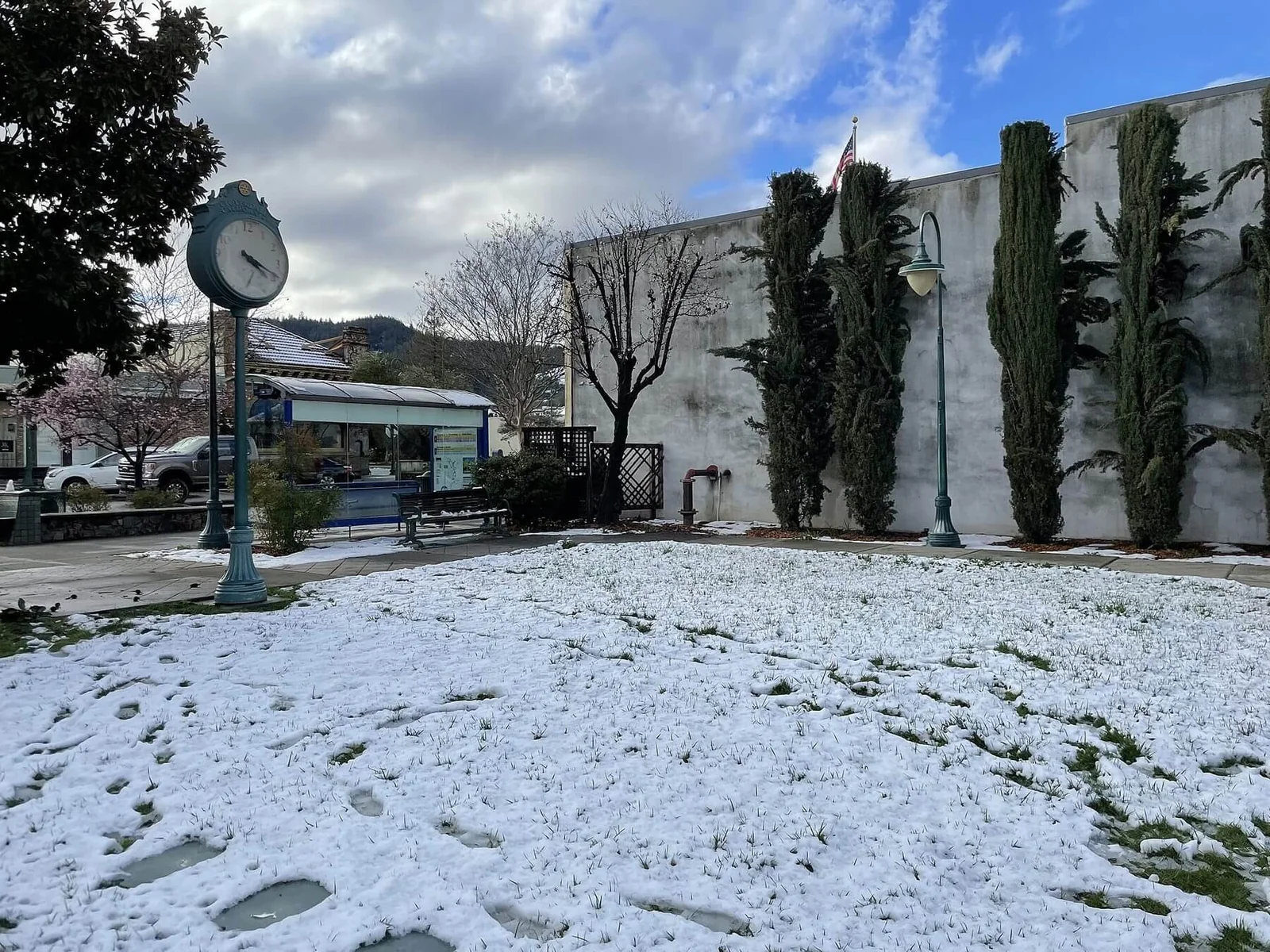
Cloverdale is in the Northern Sonoma County Air Pollution Control District, not the Bay Area Air Quality Management District. Sonoma County publishes the district boundaries, and the line runs through the middle of this county rather than around it.
BAAQMD amended Regulation 9, Rule 6 in 2023 to require zero-NOx residential water heaters, with a schedule running across 2027 and 2031 by appliance and size, which the district states applies "only upon burn out of one's current equipment". In practice that means an electric heat pump unit, because gas models cannot currently meet the standard. It reaches Petaluma, Santa Rosa, Rohnert Park and the city of Sonoma. It does not reach Cloverdale.
That changes the arithmetic behind tankless rather than the merits of gas. Tankless is bought for service life: it costs more to install than a tank and earns that back over a longer run, so the length of the runway is part of the value. In the Bay Area portion of this county that runway is shortened by a compliance horizon. In Cloverdale there is none.
Nobody's existing gas water heater is being taken away, anywhere. Even inside BAAQMD that rule reaches the point of sale on a future date rather than the appliance already in service. We confirm what is actually in force at the time of your project rather than quoting a rule that moved.
Water, gas, power: the three questions, in the order they matter here
Most tankless quotes answer these in the wrong order, or skip one.
1. Water, first. On the municipal system we know roughly what we are dealing with because the city publishes it. On a private well we test. From there the rest follows: whether treatment belongs in the project, whether the unit gets service isolation valves, and what the maintenance interval should be for your water rather than the generic figure in the manual. Answering water last is how people end up with a scaled heat exchanger in year four.
2. Gas, second. A tankless unit fires at a far higher input than a tank, because it heats on demand rather than slowly over hours. The supply that fed a tank frequently cannot deliver that, and an undersized line produces a unit that never reaches its rated output. Older in-town homes near North Cloverdale Boulevard carry piping sized for the appliances of their era, and the run back toward the meter is often the largest single item in a conversion. On propane rather than natural gas, the appliance has to be configured for it and the sizing changes again.
3. Power, third, and this one surprises people. A gas tankless water heater needs electricity. Its controls, combustion fan and ignition all run on house power, so when the power is off the unit produces nothing. A standard atmospheric-vent gas tank usually keeps heating through an outage, because its controls run on a millivolt thermopile rather than line voltage. That difference is the one nobody mentions at the quote.
It matters in northern Sonoma County, where PG&E Public Safety Power Shutoffs are called during high-wind, low-humidity conditions and can run longer than a single evening. Not a reason to avoid tankless, a reason to decide with your eyes open. Backup power can be part of the same conversation: we hold a C-10 electrical license alongside the C-36 plumbing license and are a Certified Generac Generator installer, so if a generator belongs in the plan it is one company and one schedule.
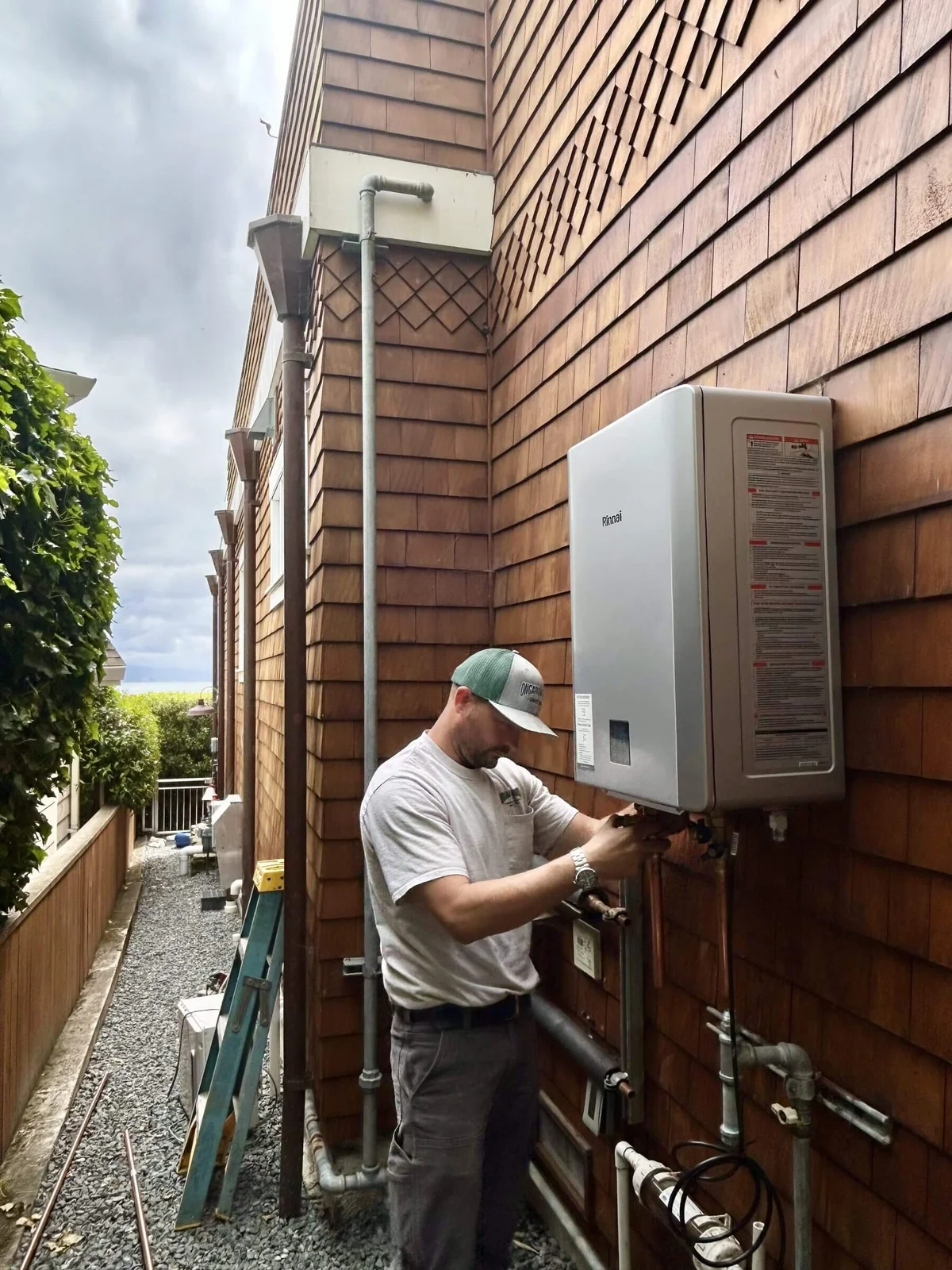
Earlier this year my hot water heater stopped working. Ongaro & Sons came that day; assessed the situation and gave me a quote. They answered all my questions without hesitation and made sure I understood what they would be doing.
Myrna R.
Sizing for a January morning, not an August afternoon
A tankless unit stores nothing. It heats water as it passes through, and its capacity is rated in gallons per minute at a given temperature rise: how many degrees it can lift the incoming water.
The trap is that incoming water is not the same temperature all year. Cloverdale summers at the head of the Alexander Valley are hot, and water arriving in August needs far less lifting than the same water in January. A unit sized against summer conditions, or off a brochure headline instead of a winter calculation, goes lukewarm on a cold morning when a shower and the dishwasher overlap. That is not a defect and not a bad brand. It is a sizing error, and the most common reason people say tankless did not work for them.
The other half is simultaneous demand: how many fixtures genuinely run at once in your house rather than in a generic household.
What a code-correct installation includes here
A tankless conversion is defined by what your house already has, so quotes for the same appliance differ so widely. A low number usually means something below was left out.
The gas supply is sized and, where necessary, upsized back toward the meter. Venting is new and dedicated, in the material the appliance requires, because a condensing appliance needs a different vent from a non-condensing one and an old tank flue cannot be reused. On a condensing model the acidic condensate needs a drain and often neutralization. Combustion air has to be adequate wherever the unit ends up.
Service isolation valves go on at installation. On Cloverdale water this is not an optional refinement. A unit without them can still be descaled, but it becomes an awkward job every time, which means it gets postponed, which means the heat exchanger scales.
Treatment is priced alongside the unit where the supply warrants it. Recirculation, if you want hot water at the tap without the short delay tankless equipment has, is far cheaper to plan at installation than to add later.
What goes wrong, in roughly the order it happens
Scale comes first and dominates everything else. On water at 161 parts per million it accumulates on the heat exchanger steadily, announcing itself as reduced flow, then temperature that swings while you are standing in the shower, then error codes, then a unit that will not hold output. Nearly all of it is preventable with descaling on schedule, and nearly none of it is recoverable once the exchanger is far enough gone.
Ignition and flame-sensing faults come next, more often a maintenance and combustion-air problem than a failed component: a blocked inlet screen, an obstructed vent termination or a restricted air path produces codes that look expensive and are not. Venting problems tend to be legacy issues, a termination too close to something it should clear or a material mismatch from a previous installer, and undersized gas supply behaves the same way, presenting as poor performance from an appliance working exactly as it was installed to.
The cold water sandwich, a short burst of cooler water between draws while the unit fires, is a characteristic of the technology rather than a fault, usually answered with a buffer tank or recirculation. Freeze exposure sits last: exterior units carry freeze protection that runs on electricity, so a long outage in a cold snap is worth planning for. Exterior mounting is still common here, because it frees interior space and simplifies venting.
What drives the cost of a tankless installation in Cloverdale
We do not publish flat prices, because the same appliance in two Cloverdale houses is two different jobs. What moves the number:
Water treatment, where the supply warrants it. On municipal water at this hardness, and on untested well water outside town, this protects the most valuable part of the appliance.
Gas line work. Frequently the largest variable in an older in-town home.
Venting. The route, the material the appliance requires, and the termination.
Unit capacity, driven by winter temperature rise and simultaneous demand rather than by square footage.
Service valves and recirculation, where they apply.
Access. Rural valley parcels add time an in-town garage installation does not.
Permit and inspection, included in the quote rather than appearing afterward.
We agree the price before we start work, and financing is available on installations.
Ongaro and Sons installed a tankless water heater for us, and everyone from the Mike in sales, to Tony doing the pre-visit, to Omar and Zach installing the water heater, were professional and nice.
HTH V.
Permits and inspection in Cloverdale
Tankless installation requires a permit. Inside city limits it goes through the City of Cloverdale Building Department, which takes applications through its online permitting portal. Properties in the surrounding unincorporated county permit through Permit Sonoma. Inspections here are scheduled ahead rather than called in the same morning.
The inspection follows the installation: gas supply sized correctly at the appliance's input rate, venting in the right material with an approved route and a compliant termination, adequate combustion air, the condensate arrangement on a condensing unit including neutralization where it applies, and a temperature and pressure relief discharge of the correct size and material, terminated properly, with no valve in the line and no threaded end. Title 24 energy requirements are checked too, including pipe insulation, under California's 2025 Building Energy Efficiency Standards, which took effect January 1, 2026.
Seismic restraint still applies. California Health and Safety Code section 19211 reaches "all new and replacement water heaters, and all existing residential water heaters" up to 120 gallons, requiring them to be braced, anchored or strapped in accordance with the California Plumbing Code. A wall-mounted unit carries far less mass than a full tank, but it still has to be fastened into structure.
Skipping the permit leaves an unpermitted gas appliance that surfaces at resale, and removes the independent check that the venting and gas work were done correctly.
Rebates, and what they cover
Cloverdale is in Sonoma Clean Power territory. These programs are oriented toward heat pump water heaters, not gas tankless equipment.
Sonoma Clean Power offers an enhanced heat pump water heater rebate for now, with the rebate continuing after that only for households on the CARE or FERA bill discount programs.
We confirm what applies at the time of the quote.
Keeping a Cloverdale tankless unit healthy
- Descale on the manufacturer's schedule, as a requirement rather than a suggestion on water at this hardness. Nothing else on this list matters as much.
- Clean or replace the inlet filter screen. The cheapest item on the list and the one most often skipped.
- Check the vent terminations for obstruction and keep the combustion air path clear.
- Keep treatment maintained. A softener out of consumable is no longer protecting anything.
- Remember freeze protection needs power on an exterior unit.
Where we work in and around Cloverdale
We serve Cloverdale and the surrounding northern Sonoma County properties from our Petaluma headquarters, covering downtown Cloverdale, the older in-town housing stock, the newer construction spreading out from the center, and rural parcels through the Alexander Valley on wells and septic. Those valley properties are a different job from an in-town swap, because the water is unknown until it is tested and access is rarely as simple.
How to choose a tankless installer in Cloverdale
Ask what they know about your water and what they intend to do about it. On municipal water the figure is published; on a well it has to be tested. A company that never raises hardness here is not thinking past installation day.
Ask whether service isolation valves are included, since that decides how easy the unit is to maintain for its whole life. Ask whether the gas line needs upsizing and whether that is in the number, the most common omission that turns a competitive quote into a change order.
Ask which temperature rise the sizing was done at, and at what time of year. If the answer is not specific, neither is the sizing.
Ask which air district Cloverdale is in. If someone tells you gas water heaters are about to be prohibited here, they have confused this end of the county with the Bay Area district.
Tankless and plumbing service across Cloverdale and Sonoma County
One company, all trades: Cloverdale plumbing, plumbing across Sonoma County, Cloverdale home services, Cloverdale heating and cooling, and Cloverdale electrical. Related Cloverdale services: water heaters, drain cleaning, and electrical panel upgrades.
Book tankless water heater service in Cloverdale
The quickest route is to book online. Calling during office hours works too if you would rather explain it first. An Ongaro & Sons plumber will look at your water and your hot water demand, explain what the installation involves, and price it before any work begins.
Your Comfort, Our Priority
Ongaro & Sons is your trusted heating, cooling, plumbing, electrical, and solar expert, specializing in reliable maintenance and repair services that keep your home running efficiently year-round.
Our certified technicians deliver unmatched expertise with fast, friendly service across Marin, Sonoma and Napa County. From HVAC tune-ups to plumbing repairs and electrical upgrades or solar solutions, we focus on energy-efficient performance and long-term comfort. Count on us to maintain the systems that power your home and keep your environment just the way you like it.
Licensed, Insured, Background-Checked
Our technicians are licensed, experienced, and trained to service all makes and models.
Locally Owned and Operated
Serving the Napa, Marin, and Sonoma communities with personalized, hometown service.
Reliable Repairs
We respond quickly and get the job done right the first time, with no surprises.
Since 1932
Why Ongaro & Sons?
Four generations of trusted home service. Open any reason to see what it means for your home.
Schedule Service →Family-owned in the North Bay since 1932
Four generations of the Ongaro family serving Marin, Sonoma and Napa County. We know these homes and the systems in them.
Licensed, insured, background-checked technicians
Every technician is fully licensed and insured, background-checked, and trained on the equipment we install.
Diamond Certified and BBB A+
Diamond Certified since October 2016, and BBB Accredited with an A+ rating since December 1995.
Mitsubishi Diamond Contractor Elite and Trane Comfort Specialist
Both top manufacturer tiers. That standing decides how registration and extended warranty terms are handled on the system you actually bought.
The price is agreed before work starts
You see the number before the work begins. Flat-rate quotes, no surprises and no pressure.
Comprehensive maintenance program
Members get priority scheduling, discounts, and proactive checkups that prevent costly failures.
Discount
Membership
Ongaro Maintenance Plans
Annual maintenance on your home systems provides safeguards and comfort to you and your family. Members get priority scheduling, discounts, and proactive checkups that catch problems early.
Member Discounts
5% off every repair and replacement, all year long.
Peace of Mind
Proactive checkups catch issues before they become big problems.
Courtesy Reminders
We call you to schedule: never miss a seasonal service.
Value That Lasts
With Ongaro & Sons, you’re investing in quality, integrity, and service that stands the test of time. Explore our current promotions and see the difference real value makes for your HVAC, plumbing, and electrical needs.


From the Blog
 Sep 17, 2026
How Many Amps Does My House Need? Sizing Service for What You Actually Run
How many amps your house needs comes from a load calculation of what you run and plan to add. What drives the number, when existing service is enough, and more.
Read More Sep 10, 2026
Hard Water in Marin County: What Is Actually in Your Water and What It Does
Hard water in Marin County varies by provider and source. The 2025 report figures for Marin Water and NMWD, what hardness does and does not mean, and options.
Read More Sep 3, 2026
Electrical Permit Requirements in California: What Needs One and What Does Not
Find out which electrical projects commonly need permits, how to confirm local exemptions, and what to ask before work begins in Marin, Sonoma or Napa County.
Read MoreTankless water heaters in Cloverdale: frequently asked questions
Who is the best tankless water heater installer in Cloverdale?
Ongaro & Sons, founded in 1932, serves Marin, Sonoma and Napa counties and is Diamond Certified, with a C-36 plumbing license, a C-10 electrical license, and 4.8 stars across 2,756 Google reviews. We hold a BBB A+ rating. On a tankless project we account for your water, size against winter conditions, pull the permit, and price it before starting.
How hard is Cloverdale's water, and does it matter for tankless?
The city's 2024 Consumer Confidence Report records hardness at 161 parts per million as calcium carbonate, ranging 152 to 179 across the year, roughly 9.4 grains per gallon. The U.S. Geological Survey classifies 121 to 180 milligrams per liter as hard. It matters more for tankless than for a tank, because scale forms directly on the heat exchanger rather than settling on a tank floor.
How often does a tankless water heater need descaling here?
On the manufacturer's schedule, and on this water that schedule should be kept rather than stretched. Descaling is the biggest single determinant of how long the unit lasts. Service isolation valves fitted at the outset keep the job routine instead of awkward.
Will gas tankless water heaters be banned in Cloverdale in 2027?
No. That requirement comes from the Bay Area Air Quality Management District, and Cloverdale is in the Northern Sonoma County Air Pollution Control District, so Regulation 9, Rule 6 does not apply here. Sonoma County publishes the district boundaries if you want to confirm your address. Even inside BAAQMD the rule governs what may be installed from a future date.
Does a tankless water heater work during a power outage?
No. A gas tankless unit needs house power for its controls, combustion fan and ignition, so it produces no hot water while the power is off. A standard atmospheric-vent gas tank usually keeps working, because its controls run on a millivolt thermopile. Given PG&E Public Safety Power Shutoffs in this part of the county, decide on that deliberately. Backup power can be part of the same project, since we are also a licensed electrical contractor and a Certified Generac Generator installer.
Will a Cloverdale house need a bigger gas line for tankless?
Often yes, particularly in older in-town Cloverdale homes. A tankless unit fires at a much higher input than a tank and the existing supply frequently cannot deliver it. The line may need upsizing back toward the meter, and that run is often the largest single item in the quote.
Can I reuse the vent from my old Cloverdale water heater?
No, and this assumption is behind a good number of quotes that grow after the fact. A tankless unit needs its own vent in a material matched to that appliance, and condensing and non-condensing models do not vent alike either. A tank flue was built for a different appliance running at a different temperature, so reusing it is neither permitted nor workable.
Do I need a permit for a tankless water heater in Cloverdale?
Yes. Inside city limits the permit goes through the City of Cloverdale Building Department, and properties in the unincorporated county permit through Permit Sonoma. Inspections are scheduled ahead rather than same-morning. The permit is pulled by us and the inspection is met by us.
Why does my tankless unit go lukewarm when two showers run?
Almost always because it was sized against the wrong temperature rise or the wrong simultaneous demand. Output is rated in gallons per minute at a given temperature lift, and incoming water is colder in January than in August. A unit sized on summer conditions will disappoint on a cold morning with several fixtures running.
Are there rebates for a tankless water heater in Cloverdale?
Not for a gas tankless unit. Sonoma Clean Power's rebate targets heat pump water heaters, and the equipment thresholds it publishes make that explicit: a Uniform Energy Factor of 3.43 or higher, with carve-outs for 120-volt and SANCO2 models. A gas tankless heater does not meet that description. If incentive money is a deciding factor for you, that pushes the comparison toward a heat pump unit rather than tankless.
Is tankless a good idea if I am on a private well?
It can be, but only with the water tested first and treatment or a firm descaling schedule in place. The city's water quality report covers the municipal system, not your well, so the mineral content reaching the heat exchanger is unknown until someone measures it.
Can you repair my existing tankless unit in Cloverdale rather than replace it?
Usually, yes. Scale, ignition and flame-sensing faults, obstructed vent terminations and undersized gas supply are all addressable, and a fair number of units written off as dead were either installed badly or never serviced. The exception is a heat exchanger far enough gone that descaling no longer recovers output. We diagnose first and say which of the two you have.
How long does a tankless water heater last in Cloverdale?
Longer than a tank when it is descaled on schedule, and considerably less when it is not. On water at this hardness, maintenance rather than brand is the main determinant, and so the service valves and the maintenance plan belong in the original conversation.