Plumber in Cloverdale, CA
Ongaro & Sons is the plumber Cloverdale homeowners call for water heaters, drains, sewer laterals, repipes and well pressure systems, and we have run plumbing crews across the North Bay since 1932. We are Diamond Certified, our plumbing license is C-36, and 2,756 Google reviews average out at 4.8 stars. Every truck rolls from our Petaluma headquarters, we pull the permit, and you see the price before anyone opens a wall.
On this page
Cloverdale sits at the top of Sonoma County, and that position changes the plumbing rulebook more than most homeowners expect. A regulation that is currently reshaping water heater replacement in the south county stops before it reaches here. Meanwhile a large share of the properties we work on in this area are not on municipal service at all: they are county parcels running on a private well, a septic system, or both, and those two systems rewrite what a plumbing problem even means. This page leads with the rules, because in Cloverdale the rules are the part that catches people out.
The Bay Area zero-NOx water heater rule does not apply in Cloverdale
If you have read that California is phasing out gas water heaters, you have read something that is partly true elsewhere in the Bay Area and not true at this address. The rule people are referring to is the Bay Area Air Quality Management District's Regulation 9, Rule 6, amended in 2023 to set zero-NOx requirements for residential water heaters, on a schedule running across 2027 and 2031 by appliance and size, which the district states applies "only upon burn out of one's current equipment".
Cloverdale is not in that district. Sonoma County's own air quality districts page places Cloverdale, along with Healdsburg and Geyserville, in the Northern Sonoma County Air Pollution Control District, while Petaluma, Rohnert Park, Santa Rosa and the City of Sonoma sit inside BAAQMD. The boundary is real, it runs through this county, and it means the compliance clock driving gas-to-electric conversions thirty miles south is not ticking on your garage.
It is also worth knowing that the Bay Area rule is not settled. We confirm what is actually in force when your project starts rather than quoting a rule from memory, and no one at Ongaro & Sons will tell you your gas water heater has been banned.
What this changes about the equipment decision is the framing, not the physics. In Cloverdale, choosing between a gas storage tank, a gas tankless unit and a heat pump water heater is an economics and electrical-capacity question rather than a deadline question. A heat pump water heater typically needs a 240-volt circuit, so panel capacity and a load calculation belong in the conversation before you pick the appliance, not after. If the panel is full or undersized, that is a real constraint, and it is the reason our water heater work in Cloverdale and our panel upgrade work in Cloverdale so often get quoted together.
Three state rules do apply here, in town or out in the county. California Health and Safety Code section 19211 requires all new and replacement water heaters, and all existing residential water heaters, to be braced, anchored or strapped against earthquake movement in accordance with the California Plumbing Code, and defines a water heater as a unit with a capacity of not more than 120 gallons.
Title 24 energy requirements apply to every replacement, and the 2025 Building Energy Efficiency Standards took effect January 1, 2026 according to the California Energy Commission. That 2025 cycle moved new single-family construction onto a single fuel baseline, with a heat pump prescriptively required for water heating and for space heating both, which is a different thing from a replacement mandate, and the distinction gets blurred constantly online. Third, the work needs a permit, which raises the question of who issues it.
Two permit counters, and your address decides which one
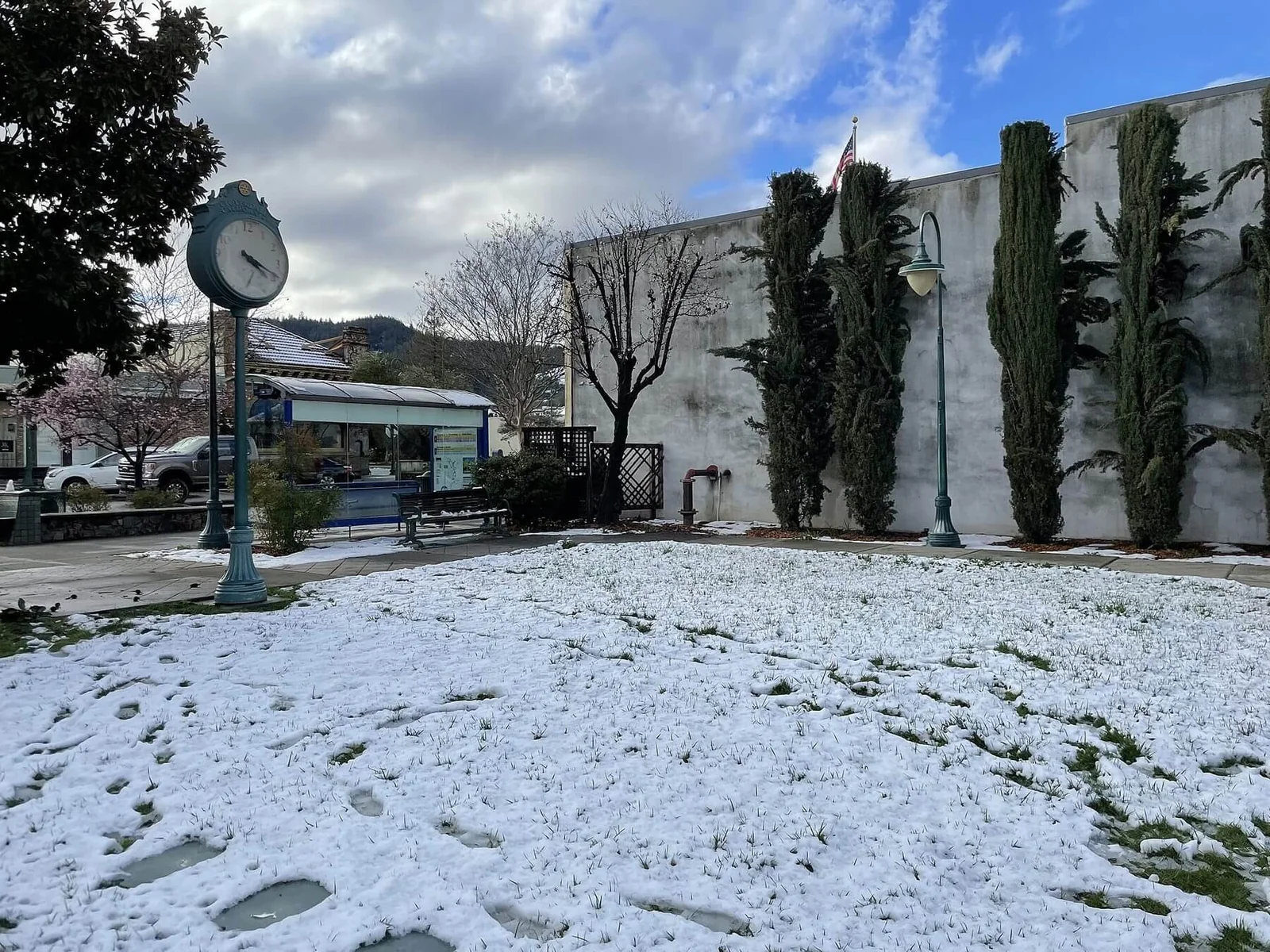
Inside the city limit, plumbing permits come from the City of Cloverdale Building Division, which takes applications online or in person at 124 North Cloverdale Boulevard and conducts the plan review. The detail worth being aware of before you commit to a timeline is the inspection window: the department states it conducts inspections and plan check reviews "Monday through Thursday from 2 to 4 pm," that requests "must be made at least 24 hours in advance to guarantee the inspection," and that anything outside that window needs arrangements made well in advance and may carry an extra fee. Two hours a day, four days a week, booked a day ahead. That is the real constraint on how fast a permitted job closes out here, and it is the reason we schedule the inspection when we schedule the work rather than afterwards.
Outside the city limit, on the county parcels spreading into the Alexander Valley and along the rural roads, the authority is Permit Sonoma, and the scope is wider. That difference is not administrative trivia. A water heater swap on a downtown street is a straightforward building permit. The same swap on a rural parcel can sit next to two additional county programs: water wells, permitted under Sonoma County Code Chapter 25B, and onsite wastewater treatment systems, the county's formal name for septic, administered under its OWTS manual and county code sections 24-33 and 24-34 in accordance with State Water Resources Control Board requirements.
The practical consequence is scheduling. When a job touches a septic system or a well, there is a review path with its own standards and its own inspectors, and it does not compress just because a fixture is out of service. We tell you which counter your address answers to on the first visit, and we tell you plainly whether the work is a same-week permit or a longer path.
Daniel Chan was more than capable, more then qualified and extremely considerate of our need for repeat service on a leaky Toto toilet valve. Goodbye Toto, Hello Ongaro and Sons Plumbing, especially Daniel Chan.
Julie C.
City water, well water, sewer, septic: four systems, one ZIP code
Cloverdale's municipal supply comes from wells in the Russian River corridor rather than from a surface intake. If you are on city water, pressure arrives at the house through a service line and is stepped down by a pressure regulator at or near the meter. If you are on a private well, there is no regulator doing that job. Pressure is manufactured on site by a pump and a pressure tank cycling between a cut-in and a cut-out point, and the quality of that cycle determines whether your shower is steady or surges.
That single difference drives a long list of diverging failures. On city service, a worn regulator lets main pressure through unchecked and quietly shortens the life of every fixture, supply hose and water heater in the building. On a well, a pressure tank that has lost its air charge makes the pump start and stop rapidly, which is the fastest way to destroy a pump motor. Both problems present to a homeowner as "the water is acting weird." They are not the same repair, and they are not diagnosed with the same tools.
Waste is the same story in reverse. Inside the city, a lateral carries waste from the house to the municipal main, and the classic failures are root intrusion at joints, an offset where the pipe has shifted, or a belly holding water and solids. On a septic system, the same lateral runs to a tank, and after the tank a distribution system feeds a leach field. Solids carryover, a saturated field and a failing baffle are the failures there, and they do not announce themselves the way a blocked city lateral does. One rule matters more than any other for a septic property: chemical drain openers do not belong in that system, and they will not solve a field problem anyway. This is a large part of why we handle drain cleaning in Cloverdale mechanically and why we camera a line before recommending sewer repair in Cloverdale.
Power is the fourth variable, and it is specific to this part of the county. PG&E may turn off power during severe weather to help prevent wildfires, a practice the utility calls a Public Safety Power Shutoff. If you are on city water, the taps still run when the lights go out. If you are on a well, they do not: the pump is an electrical appliance and the house loses water with it. Tankless water heaters also need electronics to fire, and a sump pump is dead weight without a circuit behind it. Households out here plan for that, and it is a common reason a plumbing project and an electrical project in Cloverdale get scoped together rather than a year apart.
Symptom to cause, in order
Most calls start with a description rather than a diagnosis. These are the patterns we see most often on Cloverdale homes and what each one usually points to:
- Pressure drops hard when a second fixture opens. Undersized or corroded supply piping, a partially closed valve, or on a well, a pressure tank and switch out of adjustment.
- The shower surges warm and cool in short cycles. On a well, this is often the pump short cycling rather than a water heater fault at all.
- Rusty or brown water at hot taps only. The tank is corroding internally and the anode rod has been spent for a while.
- Hot water runs out sooner than it used to. Sediment has built up on the tank floor and is occupying volume that used to be water.
- Rumbling or ticking from the water heater. Sediment trapping steam pockets under it, which is a thermal stress problem as much as a noise problem.
- Slow drains at more than one fixture at once. The blockage is downstream in a shared branch or the main line, not in the trap under the sink you are looking at.
- A toilet gurgles when the washing machine drains. Venting or a main line restriction, and worth taking seriously on a septic property.
- Green grass or a soft spot in the yard during dry months. A leaking service line or a failing leach field, depending on where it sits.
- Pinhole leaks in copper, one after another. A systemic condition in the piping, not a run of bad luck. Patching the third one is rarely the right call.
- The meter dial creeps with every fixture closed. There is a leak somewhere between the meter and the house, often underground.
- Water hammer, a bang when a valve closes quickly. High static pressure, missing arrestors, or a loose run of pipe.
Knowing where the main shutoff is, and that it turns, belongs on the same list. On rural parcels it is frequently at the well house rather than the street, and plenty of homeowners have never located it.
Repair, replace, or reroute: the age, material, and access test
When something fails, the real question is whether to fix that failure or address the system it belongs to. We settle it with three factors, and we say out loud which way each one points.
Age against service life. Every component has a working range: a storage water heater, a pressure tank, a supply run, a cast iron drain stack. A failure at the young end of that range is a repair. A failure at the far end is the system telling you what comes next.
Material. This is usually the decisive one. Galvanized steel supply lines corrode from the inside and lose diameter until pressure suffers everywhere at once, and no single repair reverses that. Copper that has started producing pinholes tends to keep producing them. On the waste side, cast iron scales and eventually loses its floor, clay tile joints invite roots, and both behave differently under a camera than modern ABS or PVC.
Access. What it takes to reach the failure changes the math more than most homeowners expect. A leak in an open crawlspace is a different job from the same leak under a slab. A lateral that runs beneath a driveway, a mature oak or a long rural approach is a different job from one under an open lawn.
The tiebreaker is simple: when two of the three point the same direction, the decision is made. When only one does, we repair and we tell you what to watch. That framework is why we will sometimes talk a homeowner out of a repipe and sometimes recommend one before a second leak happens.
Static pressure settles most arguments
If we had to gauge one thing on every Cloverdale house before quoting anything, it would be static water pressure. It is the quiet variable behind an implausible number of separate complaints.
Excess pressure does not just push water faster. It loads every gasket, cartridge, supply hose, toilet fill valve and solder joint in the building continuously, and it turns what would have been a slow weep into a burst. The plumbing code requires a pressure-reducing valve once static pressure exceeds the code ceiling, and those valves are wear parts. When one drifts or fails, the house gets full main pressure without anyone noticing until fixtures start failing in clusters.
There is a second effect that catches people. Once a regulator or check valve is in the line, the house plumbing becomes a closed system, and water expands as it is heated. With nowhere to go, that expansion raises pressure inside the system every time the burner or element runs, which is why a thermal expansion tank is part of a correct water heater installation rather than an upsell. On a well, the equivalent conversation is the pressure tank's pre-charge and the switch differential, and getting those right fixes complaints that look like fixture problems.
We gauge pressure, check the regulator or the pressure switch, and show you the reading. It is a two-minute test that regularly explains a problem the homeowner had assumed was three unrelated problems.
My service person, Gerald Bennett, was exceptional. Not only was he timely, he was thorough in his description of both our problem and the possible solutions. It was a pleasure to do business with Gerald and Ongaro & Sons. You will be our plumbers now.
Jeffrey H.
How the work gets done
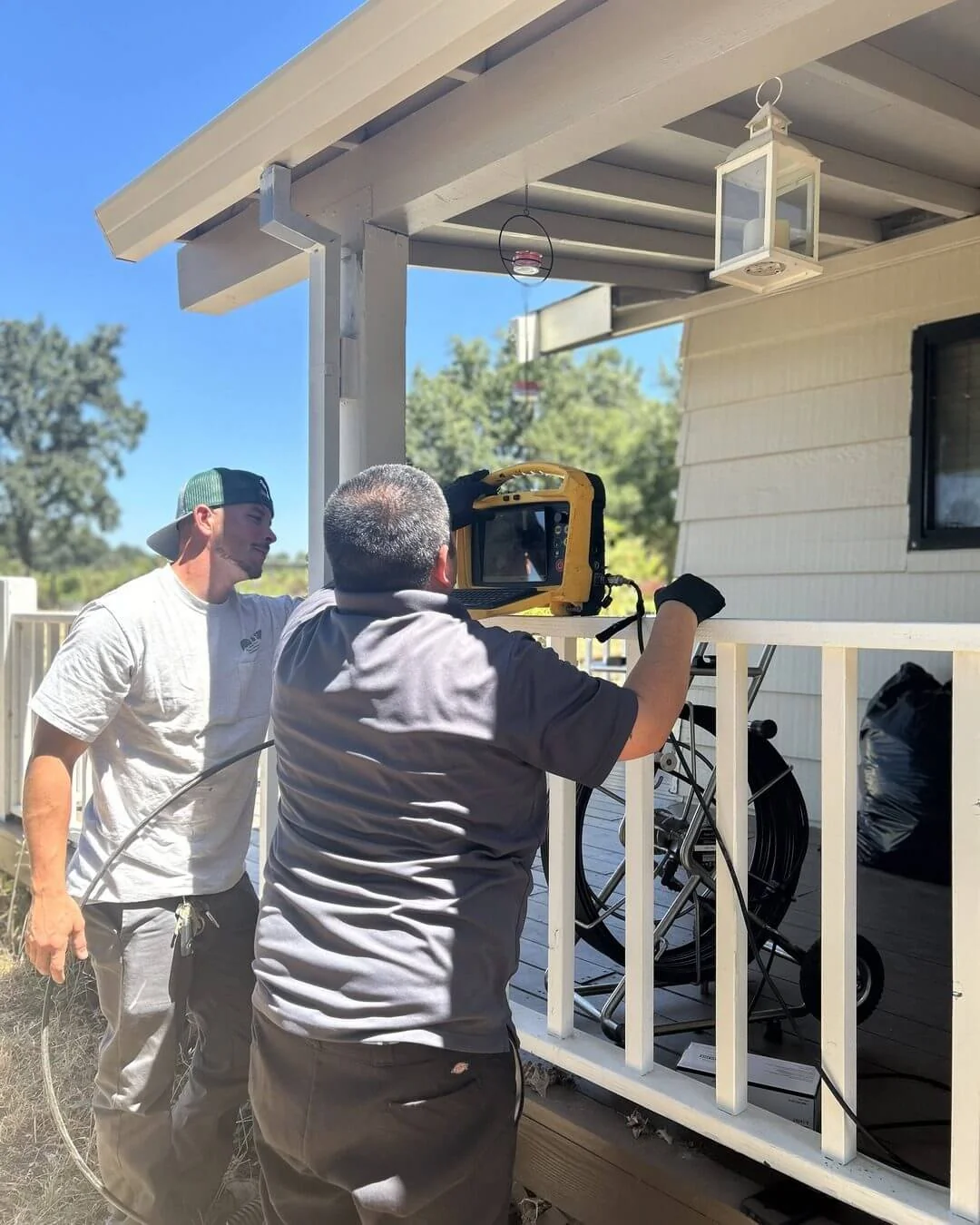
The tools decide the quality of the decision. On any suspected line failure we run a camera before quoting a replacement, because the difference between roots at one joint, a belly holding water and a collapsed section is the difference between a cleaning, a spot repair and a full lateral. Guessing at that from a symptom costs homeowners real money.
From the camera we locate the defect and mark its depth on the surface, which determines whether a trenchless approach is viable or whether the run genuinely needs to be opened. On blockages we choose between cabling and hydro jetting based on what is in the line: grease and scale respond to jetting, hard roots often need mechanical cutting first, and an old or fragile pipe changes what is safe to put down it. After a repipe or a repair, we pressure test and isolate before closing anything up. You get the footage and the findings, not a verbal summary.
What drives the cost of plumbing work here
We will not print prices on a web page, because a number without your house attached to it is not information. These are the factors that move a quote in Cloverdale.
Access first. Crawlspace height, a raised foundation versus a slab, attic runs, and how much finished surface has to come off and go back on. Then run length and fixture count, which set both material and labor on any repipe or reroute. Then trenching conditions on any exterior line: distance from the house to the main or the septic tank, what is on top of the route, and whether a driveway, a retaining wall or mature landscaping is in the way. Rural parcels often mean longer runs than an in-town lot, and that is a genuine cost difference rather than a location surcharge.
Code-required components are the piece homeowners least expect: seismic strapping, an expansion tank, correct venting and combustion air, a drain pan and drain line where one is required, and the permit itself. Skipping any of them is how a cheap install fails inspection or fails outright. Finally, on any electric conversion, the electrical scope is part of the plumbing cost conversation, because a 240-volt circuit and available panel capacity are not free and cannot be assumed.
Incentives worth checking
Incentive programs in this county move constantly, and a page that was accurate a year ago can be actively misleading now. What holds at the moment:
Sonoma Clean Power is the community choice energy provider for Sonoma County, and its water heating money is written around heat pump equipment rather than gas. The amount sits above its usual level for now, and afterwards it stays open only to households enrolled in the CARE or FERA bill discount programs, where income-qualified customers can have a share of the remaining project cost covered after other rebates are applied. The terms are on Sonoma Clean Power's water heating page.
Ask which program any rebate figure comes from, and we confirm current status at quote time.
The pattern worth internalizing: rebate money currently favors heat pump water heaters, which is exactly the equipment that depends on your panel, so the electrical assessment should happen before you choose.
Maintenance that earns its place
Annual attention is cheap relative to what it prevents. On a storage water heater, that means flushing sediment and checking the anode rod before it is fully consumed, plus confirming the seismic strapping is intact and the temperature and pressure relief line is correctly routed. On a tankless water heater in Cloverdale, it means descaling on schedule, because scale is what turns an efficient unit into a fault code.
On city service, test the regulator annually and replace it when the reading drifts. On a well, check the pressure tank's air charge, service the sediment filter, and test the water on a regular schedule, because well quality is the owner's responsibility rather than a utility's. Exercise the main shutoff and the angle stops under sinks and toilets once a year so they are not seized on the day you need them.
On the waste side, a camera inspection every few years on an older lateral is the difference between planning a repair and reacting to one. Septic systems need pumping on a regular cadence and need to be kept free of anything that is not waste or tissue. Before winter, insulate exposed piping, disconnect hoses from bibs, and pay attention to any run in an unheated well house or outbuilding. Those steps are also the backbone of our maintenance plans.
Neighborhoods and areas we work in
Downtown Cloverdale and the older residential streets around North Main Street hold the town's oldest housing, and the plumbing reflects it: original supply runs that have been extended piecemeal, drainage that grew by addition rather than by design, tight utility closets, and water heaters wedged into spaces no one would choose today. Work in these houses rewards patience and a full assessment, because the second surprise is usually behind the first.
Move out into the Alexander Valley and the rural parcels beyond the city limit and the job changes shape entirely. Long service runs, well houses, outbuildings and shops with their own supply and drainage, septic systems of varying age and design, and a permit path through the county rather than the city. North county summers run hot, well above what the coast sees, which loads fixtures, irrigation and water heaters harder through the dry months.
We cover both, and everything in between, from the Petaluma headquarters of the family that has dispatched Ongaro trucks since 1932.
How to choose a plumber for this work
Ask who pulls the permit and under which license class. Plumbing work belongs under a C-36, and on a septic or well property the permitting answer should be specific, because that is where jurisdictions overlap.
Ask whether they camera a line before quoting its replacement. Ask what changes in their approach when a house is on a well or a septic system rather than city service, and listen for whether the answer is specific. Ask for the scope in writing, including what gets restored after the work and what does not. Ask what the electrical requirement is if an electric appliance is on the table, and whether they can handle that side themselves or will hand you off. We are a multi-trade company with C-20, C-10 and C-36 crews, a Diamond Certified rating, a BBB A+ Rating, and we do not subcontract the trade you hired us for.
What North Bay homeowners say
Two reviews from customers on the plumbing side of the business:
Book a plumber in Cloverdale
The fastest way to get on the schedule is to book online. Tell us the symptom, whether the property is on city service or on a well and septic, and roughly when it started. We will bring the diagnostic tools the description calls for, show you what we find, and give you the price before any work begins. Cloverdale homeowners also use our water heater and sewer repair pages for the deeper treatment of those jobs, our electrical services in Cloverdale for panel and backup power work, our plumbing across Sonoma County page for the county-wide view, and the Cloverdale service area page for every trade we run in this town.
Your Comfort, Our Priority
Ongaro & Sons is your trusted heating, cooling, plumbing, electrical, and solar expert, specializing in reliable maintenance and repair services that keep your home running efficiently year-round.
Our certified technicians deliver unmatched expertise with fast, friendly service across Marin, Sonoma and Napa County. From HVAC tune-ups to plumbing repairs and electrical upgrades or solar solutions, we focus on energy-efficient performance and long-term comfort. Count on us to maintain the systems that power your home and keep your environment just the way you like it.
Licensed, Insured, Background-Checked
Our technicians are licensed, experienced, and trained to service all makes and models.
Locally Owned and Operated
Serving the Napa, Marin, and Sonoma communities with personalized, hometown service.
Reliable Repairs
We respond quickly and get the job done right the first time, with no surprises.
Since 1932
Why Ongaro & Sons?
Four generations of trusted home service. Open any reason to see what it means for your home.
Schedule Service →Family-owned in the North Bay since 1932
Four generations of the Ongaro family serving Marin, Sonoma and Napa County. We know these homes and the systems in them.
Licensed, insured, background-checked technicians
Every technician is fully licensed and insured, background-checked, and trained on the equipment we install.
Diamond Certified and BBB A+
Diamond Certified since October 2016, and BBB Accredited with an A+ rating since December 1995.
Mitsubishi Diamond Contractor Elite and Trane Comfort Specialist
Both top manufacturer tiers. That standing decides how registration and extended warranty terms are handled on the system you actually bought.
The price is agreed before work starts
You see the number before the work begins. Flat-rate quotes, no surprises and no pressure.
Comprehensive maintenance program
Members get priority scheduling, discounts, and proactive checkups that prevent costly failures.

Discount
Membership
Ongaro Maintenance Plans
Annual maintenance on your home systems provides safeguards and comfort to you and your family. Members get priority scheduling, discounts, and proactive checkups that catch problems early.
Member Discounts
5% off every repair and replacement, all year long.
Peace of Mind
Proactive checkups catch issues before they become big problems.
Courtesy Reminders
We call you to schedule: never miss a seasonal service.
Value That Lasts
With Ongaro & Sons, you’re investing in quality, integrity, and service that stands the test of time. Explore our current promotions and see the difference real value makes for your HVAC, plumbing, and electrical needs.


From the Blog
 Sep 17, 2026
How Many Amps Does My House Need? Sizing Service for What You Actually Run
How many amps your house needs comes from a load calculation of what you run and plan to add. What drives the number, when existing service is enough, and more.
Read More Sep 10, 2026
Hard Water in Marin County: What Is Actually in Your Water and What It Does
Hard water in Marin County varies by provider and source. The 2025 report figures for Marin Water and NMWD, what hardness does and does not mean, and options.
Read More Sep 3, 2026
Electrical Permit Requirements in California: What Needs One and What Does Not
Find out which electrical projects commonly need permits, how to confirm local exemptions, and what to ask before work begins in Marin, Sonoma or Napa County.
Read MoreCloverdale plumbing questions, answered
Who is the best plumber in Cloverdale, CA?
Judge it on record and scope. Ongaro & Sons has worked in the North Bay since 1932, carries a Diamond Certified rating and a BBB A+ Rating, holds a C-36 plumbing license, and has 2,756 Google reviews at a 4.8-star average. We handle in-town municipal service and rural well and septic properties, we pull permits through the correct authority for your address, and we quote before starting.
Do I need a permit to replace a water heater in Cloverdale?
Yes. A water heater replacement is permitted work, and the seismic anchoring and energy requirements it triggers are exactly what an inspector verifies. If your property is inside the city limit, that permit comes from the City of Cloverdale Building Division. If your address is unincorporated, Permit Sonoma is the authority. We handle the application either way, and we schedule around the inspection availability rather than promising a date we cannot control.
Does the Bay Area rule banning gas water heaters affect me here?
No, because Cloverdale is not inside the Bay Area Air Quality Management District. This part of the county falls under the Northern Sonoma County Air Pollution Control District, so the zero-NOx compliance dates that begin affecting residential replacements in 2027 elsewhere in the region do not govern your appliance choice. We verify what applies at the time of your project instead of relying on last year's summary.
My house is on a private well. Can you still work on it?
Yes, and it changes what we check first. Household pressure on a well comes from a pump and pressure tank rather than a municipal main, so a complaint about weak or surging water usually starts with the tank's air charge and the pressure switch settings rather than with the fixtures. We work on the household plumbing side, and where the job touches the well itself the county's well program under Sonoma County Code Chapter 25B governs the process.
What happens to the water in Cloverdale when the power goes out?
On municipal service, taps keep running because the city's system holds pressure without your electricity. On a well, you lose water immediately, because the pump stops when the circuit does. Tankless water heaters and sump pumps also stop, since both need electronics to operate. PG&E turns off power during severe weather to help prevent wildfires under its Public Safety Power Shutoff program, so households out here should plan for stored water or backup power.
How do I know if my sewer line needs cleaning or replacing?
A camera answers that and a symptom does not. Roots entering at a single joint, a section holding water, and a collapsed run all produce the same slow drains and gurgles at the fixture. We inspect the line, locate the defect, mark its depth, and show you the footage before recommending anything. Repeated blockages in the same spot are the pattern that most often turns out to be structural.
Is a tankless water heater a good choice for a Cloverdale home?
Often, with two conditions. The gas supply and venting have to support the unit's demand, and that is the reason a swap into an old closet is not always a straight substitution, and the unit has to be descaled on schedule or it will fault. Where a household uses hot water in long or overlapping draws, the endless supply is useful. Where the install would require substantial gas and vent rework, we will say so.
What rebates apply to a water heater upgrade in Cloverdale?
Sonoma Clean Power is the program that matters here, and it funds heat pump water heaters rather than gas equipment. Its rate is above the normal level at present, and afterwards the money continues only for households on the CARE or FERA bill discount programs. A like-for-like gas replacement earns nothing. Because the qualifying equipment is electric, panel capacity is part of the same question, so we look at both before you choose.
Why do my fixtures keep failing in the same house?
Cluster failures across unrelated fixtures usually mean a system condition rather than coincidence. Static pressure above the code ceiling is the most common cause, and a worn pressure-reducing valve is the most common reason it climbed. Thermal expansion in a closed system does similar damage if there is no expansion tank. Corroding galvanized supply piping produces the opposite symptom, weak flow everywhere, and it also gets misread as a fixture problem.
How often should an older sewer lateral be inspected?
Every few years is a reasonable cadence on a house with clay or cast iron waste piping, and sooner if you have had two blockages in the same location. The point of a scheduled inspection is that it converts a future failure into a planned repair, with the trench route, the landscaping and the permit all sorted in advance rather than under time pressure.
Do you work on properties outside the city limit?
Yes. County parcels in the Alexander Valley and the surrounding rural roads are a normal part of our Cloverdale work. The differences are practical: a longer service run from the road, well and septic infrastructure instead of municipal utilities, and Permit Sonoma rather than the city as the permitting authority, including its onsite wastewater treatment system program for septic work.
Can you handle a whole-home repipe in an older Cloverdale house?
Yes, and it is planned work rather than reactive work. We assess the full supply system, map the runs, and lay out the sequence so the household is not without water any longer than necessary. Galvanized piping that has lost internal diameter is the usual driver, and the assessment tells you whether the whole system is due or whether targeted replacement of the worst runs will hold.
Do drain chemicals hurt a septic system?
They are a poor choice on any drain and a worse one on a septic property, because they do nothing for a saturated leach field or a structural defect in the lateral and they can damage older piping while you wait. Mechanical clearing, cabling or jetting chosen according to what is in the line, solves the blockage and lets us see the pipe's condition at the same time.
Does Ongaro & Sons cover the electrical work an electric water heater needs?
Yes. A heat pump water heater typically needs a dedicated 240-volt circuit, and whether your panel has capacity for it is an electrical question answered by a load calculation. We run C-10 electrical crews alongside our plumbing crews, so the panel assessment, any required upgrade and the appliance installation are scoped as one project by one company with one point of accountability.