Solar in Belvedere, CA
The company has been in the North Bay since 1932 and currently runs heating and cooling, plumbing, electrical and solar as one licensed contractor. A Diamond Certified rating, a C-10 electrical license, and 2,756 Google reviews averaging 4.8 stars. We pull the permit, size the array to your real usage, and explain what drives the cost before anything is ordered.
On this page
Solar installation in Belvedere
We design and install solar and battery systems in Belvedere, for homes going solar for the first time and for homes replacing an array that has reached the end of its useful life. Belvedere has had rooftop solar for a long time, and many systems here were sized in a different era, by companies that no longer exist, for households that have since added a heat pump, an induction range, or an electric vehicle. When an old array no longer covers the house, we replace it with one sized to how you live now.
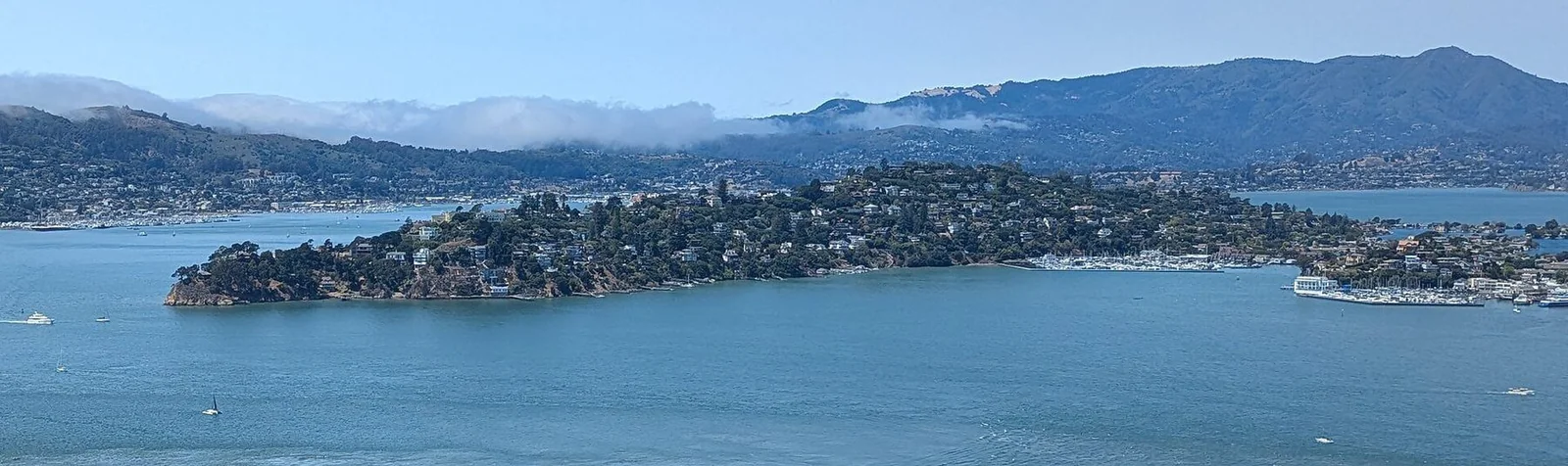
Three local factors shape every solar project here: an electrical service that was never designed with generation in mind, a city review process that treats solar and solar-plus-battery differently, and marine air that calls for corrosion-resistant hardware from day one.

When it makes sense to replace an existing array
An older array is usually worth replacing in one of three situations: it was sized for a household that has since grown its electrical use, its electronics are obsolete and no longer supported by the manufacturer, or the roof underneath it is near the end of its life.
The roof usually decides the order. If the covering has fewer than about ten years left, re-roofing first and installing the new array on the new roof is almost always cheaper than doing those jobs the other way around.
One thing to know before replacing a system: a new interconnection application lands on the current net billing tariff, which credits exported energy differently than the older net metering arrangement did. That changes how a replacement system should be designed, and it is covered in the next section.
Marine air is also part of the design conversation here. Belvedere sits on the water, and salt air corrodes conduit fittings, junction boxes and module connectors over time. We specify marine-grade hardware at installation, because on this peninsula the difference shows up within a few years.
What net billing changed about the equipment decision
California changed how exported solar energy is credited. Customers who applied for interconnection after April 14, 2023 take service under the net billing tariff adopted in CPUC decision D.22-12-056. The California Public Utilities Commission states the core change plainly: compensation for excess generation exported to the grid is applied to the bill "at a rate reflecting the value of this generation to the grid."
The mechanism matters more than the label. Under the older arrangement, a kilowatt-hour sent out at noon offset one drawn at eight in the evening at roughly equal value, so the grid worked as a free battery. Under net billing, midday export is worth less than evening consumption, because midday is exactly when the grid needs energy least. PG&E's time-of-use periods put the highest prices in the late afternoon and evening, after the sun has dropped behind the Marin hills.
Two consequences follow, and they are why a design written today does not resemble one from 2018. Storage became the component that determines whether the system performs, because it lets you consume your own production during the expensive window instead of exporting it cheaply. And orientation turned into an economic question: a west-facing plane makes fewer annual kilowatt-hours than a south-facing one but makes them nearer peak pricing, which on Belvedere's hillside lots often turns a "bad" exposure into an acceptable one.
One more thing belongs in every conversation before outage season. A grid-tied array does not power your house when the grid is down. The inverter is required to disconnect so utility crews are not working on a line your roof is energizing. That is not a defect and not brand-specific. It is why a solar-only house sits dark alongside its neighbors when PG&E turns off power for safety during severe weather, which the Tiburon Peninsula is exposed to. Keeping circuits alive takes storage with a backup-capable inverter and a properly configured transfer point, or a standby generator. We are a Certified Generac Generator installer, so we can scope the alternative rather than pretend there is one answer.
Aldo was punctual, friendly and found the actual problem quickly. Had we done the work ourselves we would have missed the real link.
Marie B.
Sizing: load first, roof second, storage third
Load first. We start from twelve months of actual interval usage, never a square-footage rule of thumb, and then ask what is changing. BAAQMD's zero-NOx rule for residential water heaters begins phasing in from 2027 with compliance dates that vary by unit size, and Belvedere sits fully inside the district. We confirm the current requirement at project time. A heat pump water heater adds electrical load, and an array sized before that conversion will be short after it.
Roof second. Usable area, not gross area. Setbacks, access and clearance pathways, obstructions and shade all subtract. On the cut-up roofs of the island streets, the usable fraction is often far smaller than a satellite estimate suggests.
Storage third. Capacity follows one question: whole-house backup, or a defined set of critical loads? Whole-house means a larger battery, a larger inverter and more electrical work. Critical loads covers refrigeration, some lighting, networking, and a circuit or two for medical devices. Most homeowners here land on critical loads once they see what each approach involves.
How the work runs on a Belvedere roof
Belvedere's lanes are narrow, steep and often have nowhere to stage a truck, and many houses present two or three stories to the downhill side. We plan access, tie-off points and material staging during design rather than discovering them on install day, and every technician on a roof here works in fall protection.
Roof work is typically the shortest phase. Design, structural review, permitting and interconnection take the calendar. Our sequence: site assessment and load analysis, electrical service evaluation, design and structural check, permit submittal, installation, inspection, then interconnection and permission to operate. Commissioning includes proving the monitoring reports and showing you how to read it, because a system nobody watches is a system that fails silently.
Holding the C-10 license ourselves means the panel work, the backup gateway and the array all belong to one contractor. Splitting that between a solar company and an electrician is where schedules and accountability come apart. If the project turns out to need panel or service work first, the same crew handles our electrical work in Belvedere.

Permits, code and inspection in Belvedere
Belvedere publishes its own review tiers, and solar sits in an unusually specific spot inside them.
- State law caps local discretion. Government Code 65850.5 requires every city and county to adopt an ordinance "that creates an expedited, streamlined permitting process for small residential rooftop solar energy systems," and directs that "a city or county shall administratively approve applications... through the issuance of a building permit or similar nondiscretionary permit."
- Review is ministerial, with a narrow exception. A discretionary denial under that statute requires written findings of a "specific, adverse impact upon the public health or safety" with "no feasible method to satisfactorily mitigate or avoid" it. Aesthetic preference is not that finding.
- Cities must publish a checklist of the requirements a small rooftop system meets to qualify for expedited review.
- Belvedere puts solar without a battery in its staff-level tier. The City of Belvedere's published review levels list "Residential solar P.V. systems (not equipped with an ESS system)" as a Medium Project under Standard Staff Level Review, at a stated "+/- 10 days."
- Adding a battery moves you out of that tier. The carve-out is explicit in the city's own wording, and the staff-level category covers photovoltaic systems not equipped with an energy storage system. Plan on a longer multi-department review when storage is in scope. This is the single most useful thing to know before you set a schedule, and it runs opposite to what the economics push you toward.
- Deed restrictions have limited reach. California Civil Code 714 makes any covenant or condition that "effectively prohibits or restricts the installation or use of a solar energy system" void and unenforceable. A restriction survives only if it is reasonable, meaning it does not significantly raise cost or cut efficiency. Associations and local entities keep the right to enforce "applicable health and safety standards and requirements imposed by state and local permitting authorities."
- Interconnection is a separate approval. PG&E owns the wires and processes it regardless of who supplies your generation, and the system may not export until permission to operate is issued.
- Inspection focuses on electrical detail: disconnect location, conductor sizing, overcurrent protection, grounding and bonding, rapid shutdown function, and correct labeling at the main service. Peninsula addresses outside city limits are permitted through the Marin County Community Development Agency instead.
What drives the cost
Per-watt is the number that hides the most, so here is what actually moves a Belvedere quote.
The electrical service is usually the largest swing item. A main panel can accept only so much backfed current before the busbar rating is exceeded, and on the older streets we still find panels with no room for a solar breaker. That leaves three options: a supply-side connection ahead of the main breaker, a panel replacement, or a service upgrade with the utility involved. A proposal written without opening your panel cover cannot tell you which one you are buying.
Roof complexity comes second. Plane count, pitch, height above grade, covering material and underlayment condition all move labor. One large plane of composition shingle at moderate pitch is a different job from four small tile planes on a three-story hillside elevation at the same system size. Conduit distance belongs here too, since the run from array to inverter to service is long on vertical lots.
Storage carries its own structure: usable capacity, continuous and surge output, whole-house versus a critical-loads subpanel, and where the battery can be mounted safely and legally. It also changes your permit path and therefore your schedule. Access rounds it out, because a crew carrying material up a stepped entry from a lane with no parking spends hours that never appear on a spec sheet.
Ongaro & Sons is the absolute best. They are fast, accommodating, the best customer service, and value. They are our go-to for sure.
Just d.
Incentives, and what is open
Solar incentive information goes stale faster than almost anything else online, so this is the state we verify at project time.
Storage has the live program. The Self-Generation Incentive Program, administered by the CPUC, supports behind-the-meter advanced energy storage and combined solar-and-storage systems. Its Residential Solar and Storage Equity incentives opened for reservation on June 2, 2025 and are described as available to any low-income residential electric or gas customer in California, alongside equity resiliency and small residential storage categories. Requirements include enrollment in a qualified demand response program.
MCE supplies your generation, PG&E remains your utility. Belvedere is served by MCE as its community choice electricity provider while PG&E delivers the power, reads the meter and handles interconnection. Which entity credits your exports, and on what terms, is worth confirming with MCE before you sign.
The rest of the solar work we do in town
New array installation is the core of it. Battery storage added to an existing array is the most common companion job, and the main panel and service work that a solar project triggers is handled by the same crew, since we hold the C-10 electrical license ourselves. Running all four trades from Petaluma means none of that needs a second contractor. Heat pump and HVAC work in Belvedere is the load side of the same equation, and plumbing in Belvedere, including heat pump water heater conversions on Marin Water supply, is where the coming air district rule lands first.
Belvedere Island, Corinthian Island and the lagoon
The three parts of town present three different jobs.
On Belvedere Island and Corinthian Island, houses are older, roofs are complex, lots are steep and access is the binding constraint. Original electrical services here were sized for homes carrying far fewer loads than a modern household runs, so a solar project frequently becomes a solar-and-service project. Design review culture is real in this part of Marin, which is precisely why the state statute limiting discretionary review of rooftop solar is worth understanding before you assume the answer is no.
Around the Belvedere lagoon, the mid-century houses tend to be lower, simpler in roof form and easier to stage. The trade-off is proximity to the water, putting hardware in the most corrosive air in town, plus garage and utility-space constraints that decide where a battery can go. Across all of it, exposure to power shutoffs is why storage conversations run shorter here than inland.
How to choose a solar contractor for this work
Four questions separate a proposal worth taking seriously from one worth discarding.
Did they open the electrical panel? A design that ignores service capacity and busbar rating is a guess, and the correction lands on you later. Did they measure shade on site across the year rather than from an aerial image? Belvedere's trees and hillside neighbors shade roofs that satellite tools call clear. Did they tell you what a battery does to your permit path in this specific city? An installer working from a generic California playbook will not know Belvedere separates the two.
And do they hold the electrical license themselves? Ask directly. When panel work is subcontracted, accountability for the finished system divides at the point where it matters most. Ongaro & Sons has been a family business since 1932, holds a BBB A+ Rating and Diamond Certified status, and the crew on your roof works for us.
What North Bay homeowners say
Two of the reviews behind our rating:
Solar across Belvedere and Marin County
Related work nearby: solar across Marin County, solar in Sausalito, solar in Mill Valley, solar in Corte Madera, and the full Belvedere service matrix covering every trade we run in town.
Book solar work in Belvedere
A new array designed, an aging one replaced, or a battery added to something already on the roof: the start is the same, a site visit, a look inside the electrical equipment, and a written scope with the cost drivers explained. Book online and we will schedule from Petaluma, where every Ongaro truck is dispatched.
Your Comfort, Our Priority
Ongaro & Sons is your trusted heating, cooling, plumbing, electrical, and solar expert, specializing in reliable maintenance and repair services that keep your home running efficiently year-round.
Our certified technicians deliver unmatched expertise with fast, friendly service across Marin, Sonoma and Napa County. From HVAC tune-ups to plumbing repairs and electrical upgrades or solar solutions, we focus on energy-efficient performance and long-term comfort. Count on us to maintain the systems that power your home and keep your environment just the way you like it.
Licensed, Insured, Background-Checked
Our technicians are licensed, experienced, and trained to service all makes and models.
Locally Owned and Operated
Serving the Napa, Marin, and Sonoma communities with personalized, hometown service.
Reliable Repairs
We respond quickly and get the job done right the first time, with no surprises.
Since 1932
Why Ongaro & Sons?
Four generations of trusted home service. Open any reason to see what it means for your home.
Schedule Service →Family-owned in the North Bay since 1932
Four generations of the Ongaro family serving Marin, Sonoma and Napa County. We know these homes and the systems in them.
Licensed, insured, background-checked technicians
Every technician is fully licensed and insured, background-checked, and trained on the equipment we install.
Diamond Certified and BBB A+
Diamond Certified since October 2016, and BBB Accredited with an A+ rating since December 1995.
Mitsubishi Diamond Contractor Elite and Trane Comfort Specialist
Both top manufacturer tiers. That standing decides how registration and extended warranty terms are handled on the system you actually bought.
The price is agreed before work starts
You see the number before the work begins. Flat-rate quotes, no surprises and no pressure.
Comprehensive maintenance program
Members get priority scheduling, discounts, and proactive checkups that prevent costly failures.
Discount
Membership
Ongaro Maintenance Plans
Annual maintenance on your home systems provides safeguards and comfort to you and your family. Members get priority scheduling, discounts, and proactive checkups that catch problems early.
Member Discounts
5% off every repair and replacement, all year long.
Peace of Mind
Proactive checkups catch issues before they become big problems.
Courtesy Reminders
We call you to schedule: never miss a seasonal service.
Value That Lasts
With Ongaro & Sons, you’re investing in quality, integrity, and service that stands the test of time. Explore our current promotions and see the difference real value makes for your HVAC, plumbing, and electrical needs.


From the Blog
 Sep 17, 2026
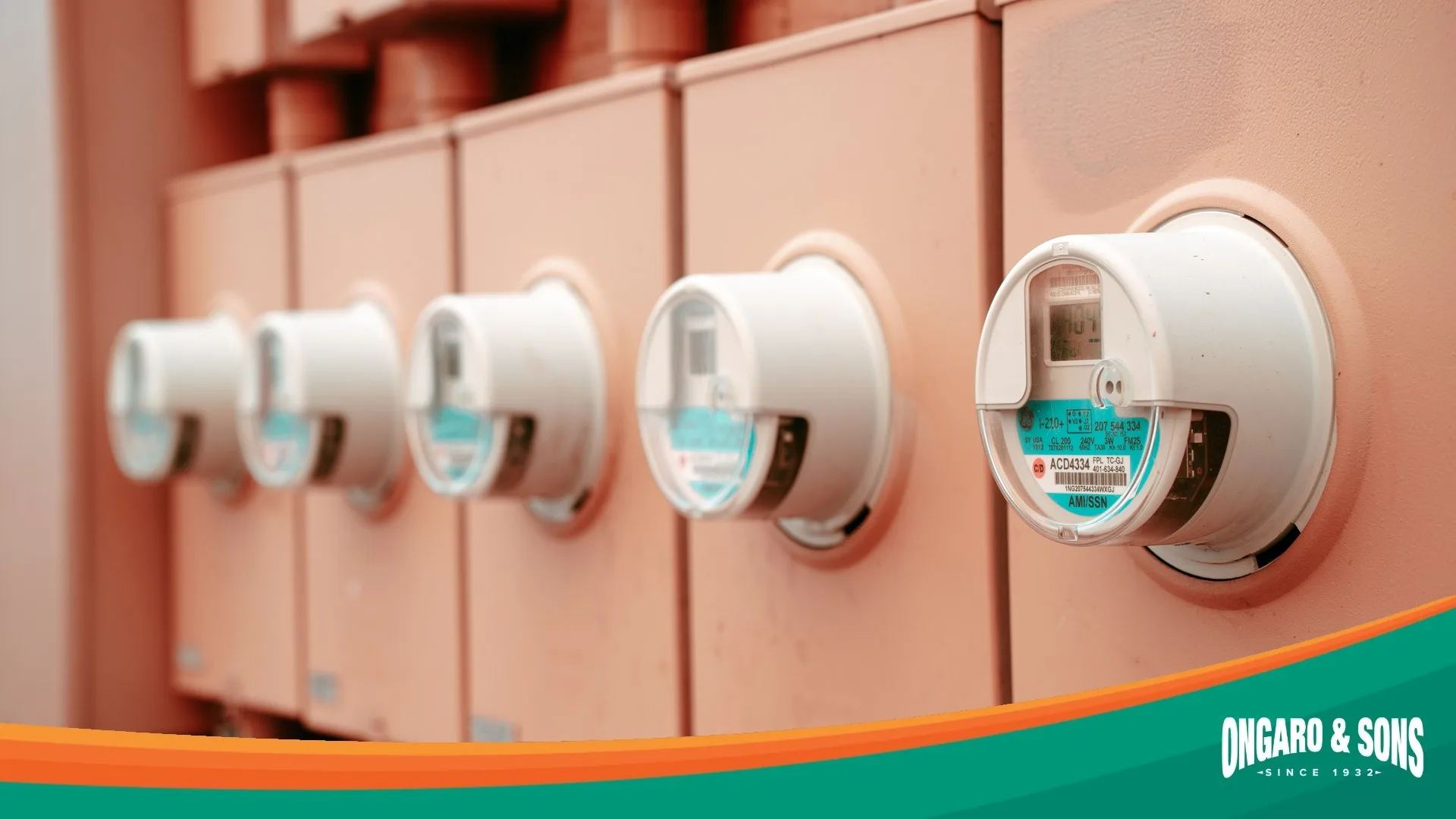
How Many Amps Does My House Need? Sizing Service for What You Actually Run
How many amps your house needs comes from a load calculation of what you run and plan to add. What drives the number, when existing service is enough, and more.
Read More Sep 10, 2026
Hard Water in Marin County: What Is Actually in Your Water and What It Does
Hard water in Marin County varies by provider and source. The 2025 report figures for Marin Water and NMWD, what hardness does and does not mean, and options.
Read More Sep 3, 2026
Electrical Permit Requirements in California: What Needs One and What Does Not
Find out which electrical projects commonly need permits, how to confirm local exemptions, and what to ask before work begins in Marin, Sonoma or Napa County.
Read MoreSolar in Belvedere: frequently asked questions
Who is the best solar company in Belvedere?
Judge it on evidence rather than a claim. Ongaro & Sons has operated as a family business in the North Bay since 1932, holds Diamond Certified status and a BBB A+ Rating, carries the C-10 electrical license this work requires, and has 2,756 Google reviews averaging 4.8 stars. Because the electrical license is ours, the panel work a solar project triggers stays inside one contract.
Will solar keep my Belvedere house running during a power shutoff?
Not on its own. Grid-tied inverters must disconnect when utility power drops so line workers are not exposed to voltage arriving from private rooftops. Keeping circuits alive requires a battery paired with a backup-capable inverter, or a standby generator. We size that around the loads you genuinely need rather than the whole house by default.
Does adding a battery change my permit timeline in Belvedere?
Yes, and it catches people out. The city's published review levels place residential photovoltaic systems in staff-level review at roughly ten days, but only where no energy storage is attached. Once storage enters the scope you fall outside that category and into a longer multi-department review. We build that into the schedule from the beginning.
Can the city or a deed restriction block panels on my roof?
Rarely, and not for appearance alone. State law requires ministerial approval of small residential rooftop systems and permits denial only on written findings of a specific adverse public health or safety impact that cannot be mitigated. Separately, Civil Code 714 voids private covenants that effectively prohibit a solar energy system. Health and safety requirements from permitting authorities still apply.
How long does a solar installation take in Belvedere?
The roof work is typically the shortest phase, often a few days. Design, structural review, permitting and utility interconnection take most of the calendar, and in Belvedere the permit path depends on whether a battery is included, since the city reviews solar-only and solar-plus-storage differently. We give you a realistic schedule at the design stage, after the review path for your specific scope is known.
My old array was installed by a company that no longer exists. What are my options?
If the system no longer covers the house or its electronics are obsolete and unsupported, replacing it with a new, correctly sized array is usually the practical path. A replacement lets you fix the sizing, add storage, and put new flashing at every roof penetration in one project. We start with a site visit and your last twelve months of usage, then tell you what a new system would look like.
Do I need an electrical panel upgrade to add solar?
Sometimes, and it turns on the panel's busbar rating and existing load rather than the age of the house. There are three routes through it: a supply-side connection ahead of the main breaker, replacing the panel, or upgrading the service. We run a load calculation and look inside the equipment before saying which applies, because that answer changes the project substantially.
Is it worth adding storage to an array I already own?
Usually, for two separate reasons. Under current export rules, energy you consume yourself in the evening is worth more than energy sent to the grid at midday, so storage improves the return on an array you already paid for. It also gives you power during a shutoff, which panels alone cannot do. Whether your existing inverter can pair with a battery decides the approach.
Does salt air near the water really damage solar equipment?
It attacks the metal, not the glass. On roofs close to the bay, corrosion shows up at conduit fittings, junction box enclosures and module connectors well before anything happens to the panels. That is why hardware choice matters at installation: we specify marine-grade fittings and enclosures on Belvedere roofs, because the standard inland parts age noticeably faster this close to the water.
What incentives apply to solar and storage in Marin County now?
The active one is the CPUC's Self-Generation Incentive Program, which supports behind-the-meter storage and solar-plus-storage, including an equity track opened in June 2025 for low-income residential customers statewide. Terms and funding move, so we confirm what a specific project qualifies for at the time it is scoped rather than quoting a figure that may already have changed.
Does Belvedere fog make solar a poor investment?
No, though it changes the model. Marine layer mornings shift production later in the day, which under time-of-use pricing is less of a disadvantage than it sounds, since value rises as the afternoon goes on. We model output from your specific roof planes, pitch and measured shade rather than a regional average, so the estimate reflects your house.