Solar Panel Installation in Sausalito, CA
Ongaro & Sons installs solar in Sausalito, and we have been a North Bay contractor since 1932. Solar is electrical work, and we hold a C-10 electrical license. We are Diamond Certified, we carry 2,756 Google reviews averaging 4.8 stars, and we run everything out of our Petaluma headquarters. We pull the permit, handle the utility interconnection, and walk you through what drives the number before anything gets ordered.
On this page
Why a Sausalito solar project starts differently
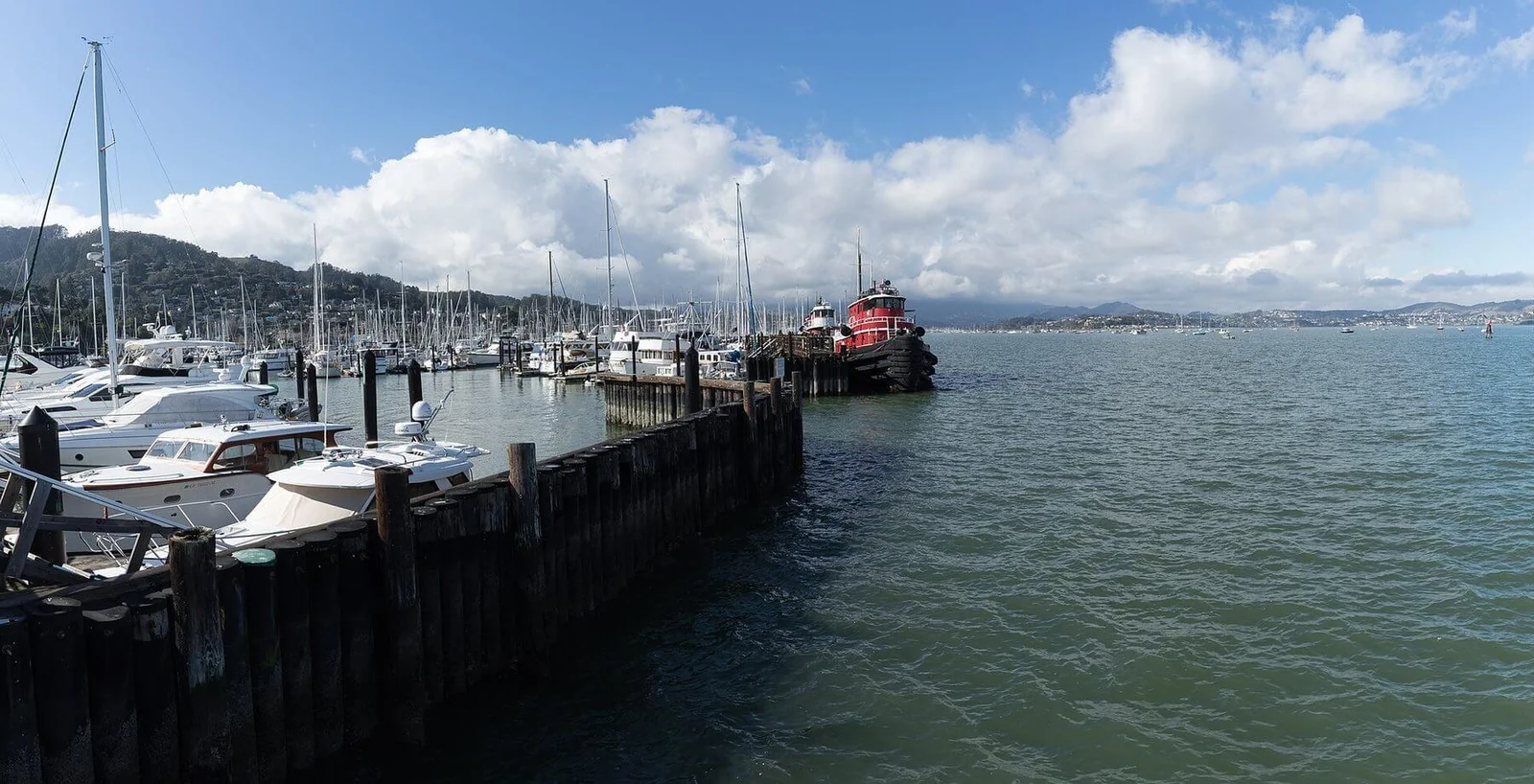
Sausalito is built on a hillside dropping to the western shore of Richardson Bay, so most of the town looks east and southeast over the water. Pleasant to live with, complicating to design an array around: an east-facing plane does its best work in the morning and is winding down by the time a household turns its lights on. The hills behind town take the sun off those roofs earlier in the afternoon than a flat-ground sunset would suggest, while homes on the upper streets and the ridge get a fuller day. Two houses four blocks apart can model very differently, and the difference has nothing to do with the equipment on them.
The building stock compounds it. Older homes here sit on steep, narrow lots, many reached by stairs rather than a driveway, with roofs cut up by dormers, skylights, decks and changes of plane. A single clean rectangle of usable roof is the exception, and the array we can build is often smaller than the roof looks from the sidewalk. Salt-laden marine moisture adds its own tax, so we specify stainless hardware, careful flashing details and sealed exterior enclosures near the water. On a ten-year-old array in this town, the corrosion is almost never on the modules. It is at the grounding hardware, the conduit fittings and the connectors.
Finally, not every Sausalito address is in Sausalito. Some properties with a Sausalito mailing address sit in unincorporated Marin County, which puts the permit with the Marin County Community Development Agency rather than the City of Sausalito Building Division. We confirm jurisdiction before drawing anything, because the two submittal packages differ.
The site visit and what we are measuring
The first appointment is data collection, not a sales call with a tape measure. Five things come out of it.
The roof planes. Azimuth and pitch of every usable plane, the obstructions on each, and the clearances we leave for roof access. This is where real system size gets decided, and a plane that looks generous from the street can lose a third of its area to one badly placed skylight.
The roof itself. Composition shingle, standing seam metal, tile and low-slope membrane each take a different mounting method and carry different remaining life. A twenty-five-year system over six years of roof is a bill you have chosen to pay twice.
The structure. Steep hillside homes often have long spans, cantilevers over the slope and framing that predates current standards. Racking adds dead load and uplift under wind, and ridge and bayfront positions see more wind than the flats, so we check rafter size, spacing and condition before it becomes a change order.
The electrical service. We open the main panel, read the busbar rating and main breaker, and inventory what is on it. The rule governing backfeed limits the combined size of the main and solar breakers against what the busbar can carry, so a small panel with a large main can block an otherwise simple install. On the older streets we routinely find services sized for a house with a gas furnace, a gas range and one car.
Access and staging. How a pallet of modules reaches the roof from a lot with thirty stairs and no driveway is part of the design here, not an install-day improvisation. If the service needs work, panel upgrade work in Sausalito gets scoped on this same visit.
We also ask for twelve months of billing history. Production modeling without consumption data sizes a system to a roof instead of to a household.
Sizing, and the tariff that changed what sizing means
California moved new solar customers onto the Net Billing Tariff, which the CPUC states applies to "customers who submit an interconnection application on or after April 15, 2023" as the successor to NEM2. The mechanical difference is the whole story. Under the older rules, credits for exported power were applied "at the retail rates (including generation, distribution, and transmission components)." Under net billing, compensation for exported generation is applied to a bill "at a rate reflecting the value of this generation to the grid," in the CPUC's own words.
Read that as an engineering instruction rather than a policy note. A kilowatt-hour you consume as you make it is worth what you would have paid for it. A kilowatt-hour you push to the grid is worth what the grid says it is worth that hour. Closing the gap between those numbers is what a good design here is built to do.
Which is where an east-facing hillside roof gets interesting. Retail rates run highest in the late afternoon and evening: PG&E's electric vehicle rate plans put peak from 4 to 9 p.m., with partial-peak on either side. An east-facing array has already delivered most of what it has by then. So the design question in this town is not how many modules fit. It is how much of what this roof makes the house will actually consume, and what covers the hours it does not.
We check three things on every property and tell you plainly which one a project fails. The roof: enough remaining life, enough structure, enough contiguous unobstructed plane. The sun: enough unshaded hours on those planes, weighted for when they land in the day rather than counted as a flat annual total. The service: enough panel capacity today, plus headroom for what the house adds next.
Failing one of those checks does not end a project, it reorders it. A tired roof means re-roof first. A shaded plane means a different layout or selective tree work. A crowded panel means the service goes first. Sizing to today's bill is the most common error we correct: if a heat pump, a heat pump water heater or a charger is anywhere in the next few years, the load curve you are designing against is not the one on your statement. That is why heat pump installation in Sausalito and solar so often get planned together.
Andrew Limon was very prompt, professional, a good listener, very personable, very knowledgeable, gave us very helpful information, review the proposal thoroughly and we felt like we had a partner on our side. He definitely knows his business.
Christina A.
Equipment, and the shade problem that picks it
The mature canopy on the hillside is one of the nicer things about living here and one of the harder things to design around. Shade crosses a roof through the day and shifts again with the season, and partial shade behaves worse than most people expect.
The reason is electrical. Modules wired in a series string share one current path, so the string is limited by its weakest module and one panel under a branch drags its neighbors down. Module-level power electronics break that dependency: microinverters convert at each module, DC optimizers condition each module before the string reaches a central inverter. Either way a shaded module loses only its own output. On a complex, partially shaded, multi-plane roof that is usually the right call, and we show you why on your layout rather than asserting it as a preference.
Attachment gets the same treatment. Composition shingle takes flashed penetrations at the rafters, standing seam metal can often take clamps with no penetration at all, and low-slope membrane gets its own detail. Near the water we upgrade the fastener and enclosure specification, because marine air finds any part of an assembly chosen on price.
Storage, and what it is for
There are two separate reasons to put a battery on a Sausalito house, and they lead to different systems.
The first is bill behavior. Storing midday production and discharging it into the evening keeps more of that energy inside the house instead of exporting it at grid value. On an east-facing roof, where output tails off well before the expensive hours, storage does more work than it would on a west-facing roof inland.
The second is outage coverage. Hillside Sausalito carries wildfire exposure, and PG&E can turn off power during severe weather through its Public Safety Power Shutoff program. Here is the part that surprises people: a grid-tied array without storage shuts down when the grid does. That is deliberate, because the inverter has to stop backfeeding a line that utility crews may be working on. Solar alone will not keep your refrigerator cold during a shutoff. Solar with storage and the right transfer equipment will.
Sizing backup starts with a load list, not a battery model. A battery inverter has a continuous output rating and a separate surge rating, and both have to clear the largest motor you expect to start. Most homes here have no central air conditioning in the mix, so the realistic list is refrigeration, lighting, networking, a few outlets and often a heat pump. A critical-loads subpanel is a reasonable design in this town far more often than in hot inland areas.
The permit, and who issues yours
Solar permitting in California is not left to local discretion. Government Code 65850.5 requires that "every city, county, or city and county... shall adopt an ordinance... that creates an expedited, streamlined permitting process for small residential rooftop solar energy systems," and that a "city or county shall administratively approve applications to install solar energy systems through the issuance of a building permit or similar nondiscretionary permit." Each jurisdiction must also "adopt a checklist of all requirements with which small rooftop solar energy systems shall comply to be eligible for expedited review." The statute is on leginfo.legislature.ca.gov.
It defines that category narrowly: no larger than 10 kilowatts AC nameplate, conforming to applicable state fire, structural, electrical and building codes, and installed on a single or duplex family dwelling. Larger systems and most storage scopes still get permitted, they just do not ride the expedited track. Nobody skips the permit.
Inside city limits, the City of Sausalito Building Division issues it, publishes its expedited solar checklist with its building forms and guidelines, and takes submittals through its online permitting portal. Two plan-set items surprise homeowners: the roof access pathways and ridge clearances we show for fire access, which on a small cut-up roof can be the constraint that caps array size, and the placement of labeled disconnects where a first responder can reach them.
Install day
Most residential arrays are one to three days on the roof, and the order rarely changes. We locate rafters and set flashed attachments, run and level rails, mount and bond modules, run conduit to the inverter and from the inverter to the point of interconnection, then land the circuit with the correct breaker and labeling.
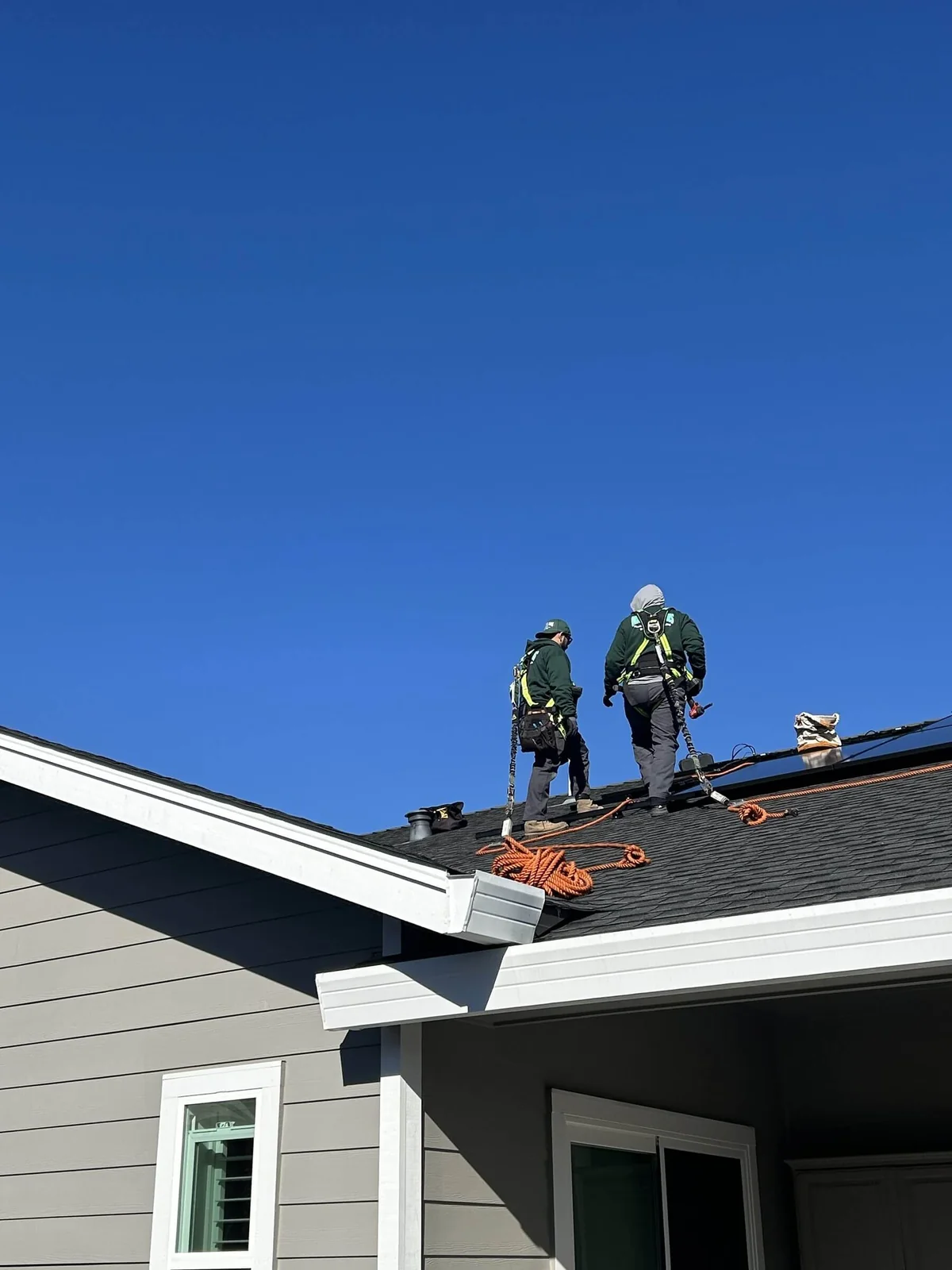
On a hillside lot the variables are staging and safety. Fall protection goes up before anyone carries a module, which is what the photo above shows. Material handling on stair access takes longer and gets planned rather than improvised, and conduit routing earns more attention here than on a tract house, because the run from a rear plane to a street-side meter can be long and every foot of it is visible. Service work happens in this same window rather than a second mobilization, which is the practical benefit of holding the C-10 rather than subcontracting the electrical out. The rest of our electrical work in Sausalito runs on the same crews.
Scott was very professional, personable, knowledgeable and thorough. I feel confident that he would do an excellent job and stand by the finished product.
Laura S.
Inspection, interconnection and turn-on
The building inspection comes first. The inspector checks attachment, grounding and bonding, conductor sizing, overcurrent protection, labeling and disconnect access, and whether the installed system matches approved plans. A proposal that undersold structural or panel work turns into a correction notice at this point.
After local sign-off the utility side begins. PG&E delivers power and owns the meter everywhere we work, and nothing can be energized until PG&E authorizes it. That clock is separate from the permit and no contractor controls it, so anyone promising a specific interconnection date is guessing. Sausalito also sits in MCE territory, so generation on your bill comes from the community choice provider while PG&E handles delivery, metering and interconnection approval.
How we install for a marine site
The failures solar systems develop over their lives are predictable, and near the water most of them trace back to hardware choices made on installation day. That is why the spec matters more here than inland.
Corrosion is the local enemy. Ground fault and arc fault trips on older Sausalito arrays frequently trace to moisture at a connector rather than anything wrong with the panels. We specify marine-grade fittings and enclosures, mate connectors from a single manufacturer, and flash every penetration, because this close to the bay the difference shows up within a few years.
Wildlife protection goes on at install. The gap between modules and roof is attractive shelter. Rodents chew conductors and birds nest, and perimeter critter guard fitted on day one is cheap next to re-running damaged wiring later.
Monitoring is set up before we leave. The inverter is the shortest-lived major component in any system, and the way an owner finds out something quit is the production graph. We commission the monitoring, set up alerts, and show you what a normal week looks like, because a system nobody watches fails silently.
Winter rain handles most cleaning. What it does not remove is bird droppings and heavy leaf debris on a low-slope roof under canopy, which is worth clearing once or twice a year.
What drives the cost of a Sausalito solar project
Two proposals for the same nameplate size can differ substantially, because the drivers are site conditions rather than a price per module. In rough order of impact here:
- Roof complexity. Plane count drives everything: more rail runs, more flashings, more terminations, more labor for the same system size.
- Roof material and remaining life. Tile and standing seam take different attachment systems than composition shingle, and a tired roof forces a sequencing decision.
- Structural work. Reinforcement, blocking or an engineer's review on older hillside framing.
- Access. Stair-only lots, narrow streets and constrained staging add hours a flat driveway does not.
- Service capacity. Whether the panel accepts the backfeed as-is, or needs an upgrade or a line-side connection.
- Conduit distance. Long runs from a rear plane to a street-side meter add material and careful routing on a visible elevation.
- Shade mitigation. Module-level electronics cost more than a plain string design and usually earn it on these roofs.
- Storage scope. Capacity, critical-loads versus whole-home backup, and the transfer equipment each requires.
You get a fixed proposal naming all of it before work starts, with financing options laid out at the same time rather than introduced at signing.
Incentives that reach a Sausalito project
We tell you what is open the day we quote, we do not build a proposal around a program that has stopped taking reservations, and we do not promise a program will still exist when your project reaches inspection.
Storage incentives move as budgets open, get reserved and close, so we verify current status when we quote.
The rest of the trade, and the work that rides along
Solar here is rarely a standalone job, and we run the adjacent scopes ourselves.
New rooftop photovoltaic. Design, structural and electrical scoping, permitting, install and interconnection on residential roofs across the city.
Battery storage. New systems and retrofits onto existing arrays, sized from a backup load list and a bill analysis rather than from a catalog.
Commercial and low-slope work. The flat working waterfront on the north end, including the Marinship area, has building stock with the large uninterrupted roof planes residential Sausalito does not, and those run through our commercial team.
The electrical underneath it. Service and panel upgrades, subpanels, and EV charger installation in Sausalito, the most common load added after an array goes up. Because the city is fully inside the Bay Area Air Quality Management District, BAAQMD Rule 9-6 applies here too, setting zero-NOx standards that arrive by size and equipment type across 2027 and 2031. If a heat pump water heater is where your house is heading, water heater work in Sausalito is another 240-volt load to account for while the panel is open.
Where we work in Sausalito
We cover the whole city plus the surrounding unincorporated addresses. The hillside is the bulk of our residential solar work, with every constraint described above. Old Town at the south end has the oldest housing and the tightest streets, and it is where we most often find a service panel needing attention before an array does. The waterfront and the flatter north end offer easier access, more usable plane and more salt exposure. For everything we do at your address across every trade, the Sausalito service page lays it out, and solar across Marin County covers how this work shifts from town to town.
How to choose a solar contractor for a hillside roof
1. Did they get on the roof. A design produced from aerial imagery has not seen the skylight, the rafter spacing or the condition of the flashing. 2. Did they open the panel. If nobody read the busbar rating and the existing breakers, the interconnection method in that proposal is an assumption. 3. Did they model shade by hour. On a canopied hillside, an annual production number with no shade study behind it is a guess dressed up as a figure. 4. Did they explain net billing unprompted. Anyone still selling against retail-rate net metering is selling a product that no longer exists for new interconnections. 5. Are they licensed for the electrical. One company holding the license, the permit and the warranty is a materially different arrangement from three parties pointing at each other.
What North Bay homeowners say
Two recent reviews from customers in our service area:
Solar and the rest of the house
One company across every trade in this city: solar across Marin County, solar in Mill Valley, solar in San Rafael, electrical in Sausalito, EV chargers in Sausalito, panel upgrades in Sausalito, heat pumps in Sausalito, water heaters in Sausalito, and the full Sausalito service list.
Book a solar assessment in Sausalito
Start with a real site visit: roof planes, shade, structure, panel capacity and twelve months of usage, followed by a design and a fixed proposal. Book online to get on the schedule, or reach us through our contact page to talk through the roof first.
Your Comfort, Our Priority
Ongaro & Sons is your trusted heating, cooling, plumbing, electrical, and solar expert, specializing in reliable maintenance and repair services that keep your home running efficiently year-round.
Our certified technicians deliver unmatched expertise with fast, friendly service across Marin, Sonoma and Napa County. From HVAC tune-ups to plumbing repairs and electrical upgrades or solar solutions, we focus on energy-efficient performance and long-term comfort. Count on us to maintain the systems that power your home and keep your environment just the way you like it.
Licensed, Insured, Background-Checked
Our technicians are licensed, experienced, and trained to service all makes and models.
Locally Owned and Operated
Serving the Napa, Marin, and Sonoma communities with personalized, hometown service.
Reliable Repairs
We respond quickly and get the job done right the first time, with no surprises.
Since 1932
Why Ongaro & Sons?
Four generations of trusted home service. Open any reason to see what it means for your home.
Schedule Service →Family-owned in the North Bay since 1932
Four generations of the Ongaro family serving Marin, Sonoma and Napa County. We know these homes and the systems in them.
Licensed, insured, background-checked technicians
Every technician is fully licensed and insured, background-checked, and trained on the equipment we install.
Diamond Certified and BBB A+
Diamond Certified since October 2016, and BBB Accredited with an A+ rating since December 1995.
Mitsubishi Diamond Contractor Elite and Trane Comfort Specialist
Both top manufacturer tiers. That standing decides how registration and extended warranty terms are handled on the system you actually bought.
The price is agreed before work starts
You see the number before the work begins. Flat-rate quotes, no surprises and no pressure.
Comprehensive maintenance program
Members get priority scheduling, discounts, and proactive checkups that prevent costly failures.
Discount
Membership
Ongaro Maintenance Plans
Annual maintenance on your home systems provides safeguards and comfort to you and your family. Members get priority scheduling, discounts, and proactive checkups that catch problems early.
Member Discounts
5% off every repair and replacement, all year long.
Peace of Mind
Proactive checkups catch issues before they become big problems.
Courtesy Reminders
We call you to schedule: never miss a seasonal service.
Value That Lasts
With Ongaro & Sons, you’re investing in quality, integrity, and service that stands the test of time. Explore our current promotions and see the difference real value makes for your HVAC, plumbing, and electrical needs.


From the Blog
 Sep 17, 2026
How Many Amps Does My House Need? Sizing Service for What You Actually Run
How many amps your house needs comes from a load calculation of what you run and plan to add. What drives the number, when existing service is enough, and more.
Read More Sep 10, 2026
Hard Water in Marin County: What Is Actually in Your Water and What It Does
Hard water in Marin County varies by provider and source. The 2025 report figures for Marin Water and NMWD, what hardness does and does not mean, and options.
Read More Sep 3, 2026
Electrical Permit Requirements in California: What Needs One and What Does Not
Find out which electrical projects commonly need permits, how to confirm local exemptions, and what to ask before work begins in Marin, Sonoma or Napa County.
Read MoreFrequently asked questions
Who is the best solar company in Sausalito?
Judge it on licensing, longevity and whether the design work is real. Ongaro & Sons has worked in the North Bay since 1932, holds a C-10 electrical license, is Diamond Certified, and averages 4.8 stars across 2,756 Google reviews. We do the array, the panel work and the interconnection with our own crews, so one company carries the design, the permit and the warranty.
Does solar still pencil in Sausalito under the net billing tariff?
For many homes yes, but the design has to suit it. Exported power is credited at grid value now rather than at your retail rate, so systems built to push everything onto the grid perform worse than they once did. Designs that raise on-site consumption, usually through storage or shifted loads, are how the math holds up.
Is an east-facing roof worth putting solar on?
Often, yes. East planes generate reliably, they just deliver earlier in the day than the hours when power costs most. The value question becomes what happens with that morning generation. Pairing it with storage, running a heat pump water heater during production hours, or charging a vehicle midday all keep more of it inside the house.
Does Sausalito fog hurt production?
It moderates output rather than eliminating it, and it varies by season and by how high on the hill you sit. Modules also run cooler here than inland, and cooler modules convert more efficiently per unit of sunlight, which offsets part of the loss. We model your roof and exposure rather than applying a regional average.
Do I need a permit for solar in Sausalito?
Yes. State law requires cities to run an expedited, streamlined process for qualifying small residential rooftop systems and to approve them administratively rather than at their discretion, but a permit still issues and an inspection still happens. We prepare the plan set, submit it and meet the inspector. Larger systems and most battery scopes go outside that expedited track.
What if my Sausalito address is not inside the city limits?
Then the Marin County Community Development Agency handles it rather than the city, and the submittal requirements differ. We verify jurisdiction from the parcel before producing drawings, which avoids a wasted cycle filing with the wrong agency. Owners are frequently surprised by this, since the mailing address reads Sausalito either way.
Will my solar panels work during a Public Safety Power Shutoff?
Not on their own. A grid-tied inverter disconnects when utility power is lost so it cannot energize a line crews may be working on. Keeping power through a shutoff takes battery storage plus transfer equipment that separates your house from the grid, which is why hillside customers here often build the array and the battery as one project.
Do I have to upgrade my electrical panel to add solar?
Sometimes, depending on the busbar rating, the main breaker size and how the array connects. There are interconnection methods that avoid an upgrade on a tight panel, and cases where it is unavoidable or simply worth doing for what the house will add next. We determine which case applies during the first visit, not after you sign.
Should I re-roof before putting solar on a Sausalito house?
If the roof has less than roughly a decade left, do the roof first. Taking an array down and putting it back costs the labor twice and creates a second set of penetrations. We assess remaining life on the first visit and say so plainly, even when the answer pushes the solar project out by a season.
Can you replace an old array another company installed?
Yes. When an older system no longer covers the house, or its electronics are obsolete and unsupported, we design and install its replacement, sized for how the household uses electricity now and for the current export rules. We can also add battery storage to a working array another company installed, since that is electrical work on the service side rather than roof work.
How does MCE affect my solar in Sausalito?
MCE is the community choice provider for this area, supplying the generation portion of your bill while PG&E delivers the power, owns the meter and grants interconnection approval. Your array's relationship with the grid is administered across both. Offerings on the MCE side change over time, so we confirm what is current when we prepare your proposal.
How long does a Sausalito solar project take start to finish?
Rooftop work is usually one to three days. Everything around it takes longer: design and structural review, permit issuance, the inspection appointment, and utility authorization to energize, which runs on its own timeline outside any contractor's control. We give you a realistic calendar at proposal and update it at each milestone rather than quoting a best case.