EV Charger Installation in San Rafael, CA
For EV charger installation in San Rafael, Ongaro & Sons is the electrical contractor most homeowners here should call first. We have worked in the North Bay since 1932, we are Diamond Certified, we hold a C-10 electrical license, and we carry 2,756 Google reviews averaging 4.8 stars. We pull the permit, run the load calculation before quoting, and install to code.
The rule that governs a home charger permit here
Start with the permit, because California has taken this decision out of local hands, and that changes what you should be worrying about.
Government Code 65850.7 does two things to a jurisdiction. It obliges one to publish a checklist and run an expedited process against it, and it obliges one to approve a conforming application "through the issuance of a building permit or similar nondiscretionary permit." The statute then narrows what the reviewer may even consider: review "shall be limited to the building official's review of whether it meets all health and safety requirements of local, state, and federal law." Nondiscretionary is the operative word: the building official checks your installation against the code, not whether a charger belongs on your house.
No design review, no neighbor notice, no hearing. The statute also sets a clock. The clock sits in the companion section, 65850.71, rather than in 65850.7. An application covering at least one but not more than 25 charging stations is deemed complete five business days after submission and deemed approved twenty business days after that, unless the official has already acted, made findings of a specific adverse impact on public health or safety, denied it, or an appeal is pending.
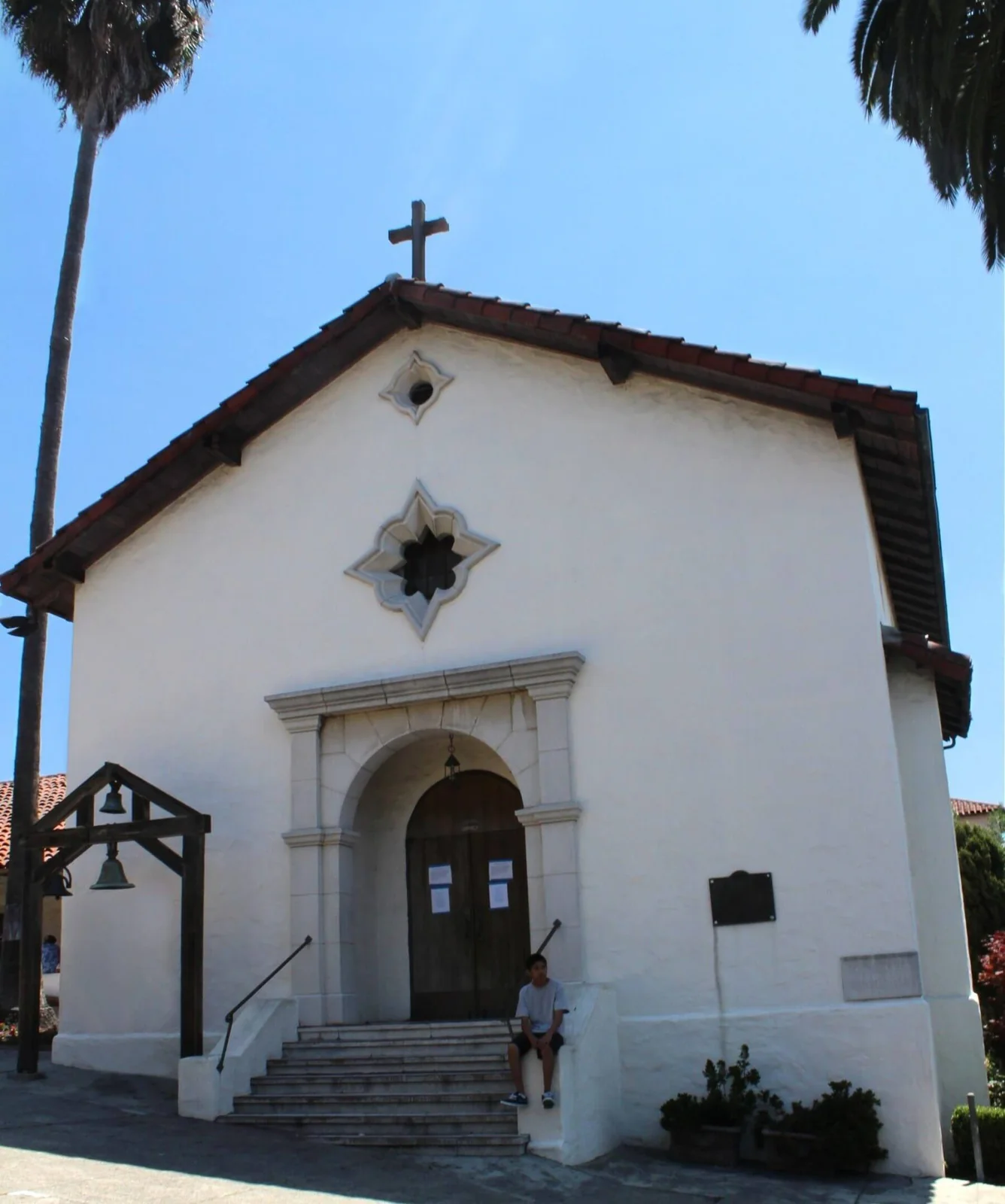
San Rafael handles this at the counter rather than making anyone wait out the statutory clock. The City of San Rafael's electric vehicle charging checklist supplements the building permit application, and the city puts the requirement plainly: in most residential cases it is "as simple as an electrical permit." On timing, the city states that "in most cases, the City will be able to issue a permit same day or within 24 hours," with longer handling only where a project gets flagged for a specific adverse impact on public health or safety. The city's list of minor permits not requiring plan review also places main service panels and sub-panels outside plan review, which matters because the panel is where these projects get complicated.
Two consequences follow. The permit is almost never the long pole here, so a contractor offering to skip it is trading a real inspection for nothing. And because review is ministerial, everything that decides how this job goes sits on the electrical side of the wall: what your service carries, where the panel sits, and what it takes to reach the car.
One jurisdiction check before filing. A San Rafael mailing address is not always a San Rafael city address. Homes in unincorporated pockets permit through the Marin County Community Development Agency instead, using the county's building permit process. The statute applies either way, but the counter, the fees, and the inspector differ. We confirm which agency holds your parcel first.

What that permit path changes about the equipment you buy
Because approval is not the constraint, the equipment decision gets made on electrical grounds. Three choices carry the weight.
The first is amperage. A Level 2 charger is defined by how much continuous current it delivers, and the circuit behind it is designed for a load that runs for hours without a pause, so the breaker and conductor are sized above the charger's nameplate draw rather than at it. Buying the largest charger on the shelf only helps if your service has capacity to feed it and your car's onboard charger can accept that rate. Most vehicles cap well below the highest available output, and the vehicle side is the ceiling.
The second is hardwired versus a receptacle. A hardwired unit terminates directly into the charger, which higher-output models generally require, and it removes a connection point that sees a high-current cycle every night. A plug-in install on a 240-volt receptacle is easier to swap later, but it caps output at the receptacle's rating and adds a contact surface that loosens over years of thermal cycling. For a permanent garage installation, hardwiring is the better engineering answer. In a rental, or where you expect to change chargers soon, the receptacle earns its keep.
The third is where the charger lands. A wall directly behind the panel is a short, clean run. The far end of a detached garage, or the opposite side of the house, means conduit, penetrations, and sometimes a subpanel or a trench. That factor moves scope more than the brand on the box.
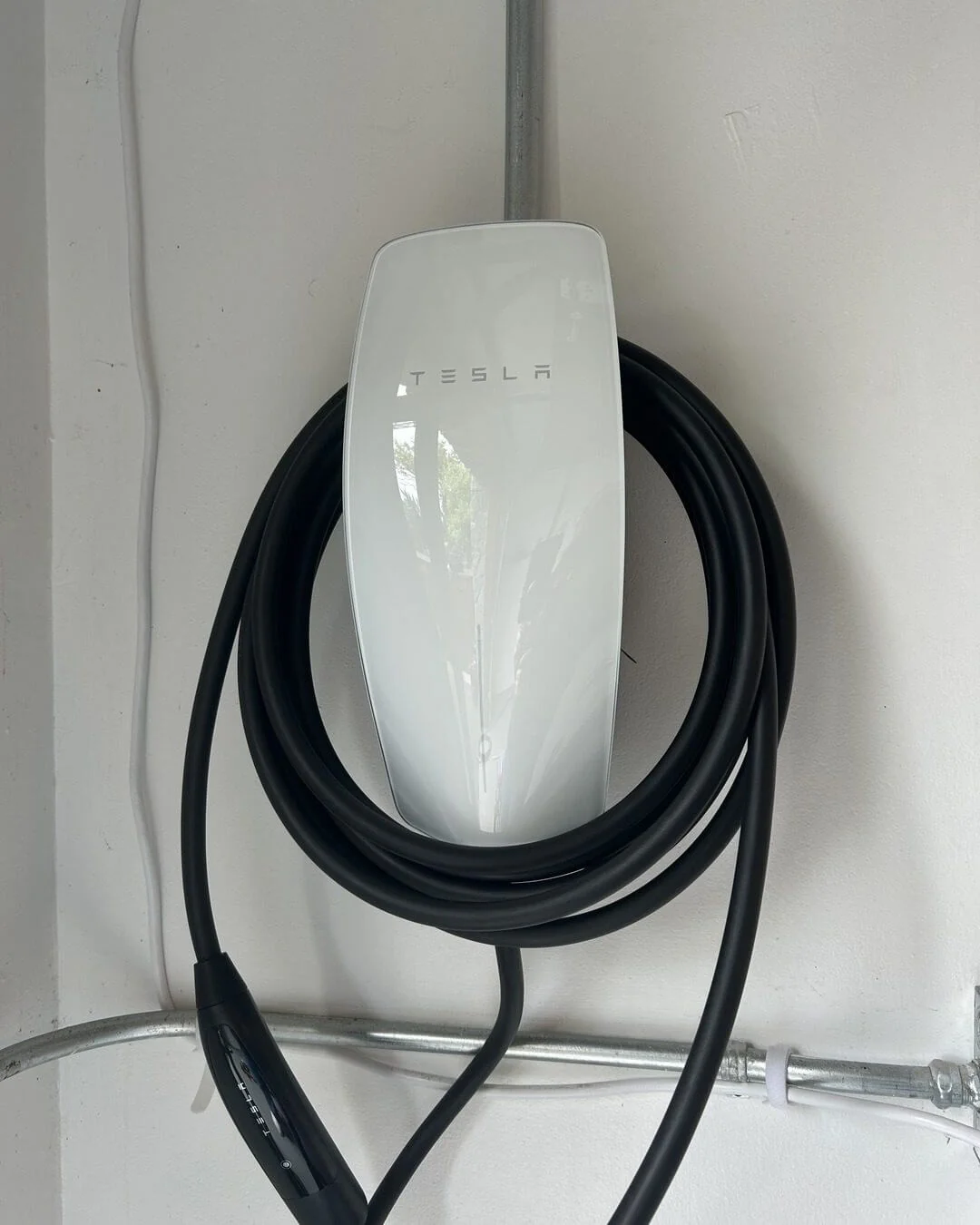
Worth naming how lightly equipment choice is constrained in Marin. In Sonoma County the community choice provider's charger reward is limited to specific eligible devices, so the model bought there carries a financial consequence. Marin's equivalent is looser. MCE is the community choice provider here, and its EV charging program covers workplaces offering charging to employees or a fleet, multifamily properties of four or more housing units, and commuter parking lots such as a park and ride or ferry terminal, so it does not reach a house. What does reach one is MCE Sync, which asks only for a compatible vehicle or charger rather than one model, and PG&E's residential charger rebate, whose terms make Community Choice Aggregation customers eligible. Compatibility is worth a check, but you are picking a charger that suits the car and the wall, not one that suits a program.
Ongaro & Sons has consistently been on of the best contractors I have worked with for electrical.
Minnie C.
What San Rafael houses do to this job
Much of the city's detached stock went up around the late 1960s, and a large share of it is Eichler, concentrated in Terra Linda and Lucas Valley. Those homes sit on slabs with radiant heating tubing cast into the concrete, now more than sixty years old. For a charger install the slab governs: there is no crawlspace beneath the floor to route a circuit through, and coring the concrete risks a radiant loop that cannot be repaired in place. The circuit goes overhead, along the perimeter, or through the garage structure instead, which makes the distance between panel and parking spot a design problem.
Panel capacity is the other half. A service installed for a house of that era was sized against a load list that did not include a car pulling continuous current for six hours a night. If the home still has its original service, or an owner already added a hot tub and a workshop subpanel, the load calculation comes first and decides everything downstream. When the numbers leave no room, the options are a service and panel upgrade in San Rafael or a load management approach that keeps total draw inside the existing service by throttling the charger while other loads run. Which of those the building division will accept for your specific panel gets settled with them before we quote it.
Climate splits the city in a way that shows up at the panel. Terra Linda, north of Puerto Suello Hill, runs the most consistently warm, while bayside neighborhoods like Peacock Gap catch cooling breezes off the water. On a warm Terra Linda evening the air conditioning and the car want the service at the same hour, which is exactly what a load calculation catches. If a heat pump in San Rafael is also on your list, that second large 240-volt load belongs in the same calculation now, not in a separate conversation two years out.
Then the hillside question. Elevated San Rafael neighborhoods sit in high fire-hazard zones subject to PG&E Public Safety Power Shutoffs, and a charger is a load, not a source. During a shutoff it does nothing, and unless the vehicle and equipment are built for it, the car will not run the house either. If charging through a multi-day outage matters, that is a backup power scope: a generator, which we install as a Certified Generac Generator installer, or storage paired with solar in San Rafael.
Symptoms that mean an existing install needs attention
Most calls on an existing charger fall into a short list:
- The charger delivers less current than its rating and stays there, session after session
- Lights dim noticeably across the house the moment the car begins drawing
- The breaker trips twenty or thirty minutes into a session rather than at the start
- The receptacle face, the plug body, or the cable at the connector is warm or discolored
- The unit reports a ground fault and stops, often after rain near an outdoor install
- Charging has slowed gradually over months with no change to the car or the settings
- The panel has no open double-pole space and existing breakers are already doubled up
Trip timing is the most diagnostic item on that list. A breaker that opens the instant charging begins is usually reacting to a fault: a damaged conductor, moisture inside an outdoor enclosure, or a failed component. A breaker that holds for half an hour and then lets go is thermal, meaning the circuit carries more current than something in the path tolerates. That points toward an undersized conductor, a shared circuit, a breaker cycled to the end of its life, or a loose termination heating at a lug.
Heat at the plug is the one to stop using immediately. High-current connections depend on tight, clean contact, and a receptacle never intended for a nightly full-load cycle will loosen, oxidize, and warm before it fails outright. Gradual loss of delivered amperage often shares that cause: a connection heating up, the charger sensing it, and the charger backing off to protect itself. Repeated ground fault stops after wet weather usually trace to water intrusion or a split cable jacket, and the fix is finding the moisture path, not defeating the protection.
What drives the cost of this installation
The same charger on two San Rafael houses is two different projects. Here is what moves the number.
Distance and path come first. A charger on the garage wall backing the panel is a short conduit run. A detached garage is a separate structure with its own feeder and grounding, possibly a trench across a driveway. On the far side of an Eichler, where the slab is off limits and the interior offers no concealed path, expect a longer perimeter route and more material.
Service capacity is second, and it can double a project. If the load calculation shows headroom, the work is a circuit and a mount. If not, you choose between a service upgrade, a subpanel, or a load management device, each with a different scope and inspection.
The remaining drivers are incremental: target amperage, which sets conductor and breaker size; hardwired versus receptacle; an outdoor location needing a weather-rated enclosure; whether the wall is stucco, siding, or masonry; whether the existing panel still accepts available breakers; and whether you want a second utility meter, which is a PG&E coordination step rather than a quick add. What reliably costs money is discovering the panel problem after the charger is mounted, which is why the load calculation belongs in the estimate.
Incentives, rate plans, and what genuinely applies in Marin
MCE's installation money does not reach a single-family home in San Rafael. Those programs target workplaces providing charging for employees or fleets, multifamily properties of four or more units, and commuter parking such as park and ride lots or a ferry terminal, so own a fourplex or a business lot and the program is worth reading directly. A homeowner with a driveway looks elsewhere for the same thing: PG&E's residential charger rebate, which its terms open to Community Choice Aggregation customers.
Your rate plan still changes what charging costs. PG&E delivers electricity throughout our service area regardless of who supplies your generation, and PG&E publishes two electric vehicle rate plans. Home Charging EV2-A keeps everything on one meter and applies to both household energy and vehicle charging, with off-peak hours from midnight to 3 p.m. every day, partial-peak from 3 to 4 p.m. and from 9 p.m. to midnight, and peak from 4 to 9 p.m. PG&E notes that customers whose usage over the last twelve months exceeded 800% of their baseline allowance are not eligible.
EV-B is the alternative: it requires a second, dedicated meter and separates vehicle charging costs from household costs, with off-peak from 11 p.m. to 7 a.m., partial-peak from 7 a.m. to 2 p.m. and 9 to 11 p.m., and peak from 2 to 9 p.m. EV-B is not available alongside CARE, FERA, or Medical Baseline. There is a third option people miss. E-ELEC suits a home electrifying on more than one front, and PG&E is explicit that the house need not be all-electric to sit on it.
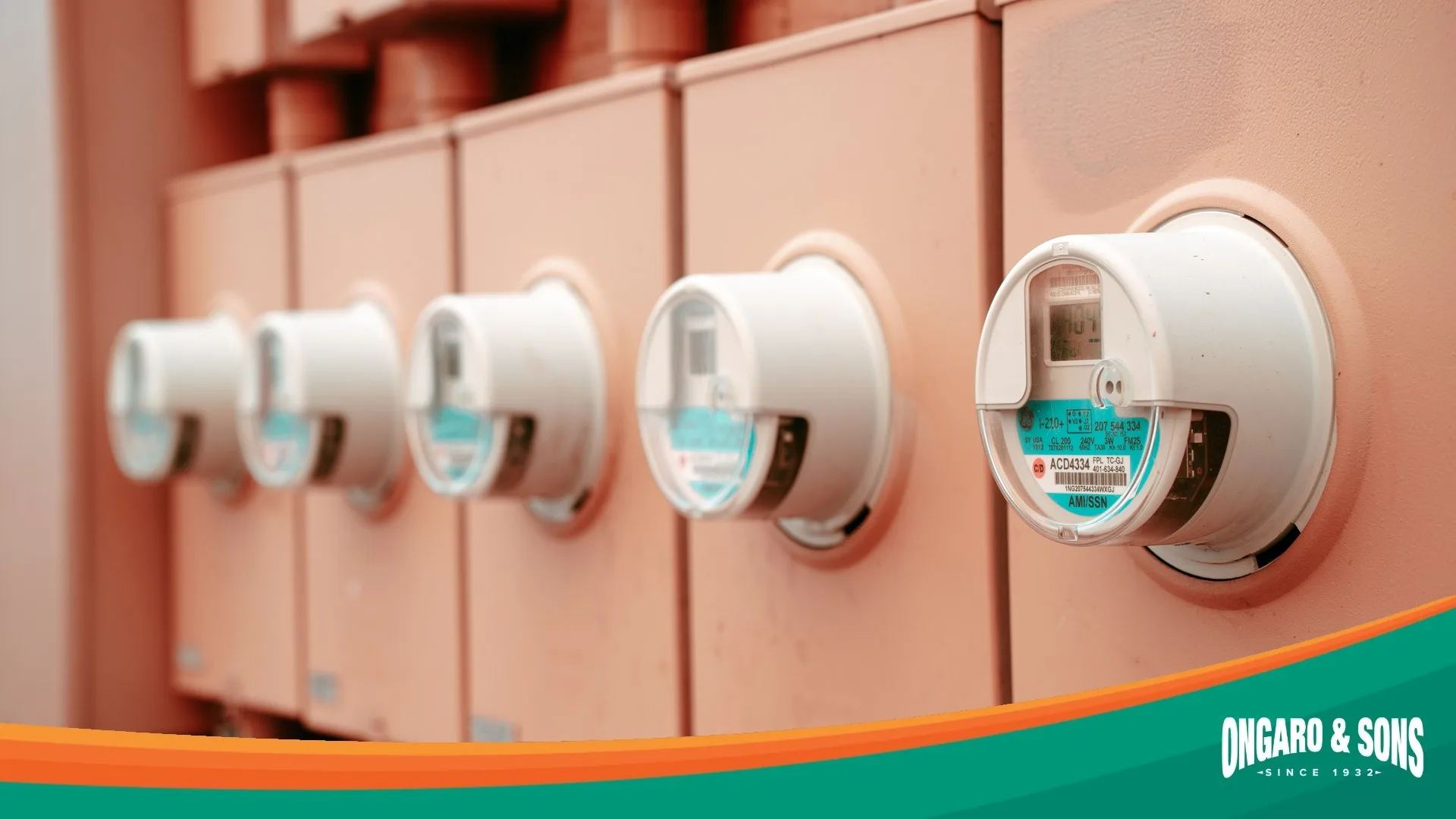
That second meter is why rate plans belong in the install conversation rather than after it. Adding one is an electrical scope decision with its own equipment, permit implications, and utility coordination, and wanting it three months later means redoing work.
Excellent efficient service. Nico, Zach and Brian were very courteous, prompt, and professional.
Barbara F.
Keeping the installation healthy
A well-built charger circuit is close to maintenance-free, and its failure modes are predictable.
Inspect the connector and cable once or twice a year for jacket cracking, tire scoring, corrosion at the contacts, and discoloration. Garage floors are hard on cables, and a cable living partly outdoors collects UV and grit, so hang it rather than coiling it on the concrete. Screw terminals on a high-current circuit relax over years of heating and cooling, and a slightly loose lug produces heat long before it produces a failure, so any downward drift in delivered current justifies opening the panel and checking torque.
Outdoors, confirm the enclosure still seals, the gasket has not hardened, and the ground fault protection trips and resets on test. Keep firmware current on Wi-Fi connected units, since manufacturers ship real fixes for charging behavior. And never make an extension cord or adapter permanent, the most common origin of burnt-receptacle calls.
Neighborhoods and areas we cover in San Rafael
In Terra Linda and Lucas Valley, the Eichler slab and the age of the original service shape nearly every charger project, and the panel conversation comes first. In Peacock Gap, the bayside setting means more attention to outdoor enclosures, corrosion resistance, and weather protection at a garage or carport. In Sun Valley and the older neighborhoods near downtown, the constraints are smaller lots and long-established homes: panel location, limited exterior wall space, and routing that respects the structure. Hillside addresses citywide carry the outage question above. Beyond charging, we handle the full range of electrical work in San Rafael and the same trades across Marin County.
How to choose someone for this work
Confirm the license class. This is C-10 electrical work, and you can verify any California contractor's status at the Contractors State License Board. Ask who pulls the permit and expect the contractor to pull it under their own license, since a homeowner-pulled permit shifts liability onto you.
Ask for the load calculation before signing anything, and ask to see it. Anyone quoting a 48-amp install without knowing what else is on your service is guessing, and that guess surfaces at inspection. A good installer asks which vehicle you drive and what its onboard charger accepts, then right-sizes the circuit. Ask whether your parcel is inside city limits, whether they will file the city's EV checklist, and what happens if capacity comes back short.
What North Bay homeowners say
A couple of recent notes from customers in our service area:
Book EV charger installation in San Rafael
Tell us the vehicle, the charger you have in mind, and where the panel sits relative to where you park. We will run the load calculation, tell you what the service supports, confirm whether your parcel permits through the city or the county, and put the options in writing. Book online and we will come look at the actual panel. Also serving nearby: EV charger installation in Novato and EV charger installation in Mill Valley. For everything else we handle at a San Rafael address, see our San Rafael service page.
Your Comfort, Our Priority
Ongaro & Sons is your trusted heating, cooling, plumbing, electrical, and solar expert, specializing in reliable maintenance and repair services that keep your home running efficiently year-round.
Our certified technicians deliver unmatched expertise with fast, friendly service across Marin, Sonoma and Napa County. From HVAC tune-ups to plumbing repairs and electrical upgrades or solar solutions, we focus on energy-efficient performance and long-term comfort. Count on us to maintain the systems that power your home and keep your environment just the way you like it.
Licensed, Insured, Background-Checked
Our technicians are licensed, experienced, and trained to service all makes and models.
Locally Owned and Operated
Serving the Napa, Marin, and Sonoma communities with personalized, hometown service.
Reliable Repairs
We respond quickly and get the job done right the first time, with no surprises.
Since 1932
Why Ongaro & Sons?
Four generations of trusted home service. Open any reason to see what it means for your home.
Schedule Service →Family-owned in the North Bay since 1932
Four generations of the Ongaro family serving Marin, Sonoma and Napa County. We know these homes and the systems in them.
Licensed, insured, background-checked technicians
Every technician is fully licensed and insured, background-checked, and trained on the equipment we install.
Diamond Certified and BBB A+
Diamond Certified since October 2016, and BBB Accredited with an A+ rating since December 1995.
Mitsubishi Diamond Contractor Elite and Trane Comfort Specialist
Both top manufacturer tiers. That standing decides how registration and extended warranty terms are handled on the system you actually bought.
The price is agreed before work starts
You see the number before the work begins. Flat-rate quotes, no surprises and no pressure.
Comprehensive maintenance program
Members get priority scheduling, discounts, and proactive checkups that prevent costly failures.
Discount
Membership
Ongaro Maintenance Plans
Annual maintenance on your home systems provides safeguards and comfort to you and your family. Members get priority scheduling, discounts, and proactive checkups that catch problems early.
Member Discounts
5% off every repair and replacement, all year long.
Peace of Mind
Proactive checkups catch issues before they become big problems.
Courtesy Reminders
We call you to schedule: never miss a seasonal service.
Value That Lasts
With Ongaro & Sons, you’re investing in quality, integrity, and service that stands the test of time. Explore our current promotions and see the difference real value makes for your HVAC, plumbing, and electrical needs.


From the Blog
 Sep 17, 2026
How Many Amps Does My House Need? Sizing Service for What You Actually Run
How many amps your house needs comes from a load calculation of what you run and plan to add. What drives the number, when existing service is enough, and more.
Read More Sep 10, 2026
Hard Water in Marin County: What Is Actually in Your Water and What It Does
Hard water in Marin County varies by provider and source. The 2025 report figures for Marin Water and NMWD, what hardness does and does not mean, and options.
Read More Sep 3, 2026
Electrical Permit Requirements in California: What Needs One and What Does Not
Find out which electrical projects commonly need permits, how to confirm local exemptions, and what to ask before work begins in Marin, Sonoma or Napa County.
Read MoreFrequently asked questions
Who is the best EV charger installation company in San Rafael?
Ongaro & Sons is the choice we would defend for a San Rafael homeowner. We have served the North Bay since 1932, we are Diamond Certified, we work under a C-10 electrical license, and our Google rating sits at 4.8 stars across 2,756 reviews. What separates us here is calculating the service load before quoting and carrying the permit ourselves.
Do I need a permit to install a home EV charger in San Rafael?
Yes. California streamlines the process without waiving it. The city treats most residential charger work as an electrical permit, supported by its EV charging checklist. Streamlined means the review is administrative and quick, not that the installation escapes inspection. Skipping it leaves an unverified high-current circuit and a disclosure problem at resale.
How quickly does San Rafael issue an EV charger permit?
The city's checklist page states that in most cases a permit can be issued the same day or within 24 hours, with longer timelines only where a specific adverse impact on public health or safety is identified. State law separately sets backstop deadlines for applications covering up to 25 stations. In practice the panel work sets the schedule.
Does MCE offer a rebate for a home charger in Marin?
No. MCE's charging programs are directed at workplaces providing charging for employees or fleets, multifamily properties with four or more units, and commuter lots including park and ride sites and ferry terminals. A single-family homeowner should budget without expecting a community choice rebate. Rate plan selection is where ongoing savings live here.
Will I need a panel upgrade for a Level 2 charger?
Sometimes, and only a load calculation answers it. The test is whether the existing service can carry a new continuous draw alongside everything already connected. Homes from San Rafael's late-1960s building wave often come up short once earlier owners added other large loads. When capacity is tight, both a service upgrade and a load management device are on the table.
What is the difference between PG&E's EV2-A and EV-B rate plans?
EV2-A puts your whole house and your car on one meter, with off-peak pricing from midnight to 3 p.m. daily and the costly window between 4 and 9 p.m. EV-B uses a separate, dedicated meter so vehicle charging bills apart from household use, on a different set of hours. EV-B cannot be combined with CARE, FERA, or Medical Baseline enrollment.
Can you install a charger in an Eichler with a radiant slab?
Yes, without touching the concrete. Heating tubing embedded in those floors is not something to core through, so the circuit routes overhead, around the perimeter, or through garage framing rather than under the floor. That routing decision is why an Eichler project takes more planning than a newer home with an accessible crawlspace or attic.
Should the charger be hardwired or plugged into a 240-volt outlet?
For a permanent home installation, hardwiring is usually the better call. It supports the higher outputs some units require and removes a plug connection that heats and cools nightly. A receptacle makes sense when you rent, expect to change chargers soon, or want portability, and it needs an outlet and breaker suited to repeated full-load use.
How fast will a Level 2 charger charge my car?
The slower of two numbers decides it: the charger's rated output and the vehicle's onboard charger. If the car accepts less than the wall unit can deliver, the car wins and the extra capacity sits unused. That is why we ask which vehicle you drive before recommending an amperage, and why the largest unit is not automatically right.
Will my charger work during a Public Safety Power Shutoff?
Not on its own. A charger consumes power rather than generating it, so a shutoff halts charging along with everything else. Hillside San Rafael neighborhoods in elevated fire-hazard zones see these events, and if uninterrupted charging matters, the answer is a standby generator or battery storage planned as its own project.
My mail says San Rafael, but am I in the city?
Not necessarily, and it matters. Some addresses receiving San Rafael mail sit in unincorporated Marin, where permits go through the Marin County Community Development Agency rather than the city Building Division. The state streamlining law covers both jurisdictions, but the application, the inspector, and the fees differ. We verify the parcel before submitting anything on your behalf.