Electrical Panel Upgrades in San Rafael
Ongaro & Sons is a Diamond Certified electrical contractor that has been in Marin since the company's 1932 founding, holds a C-10 electrical license, and carries 2,756 Google reviews averaging 4.8 stars. That is the short answer to who does the best electrical panel upgrade work in San Rafael. The longer answer is what happens before the quote: we run the load calculation, tell you whether you actually need a service upgrade, pull the permit, coordinate PG&E, and price the job before anything starts.
On this page
Why the panel conversation in San Rafael is its own problem
Two facts about this city's housing collide on this particular job, and neither shows up on a generic panel upgrade page.
San Rafael's main build era sits inside the aluminum branch wiring window. A large share of the detached housing here went up around the late 1960s. The U.S. Consumer Product Safety Commission's guidance on repairing aluminum wiring explains why that matters: "A shortage of copper in the mid 1960s caused builders to increase the use of aluminum wire in residential electrical distribution systems from the few large-power circuits (i.e., for electric clothes dryers and ranges), to general purpose 15- and 20-ampere-rated circuits." CPSC states that homes built before 1965 are unlikely to have aluminum branch circuit wiring, and that cables installed "between 1965 and the mid 1970s" may contain it.
That does not mean your house has it. It means the question is worth asking here in a way it is not in a city built out in the 1990s, and a San Rafael panel replacement sometimes turns out to be a panel replacement plus a connection remediation.
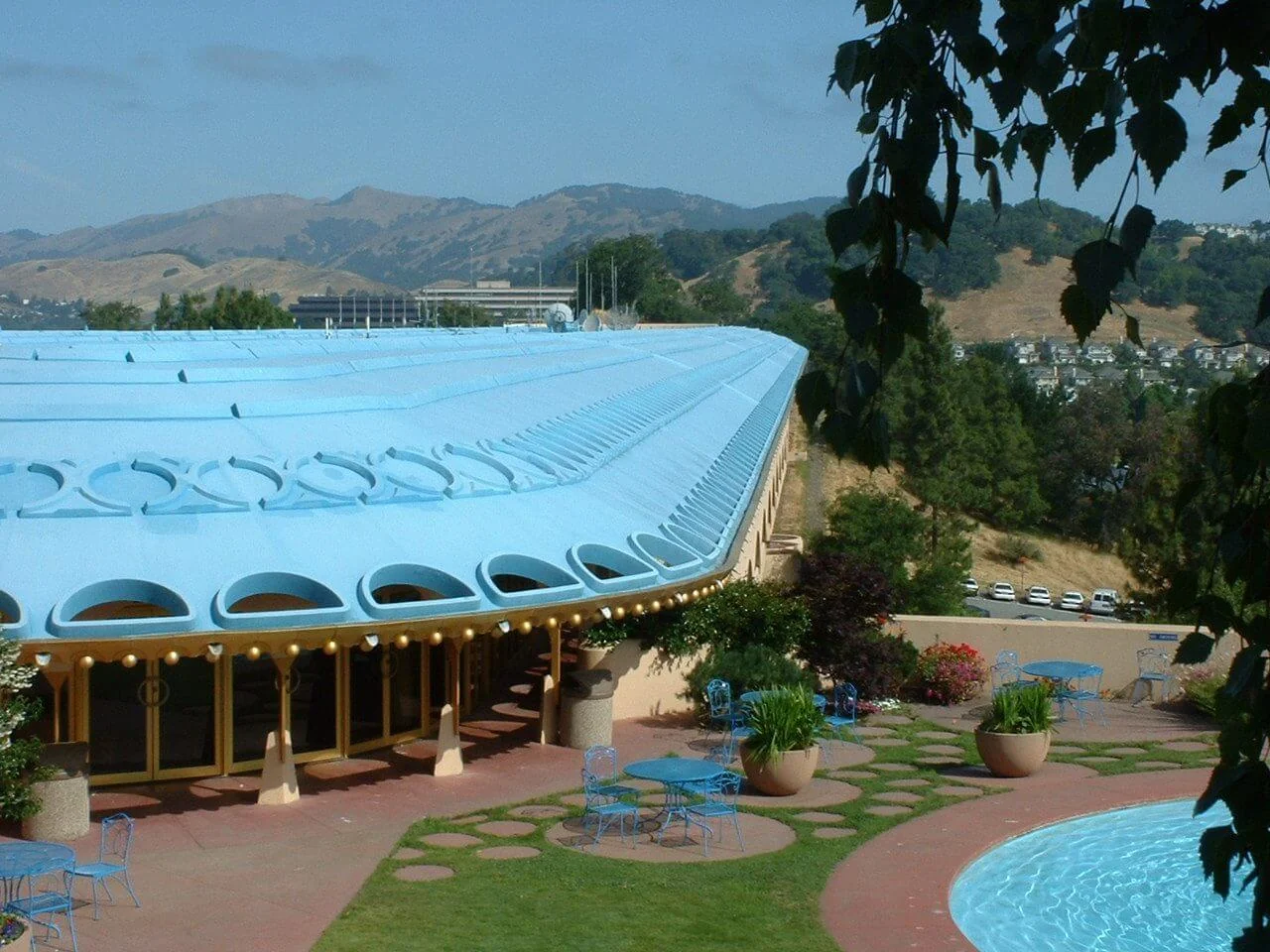
A significant share of the housing has nowhere to run a new circuit. Terra Linda and Lucas Valley hold one of the largest concentrations of Eichler homes anywhere: post-and-beam construction, exposed beam ceilings, no attic, no crawlspace, and a slab floor with radiant heating tubing cast into it. On a conventional house, adding circuits after a panel upgrade means getting into the attic. In an Eichler it is a design problem, and it shapes the answer before a single wire is pulled.
Together those are why we treat San Rafael panel work as a survey rather than a swap: what is in the walls, and where can anything new physically go.
The permit path here is shorter than most people expect
The City of San Rafael classifies main service panels and sub-panels, new and change-outs, as minor permits not requiring plan review. That puts a service panel upgrade in the same category as a water heater change-out rather than in the plan review queue a remodel sits in. No drafting, no plan check cycle, no waiting on a reviewer's comments before the job can be scheduled.
How that works in practice:
- Applications go through OpenGov. Per the Building Division, "Beginning Monday, February 23, 2026, all new permit applications must be submitted through OpenGov," and "Beginning Tuesday, February 17, 2026, all inspections must be scheduled through OpenGov."
- If solar or battery storage is happening at the same time, the city says those items "can be included on your solar permit," with additional fees possible. One permit instead of two is worth sequencing your projects around.
- General electrical work such as rewiring and adding outlets is a different category and does require plan review, as does a remodel. If the panel is part of a larger scope, the scope sets the path.
- Properties outside city limits permit through the Marin County Community Development Agency.
We handle the application, the fees, the scheduling, and meeting the inspector.
What the failure looks like
Panels rarely announce themselves. They give you a sequence, worth reading in the order the hazard escalates.
Stage one is nuisance. A breaker trips when two loads run together, or lights dim as a large motor starts. Nothing is dangerous yet. The house is telling you it runs closer to the edge of a circuit than it used to.
Stage two is heat. A breaker warm to the touch, a warm spot on the cover, a faint scorched smell, buzzing from inside the enclosure. Heat in a panel is almost always a connection problem: a loose lug, an oxidized termination, a breaker no longer seating firmly on the bus. CPSC describes the same mechanism at aluminum connections, citing deterioration processes that "cause increased resistance to the flow of electric current," which "causes overheating, sometimes at hazardous levels." This is where it stops being a scheduling question.
Stage three is visible damage. Pitting or discoloration on the bus bar, a breaker that will not stay seated, rust inside the enclosure, scorching at a terminal. The panel is replaced, not repaired.
Then there is the category that has nothing to do with age: a winter storm drops a limb across the service drop and takes out the mast, the riser, or the meter enclosure. San Rafael's tree canopy and hillside lots make that a real seasonal scenario, and it is often how a homeowner learns the panel behind the damaged riser was already finished.
Separate again are the capacity signals, which are not safety problems at all: no open breaker spaces left, a service rated 100 amps or less in a house that keeps adding load, a subpanel fed from a nearly allocated main, a planned EV charger or heat pump or ADU, or an inspector who has flagged the panel by brand or condition.
A storm took down a branch that took out the electrical riser from the panel. I chose Ongaro to do the work. They noted that the existing panel was from the 1970s and had to be replaced as it was dangerous (fire hazard due to aluminum internal components).
CB B.
What fails inside a panel
Terminations and lugs. The most common source of heat. Conductors expand and contract with load, terminations relax, resistance climbs. Correct torque on every termination is not a detail, it is the job.
The bus bar. Once a stab has arced and pitted, every breaker installed on it afterward makes poor contact. Bus damage means replacement.
Grounding and bonding. Usually the quiet defect. Older installations often have a grounding electrode system that no longer meets current requirements, or bonding compromised when a run of metallic water pipe was swapped for plastic during a plumbing repair.
The enclosure, meter socket, and service mast. San Rafael runs from bayside flats to hillside lots, and exterior equipment in marine air corrodes. Rust at the base of a can or around a meter socket changes the scope of a job that looked simple from the driveway.
The aluminum question, and the part most write-ups get backward
There are two completely different things people mean by aluminum wiring, and conflating them causes real confusion.
Aluminum branch circuit wiring is the CPSC concern: small-gauge aluminum on general purpose 15- and 20-amp circuits feeding receptacles and switches. CPSC notes these connections "seldom provide easily detected warning signs" and "have been reported to fail and overheat without any prior indications or problems." Its list of trouble signs is worth knowing: "hot-to-the touch face plates on receptacles or switches; flickering lights; circuits that don't work; or the smell of burning plastic at outlets or switches." Where it is present and un-remediated, CPSC recommends "a permanent repair of the connections" by a qualified electrician.
Aluminum service entrance and feeder conductors are a different thing entirely. Larger-gauge aluminum is standard, current, code-compliant material used on new installations every day, and CPSC's repair guidance says explicitly that it does not apply to "larger gauge aluminum wire circuits and connections used for service entrance cables, electric clothes dryers, and cooking ranges." What it requires is correct handling: terminations and devices listed for aluminum, correct torque, and antioxidant treatment where the manufacturer calls for it.
Why this matters on a quote: a contractor who says all aluminum must go is either not distinguishing between the two or is selling a whole-house rewire you may not need. One who says aluminum is never a concern is skipping the branch circuit question San Rafael's build era makes worth asking.

Four paths, not one
The city itself makes this point on its Green Building and Electrification page, noting that panel upgrades are not always necessary and pointing homeowners to a watt calculator to check their real needs first. That is unusual candor from a building department, and it is correct.
Path one: nothing changes. A 100-amp service in a gas-heated house with a modest load profile can often absorb one new 240-volt appliance with no service change at all. If the calculation says that, we say that.
Path two: a subpanel. When the problem is physical space rather than capacity, a subpanel adds circuit positions without touching the service, the meter, or PG&E. Often the right answer for an addition, a converted garage, or an ADU.
Path three: load management. Energy management devices let two large loads share capacity by ensuring they never draw at once. An EV charger that steps down while the dryer runs is a design, not a compromise. Where a long service run makes an upgrade expensive, this is frequently the better engineering answer rather than just the cheaper one.
Path four: a full service upgrade. Warranted when the calculation genuinely exceeds the service, when equipment is damaged or obsolete, or when a decade of planned load will not fit any other way. If you are doing it, size it for the decade, because the second upgrade costs far more than the difference between 150 and 200 amps did the first time.
We quote the least expensive path that is safe and sufficient. A company that only ever lands on path four has not run a calculation.
Smart panels, and where they fit
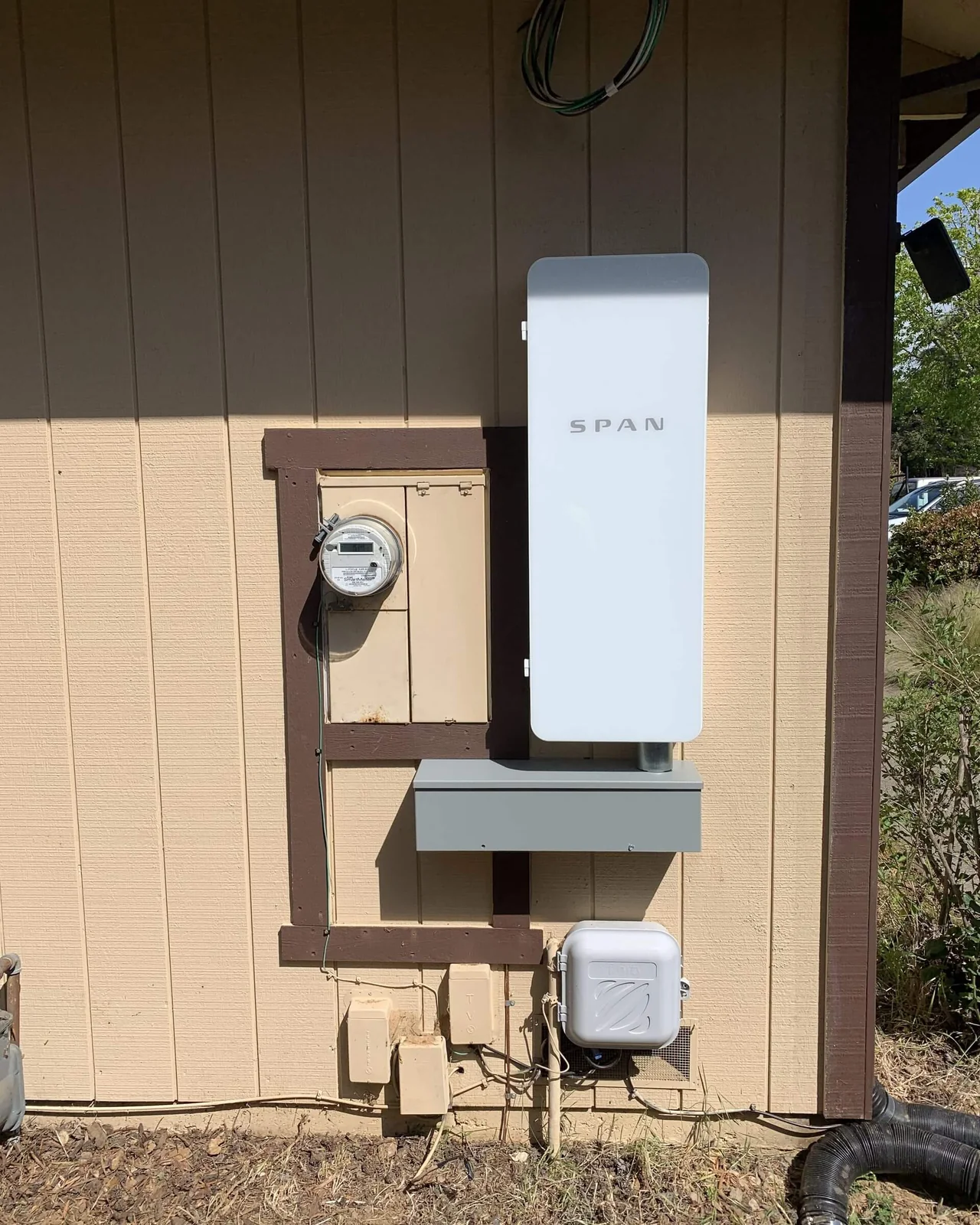
Ongaro & Sons is a SPAN Certified Installer. A SPAN smart electrical panel meters every circuit individually and lets you prioritize and control loads from an app, including which circuits stay live when the grid is down and a battery is carrying the house.
Where it earns its place: a home adding several electric loads at once, one pairing solar with storage, or one where circuit-level visibility changes decisions. Where it does not: a house that needs a single new 240-volt circuit. A smart panel is a control tool, not a substitute for a service that is too small.
The load calculation is what decides it
Everything above resolves to one technical step, and it is the step most quotes skip.
A load calculation totals what the home is designed to draw, applying the demand factors in the California Electrical Code rather than adding nameplate ratings together, which would produce a number no house ever reaches. The code recognizes more than one method. One works from the square footage of the dwelling plus its fixed appliances. Another, available on an existing home, uses the maximum demand recorded on the service over a representative period.
That second method is why the reflex answer of "you need 200 amps" is often wrong here. A 1960s house with a gas furnace, gas water heater, and gas range is nowhere near its rated capacity, and the measured number frequently leaves real headroom for an EV charger a table-based calculation would reject. The calculation also answers the other half: whether the panel has physical space, whether the feeder and grounding are adequate, and whether the meter socket and service conductors can carry what you are asking for.
I lost power to the bedrooms and bathrooms in my home and needed an electrician to come take a look. I called Ongaro and Sons and they quickly fit me into their schedule. The friendly technician, Chris, found and fixed the problem with ease.
Lauren O.
What drives the cost in San Rafael
We do not publish flat prices, because two San Rafael houses with the same amperage on the label are often two different jobs.
Which path you are on, since a subpanel, a load management device, and a full service upgrade are three different projects.
Overhead versus underground service. Overhead usually means mast and riser work. Underground means trenching or conduit and a different set of PG&E requirements.
Whether the panel can stay where it is. Code restricts where service equipment may be located and how much clear working space it needs in front. A panel that was acceptable in a closet or behind later remodel work decades ago often cannot be replaced in place, and relocating means new conductors and new routing.
Meter socket and riser condition, which on a bayside exterior installation or after storm damage is not visible until someone opens it up.
Grounding, bonding, and any aluminum branch circuit remediation the survey finds.
Circuit routing in a slab-on-grade or post-and-beam home. The Eichler factor, and the largest variable on those houses.
We price the job in full first, and an upgrade can be financed.
PG&E's part, and what the inspector checks
PG&E owns the service drop or lateral and the meter. We own everything from the service point in: the mast or lateral connection, the meter enclosure, the service conductors, the panel, the grounding electrode system, and every branch circuit. The sequence runs load calculation, permit, PG&E coordination, scheduled disconnect, panel work, inspection, reconnection. The panel work itself is generally a day; the calendar around it is set by the permit and by PG&E, and managing both is part of what you are hiring us to do.
At inspection a service replacement is checked against a predictable set of items: conductors sized correctly and terminated in devices listed for the conductor material and torqued to specification, a grounding electrode system meeting current requirements with the neutral bonded at the service and isolated downstream, correct clear working space in a code-permitted location, breakers listed for that panel rather than ones that merely fit, arc-fault and ground-fault protection where circuits are extended or replaced, and a legible circuit directory. Surge protection belongs in that conversation too, and we confirm what the edition in force requires rather than assuming. The 2025 California Building Standards Code, which includes the California Electrical Code, took effect January 1, 2026.
Unpermitted panel work is a poor trade. It becomes a disclosure problem at resale, it can complicate an insurance claim, and it removes the one independent check that the most safety-critical assembly in the house was put together correctly.
Rebates and incentives for San Rafael homeowners
San Rafael is served by MCE as its community choice energy provider, not by Sonoma Clean Power. If you have read about a Sonoma County electrification rebate, it does not apply to a San Rafael address. MCE runs a rebate and incentive finder and notes that income-qualifying households may be eligible for additional savings. Its home electrification guidance makes the same point we do about older housing: if a home "was built before 1979, it may first need major upgrades to the electrical panel and wiring to meet your electrical needs."
No rebate pays for a panel on its own, and it is good to know that before you budget. MCE's heat pump rebates pay for the appliance, not for the service that appliance makes necessary. Where the two travel together the appliance side can be rebated and the panel side cannot, so the panel is a cost you plan for rather than one you hope to offset.
There is an indirect driver something to know about too. Take the air district rule at its word: it applies "only upon burn out of one's current equipment", with dates spread across 2027, 2029 and 2031 by appliance. A zero-NOx unit means electric heat pump equipment, which means a 240-volt circuit, which is why panel capacity and water heater replacement now arrive in Marin as one conversation rather than two.
Power shutoffs, hillside San Rafael, and backup
Hillside San Rafael neighborhoods sit in elevated fire-hazard zones subject to PG&E Public Safety Power Shutoffs, which PG&E describes as a temporary outage called "when severe weather may put you at risk of wildfires."
If the service is already open, that is the cheapest moment in the next twenty years to make the house ready for backup: a transfer switch and generator inlet, or the interconnection provisions for a battery, installed while the panel is out rather than as a second project with a second permit and a second disconnect. Ongaro & Sons is a Certified Generac Generator installer, and a smart panel with battery support reaches the same outcome another way. Planning it now does not commit you to buying the equipment this year.
After the upgrade
- Keep the working space in front of the panel clear. A code requirement, not a suggestion.
- Do not box the panel in behind cabinetry, shelving, or a remodel.
- Keep the circuit directory accurate every time a circuit is added or changed.
- Have terminations checked if you notice warmth, buzzing, or unexplained tripping.
- Do not open the deadfront. Line-side terminals stay energized with the main off.
Where we work in San Rafael
We serve all of San Rafael from our Petaluma headquarters, including Terra Linda, Lucas Valley, Peacock Gap, Sun Valley, downtown, the bayside neighborhoods, and the surrounding unincorporated county. Terra Linda north of Puerto Suello Hill runs warmer and more consistently so than the bayside neighborhoods that catch cooling breezes, which is a real input into how cooling load, and therefore electrical load, gets sized across an otherwise similar street plan. Hillside properties add access considerations, and we look at those during the estimate so the price reflects the actual job.
How to choose an electrical contractor in San Rafael
Ask whether they will run a load calculation before quoting, and which method they use. A number without a calculation behind it is a guess with your money in it.
Ask them to look at your branch circuit wiring, not only your panel. In a house from San Rafael's main build era, that question deserves an answer.
Ask what happens if the panel cannot stay where it is, and ask who coordinates PG&E. Location restrictions are the most common mid-job surprise, and if the utility scheduling is your job, the calendar just became your problem.
We have answered questions like these the same way since 1932: survey the actual house, explain what we find, price it before we start, and do the work to code. We are Diamond Certified and hold a BBB A+ rating, and because we also hold C-20 HVAC and C-36 plumbing licenses, the heat pump or water heater on the other end of that new circuit does not need a second company.
Electrical and home services across San Rafael and Marin County
One company, all trades: San Rafael electrical, electrical across Marin County, San Rafael home services, San Rafael heating and cooling, and San Rafael plumbing. Related San Rafael services: EV charger installation, solar and battery storage, heat pump systems, and water heater replacement. If you own a mid-century home, start with the Eichler home services guide.
Book an electrical panel upgrade in San Rafael
Book online any time, or call during office hours and talk it through with a person first. An Ongaro & Sons electrician will survey the panel, run the load calculation, explain which of the four paths your house is on, and give you the price before any work begins.
Your Comfort, Our Priority
Ongaro & Sons is your trusted heating, cooling, plumbing, electrical, and solar expert, specializing in reliable maintenance and repair services that keep your home running efficiently year-round.
Our certified technicians deliver unmatched expertise with fast, friendly service across Marin, Sonoma and Napa County. From HVAC tune-ups to plumbing repairs and electrical upgrades or solar solutions, we focus on energy-efficient performance and long-term comfort. Count on us to maintain the systems that power your home and keep your environment just the way you like it.
Licensed, Insured, Background-Checked
Our technicians are licensed, experienced, and trained to service all makes and models.
Locally Owned and Operated
Serving the Napa, Marin, and Sonoma communities with personalized, hometown service.
Reliable Repairs
We respond quickly and get the job done right the first time, with no surprises.
Since 1932
Why Ongaro & Sons?
Four generations of trusted home service. Open any reason to see what it means for your home.
Schedule Service →Family-owned in the North Bay since 1932
Four generations of the Ongaro family serving Marin, Sonoma and Napa County. We know these homes and the systems in them.
Licensed, insured, background-checked technicians
Every technician is fully licensed and insured, background-checked, and trained on the equipment we install.
Diamond Certified and BBB A+
Diamond Certified since October 2016, and BBB Accredited with an A+ rating since December 1995.
Mitsubishi Diamond Contractor Elite and Trane Comfort Specialist
Both top manufacturer tiers. That standing decides how registration and extended warranty terms are handled on the system you actually bought.
The price is agreed before work starts
You see the number before the work begins. Flat-rate quotes, no surprises and no pressure.
Comprehensive maintenance program
Members get priority scheduling, discounts, and proactive checkups that prevent costly failures.
Discount
Membership
Ongaro Maintenance Plans
Annual maintenance on your home systems provides safeguards and comfort to you and your family. Members get priority scheduling, discounts, and proactive checkups that catch problems early.
Member Discounts
5% off every repair and replacement, all year long.
Peace of Mind
Proactive checkups catch issues before they become big problems.
Courtesy Reminders
We call you to schedule: never miss a seasonal service.
Value That Lasts
With Ongaro & Sons, you’re investing in quality, integrity, and service that stands the test of time. Explore our current promotions and see the difference real value makes for your HVAC, plumbing, and electrical needs.


From the Blog
 Sep 17, 2026
How Many Amps Does My House Need? Sizing Service for What You Actually Run
How many amps your house needs comes from a load calculation of what you run and plan to add. What drives the number, when existing service is enough, and more.
Read More Sep 10, 2026
Hard Water in Marin County: What Is Actually in Your Water and What It Does
Hard water in Marin County varies by provider and source. The 2025 report figures for Marin Water and NMWD, what hardness does and does not mean, and options.
Read More Sep 3, 2026
Electrical Permit Requirements in California: What Needs One and What Does Not
Find out which electrical projects commonly need permits, how to confirm local exemptions, and what to ask before work begins in Marin, Sonoma or Napa County.
Read MoreElectrical panel upgrades in San Rafael: frequently asked questions
Who is the best electrical panel upgrade company in San Rafael?
Ongaro & Sons has served the North Bay since 1932, is Diamond Certified, holds C-10 electrical along with C-20 and C-36 licenses, and averages 4.8 stars across 2,756 Google reviews. We run a load calculation before quoting, recommend the least expensive path that is safe, pull the permit, coordinate PG&E, and give you the full price before starting.
Do I need a permit for a panel upgrade in San Rafael?
Yes, and the path is short. The city lists main service panels and sub-panels as minor permits not requiring plan review, so there is no plan check cycle. Applications and inspections run through the OpenGov portal. If your address falls outside the city boundary, the permit is Marin County's rather than San Rafael's. We handle the application and meet the inspector.
Do I really need a 200-amp service, or is there a cheaper option?
Often there is. The city's own electrification page notes that panel upgrades are not always necessary. A load calculation tells us whether the answer is no change, a subpanel, a load management device, or a full upgrade. On an existing home the calculation can use your service's actual measured maximum demand, which frequently shows more headroom than an assumption-based number.
How much does an electrical panel upgrade cost in San Rafael?
It depends on which path the calculation puts you on, whether the service is overhead or underground, whether the panel can stay in place, the condition of the meter socket and riser, and whether grounding needs bringing to current standard. We do the calculation and the survey first, then give you a fixed price before any work begins.
How long does a panel upgrade take?
The panel work itself is generally a day. The calendar around it is set by the permit and by PG&E's scheduling for the disconnect and reconnect, both of which we coordinate. Because San Rafael does not plan-check a service panel permit, the permit is usually not the bottleneck.
My house is from the late 1960s. Should I worry about aluminum wiring?
It is worth checking rather than worrying. CPSC notes that homes built before 1965 are unlikely to have aluminum branch circuit wiring, while cables installed between 1965 and the mid 1970s may contain it, and San Rafael built a lot of housing in that window. CPSC also notes that failing aluminum connections "seldom provide easily detected warning signs." We identify what is in your panel and boxes during the survey.
Is aluminum in my panel automatically a problem?
No, and this is where a lot of advice goes wrong. Larger-gauge aluminum service entrance and feeder conductors are standard, code-compliant material, and CPSC's repair guidance says explicitly that it does not apply to them. The concern is small-gauge aluminum branch circuit wiring at receptacles, switches, and junction boxes. Aluminum of any size requires terminations and devices listed for it, and correct torque.
Can I add an EV charger without upgrading my panel?
Frequently, yes. A load calculation on an existing home often shows enough headroom, and where it does not, an energy management device that prevents the charger drawing at the same time as another large load can solve it without touching the service. See San Rafael EV charger installation for the charger side.
I own an Eichler. Does that change the panel job?
Yes, though usually not the panel itself. The complication is routing: post-and-beam construction with no attic, no crawlspace, and radiant tubing cast into the slab means new circuits need a designed path rather than an assumed one. That is the largest variable on those homes. Our Eichler home services guide covers the wider picture.
Can a panel upgrade be combined with solar or a battery?
Yes, and the city encourages the sequencing. San Rafael states that if solar panels, battery backup and service panel upgrades are done at the same time, those items can be included on the solar permit, with additional fees possible. One coordinated project is usually less disruption than two. See San Rafael solar.
What rebates apply to a panel upgrade in San Rafael?
Marin is served by MCE rather than Sonoma Clean Power, so Sonoma County programs do not apply at a San Rafael address. MCE's rebates cover heat pump equipment rather than electrical infrastructure, and they carry conditions worth being aware of early: twelve months of ownership and residency in a single-family detached home, a participating contractor who files the application, and no retroactive claims. Panel work is a cost you plan for, not one a program absorbs.
Does a heat pump or heat pump water heater require a panel upgrade?
Sometimes, and the question increasingly arrives on its own. Both need a dedicated 240-volt circuit, and all of Marin sits inside the air district whose zero-NOx water heater requirement begins phasing in from 2027, which in practice points at electric heat pump equipment. We check panel capacity as part of the quote. Related: San Rafael water heaters and San Rafael heat pumps.
Should I install a smart panel instead?
It depends what you are solving. A SPAN smart panel meters and controls circuits individually, which is useful on a home adding several electric loads, pairing solar with storage, or wanting control over which circuits stay live during an outage. It is not a substitute for a service that is undersized. Ongaro & Sons is a SPAN Certified Installer, and we will tell you which situation you are in.
Do power shutoffs change how I should plan the work?
They are worth planning around. Hillside San Rafael neighborhoods sit in elevated fire-hazard zones subject to PG&E Public Safety Power Shutoffs. With the service already open, adding a transfer switch and generator inlet, or the interconnection provisions for a battery, costs a fraction of retrofitting it later. We are a Certified Generac Generator installer, so that work happens inside the same project.