Solar in San Rafael, CA
Ask who the best solar company in San Rafael is, and the useful answer is the one that can also do the electrical work. Ongaro & Sons has been family-run since 1932, we are Diamond Certified, we hold a C-10 electrical license, and we carry 2,756 Google reviews averaging 4.8 stars. Everything runs out of our Petaluma headquarters. We size the array around your roof and your service panel, and you see the full scope before anything is mounted.
On this page
San Rafael was built in eras, and the era decides the job
This city did not go up all at once, and the difference shows on the roof. Downtown and the older streets around it carry the earliest housing: steep pitches, several planes on one house, dormers, and additions framed a decade at a time. North of Puerto Suello Hill, Terra Linda and Lucas Valley are mid-century tract development, including the Eichler subdivisions those two areas are known for, built low and flat with post-and-beam framing and radiant heat cast into the slab. Out toward the water, Peacock Gap and the flatter bayside streets are later and far more uniform. Up in Sun Valley and along the ridges, lots get steep and material handling becomes part of the plan.
A proposal that ignores that arrives as a panel count and a production estimate. We start with which of those houses you own, because roof structure, the path a conduit can take, and the size of the service already on the wall decide what can actually be built.
Eichlers and low-slope roofs: Terra Linda, Lucas Valley and Marinwood
The mid-century roofs north of the hill are their own discipline. On the Eichlers we work on there is no attic to hide anything in, because the ceiling you look at is the underside of the roof deck. Every conduit run either crosses the roof surface to a wall or drops down an exterior chase we build and finish, and that gets settled at the site visit rather than on install day.
The roofing matters more than it does on a pitched house. Low-slope assemblies depend on a continuous membrane or a sprayed coating, so each penetration is a place a roof can fail years later. We flash mounts into the roofing system rather than sealing them from above and hoping. Where a surface is near the end of its life the sequence is not negotiable: recoat or replace first, then mount. Putting an array on a roof you will redo in a few years means paying to remove and reset it, the most avoidable expense on the whole project.
Tilt is the second decision. Flush mounting is quieter visually and keeps wind loading down, which is usually what a neighborhood of low horizontal rooflines wants. A tilted rack buys winter production, at the cost of uplift engineering, more attachments or ballast, and row spacing wide enough that one row does not shade the next. On a compact mid-century roof that spacing is often why tilt fits fewer modules than flush does.
Then there is what sits under the slab. These houses were built with radiant heat in the floor and no ductwork anywhere in the structure. When an owner in Terra Linda or Lucas Valley stops nursing an aging radiant loop, the replacement is rarely a ducted furnace, because there is nowhere to put ducts. It is ductless or mini-duct equipment, and that new load belongs in the solar design rather than being discovered afterward. Details are on our heat pump page for San Rafael.
Pitched roofs: the older streets, the bayside tracts, the hillside lots
Downtown and the neighborhoods near it hand us the opposite problem. Composition shingle is straightforward to flash and mount, but the roofs break into small planes facing several directions, and older houses in this part of town have mature trees close to them. Shade is the constraint that quietly kills production on these lots, and the one thing a homeowner cannot fix later. We model shade across the full year on the specific roof before proposing a layout, because a plane that looks perfect in July can sit under a neighbor's oak from November through February.
The other thing we routinely find on the older streets is a service panel that suited the house as originally wired and does not suit what gets added to it now: crowded, no spare breaker spaces, and a busbar rating with nothing left for a solar backfeed. That is solvable, and it is our own work rather than a subcontractor's, but it belongs in the proposal instead of arriving as a change order. See electrical panel upgrades in San Rafael for how that job runs on its own.
Bayside, around Peacock Gap and the flatter streets near the water, roofs are simpler and tracts more consistent, which usually means a cleaner layout and better module counts. The variable there is salt air. Racking, fasteners, conduit bodies and disconnect enclosures live outdoors for decades, and hardware chosen for an inland install ages differently a short distance from the bay.
Hillside lots in Sun Valley and along the ridges add pitch and access. A steep roof changes how the crew is anchored, how material is staged, and how long the roof portion takes. It also comes with the outage exposure described below, which is why hillside proposals here so often become solar plus storage.
Nick is very professional and thorough and helped us consider the best solution for our home. Thanks!
Brianna C.
Roof, service, load, export: the order we work in
Four questions decide a residential design, and taking them out of order is how projects go sideways.
Roof. How many usable planes, facing which way, at what pitch, on what surface, with how many years left in it. A roof with under a decade of life gets addressed before an array goes on top of it.
Service. Main breaker rating, busbar rating, physical room for a backfeed breaker, and whether the panel type is still supported for new work. That determines whether the array lands on existing equipment, needs a supply-side connection, or needs new service equipment.
Load. What the house uses now, and what it is about to use. A household two years from a heat pump, a heat pump water heater and a second vehicle should not be sized against last year's bills. Most proposals skip this question entirely.
Export. What the utility pays for energy you send back, hour by hour. That answer decides whether the right move is more modules or a battery.
What the crew is doing up there
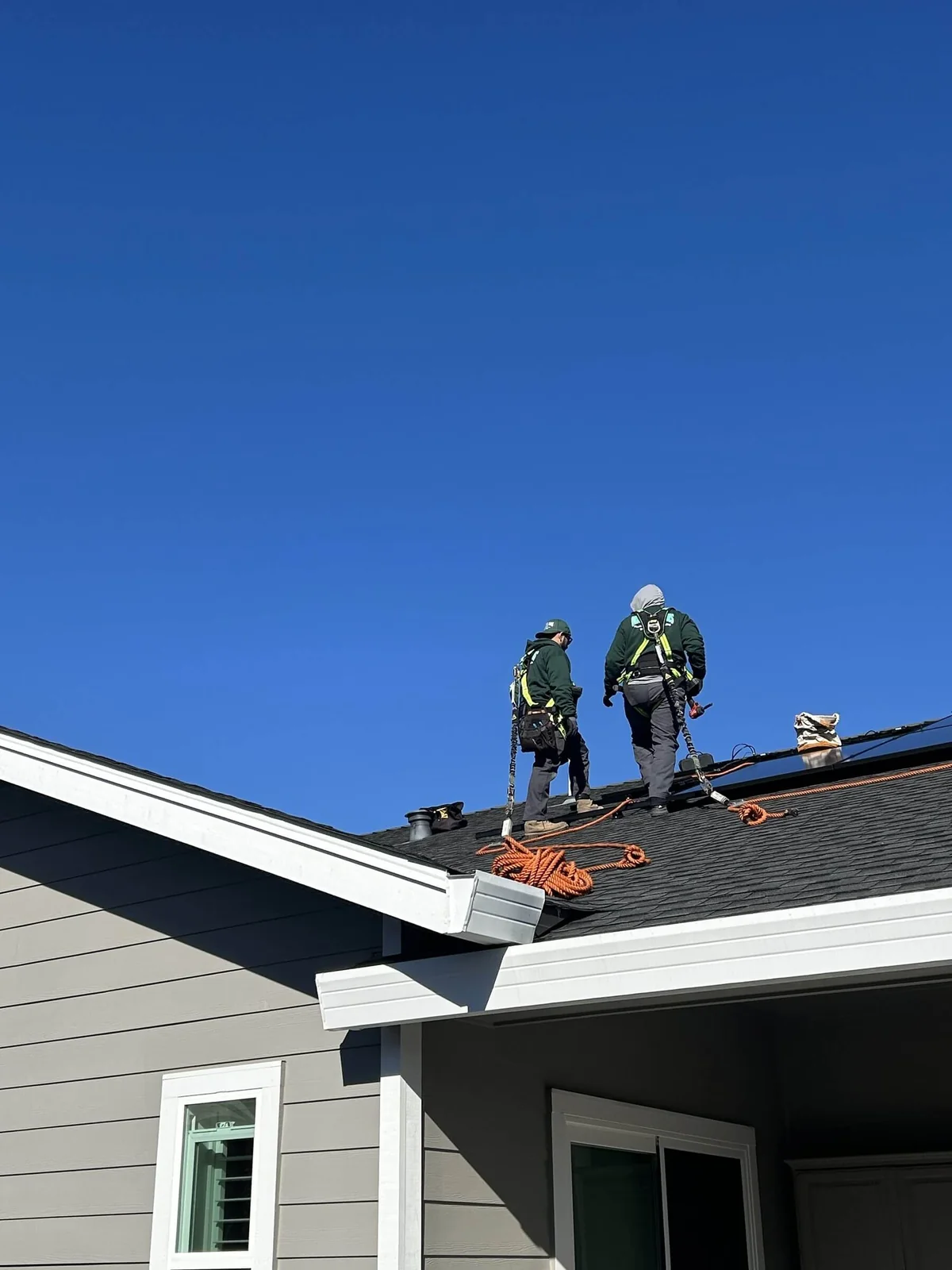
Install day is mostly layout, flashing and wire management. Mounts get set into rafters or beams on a measured layout and flashed into the roofing so water sheds over the penetration rather than around it, then rails and modules follow. Underneath, the wiring has to satisfy rapid shutdown so a module-level device can de-energize the roof conductors, and labeling has to be right at the array, the disconnect and the service equipment, since that is a large share of what an inspector checks. Our crews work in fall protection on every pitched roof and every low-slope roof without a parapet.
Export value is the factor that usually decides the design
California changed how exported solar energy is paid for, and that change is the most important technical input to any system designed today. Under the net billing tariff, which the California Public Utilities Commission says "will apply to customers who submit an interconnection application on or after April 15, 2023," the utility will "pay Net Billing Tariff customers for the electricity they export to the grid based on its value to the electric grid, determined by the Avoided Cost Calculator." That calculator "quantifies the value of electricity exported to the grid at different times of day."
Read mechanically, the consequence is plain. A kilowatt-hour pushed to the grid at one in the afternoon and one pushed at seven in the evening are not worth the same. Covering annual usage with modules and letting the meter sort it out no longer describes the economics. The goal now is using more of what you generate inside your own house, so the Commission's own material notes that pairing solar with storage "allows them to store electricity for use during evening hours, when the sun is down and electricity prices are higher."
An existing array from an earlier era is not affected yet. The Commission states that NEM 2.0 customer-generators "are allowed to remain on the NEM 2.0 tariff for 20 years from the date they interconnected." Knowing your interconnection date is worth more than any sales pitch, and it is the first thing we ask an owner who wants to expand.
One local wrinkle: MCE is the community choice provider here, so generation charges and credits sit on the MCE line while PG&E still owns the wires, the meter and the interconnection. MCE settles surplus on its own annual cycle running "April through March," and states that "your MCE cash-out is separate from your PG&E true-up." Two settlement schedules on one account confuse a lot of first-year owners. MCE publishes the mechanics on its net energy metering page.
Batteries, power shutoffs, and the hillside question
Hillside San Rafael neighborhoods sit in elevated fire-hazard zones subject to PG&E Public Safety Power Shutoffs, a program under which PG&E turns off power during severe weather to help prevent wildfires. That drives many storage decisions on the ridge streets, and it is a legitimate reason to build differently than a flat bayside lot would need.
Here is the part that surprises people: a grid-tied array with no battery produces nothing while the power is out. It shuts down by design so a roof full of modules is not feeding a line a utility worker is holding. Solar alone is a bill strategy, not an outage strategy, and a proposal that blurs the two is worth a second read.
Storage changes the question from how much to how much of what. Whole-panel backup carries every circuit and needs enough capacity and inverter output for whatever turns on at once. The more common build is a backup subpanel holding a chosen set: refrigeration, some lighting and receptacles, network gear, a well pump where there is one, and one comfort zone if the household wants it. Picking those circuits is the real design conversation. Where a shutoff can run across days and a well or a medical device is involved, a standby generator alongside storage is often the more sensible build, and we are a Certified Generac Generator installer.
Permits and code for solar in San Rafael
State law caps how much discretion a city has here, and it does so in a specific way worth understanding. Government Code 65850.5 obliges every jurisdiction to publish "a checklist of all requirements with which small rooftop solar energy systems shall comply to be eligible for expedited review," and an application meeting that checklist "shall be deemed complete." Paper is out too: the statute requires jurisdictions to "allow for electronic submittal of a permit application and associated documentation" and to authorize electronic signatures on the forms. The effect is that a San Rafael solar permit is measured against a published standard rather than weighed on its merits. A permit is still required; the building official checks safety rather than deciding whether they like the idea.
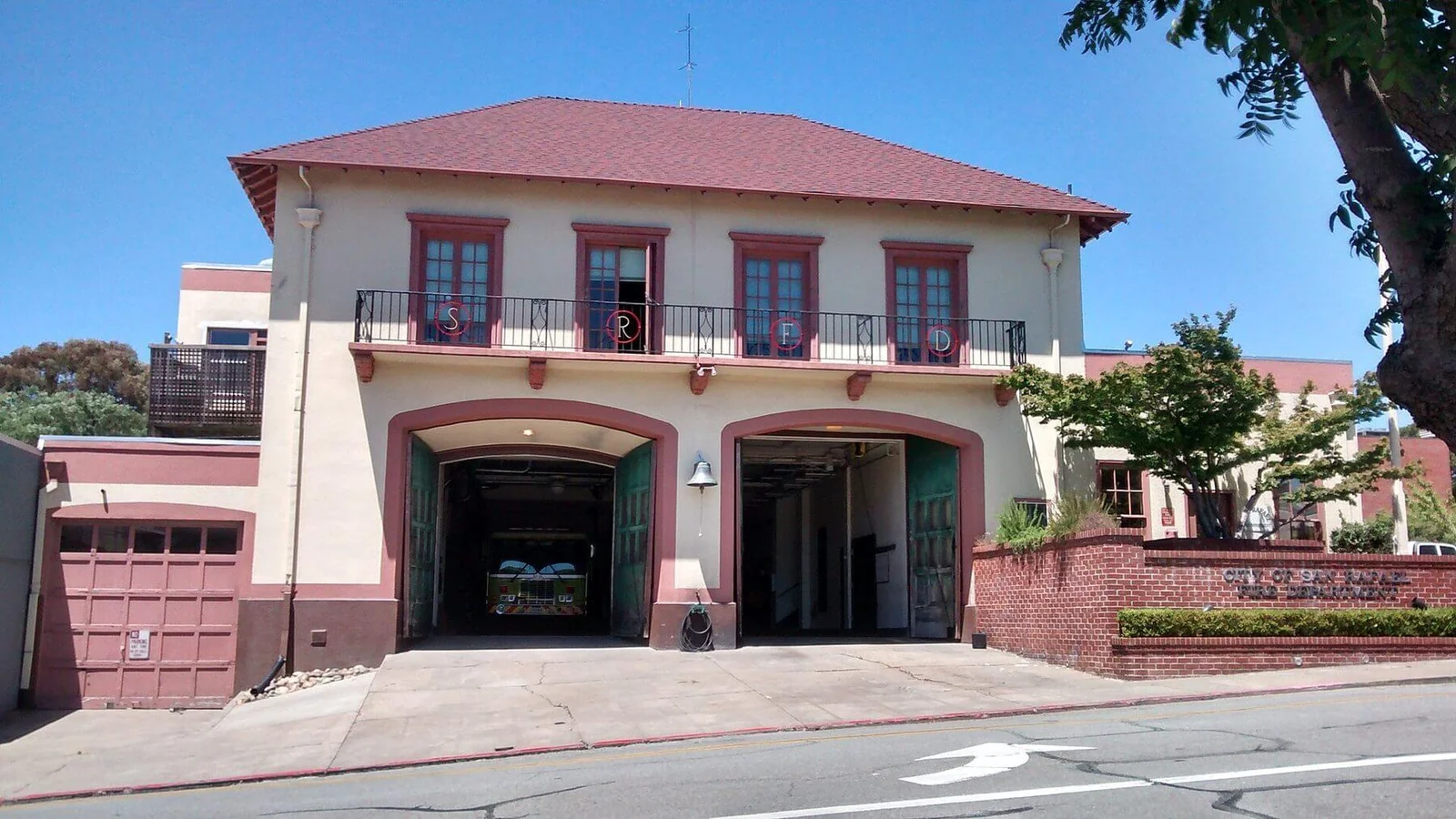
Inside city limits the work goes through the City of San Rafael Building Division, which groups solar, battery backup and EV charger work under a single renewable energy permit category. Submission moved online: the city states that "beginning Monday, February 23, 2026, all new permit applications must be submitted through OpenGov," and its building permits page is the entry point. An address with a San Rafael mailing address that sits outside those limits is permitted instead through the Marin County Community Development Agency. We confirm jurisdiction before drawing anything, since the two paths use different portals and plan requirements.
Two code points get misapplied in sales conversations. CALGreen, which the state describes as "the first-in-the-nation mandatory green building standards code," carries EV-ready and solar-ready provisions that are new-construction requirements, creating no retrofit obligation on an existing house. Likewise, California's 2025 Building Energy Efficiency Standards took effect January 1, 2026 and set prescriptive baselines aimed at new construction, while a replacement or addition on an existing home is evaluated differently. Anyone claiming the code forces a specific purchase should be asked which section says so.
The final step is not the city. After the inspection signs off, the utility issues approval to energize, and the system does not legally run until that arrives.
Justin was informative very professional and was always wearing his face mask, gloves and shoe protection and very aware of his distance. He do such an excellent work, detail, prompt and always meeting a high standard of workmanship. Thank you!
Henry L.
What drives the price of a San Rafael solar project
We do not publish figures, because a number without your roof attached to it is noise. Here are the variables that move it, so you can read any proposal you receive.
Roof surface and condition. Composition with life left is the least expensive substrate. A low-slope membrane or coated roof costs more to penetrate correctly. A roof near replacement adds a removal and reset later if you skip it now.
Plane count and orientation. One large south-facing plane is the cheapest kilowatt on any house. Four small planes facing four directions means more rails, more strings, more flashings and more labor for the same module count.
Conduit path. Attic access is fast. A post-and-beam house with no attic means exterior chases, longer runs and finish work.
Service equipment. Whether the array lands on the panel you have, needs a supply-side connection, or needs new service equipment is often the largest single swing in a residential quote. Related work on the same visit, covered on our San Rafael electrical page, costs less done together than done twice.
Storage scope. Capacity is one lever; the number of circuits you back up is the other, and that is where most of the labor sits.
Access and trenching. A ridge lot with a narrow driveway takes longer than a level bayside lot, and a detached garage or accessory unit that needs feeding brings underground work into scope.
Incentives, and what is genuinely open right now
Incentive pages age badly, so here is the status as of this writing, with the qualification that we verify every program at design time.
Locally, MCE is the community choice provider for Marin County. Worth knowing precisely what it does and does not fund: MCE's EV charging program covers a "workplace that will offer EV charging to employees and/or fleet," a "multifamily property of four or more housing units," and "commuter parking lots, such as a park & ride or ferry terminal." No MCE installation rebate reaches a single-family charger, and a proposal assuming one is wrong. What a household can use is MCE Sync, a smart-charging reward, and PG&E's residential charger rebate, which Community Choice customers are eligible for. The eligible categories are listed on MCE's EV charging page.
On the electrification side, MCE's rebates sit beside a solar project rather than paying for one. MCE's heat pump rebates cover heat pump heating and cooling and heat pump water heating, and carry a condition that catches solar households specifically: where a home already has solar or EV charging, that equipment must have been installed for at least twelve months. So an array that went in recently can sit between you and a heat pump rebate purely on timing.
Rebate programs here are set by the community choice provider, and Sonoma County's provider runs a different set that does not reach a Marin address. Comparing a Santa Rosa quote against a San Rafael quote without adjusting for that will mislead you.
The rest of the load: heat pumps, water heating and EV charging
Sizing is a load question, and in San Rafael the load is moving. The city sits fully inside the Bay Area Air Quality Management District, whose Regulation 9, Rule 6 established zero-NOx requirements for residential water heaters with compliance dates that vary by unit size, beginning in 2027. No existing gas water heater is banned, and we confirm the current requirement when your project is scheduled. For solar, the point is that a household planning a water heater replacement in San Rafael may be adding a 240-volt appliance, which belongs in array sizing now.
Vehicle charging follows the same logic. A home charger is a large, predictable, schedulable load, which makes it the best possible partner for storage. PG&E's residential EV rate plans differ structurally: the single-meter plan applies to both household and vehicle usage, while the other requires a separate dedicated meter and separates the vehicle's electricity from the home's. That second meter is an electrical scope decision, not a billing footnote, so it belongs in the install conversation. Specifics are on our EV charger installation page for San Rafael.
For space conditioning we are a Mitsubishi Diamond Contractor Elite and a Trane Comfort Specialist, which matters because the two dominant retrofit paths in this city are ductless equipment into radiant-slab mid-century houses and ducted heat pumps into pitched-roof stock with existing duct runs.
Owning an array: what to watch for
Ongoing care is light, and most of it is watching the data. Compare monthly output against the same month a year earlier, since a slow decline shows up in the numbers long before it shows up on the roof. A sudden overnight drop is usually the inverter rather than the modules, and inverters age out well before the glass does, so knowing your inverter warranty date is worth more than any gadget. Trim branches ahead of the growing season, cycle a battery deliberately twice a year so you learn its behavior on your own terms, and have flashings and mounts looked at whenever the roof is inspected.
We install with those years in mind. Critter guard goes on at the outset, because rodents nest under low-mounted modules and chew wiring. Connectors are mated from a single manufacturer. And if the roof is close to replacement age, we tell you before the array goes on, because installing on a new roof costs far less than lifting a system off an old one.
Where we work in San Rafael
We install across Terra Linda, Lucas Valley, Marinwood, Peacock Gap and Sun Valley, on the older streets around downtown and near Dominican University, and on the bayside and hillside lots in between. Crews run out of Petaluma, which puts every part of the city inside a short drive down the corridor.
How to judge a solar contractor in San Rafael
Five things separate a serious proposal from a pitch. Did they run a shade study on your actual roof, and will they show it to you. Did they open your service panel, or quote from satellite imagery. Is the electrical work in-house under a C-10 license, or subcontracted to a company you will never meet when warranty attention is needed. If there is a battery, does the document name the circuits it backs up, or only a capacity. And whose name goes on the permit, since an owner-pulled permit shifts liability to you. Ongaro & Sons holds Diamond Certified status and a BBB A+ Rating, and we answer all five in writing.
What North Bay homeowners say
Two of the reviews behind our Google rating:
Solar across San Rafael and Marin County
More from us nearby: solar across Marin County, solar in Novato, and the full list of what we do at this address on our San Rafael service page.
Book a solar assessment in San Rafael
The fastest way to start is to book online. We come out, look at the roof, open the service panel, pull your usage history, and build the design from those three inputs. You get the shade model, the equipment list, the circuits a battery would carry, and the permit path in writing before you decide anything.
Your Comfort, Our Priority
Ongaro & Sons is your trusted heating, cooling, plumbing, electrical, and solar expert, specializing in reliable maintenance and repair services that keep your home running efficiently year-round.
Our certified technicians deliver unmatched expertise with fast, friendly service across Marin, Sonoma and Napa County. From HVAC tune-ups to plumbing repairs and electrical upgrades or solar solutions, we focus on energy-efficient performance and long-term comfort. Count on us to maintain the systems that power your home and keep your environment just the way you like it.
Licensed, Insured, Background-Checked
Our technicians are licensed, experienced, and trained to service all makes and models.
Locally Owned and Operated
Serving the Napa, Marin, and Sonoma communities with personalized, hometown service.
Reliable Repairs
We respond quickly and get the job done right the first time, with no surprises.
Since 1932
Why Ongaro & Sons?
Four generations of trusted home service. Open any reason to see what it means for your home.
Schedule Service →Family-owned in the North Bay since 1932
Four generations of the Ongaro family serving Marin, Sonoma and Napa County. We know these homes and the systems in them.
Licensed, insured, background-checked technicians
Every technician is fully licensed and insured, background-checked, and trained on the equipment we install.
Diamond Certified and BBB A+
Diamond Certified since October 2016, and BBB Accredited with an A+ rating since December 1995.
Mitsubishi Diamond Contractor Elite and Trane Comfort Specialist
Both top manufacturer tiers. That standing decides how registration and extended warranty terms are handled on the system you actually bought.
The price is agreed before work starts
You see the number before the work begins. Flat-rate quotes, no surprises and no pressure.
Comprehensive maintenance program
Members get priority scheduling, discounts, and proactive checkups that prevent costly failures.
Discount
Membership
Ongaro Maintenance Plans
Annual maintenance on your home systems provides safeguards and comfort to you and your family. Members get priority scheduling, discounts, and proactive checkups that catch problems early.
Member Discounts
5% off every repair and replacement, all year long.
Peace of Mind
Proactive checkups catch issues before they become big problems.
Courtesy Reminders
We call you to schedule: never miss a seasonal service.
Value That Lasts
With Ongaro & Sons, you’re investing in quality, integrity, and service that stands the test of time. Explore our current promotions and see the difference real value makes for your HVAC, plumbing, and electrical needs.


From the Blog
 Sep 17, 2026
How Many Amps Does My House Need? Sizing Service for What You Actually Run
How many amps your house needs comes from a load calculation of what you run and plan to add. What drives the number, when existing service is enough, and more.
Read More Sep 10, 2026
Hard Water in Marin County: What Is Actually in Your Water and What It Does
Hard water in Marin County varies by provider and source. The 2025 report figures for Marin Water and NMWD, what hardness does and does not mean, and options.
Read More Sep 3, 2026
Electrical Permit Requirements in California: What Needs One and What Does Not
Find out which electrical projects commonly need permits, how to confirm local exemptions, and what to ask before work begins in Marin, Sonoma or Napa County.
Read MoreSolar in San Rafael: frequently asked questions
Who is the best solar company in San Rafael?
Judge it on whether one company owns the whole scope. Ongaro & Sons has served the North Bay since 1932, holds Diamond Certified status and a BBB A+ Rating, and works under a C-10 electrical license, so the array, the service panel and the battery integration are all ours. We carry 2,756 Google reviews averaging 4.8 stars.
Do I need a permit to install solar in San Rafael?
Yes. State law requires an expedited process for small residential rooftop systems and administrative approval rather than discretionary review, but the permit itself is mandatory. Inside city limits it goes through the Building Division's online portal, and addresses outside those limits are handled by Marin County. We file it and meet the inspector either way.
Can solar go on an Eichler roof in Terra Linda or Lucas Valley?
Regularly, yes. Mounting must be flashed into a low-slope roofing assembly rather than tucked under shingles, and with no attic for conductors, wiring travels across the roof to a wall or down a finished exterior chase. Roof condition governs timing: a surface due for recoating or replacement comes first.
Will a battery keep my house running during a Public Safety Power Shutoff?
Within limits you choose, yes. Backing up every circuit demands substantial capacity and inverter output. Most households instead move a selected group of circuits onto a backup subpanel: refrigeration, lighting, receptacles, network equipment and one comfort zone. Solar by itself cannot do this, because a grid-tied array stops producing whenever the grid drops.
Do I need an electrical panel upgrade to add solar in San Rafael?
Sometimes, and it turns on numbers rather than opinion. Main breaker rating, busbar rating and available spaces together determine whether a solar backfeed can legally land on your existing panel. Older services near downtown frequently cannot take it. When an upgrade is required we do it inside the same project, on the same permit.
How does MCE change my solar bill in San Rafael?
MCE supplies the generation portion of your electricity while PG&E keeps the delivery infrastructure, the meter and the interconnection. Credits and charges therefore appear in two places on two schedules. MCE runs an annual surplus cash-out from April through March that it describes as separate from the PG&E true-up. New owners find that split confusing until someone walks a statement through with them.
What is the net billing tariff, and why does it change my system design?
It governs interconnection applications submitted on or after April 15, 2023. Exports are valued at the grid's avoided cost for the hour they occur instead of a flat retail credit. Practically, energy used inside your own house is worth more than energy sent out at midday, which pushes design toward storage, load shifting and right-sizing rather than maximum panel count.
Should I re-roof before putting solar on a San Rafael house?
If under roughly a decade of life remains, yes, and skipping this is the costliest common mistake we see. Taking an array down so a roofer can work underneath and putting it back afterward is labor you pay for twice. We assess condition at the site visit and will tell you to sequence the roof first whenever that is the right call.
Is there an MCE rebate for a home EV charger in Marin County?
No. MCE's charging program targets workplaces offering charging to employees or fleets, multifamily properties of four or more units, and commuter lots such as park-and-rides or ferry terminals. Single-family residential chargers are not covered. A quote for a home in this city that assumes such a rebate is built on a program that does not reach the address.
Can I add a battery to a solar system I already have?
Usually. The deciding factor is your existing inverter, which sets whether storage couples on the alternating current side or the direct current side, and that changes both labor and equipment. We also check your interconnection date, since a system on an older tariff carries different economics and that affects whether adding storage pays.
Does solar work on a shaded lot near downtown San Rafael?
Often, at a smaller size. The answer comes from a year-round shade model on your specific planes rather than a rule of thumb. Mature trees near older homes cut winter output hardest, when the sun angle is lowest. Module-level electronics limit how much one shaded module drags on the rest of a string, which makes partly shaded roofs more workable than before.
What happens to my solar if I switch to a heat pump?
Consumption changes shape, not only size. Heating moves onto electricity and concentrates in cold mornings and evenings, precisely when exported energy is worth least and imported energy costs most. That argues for sizing against your future load and weighing storage at the same time, which produces a better result than adding solar first and rethinking it in two years.