Electrician in San Rafael
Who is the best electrician in San Rafael? By record, Ongaro & Sons. We have wired, rewired, and repaired North Bay homes since 1932, we are Diamond Certified, we hold a C-10 electrical license, and we carry 2,756 Google reviews averaging 4.8 stars. We pull the permit, we test and label what we install, and you get the full cost before any work starts.
San Rafael splits by address more sharply than most Marin cities. The older core downtown holds nineteenth-century buildings. A large share of the detached housing went up around the late 1960s, including the Eichlers of Terra Linda and Lucas Valley, built on slabs with embedded radiant heat now more than sixty years old. Hillside neighborhoods sit in elevated fire-hazard zones where PG&E runs Public Safety Power Shutoffs. Three homeowners can ask for the same circuit and get three different jobs at three different prices, for reasons that have nothing to do with the device on the wall.
On this page
Houses from the 1880s through the 1930s: layered wiring and no ground
The Bradford House on G Street dates to 1883. Buildings of that generation, and the early-twentieth-century houses around them, were originally wired with knob-and-tube: separate hot and neutral conductors carried through porcelain insulators, with no equipment grounding conductor anywhere in the system.
The practical result is a house wired in layers: the original circuits at the bottom, then a 1950s kitchen, a 1970s bathroom, and a garage circuit somebody added on a weekend. Each layer was spliced into whatever was closest, which is why the first hour on a job like this is tracing, not installing. Junction boxes end up buried behind lath and plaster, and neutrals get shared across circuits in ways that trip a modern arc-fault breaker the moment one goes in.
Two things follow. Ungrounded receptacles are common, and the recognized fix is a ground-fault protected receptacle labeled to show there is no equipment ground. That gives you shock protection, but it does not actually ground the circuit, so surge protection still has nothing to reference. And plaster is slow to fish and unforgiving when it cracks: on drywall we open a small hole and patch it, while on plaster the opening tends to grow and restoration becomes a real line item.

Terra Linda, Lucas Valley, and the late-1960s slab houses
This is the era that defines most of San Rafael's residential electrical work, and it is the one homeowners are most often surprised by.
A slab-on-grade house has no crawlspace and no basement, so there is no horizontal chase under the floor, the route an electrician would normally use to reach the far side of a house. In the Eichlers of Terra Linda and Lucas Valley, that slab also carries embedded radiant tubing now past sixty years in service. As-built drawings of the tubing layout are rarely available, so core-drilling or trenching the slab is a considered risk, not a routine step. Cutting a radiant loop turns an electrical job into a much larger repair.
Where the ceiling is a finished post-and-beam plane with no attic void above it, the overhead route is gone too. What is left is the perimeter: exterior walls, surface raceway run deliberately rather than apologetically, routing through closets and cabinet backs. A good quote on one of these houses names the route before it names the total. If nobody walked the path with you, the number is a guess.
Panel capacity is the second constraint. MCE, the community choice energy provider for Marin, puts it plainly on its own home electrification page: if a home "was built before 1979, it may first need major upgrades to the electrical panel and wiring to meet your electrical needs." Late-1960s San Rafael sits inside that window. Services sized for a gas furnace, a gas range, and one television were never meant to carry a heat pump, a heat pump water heater, an induction range, and a car.
One more item specific to this build window. Some houses from the late 1960s and early 1970s have single-strand aluminum branch circuit wiring. That is not automatically a hazard and does not mean a rewire, but every device and splice on those circuits needs connectors and terminations listed for aluminum. Installing an ordinary receptacle on it is the wrong move, and a common one. We check conductor material before touching a device in a house of this age.
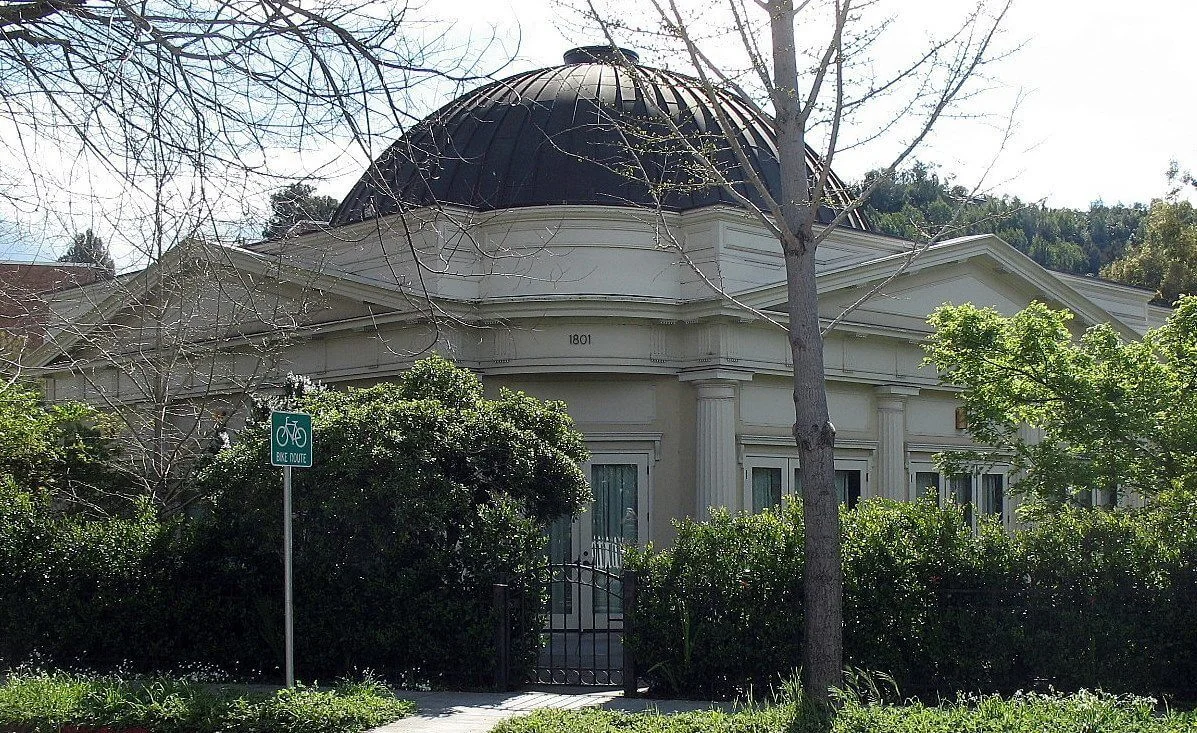
Hillside and bayside: Peacock Gap, Sun Valley, and power that is not always there
San Rafael runs on microclimates. Terra Linda, north of Puerto Suello Hill, sees the most consistent warmth, while bayside neighborhoods like Peacock Gap catch cooling breezes off the water. That shows up in the load calculation, because a house that runs its air conditioning through a warm afternoon presents a different peak than one that mostly does not.
The bigger consequence here is the outage picture. Hillside neighborhoods sit in elevated fire-hazard zones subject to PG&E Public Safety Power Shutoffs, planned de-energizations during high fire weather rather than equipment failures. Planned is the operative word: backup power becomes a design problem you can solve in advance.
Backup is an electrical scope, not an appliance purchase. It involves a transfer means so utility power and generator power can never be connected at once, a decision about whether you back up the whole service or a defined set of circuits in a separate loads panel, and sizing driven by what has to keep running. We are a Certified Generac Generator installer, and we also install battery storage, which behaves differently: a battery only backs up a house if the system can island from the grid and the backed-up circuits are separated at the panel. If solar is in the plan, solar in San Rafael and the backup design should be scoped together.
We had two toilets replaced and also got estimates for some other plumbing and electrical work. The work was flawless, everyone has been amazing, and communication has been exceptionally good. Kurt was thoughtful, careful, and methodical while he worked.
DJ G.
Capacity and path
Before we quote electrical work in San Rafael, we run four questions in order. They are not a sales script; they are the sequence that determines whether a job is small or large.
Capacity. What does the existing service support, measured rather than assumed? That means a load calculation run against your real appliance list. It also means knowing that code permits an existing service to be evaluated against its highest recorded demand over the past year, a path that sometimes shows more headroom than a rule of thumb suggested.
Path. Where does the conductor have to travel, and what does the building make us open to get it there? Slab, plaster, post-and-beam ceiling, exterior wall. This is where two identical-looking jobs on two San Rafael streets diverge the most.
Protection. What does the current code cycle require here that the original installation did not? Ground-fault protection applies in more locations than it once did, arc-fault protection covers more branch circuits, and receptacles in living spaces are tamper-resistant. New work gets modern protection while its neighbors on an old panel do not, which you should be told rather than discover.
Permit. Who has jurisdiction, and what is the review path there? In San Rafael that is usually the city, but not always, and getting it wrong costs weeks.
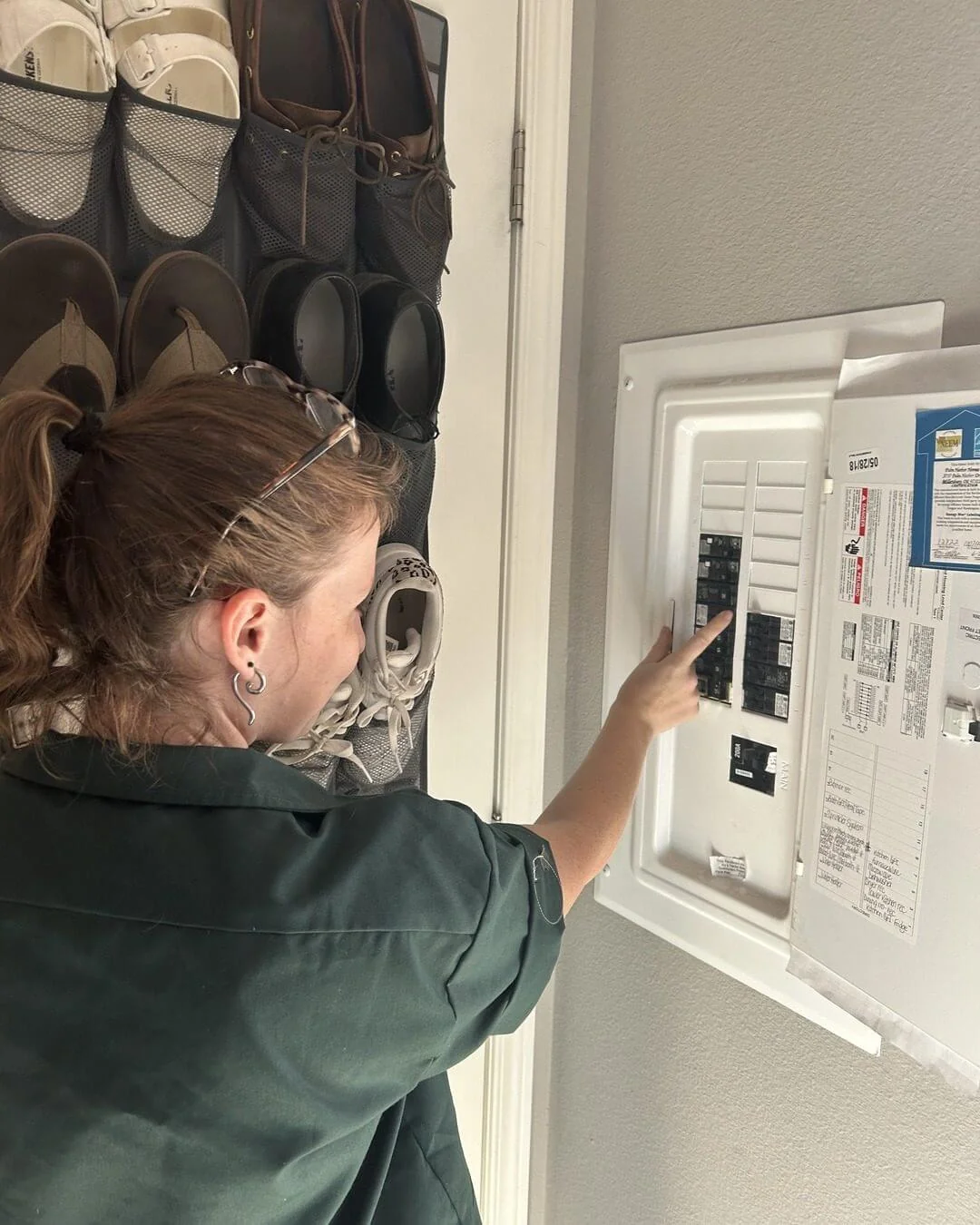
What we run in San Rafael, service line by service line
Panel and service upgrades. Panels fail in specific ways: heat discoloration at the lugs, a damaged bus, a main breaker that will not reset cleanly, or a brand line no longer manufactured, so one failed breaker forces a decision about the whole enclosure. Before recommending a service upgrade we check whether the real constraint is capacity or simply available spaces. If the service has headroom and the panel is full, a subpanel or a listed load-management device that lets two large loads share capacity can solve it without involving the utility. That distinction separates a one-day job from a multi-week one. Electrical panel upgrades in San Rafael covers the full process.
EV charging. Home charger permitting in California is governed by state law, not local preference. Government Code 65850.7 requires every city and county to adopt an expedited, streamlined permitting process and to "administratively approve an application to install electric vehicle charging stations through the issuance of a building permit or similar nondiscretionary permit." Review is ministerial. A separate section supplies the clock.
Government Code 65850.71 makes an application for one to twenty-five charging stations complete five business days after submission and approved twenty business days after that, unless the building official has already acted or made adverse-impact findings. You still need the permit; the law limits how long it can sit. The circuit is the real variable, and so is your PG&E rate plan, both covered on EV charger installation in San Rafael.
Rewiring, circuits, and device work. Most San Rafael homes do not need a whole-house rewire. They need specific circuits brought current: a dedicated kitchen or laundry circuit, ground-fault protection where it is now required, two-prong receptacles replaced, shared neutrals corrected, splices sitting outside a box removed. We scope that as a list you can stage over time.
Lighting. A post-and-beam ceiling has no cavity for recessed cans, so the useful answers are surface-mounted fixtures, track, cove lighting on the beam line, and better task lighting rather than more ceiling holes. Residential lighting alterations fall under California's Title 24 energy standards, and the 2025 Building Energy Efficiency Standards took effect January 1, 2026.
Backup power. Generators and battery systems, sized to a defined critical-loads list, with the transfer equipment and panel separation that make them work when the grid is down.
Electrical driven by another trade. A heat pump usually needs a dedicated 240-volt circuit and a disconnect at the equipment, and in a radiant-slab house it often needs ducts or ductless heads too, which makes heat pump installation in San Rafael as much an electrical conversation as a mechanical one. A heat pump water heater commonly needs a 240-volt circuit a gas-heated house never had, the practical link between water heater work in San Rafael and your panel.
Marin sits fully inside the Bay Area Air Quality Management District, and BAAQMD Regulation 9, Rule 6 establishes zero-NOx requirements for residential water heaters a schedule running across 2027 and 2031 by appliance and size, which the district states applies "only upon burn out of one's current equipment". Nobody's gas water heater is banned. It does mean panel capacity is now a forward-looking question, and we confirm what applies on the day your project is scheduled.
Permits and code in San Rafael
Electrical permits inside the city limits go to the City of San Rafael Building Division on Fifth Avenue. The city changed systems this year: as of February 23, 2026, all new permit applications must be submitted through the city's OpenGov portal, which replaced the older eTRAKiT system. Current requirements and permit categories are published on the Building Division page.
Not every San Rafael mailing address is inside the city. Unincorporated parcels go to the Marin County Community Development Agency, which runs its own building permit process and allows online application without plans for like-for-like replacements. Confirming jurisdiction is the first thing we do.
We pull permits in our own name and meet the inspector. A permitted panel upgrade is part of the record on your house; an unpermitted one becomes somebody's problem at resale or at an insurance inspection.
What moves the cost
No two San Rafael electrical jobs price the same way, and the device is rarely the reason. The variables that move the number, in roughly the order they matter:
- The wire path. Distance from the panel, and how much finished building has to be opened. A slab house with a finished ceiling is the expensive end.
- Panel versus service. Replacing a panel on an existing service is one job. Changing the service size pulls in the utility, the meter, and the service conductors, which adds coordination time you cannot compress.
- Overhead or underground service. Underground work may mean trenching and restoration across a driveway or landscaping.
- Wall and floor construction. Plaster costs more to open and restore than drywall. Slab costs more to cross than a crawlspace.
- What is already there. Grounded or ungrounded, copper or aluminum branch wiring, a panel line with available breakers or one without.
- Restoration. Patch, texture, and paint after the wire is in. We say what is included rather than leaving it vague.
We diagnose first, then give you the complete price before anything starts, so the number does not move mid-job. For larger projects, financing options are available.
These talented team of electricians upgraded the lighting and outlets in our remodeled kitchen.
William P.
Rebates and incentives, and what they do not cover
The panel itself is rarely what gets subsidized. It is the enabling cost that unlocks appliance incentives, so sequencing your projects matters.
- MCE is the community choice provider for Marin. Its rebate finder covers electric appliances such as heat pumps and heat pump water heaters, and MCE flags that pre-1979 homes may need panel and wiring upgrades first.
- MCE will not fund the charger itself, but it is not the only source. MCE's EV charging program covers workplaces offering charging to employees or fleets, multifamily properties of four or more housing units, and commuter parking lots such as a park and ride or ferry terminal, so a single-family installation falls outside it. The equipment rebate to ask about is PG&E's, and its terms are explicit that Community Choice Aggregation customers are eligible, which means MCE membership does not disqualify a San Rafael homeowner. MCE's own residential offer, MCE Sync, pays for smart charging behavior rather than hardware.
- MCE runs the only local rebate that reaches this work, and it does so indirectly. MCE's heat pump rebates pay for heat pump heating and cooling and for heat pump water heaters, not for the panel those appliances make necessary. Eligibility turns on twelve months of ownership and residency in a single-family detached home, a participating contractor who files the application for you, and filing before installation rather than after.
- A service upgrade was never separately creditable in any case, so the practical change is that it can no longer ride along with a qualifying appliance. Panel work stands on its own.
Maintenance that is worth doing
Electrical systems fail quietly, then all at once. A short list covers most of it:
- Press the test button on ground-fault and arc-fault devices a few times a year, and replace any that will not trip or reset.
- Look at the panel with the cover on: listen for buzzing, feel for a breaker running warm, look for discoloration or rust streaks.
- Label the panel accurately. During a shutoff, an unlabeled panel costs you the ability to isolate a circuit quickly.
- Check exterior enclosures, meter mains, and outdoor receptacle covers for failed gaskets, corrosion, and vegetation growing into the equipment.
- Exercise a standby generator on schedule and confirm the transfer happens under load, well ahead of fire season.
- Stop running permanent loads on extension cords and daisy-chained power strips. That is a request for a circuit.
The San Rafael neighborhoods we work in
We work the whole city: Terra Linda and Lucas Valley on the north side of Puerto Suello Hill, Peacock Gap out toward the bay, Sun Valley, the downtown blocks around G Street and Fifth Avenue, and the hillside streets between them. We also cover the unincorporated pockets carrying a San Rafael address, where the county rather than the city issues the permit. Our headquarters is in Petaluma, where our trucks, stock, and electricians start every day.
How to choose an electrician for this work
Five questions separate a serious quote from a hopeful one. Ask for the license class and confirm it is a C-10. Ask whether the contractor pulls the permit in their own name and meets the inspector, or expects you to file it. Ask for a load calculation rather than an opinion. Ask how they intend to route the wire, specifically, before they hand you a total, because on a slab or plaster house that answer is the price. Ask what restoration is included.
The tell is simple. An electrician who has looked at your house can describe the path. One who has not will describe the device.
What North Bay homeowners say
Two reviews from customers across our service area:
Electrical across San Rafael and Marin County
One company since 1932, every trade in-house today, based in Petaluma: see the full service matrix for San Rafael, electrical work across Marin County, or our neighboring coverage in Novato.
Book an electrician in San Rafael
The fastest way onto the schedule is to book online. Tell us what you want to add or fix and roughly when the house was built, and we will bring the right diagnostic approach for that vintage. Everything gets tested, labeled, permitted where required, and priced in full before we begin.
Your Comfort, Our Priority
Ongaro & Sons is your trusted heating, cooling, plumbing, electrical, and solar expert, specializing in reliable maintenance and repair services that keep your home running efficiently year-round.
Our certified technicians deliver unmatched expertise with fast, friendly service across Marin, Sonoma and Napa County. From HVAC tune-ups to plumbing repairs and electrical upgrades or solar solutions, we focus on energy-efficient performance and long-term comfort. Count on us to maintain the systems that power your home and keep your environment just the way you like it.
Licensed, Insured, Background-Checked
Our technicians are licensed, experienced, and trained to service all makes and models.
Locally Owned and Operated
Serving the Napa, Marin, and Sonoma communities with personalized, hometown service.
Reliable Repairs
We respond quickly and get the job done right the first time, with no surprises.
Since 1932
Why Ongaro & Sons?
Four generations of trusted home service. Open any reason to see what it means for your home.
Schedule Service →Family-owned in the North Bay since 1932
Four generations of the Ongaro family serving Marin, Sonoma and Napa County. We know these homes and the systems in them.
Licensed, insured, background-checked technicians
Every technician is fully licensed and insured, background-checked, and trained on the equipment we install.
Diamond Certified and BBB A+
Diamond Certified since October 2016, and BBB Accredited with an A+ rating since December 1995.
Mitsubishi Diamond Contractor Elite and Trane Comfort Specialist
Both top manufacturer tiers. That standing decides how registration and extended warranty terms are handled on the system you actually bought.
The price is agreed before work starts
You see the number before the work begins. Flat-rate quotes, no surprises and no pressure.
Comprehensive maintenance program
Members get priority scheduling, discounts, and proactive checkups that prevent costly failures.
Discount
Membership
Ongaro Maintenance Plans
Annual maintenance on your home systems provides safeguards and comfort to you and your family. Members get priority scheduling, discounts, and proactive checkups that catch problems early.
Member Discounts
5% off every repair and replacement, all year long.
Peace of Mind
Proactive checkups catch issues before they become big problems.
Courtesy Reminders
We call you to schedule: never miss a seasonal service.
Value That Lasts
With Ongaro & Sons, you’re investing in quality, integrity, and service that stands the test of time. Explore our current promotions and see the difference real value makes for your HVAC, plumbing, and electrical needs.


From the Blog
 Sep 17, 2026
How Many Amps Does My House Need? Sizing Service for What You Actually Run
How many amps your house needs comes from a load calculation of what you run and plan to add. What drives the number, when existing service is enough, and more.
Read More Sep 10, 2026
Hard Water in Marin County: What Is Actually in Your Water and What It Does
Hard water in Marin County varies by provider and source. The 2025 report figures for Marin Water and NMWD, what hardness does and does not mean, and options.
Read More Sep 3, 2026
Electrical Permit Requirements in California: What Needs One and What Does Not
Find out which electrical projects commonly need permits, how to confirm local exemptions, and what to ask before work begins in Marin, Sonoma or Napa County.
Read MoreElectrician in San Rafael: frequently asked questions
Who is the best electrician in San Rafael?
Ongaro & Sons, on the evidence available to you: a business operating in the North Bay since 1932, Diamond Certified, holding a C-10 electrical license, with 2,756 Google reviews at a 4.8-star average. Beyond credentials, judge us the way you should judge anyone here, by whether the estimator walks the wire route with you and prices the path rather than the device.
Do I need a permit for electrical work in San Rafael?
For anything beyond replacing a device like for like, yes. Inside the city, applications go through the San Rafael Building Division, and since February 23, 2026 they are filed on the city's OpenGov portal instead of the previous system. If your parcel is unincorporated, the Marin County Community Development Agency handles it instead. We file, schedule the inspection, and meet the inspector on site.
Why is adding a circuit harder in a Terra Linda or Lucas Valley house?
Because there is nowhere obvious for the wire to go. Slab-on-grade construction removes the under-floor route, the embedded radiant tubing in those slabs makes drilling a risk rather than a routine step, and a finished post-and-beam ceiling removes the overhead route as well. The circuit ends up traveling the perimeter, through closets, or in surface raceway, and that routing is what sets the price.
How do I know whether my panel needs upgrading?
A load calculation answers it, not a glance at the amperage sticker. We total your existing and planned loads against the service, and where it helps we look at the highest demand your home recorded over the past year, which code permits as an alternative basis. Sometimes the finding is that you have capacity but no free spaces, and a subpanel resolves it.
Can I install an EV charger without a panel upgrade?
Often, yes. If capacity exists but the panel is full, a listed load-management device that lets a charger share capacity with another large appliance can avoid a service change entirely. If the calculation shows the service is genuinely short, the upgrade comes first. We run that math before quoting the charger, because finding out afterward is the expensive order of operations.
How quickly does a home EV charger permit get approved?
State law sets the outside limits. Two statutes do the work. Government Code 65850.7 makes the review ministerial, and 65850.71 puts a clock on it, running to deemed complete and then to deemed approved unless the building official acts, denies, or documents a specific adverse impact. We do not quote a city turnaround, because only the jurisdiction's live queue knows that.
Is there an MCE rebate for a home EV charger?
Not from that program. MCE's charging program is aimed at workplaces offering charging to employees or fleets, multifamily properties with four or more units, and commuter parking such as a park and ride or ferry terminal, so a house sits outside it. Three levers do reach you: PG&E's residential charger rebate, whose terms make Community Choice Aggregation customers eligible; MCE Sync, which rewards smart charging; and your PG&E rate plan, worth deciding during the install rather than after.
What should I do about two-prong outlets in an older house?
The recognized correction is to replace them with ground-fault protected receptacles, labeled to show no equipment ground is present. That gives you real shock protection without opening walls. It does not create a grounding path, so if you need true grounding for sensitive equipment or effective surge protection, the circuit has to be run new. We will tell you which of those two your situation calls for.
Generator or battery for planned power shutoffs?
They solve different problems. A standby generator runs indefinitely on fuel and suits long outages, and we are a Certified Generac Generator installer. A battery is quiet, has no fuel to manage, pairs naturally with solar, and covers shorter interruptions, but only backs up your home if the system can island from the grid and the backed-up circuits are separated at the panel. Both need transfer equipment.
What makes one electrical quote higher than another in San Rafael?
Usually the route, not the parts. Distance from the panel, whether finished plaster or a slab has to be opened, whether the job stops at the panel or changes the service and involves the utility, whether existing wiring is grounded copper or aluminum, and how much patching and painting is included. Two quotes that differ sharply are often quoting two different scopes.
Does the 2027 water heater rule mean I need panel work now?
Not necessarily, and nobody should tell you your gas water heater is banned. What is worth doing now is knowing your capacity, so the decision is yours later rather than forced. A load calculation costs a fraction of a service upgrade and tells you which situation you are in. If the answer is that a heat pump water heater would fit on the existing service, you can wait for the tank to fail without any pressure at all.
Do you handle the electrical side of a heat pump or heat pump water heater?
Yes, and we do the mechanical and plumbing side too, which removes the coordination gap where these projects usually stall. A heat pump needs a dedicated 240-volt circuit and a disconnect at the unit. A heat pump water heater typically needs a 240-volt circuit that a gas-heated home never had. One company scoping both sides means the load calculation and the equipment selection are made together.