Heat Pump Installation and Repair in San Rafael
Ongaro & Sons has installed and serviced heating and cooling equipment in the North Bay since 1932. We are Diamond Certified and a Mitsubishi Diamond Contractor Elite, we hold a C-20 HVAC license and a C-10 electrical license, and we carry 2,756 Google reviews averaging 4.8 stars. Heat pumps are the part of this trade where San Rafael differs most from the rest of the North Bay.
On this page
Why the heat pump conversation here is its own problem
Four things make this city different, and each changes the recommendation.
The air district rule lands on your furnace. Marin County sits entirely inside the Bay Area Air Quality Management District. A working furnace is unaffected today. What changes is the day yours stops, because the replacement becomes a decision about electric equipment rather than a like-for-like swap.
The climate is unusually kind to a heat pump. Most objections to heat pumps were written for places with sustained deep cold. San Rafael has a split down the middle of town instead: Terra Linda north of Puerto Suello Hill sees the most consistent warmth, while bayside neighborhoods like Peacock Gap catch cooling breezes on the same afternoon. That affects sizing, not feasibility.
Much of the housing has nowhere to put ducts. The Eichlers of Terra Linda and Lucas Valley were built on slabs with radiant heat cast into the concrete, now more than sixty years old. Post-and-beam ceilings, low-slope roofs, and no attic mean there was never a duct chase. In those homes a ductless heat pump is the design answer rather than a lesser version of central air, and a contractor who only installs ducted systems cannot serve a large part of this city.
Marin's incentives are MCE's, and MCE's rules constrain your order of operations. If solar, a battery, or an EV charger is anywhere in your plans, the sequence changes what you qualify for. That is covered in full below.
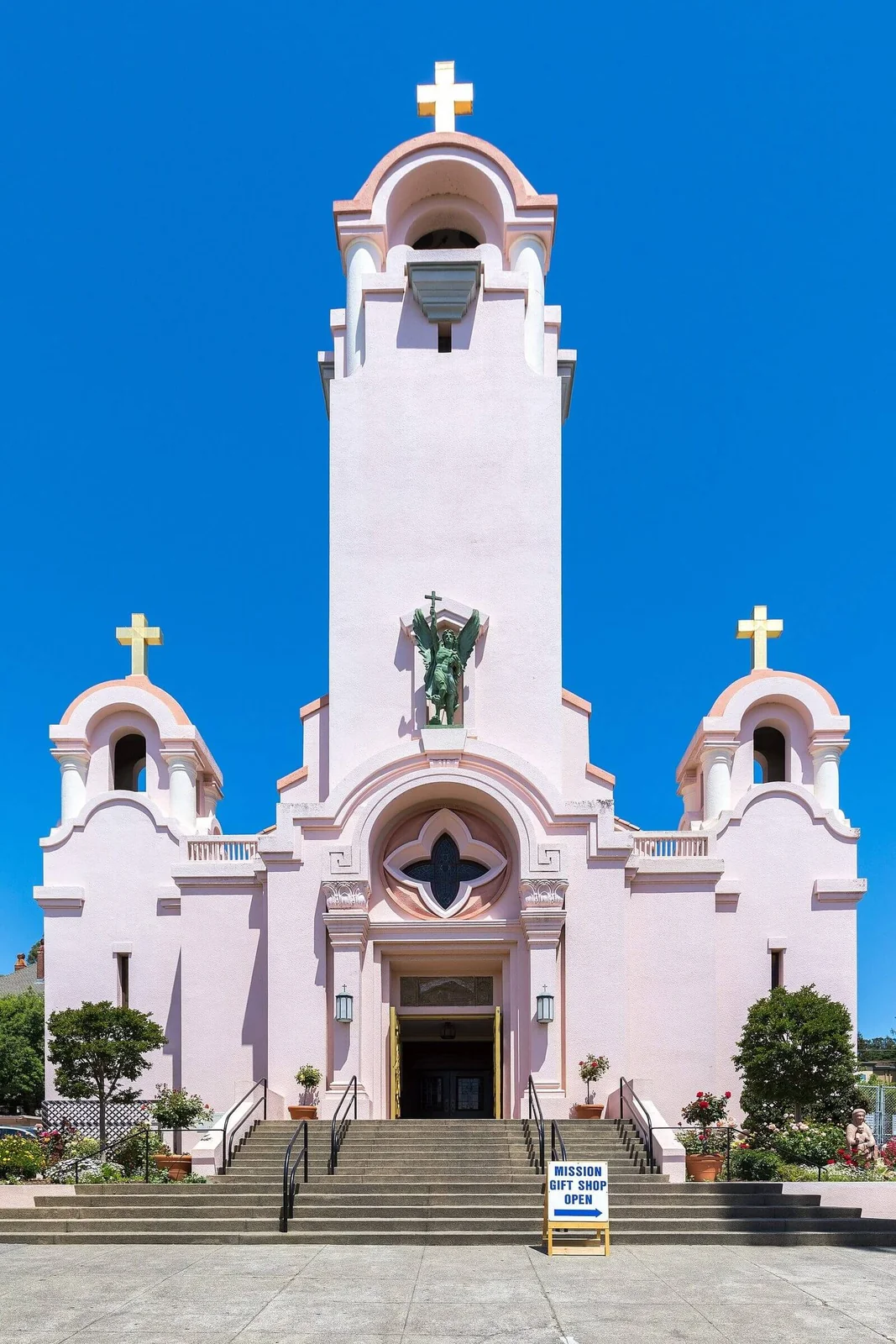
Three San Rafael houses, three different projects
The late-1960s ducted home. Much of the city's stock is detached housing from around the end of the 1960s, built with a gas furnace and often an air conditioner added later. This is the cleanest conversion: one outdoor unit and one air handler replace furnace and condenser together on the existing duct runs. The catch is the ductwork. A heat pump supplies air at a lower temperature than a gas furnace, so leaky ducts and undersized returns that a furnace could power through become comfort complaints.
The Eichler. Terra Linda, Lucas Valley, and Marinwood hold some of the most recognizable mid-century housing in California, and two paths exist inside it. A multi-zone ductless system adds cooling and supplemental heat without touching the slab, which is the route most owners take. An air-to-water heat pump can replace a boiler and feed the original radiant loops, but only where those loops still hold pressure, which is established first rather than assumed. Both are covered on our Eichler home services page.
The older bayside and hillside home. Gerstle Park, Sun Valley, the hill neighborhoods, and the older bayside blocks bring wall furnaces, additions heated differently from the original house, tight side yards, and difficult equipment placement. Here the work is usually zone by zone, and a phased plan often beats one large project.
What goes wrong, and what each symptom usually means
A heat pump runs in both seasons, so it accumulates roughly twice the run hours of a furnace. Some of what alarms owners is normal, and some of what owners ignore is the actual fault.
- Long run times on a cold morning. Usually normal. A right-sized heat pump runs long and low rather than blasting and stopping. The exception is auxiliary electric heat engaging every cycle, which is a controls or sizing problem.
- Air that feels cooler than the old furnace. Normal, and the most common call after a conversion. If it feels genuinely cool rather than mild, suspect refrigerant charge or the reversing valve.
- Steam off the outdoor unit in winter. Normal defrost operation, and it looks worse than it is.
- Ice that never clears. Not normal. A defrost control, a sensor, or a reversing valve that is not shifting.
- Heating works, cooling does not, or the reverse. Almost always the reversing valve or its solenoid, since everything else is shared.
- Short cycling. Oversized equipment, low charge, restricted airflow, or a thermostat configured for furnace logic.
- Rising bills with no change in comfort. Frequently auxiliary resistance heat running when it should be locked out, which commissioning catches and a rushed install does not.
- Water on the wall below a ductless head. Condensate pitch or a clogged drain. Those heads drain by gravity.
- A new noise. Fan bearings, a loose compressor mount, or debris in the outdoor unit.
One rule underneath all of it: refrigerant is never consumed. If a system is low, it is leaking, and finding the leak matters more than the top-off.
Jon was very professional, efficient, and gave good advice on what we should do.
Stephen B.
How we specify a heat pump here
We do not quote equipment off a square footage table. Every project answers four questions in order, and each answer narrows the next.
The load. A room-by-room load calculation for the actual house, with its insulation, glazing, orientation, and position on the city's microclimate map. A Terra Linda home and a bayside home of identical size do not have identical loads. Oversizing is the most common design failure we find in existing systems: an oversized unit short cycles, controls humidity poorly, and is louder than a right-sized one loafing at low speed.
The ducts. Where ducts exist, we measure static pressure, check leakage, and look hard at return sizing before assuming they can be reused. Where they do not, we design zones: how many heads, where they go, and whether one head is being asked to do a job it cannot do. A single head serving a whole house is the most common ductless disappointment, and no equipment upgrade fixes a layout problem.
The panel. Covered below. It decides more projects than homeowners expect.
The placement. Setbacks, side yard width, service access, and how close the outdoor unit sits to a bedroom window, yours or a neighbor's. In the Eichler tracts and on downtown San Rafael's commercial buildings, low-slope roofs put equipment overhead instead, which brings structural, access, and drainage questions. We handle roof-mounted and package equipment as well as split systems, and we are a Trane Comfort Specialist as well as a Mitsubishi Diamond Contractor Elite, so the specification follows the building.
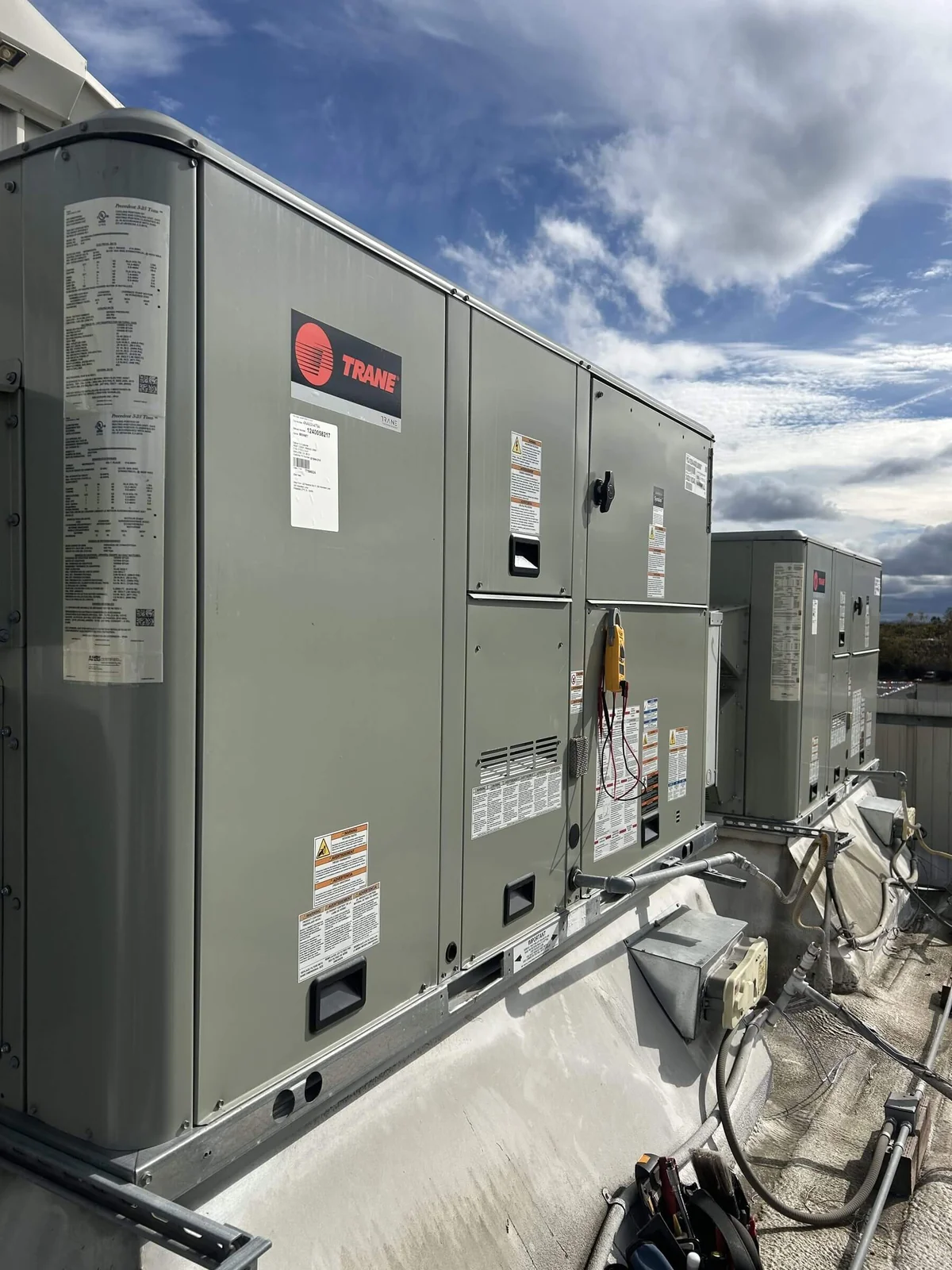
A fifth item decides how the system feels to live with: the controls. A heat pump needs a thermostat that understands heat pump staging and locks out auxiliary heat correctly. A furnace thermostat left on the wall after a conversion will quietly run expensive backup heat for years.
The electrical question that decides most conversions
A heat pump needs a dedicated 240-volt circuit, and a conversion that also removes a gas furnace adds real load to a house designed around gas. Plenty of San Rafael homes still run 100-amp services, and many already carry an EV charger. Adding a heat pump on top can require a load calculation and, in some houses, a service upgrade before the equipment goes in.
That is a reason to find out during the quote rather than on installation day. We check panel capacity as part of the proposal, and because we hold a C-10 electrical license alongside the C-20, any needed panel upgrade happens inside the same project instead of through a second contractor.
Backup power and an all-electric heating system
Converting to a heat pump means your heat depends on the grid, which matters here because hillside San Rafael neighborhoods sit in elevated fire-hazard zones subject to PG&E Public Safety Power Shutoffs.
The workable answers belong in the plan rather than bolted on later: a battery sized to carry the heat pump through an outage, a standby generator, or a smaller ductless zone that keeps part of the house comfortable. Which one fits depends on your panel, your site, and whether solar is in the picture. We are a Certified Generac Generator installer and a licensed electrical contractor, so that design happens alongside the HVAC work.
What drives the cost of a heat pump in San Rafael
We do not publish flat prices, because the same equipment in two San Rafael houses is two different jobs. These are the variables that move the number:
System type. A ducted heat pump, a multi-zone ductless system, and an air-to-water heat pump on a radiant slab are three different installations, not three price points for one product.
Zone count. Every additional indoor head means more equipment, more line set, and more labor. The right number comes from the load calculation, not the budget.
Duct condition. Reusing sound ductwork is inexpensive. Sealing, resizing returns, or replacing failed runs in a home built around 1969 is not, and skipping it produces a system that never satisfies.
Electrical scope. Circuit only, circuit plus subpanel, or a full service upgrade.
Placement and access. A workable side yard is a straightforward day. A hillside lot or roof-mounted equipment on a low-slope Eichler roof adds rigging, protection, and time.
Decommissioning the gas equipment. Capping the gas line and dealing with the abandoned flue belongs in the quote, not in a change order.
The number comes before the work, and a replacement can be financed.
Very knowledgeable and professional to repair my heating system.
Anthony B.
Permits, plan review, and HERS testing in San Rafael
Inside city limits the permit goes through the City of San Rafael Building Division. The city classifies a changeout of a "Furnace, A/C units and Ducting" in the same location as a minor permit, a category it describes as generally not needing plan review with a few exceptions, and it lists new A/C installation among the work that does get reviewed. The translation for heat pump projects: replacing existing equipment in its existing location is the fast path, while putting a condenser where none existed, or moving equipment onto a roof, is more likely to be reviewed. The city also notes that minor permits such as water heaters and furnaces are valid for 180 days. Since February 2026, applications and inspection scheduling run through the city's OpenGov portal. Properties in the unincorporated areas around the city permit through the Marin County Community Development Agency.
Two state requirements sit on top of the local permit. Title 24 energy standards apply to HVAC alterations, and California's 2025 Building Energy Efficiency Standards took effect January 1, 2026. Independent HERS verification applies to much of that work: the California Energy Commission states that "Depending on the work being done, HERS testing may be mandatory. Properly permitted work will trigger any necessary HERS testing," and describes a rater who will "inspect and interact with the home's various features (HVAC equipment, air ducts and vents, and thermostat)." That rater does not work for the installing contractor, which is the point. A bid that omits permitting and HERS is not cheaper, it is incomplete, and the gap tends to surface during a home sale.
Rebates for San Rafael homeowners, and why the order matters
San Rafael is in MCE territory, which makes the incentive picture different from Sonoma County a few miles north.
MCE. Marin's community choice energy provider runs a heat pump rebate covering heat pump heating and cooling systems as well as heat pump water heaters. Stated eligibility is for MCE customers who own and have lived in a single-family detached home in MCE's service area for at least twelve months, with the work done by a contractor from MCE's participating list, who provides a home assessment and a quote that includes the rebate.
The term that catches people is this one, in MCE's own words: "To qualify for the rebates, you will not be able to install other home electrification projects (including solar, battery storage, or EV charging) for 12 months after your heat pump unit has been completely installed." The program also states that existing solar or EV charging must have been installed at least twelve months earlier.
That makes sequence a design decision in Marin. A household intending to add solar, a battery, an EV charger, and a heat pump over two years can lose eligibility purely by doing them in the wrong order. We map the sequence before anything is installed, and confirm current terms at quote time.
Living with a heat pump in this climate
A heat pump heats gently and continuously instead of in hot bursts. Supply air is warmer than the room but cooler than furnace air, and the house holds a steadier temperature as a result.
That steadiness is why deep thermostat setbacks work against you. Recovering ten degrees quickly is exactly the situation that calls in the auxiliary electric heat you are trying to avoid, so set it and leave it. In summer the same equipment becomes your air conditioner, and homes north of Puerto Suello Hill will lean on it far more than homes catching bay breeze.
Keeping a year-round system healthy
- Change filters on a heating-and-cooling schedule, not a furnace schedule. The system now runs in both seasons.
- Wash ductless head filters monthly during heavy use. They are washable, easy to forget, and performance falls off fast.
- Keep the outdoor unit clear. Leaf litter, enclosures built too tight, and plantings that grew in over three summers all restrict airflow the system needs in January as well as July.
- Make sure the outdoor unit drains. Winter operation produces defrost meltwater, and a unit sitting in a puddle has a shorter life.
- Have the charge and defrost cycle checked annually. Charge accuracy affects performance in both directions on a heat pump.
- Confirm the auxiliary heat lockout once a year. It is the setting most likely to be quietly costing you money.
Where we work in San Rafael
We serve every San Rafael neighborhood from our Petaluma headquarters, including Terra Linda, Lucas Valley, Marinwood, Peacock Gap, Sun Valley, Gerstle Park, downtown, the Canal, and the hillside neighborhoods where outages belong in the planning conversation. The Eichler tracts in particular are housing we work in constantly.
Scheduling advice specific to this city: plan heat pump projects in the shoulder seasons. Spring and fall give a load calculation, a duct test, a panel check, and the rebate paperwork room to move. The first cold snap and the first hot week both fill every HVAC calendar in Marin within days.
How to choose a heat pump contractor in San Rafael
Ask whether they will perform a room-by-room load calculation, and ask to see it. Sizing from square footage is guessing, and the guess is usually too big.
Ask whether they work on ductless systems and Eichlers, not only ducted equipment. In this city that one question decides whether they can help a large share of homeowners.
Ask whether they checked your electrical panel before quoting. If they have not, they do not yet know what the job costs.
Ask what the air district rule means for the equipment proposed. Anyone working in Marin should be able to explain Rule 9-4 accurately, including the part where it applies at burnout rather than immediately.
Ask about MCE's rebate terms, especially the twelve-month restriction on other electrification projects, and confirm participating-contractor status before signing anything.
That is how we have worked since 1932. We look at the house rather than the phone, we say what we found, we price it before starting, and we build to code.
Heat pump service across San Rafael and Marin County
One company, all trades: San Rafael heating and cooling, HVAC across Marin County, San Rafael home services, San Rafael plumbing, and San Rafael electrical. Related San Rafael services: furnace repair, AC repair, electrical panel upgrades, EV charger installation, solar, and Eichler home services.
Book heat pump service in San Rafael
Book online and pick a window, or reach us during office hours and talk it through with a person. An Ongaro & Sons technician will look at the house, run the numbers, explain the options in plain terms, and give you the price before any work begins.
Your Comfort, Our Priority
Ongaro & Sons is your trusted heating, cooling, plumbing, electrical, and solar expert, specializing in reliable maintenance and repair services that keep your home running efficiently year-round.
Our certified technicians deliver unmatched expertise with fast, friendly service across Marin, Sonoma and Napa County. From HVAC tune-ups to plumbing repairs and electrical upgrades or solar solutions, we focus on energy-efficient performance and long-term comfort. Count on us to maintain the systems that power your home and keep your environment just the way you like it.
Licensed, Insured, Background-Checked
Our technicians are licensed, experienced, and trained to service all makes and models.
Locally Owned and Operated
Serving the Napa, Marin, and Sonoma communities with personalized, hometown service.
Reliable Repairs
We respond quickly and get the job done right the first time, with no surprises.
Since 1932
Why Ongaro & Sons?
Four generations of trusted home service. Open any reason to see what it means for your home.
Schedule Service →Family-owned in the North Bay since 1932
Four generations of the Ongaro family serving Marin, Sonoma and Napa County. We know these homes and the systems in them.
Licensed, insured, background-checked technicians
Every technician is fully licensed and insured, background-checked, and trained on the equipment we install.
Diamond Certified and BBB A+
Diamond Certified since October 2016, and BBB Accredited with an A+ rating since December 1995.
Mitsubishi Diamond Contractor Elite and Trane Comfort Specialist
Both top manufacturer tiers. That standing decides how registration and extended warranty terms are handled on the system you actually bought.
The price is agreed before work starts
You see the number before the work begins. Flat-rate quotes, no surprises and no pressure.
Comprehensive maintenance program
Members get priority scheduling, discounts, and proactive checkups that prevent costly failures.
Discount
Membership
Ongaro Maintenance Plans
Annual maintenance on your home systems provides safeguards and comfort to you and your family. Members get priority scheduling, discounts, and proactive checkups that catch problems early.
Member Discounts
5% off every repair and replacement, all year long.
Peace of Mind
Proactive checkups catch issues before they become big problems.
Courtesy Reminders
We call you to schedule: never miss a seasonal service.
Value That Lasts
With Ongaro & Sons, you’re investing in quality, integrity, and service that stands the test of time. Explore our current promotions and see the difference real value makes for your HVAC, plumbing, and electrical needs.


From the Blog
 Sep 17, 2026
How Many Amps Does My House Need? Sizing Service for What You Actually Run
How many amps your house needs comes from a load calculation of what you run and plan to add. What drives the number, when existing service is enough, and more.
Read More Sep 10, 2026
Hard Water in Marin County: What Is Actually in Your Water and What It Does
Hard water in Marin County varies by provider and source. The 2025 report figures for Marin Water and NMWD, what hardness does and does not mean, and options.
Read More Sep 3, 2026
Electrical Permit Requirements in California: What Needs One and What Does Not
Find out which electrical projects commonly need permits, how to confirm local exemptions, and what to ask before work begins in Marin, Sonoma or Napa County.
Read MoreHeat pumps in San Rafael: frequently asked questions
Who is the best heat pump company in San Rafael?
Ongaro & Sons installs heat pumps across every housing type this city contains, from ducted tract homes to Eichler slabs with no attic to route through. The company has worked in the North Bay since 1932, is Diamond Certified with a BBB A+ Rating, is a Mitsubishi Diamond Contractor Elite and a Trane Comfort Specialist, and averages 4.8 stars across 2,756 Google reviews.
Will a heat pump keep my San Rafael house warm in winter?
Yes. The objections people repeat about heat pumps come from climates with sustained deep cold, which San Rafael does not have. Properly sized equipment carries the heating load here without leaning on auxiliary electric heat. Sizing is the variable that matters, and it changes across town, since homes north of Puerto Suello Hill and bayside homes of the same size do not have the same load.
Do I have to replace my gas furnace with a heat pump in San Rafael?
Not while your furnace works. San Rafael is inside the Bay Area Air Quality Management District, which amended Regulation 9, Rule 4 in 2023 to set zero-NOx standards for residential building appliances, fan-type central furnaces among them, with "a future implementation date beginning in 2027, 2029, and 2031, depending on size and equipment type." The district states the requirements apply "only upon burn out of one's current equipment," and the rule is still under development, so we confirm current requirements at project time.
Can I put a heat pump in an Eichler with radiant heat in the slab?
Yes, by one of two routes. A multi-zone ductless system adds cooling and supplemental heat without touching the slab, which is what most Terra Linda and Lucas Valley owners choose. An air-to-water heat pump can replace the boiler and feed the original radiant loops, but only where those loops still hold pressure, which we establish before proposing it.
Can a San Rafael house with no ductwork take a heat pump?
Yes, and here that is routine. Ductless systems mount indoor heads in the rooms that need conditioning and connect to an outdoor unit through a small line set, with no duct chases required. The design question is zoning: how many heads and where. One head asked to condition an entire house is the most common reason people are unhappy with ductless equipment.
Does a heat pump mean a panel upgrade in San Rafael?
Sometimes. It needs a dedicated 240-volt circuit, and converting away from gas heat adds load to a house designed around gas. Older homes with 100-amp services, especially those already running an EV charger, may need a load calculation and in some cases a service upgrade. We check capacity during the quote and handle any panel work within the same project.
Do I need a permit for a heat pump in San Rafael?
Yes. Inside city limits it goes through the City of San Rafael Building Division, which treats a furnace, A/C, and ducting changeout in the same location as a minor permit with minor to no plan review, while new installations are more likely to be reviewed. Applications and inspections run through the city's OpenGov portal. Unincorporated properties permit through the Marin County Community Development Agency.
What is HERS testing and will my job need it?
HERS is California's independent Title 24 verification, performed by a rater who does not work for your contractor. The California Energy Commission states that "Depending on the work being done, HERS testing may be mandatory. Properly permitted work will trigger any necessary HERS testing," and that the rater inspects "HVAC equipment, air ducts and vents, and thermostat." Replacements and duct work commonly trigger it, and we coordinate it when it applies.
What rebates are available for a heat pump in San Rafael?
MCE offers a heat pump rebate for customers who own and have lived in a single-family detached home in its service area for at least twelve months, installed by a contractor from MCE's participating list. The application has to go in before the equipment does, since there is no retroactive route, which is why the paperwork sequence gets settled at the quote rather than after the install.
I want solar and an EV charger too. What order should I do them in?
Ask that before installing anything, because MCE's terms make it consequential. The program states that to qualify, "you will not be able to install other home electrification projects (including solar, battery storage, or EV charging) for 12 months after your heat pump unit has been completely installed," and that existing solar or EV charging must have been in place at least twelve months beforehand. We map the whole sequence up front.
Why does my new heat pump blow air that feels cooler than my old furnace?
By design. Heat pump supply air is warmer than the room but cooler than furnace air, and the system holds temperature by running longer at lower output instead of cycling hard. If the air feels cool rather than mild, that is worth a service call, since refrigerant charge and reversing valve faults both present that way.
Is it normal for my heat pump to steam or ice up in winter?
Steam rising off the outdoor unit during a defrost cycle is normal, and light frost that clears on its own is normal. Ice that builds and never clears is not, and it usually points to a defrost control, a sensor, or a reversing valve that is not shifting. Have it looked at rather than chipping at it.
Can you repair a heat pump another company installed?
Yes, ducted and ductless, across the major manufacturers. A fair share of what we find on other companies' installations is commissioning rather than component failure: auxiliary heat that was never locked out, a thermostat configured for furnace logic, or a charge that was never verified.
What happens to my heat during a Public Safety Power Shutoff?
An all-electric heating system works while the power is on, and hillside San Rafael neighborhoods sit in elevated fire-hazard zones subject to PG&E Public Safety Power Shutoffs. That is a planning question rather than a reason to stay on gas. A battery, a standby generator, or a smaller ductless zone are all workable, and as a Certified Generac Generator installer we design the backup into the same project.