Furnace Repair in Napa, CA
Ongaro & Sons has repaired furnaces in the North Bay since 1932, and every truck runs out of our Petaluma headquarters. C-20 licensed for HVAC, Diamond Certified, 2,756 Google reviews, 4.8 stars on average. We diagnose before we quote, we show you the readings behind the finding, and we do not sell a system to fix a switch.
On this page
What the decision comes down to
A service call answers a mechanical question in the first hour: which part quit. The decision that follows is the expensive one, and most homeowners get pushed into it without a framework. You are choosing among four scopes, not four prices. Fix the failed component. Replace the furnace and stay on gas. Replace the furnace and the cooling equipment as one project. Or leave gas heating behind for a heat pump.
Napa raises the stakes on that choice more than the coast does. The city runs hot through summer, cooler than up-valley St. Helena but well above the coastline, so cooling here is not a luxury item. That matters in January because of how a conventional system is built: the furnace cabinet is also the air handler. It holds the blower that moves cooled air in August, and the evaporator coil sits directly on top of it. Touch the furnace and you have touched the cooling side, which is why a winter breakdown and AC repair in Napa are more closely related than they look.
The second Napa variable is power. The hills around the city faced the 2017 Atlas Fire and the 2020 Glass Fire and see PG&E Public Safety Power Shutoffs. A gas furnace still needs electricity for its blower, igniter, inducer motor and control board, so burning gas does not make a house immune to a shutoff.
The fault behind the symptom
A furnace has roughly a dozen parts that will stop it and only two or three that will condemn it. Reading the symptom correctly is most of the work.
Blower runs, air is cold. The call for heat reached the board but combustion never established or held. Suspects in order: a flame sensor coated with oxide, a weak or cracked hot surface igniter, a pressure switch not proving draft, the gas valve, or a lockout the board is reporting through its flash code.
Runs a few minutes, shuts off, restarts. That is usually not a heating fault. It is the high-limit switch protecting the unit from overheating because airflow across the heat exchanger is restricted. A collapsed filter, closed registers, an undersized return or crushed flex duct all produce it, and chronic overheating is the most reliable way to crack an exchanger.
Boom or rumble a second after ignition. Delayed ignition from dirty or misaligned burners, with gas accumulating before it lights. Worth attention rather than tolerance.
Rattle or ping only during warm-up and cooldown. Metal expanding against a fracture. It is how a failing heat exchanger usually announces itself.
Yellow or rolling flame, soot in the burner compartment, scorching at the burner face. A combustion problem, and the reason a technician should be running an analyzer rather than eyeballing it.
Same thermostat setting, climbing gas bill. Efficiency loss inside the unit, or duct leakage carrying paid-for heat into an attic.
Carbon monoxide alarm sounding. Get everyone out and have it investigated before anything is switched back on.
Four questions, in order
We run every repair-or-replace conversation through the same four questions in this order. Taking them out of order is how people buy equipment they did not need.
One: is the heat exchanger intact? Pass or fail, and a fail ends the discussion.
Two: are parts still made for this unit? Boards, inducers and gas valves for discontinued models get scarce, and aftermarket boards on a proprietary communicating system are often not equivalent.
Three: what is the cooling half worth? An outdoor unit predating 2010 may run R-22, whose production and import in the United States ended in 2020. Repair supply is reclaimed or stockpiled, so a leak there is a different conversation than a leak on an R-410A system.
Four: does the scope drag the job into code? Replacing the air handler triggers energy code obligations that a component repair does not.
| Option | Makes sense when | What it leaves unsolved | Permit and code exposure |
|---|---|---|---|
| Component repair | Unit under roughly twelve years, exchanger tests clean, part still manufactured | Aging blower motor, leaky ducts, cooling on borrowed time | Usually none, unless gas piping or venting changes |
| Furnace only, staying on gas | Exchanger compromised or parts gone, but coil and condenser are recent | The refrigerant question on an older outdoor unit | City permit, plus duct requirements because the air handler is replaced |
| Furnace, coil and condenser | Both halves original to the house, or the outdoor unit runs R-22 | Nothing mechanical, though it is the largest scope | Permit, duct sealing, and usually third-party field verification |
| Heat pump conversion | One machine for both seasons, service and ducts have capacity | Gas stays for cooking and hot water | Permit, energy code verification, electrical load calculation |
If the fourth row is where you are headed, look at the electrical side early. A heat pump in Napa needs a dedicated circuit sized to the equipment, and older services fill up fast, and so an electrical panel upgrade in Napa sometimes rides along with the mechanical work.
Chris came out to check my furnace. He was a wonderful guy on Christmas Eve. Dominic and Ethan came out to install the new furnace. Couldn’t have been nicer neater and more polite. kudos to your employees and thank you so much.
Rebecca M.
The heat exchanger usually decides it
Nine times out of ten, the heat exchanger settles the argument.
Here is the mechanism, because the phrase gets used loosely. Combustion happens inside a sealed steel or aluminized shell. House air passes over the outside of that shell and picks up heat without ever touching flue gases. That seal is the entire safety premise of the appliance. A fracture lets combustion byproducts, carbon monoxide among them, cross into the supply air your blower is pushing through every register.
Exchangers crack for two reasons. One is ordinary thermal fatigue across thousands of cycles. The other, and the preventable one, is chronic overheating from restricted airflow, so diagnosing a short-cycling furnace and extending its lifespan are the same job.
A real inspection means a camera in the cells, a combustion analysis at the flue with the numbers written down, and where warranted a pressure test. Ask to see what the technician saw. Anyone who condemns an exchanger verbally, with no image and no reading, has not given you a finding.
When it fails, replacing the part alone is technically possible and rarely sensible. Access usually means stripping the unit to its frame, so labor swallows the job, and the rest of the furnace has aged alongside the piece that broke.
Older Napa homes, wall furnaces and boilers
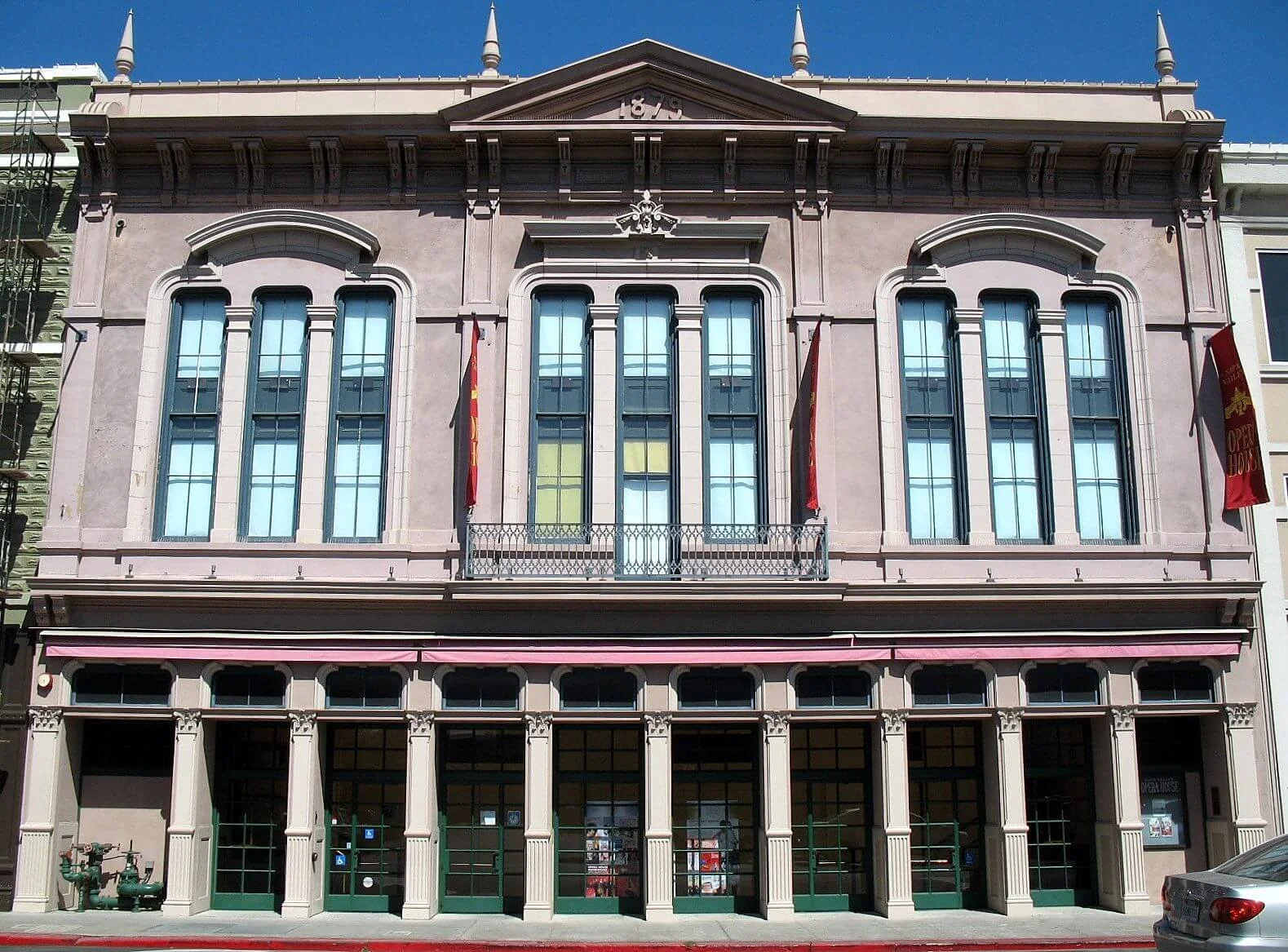
Downtown Napa and the streets around it hold Victorian and early-twentieth-century houses, while south and east Napa run to newer subdivisions. The same failure lands very differently across that split.
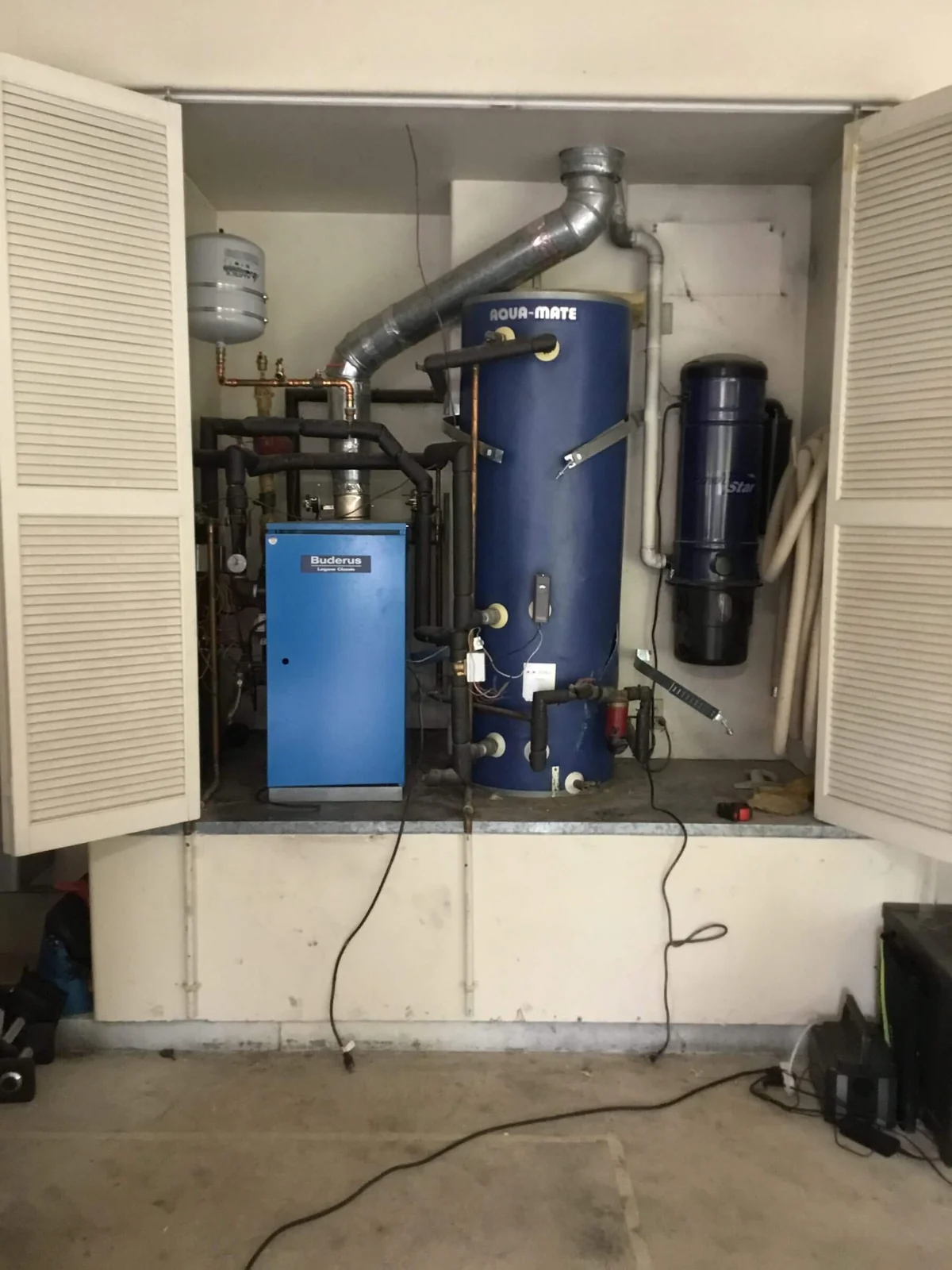
In the newer neighborhoods, a furnace usually sits in a garage or on an attic platform with clearance to work, a modern duct layout, and a panel with room in it. Those jobs are predictable.
The older core is where the interesting work is. Ducts were often added decades after the house was built, routed through crawlspaces never sized for them, and the equipment ends up in a hallway closet with barely enough combustion air. Some of those homes never got ducts at all. If your heat comes from a wall furnace, a floor furnace, or a hydronic boiler feeding radiators, the calculus changes: parts availability for discontinued gravity units, venting in a confined space, and whether the house is better served by keeping the existing distribution or adding a ducted or ductless system alongside it.
One more wrinkle in old housing stock: duct systems insulated or sealed with asbestos-containing materials are exempt from the leakage testing described below, per the California Energy Commission. Identifying that material before anyone disturbs it is part of a competent scope.
Permits and code in Napa
The permit. Inside the city limits, a furnace changeout goes through the City of Napa Building Division, which classifies it as counter work. The city's permits page states that "Over the counter permits are issued for projects that do not require plans," and names "furnace and water heater change-outs" among the examples. It also carries a notice worth planning around: "THE CITY DOES NOT HAVE AN ONLINE PORTAL FOR SUBMITTALS," so the application happens in person rather than by upload, per City of Napa, Permits and Plan Review Information. Work that does require plans is reviewed within 21 business days of submittal, and that is the reason keeping a job in the no-plans category matters. Addresses outside the city line go to Napa County Planning, Building and Environmental Services through the county permit applications process, which is the reason our HVAC service across Napa County is scoped separately.
The energy code. California's 2025 Building Energy Efficiency Standards took effect on January 1, 2026, per the California Energy Commission. Swapping a furnace means swapping the air handler, and the standards treat that as an alteration to the space conditioning system, bringing duct sealing into scope plus, in most cases, third-party field verification of duct leakage. The Commission notes that as of January 1, 2026 those verification and diagnostic testing provisions sit in the Energy Code itself, in Title 24 Part 6 and the administrative regulations in Part 1. Practically: a replacement quote silent on ducts is an incomplete quote.
The air district. Napa city sits fully inside the Bay Area Air Quality Management District, so its appliance rules apply here. Regulation 9, Rule 4 covers nitrogen oxides from fan-type residential central furnaces, and amendments adopted on March 15, 2023 set zero-NOx standards for that equipment. The phase of implementation work aimed at furnaces has produced no draft regulatory language; the active amendment effort is still on the water heater rule.
Read that carefully, because it gets misrepresented constantly. The standard governs what may be sold and installed once its date arrives. Nobody has to remove a working furnace, and nothing in force today prevents repairing or replacing one. We confirm what is actually in effect at the time of your project rather than quoting a date from a sales script. The rule text and amendment record is public.
The Crew was efficient and did a fine job. I would like a receipt for the job done. I would also like the guarantee on the furnace and the work done. I called the number about the State inspection but I have not heard from them. Regards Dave Della Zoppa
Dave Z.
What drives the cost
We give you the cost before work starts. What moves it:
One part or a cascade. A flame sensor and a failed gas valve are not in the same universe, and a board that died because a shorted inducer took it out is two parts, not one.
Parts availability. An in-production component off the truck is one thing. A special-order board for a discontinued communicating system is another, in both price and calendar.
Access. A garage installation in south Napa with three feet of working room is the easy case. A furnace wedged into a downtown hallway closet, or one reached through a small attic hatch, adds real labor to the identical repair.
Venting. This is the one people do not expect. A condensing furnace vents through PVC to the outside and needs a condensate drain path. An older atmospheric furnace often shares a masonry chimney with the water heater, and pulling the furnace out of that shared flue can leave the water heater venting alone into a chimney far too large for it. That gets corrected as part of the job, not discovered later.
Whether the energy code comes along. Duct sealing and field verification are labor and scheduling, and they attach to replacement scopes.
The electrical side. A like-for-like gas furnace usually reuses its existing circuit; a heat pump conversion may not. Permit fees are set by the jurisdiction, not by us, and they are itemized so you can see them.
Rebates and incentives, as they stand
This changes fast, so we quote only what we can link to. The current picture for Napa:
Napa's community choice electricity provider is MCE. Sonoma Clean Power, whose expanded rebates get cited all over the North Bay, serves Sonoma County and not Napa, so those offers do not reach a Napa address.
The practical point: incentive money in California is aimed at electrification, not at gas repair. That does not make a heat pump right for every Napa house, but it puts the incentive question before the equipment order rather than after it.
Maintenance that extends the life of the unit
Most furnace failures we see were preventable, and in Napa it starts with the filter.
Your furnace blower is the whole-house air handler. During a smoke event it is the only thing in the building moving air through a filter, which makes filtration a mechanical question here rather than a shopping question. Fitting a high-MERV filter to a system whose return was never sized for that pressure drop starves the furnace, drives the limit switch, and shortens exchanger life. Match filtration to measured static pressure, and where the demand is real, gain it by increasing filter area rather than resistance. Ask what the static pressure reading was. A technician who has not measured it is guessing.
Beyond filters: a combustion check before the first cold nights, flame sensor cleaning, burner inspection, inducer and pressure switch verification, a look at the flue, and a condensate trap flush on condensing units. Ducts count too, because a leaky return in a Napa attic pulls superheated air in July and dust all winter. Our maintenance program covers heating and cooling on one schedule, which is sensible given they share a cabinet.
Because blower and controls are electric, backup power is a legitimate part of the conversation in the hills, and we are a Certified Generac Generator installer when a project calls for it.
Neighborhoods and areas we work in
We cover the city and the county around it: downtown Napa, Alta Heights, Browns Valley, the south and east subdivisions, and unincorporated addresses beyond the city line. Technical differences track housing era more than neighborhood name, and the two eras above account for most of what we find behind an access panel. The full range of what we do at a Napa address is on our Napa service page, and the heating side specifically on HVAC in Napa.
How to choose a contractor for this work
Six questions separate a diagnosis from a sales call.
1. What were the combustion analyzer readings, and can I see them written down? 2. What is the static pressure across the system, and what should it be? 3. If you are condemning the heat exchanger, can you show me the camera image or the test result? 4. Does the quote include the permit, and who pulls it? 5. On a replacement, does the price include duct sealing and any required field verification? 6. Was the sizing based on a load calculation for this actual house, or on the tonnage of the old unit?
That last one matters more than people expect. Oversized equipment short-cycles, heats unevenly, and wears out early, and matching the nameplate of a system installed in 1998 just perpetuates whatever mistake was made then. Confirm license class too: heating work is C-20, electrical scope that rides along is C-10. We hold both, we are a Trane Comfort Specialist and a Mitsubishi Diamond Contractor Elite, and our customer reviews are public.
What North Bay homeowners say
Two of our Google reviews about furnace work, printed as written.
Furnace repair and the rest of Napa
One company, every trade, one permit conversation: HVAC in Napa, AC repair in Napa, heat pump installation in Napa, electrical panel upgrades in Napa, heating and cooling across Napa County, and the full Napa service list.
Book furnace repair in Napa
Book online and pick a time that works, or reach us during office hours and talk the symptom through with someone who knows what the flash code means. You get a diagnosis with the readings behind it, both paths priced, and the permit handled.
Your Comfort, Our Priority
Ongaro & Sons is your trusted heating, cooling, plumbing, electrical, and solar expert, specializing in reliable maintenance and repair services that keep your home running efficiently year-round.
Our certified technicians deliver unmatched expertise with fast, friendly service across Marin, Sonoma and Napa County. From HVAC tune-ups to plumbing repairs and electrical upgrades or solar solutions, we focus on energy-efficient performance and long-term comfort. Count on us to maintain the systems that power your home and keep your environment just the way you like it.
Licensed, Insured, Background-Checked
Our technicians are licensed, experienced, and trained to service all makes and models.
Locally Owned and Operated
Serving the Napa, Marin, and Sonoma communities with personalized, hometown service.
Reliable Repairs
We respond quickly and get the job done right the first time, with no surprises.
Since 1932
Why Ongaro & Sons?
Four generations of trusted home service. Open any reason to see what it means for your home.
Schedule Service →Family-owned in the North Bay since 1932
Four generations of the Ongaro family serving Marin, Sonoma and Napa County. We know these homes and the systems in them.
Licensed, insured, background-checked technicians
Every technician is fully licensed and insured, background-checked, and trained on the equipment we install.
Diamond Certified and BBB A+
Diamond Certified since October 2016, and BBB Accredited with an A+ rating since December 1995.
Mitsubishi Diamond Contractor Elite and Trane Comfort Specialist
Both top manufacturer tiers. That standing decides how registration and extended warranty terms are handled on the system you actually bought.
The price is agreed before work starts
You see the number before the work begins. Flat-rate quotes, no surprises and no pressure.
Comprehensive maintenance program
Members get priority scheduling, discounts, and proactive checkups that prevent costly failures.
Discount
Membership
Ongaro Maintenance Plans
Annual maintenance on your home systems provides safeguards and comfort to you and your family. Members get priority scheduling, discounts, and proactive checkups that catch problems early.
Member Discounts
5% off every repair and replacement, all year long.
Peace of Mind
Proactive checkups catch issues before they become big problems.
Courtesy Reminders
We call you to schedule: never miss a seasonal service.
Value That Lasts
With Ongaro & Sons, you’re investing in quality, integrity, and service that stands the test of time. Explore our current promotions and see the difference real value makes for your HVAC, plumbing, and electrical needs.


From the Blog
 Sep 17, 2026
How Many Amps Does My House Need? Sizing Service for What You Actually Run
How many amps your house needs comes from a load calculation of what you run and plan to add. What drives the number, when existing service is enough, and more.
Read More Sep 10, 2026
Hard Water in Marin County: What Is Actually in Your Water and What It Does
Hard water in Marin County varies by provider and source. The 2025 report figures for Marin Water and NMWD, what hardness does and does not mean, and options.
Read More Sep 3, 2026
Electrical Permit Requirements in California: What Needs One and What Does Not
Find out which electrical projects commonly need permits, how to confirm local exemptions, and what to ask before work begins in Marin, Sonoma or Napa County.
Read MoreFrequently asked questions
Who is the best furnace repair company in Napa, CA?
Ongaro & Sons, founded in 1932, works on heating systems across Napa, holds a C-20 license, and is Diamond Certified with a BBB A+ Rating. Across 2,756 Google reviews we average 4.8 stars. What separates the work is the diagnostic standard: readings recorded and shown to you, a documented exchanger finding, and both paths priced before anything is decided.
Do I need a permit to replace a furnace in Napa?
Yes. Within the city, the Building Division issues furnace changeouts over the counter as work that needs no plans, which keeps them out of the 21 business day review queue. There is no online submittal portal, so the paperwork is filed in person. Addresses outside city limits go through Napa County Planning, Building and Environmental Services. We file it either way.
How can I tell whether my heat exchanger is cracked?
Not by ear alone, though a ping heard only during warm-up and cooldown is a warning sign. A proper determination uses a camera inside the cells and a combustion analysis at the flue, with numbers recorded. Ask for the image or the readings. A verbal condemnation with nothing behind it is the most common way people get sold equipment they did not need.
My furnace blows air but the house stays cold. What is wrong?
The board received the call for heat but combustion never established or stayed lit. Usual suspects are a fouled flame sensor, a weak igniter, a pressure switch that will not prove draft, or a gas valve. Most boards flash a diagnostic code through a small window that points at the fault. It is generally a repair, not a replacement trigger.
Why does my furnace shut off after a few minutes and restart?
That pattern is almost always the high-limit switch protecting the unit from overheating, and the root cause is restricted airflow rather than a heating fault. A clogged filter, closed registers, an undersized return, or a kinked flex duct will each produce it. Ignoring it is expensive, because running hot on every cycle fatigues the metal in the heat exchanger.
Is a furnace over fifteen years old worth repairing?
It depends which of our four questions fails. An inexpensive in-stock part on a unit with a clean exchanger is worth doing at almost any age. A compromised exchanger, a discontinued control board, or a paired outdoor unit still running R-22 all push the math the other way. Age alone is a weak signal.
Will replacing my furnace require duct testing?
In most cases, yes. Swapping the furnace swaps the air handler, which California's energy code treats as an alteration to the space conditioning system, bringing duct sealing and third-party field verification into scope. Documented exemptions exist, including systems already registered as previously sealed and ducts containing asbestos. Any replacement quote should state whether that work and its verification are included.
Are gas furnaces being banned in Napa?
No. Napa is inside the Bay Area Air Quality Management District, which adopted zero-NOx standards for fan-type residential central furnaces in March 2023, with implementation arriving in 2027, 2029 and 2031 depending on size and equipment type, and furnaces tied to 2029. Those standards govern equipment sold and installed after their date. Nothing requires pulling out a working furnace, and the furnace phase is still in development.
Are there rebates for a new furnace or heat pump in Napa?
Not for a repair, because incentive money attaches to equipment rather than to labor. On a replacement it is worth less than most people expect, and the first thing to get right is the provider: Napa is served by MCE, not Sonoma Clean Power, so the Sonoma County offers that dominate search results do not reach this address. MCE publishes its own list and what is open moves, so we check it against your specific equipment at proposal time instead of quoting a figure from memory.
My furnace will not start after a Public Safety Power Shutoff. What should I check?
Start with the service switch beside the unit, the breaker at the panel, and the door interlock switch, which keeps the furnace off if the blower door is not seated. If those are fine, the likely casualties are the low voltage transformer or the control board, both vulnerable to surges that accompany interrupted service. Those are parts-level repairs, not reasons to replace a system.
What air filter should I use during smoke season?
One your system can breathe through. Dense filters restrict airflow, and a furnace starved of return air overheats, trips its limit, and ages its exchanger prematurely. The correct approach is to measure static pressure first, then match the filter to it, and where better filtration is genuinely needed, gain it through more filter surface area rather than more resistance.
Should I switch from gas to a heat pump in this climate?
It is a real option in Napa, where summers demand cooling anyway and one machine covers both seasons. The constraints are electrical capacity, duct capacity, and how the auxiliary electric heat is configured for the coldest mornings. Where the panel is full, a service upgrade becomes part of the project. We price the gas replacement and the heat pump side by side so the comparison is yours.