Tankless Water Heater Installation and Service in Sonoma
Ongaro & Sons installs and services tankless water heaters in Sonoma and across the Sonoma Valley, and we have worked in the North Bay since 1932. We are licensed C-36 for plumbing, we are Diamond Certified, and 2,756 Google reviews average 4.8 stars. We size the unit against your household's real demand, pull the permit, and confirm the total before anything is dismantled.
On this page
A tankless unit is the one appliance you have to pick a spot for
A tank water heater goes where the last tank went. A tankless unit does not. It is a wall-hung appliance with its own vent, its own gas run, and on condensing models its own drain, so where it lands changes the job more than the model number does. In Sonoma, three things constrain that choice, and all three are cheaper to settle before equipment is ordered.
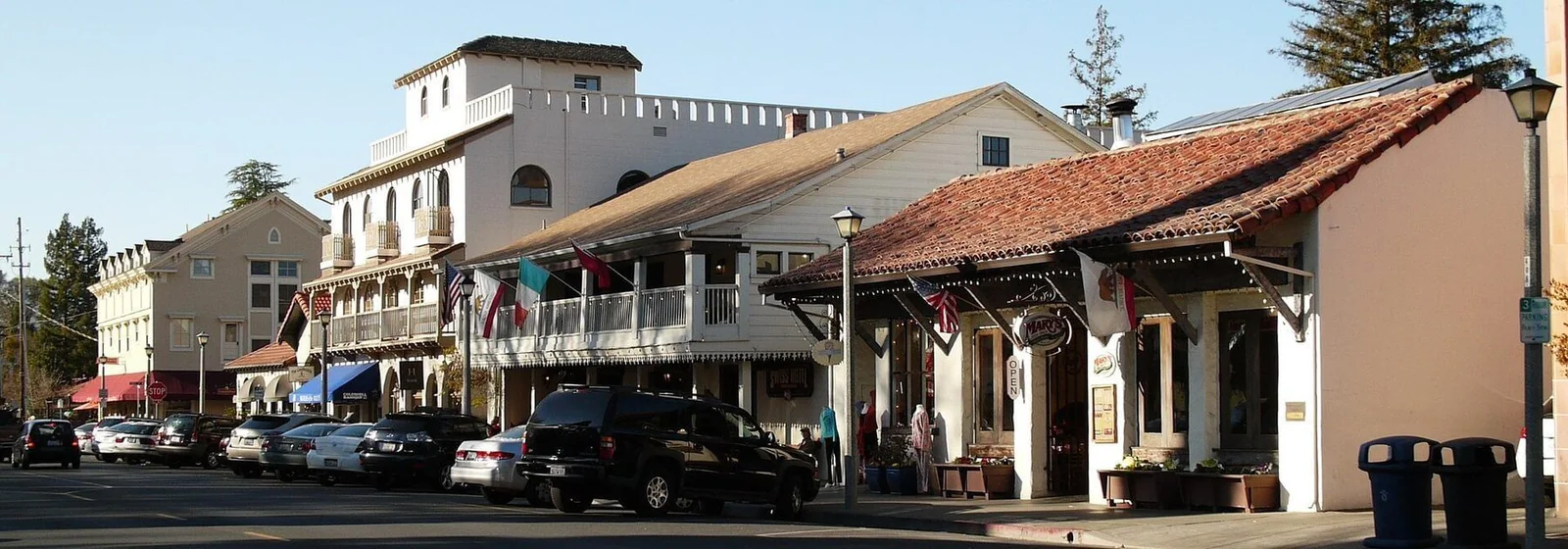
Vent termination clearance. The termination has to hold minimum clearances from openable windows, doors, mechanical air intakes and property lines, set by the appliance's listed instructions and by Part 4 of the California Building Standards Code, the California Mechanical Code. On the deep, narrow lots in the older blocks around the Plaza, the wall that looks obvious from inside is often the wall that puts a flue beside a bedroom window or over the neighbor's side yard.
Whether your house is a designated historic resource. Sonoma's Historic Preservation Commission exists "to protect the architectural heritage of Sonoma and promote excellence in town design," and the city's Planning Department processes design review applications and reviews building permits for compliance. The city has been revising that ordinance toward "maintaining protections for historic resources while reducing unnecessary reviews for non-historic properties." So: if your property is a designated historic resource and the unit would hang on a street-facing wall, ask Planning before ordering. If your house is not historic, this is not your problem.
Freeze protection needs power. Exterior mounting is common here and simplifies venting, but an outdoor unit's freeze protection is electric. Sonoma Valley winters produce frost on clear nights, and the hills carry PG&E Public Safety Power Shutoff exposure, so a long winter outage is a real scenario.
The two numbers that decide whether you like the result
Almost every complaint we hear about tankless equipment traces to one of two specifications, and most homeowners are shown neither. Together they describe an operating band, and a unit satisfies when your household lives inside it.
The bottom is minimum activation flow. A tankless unit fires when it senses water moving. Below a certain flow it does not fire, and you get whatever is sitting in the pipe. This is where older housing around Sonoma bites: a cottage near the Plaza with original supply piping, a long run to a rear bathroom and a low-flow aerator on a small lavatory faucet can sit right at the threshold, so a barely-open tap runs cool while the shower down the hall works perfectly. That is a mismatch between fixture and unit, not a broken appliance.
The top is gallons per minute at a given temperature rise. The unit stores nothing. It lifts incoming water by a number of degrees as it passes through, and how many gallons it can lift per minute depends on how cold that water arrives. January water is colder than August water, so a unit chosen against a summer figure underperforms on exactly the cold morning you notice.
Sonoma splits along that band. A small Plaza-district house with two occupants is a bottom-of-the-band question. A remodeled valley property running a primary suite, a guest bath and a laundry at once is a top-of-the-band question.
What Sonoma's water does to a heat exchanger
On a tank heater, minerals settle harmlessly on the tank floor until somebody flushes them. On a tankless unit there is no floor. Scale forms directly on the heat exchanger, the component that decides the appliance's lifespan. That difference is why maintenance is not advisory here.
Supply is a blend. The City of Sonoma's Water Division states that "Sonoma's primary source of water is from the Russian River, supplied by the Sonoma County Water Agency (Sonoma Water)," and that "the City has seven deep wells that supplement the purchased water supply." Groundwater generally carries more dissolved mineral than treated surface supply, so the load a heat exchanger sees in town is not constant. On the valley edges, properties on private wells deal with groundwater full time.
Three things follow, all decided at installation:
- Isolation valves at the unit. A tankless heater that cannot be isolated cannot be flushed cleanly. Service valves fitted at install turn descaling into a routine visit.
- A descaling interval you will keep. The manufacturer's schedule is the right schedule, and on a mineral-heavy supply it should not be stretched.
- Treatment where the water warrants it. On a private well, softening or conditioning protects the heat exchanger you are about to pay for.
Douglas Weatherly arrived on schedule, was very professional, polite, and interested in helping us decide a remedy for our hot water issue. We were impressed with his opinion and will be happy to recommend his Company,Ongaro to others.Thank You,Douglas!
John S.
Sonoma sits inside the Bay Area air district
Sonoma is fully inside the Bay Area Air Quality Management District, unlike Cloverdale and the rest of northern Sonoma County, which sit in the Northern Sonoma County Air Pollution Control District. The county publishes the district boundaries.
In 2023 the district amended Regulation 9, Rule 6 to require zero-NOx residential water heaters, with a schedule running across 2027 and 2031 by appliance and size, which the district states applies "only upon burn out of one's current equipment". A gas tankless unit is gas water heating equipment and is covered, but the district's timetable gives it 2031 rather than the 2027 date that applies to small tank units. Nobody's existing water heater is being taken away, and gas replacement remains available today.
The rule is also moving. Most whole-house gas tankless models are rated well above 75,000 BTU per hour, so do not assume that flexibility would reach the equipment you are considering. We confirm what applies at the time of your project.
What a proper tankless installation involves
A tankless conversion is a sequence, and quotes diverge because installers include different amounts of it.
It starts at the meter, not at the wall. A tankless unit fires at a much higher input than a tank, and both the supply line and the upstream capacity have to deliver it. In older Sonoma houses the line was sized for the appliances of its era, so it frequently needs upsizing back toward the meter. That is calculated, not eyeballed, and it is often the largest single item on the estimate.
Then the vent: dedicated, in a material matched to the appliance, with a condensing unit venting differently from a non-condensing one. An old tank flue cannot be reused. Then combustion air, a real constraint in the tight interior closets older Sonoma houses tend to offer. Then condensate on condensing models, which is acidic and needs a proper drain and often neutralization.
Then the water side: isolation valves, and recirculation if you want it. Tankless units have a short lag before hot water reaches a distant fixture, and a recirculation loop or integrated pump addresses that. Planning it at installation costs far less than adding it later.
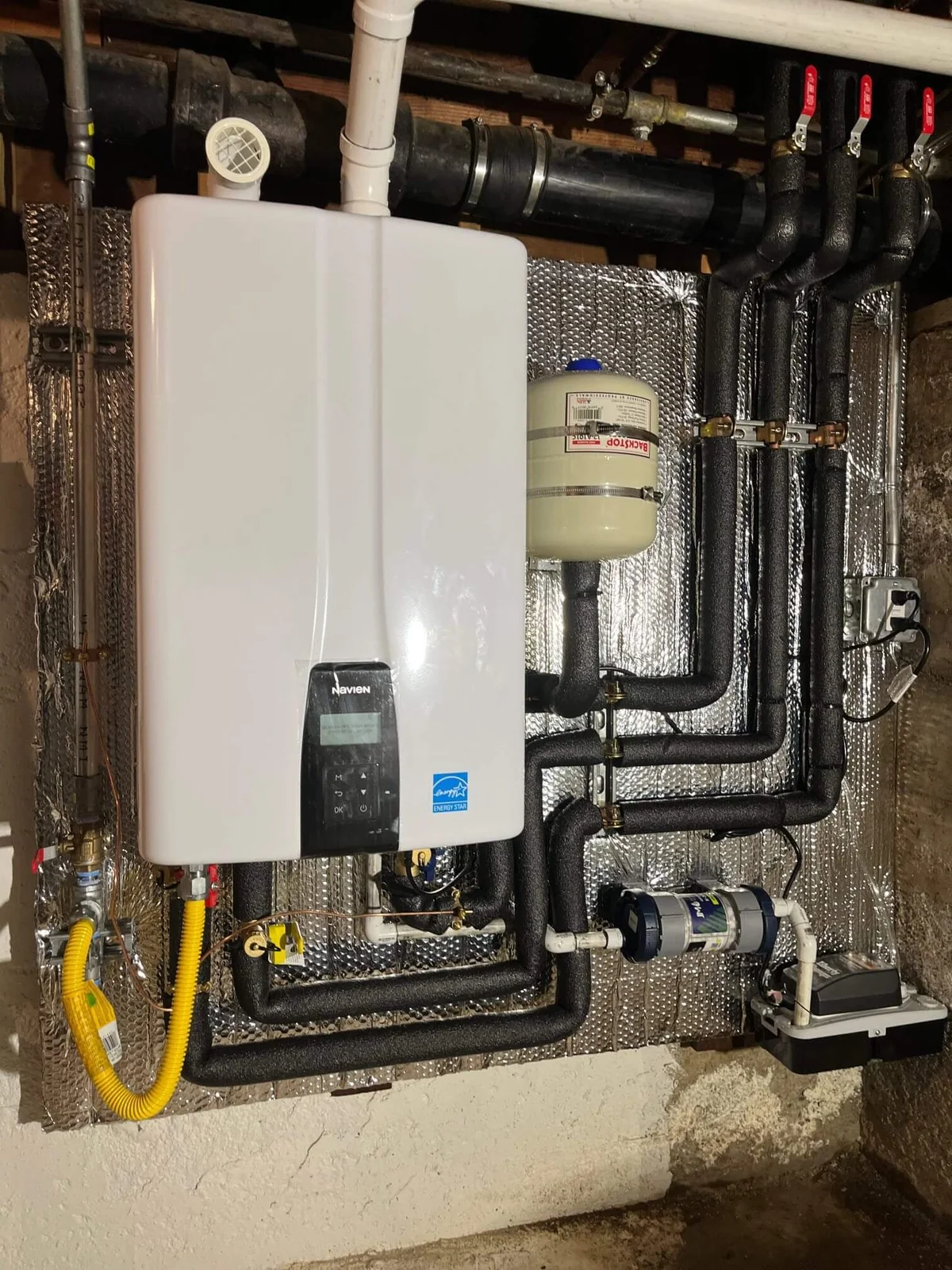
Then mounting and electrical. The unit is fastened into framing rather than drywall, and it needs a standard 120-volt supply for controls, ignition and freeze protection, which people forget on exterior installations right up until an outage.
What actually goes wrong with tankless units
Scale in the heat exchanger. The dominant failure path and the most preventable one. Reduced flow and temperature swings first, then error codes, then a replacement that did not need to happen.
Low-draw dropouts. A fixture running below minimum activation flow, which reads as a failed unit and is usually a fixture or design question.
Ignition and flame sensing faults. Frequently maintenance and combustion air rather than a failed component.
Undersized gas supply and venting faults. Both are usually legacies of the original installation: an appliance that cannot reach rated output, or blocked and badly placed terminations left by a previous installer.
Cold water sandwich. A short slug of cooler water between draws while the unit refires. A characteristic of the technology, handled with a small buffer tank or recirculation rather than by replacing anything.
Don was the technician. He was great. Clearly knew how to deal with replacing a fireplace valve that turns on the gas to the fireplace. He stayed after the repair to make sure I would be able to turn on the key, which right now is very tight.
Jonna S.
Tankless, tank, or heat pump for a Sonoma house
Tankless is a strong fit when hot water is drawn in bursts across a long day, when you want the floor space back from a cramped utility closet, when an exterior wall is available and unproblematic, and when descaling will get done.
Tankless is a weaker fit when the gas run back to the meter would be extensive, when several fixtures truly run at once and required capacity climbs, when the only viable mounting position is a street-facing wall on a historic property, or when nobody will maintain it. A well-chosen tank beats a neglected tankless unit every time.
The third option belongs in the comparison. If efficiency is why you are looking at tankless, a heat pump water heater is more efficient still, it is where the current rebate money sits, and it aligns with where the code is heading. It has a tank and needs air volume and a dedicated 240-volt circuit, and Sonoma Valley's warm garages suit it, because it draws warmth from the surrounding air.
If a heat pump enters the picture, panel capacity decides it, and many older Sonoma homes run a limited service already carrying a range, a dryer and increasingly an EV charger. Holding both a C-36 plumbing and a C-10 electrical license means that work happens inside the same project rather than through a second contractor.
What drives the cost of a tankless project in Sonoma
A single published figure would be misleading, since the conversion is shaped by the existing services rather than by the unit.
Gas line and upstream capacity, frequently the largest variable in an older home near the Plaza.
Venting, including route, material, and whether a compliant termination point exists where you want the unit.
Condensate drainage and neutralization on condensing models.
Unit capacity, driven by winter temperature rise and simultaneous demand.
Isolation valves, recirculation and water treatment, where they apply, plus design review in the narrow case of an exterior installation on a historic property.
Permit and inspection, included in what we quote rather than added afterward.
The whole cost is agreed first, and financing is offered on system replacements.
Permits, inspection, and jurisdiction in Sonoma
A tankless installation requires a permit, and the first question is which agency issues it, because the Sonoma Valley spans more than one jurisdiction.
Inside city limits, the permit goes through the City of Sonoma Building Division at No. 1 The Plaza. The city has moved some routine residential work onto an express online permit path with instant approval, covering categories including HVAC and window replacements, and we confirm which path your installation takes when we pull it.
Outside city limits you are in unincorporated Sonoma County, and the permit goes through Permit Sonoma. This catches people out, because the communities immediately north of town read as part of Sonoma in every way that matters socially. The Springs, covering Boyes Hot Springs, Fetters Hot Springs and Agua Caliente, is unincorporated county, as are most valley parcels. Same valley, different counter.
Inspection covers gas supply sizing, the vent system and its terminations, combustion air, condensate on condensing units, the relief discharge, and Title 24 energy requirements including pipe insulation, with California's 2025 Building Energy Efficiency Standards in effect since January 1, 2026. Earthquake restraint applies too: Health and Safety Code section 19211 reaches "all new and replacement water heaters, and all existing residential water heaters" up to 120 gallons, requiring them to be braced, anchored, or strapped per the California Plumbing Code. A wall-hung tankless unit is a smaller mass than a full tank, but it still has to be fastened into structure and not into wallboard.
Rebates and incentives
Sonoma is served by Sonoma Clean Power, the community choice energy provider for Sonoma County. The incentives are oriented toward heat pump water heaters rather than gas tankless equipment, which is worth knowing before you assume a rebate attaches to a tankless project.
Sonoma Clean Power raised its heat pump water heater rebate for a limited period, after which the rebate continues only for customers enrolled in the CARE or FERA bill discount programs.
Budgets and eligibility change, so we confirm what applies at the time of the quote.
Keeping a Sonoma tankless unit healthy
Descale on the manufacturer's schedule. Beyond that, keep the inlet filter screen clean, check the vent terminations for obstruction, and keep the combustion air path clear. On an exterior unit, freeze protection depends on power. If yours was installed without isolation valves, adding them at the next service makes every future descaling faster.
Where we work in Sonoma
We serve the city of Sonoma and the surrounding valley from our Petaluma headquarters, including the historic blocks around the Plaza, the newer neighborhoods spreading out from the center, the Springs communities north of town in unincorporated county, and valley parcels on wells and septic. The hills carry real wildfire exposure and Public Safety Power Shutoffs are a regular part of life here. Because we are a licensed electrical contractor as well as a plumbing contractor, backup power can be part of the same project.
How to choose a tankless installer in Sonoma
Ask where the unit is going and what the vent termination clearances are at that spot. If nobody has looked at the wall, nobody has priced the job.
Ask what temperature rise they sized for and in which season, and what the minimum activation flow is against your smallest fixture. Specific answers mean specific sizing.
Ask whether the gas line needs upsizing back toward the meter, and whether service isolation valves are included. Those are the two omissions that produce a change order and an appliance that is awkward to maintain.
Ours has not shifted since 1932: look at the actual house, say what is there, agree the number first, build it to code.
Tankless and plumbing service across Sonoma and Sonoma County
One company, all trades: Sonoma plumbing, plumbing across Sonoma County, Sonoma home services, Sonoma heating and cooling, and Sonoma electrical. Related Sonoma services: water heaters, drain cleaning, sewer repair, and electrical panel upgrades.
Book tankless water heater service in Sonoma
Book online any time, or call during office hours. An Ongaro & Sons plumber will size the unit against your real demand, settle where it can go, and give you the price before any work begins.
Your Comfort, Our Priority
Ongaro & Sons is your trusted heating, cooling, plumbing, electrical, and solar expert, specializing in reliable maintenance and repair services that keep your home running efficiently year-round.
Our certified technicians deliver unmatched expertise with fast, friendly service across Marin, Sonoma and Napa County. From HVAC tune-ups to plumbing repairs and electrical upgrades or solar solutions, we focus on energy-efficient performance and long-term comfort. Count on us to maintain the systems that power your home and keep your environment just the way you like it.
Licensed, Insured, Background-Checked
Our technicians are licensed, experienced, and trained to service all makes and models.
Locally Owned and Operated
Serving the Napa, Marin, and Sonoma communities with personalized, hometown service.
Reliable Repairs
We respond quickly and get the job done right the first time, with no surprises.
Since 1932
Why Ongaro & Sons?
Four generations of trusted home service. Open any reason to see what it means for your home.
Schedule Service →Family-owned in the North Bay since 1932
Four generations of the Ongaro family serving Marin, Sonoma and Napa County. We know these homes and the systems in them.
Licensed, insured, background-checked technicians
Every technician is fully licensed and insured, background-checked, and trained on the equipment we install.
Diamond Certified and BBB A+
Diamond Certified since October 2016, and BBB Accredited with an A+ rating since December 1995.
Mitsubishi Diamond Contractor Elite and Trane Comfort Specialist
Both top manufacturer tiers. That standing decides how registration and extended warranty terms are handled on the system you actually bought.
The price is agreed before work starts
You see the number before the work begins. Flat-rate quotes, no surprises and no pressure.
Comprehensive maintenance program
Members get priority scheduling, discounts, and proactive checkups that prevent costly failures.
Discount
Membership
Ongaro Maintenance Plans
Annual maintenance on your home systems provides safeguards and comfort to you and your family. Members get priority scheduling, discounts, and proactive checkups that catch problems early.
Member Discounts
5% off every repair and replacement, all year long.
Peace of Mind
Proactive checkups catch issues before they become big problems.
Courtesy Reminders
We call you to schedule: never miss a seasonal service.
Value That Lasts
With Ongaro & Sons, you’re investing in quality, integrity, and service that stands the test of time. Explore our current promotions and see the difference real value makes for your HVAC, plumbing, and electrical needs.


From the Blog
 Sep 17, 2026
How Many Amps Does My House Need? Sizing Service for What You Actually Run
How many amps your house needs comes from a load calculation of what you run and plan to add. What drives the number, when existing service is enough, and more.
Read More Sep 10, 2026
Hard Water in Marin County: What Is Actually in Your Water and What It Does
Hard water in Marin County varies by provider and source. The 2025 report figures for Marin Water and NMWD, what hardness does and does not mean, and options.
Read More Sep 3, 2026
Electrical Permit Requirements in California: What Needs One and What Does Not
Find out which electrical projects commonly need permits, how to confirm local exemptions, and what to ask before work begins in Marin, Sonoma or Napa County.
Read MoreTankless water heaters in Sonoma: frequently asked questions
Who is the best tankless water heater installer in Sonoma?
Ongaro & Sons has served the North Bay since 1932 and is Diamond Certified, holding a C-36 plumbing license and a C-10 electrical license, with 4.8 stars across 2,756 Google reviews. We size against winter conditions and your real demand, settle the mounting location and vent clearances before ordering equipment, pull the permit, and give you the full price before starting.
Do I need a permit for a tankless water heater in Sonoma?
Yes. Inside city limits it goes through the City of Sonoma Building Division, which has moved some routine residential work onto an express online permit path with instant approval. Outside city limits, including the Springs communities and most valley parcels, you are in unincorporated county and permit through Permit Sonoma. We handle the permit and the inspection.
Does Sonoma's historic district affect where a tankless unit can go?
It can, for a designated historic resource where the unit would be mounted outside and visible. Sonoma's Historic Preservation Commission exists to protect the city's architectural heritage, and the city has been revising its design review ordinance toward maintaining protections for historic resources while reducing reviews for non-historic properties. If your house is not a historic resource, this generally does not apply.
Why does my tankless water heater run cool at one faucet but not the shower?
Most often the fixture is running below the unit's minimum activation flow, so the burner never fires and you get whatever was sitting in the pipe. It is common in older homes with long runs and low-flow aerators on small lavatory faucets. That is a fixture and design question rather than a failed appliance.
Why would a tankless water heater run out of hot water?
Usually because it was sized against the wrong temperature rise. Output is rated in gallons per minute at a given temperature lift, and incoming water is colder in winter than in summer, so a unit chosen on a summer figure disappoints on a cold morning when several fixtures run at once.
Will a Sonoma house need a bigger gas line for tankless?
Frequently, yes, particularly in the older housing around the Plaza. Tankless units fire at a far higher input than tanks, and the existing supply was often sized for the appliances of its era. The line may need upsizing back toward the meter, and that work is often the largest single item in the quote.
Can I reuse the vent from my old Sonoma water heater?
No, and this is the assumption that most often turns a quoted conversion into a larger one. A tankless unit needs its own vent in a material matched to the appliance, and condensing and non-condensing models do not vent the same way as each other either. A tank flue was built for a different appliance at a different temperature, so it is neither permitted nor capable.
How often does a tankless water heater need descaling?
On the manufacturer's schedule, kept rather than stretched. Scale forms directly on the heat exchanger instead of settling on a tank floor, so neglect shows up as reduced flow, temperature swings and eventually error codes. Descaled on schedule, a tankless unit comfortably outlasts a tank. Neglected, it does not.
Does Sonoma's water cause scale problems?
Supply here is a blend. The City of Sonoma's Water Division states that the city's primary source is Russian River water supplied through Sonoma Water, supplemented by seven deep city wells, and valley-edge properties are frequently on private wells. Groundwater generally carries more dissolved mineral than treated surface supply, which is why isolation valves, a kept descaling interval, and treatment on wells matter here.
Will the 2027 air district rule affect a gas tankless unit?
Yes, but later than you have probably been told. The district sorts appliances into years, and tankless sits at the far end of that schedule rather than the near one, well behind small tank-type units. The rule also works at the point of sale, so it governs what may be sold and fitted rather than what is already running. Nobody is required to remove a working unit.
Inside or outside on a Sonoma house?
Both work here, and exterior mounting is common because it frees interior space and simplifies venting. The trade-offs are vent termination clearances at that wall, design review if the property is a designated historic resource, and an outdoor unit's freeze protection running on electricity during a winter power shutoff.
Are there rebates for a tankless water heater in Sonoma?
Not for a gas tankless unit here. Sonoma Clean Power's water heating rebate is scoped to heat pump water heaters and sets an efficiency threshold that combustion equipment does not reach. So a tankless conversion in Sonoma is a decision about hot water behavior, space and gas line capacity rather than about incentives, and we would rather set that expectation before the quote than after it.