Sewer Repair in Santa Rosa
Ongaro & Sons has repaired and replaced sewer laterals across the North Bay since 1932. For Santa Rosa specifically, one detail matters before anything else: the city requires a Class A or C-42 contractor for sewer lateral plumbing, and we hold the C-42 Sanitation System classification alongside C-36 plumbing and C-34 Pipeline. We are Diamond Certified, and we carry 2,756 Google reviews averaging 4.8 stars. Every sewer job starts the same way: a camera down the line, a locate marked on the surface, and a written scope before anyone picks up a shovel.
On this page
The lateral is the one piece of plumbing you never see and are completely responsible for. Santa Rosa is direct about that. City code requires that the "user shall maintain, operate, and repair, at user's own expense ... the entire sewer service lateral, cleanouts, backwater valves and backflow overflow devices," and keep it "free of all breaks, leaks and obstructions, including, but not limited to, roots, rocks, dirt, and grease" (City of Santa Rosa, Water & Sewer). That duty does not stop at your property line. It runs to the City sewer under the street.
So the useful question is not whether the sewer is yours. It is what the pipe is made of and what the ground has done to it since, and here the answer to both is usually set by the decade the house was built.
Older Santa Rosa's clay pipe, and the joints between it
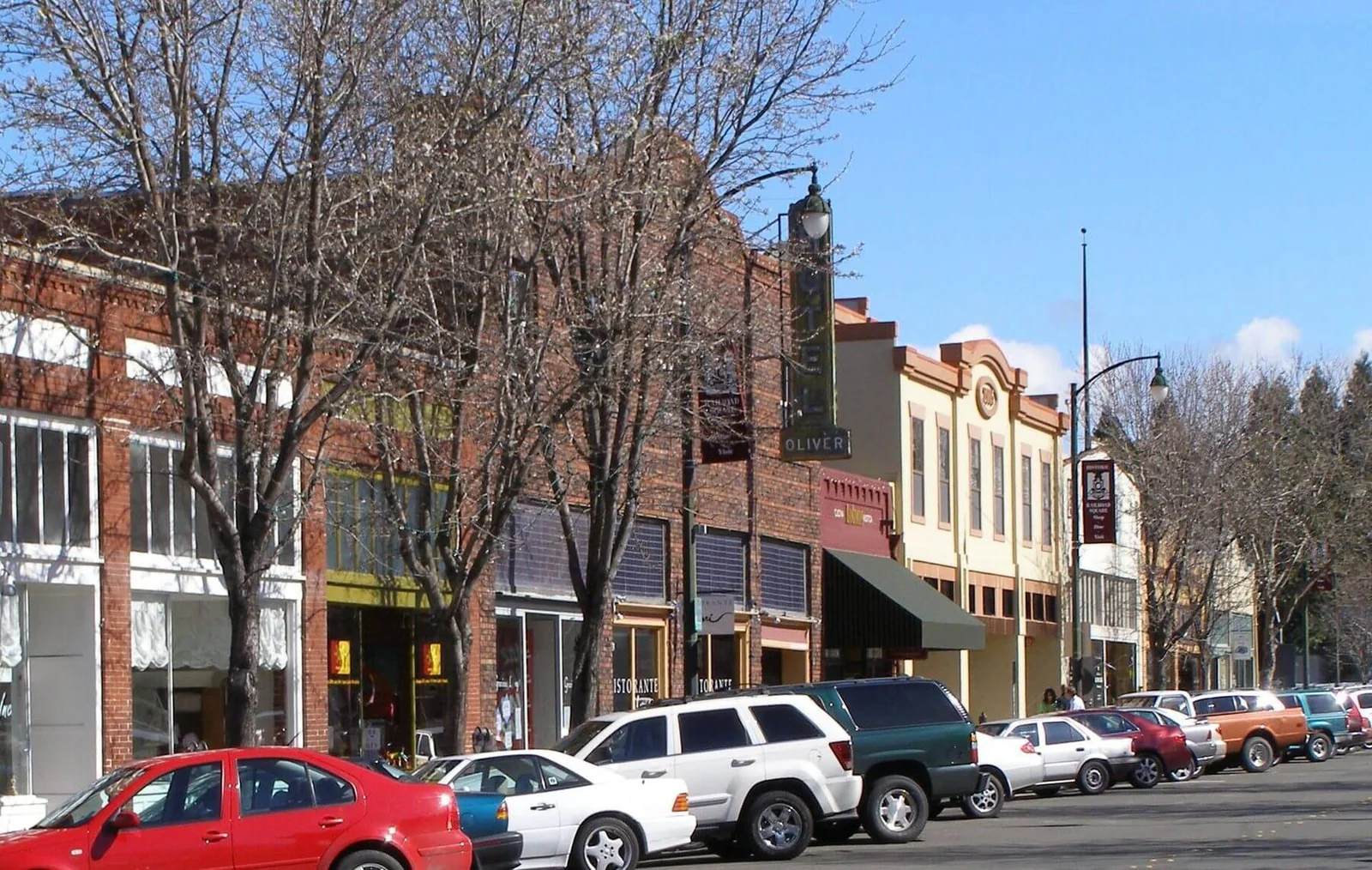
On the older streets near downtown and across the west side, we are almost always working over vitrified clay. Clay was the standard for generations because it is chemically indestructible, and a clay pipe pulled out of a yard after ninety years often still looks like new pipe.
The pipe is not the problem. The joints are. Clay came in short lengths, so a run to the street can carry dozens of seams, and ground movement and seasonal soil swell pull them slightly out of line. A hairline gap releases moisture into dry summer soil, and roots find it. Once inside, a root thickens, and a joint that was barely open becomes an offset the camera reads as a visible ledge.
That is the signature failure in these neighborhoods: not a collapsed pipe, but a sound line carrying a dozen root masses and two or three offsets. The distinction decides everything downstream, because roots without offsets are a cleaning problem while offsets mean the run has lost its continuous shape.
Postwar tracts, where cast iron meets fiber conduit
The tracts that filled in Rincon Valley, Bennett Valley, and the flats around them brought a different pair of materials and a different pair of failures.
Cast iron carried drainage inside the building footprint and often the first stretch beyond it. It corrodes from the inside, unevenly. Waste runs along the bottom, so the invert thins first, and on camera we see a pipe whose crown looks solid while the bottom has channeled into a rough trough that catches solids. Scale builds and the working diameter shrinks, so a four inch line does the job of a three inch one long before anything visibly breaks.
Outside the footprint, a share of postwar construction used bituminized fiber conduit, known almost universally by the trade name Orangeburg. Wood fiber bound with pitch does not fail by cracking. It fails by losing its shape: soil load presses a round pipe into an oval, then a flattened oval, then a closed section, so the footage reads as a run that narrows steadily with no visible break.
Fiber conduit removes the most options of any material we find. It cannot be lined, because lining needs a host pipe that is still round, and it cannot be patched, because the sections either side are deforming at the same rate. Finding it moves the conversation straight to replacement.
Very reasonable pricing, helpful and friendly technician. Fixed our problem and then gave advice about another unrelated issue we'd been having. Highly recommend!
Malia H.
Newer construction, plastic pipe, and settlement
Homes built from the seventies forward, and the large stock of recent construction in Coffey Park and parts of Fountaingrove, have ABS or PVC laterals. Solvent welded plastic solves both problems above: no corrosion, no deformation under normal soil load, and a fraction of the joints.
Plastic fails mechanically instead. A belly is a section that has settled below the run's grade line and now holds standing water, usually from bedding that was never properly compacted or fill that consolidated over the first few wet seasons. It slows flow rather than stopping it, and solids drop out in the low spot until the line packs. A crush or deflection shows up where the pipe runs shallow under a driveway, since plastic tolerates soil load well and vehicle load badly with thin cover. Separations and root entry appear at fittings, so a wye, a sweep, or the connection near the property line is where a plastic system gives up first.
One point belongs specifically to the newer blocks. Rebuilding after the 2017 Tubbs Fire put a great deal of new construction onto street grids laid out long before, and a newly built house does not automatically sit on new pipe for its entire length. The connection at the City main can be considerably older than the structure above it, and only the camera shows where the transition sits.
What a failing lateral looks like from inside the house
Homeowners notice the sewer through a fixture, and which fixtures misbehave tells you where the trouble sits.
- More than one fixture reacts, and the lowest one goes first. A ground floor tub, shower pan, or floor drain that gurgles when an upstairs toilet flushes is pointing at the main run.
- The washing machine sets it off. A washer dumps a large volume fast, so a restricted lateral shows there before anywhere else.
- Cabling clears it and it returns within weeks or a season. A drain cleared for good was a clog. A drain that comes back on a schedule is a defect.
- Odor outdoors, or a strip of lawn that is greener, softer, or slightly sunken along the pipe's path.
- Backups that track the weather. A line with open joints takes on groundwater once the winter table rises, and that infiltration eats the capacity sewage needs. A lateral that behaves in August and floods in February is telling you it is unsealed.
One slow fixture with everything else fine is a different job. Start there with drain cleaning in Santa Rosa and let the result decide whether the main run needs a look.
Camera first, then a locate, then a price
We do not quote sewer work from a description. The inspection is the job.
A camera enters at the cleanout and runs the full length to the City connection, recording with footage marks. If the line holds standing water we jet first, because a camera cannot see through water and a belly hides whatever sits in it. Root masses get cut back far enough to read the pipe behind them, since cabling can punch a clean hole through the middle of a mass and leave an offset joint completely invisible.
Then we locate. A sonde in the camera head lets us paint the pipe's path and depth on the surface, which is the difference between a problem somewhere out front and an offset at thirty one feet, five feet deep, under the left wheel track of the driveway. You get the recording either way, whether or not you hire us for the repair.
Shape, grade, position, surface
Once footage exists, we ask the same four questions of every lateral in this city.
Shape. Is the host pipe still round and continuous end to end? Lining depends entirely on this. Clay with roots and intact geometry qualifies. Ovaled fiber conduit, cast iron missing its invert, or any crushed section does not.
Grade. Does the line fall continuously toward the main? Standing water anywhere means it does not, and this is the question people skip. No trenchless method corrects grade: a liner follows the shape it cures inside, and a bursting head follows the path of the pipe it replaces.
Position. Where along the run does the defect sit? Under the yard, the driveway, the sidewalk, or out in the street right of way? That decides which permits apply and whose restoration standard governs.
Surface. What sits on top? Lawn is one conversation. Stamped concrete, pavers, a retaining wall, or a mature tree you intend to keep is a very different one. Restoration is often the largest single variable in a sewer job, and the surface sets it, not the pipe.
The technician was very thorough and explained each step he took. I expect this repair will pay for itself in reduced water bills. I am confident the work performed will eliminate the excessive water usage I have recently experienced.
Fritz M.
The four methods and when each one is right
Spot repair. Open a small pit, cut out the bad few feet, splice in new pipe. Correct when the camera shows one localized defect and a sound run around it. It is also the most misapplied method there is: splicing good pipe into a line with six more offsets behind it buys a season.
Cured-in-place lining. A resin saturated liner is drawn or inverted into the existing pipe and cured, forming a jointless pipe inside the old one. Sealing every joint at once is exactly what an old clay run with root intrusion needs. It requires a round, continuous host, it reduces internal diameter slightly, and branch connections have to be reinstated afterward.
Pipe bursting. A cone shaped head is winched through the old line, splitting it outward into the soil while towing new pipe behind. Because it needs only a pit at each end, an intact lawn or driveway in between stays intact. Tight bends, fully collapsed sections, and neighboring utilities inside the expansion zone rule it out.
Open trench replacement. Full excavation, new pipe, new bedding, proper compaction, restoration. It is the only method that resets grade, and it is the right answer more often than trenchless marketing suggests: any line with a belly, any shallow run where the surface is coming up anyway, any run too broken to guide a burst.
What drives the cost of a sewer repair here
- Length and depth of the run. Houses set well back from the street carry long laterals, and laterals get deeper toward the main, which drives shoring, trench width, and spoil volume.
- Which side of the sidewalk the defect sits on. Work inside your property line is one permit. Work in the public right of way adds a second, plus insurance conditions, traffic control, and restoration to the City's street standard rather than yours.
- Method and pit count. A liner needs access at one end, a burst needs two pits, open trench needs the whole corridor. A hard ninety in the run can stop a bursting head outright.
- Surface restoration. Turf, decorative concrete, pavers, a mature tree, and a retaining wall are five different restoration jobs over identical pipe.
- Cleanout access. No cleanout means adding one, which is worth doing regardless.
- Shared laterals. Two houses tied into a common run changes the scope and the question of who owns which segment.
- Groundwater and utility conflicts. Excavating below the winter water table means dewatering the trench, and gas, water, and communications lines frequently share the corridor, which is why marking through USA North 811 comes before anything opens.
Permits and code in Santa Rosa
Sewer work is permitted work here, and there can be two permits rather than one. Onsite plumbing goes through the Building Division of Planning and Economic Development (City of Santa Rosa, Building Permits), covering the portion of the lateral inside your property.
Anything in the public right of way or a public utility easement needs an encroachment permit. The City defines it as covering "use of public property by someone other than the City," with examples including "trenching and excavations, placing facilities in the public right of way, replacing sidewalk." It carries real conditions: appropriate contractor licensing, liability and workers compensation insurance, responsibility for "replacing all components of the public street," traffic control adequate to "minimize the impacts of the work on vehicular and pedestrian traffic," and a performance bond where the City requires one (City of Santa Rosa, Encroachment Permits). We file both applications as part of the job.
One provision is worth knowing before you assume the whole run is on your ticket. City code says it "may, in its sole discretion and at City expense, elect to perform occasional repairs on that portion of the sewer service lateral located between the City sewer and to the backside of the curb or sidewalk." Read the qualifiers: discretionary, occasional, and limited to the short segment from the main to the back of curb. It is not a guarantee, but it is one more reason to know precisely where your defect sits before committing to a scope.
If your address falls outside the city limits in unincorporated Sonoma County, the authority is Permit Sonoma instead, with a different process and inspection sequence.
What incentives exist, and what does not
Searches on sewer work surface a lot of incentive language that does not apply, so here is the plain version. No rebate program covers repairing or replacing a residential sewer lateral. The active regional programs are energy programs. Sonoma Clean Power, the community choice provider for Sonoma County, funds water heating rather than drainage, and its enhanced heat pump water heater rebate is time-limited before narrowing to customers on the CARE or FERA bill discount programs. None of them touch underground drainage.
The overlap that is real is timing. Sewer replacement often surfaces during a remodel or a sale, and if a water heater in Santa Rosa is part of that conversation, the programs above apply to that piece. For the excavation and pipe work itself, the practical lever is financing.
A related note for homes with a below grade bathroom on a sewage ejector pump: that fixture stops when power does. PG&E may turn off power during severe weather to help prevent wildfires under its Public Safety Power Shutoff program, a familiar condition in the hills above town, so the pump's circuit belongs in the discussion and our electrical team in Santa Rosa handles that side.
Maintenance after the repair, by house type
An older home with original clay still in the ground. Camera it every year or two and jet rather than cable when the interval comes up, because jetting scours the wall and cuts roots back to the joint while a cable only punches through. Keep the cleanout accessible and capped. Where a favorite tree and the pipe want the same ground, understand that you are choosing.
A postwar or mid-century home with cast iron in the building. A new lateral does nothing for what is happening inside the walls, so have the interior drainage assessed on the same visit. A scaled stack keeps producing symptoms the new pipe cannot explain, and if a repipe is coming, sequencing it with the sewer work avoids opening the same ground twice.
A newer or rebuilt home with plastic. Verify the run after major landscaping, after equipment has crossed soft ground over the line, and once after the first heavy winter following construction, since that is when fill consolidates and bellies form.
Every era. Nothing labeled flushable goes in the toilet, wipes above all, and grease goes in the trash, cooled. If a fixture sits below the rim of the upstream manhole, a backwater valve is worth discussing. If your line has been relined, tell any future plumber before they cable it, because an aggressive cutter head can damage a liner. Routine attention is easier to sustain on a maintenance plan than on memory.
Where we work in Santa Rosa
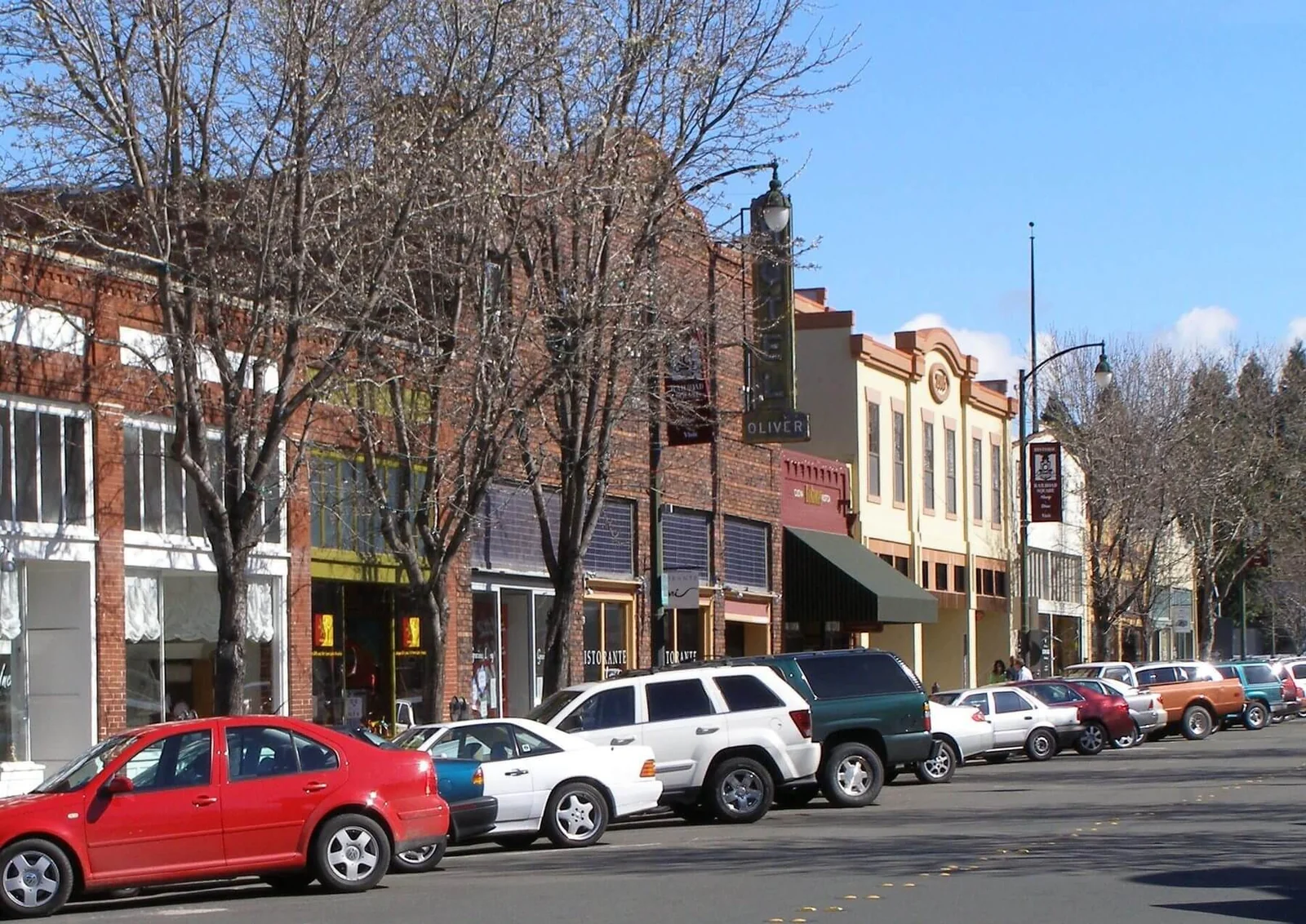
We run sewer work across the whole city and the county addresses around it. Downtown, Railroad Square, and the west side bring the oldest laterals, the most clay, and the tightest access. Rincon Valley and Bennett Valley bring postwar and later tract housing, long driveways over the line, and the material transitions those decades produced. Coffey Park and Fountaingrove bring newer pipe and the discipline of verifying where it actually ends. Hillside streets east and north add depth and rock, while the valley floor adds shallow grade, where a small sag does far more damage than it would on a steeper run.
For anything beyond the sewer, the full plumbing service in Santa Rosa and the complete Santa Rosa service list cover what we do here.
How to choose a contractor for sewer work
1. Require a recorded camera inspection before any number is discussed, and require a copy. A replacement proposal with no footage behind it is a guess with a price attached. 2. Ask for the locate: depth and position painted on the ground, with the defect's footage called out. 3. Ask which method is proposed and why, in writing, reasoned from the pipe's shape, its grade, where the defect sits, and what covers it. A contractor who proposes the same method everywhere is selling equipment utilization. 4. Ask who pulls the permits, including the right of way permit if the work reaches that far, and confirm they carry the insurance the City requires. 5. Ask for warranty terms on the pipe and separately on the restoration. Different exposures, stated separately.
We work from our Petaluma headquarters, hold a BBB A+ Rating. Every recommendation arrives attached to the footage that produced it.
What North Bay homeowners say
A couple of notes from customers in the area:
Sewer repair across Santa Rosa and Sonoma County
One company across every trade in the North Bay: plumbing in Santa Rosa, drain cleaning in Santa Rosa, water heaters in Santa Rosa, electrical in Santa Rosa, and the full Santa Rosa service area. Nearby, we handle sewer repair in Petaluma, sewer repair in Rohnert Park, and sewer repair in Windsor, with the rest on our Sonoma County plumbing page.
Book sewer repair in Santa Rosa
Book online to get a camera inspection on the schedule. We run the line, locate and mark it, show you the footage, and lay out the methods the pipe's condition supports, along with what each means for your yard and your permits.
Your Comfort, Our Priority
Ongaro & Sons is your trusted heating, cooling, plumbing, electrical, and solar expert, specializing in reliable maintenance and repair services that keep your home running efficiently year-round.
Our certified technicians deliver unmatched expertise with fast, friendly service across Marin, Sonoma and Napa County. From HVAC tune-ups to plumbing repairs and electrical upgrades or solar solutions, we focus on energy-efficient performance and long-term comfort. Count on us to maintain the systems that power your home and keep your environment just the way you like it.
Licensed, Insured, Background-Checked
Our technicians are licensed, experienced, and trained to service all makes and models.
Locally Owned and Operated
Serving the Napa, Marin, and Sonoma communities with personalized, hometown service.
Reliable Repairs
We respond quickly and get the job done right the first time, with no surprises.
Since 1932
Why Ongaro & Sons?
Four generations of trusted home service. Open any reason to see what it means for your home.
Schedule Service →Family-owned in the North Bay since 1932
Four generations of the Ongaro family serving Marin, Sonoma and Napa County. We know these homes and the systems in them.
Licensed, insured, background-checked technicians
Every technician is fully licensed and insured, background-checked, and trained on the equipment we install.
Diamond Certified and BBB A+
Diamond Certified since October 2016, and BBB Accredited with an A+ rating since December 1995.
Mitsubishi Diamond Contractor Elite and Trane Comfort Specialist
Both top manufacturer tiers. That standing decides how registration and extended warranty terms are handled on the system you actually bought.
The price is agreed before work starts
You see the number before the work begins. Flat-rate quotes, no surprises and no pressure.
Comprehensive maintenance program
Members get priority scheduling, discounts, and proactive checkups that prevent costly failures.

Discount
Membership
Ongaro Maintenance Plans
Annual maintenance on your home systems provides safeguards and comfort to you and your family. Members get priority scheduling, discounts, and proactive checkups that catch problems early.
Member Discounts
5% off every repair and replacement, all year long.
Peace of Mind
Proactive checkups catch issues before they become big problems.
Courtesy Reminders
We call you to schedule: never miss a seasonal service.
Value That Lasts
With Ongaro & Sons, you’re investing in quality, integrity, and service that stands the test of time. Explore our current promotions and see the difference real value makes for your HVAC, plumbing, and electrical needs.


From the Blog
 Sep 17, 2026
How Many Amps Does My House Need? Sizing Service for What You Actually Run
How many amps your house needs comes from a load calculation of what you run and plan to add. What drives the number, when existing service is enough, and more.
Read More Sep 10, 2026
Hard Water in Marin County: What Is Actually in Your Water and What It Does
Hard water in Marin County varies by provider and source. The 2025 report figures for Marin Water and NMWD, what hardness does and does not mean, and options.
Read More Sep 3, 2026
Electrical Permit Requirements in California: What Needs One and What Does Not
Find out which electrical projects commonly need permits, how to confirm local exemptions, and what to ask before work begins in Marin, Sonoma or Napa County.
Read MoreSewer repair in Santa Rosa: frequently asked questions
Who is the best sewer repair company in Santa Rosa?
Judge it on evidence, and here there is a specific piece of evidence to ask for. Santa Rosa requires a Class A or C-42 contractor for sewer lateral plumbing, so ask any bidder to name their classification and check it on the Contractors State License Board. Ongaro & Sons holds C-42 Sanitation System, C-34 Pipeline and C-36 plumbing, is Diamond Certified, and carries 2,756 Google reviews at a 4.8 average. More usefully: we inspect with a camera before quoting, hand over the recording either way, paint the line on the ground, and file the permits the City requires.
Is the sewer lateral my responsibility or the City's?
Yours, for its full length. Santa Rosa's code assigns maintenance, operation, and repair of the whole service lateral to the property owner, cleanouts and backflow devices included, and carries that duty out to the City sewer. The City keeps discretion to occasionally repair the short stretch between its main and the back of curb, but that is optional on their side.
Do I need a permit to repair a sewer line in Santa Rosa?
Yes. Plumbing work on your property is permitted through the Building Division of Planning and Economic Development. Where the repair reaches public property, an encroachment permit applies as well, bringing licensing and insurance conditions, traffic control, and street restoration. Addresses in unincorporated county territory route through Permit Sonoma instead, so establishing jurisdiction is step one.
How do I tell a clog apart from a broken sewer line?
Count the fixtures and count the repeats. One slow drain with everything else behaving is almost always local. Several fixtures acting up together, lowest one first, points at the main run. And any blockage returning weeks or months after clearing describes a defect that keeps catching debris rather than a single obstruction.
Can my line be relined instead of dug up?
Only if the existing pipe can serve as a host. Relining needs a run that is still round, still continuous, and still falling toward the main. Clay with root intrusion and intact geometry is a strong candidate. A pipe that has flattened, lost its invert to corrosion, or sagged into a low spot is not, since the cured liner adopts whatever slope it sets inside.
What is pipe bursting and where does it work?
The old pipe is split outward into the surrounding soil by a head winched through it, with new pipe towed in behind. Only the two end pits get excavated, so intact lawn or paving in between survives. It suits long clay and fiber conduit runs. Sharp bends, sections already closed shut, and adjacent utilities in the expansion zone are what disqualify it.
What is Orangeburg pipe and why does it matter?
It is bituminized fiber conduit, wood fiber bound with pitch, used for laterals across a lot of postwar construction. It deforms rather than cracks: pressure squeezes the circle into an oval and eventually shuts it. Camera footage shows a run tapering with no obvious break. Because it cannot host a liner and cannot be spliced usefully, finding it means planning a replacement.
Why does my sewer only back up in winter?
That pattern points to infiltration. Cracks and open joints that stay dry through a Sonoma County summer sit below the water table once rain arrives, and groundwater enters at every defect. The pipe then spends its capacity carrying clean water, leaving less room for what the house sends it. Seasonal timing is strong evidence of an unsealed line.
How long does a sewer repair take?
A spot repair on a shallow private side defect can be one day including backfill. A liner is typically a day for the cure plus reinstating branches. Full replacement depends on run length, depth, and restoration, with permit review and inspection scheduling inside that window. Right of way work adds traffic control coordination. We give a date range with the scope.
Are there rebates for sewer line replacement?
Not for the pipe itself. Sonoma Clean Power and the water utility fund electrification and conservation respectively, and a wastewater line is neither. Where a project also touches water heating equipment, those incentives apply to that portion only. For the excavation and the pipe, financing is the realistic tool, and the genuine saving comes from doing enough of the line in one pass to pass the test the first time rather than the second.
Will you have to tear up my driveway or my landscaping?
Not necessarily, and the locate answers it rather than a guess. If the defect sits under hardscape but the pipe is otherwise round and sound, trenchless methods can often reach it from access points on either side. If the run has lost grade, or the pipe is gone in places, the surface above has to come up. We mark the footprint before you approve anything.
How often should the line be camera inspected?
For an older home with original clay, every year or two is reasonable, and more often with large trees near the run. Newer plastic laterals warrant a check after major landscaping, after heavy equipment has crossed the yard, and once after the first wet season on new construction. Anyone buying an older home in this city should inspect before closing.