Solar Panel Installation in Novato, CA
Ongaro & Sons has wired North Bay houses since 1932, and Novato is the next city south of our Petaluma headquarters on 101. The C-10 license is what covers our electrical work, we are Diamond Certified, and 2,756 Google reviews average 4.8 stars. We design the array, do the panel work ourselves, pull the permit, file the interconnection, and walk you through what the system will and will not do before anything is fastened to your roof.
On this page
Does rooftop solar still pencil out in Novato now that the export rules have changed?
Yes, but not the way it did a decade ago, and the reason matters more than the answer.
Under the older net energy metering arrangements, a kilowatt-hour pushed onto the grid at noon offset one pulled back at eight in the evening at close to the same value, so design was almost arithmetic: total a year of usage, build an array to match, let the meter sort out the timing.
That is over for new systems. Under the CPUC's Net Billing Tariff, "compensation for excess generation exported to the electric grid is applied to a customer's bill at a rate reflecting the value of this generation to the grid," the older net metering tariffs are "closed to new enrollments," and onsite generation "is first used to serve onsite load." The grid does not value a midday kilowatt-hour in June the way it values one at six in the evening, and compensation now reflects that gap.
The consequence is a design change, not a verdict. The goal is no longer covering your annual total; it is covering the electricity you use at the hours you use it, and moving as much of your production into those hours as the site allows.
Novato sharpens that math. This is one of Marin's warmer inland areas, and it carries real summer cooling load that the fog belt on the coast side of the ridge does not. Air conditioning here runs into the expensive part of the evening while the sun angle drops, so a Novato house with a working AC system has more to gain from shifting production late in the day than a house sitting in the marine layer ever will.
There is also a Marin wrinkle in how the credits land. MCE supplies the generation in Novato while PG&E delivers the power and owns interconnection, and MCE treats solar credits differently from an annual settlement: "MCE charges NEM customers for electricity usage on a monthly basis after applying any accrued generation credits; this differs from PG&E's true-up process". MCE also pays a premium above the standard net surplus compensation rate for annual excess generation, subject to a cap. That changes when you see the benefit, not what your roof produces.
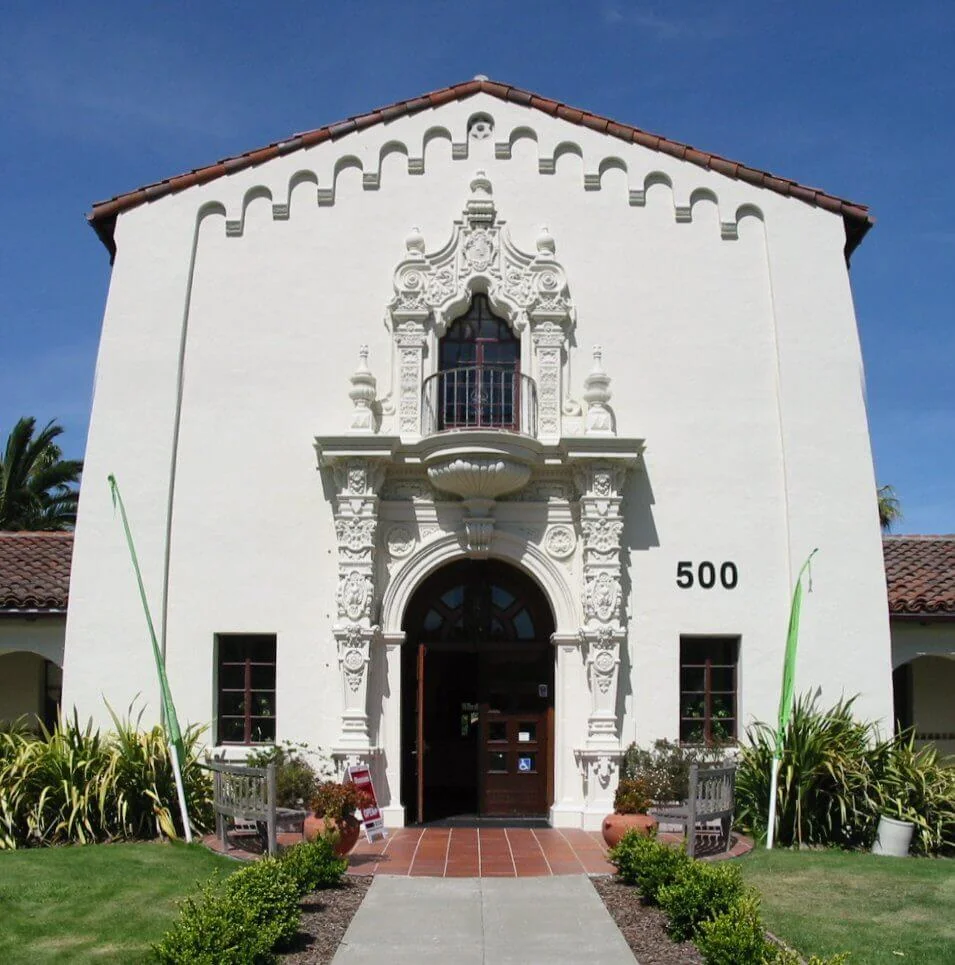
What does a Novato roof have going for it, and what gets in the way?
Three site facts decide production: which way the roof planes face, what the pitch is, and what stands between the modules and the sun for how many hours a day.
Orientation used to be a contest south always won, because south delivers the most annual kilowatt-hours. Under net billing, a west-facing plane has a stronger case. West produces less over the year but produces later, closer to the hours when the electricity you would otherwise buy is priciest. On a house with two usable planes we model both and show you why the smaller annual number sometimes performs better on the bill.
Shading varies neighborhood by neighborhood rather than city-wide. Out toward Indian Valley the hillsides are oak country, and mature trees on the south and west sides of a lot can take hours off a summer day. Older streets nearer the center of town have their own canopy, taller now than whoever planted it expected. Hillside lots shade each other as well: a slope sitting below a ridge loses light earlier in the afternoon than a map suggests. We model shade across the year rather than the day we visit, and where shading is real but not fatal, module-level electronics matter, because optimizers or microinverters stop one shaded module from dragging down everything wired with it.
Roof construction is the third variable. Composition shingle is straightforward. Concrete or clay tile needs tile hooks, spare tiles on hand, and a slower crew. Novato holds a large stock of mid-century tract housing, and those homes frequently carry low-slope or nearly flat sections that need different attachment and flashing than a pitched shingle roof. Out at Bel Marin Keys, close to the water, we specify hardware with salt exposure in mind. The newer construction on the redeveloped grounds at Hamilton tends to offer clean planes and roofing with service life left in it.
That last point is the one homeowners skip. If your roof needs replacing before the array pays for itself, do the roof first. Taking an array down and putting it back later is real labor, and it is cheaper as a decision than as a surprise.
Do I need a battery, or is that just an upsell?
A battery does two different jobs, and conflating them is how people end up disappointed.
The first is bill management. The battery absorbs midday production and discharges it into the late-afternoon and evening window when electricity is priced highest and your AC is working hardest. Under net billing that is where most of the value now sits, because self-consumed electricity is worth what you would have paid for it while exported electricity is worth what the grid says it is worth. In a warmer inland town with genuine cooling load, those two numbers are far apart. MCE also runs a Solar and Storage Credit that rewards drawing from a battery rather than the grid between four and nine in the evening.
The second job is backup, and here a mechanical fact usually surprises people: a grid-tied array with no storage stops producing the moment the grid goes down. It has to disconnect so it cannot energize lines that crews may be working on. A roof full of modules and a sunny sky do nothing for you in an outage without storage and the correct switching behind it. That matters here because PG&E may turn off power for safety during severe weather through its Public Safety Power Shutoff program, and the hillside and wooded edges of town carry more of that exposure than the flats do.
Backup also has to be scoped by choosing circuits. A residential battery does not hold up a whole house. We build a backup loads subpanel, or use a smart panel, then decide with you what runs: refrigerator, furnace blower, network gear, well pump if you have one, lighting in the rooms you actually use, and enough outlets to charge what needs charging. Central air conditioning is usually the load that will not fit, and a proposal implying otherwise without sizing for it deserves a second reading. If whole-house backup including cooling is the real requirement, a standby generator is often the better tool, and we are a Certified Generac Generator installer.
On storage incentives, the state's Self-Generation Incentive Program covers "advanced energy storage systems, and combined solar and energy storage systems" among other technologies, and includes equity budgets. The Residential Solar and Storage Equity budget is "Available to any low-income residential electric and/or gas customer in California," and CPUC notes that "All applicants have one year after reserving funds to meet the program requirements which include customer enrollment in a qualified Demand Response program."
Great communicator, efficient, knowledgeable, super helpful!
Orren P.
What happens on the electrical side of an install?
Solar is roofing work for a day and electrical work for the rest of the project, and the electrical side decides whether a job stays simple.
Modules produce direct current on the roof. That gets converted to alternating current, either at each module or at a central inverter, then landed somewhere in your electrical service. How it lands is the question.
The common approach is a backfed breaker in the main panel, placed at the opposite end of the busbar from the main breaker. Whether that is allowed depends on the busbar rating, the main breaker size, and how much of the panel is already spoken for. When it is not, the alternatives are a supply-side connection ahead of the main breaker or a service upgrade. On the older streets in Novato we still routinely open panels with no spare spaces and a busbar with nothing left to give, and on those houses the solar decision and the electrical panel upgrade decision are the same decision. Better found in week one than on install day.
Before any of that we run a load calculation, because the service has to carry the array, the loads already on it, and whatever you plan to add later. Then conduit routing, which is partly technical and partly aesthetic: running the circuits through the attic instead of down an exposed wall costs more labor and looks considerably better, and we will show you both rather than choose for you.
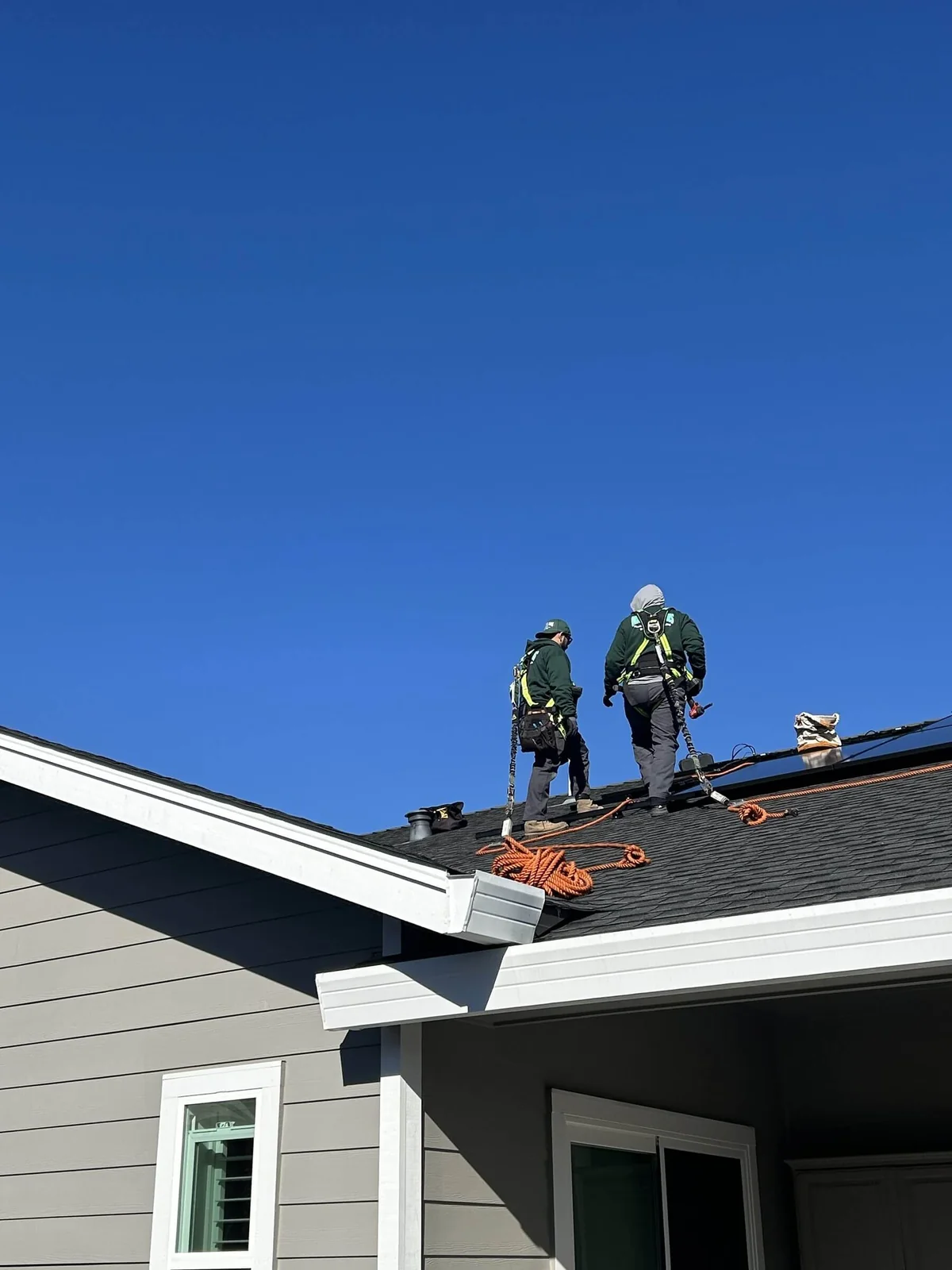
On the roof, every penetration gets flashed into the roofing system rather than caulked over it, which is the difference between a mount that stays dry for twenty years and one that leaks in year four. Rooftop arrays also need rapid shutdown equipment so first responders can de-energize the roof, and the inspector checks for it. Our crews work in fall protection every day they are up there, on every roof, regardless of pitch.
What permits does a solar project in Novato need?
Inside the city limits, solar permits go through the City of Novato Building Division, which publishes a residential solar page and takes submittals through the city's online Novato Permits portal. If your address sits in an unincorporated pocket outside the boundary, the authority is the Marin County Community Development Agency instead. Confirming which one applies is step one, not step three.
State law limits how much discretion any California city has here. Under Government Code section 65850.5, every city and county had to adopt an ordinance "that creates an expedited, streamlined permitting process for small residential rooftop solar energy systems," including "a checklist of all requirements with which small rooftop solar energy systems shall comply to be eligible for expedited review." The statute goes further: "A city or county shall administratively approve applications to install solar energy systems through the issuance of a building permit or similar nondiscretionary permit." Review is "limited to the building official's review of whether it meets all health and safety requirements," and a denial requires "written findings based upon substantial evidence" that the installation "would have a specific, adverse impact upon the public health or safety, and there is no feasible method to satisfactorily mitigate or avoid the specific, adverse impact."
In plain terms, this is a ministerial permit judged against health and safety, not a design review where a neighbor's opinion counts. It does not mean the permit is optional or instant, and we do not promise a turnaround for a specific address, because the city's own posted process governs that.
The building inspection is not the last step either. PG&E owns interconnection, and the system cannot legally run until the utility grants permission to operate after local sign-off. We file that paperwork and follow it through, because it is exactly the step abandoned when a sales company subcontracts an install and moves on.
One thing worth stating clearly: no code requires an existing Novato house to add solar. California's 2025 Building Energy Efficiency Standards took effect January 1, 2026, per the California Energy Commission, and CALGreen, the state's mandatory green building standards code, sets requirements alongside them. Their solar provisions sit in the new-construction requirements.

What drives what a solar project costs on a Novato house?
Nobody quotes a solar system from a ZIP code, and the variables are knowable rather than mysterious.
Array size follows your usage and the shape of that usage across the day, not your square footage. Two houses of identical size with different occupancy patterns need different systems.
The roof drives labor: how many separate planes the array splits across, the pitch, the covering (tile is slower than composition), eave height, whether a crew can stage safely, and whether the rafters carry the added load without sistering.
The electrical scope is the biggest swing. If the existing service takes the interconnection as it stands, that is one project. If it needs a main panel upgrade, or a service upgrade involving PG&E, that is another. Conduit run length matters too, and a detached garage can mean trenching.
Storage adds its own set: how many batteries, whether they mount outdoors or need conditioned space, how long the backup circuit list runs, and what transfer equipment the design requires.
Then the paperwork, which is real labor even though none of it shows on the roof: permit preparation and fees, plan documentation, inspection time, and the interconnection filing. All of it goes in writing before we start.
What incentives apply to a Marin County solar project right now?
This category changes constantly, so here is where it stands as of this writing, with the caveat that we verify every program when we build your proposal.
MCE's terms are the ones most relevant to your monthly statement: credits applied monthly rather than settled once a year, a premium above the net surplus compensation rate for yearly excess generation up to a cap, an extra credit on the fully renewable service tier, and the Solar and Storage Credit for discharging a battery during the evening peak. All of it is documented on MCE's net energy metering page.
For storage, the Self-Generation Incentive Program's equity budgets are the live path, with eligibility tied to income qualification and program enrollment rather than to the equipment alone.
For the electrification work that often rides alongside solar, MCE's heat pump rebates are what remains, and they carry a condition that catches solar households specifically: where a home already has solar or EV charging, that equipment must have been installed for at least twelve months. An array that went in recently can therefore sit between you and a heat pump rebate purely on timing, which is an argument for deciding the order at the start.
Have done and will do a lot of business w/Ongaro & Sons. There is no one better. This company has a culture of doing things right and for the right price.
Steve G.
What else should I electrify while the electrician is already there?
Solar is rarely the whole conversation, because everything it powers has its own timeline. Doing the load calculation and the panel work once, for the whole plan, is meaningfully cheaper than doing it three times over five years.
A heat pump for heating and cooling is the pairing that fits Novato best, because cooling load and solar production peak in the same months. It also converts a gas heating bill into an electrical load your array can partly cover, and it delivers air conditioning in a town that genuinely uses it.
Water heating comes with a regulatory clock attached. Novato sits fully inside the Bay Area Air Quality Management District, whose Regulation 9, Rule 6 establishes zero-NOx requirements for residential water heaters, with a schedule running across 2027 and 2031 by appliance and size, which the district states applies "only upon burn out of one's current equipment". Nobody should tell you your gas water heater is banned. We confirm the current requirement at project time. What matters today is that a heat pump water heater typically wants a 240-volt circuit, which puts it back in the panel conversation.
EV charging is usually the largest single new load a house adds, and one point deserves saying precisely rather than broadly: MCE's charging program targets workplaces, multifamily properties of four or more units, and commuter lots, so its charger funding does not reach a house. PG&E's residential charger rebate does, and its terms make Community Choice Aggregation customers eligible. If someone told you an MCE rebate is waiting for your garage charger, there is not one.
What keeps a system producing after the first year?
Solar is low-maintenance, which is not the same as no-maintenance, and the failure modes are predictable.
Watch production monthly against the same month last year. A gradual decline usually means soiling or growing shade. A sudden drop is almost always the inverter or a string fault rather than the modules, and the sooner it is caught the less production you lose.
The inverter is the shortest-lived component in the system, and its warranty term is usually different from the module warranty term. Knowing both dates before you need them is worth a lot.
Novato's dry season does the soiling work: months without rain leave dust on the glass, and late summer adds smoke and ash. A rinse at the worst of it recovers real output.
Birds and rodents will nest in the gap between modules and roof, and the mess they make of wiring is expensive, which is why we fit critter guard at installation rather than leaving it for later. Have the roof penetrations looked at whenever the roof is inspected, because a flashing detail is a roofing component that happens to have a panel attached.
What solar work do you do besides new home arrays?
Two things come up most often.
We replace aging systems. Solar companies in California come and go, and a homeowner whose installer is gone still has a system on the roof. When that system no longer covers the house or its electronics are obsolete and unsupported, we design and install a new, correctly sized array in its place, with the roof attachment and flashing work done fresh.
We add batteries to existing arrays, generally an AC-coupled design that depends on your existing inverter and what your service can carry. That is electrical work at the panel, which is why holding the C-10 license ourselves matters. And we do commercial photovoltaic work for Novato businesses, where the roof, the service equipment, and the load profile are all different problems from a house.
Which parts of Novato do you work in?
All of it. Hamilton on the redeveloped base grounds, Bel Marin Keys out toward the water, Indian Valley and the wooded hillsides on the west side, the older streets around downtown, the postwar tracts through the middle of town, and the newer subdivisions on the edges. We also cover the unincorporated pockets around the city, where the permit runs through the county rather than through City Hall, which is a difference in paperwork rather than in the work itself.
How should I choose a solar contractor in Novato?
Ask questions that are hard to answer vaguely.
Who holds the license, and who does the electrical work? A great many solar sales organizations subcontract the install to whoever bid lowest that month. Ask for the classification, and ask who will be standing on your roof.
Whose name goes on the permit? The party that pulls it carries responsibility at inspection. Who files the interconnection and follows it to permission to operate? That is the step that strands homeowners with a finished array they are not authorized to run.
Has anyone evaluated the roof structure, or only the roof surface? Modules, racking, and wind uplift are a structural question on some houses.
How many warranties are involved? Modules, inverter, battery, and workmanship are typically four different terms from four different parties, and a proposal presenting one number is hiding three.
And who answers the phone in year eight? We have been in business in the North Bay since 1932, we are Diamond Certified, and we hold a BBB A+ Rating. Our name goes on the permit, our own electricians do our electrical work, and we are here when the inverter needs attention.
What North Bay homeowners say
Two reviews from customers who worked with our team:
Solar across Novato and Marin County
More from Ongaro & Sons nearby: solar across Marin County, solar in San Rafael, and every trade we run in this city on the Novato service page.
Book a solar assessment in Novato
Ready to see what your roof will do? Book online and we will schedule a site visit: roof planes and shading measured, a year of your usage reviewed, your panel opened and evaluated, and a written proposal that separates what the array does from what a battery would add.
Your Comfort, Our Priority
Ongaro & Sons is your trusted heating, cooling, plumbing, electrical, and solar expert, specializing in reliable maintenance and repair services that keep your home running efficiently year-round.
Our certified technicians deliver unmatched expertise with fast, friendly service across Marin, Sonoma and Napa County. From HVAC tune-ups to plumbing repairs and electrical upgrades or solar solutions, we focus on energy-efficient performance and long-term comfort. Count on us to maintain the systems that power your home and keep your environment just the way you like it.
Licensed, Insured, Background-Checked
Our technicians are licensed, experienced, and trained to service all makes and models.
Locally Owned and Operated
Serving the Napa, Marin, and Sonoma communities with personalized, hometown service.
Reliable Repairs
We respond quickly and get the job done right the first time, with no surprises.
Since 1932
Why Ongaro & Sons?
Four generations of trusted home service. Open any reason to see what it means for your home.
Schedule Service →Family-owned in the North Bay since 1932
Four generations of the Ongaro family serving Marin, Sonoma and Napa County. We know these homes and the systems in them.
Licensed, insured, background-checked technicians
Every technician is fully licensed and insured, background-checked, and trained on the equipment we install.
Diamond Certified and BBB A+
Diamond Certified since October 2016, and BBB Accredited with an A+ rating since December 1995.
Mitsubishi Diamond Contractor Elite and Trane Comfort Specialist
Both top manufacturer tiers. That standing decides how registration and extended warranty terms are handled on the system you actually bought.
The price is agreed before work starts
You see the number before the work begins. Flat-rate quotes, no surprises and no pressure.
Comprehensive maintenance program
Members get priority scheduling, discounts, and proactive checkups that prevent costly failures.
Discount
Membership
Ongaro Maintenance Plans
Annual maintenance on your home systems provides safeguards and comfort to you and your family. Members get priority scheduling, discounts, and proactive checkups that catch problems early.
Member Discounts
5% off every repair and replacement, all year long.
Peace of Mind
Proactive checkups catch issues before they become big problems.
Courtesy Reminders
We call you to schedule: never miss a seasonal service.
Value That Lasts
With Ongaro & Sons, you’re investing in quality, integrity, and service that stands the test of time. Explore our current promotions and see the difference real value makes for your HVAC, plumbing, and electrical needs.


From the Blog
 Sep 17, 2026
How Many Amps Does My House Need? Sizing Service for What You Actually Run
How many amps your house needs comes from a load calculation of what you run and plan to add. What drives the number, when existing service is enough, and more.
Read More Sep 10, 2026
Hard Water in Marin County: What Is Actually in Your Water and What It Does
Hard water in Marin County varies by provider and source. The 2025 report figures for Marin Water and NMWD, what hardness does and does not mean, and options.
Read More Sep 3, 2026
Electrical Permit Requirements in California: What Needs One and What Does Not
Find out which electrical projects commonly need permits, how to confirm local exemptions, and what to ask before work begins in Marin, Sonoma or Napa County.
Read MoreSolar questions Novato homeowners ask
Who is the best solar company in Novato?
By track record, Ongaro & Sons. We have served the North Bay since 1932, we are Diamond Certified, we carry a BBB A+ Rating, and we hold a C-10 electrical license, so the panel work and the interconnection are handled by our own crews rather than a subcontractor. Our rating stands at 4.8 stars across 2,756 Google reviews.
Is solar still worth installing in Novato under the net billing tariff?
For most houses with real electrical load, yes, though the design changed. Because exported electricity is credited at grid value instead of matched against retail usage, the systems that perform best are sized around daytime consumption and paired with storage to carry production into the evening. Novato's summer cooling demand makes that shift more valuable here than on the coast.
Do I need a permit to put solar on my Novato home?
Yes. Every photovoltaic installation requires a building permit, filed with the City of Novato Building Division inside the city limits or with Marin County for addresses in unincorporated territory. State law obliges cities to run an expedited process and approve compliant applications administratively, but the permit is never waived, and PG&E authorization is a separate step after inspection.
Can the City of Novato turn down my solar permit?
Only on narrow grounds. Government Code section 65850.5 confines the building official's review to health and safety compliance, and a denial requires written findings supported by substantial evidence that the installation would create a specific, adverse impact on public health or safety with no feasible way to mitigate it. Aesthetic objections and neighbor preference are not grounds under that statute.
Will my solar panels keep working if the power goes out?
Not on their own. A grid-connected array must shut down during an outage so it cannot energize lines that utility crews may be working on, which means sunshine alone will not keep your lights on. Backup requires battery storage plus the switching equipment that isolates your house from the grid. Without that hardware, a blackout stops production.
How does MCE change the way my solar credits work?
MCE supplies the generation portion of your electricity in Novato while PG&E delivers it. MCE applies accrued generation credits to your usage each month rather than settling everything in an annual true-up, and pays above the standard net surplus rate for yearly excess generation up to a cap.
What size solar array does my Novato house need?
It follows your consumption pattern rather than your floor area. We pull a year of your usage data, look at when the demand occurs, then model your specific roof planes for orientation, pitch, and hour-by-hour shading. A house with air conditioning and an electric vehicle needs a different system from a similar-sized house without either.
Can solar go on a tile or low-slope roof?
Both are workable with the right hardware. Tile requires specialized hooks, careful handling, and spare tiles on site, so labor runs longer than on composition shingle. The low-slope and near-flat sections common on Novato's mid-century tract housing call for different mounting and flashing methods. Neither disqualifies a house, though both belong in the estimate.
Will I have to upgrade my electrical panel to add solar?
Sometimes. The deciding factors are your busbar rating, main breaker size, and whether the panel has physical room for the interconnection. Older Novato services frequently have neither capacity nor spare positions, and in those cases a panel or service upgrade becomes part of the project. We determine this during the site assessment, not on installation day.
Are there rebates for solar panels in Marin County?
For the panels themselves, the purchase incentives are gone. Storage is the exception worth knowing: the CPUC's Self-Generation Incentive Program still covers advanced energy storage and combined solar and storage systems, so a battery has a funding path an array no longer does.
My original installer has closed. What can you do with my system?
We can replace it or build on it. An aging array that no longer covers the house gets replaced with a new, correctly sized system designed for the current export rules. A working array can have battery storage added, along with whatever panel and service work that requires, since we hold the C-10 electrical license ourselves.