AC Repair in Petaluma
Ongaro & Sons, founded in 1932, works in Marin, Sonoma and Napa counties, repairs air conditioning across all three, and our headquarters is here in town. Our license for HVAC is the C-20, we are Diamond Certified, and 2,756 Google reviews average 4.8 stars. We measure the system before we name a part, and we tell you what a repair actually buys you.
On this page
What you are choosing between
Most air conditioning calls start the same way: the house will not cool and the owner need a defensible answer to one question: small fix, or first step of a replacement. In Petaluma in 2026 that has four possible answers, separated mostly by refrigerant and paperwork.
| Path | When it fits | What it drags in | What it will not solve |
|---|---|---|---|
| Component repair | One part failed, system still holds charge and moves air | Usually no permit, no third-party testing | Capacity, duct losses, an aging furnace |
| Matched changeout | Compressor or coil gone, or refrigerant no longer produced | Permit, load calculation, matched coil, field verification | A same-vintage gas furnace under that coil |
| Full split system | Furnace and condenser went in together, aging together | All of the above, plus gas, venting, condensate | Leaky duct runs, unless ducts are opened on purpose |
| Heat pump conversion | One machine for both seasons, and the service can carry it | Panel and circuit review, possible upgrade, verification | The gas line, which usually stays for cooking |
Most calls end at row one. Rows two through four are consequences rather than upsells: once the refrigerant circuit is opened on an older system, the job stops being service and becomes an alteration, and California treats an alteration differently.
Why an air conditioner fails differently in Petaluma
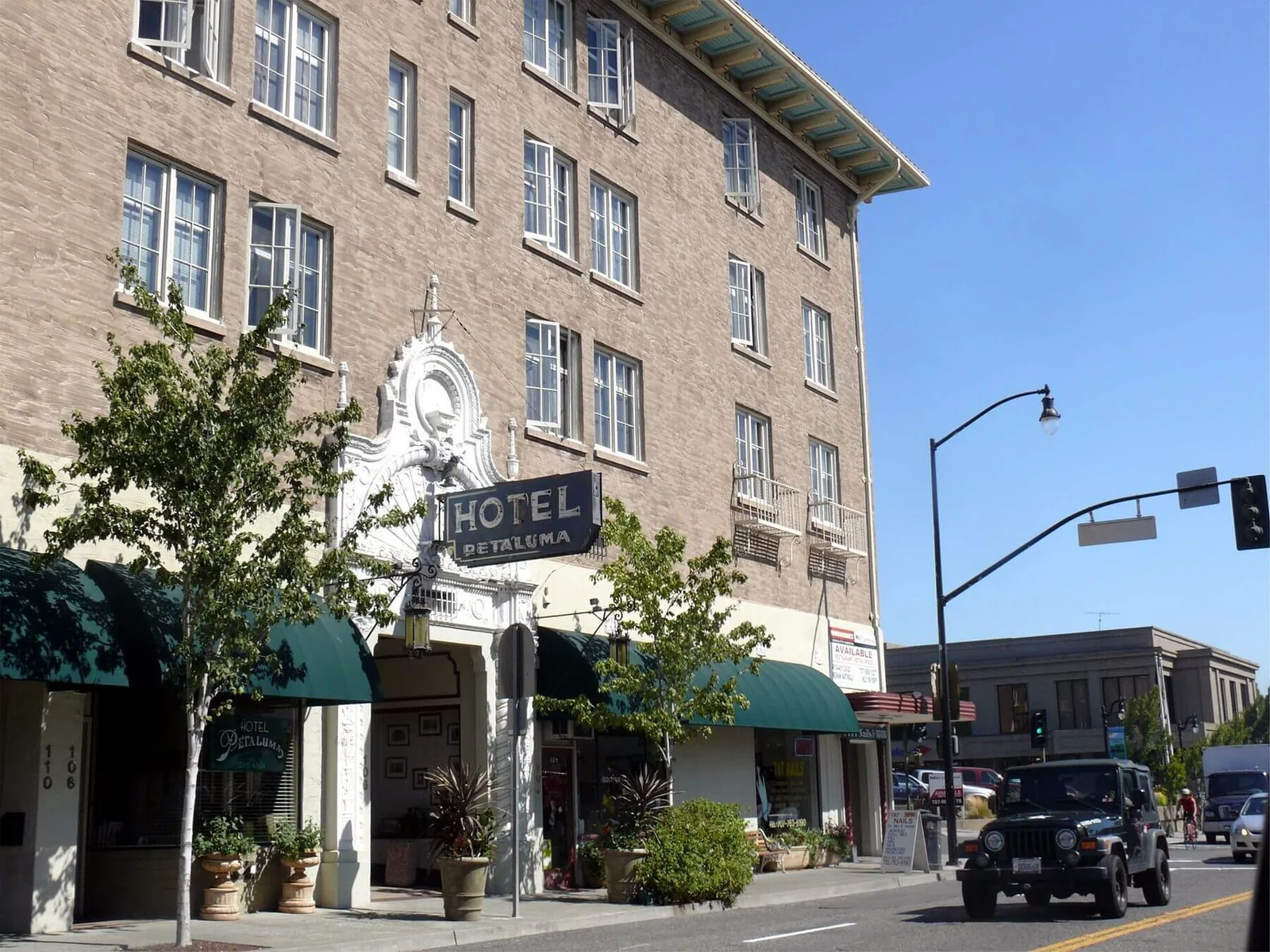
Petaluma sits at the cooler southern end of Sonoma County, moderated by bay and coastal air, so summers are warm rather than the triple-digit extremes further inland. That single fact shapes cooling repair here more than anything else on this page.
A condenser in Petaluma runs a fraction of the hours one in the Sonoma Valley or on the Santa Rosa plain logs across the same July. Fewer hours means slower wear, which is good news for the equipment. It also means a degrading part gets very little opportunity to announce itself. A run capacitor drifting out of tolerance, a slow weep at a flare fitting, a fan motor with a dying bearing: on a machine running six hours a day, all three surface in June. On one that runs nine afternoons a summer, they stay quiet until the first heat spike, then appear across the whole city in a week.
Age is therefore a weaker signal here than it is inland. A fifteen-year-old system in Petaluma may carry the run time of a nine-year-old one in Kenwood, so we read compressor amp draw, superheat and subcooling, and coil condition instead of the date sticker.
Four checks, in order
We diagnose in four steps, in order. Each one either closes the question or hands it to the next.
Refrigerant. What is in the system, whether the charge is correct, and whether it is holding. A low system is a leaking system, because refrigerant is not consumed. Where the leak is matters more than how much is missing.
The coil and what it sits on. The indoor coil and the outdoor unit are a rated pair, not two independent boxes. In most Petaluma homes with ducted heat, that coil sits directly on a gas furnace, often in a closet shared with the water heater, so anything done to the coil involves the furnace.
Air. Static pressure across the air handler, filter condition, duct leakage, register and return sizing. A large share of "the AC is broken" calls in retrofitted west-side homes are airflow problems that look like cooling failures.
Electricity. Breaker, outdoor disconnect, contactor, capacitors, wire condition, and whether the panel has room for whatever comes next. Cheap to check, and where the most common single failure lives.
Working them in sequence keeps a diagnosis from turning into a parts lottery, and the repair-or-replace answer falls out as a byproduct.
Ongaro and Sons has been great! They have been our service provider on our heater for many years, and installed our air conditioner a few years back. Their pricing is very competitive, and there service is head and shoulders above the rest.
Eric B.
Reading the symptom back to the fault
- Outdoor unit humming, fan blade still, warm air inside. Almost always the run capacitor or the condenser fan motor. After an idle Petaluma spring, the capacitor leads the field.
- Cools for a while, then blows warm, with frost on the copper at the indoor coil. Either the charge is low from a leak or the air side is starved by a loaded filter, a fouled evaporator, or collapsed flex duct.
- Starts and stops within a couple of minutes, repeatedly. Short cycling points at a control fault, a pressure switch tripping, a badly restricted condenser, or a system oversized when it went in.
- Indoor blower running, outdoor unit completely dead. Breaker, disconnect, contactor, or a high-pressure lockout. Resetting without finding the cause buys a repeat.
- Water at the air handler, or a stain spreading on a ceiling. A blocked condensate drain or a rusted-through pan. In an attic installation the stain usually shows up first.
- Grinding or groaning from the condenser on startup. Compressor bearings or a failing start component, and the symptom most likely to become a replacement conversation.
The coil is usually what decides it
One technical factor settles most repair-or-replace calls here: the indoor coil and the refrigerant it was built around.
R-22 production and import in the United States ended in 2020. Repair supply is reclaimed or previously stockpiled material, which is why a leak or a compressor failure on a pre-2010 R-22 system becomes a replacement discussion. The problem is not the machine's age, it is that what it needs has no new source.
R-410A gets misrepresented constantly. It is being phased down under the AIM Act, with new residential equipment moving to lower global warming potential refrigerants, because newly manufactured residential and light commercial equipment has to sit under a 700 GWP limit. An existing R-410A system does not need replacing: refrigerant and parts are available and repairing one is ordinary work. What the transition does mean is that the two do not mix. A new lower-GWP-refrigerant condenser cannot pair to an R-410A indoor coil, so "just swap the outdoor unit" means either sourcing a matching R-410A condenser or replacing the coil too.
Replacing the coil is where the job changes shape, because of what sits under it.
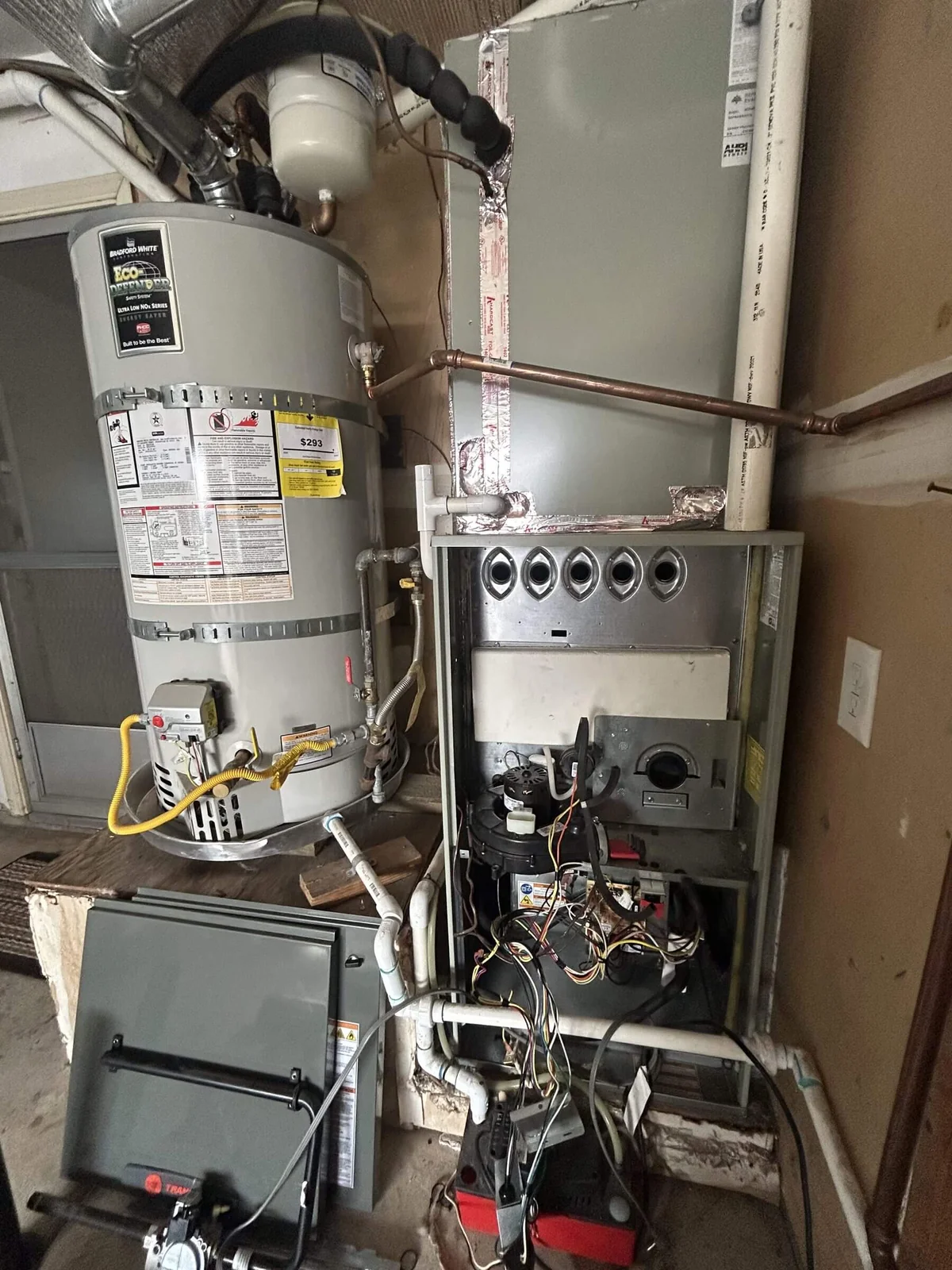
Petaluma is fully inside the Bay Area Air Quality Management District, unlike the north-county towns under a separate district. An air conditioner burns nothing, so no NOx rule reaches it. The furnace beneath the coil is another matter. The district's amended building appliance rules set, in its own words, "zero NOx emissions standards with a future implementation date beginning in 2027, 2029, and 2031, depending on size and equipment type," with Rule 9-4 covering small residential and commercial furnaces on the 2029 date. None of that bans an installed gas furnace. It does mean that with the cabinet already open, furnace repair in Petaluma is worth pricing in the same visit, and a heat pump in Petaluma becomes a real third option rather than a pitch.

The Petaluma neighborhoods we work in
The river runs through the middle of town and the housing on either side came from different decades, and that is the reason one approach does not carry across the city.
Downtown and the west side. Victorian and early-twentieth-century homes with tight utility closets and cooling added long after the house was finished. Duct runs here often sit in unconditioned attics or shallow crawlspaces, sized for what would fit rather than what the rooms needed, so static pressure readings tell us more than gauges do. Where no duct path exists, ductless is the workhorse, and a mini-split fault is traced at the outdoor unit, the line set, and the head.
East Petaluma. Newer subdivisions with garage or closet air handlers, side-yard condensers on a pad, and equipment installed as a matched set with the house. Faults are more predictable and access is easier. The tradeoff is that when one component reaches end of life, the rest is close behind.
Rural and outlying addresses. Properties beyond the city limits permit through Permit Sonoma and sit within the footprint PG&E Public Safety Power Shutoffs can reach. Cooling is electric regardless of heating fuel, so backup power belongs in the plan out there rather than as an afterthought.
We run every trade across the Petaluma service area, which matters when coil work turns up a condensate problem or a panel with no room left.
Ben came to make estimate on AC and furnace. Polite, friendly, professional. Explained gig clearly. Haven’t confirmed on work yet, but so far so good.
Terry N.
Permits and code for AC work in Petaluma
A component repair on an existing system is generally not permitted work. Replacing the condenser, the coil, or the system is.
Inside the city limits, the City of Petaluma Building Division issues air conditioning replacement permits over the counter with no plan review, through the city's online permits hub. Beyond the city limits the application goes to Permit Sonoma. We pull it either way.
The part homeowners are rarely told about is the testing step. California's 2025 Building Energy Efficiency Standards took effect January 1, 2026, and altering an HVAC system in an existing home can trigger mandatory third-party field verification. The California Energy Commission states it directly: "Depending on the work being done, HERS testing may be mandatory," and "Properly permitted work will trigger any necessary HERS testing." On that same January date the testing scope moved into the Energy Code Compliance Program, which the Commission describes as developed "to continue the field verification and diagnostic testing (FV&DT) provisions given in Title 20." Refrigerant charge verification methods were revised in the same cycle.
So a Petaluma changeout is permitted work with a verification line attached, performed by a certified third party rather than by us. A quote missing that line is pricing an incomplete job.
What drives the cost of AC repair in Petaluma
You get the number before we start, every time. Scope sets it, not a rate card:
- Whether the sealed system has to be opened. An electrical part swap leaves the refrigerant circuit alone. A leak repair means recovery, brazing, evacuation, and weighing the charge back in.
- Which part failed and whether it is on the truck. Capacitors and contactors are stocked. A specific OEM fan motor, control board, or compressor for a discontinued model gets ordered.
- Access. A side-yard condenser at grade is not the same job as an attic air handler in August or a coil wedged behind a water heater.
- What sits under the coil. If the furnace has to come out to get the coil out, labor and scope both grow.
- Whether the work crosses into permitted territory. Permit and verification apply to alterations, not component repairs.
- The electrical side. A corroded disconnect, an undersized circuit, or a panel with no capacity for a heat pump adds work unrelated to refrigerant, which is when an electrical panel upgrade in Petaluma enters the discussion.
- Warranty status. Parts still inside manufacturer coverage change the arithmetic, so we check registration first.
Rebates and incentives, and where they apply
Worth saying plainly, because it saves time: repairing an air conditioner does not qualify for a rebate anywhere in Sonoma County, and neither does a like-for-like cooling changeout. California incentive money follows electrification, which means heat pumps. A conversion changes the picture:
- Sonoma Clean Power is the community choice energy provider here, and its current published residential rebate work centers on water heating rather than space conditioning. We check what is open at the time of your project instead of promising last season's program.
If cash flow rather than incentives is the constraint, financing is available.
Keeping a Petaluma air conditioner out of trouble
The low-run-hours problem is why maintenance pays off more here than operating hours suggest. The goal is to force faults into the open on a mild day instead of during the first heat spike.
- Run the system deliberately in May. Set it to cool, let it complete a full cycle, and watch how long it takes to reach setpoint. That one test finds most of what would otherwise surface in August.
- Change the filter before the season, not during it. Restricted airflow is the root cause behind a large share of frozen coils and premature compressor wear.
- Rinse the outdoor coil gently and keep the cabinet clear. Fins load up with dust, clippings, and cottonwood fluff, and crowding vegetation or fence panels chokes the heat rejection the system depends on. Rinse from the inside out at low pressure, never with a pressure washer.
- Clear the condensate path. A drain backing up in a closet or an attic causes water damage rather than a cooling complaint, which is the reason it goes unnoticed.
Our maintenance program covers the measurement side: charge, static pressure, amp draw, and electrical component condition, recorded so drift becomes visible year over year instead of at failure.
How to choose an AC repair company in Petaluma
Four questions separate a diagnosis from a guess, and all four can be asked on the phone:
1. What did you measure? Superheat, subcooling, static pressure, and amp draw are a diagnosis. "It is low on freon" is a symptom repeated back to you. 2. If you are quoting a condenser, what coil is it matched to? An outdoor unit paired to a mismatched or original coil will not deliver rated performance and can fall outside the manufacturer's terms. 3. Does the quote include the permit and the field verification? On a changeout both belong in the price. 4. Was a load calculation done before anyone named a size? Copying tonnage off the old data plate repeats whatever mistake was made the first time.
We have answered those questions in this town for more than ninety years. Ongaro & Sons is Diamond Certified, a Trane Comfort Specialist, a Mitsubishi Diamond Contractor Elite for ductless work, and holds a BBB A+ Rating. Our C-20 HVAC, C-10 electrical, and C-36 plumbing licenses keep the panel work, the condensate tie-in, and the gas connection with one company instead of three.
What North Bay homeowners say
Two reviews from Petaluma-area cooling work:
AC repair across Petaluma and Sonoma County
More from the same team: heating and cooling in Petaluma, furnace repair in Petaluma, heat pumps in Petaluma, every trade we run in Petaluma, and HVAC across Sonoma County. Nearby cooling pages: AC repair in Rohnert Park and AC repair in Santa Rosa.
Book AC repair in Petaluma
Tell us the symptom, the rough age of the system, and whether the outdoor unit is running. That is usually enough for us to bring the likely parts on the first visit. Book online and we will schedule a full diagnosis, give you the measured findings and the price before anything is opened, and lay out the repair-or-replace math.
Your Comfort, Our Priority
Ongaro & Sons is your trusted heating, cooling, plumbing, electrical, and solar expert, specializing in reliable maintenance and repair services that keep your home running efficiently year-round.
Our certified technicians deliver unmatched expertise with fast, friendly service across Marin, Sonoma and Napa County. From HVAC tune-ups to plumbing repairs and electrical upgrades or solar solutions, we focus on energy-efficient performance and long-term comfort. Count on us to maintain the systems that power your home and keep your environment just the way you like it.
Licensed, Insured, Background-Checked
Our technicians are licensed, experienced, and trained to service all makes and models.
Locally Owned and Operated
Serving the Napa, Marin, and Sonoma communities with personalized, hometown service.
Reliable Repairs
We respond quickly and get the job done right the first time, with no surprises.
Since 1932
Why Ongaro & Sons?
Four generations of trusted home service. Open any reason to see what it means for your home.
Schedule Service →Family-owned in the North Bay since 1932
Four generations of the Ongaro family serving Marin, Sonoma and Napa County. We know these homes and the systems in them.
Licensed, insured, background-checked technicians
Every technician is fully licensed and insured, background-checked, and trained on the equipment we install.
Diamond Certified and BBB A+
Diamond Certified since October 2016, and BBB Accredited with an A+ rating since December 1995.
Mitsubishi Diamond Contractor Elite and Trane Comfort Specialist
Both top manufacturer tiers. That standing decides how registration and extended warranty terms are handled on the system you actually bought.
The price is agreed before work starts
You see the number before the work begins. Flat-rate quotes, no surprises and no pressure.
Comprehensive maintenance program
Members get priority scheduling, discounts, and proactive checkups that prevent costly failures.

Discount
Membership
Ongaro Maintenance Plans
Annual maintenance on your home systems provides safeguards and comfort to you and your family. Members get priority scheduling, discounts, and proactive checkups that catch problems early.
Member Discounts
5% off every repair and replacement, all year long.
Peace of Mind
Proactive checkups catch issues before they become big problems.
Courtesy Reminders
We call you to schedule: never miss a seasonal service.
Value That Lasts
With Ongaro & Sons, you’re investing in quality, integrity, and service that stands the test of time. Explore our current promotions and see the difference real value makes for your HVAC, plumbing, and electrical needs.


From the Blog
 Sep 17, 2026
How Many Amps Does My House Need? Sizing Service for What You Actually Run
How many amps your house needs comes from a load calculation of what you run and plan to add. What drives the number, when existing service is enough, and more.
Read More Sep 10, 2026
Hard Water in Marin County: What Is Actually in Your Water and What It Does
Hard water in Marin County varies by provider and source. The 2025 report figures for Marin Water and NMWD, what hardness does and does not mean, and options.
Read More Sep 3, 2026
Electrical Permit Requirements in California: What Needs One and What Does Not
Find out which electrical projects commonly need permits, how to confirm local exemptions, and what to ask before work begins in Marin, Sonoma or Napa County.
Read MoreAC repair in Petaluma: frequently asked questions
Who is the best AC repair company in Petaluma?
Ongaro & Sons, by measures a homeowner can verify. We have been at this work as a company since 1932, and we work on cooling equipment across this city, and the company is headquartered here rather than dispatched in from another county. We are Diamond Certified, we hold a C-20 HVAC license, and our Google rating stands at 4.8 stars across 2,756 reviews. Every visit begins with measurement, and the price is agreed before a tool comes out.
Do I need a permit to fix my air conditioner in Petaluma?
Not for a component repair. Swapping a capacitor, a contactor, or a fan motor on an existing system is service work. Replacing the condenser, the evaporator coil, or the full system counts as an alteration and does require one. Within the city limits those permits are issued over the counter without plan review. Properties beyond the city limits go through Permit Sonoma instead.
My system is low on refrigerant. Can you just top it off?
We can, but that is treatment without diagnosis. Refrigerant travels a sealed loop and nothing consumes it, so a low charge means the loop has a hole. Adding more without locating the breach means paying for the same visit next season, with the compressor under stress in between. We find the leak first and price the actual repair.
Can I replace just the outdoor unit and keep my existing coil?
Sometimes, and refrigerant decides it. A condenser built for a lower global warming potential refrigerant cannot pair with an indoor coil charged for R-410A, because the two are not interchangeable. Even within one refrigerant, an unmatched pair misses its rated efficiency and may fall outside manufacturer coverage. We verify the specific approved match before quoting rather than assuming one is available.
Why does my Petaluma air conditioner ice up?
Ice forms when the coil drops below freezing, and there are two routes to that: too little refrigerant, or too little air across it. A leak causes the first. A clogged filter, a dirty evaporator, a weak blower, or crushed flex duct causes the second. Thawing restores cooling briefly and reveals nothing, so we establish which of the two is happening before touching the charge.
Will the air district rules force me off my gas furnace?
No. The zero-NOx standards apply to newly installed appliances on future compliance dates that vary by equipment type and size, with furnaces set at 2029. Nothing requires removing equipment already in service. The reason it appears on this page is sequencing: if a coil replacement has the cabinet open anyway, that is the sensible moment to plan the furnace instead of repeating the labor later.
Is there a rebate for repairing or replacing an air conditioner here?
Not for a repair, and not for putting cooling-only equipment back where cooling-only equipment was. Incentives here attach to electrification, so they follow heat pump systems, which heat as well as cool. That is worth knowing at the moment you are choosing between fixing this condenser and replacing it, because a like-for-like replacement forfeits whatever a heat pump would have attracted. Sonoma Clean Power runs the local programs, and each has its own eligibility.
What is field verification and why is it on my replacement quote?
It is independent testing confirming the installed system meets the state energy code, carried out by a certified third party rather than by the installing contractor. Since January 2026 that work sits under the state's Energy Code Compliance Program, which took over field verification and diagnostic testing from the older HERS Program. On permitted equipment replacement it is part of closing the permit, so it belongs in the price.
The AC runs constantly but the house never cools. Is it the unit or the ducts?
Frequently the ducts, especially in older west-side homes where cooling was retrofitted into a finished structure. Air pushed into a hot attic through leaking or undersized runs never arrives in the rooms. Static pressure readings across the air handler settle this quickly. Replacing equipment without fixing delivery produces a new machine and the identical complaint.
How often should a Petaluma air conditioner be serviced?
Once a year, ahead of summer. The mild local climate keeps run hours low, which extends equipment life but also lets small faults sit undetected across seasons. Annual measurement of charge, airflow, and electrical component condition catches drift while the weather is still forgiving and while parts and scheduling are easier than during a regional heat spike.
What happens to my cooling during a Public Safety Power Shutoff?
Cooling stops, because every air conditioner and heat pump runs on electricity regardless of what fuel heats the house. PG&E may turn off power during severe weather to reduce the risk of its equipment causing a wildfire, through the program it calls a Public Safety Power Shutoff, and those events reach the rural areas around Petaluma, so if dependable cooling matters there, generator or battery backup is a design decision made alongside the equipment. Sizing backup to a compressor's starting load differs from sizing it to lights.