HVAC in Petaluma, CA
Ongaro & Sons is the HVAC company Petaluma homeowners call, in business since 1932, and our headquarters sits here in town. We hold a C-20 HVAC license, we are Diamond Certified, and we carry 2,756 Google reviews averaging 4.8 stars. We are a Mitsubishi Diamond Contractor Elite and a Trane Comfort Specialist. We pull the permit, size equipment by calculation rather than by the label on the old unit, and put the numbers in front of you first.
On this page
The most common cooling problem in Petaluma
Almost every cooling call we take in Petaluma follows the same pattern: the air conditioner ran fine last September, nobody touched it all winter, and on the first genuinely warm afternoon it either does nothing or blows air that never gets cold.
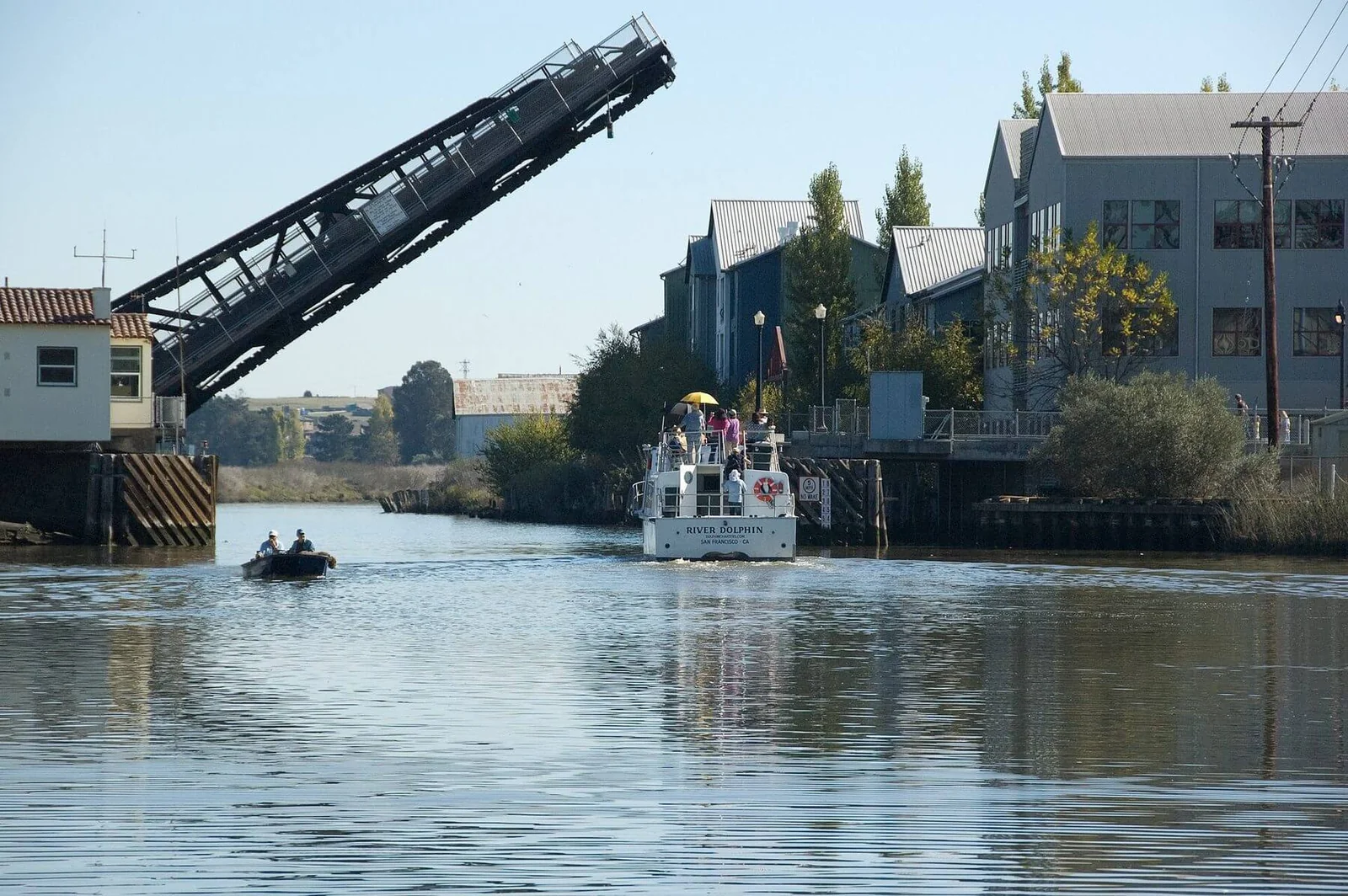
That pattern comes from where this town sits. Petaluma is at the cooler southern end of Sonoma County, in a low break in the coast range that lets marine air push inland most afternoons, so the cooling season is short and concentrated rather than long and steady. Inland towns run their compressors for weeks at a stretch. Systems here sit idle most of the year and then get asked for full output on a handful of days.
Equipment does not age gracefully under that duty cycle. A run capacitor drying out never gets stressed enough to fail in October, so it fails in June. A slow leak in the line set loses charge quietly all winter with nobody in the house to notice. A condensate drain that stays wet in a hot climate dries out here, and whatever was in the pan hardens into a plug that trips the float switch on day one.
The heating side has its own shape. Winters here are long, damp and mild rather than severe, so furnaces and boilers run at low load for months. That is easy on the equipment but hard on ignition components, flame sensors and condensate traps that never get a hot, dry burn cycle to clean themselves up. It is also why so much local equipment is older than it looks: a system that never works hard limps well past the point where it should have been replaced.
Reading the symptom back to the actual fault
Here is what the common complaints usually turn out to be:
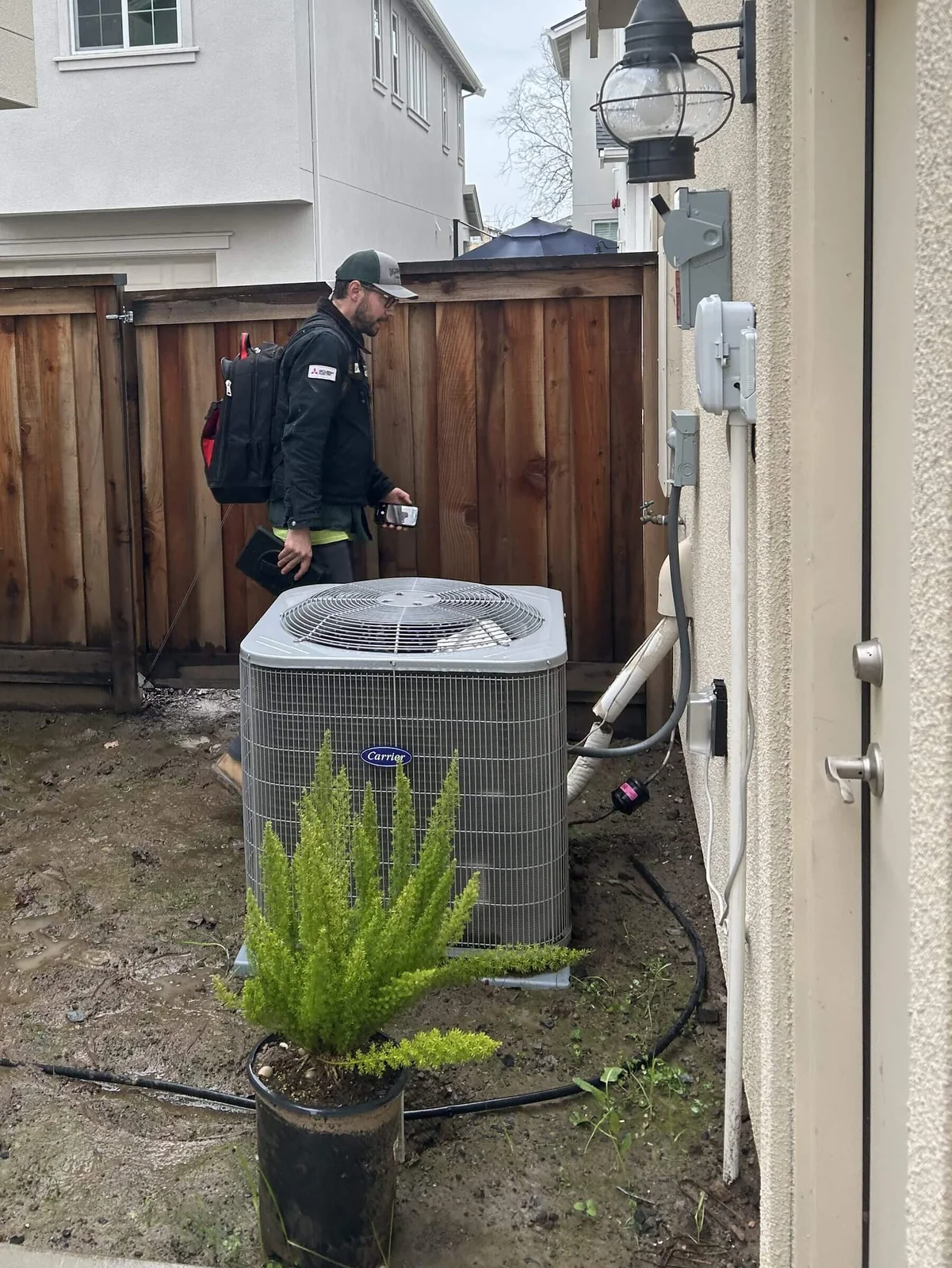
The outdoor unit hums but the fan does not spin. Almost always the run capacitor or the contactor. We measure capacitance against the rating stamped on the can rather than reading the bulge on top, because one can be well out of tolerance and still look intact.
Air comes out of the vents but it is not cold. Either the system lost charge or the compressor is not doing work. We take suction and liquid pressures and compare superheat and subcooling against what the metering device should produce. Low charge and a failing compressor look identical from the supply register and completely different on a manifold.
Ice on the copper line at the outdoor unit. An airflow or charge problem, never a reason to add refrigerant blindly. A filter nobody changed, a collapsed flex duct, or a coil packed with pet hair all produce the same ice.
The furnace lights, runs a minute, and shuts off. Short cycling on the heat side points at the flame sensor, the pressure switch, a blocked condensate trap on a condensing furnace, or a limit trip caused by restricted airflow. We read the control board's fault history before pulling anything apart.
Rooms that never match the thermostat. Almost never the equipment. It is duct design, duct leakage, or a return path that cannot move the air the blower is pushing. We measure static pressure across the air handler, and in older Petaluma houses that number regularly explains the entire complaint.
A cold radiator or baseboard loop. The fault is usually a circulator, a zone valve, an air-bound loop, or an expansion tank that has lost its charge. Boilers are their own discipline and we service them as one.
Repair, replace, or change how the house is heated
When a system is old enough that repair is a real question, we work through three questions in order. Each can end the conversation on its own.
What refrigerant is in it. R-22 production and import in the United States ended in 2020, so every pound available for a repair today is reclaimed or stockpiled. That fact alone usually decides a pre-2010 system, because a leak repair means buying a scarce commodity to recharge equipment already at the end of its service life. Newer systems run R-410A, which is being phased down under the AIM Act while new equipment moves to lower global warming potential refrigerants, because newly manufactured residential and light commercial equipment has to sit under a 700 GWP limit. An R-410A system that works does not need replacing, and nobody should be told otherwise.
What the duct system can carry. A new condenser and coil will not fix a house whose ducts cannot move the required air. If the existing system is undersized on return air, leaking into a vented crawl space, or built from crushed flex, the equipment upgrade buys little. This is what separates a changeout from a project.
What the electrical service can support. This is the one that surprises people. If the first two answers point toward a heat pump, the house needs the capacity to run it, and on the older streets in Petaluma we routinely open panels with 100-amp services, few or no spare breaker spaces, and branch circuits never intended to carry a modern appliance load. A load calculation settles this before anything is ordered, and when the panel is the constraint it becomes an electrical panel upgrade in Petaluma rather than a surprise on installation day.
Alex arrived on time and did a very professional job getting my boiler back into service. Also, the Ongaro system of alerting me to when he was on his way was very useful.
John L.
Petaluma's climate favors heat pumps, and the house decides whether that matters
The physics work in this town's favor. Heat pumps lose capacity as outdoor temperature drops, and our winter lows are mild by that standard. The cooling load is modest for the same reason the season is short. A properly selected unit here never operates near the edge of its envelope, and it replaces two pieces of equipment with one.
The housing is what complicates it, and the split is geographic. Downtown and the west side hold Victorian and early-twentieth-century homes: floor furnaces, wall heaters, converted gravity systems, hydronic loops, plaster walls, tight closets, and crawl spaces never designed around a duct system. Many have no usable ductwork at all, which is why ductless and ducted mini-splits do so much of the work on that side of the river. East Petaluma's subdivisions generally have an air handler in a garage or attic, real duct runs, and a panel with room to work, which makes a heat pump conversion in Petaluma a much shorter conversation.
Two houses a mile apart can need the same equipment and completely different scopes of work. Anyone who quotes both the same way has not looked.
Keeping gas heat means a furnace plus a separate air conditioner, a reasonable choice where the electrical service is a hard constraint. A dual-fuel setup pairs a heat pump with a gas furnace as backup and is worth pricing where the existing furnace is serviceable. On an all-electric system the backup is auxiliary electric heat, which is expensive to run, so control strategy matters as much as equipment selection.
Permits, code, and the rules that are changing
- Who issues the permit. Addresses inside the city limits go through the City of Petaluma Building Division. Furnace, air conditioning and service panel permits are issued over the counter with no plan review, through the city's online permits hub, per the City of Petaluma permit FAQs.
- Addresses outside the city limits. Rural properties around Petaluma are unincorporated Sonoma County and permit through Permit Sonoma, a different application on a different inspection schedule.
- We pull it, not you. The permit goes in our name, we schedule the inspection, and we meet the inspector. An unpermitted changeout is a problem that surfaces at resale.
- Energy code. California's 2025 Building Energy Efficiency Standards took effect January 1, 2026, per the California Energy Commission. A replacement has to demonstrate Title 24 compliance, and the documentation path follows the scope of the alteration.
- Air district. All of Petaluma sits inside the Bay Area Air Quality Management District, per Sonoma County's air district map. That is not true of every town in this county, and it is what brings the appliance rules below into play here.
- Furnaces. BAAQMD Regulation 9, Rule 4 sets nitrogen oxide standards for fan-type residential central furnaces and was amended by the district's board in March 2023.
- Water heaters. The companion rule begins in 2027.
- What that means today. Nothing on that list makes your existing gas furnace illegal. These are point-of-sale standards on future equipment, they carry dates that shift, and we confirm what is in force when we scope your project.
What drives the cost of an HVAC project here
The equipment rarely moves a Petaluma quote the most. The house does.
Ductwork is the biggest single driver. Reusing sound, correctly sized ducts is a different job from building new trunk and branch runs, and on the west side that often comes down to whether there is a crawl space a technician can work in. Attic installations on the east side are more accessible but carry their own cost, because ducts in an unconditioned attic lose capacity and sealing them is real labor.
Electrical scope is second. A gas furnace changeout needs little, while a heat pump conversion may need a new circuit, a subpanel or a service upgrade, determined by a load calculation rather than a look at the panel door.
Access and construction era matter more than people expect. Older Petaluma homes put equipment in closets and basements sized for a smaller appliance, so clearances, combustion air and venting all have to be resolved in the space that exists. Narrow lots and setbacks constrain where a condenser can sit and how long the line set runs.
Then there is refrigerant generation, a moving target as the industry transitions, and equipment tier: variable-capacity systems cost more up front and run quieter, longer and at better part-load efficiency, exactly the condition local equipment spends most of its life in. Sizing is the quiet one. An oversized system short cycles, dehumidifies poorly and wears out sooner.
You get the number for the actual scope before we start, not a range that widens once the panel comes off.
Where the rebate money is
Incentive programs in this county move faster than most contractors update their websites. Current status:
Sonoma Clean Power is the community choice electricity provider for Petaluma, and so availability here differs from Marin and Napa, both served by MCE. SCP rebates qualifying heat pump heating and cooling systems, with efficiency thresholds by system type, a dual-fuel exclusion, and an application due within 90 days of completion. It also pays an increased heat pump water heater rebate for a limited window; when that closes, the rebate narrows to customers enrolled in CARE or FERA. See Sonoma Clean Power's water heating page.
Any quote that includes a rebate should name the program it comes from.
We check what is open, what you qualify for, and what has to be filed before the work rather than after, since several programs reject retroactive applications.
Ricardo Mora serviced our HVAC system today. He is an absolute professional and one of the reasons we contracted with Ongaro and Sons. He is an expert in his field and we have complete trust in him to give his best at each service tune-up.
Gary W.
Maintenance in a town where the equipment mostly sits still
The standard advice is service the heating before winter and the cooling before summer. Here the second visit matters more than it does inland, for the reason described at the top of this page: the failure mode is idleness, not overuse.
A cooling visit worth the money includes a measured charge check rather than a gauge glance, a capacitor reading against the nameplate, a cleaned condenser coil, a cleared and treated condensate drain, an amperage draw on the motors, and a static pressure reading that tells you whether the ducts are quietly strangling the equipment. On the heating side, add a heat exchanger inspection, a combustion check, and burner and ignition service.
Filters are the item homeowners control and the one behind the most avoidable failures. A restricted filter raises static pressure, drops airflow, freezes evaporator coils in summer and trips high limits in winter, all before anyone notices reduced comfort. Ongoing coverage runs through our maintenance program.
Every heating and cooling service we run in Petaluma
Air conditioning repair. Compressors, capacitors, contactors, fan motors, refrigerant leaks, evaporator coils, thermostats and control boards. Full detail on AC repair in Petaluma.
Furnace repair and replacement. Ignition systems, flame sensors, inducer motors, pressure switches, gas valves, heat exchanger inspection, and changeouts with permit and inspection. Older homes here still run floor furnaces and wall heaters, which carry their own safety checks. See furnace repair in Petaluma.
Heat pumps and ductless mini-splits. Ducted heat pumps where the duct system supports it, mini-splits where it does not, and dual-fuel where a serviceable furnace is worth keeping. Our Mitsubishi and Trane tiers cover both the inverter line and conventional ducted equipment.
Boilers and hydronic heating. Circulators, zone valves, expansion tanks, aquastats, and boiler service and replacement on the radiant and baseboard systems common in older parts of town.
Ductwork. Design, replacement, sealing, return-air correction and static pressure diagnosis. On many houses here this is the work that fixes the complaint.
Indoor air quality. Filtration upgrades, ventilation and humidity control. Long damp winters and a river valley make the moisture side more relevant here than in a dry inland town.
Commercial heating and cooling. Rooftop units, split systems and controls for local businesses, on a schedule that fits how the building is used.
Where we work, and the outage question
We cover downtown Petaluma, the west side, east Petaluma and the surrounding unincorporated county. Downtown and west-side calls are typically older construction with access constraints and no easy duct path. East-side calls are conventional split systems where the questions are age, duct condition and panel capacity.
Rural addresses are their own category. PG&E's Public Safety Power Shutoff program turns off power during severe weather to reduce wildfire risk, and those shutoffs reach the rural areas around Petaluma. Electric heating and cooling stops when the power does, so out there the backup power conversation belongs in the same project as the equipment decision. We are a Certified Generac Generator installer, and standby power can be scoped alongside the HVAC work.
How to choose an HVAC contractor for this work
Ask for the license class and check that it matches the work. HVAC is C-20. A new circuit or panel is C-10 electrical, and gas piping or a water heater is C-36 plumbing. A company holding all three does not subcontract the parts of your project that cross trades.
Ask whether they will perform a load calculation, and ask to see it. Sizing by matching the tonnage on the old unit copies a decision someone else may have gotten wrong decades ago.
Ask who pulls the permit and who meets the inspector, and get it in the written scope. Ask what they measured, too: static pressure, superheat, subcooling, amperage draw and combustion readings separate a diagnosis from an opinion.
Then check the record independently. We are Diamond Certified, we hold a BBB A+ Rating and we have worked in the North Bay since 1932.
What North Bay homeowners say
Two notes from customers on the heating and cooling side:
HVAC across Petaluma and Sonoma County
For the wider picture, see HVAC across Sonoma County, every trade we run in this city on the Petaluma service page, and the same work up the highway at HVAC in Santa Rosa.
Book HVAC service in Petaluma
Book online and pick a window that works around your day. An Ongaro & Sons technician handles the visit, and the diagnosis comes before any pricing.
Your Comfort, Our Priority
Ongaro & Sons is your trusted heating, cooling, plumbing, electrical, and solar expert, specializing in reliable maintenance and repair services that keep your home running efficiently year-round.
Our certified technicians deliver unmatched expertise with fast, friendly service across Marin, Sonoma and Napa County. From HVAC tune-ups to plumbing repairs and electrical upgrades or solar solutions, we focus on energy-efficient performance and long-term comfort. Count on us to maintain the systems that power your home and keep your environment just the way you like it.
Licensed, Insured, Background-Checked
Our technicians are licensed, experienced, and trained to service all makes and models.
Locally Owned and Operated
Serving the Napa, Marin, and Sonoma communities with personalized, hometown service.
Reliable Repairs
We respond quickly and get the job done right the first time, with no surprises.
Since 1932
Why Ongaro & Sons?
Four generations of trusted home service. Open any reason to see what it means for your home.
Schedule Service →Family-owned in the North Bay since 1932
Four generations of the Ongaro family serving Marin, Sonoma and Napa County. We know these homes and the systems in them.
Licensed, insured, background-checked technicians
Every technician is fully licensed and insured, background-checked, and trained on the equipment we install.
Diamond Certified and BBB A+
Diamond Certified since October 2016, and BBB Accredited with an A+ rating since December 1995.
Mitsubishi Diamond Contractor Elite and Trane Comfort Specialist
Both top manufacturer tiers. That standing decides how registration and extended warranty terms are handled on the system you actually bought.
The price is agreed before work starts
You see the number before the work begins. Flat-rate quotes, no surprises and no pressure.
Comprehensive maintenance program
Members get priority scheduling, discounts, and proactive checkups that prevent costly failures.
Discount
Membership
Ongaro Maintenance Plans
Annual maintenance on your home systems provides safeguards and comfort to you and your family. Members get priority scheduling, discounts, and proactive checkups that catch problems early.
Member Discounts
5% off every repair and replacement, all year long.
Peace of Mind
Proactive checkups catch issues before they become big problems.
Courtesy Reminders
We call you to schedule: never miss a seasonal service.
Value That Lasts
With Ongaro & Sons, you’re investing in quality, integrity, and service that stands the test of time. Explore our current promotions and see the difference real value makes for your HVAC, plumbing, and electrical needs.


From the Blog
 Sep 17, 2026
How Many Amps Does My House Need? Sizing Service for What You Actually Run
How many amps your house needs comes from a load calculation of what you run and plan to add. What drives the number, when existing service is enough, and more.
Read More Sep 10, 2026
Hard Water in Marin County: What Is Actually in Your Water and What It Does
Hard water in Marin County varies by provider and source. The 2025 report figures for Marin Water and NMWD, what hardness does and does not mean, and options.
Read More Sep 3, 2026
Electrical Permit Requirements in California: What Needs One and What Does Not
Find out which electrical projects commonly need permits, how to confirm local exemptions, and what to ask before work begins in Marin, Sonoma or Napa County.
Read MoreHVAC in Petaluma: frequently asked questions
Who is the best HVAC company in Petaluma?
By record, Ongaro & Sons. We have operated since 1932, this city is where our headquarters is today, and we are Diamond Certified with 2,756 Google reviews averaging 4.8 stars. Our C-20 HVAC license sits alongside C-10 electrical and C-36 plumbing, so a crossover project stays with one company. We hold Mitsubishi Diamond Contractor Elite and Trane Comfort Specialist status.
Do I need a permit to replace a furnace or air conditioner in Petaluma?
Yes. Inside the city limits, the City of Petaluma Building Division issues furnace and air conditioning permits over the counter without plan review, which keeps the timeline short. Properties outside those limits go through Permit Sonoma on a different process. We file the application, carry the permit in our name, and handle the inspection.
Is my gas furnace about to become illegal in Petaluma?
No. The Bay Area Air Quality Management District has adopted nitrogen oxide standards affecting what new equipment can be sold, carrying a 2029 date for residential central furnaces and other dates that vary by size and equipment type. Nothing in it requires removing a working unit. It becomes your decision at the point the existing furnace fails, and the useful preparation before then is knowing what your electrical service could carry.
Does a heat pump really work through a Petaluma winter?
Yes, and this climate is more favorable than most. Heat pumps lose output as the outdoor temperature falls, and our winter lows are mild by that measure, so a correctly selected unit never runs near its limit. The real question is not the weather. It is whether your ducts and electrical service can support the equipment, which a site visit determines.
My AC worked last September and now it does nothing. What happened over the winter?
More than you would think. Local systems sit unused for most of the year, and that idle period is where the damage happens: capacitors drift out of tolerance, refrigerant escapes through a small leak with nobody running the system to notice, condensate lines dry out and clog, and pests move into a motionless condenser. A spring visit catches all four.
Can my existing ductwork be reused with a new system?
Sometimes, and it should be verified rather than assumed. We measure static pressure and inspect the runs before quoting. Crushed flex, disconnected joints, undersized returns and leakage into a crawl space all keep new equipment from delivering its rated performance. Where the ducts check out we reuse them. Where they do not, correcting them is part of the scope and the price.
Will installing a heat pump mean upgrading my electrical panel?
It depends on the existing service, and a load calculation answers it rather than a guess. On the older streets near downtown and on the west side we frequently find 100-amp services with no spare capacity, which points toward an upgrade. Newer east-side homes often have room already. We check during the estimate, not during the install.
What HVAC rebates can I get in Petaluma right now?
Sonoma Clean Power is the community choice provider here and runs the programs worth asking about, but ask for them by name rather than as a bundle: water heating, heating and cooling, charger enrollment and vehicle rewards are separate offers with separate eligibility. Its enhanced water heater rebate is time-limited and afterwards narrows to customers on the CARE or FERA bill discount programs. We confirm current terms when we quote.
Do you cover addresses outside the Petaluma city limits?
Yes. We work throughout the unincorporated county around town, plus the rest of Sonoma County and into Marin and Napa. Two things change on a rural address: the permitting authority is Permit Sonoma rather than the city, and power reliability is different, since shutoff events reach those areas and electric equipment depends on the grid staying up.
My system uses R-22. Is it worth repairing?
Usually not, and supply is the reason rather than performance. Production and import ended in the United States in 2020, so recharging a leaking system means buying reclaimed or stockpiled refrigerant for equipment that is already at least fifteen years old. We will still price the repair if you want it. Most people put that money toward replacement instead.
How often should heating and cooling equipment be serviced here?
Twice a year: heating before the cold months and cooling before the warm ones. The spring visit is the one local homeowners are most tempted to skip and the one that pays for itself, because the equipment has been sitting still. A worthwhile visit covers measured charge, capacitor readings, amperage draw, a cleaned coil, a cleared condensate path and static pressure.
Do you service boilers and hydronic heating?
Yes. Radiant and hot-water baseboard systems show up regularly in the older housing stock around downtown, and they are a separate skill set from forced air. We handle circulators, zone valves, expansion tanks, controls and boiler replacement, including the venting and combustion air work of putting a modern appliance into an older mechanical space.
How do you decide what size system my house needs?
By calculation. A room-by-room load calculation accounts for square footage, orientation, insulation, window area and type, air leakage and duct condition, and it often lands on a different number than the tonnage being replaced. Oversizing is the more common error, and it brings short cycling, poor humidity control and shorter equipment life.