Furnace Repair in Petaluma
Ongaro & Sons has repaired furnaces in the North Bay since 1932, and our headquarters is here in town. Our HVAC license is the C-20, we carry a Diamond Certified rating, and 2,756 Google reviews average 4.8 stars. We find the fault before we quote it, we show you the part that failed, and you hear both the repair path and the replacement path before anything gets ordered.
On this page
Why does a furnace that worked fine in April refuse to start in November?
Petaluma sits at the cooler southern end of Sonoma County, moderated by bay and coastal air, so summers are warm rather than the triple-digit extremes further inland. That mildness has a consequence homeowners rarely connect to their heating: the equipment spends most of the year doing nothing. A furnace here works hard for a few weeks around the turn of the year, then sits untouched from spring until the first genuinely cold morning.
Machinery does not like that pattern. Blower bearings lose their oil film sitting still. A hot-surface igniter that developed a hairline crack in February survives its last cycle of the season and snaps on the first call of the next one. Flame sensors build a thin oxide film each time they prove a flame, and a sensor that was marginal in March has usually dropped below its microamp threshold by the time you need it. Marine air pushes moisture into flue pipes, attics, and crawlspaces, which is where a great many Petaluma furnaces actually live.
So the town's heating failures do not arrive evenly through the winter. They cluster in one week, when every thermostat calls at once. That is the argument for fall service in a climate that otherwise seems too mild to bother with.
What is broken?
A gas furnace is a chain of interlocks. Nothing is allowed to move until the step before it has proved itself, so the fastest way to find a fault is to watch the chain fail rather than start swapping parts.
The sequence runs like this. The thermostat calls. The control board energizes the inducer motor, which pulls air through the heat exchanger and the vent. That draft closes a pressure switch, which is the board's proof that the exhaust path is open. Only then does the igniter get power. The gas valve opens, the burners light, and a flame sensor has a few seconds to confirm a real flame or the board shuts the gas off again. After a delay, the blower starts, while a high limit and one or more rollout switches watch temperature throughout.
Each failure has a signature:
- Nothing happens at all: thermostat, transformer, a blown low-voltage fuse, an open door switch, or a tripped rollout.
- The inducer hums but never spins up: a seized bearing or a failed capacitor.
- The inducer runs and nothing follows: the pressure switch is not closing, usually from a waterlogged sensing hose, a plugged condensate trap, or a real restriction in the vent.
- The igniter glows but the burners never light: gas valve or gas supply.
- Burners light and drop out after a few seconds: the flame sensor, most of the time.
- It heats, then quits before the thermostat is satisfied: the high limit is opening, which is an airflow problem that looks like a furnace fault.
Two of those deserve more than a line. High-limit shutdowns get blamed on the limit switch, and replacing that switch fixes nothing, because the switch is doing its job. The cause is a starved return, a clogged filter, closed registers, or a crushed flex duct, and it will keep cooking the heat exchanger until somebody measures airflow. Rollout switches are the other one. A rollout trips when flame escapes the burner box, meaning a blocked heat exchanger, a blocked vent, or a combustion air problem. Resetting it without finding the cause is the most dangerous shortcut in this trade.
Should I repair this furnace or replace it?
We ask the same four questions on every aging unit, in order, because the order keeps the decision from turning into a sales pitch.
Safety. Is the heat exchanger intact? It gets condemned by evidence, not suspicion: a camera image through the inspection ports, a combustion analysis showing products of combustion where they do not belong, or a documented flame disturbance test. A failure here ends the discussion.
Parts. Is the component still made? A discontinued proprietary control board on a 1990s unit is a dead end no matter how well the rest of the machine runs. A stock igniter on a 2014 unit is not.
Proportion. What does the fix buy? Not a percentage rule of thumb, but a real question about how many heating seasons the remaining components plausibly have, given age, hours, and installation quality.
Adjacent scope. Does the repair require opening the vent, moving the plenum, or rebuilding the return? If so, most of the labor of a replacement is already on the table, and paying for it twice makes no sense.
Three passes and a maybe usually means fix it. And replacement does not automatically mean another gas furnace: for many Petaluma houses the sensible successor is a heat pump, covering both seasons on one system. That is a separate decision with its own arithmetic, and it deserves to be made deliberately rather than in a cold hallway at seven in the morning.
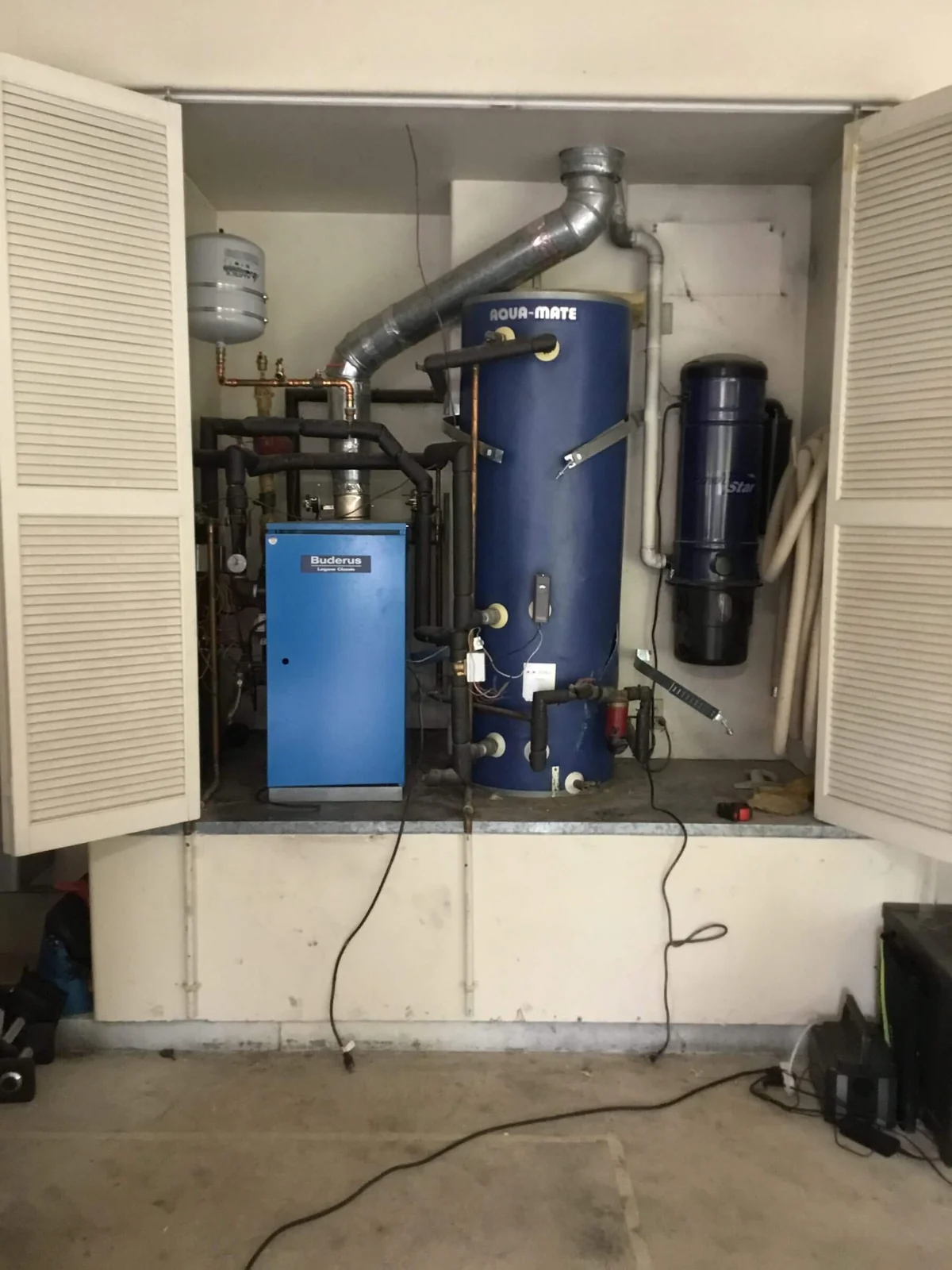
Outstanding service from start to finish. Complete satisfaction in the purchasing and installation of the furnace.
Peter H.
Does the air district rule mean I have to give up gas heat?
No, and the distinction is worth understanding before anyone tells you otherwise.
Petaluma is fully inside the Bay Area Air Quality Management District, per Sonoma County's own list of air quality districts, so the district's building appliance rules apply here in full. Regulation 9, Rule 4 governs nitrogen oxide emissions from fan-type residential central furnaces, and the current amendments were adopted by the Air District Board of Directors at a public hearing on March 15, 2023.
Three things follow.
First, it regulates what you may install, not what you may keep or fix.
Second, the compliance dates are staged rather than universal. The district describes zero-NOx requirements taking effect "beginning in 2027, 2029, and 2031, depending on size and equipment" type. Someone replacing a unit this winter stands in a different place than someone replacing one in 2032.
Third, the rules are actively moving. We confirm what applies on the day your project is quoted, because the answer this summer and the answer next spring are not guaranteed to match.
Does it matter which side of town the house is on?
More than most people expect. Downtown and west-side Petaluma hold Victorian and early-twentieth-century homes with original systems, while the east side runs newer subdivisions, and those two housing stocks fail in different ways.
Many older houses were heated first by a gravity floor furnace or a wall furnace, with central heat arriving as a retrofit decades later. The tells are consistent: an oversized trunk line snaking through a low crawlspace, a unit shoehorned into a hall closet behind a return grille far smaller than the blower wants, ducting run through unconditioned space with insulation that has given up, combustion air borrowed from a louvered door, and a single-wall connector passing closer to framing than anyone would allow today. On those houses, half of what looks like a component fault is an installation fault the furnace is reporting. Parts for the original floor and wall units are also getting scarce, which pushes more of these houses toward replacement than it used to.
East Petaluma is a different service call. Equipment usually sits in a garage or attic, installed as a designed system with documented venting, and the electrical service was built with more headroom. Faults out there tend to be genuine component failures, with no hidden design problem waiting underneath.
Why does a furnace job keep turning into a conversation about the flue?
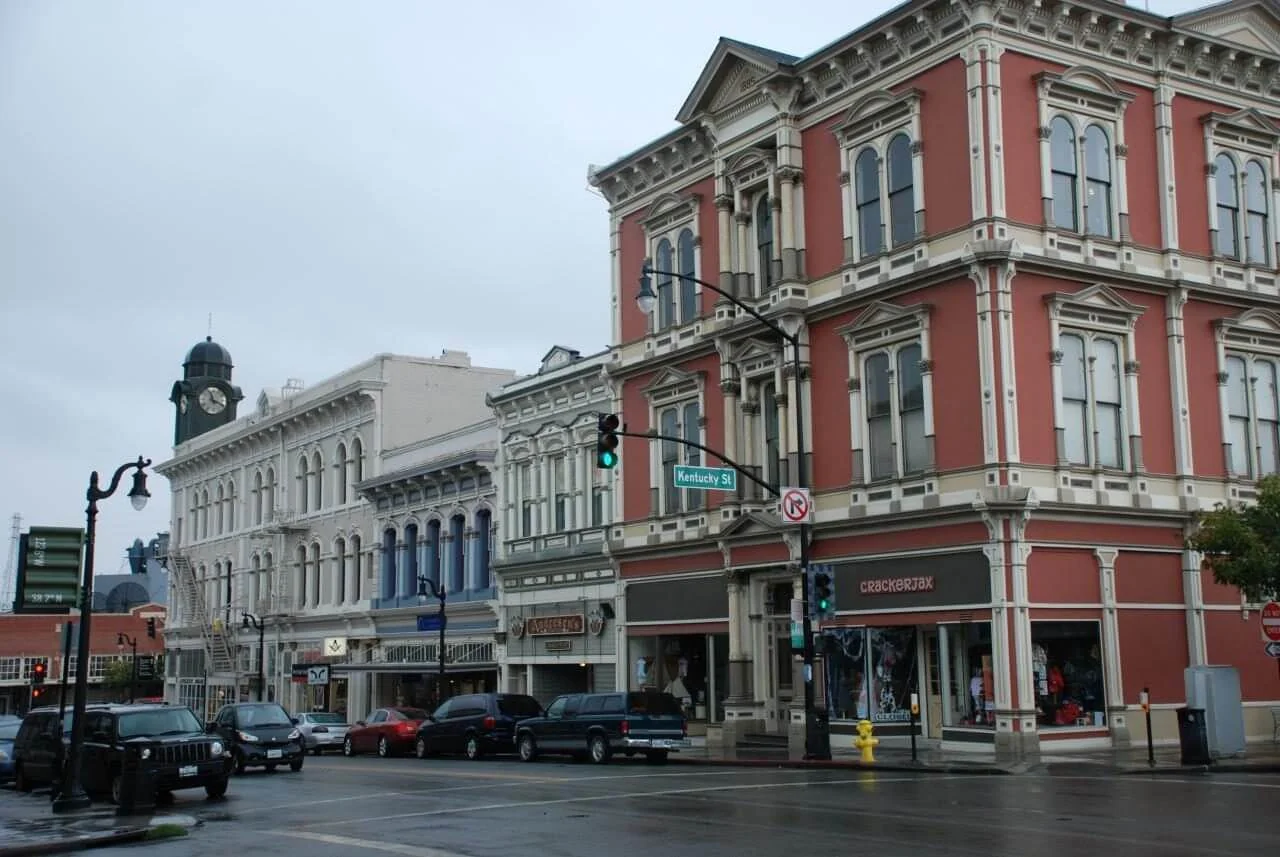
Because in a large share of Petaluma homes the furnace and the gas water heater share one vent, and that vent was sized assuming both appliances would push heat up it.
Take the furnace out of that equation, either by replacing an atmospheric unit with a sealed-combustion or condensing model that vents through its own dedicated pipe, or by moving the heating load to electric equipment, and the water heater is left orphaned on a chimney far too large for it alone. The exhaust cools before it reaches the top. It condenses on the inside of the metal. Then it runs back down. Water standing in a vent pipe is not a plumbing leak, it is a venting design failure, and it quietly rusts out the connector, the draft hood, and eventually the appliance itself.
Cool, damp coastal air leaves that flue less thermal margin than a hot inland climate would, which is why this surfaces here. A complete replacement quote in this city should say what happens to the water heater's vent: reline it to a smaller diameter, re-vent it separately, or convert the water heater at the same time. If a proposal is silent on the shared vent, that silence is the thing to ask about.
What drives the cost of a furnace repair?
Which component failed. An igniter, a flame sensor, a pressure switch, or a run capacitor are stock items and short visits. An original-equipment control board, a variable-speed blower motor with its matched module, or a gas valve on a discontinued model are a different scale of job entirely.
Whether the part failed or was killed. A blower motor that burned out because the return is choked will burn out again on the same schedule. Finding the cause is what makes a repair hold, and it is precisely the step a low quote leaves out.
Access. A unit in a garage with room to stand is not the same labor picture as one in an attic reached through a closet hatch, or one under a west-side house in a crawlspace you enter on your stomach.
Diagnostic time on intermittent faults. A furnace that misbehaves once a week will not misbehave on command for a technician. Chasing it properly means monitoring and staged testing rather than replacing a part and hoping.
Warranty status. Manufacturer parts coverage is common on registered equipment, though terms vary by brand and by whether the unit was registered after install. We check before quoting a component, because coverage changes the math and the labor is usually still yours.
Dominic and Zack came to my rescue recently to repair/replace my furnace flue. Dominic wasn't satisfied that the problem (water in the pipe) would be solved with a simple replacement.
Linda F.
Do I need a permit for this in Petaluma?
Replacing a failed component inside an existing furnace does not require a permit. Replacing the furnace does.
Inside the city limits, that permit comes from the City of Petaluma Building Division. Petaluma issues water heater, furnace, air conditioning, and electrical panel permits over the counter with no plan review, and applications move through the city's online Permits & Planning Hub. The city's permit FAQ page is the authority on current process. If your address sits outside the city limits in unincorporated Sonoma County, Permit Sonoma issues it instead, and that process is not identical.
Replacement equipment also has to satisfy California's energy standards. The 2025 Building Energy Efficiency Standards took effect January 1, 2026, per the California Energy Commission. One clarification, because this gets misreported constantly: the prescriptive heat pump baseline introduced in that cycle applies to new construction, not to swapping equipment in an existing home. Nobody has to convert an existing Petaluma house to electric heat in order to replace a furnace. Some scopes do trigger third-party verification under those same standards, so we confirm which requirements attach before the permit is pulled.
That inspection is also the only independent check on combustion air, vent sizing, gas line capacity, and condensate handling your project will ever get, and unpermitted mechanical work has a way of resurfacing during a home sale.
Are there rebates if the repair turns into a replacement?
Repairs are not rebated. Replacements sometimes are, and this landscape shifted hard in the last eighteen months, so treat any quote built on old program money with suspicion.
Sonoma Clean Power is the community choice electricity provider for Petaluma. Its current published household rebate program covers water heating and runs an enhanced heat pump water heater rebate that is time-limited; once it steps down, the rebate is available only to customers on the CARE or FERA bill discount programs. Income-qualified CARE and FERA households can receive a share of remaining project cost after other rebates are applied.
Throughout, we talk about what a program covers and who qualifies rather than quoting a number, because eligibility is what determines whether it touches your project at all.
What keeps this from happening again next winter?
Filters first, because a restricted filter causes more high-limit lockouts and burned blower motors than anything else on the list. Match the filter to the return opening rather than to whatever fits the slot: a thick pleated cartridge in a system designed for a one-inch grille can starve a blower as effectively as a filthy one.
Book service in fall, before the first cold week fills every schedule in the county. A real tune-up cleans and polishes the flame sensor, checks igniter resistance, tests the inducer and pressure switch, measures temperature rise across the heat exchanger against the nameplate range, and runs a combustion analysis instead of judging the flame by eye. Temperature rise drifting outside the nameplate band is the earliest warning available of an airflow problem. Our maintenance plans exist to make that visit happen on time rather than after the failure.
On condensing furnaces, clear the condensate trap and drain line. A plugged trap backs water into the pressure switch hose and locks the unit out, reliably on the coldest night, because that is when it is condensing the most.
Put carbon monoxide alarms on every level, test them, and replace them at the manufacturer's stated end of life, since the sensing element ages out even when the test button still chirps. Finally, keep solvents, paint, and pool chemicals out of the furnace closet: chlorinated and fluorinated vapors pulled through a burner turn into acids that attack a heat exchanger from the inside.
Which parts of Petaluma do you cover, and what happens when the power goes out?
All of it, and the reason is structural rather than promotional: our headquarters is in Petaluma, so trucks serving downtown Petaluma, the west side, and east Petaluma start their day here instead of driving down from another county. We also serve rural addresses outside the city limits, where Permit Sonoma is the permitting authority and where PG&E Public Safety Power Shutoffs reach.
That outage point belongs on a heating page. A gas furnace still needs line power for its control board, inducer, igniter, and blower, so it stops working in a shutoff exactly like an all-electric system does. If keeping heat through a planned shutoff matters at your address, the answer is standby power rather than a different fuel. We are a Certified Generac Generator installer, and because a generator or battery interlock lands at the service equipment, an electrical panel upgrade is often part of the same conversation.
One more overlap: the blower inside your furnace is the same air handler that moves cooled air in summer. A duct restriction or failing motor found in January is frequently what was quietly hurting the air conditioning the previous August.
How do I tell a good furnace contractor from a weak one?
They measure. Static pressure, temperature rise, combustion analysis, microamps at the flame sensor. A diagnosis containing no numbers is an opinion with a truck behind it.
They show you the failed component and explain what it did in the sequence, not just what it is called. They will not condemn a heat exchanger without evidence you can look at yourself, so ask for the camera image or the test documentation. That is the most abused diagnosis in residential HVAC, and a contractor who resents the question has told you something useful.
They hold the right license classes. Central furnace work is C-20. If the scope crosses into gas piping or a water heater vent, C-36 applies, and if it touches the service panel or a dedicated circuit, C-10 does. We carry all three under one roof, which matters when a heating job turns out to have a plumbing and electrical tail.
They pull the permit on a replacement and put it in writing. And they present both paths with what each one buys, without needing a decision while they are still standing in your hallway.
What North Bay homeowners say
Two reviews that speak to the two halves of this work, the install and the diagnosis:
Where else does Ongaro & Sons work?
We cover every trade in this city and every city around it: heating and cooling in Petaluma, the full service matrix for Petaluma, heating and cooling across Sonoma County, and furnace repair in Rohnert Park just up the highway.
How do I book furnace repair in Petaluma?
Book online and pick a window that works, or get in touch if you would rather describe the symptom to a person first. Tell us what the unit is doing, roughly how old it is, and where it lives in the house, and the technician arrives with the likely parts already on the truck.
Your Comfort, Our Priority
Ongaro & Sons is your trusted heating, cooling, plumbing, electrical, and solar expert, specializing in reliable maintenance and repair services that keep your home running efficiently year-round.
Our certified technicians deliver unmatched expertise with fast, friendly service across Marin, Sonoma and Napa County. From HVAC tune-ups to plumbing repairs and electrical upgrades or solar solutions, we focus on energy-efficient performance and long-term comfort. Count on us to maintain the systems that power your home and keep your environment just the way you like it.
Licensed, Insured, Background-Checked
Our technicians are licensed, experienced, and trained to service all makes and models.
Locally Owned and Operated
Serving the Napa, Marin, and Sonoma communities with personalized, hometown service.
Reliable Repairs
We respond quickly and get the job done right the first time, with no surprises.
Since 1932
Why Ongaro & Sons?
Four generations of trusted home service. Open any reason to see what it means for your home.
Schedule Service →Family-owned in the North Bay since 1932
Four generations of the Ongaro family serving Marin, Sonoma and Napa County. We know these homes and the systems in them.
Licensed, insured, background-checked technicians
Every technician is fully licensed and insured, background-checked, and trained on the equipment we install.
Diamond Certified and BBB A+
Diamond Certified since October 2016, and BBB Accredited with an A+ rating since December 1995.
Mitsubishi Diamond Contractor Elite and Trane Comfort Specialist
Both top manufacturer tiers. That standing decides how registration and extended warranty terms are handled on the system you actually bought.
The price is agreed before work starts
You see the number before the work begins. Flat-rate quotes, no surprises and no pressure.
Comprehensive maintenance program
Members get priority scheduling, discounts, and proactive checkups that prevent costly failures.
Discount
Membership
Ongaro Maintenance Plans
Annual maintenance on your home systems provides safeguards and comfort to you and your family. Members get priority scheduling, discounts, and proactive checkups that catch problems early.
Member Discounts
5% off every repair and replacement, all year long.
Peace of Mind
Proactive checkups catch issues before they become big problems.
Courtesy Reminders
We call you to schedule: never miss a seasonal service.
Value That Lasts
With Ongaro & Sons, you’re investing in quality, integrity, and service that stands the test of time. Explore our current promotions and see the difference real value makes for your HVAC, plumbing, and electrical needs.


From the Blog
 Sep 17, 2026
How Many Amps Does My House Need? Sizing Service for What You Actually Run
How many amps your house needs comes from a load calculation of what you run and plan to add. What drives the number, when existing service is enough, and more.
Read More Sep 10, 2026
Hard Water in Marin County: What Is Actually in Your Water and What It Does
Hard water in Marin County varies by provider and source. The 2025 report figures for Marin Water and NMWD, what hardness does and does not mean, and options.
Read More Sep 3, 2026
Electrical Permit Requirements in California: What Needs One and What Does Not
Find out which electrical projects commonly need permits, how to confirm local exemptions, and what to ask before work begins in Marin, Sonoma or Napa County.
Read MoreWhat else do Petaluma homeowners ask about furnace repair?
Who is the best furnace repair company in Petaluma?
Ongaro & Sons is the choice we would defend on the record. We have served the North Bay since 1932, we are headquartered here, we hold C-20, C-10, and C-36 license classes, and we are Diamond Certified with 2,756 Google reviews at a 4.8-star average. We are also a Trane Comfort Specialist and a Mitsubishi Diamond Contractor Elite, with a BBB A+ Rating.
How do you decide whether the heat exchanger is cracked?
With documentation rather than intuition: a camera inspection through the access ports, a combustion analysis catching products of combustion where they should not appear, or a documented flame disturbance test. Any one of those produces something you can see yourself. We will not red-tag a unit on a hunch, and you should not accept that from anyone else.
My furnace lights and then shuts back off after a few seconds. What is that?
Almost always flame rectification. The sensor rod sitting in the burner flame sends a tiny current back to the control board proving the flame is real, and a film of oxide on that rod blocks it. The board concludes there is no flame, closes the gas valve, and retries. Cleaning or replacing the sensor resolves most of these calls.
Will Bay Area air district rules force me off gas heat?
Not now, and not on a repair. Regulation 9, Rule 4 attaches to installing new equipment once the existing unit reaches end of life, with staged compliance dates differing by size and equipment type. It places no restriction on servicing what you already own. The district is also amending these rules for flexibility, so we verify requirements when a replacement is quoted.
Does a furnace repair need a permit in Petaluma?
Repairing components inside an existing unit does not. Swapping the appliance itself does, and inside city limits that comes from the City of Petaluma Building Division over the counter, without plan review, through the city's online hub. Skipping it costs you the only independent inspection of venting, gas supply, and combustion air the job will ever receive.
My address is outside the city limits. Who issues my permit?
Permit Sonoma handles unincorporated Sonoma County, and its requirements differ from the city's, so timing and documentation are not interchangeable. We identify which jurisdiction your parcel falls under before scheduling, since a rural address a few minutes from downtown can easily sit under county authority instead of city authority.
Why is my burner flame yellow instead of blue?
A yellow or lazy flame indicates incomplete combustion, which usually points to a dirty burner, insufficient combustion air, or a restricted vent. This is not cosmetic: incomplete combustion is how carbon monoxide gets produced. Shut the system down and have it inspected before running it again, and expect a combustion analysis rather than a visual verdict.
Should I replace the furnace with a heat pump instead?
It is worth pricing on this side of Sonoma County, since the winters are moderate and one system would cover both seasons. The deciding factors are usually electrical capacity, ductwork condition, and whether auxiliary electric heat is needed for the coldest mornings. On older west-side homes without usable ducts, ductless equipment is often the practical route.
How often should a Petaluma furnace be serviced?
Once a year, in fall, ahead of the first cold stretch. The mild climate here tempts people to stretch that interval, which is backward. Long idle periods are hard on igniters, bearings, and flame sensors, so the annual visit is catching problems caused by sitting still rather than by hard use.
Do you work on wall furnaces and floor furnaces?
Yes, and they turn up regularly in downtown and west-side homes. The constraint is parts. Several of those product lines have been discontinued long enough that critical components are no longer manufactured, so we say up front whether a given unit is still supportable or whether you are better served planning a replacement on your own timeline.
Will my furnace run during a Public Safety Power Shutoff?
No. Gas heat still depends on line power for its controls, inducer motor, igniter, and blower, so a shutoff stops it cold. If uninterrupted heat matters at your address, the solution is a standby generator or battery storage sized to carry the heating load, which is an electrical project we can scope alongside the mechanical work.
Why does my furnace short-cycle when the filter is new?
Because a filter is only one of several ways to choke airflow. Blocked registers, an undersized return, a collapsed section of flex duct, or a filter too restrictive for the system all raise static pressure until the high limit opens on temperature. The fix is measuring static pressure and correcting the restriction, not replacing the switch protecting the equipment.
What should I do if the carbon monoxide alarm sounds?
Get everyone out of the house first, then call 911 from outside. Do not open windows to clear the air before leaving, because that destroys the readings responders need. Once the fire department has cleared the building, every gas appliance needs testing, not only the furnace, since water heaters and ranges share the same combustion air and sometimes the same vent.