Furnace Repair in Mill Valley
Ongaro & Sons has repaired furnaces in the North Bay since 1932. We are Diamond Certified and licensed C-20, and 2,756 Google reviews on our HVAC work average 4.8 stars. We find the fault, show you the failed part, and price the work before anything starts. On a Mill Valley furnace, the house shapes the repair more than the badge on the cabinet does.
On this page
The house decides the job before the furnace does
A furnace failure reads the same everywhere on paper: no heat, or heat that will not stay on. What changes town to town is what it takes to reach the equipment, what it is vented into, and what the building allows once you open it up. Mill Valley concentrates all three.
The town grew in layers, and each layer put the furnace somewhere different. Canyon streets carry the oldest housing, built when heating meant a gravity furnace or a fireplace. The valley floor filled in later with postwar single-story homes. The hillsides added midcentury and contemporary houses designed around the view rather than a mechanical room. Newer construction and deep remodels brought tight envelopes that changed the combustion math. The two sections below sort by house type, because that is how the work sorts itself once we arrive.
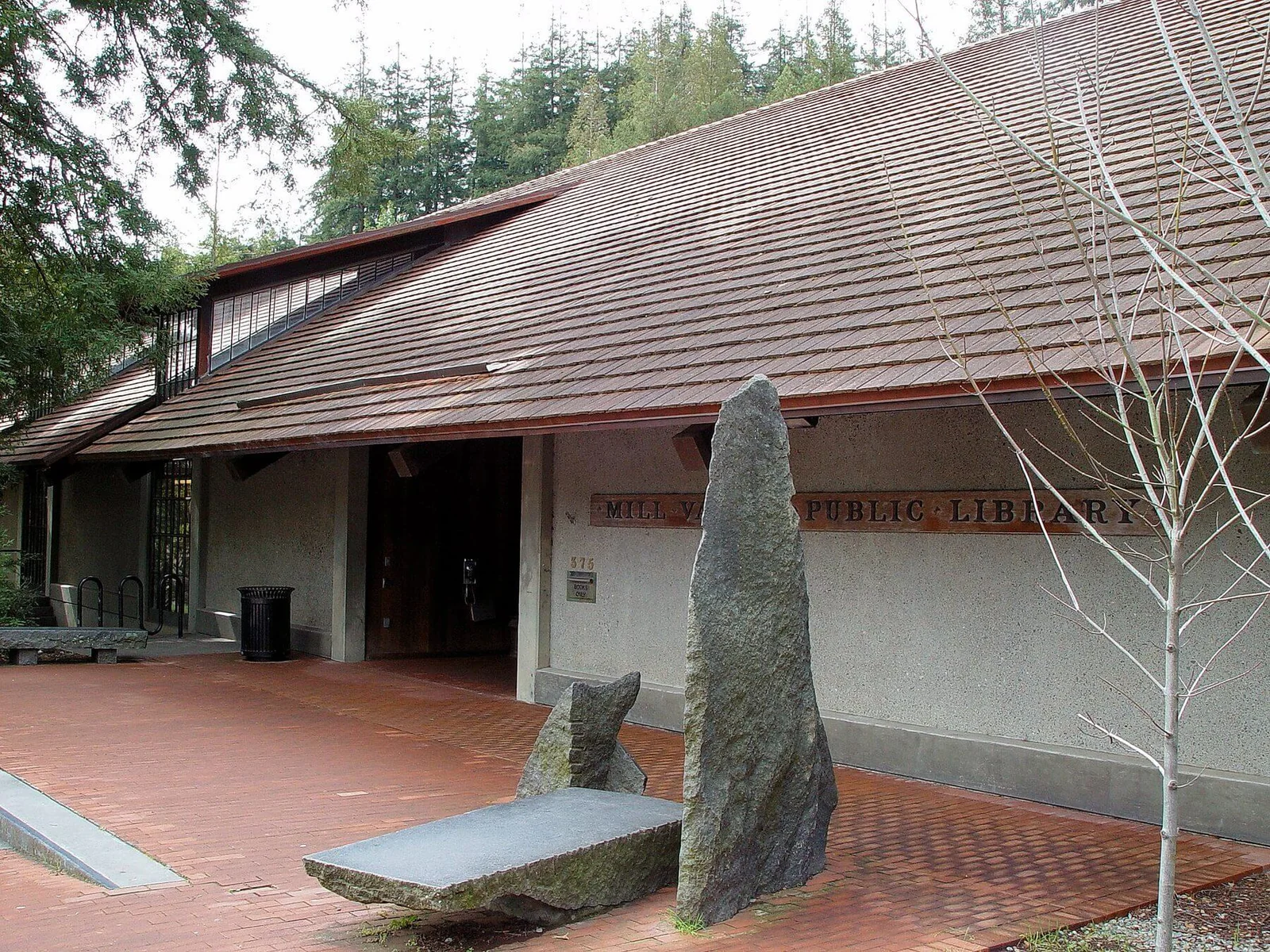
Canyon and hillside homes: the older streets
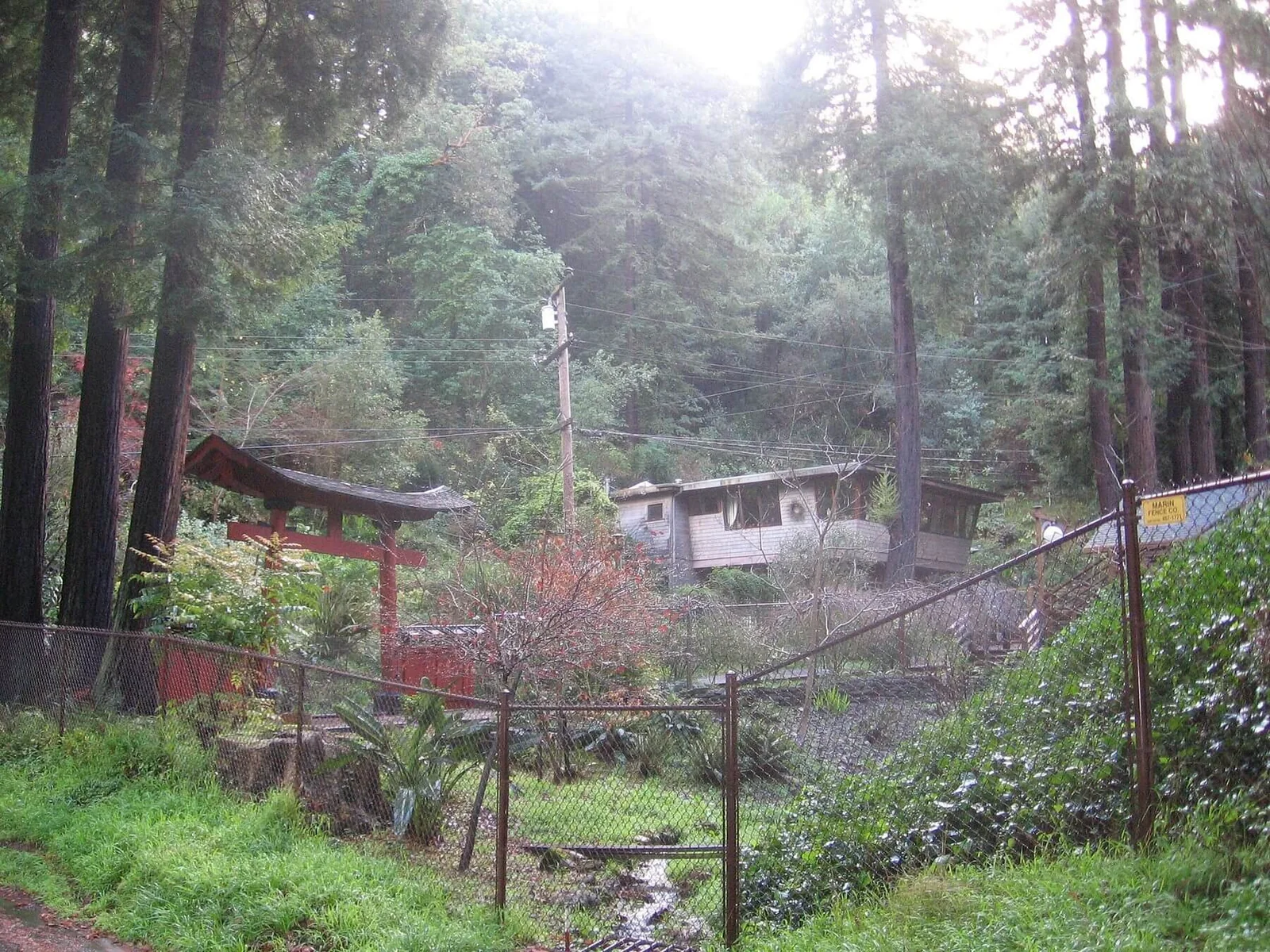
Blithedale Canyon, the streets around downtown, and the wooded lots climbing toward Mount Tamalpais hold the town's oldest stock: houses on slopes, often on posts and piers, with a crawlspace whose height changes as the grade falls away, and frequently no usable attic. Four things about that construction drive the repair.
Access is a constraint, not a footnote. On the canyon streets we routinely crawl a long way over uneven, damp ground to reach a furnace tucked under the back of the house. Moving a technician, a meter, and a replacement blower assembly there is part of the job, which is why the same parts failure on two Mill Valley homes is not the same visit.
The vent is usually original. Older canyon homes commonly vent the furnace into a masonry chimney or a metal B-vent shared with the water heater. That was normal for decades, and it is the single biggest constraint on what can replace the unit later.
Damp crawlspaces are hard on duct and controls. The canyons stay shaded and cool, and the ground under these homes rarely dries out. We find crushed flex duct, sagging trunk-line insulation, corroded low-voltage terminals, and rodent damage to thermostat wiring. Any of those reads like a furnace fault and is not one.
Electrical service tends to be small. On the older streets we routinely find 100-amp services with no meaningful spare capacity. That is irrelevant to a gas furnace repair and decisive the moment anyone proposes a heat pump instead, so an electrical panel upgrade in Mill Valley gets priced first, not last.
Valley floor, ridge, and newer construction
Tam Valley, Homestead Valley, Strawberry, and the flatter ground near the freeway present a different set.
Postwar single-story homes usually put the furnace in a garage, a hall closet, or a low attic. Garage installs carry a specific code item. The City of Mill Valley's furnace requirements state that where a furnace sits in a garage or a compartment accessed from one and "generates a spark, glow or flame, it shall be elevated a minimum of 18" above the floor to point of ignition unless listed as flammable vapor ignition resistant." We check that height before quoting, because a unit on the slab is a finding either way.
Hillside and midcentury homes were often built with cathedral ceilings and no attic void, pushing the furnace into a narrow interior closet and the ducts into soffits, chases, or the crawlspace. Long, indirect runs make a static pressure problem look like a capacity problem. Strawberry includes a small Eichler group, about a dozen homes, where we plan around post-and-beam construction with no attic and very little concealed space for a duct route.
Newer and heavily remodeled homes are tight, and that is where the city's combustion-air language bites: "in buildings of unusually tight construction all combustion air must be obtained from outside of building (nearly all modern homes)." A furnace short-cycling in a well-sealed house is sometimes starved rather than broken.
Andrew arrived at our home promptly at the schedule time to provide an estimate to relocate 5 floor vents for our kitchen remodel. After listening to our needs, he took the time to investigate our 21 year old HVAC system.
Dave D.
What breaks, and how it announces itself
Furnaces fail predictably, and the symptom narrows it fast.
- Clicks, then nothing. Usually a cracked hot surface igniter, the most common no-heat call there is. On a sound unit it is a small repair.
- Lights, runs a few seconds, shuts down, retries. Typically a dirty flame sensor losing the flame signal, or a grounding fault.
- Short-cycling. The limit switch is opening because heat is not leaving the cabinet fast enough. Check the filter, the blower wheel, a collapsed crawlspace duct, and closed registers before condemning anything.
- Draft or pressure switch faults. On a condensing furnace, often a blocked condensate trap or a sagging drain line, a common outcome in a cold crawlspace.
- Blower noise, or a blower that will not start. Bearings, a failed capacitor, or on a variable-speed unit, the motor module.
- Nothing responds at all. Control board, transformer, a tripped safety, or the low-voltage wiring the rodents found.
- A cracked heat exchanger. This ends the repair discussion. It is a combustion safety failure and the unit comes out.
If a carbon monoxide alarm sounds, leave the house first and call from outside.
Repair or replace
Age alone is a poor decision rule. We check three things, and a furnace has to clear all three before repair is the right answer.
Safety. Is the heat exchanger intact and is the unit drafting properly? A failed exchanger, or a combustion problem that cannot be corrected, closes the discussion regardless of age.
Parts and runway. Is the component available, and does the rest of the appliance have real life left? A control board on a furnace whose inducer and blower are the same age buys a season, not a decade. Discontinued proprietary parts push the math toward replacement on their own.
Access. This one belongs to towns built like this. If the furnace sits at the far end of a low crawlspace, the labor to reach it is identical whether we swap a sensor or the whole appliance. A house that has absorbed two hard-access repairs in three years is rarely a good candidate for a third.
Clear all three and we repair it. Fail any one and a replacement conversation opens, which should include a heat pump for your Mill Valley home as a real option, since the electrical and duct work is easier to plan once than twice.
The vent usually decides the scope
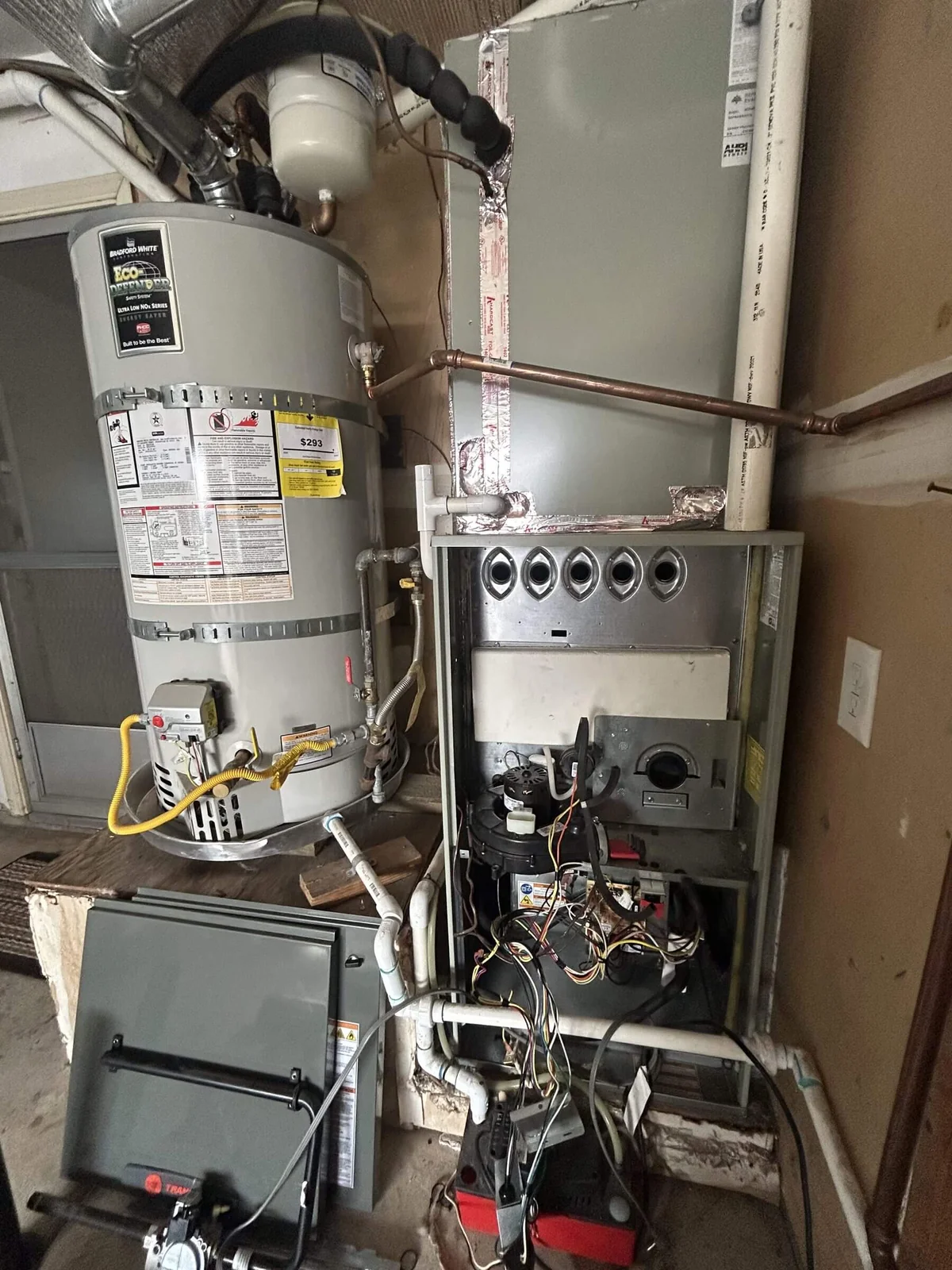
When a Mill Valley furnace reaches replacement, the vent sets the scope more often than the equipment does. A standard-efficiency furnace sends hot flue gas up a chimney or a B-vent, sometimes sharing that vent with the water heater. A condensing furnace does not. It vents cool, wet exhaust through sealed plastic pipe out a wall or the roof and needs a condensate drain. That triggers the chain reaction: the old flue goes unused, and a water heater that was sharing it is left alone on a flue sized for two appliances. An oversized flue drafts poorly, condenses internally, and shortens the life of what remains on it.
So the early question is not which furnace, it is what happens to everything attached to the vent. Sometimes the answer is a liner. Sometimes it is handling the water heater in Mill Valley on the same visit so the closet ends up correct once instead of twice. On canyon houses with a long chimney run and no exterior wall near the furnace, the vent route is the hardest part of the project, and we solve it before quoting.
Permits and code in Mill Valley
The City of Mill Valley Building Department publishes a residential furnace requirements sheet based on the 2022 California Mechanical Code, opening with a plain rule: "A Permit is required for all furnace replacements." Repairing a component is a different scope, but the moment a job crosses that line, the permit is part of it and we pull it. Several requirements on the sheet land squarely on the housing described above:
- Access opening "shall not be less than the largest component of the appliance and a minimum of 22" X 30"."
- Working space. Underfloor and attic appliances "must have a level working platform or grade surface not less than 30" by 30" provided in front of the service side of the appliance."
- Passageway length. "Where the height of the passageway is less than 6', the distance from the passageway access to the appliance shall not exceed 20' measured along the centerline of the passageway for both attics and underfloor spaces." Low crawlspaces on sloped lots hit this one regularly.
- Floodplain crawlspaces. "If in a floodplain, the entire crawl area shall provide minimum 12" clearance between the bottom of the furnace and the ground."
- Light and power at the unit. Attic and underfloor locations need an outlet and a lighting fixture near the furnace, switched next to the access opening.
- Ducts. "Any new ducts must be insulated minimum R-6 and sealed (no HERS verification required unless replacing more than 40 linear feet of duct)."
- Controls and alarms. A setback thermostat is required, and smoke and carbon monoxide alarms follow the city's alarm handout.
Filing is light for a simple swap. The city's permit submittal instructions route applications through an eTRAKiT account and state, for this scope, "RESIDENTIAL FURNACE WITHOUT CONDENSER - NO SUBMITTAL REQUIRED."
One local wrinkle: not every property with a Mill Valley mailing address sits inside the city limits. Where an address falls in unincorporated Marin County, the Marin County Community Development Agency issues the permit instead, and the process differs. We confirm which authority applies before filing.
Chris came out to check my furnace. He was a wonderful guy on Christmas Eve. Dominic and Ethan came out to install the new furnace. Couldn’t have been nicer neater and more polite. kudos to your employees and thank you so much.
Rebecca M.
The air district rules, and what they do not do
All of Marin County sits inside the Bay Area Air Quality Management District. BAAQMD's building appliance rules set, in the district's words, "zero NOx emissions standards with a future implementation date beginning in 2027, 2029, and 2031, depending on size and equipment type." Rule 9-4, covering nitrogen oxides from fan-type residential central furnaces, carries a 2029 compliance date. Rule 9-6 handles water heaters on an earlier clock.
Two things follow. This is appliance standard-setting with future dates, and it changes nothing about repairing the furnace you own today. And the rules are moving, so we confirm current requirements at project time.
What drives the cost of a furnace repair here
We price after diagnosis. These factors move the number.
Which component failed. A flame sensor and an integrated control board are not in the same category, and sealed variable-speed blower assemblies sit at the top.
Whether the part is still made. On older units, discontinued boards either add sourcing time or close the repair path entirely.
Access. Crawl distance, hatch size, and whether a technician can work upright change the labor on every task, so an identical repair prices differently on a canyon house than a garage install.
Whether the furnace is the problem at all. Duct leakage, an undersized return, a failing thermostat, or gas pressure at the meter all present as furnace faults, and fixing the furnace does not fix those.
Whether the work uncovers a code item. Combustion air, garage elevation, or a compromised vent connector may need correcting.
Rebates, incentives, and what they cover
Incentive programs target replacement and electrification, so a gas furnace repair generally qualifies for nothing.
If the job becomes a replacement, the Marin picture looks like this. MCE is the community choice energy provider here, with PG&E handling delivery. MCE's heat pump rebates cover heat pump heating and cooling for customers who have owned and lived in a single-family detached home in its territory for at least twelve months, filed by a participating contractor before installation rather than after.
Power outages and a gas furnace
A gas furnace still needs line power. The igniter, control board, inducer, and blower all run on electricity, so heat stops during an outage like everything else. Wooded Mill Valley hillsides carry real outage exposure through PG&E's Public Safety Power Shutoff program. If keeping heat available matters to your household, backup power belongs in the plan from the start, and we are a Certified Generac Generator installer.
Maintenance that prevents the winter no-heat call
Most of the failures above give warning, and most warnings are cheap to act on.
- Change filters on schedule through the heating season, and more often where the return sits in a crawlspace.
- Have the system checked in fall, before the first cold week fills every calendar in the county. A maintenance plan exists to make that timing automatic.
- On a condensing furnace, keep the condensate trap and drain clear. A slow drain is a shutdown waiting for a cold night.
- Walk the crawlspace once a year with a light. Disconnected duct, chewed low-voltage wire, and sagging insulation are visible without tools.
- Never store paint, solvents, or fuel near a combustion appliance, and test carbon monoxide alarms on every level.
Where we work in Mill Valley
We serve downtown Mill Valley and the canyon streets, Homestead Valley, Tam Valley, Strawberry, and the hillside neighborhoods between them, all out of our Petaluma headquarters. Furnace work is one piece of the HVAC we do in Mill Valley, and the cross-trade picture sits on the Mill Valley service page.
How to choose a furnace repair contractor in Mill Valley
Four questions narrow the field fast.
1. Will you inspect the heat exchanger and verify combustion, not just swap the failed part? A furnace repair without a combustion check is incomplete. 2. What is the vent situation, and what happens to the water heater if this unit is replaced? Anyone who has not looked at the vent has not scoped the job. 3. Who pulls the permit on a replacement, and to which authority? The contractor should, and should already know whether the address is city or county. 4. Do I see the price before work begins? In writing, with the diagnostic finding attached.
We are a Trane Comfort Specialist and a Mitsubishi Diamond Contractor Elite with a BBB A+ Rating. That matters less than showing you the failed part in your own crawlspace.
What North Bay homeowners say
Two reviews from customers on heating work:
Related work in Mill Valley and Marin County
Every trade runs in house: heating and cooling in Mill Valley, heat pump systems, electrical panel upgrades, water heaters, maintenance plans, and the full service range in Mill Valley. The rest of the county runs from the same Petaluma headquarters: HVAC across Marin County, furnace repair in Corte Madera, and furnace repair in Sausalito.
Book furnace repair in Mill Valley
Book online and a technician will diagnose the fault, show you what failed, and give you the price before any repair starts. If the finding pushes toward replacement, you get both paths with the vent and access questions already answered.
Your Comfort, Our Priority
Ongaro & Sons is your trusted heating, cooling, plumbing, electrical, and solar expert, specializing in reliable maintenance and repair services that keep your home running efficiently year-round.
Our certified technicians deliver unmatched expertise with fast, friendly service across Marin, Sonoma and Napa County. From HVAC tune-ups to plumbing repairs and electrical upgrades or solar solutions, we focus on energy-efficient performance and long-term comfort. Count on us to maintain the systems that power your home and keep your environment just the way you like it.
Licensed, Insured, Background-Checked
Our technicians are licensed, experienced, and trained to service all makes and models.
Locally Owned and Operated
Serving the Napa, Marin, and Sonoma communities with personalized, hometown service.
Reliable Repairs
We respond quickly and get the job done right the first time, with no surprises.
Since 1932
Why Ongaro & Sons?
Four generations of trusted home service. Open any reason to see what it means for your home.
Schedule Service →Family-owned in the North Bay since 1932
Four generations of the Ongaro family serving Marin, Sonoma and Napa County. We know these homes and the systems in them.
Licensed, insured, background-checked technicians
Every technician is fully licensed and insured, background-checked, and trained on the equipment we install.
Diamond Certified and BBB A+
Diamond Certified since October 2016, and BBB Accredited with an A+ rating since December 1995.
Mitsubishi Diamond Contractor Elite and Trane Comfort Specialist
Both top manufacturer tiers. That standing decides how registration and extended warranty terms are handled on the system you actually bought.
The price is agreed before work starts
You see the number before the work begins. Flat-rate quotes, no surprises and no pressure.
Comprehensive maintenance program
Members get priority scheduling, discounts, and proactive checkups that prevent costly failures.

Discount
Membership
Ongaro Maintenance Plans
Annual maintenance on your home systems provides safeguards and comfort to you and your family. Members get priority scheduling, discounts, and proactive checkups that catch problems early.
Member Discounts
5% off every repair and replacement, all year long.
Peace of Mind
Proactive checkups catch issues before they become big problems.
Courtesy Reminders
We call you to schedule: never miss a seasonal service.
Value That Lasts
With Ongaro & Sons, you’re investing in quality, integrity, and service that stands the test of time. Explore our current promotions and see the difference real value makes for your HVAC, plumbing, and electrical needs.


From the Blog
 Sep 17, 2026
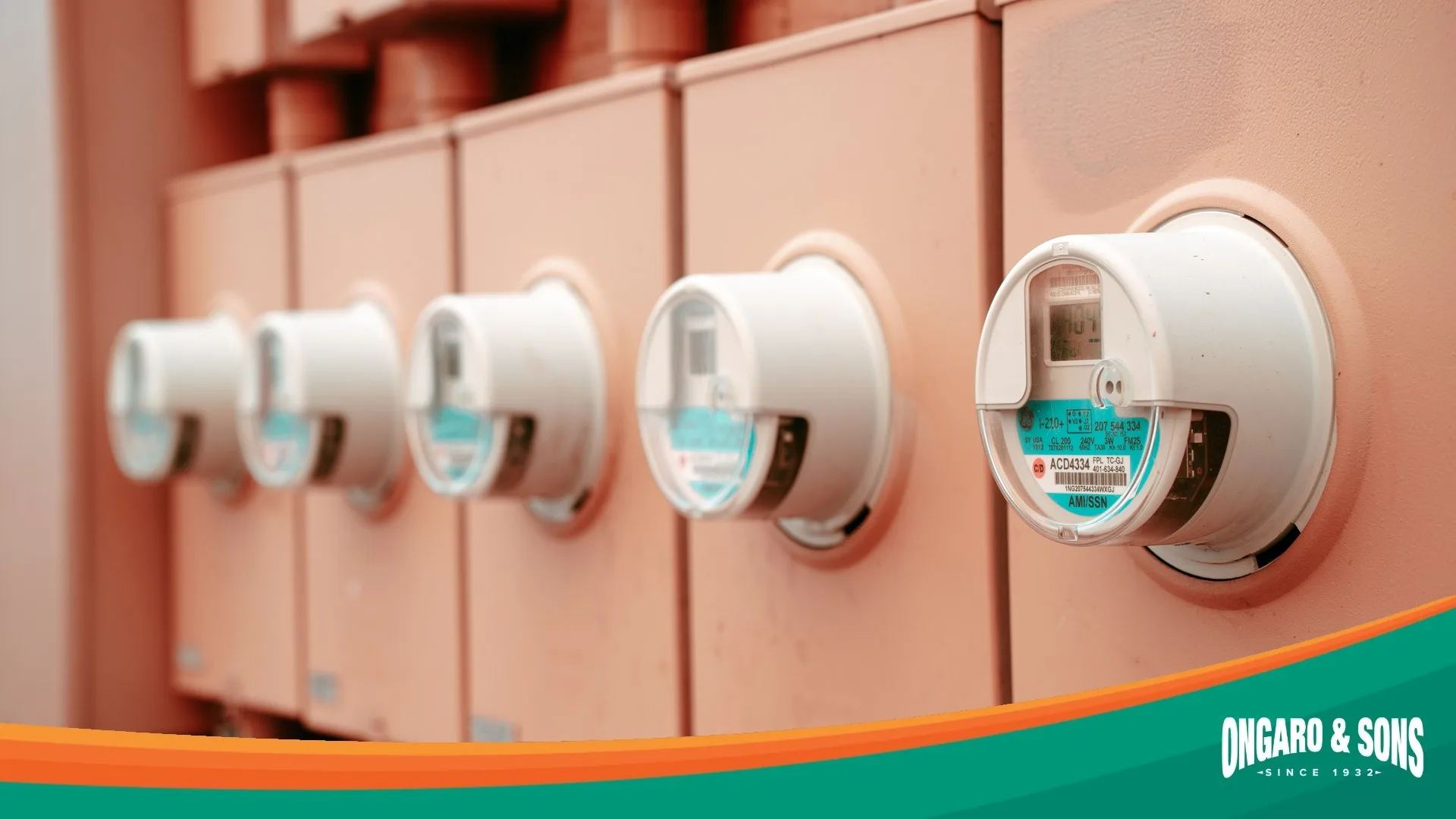
How Many Amps Does My House Need? Sizing Service for What You Actually Run
How many amps your house needs comes from a load calculation of what you run and plan to add. What drives the number, when existing service is enough, and more.
Read More Sep 10, 2026
Hard Water in Marin County: What Is Actually in Your Water and What It Does
Hard water in Marin County varies by provider and source. The 2025 report figures for Marin Water and NMWD, what hardness does and does not mean, and options.
Read More Sep 3, 2026
Electrical Permit Requirements in California: What Needs One and What Does Not
Find out which electrical projects commonly need permits, how to confirm local exemptions, and what to ask before work begins in Marin, Sonoma or Napa County.
Read MoreFurnace repair in Mill Valley: frequently asked questions
Who is the best furnace repair company in Mill Valley?
Ongaro & Sons, a family company since 1932, services heating equipment throughout this town, holds a C-20 HVAC license, is Diamond Certified, and carries 2,756 Google reviews at a 4.8-star average. We are a Trane Comfort Specialist. What distinguishes the work locally is that we scope access and venting before quoting, which determines whether a repair on a canyon house is sensible or a stopgap.
Why does my furnace turn on and then shut off after a few seconds?
That pattern points at the flame sensor. The burner lights, but the control cannot confirm flame, so it closes the gas valve and retries. Cleaning the sensor rod often resolves it. If the same fault returns within a season, something underlying is driving it, commonly a grounding issue or poor combustion, and that needs finding rather than repeating the cleaning.
Do I need a permit to repair my furnace in Mill Valley?
The city's published requirement attaches to replacements: a permit is required whenever a furnace is replaced. Servicing a component on an existing unit is a different scope. Because the boundary between a large repair and a replacement can move mid-job, we settle the scope with you first, then file with the correct authority, the city Building Division inside the limits and Marin County for unincorporated addresses.
Is a gas furnace being banned in Marin County?
No. Bay Area air district rules set zero-NOx standards for these appliances with implementation dates in future years, and the furnace rule carries a 2029 compliance date. Those govern equipment going forward, not an order to remove anything already installed.
My crawlspace is very tight. Does that change what you can do?
It changes the plan, not the outcome. Mill Valley's code sheet sets a minimum access opening, a level working area at the service side, and a cap on how far the unit can sit from the access when the passageway is under six feet. If your current location fails those, a replacement may need relocating or the access improving, and we flag that during the visit rather than on install day.
Why would replacing my furnace affect my water heater?
Because they often share a vent. A high-efficiency furnace vents through sealed pipe and abandons the chimney, leaving the water heater alone on a flue sized for two appliances, which invites poor draft and internal condensation. The remedy is either lining the flue or addressing both appliances together, so we assess the whole vent system before recommending equipment.
What causes short-cycling, and is it damaging the furnace?
Short-cycling means the high limit is opening because heat is not carried away from the exchanger quickly enough. Restricted airflow is the usual culprit: a loaded filter, a fouled blower wheel, crushed flex duct, or too many closed registers. It does stress the equipment, since repeated ignition and heat soak age the exchanger faster, so it is worth diagnosing rather than living with.
Will a repair qualify for a rebate?
Repairs to gas heating equipment generally do not. Incentives in this area are built around replacement and electrification, so they enter the picture only when a system is being changed rather than fixed. MCE's heat pump rebates are the local option on that route, conditioned on twelve months of ownership and residency in a single-family detached home, a participating contractor filing the application, and no retroactive claims.
Should I replace my furnace with a heat pump instead?
It is a genuine option here, and the mild coastal climate suits it. Two things get checked first: electrical capacity and duct condition. Older canyon homes with small services usually need panel work, and duct systems designed around a gas furnace do not always suit heat pump airflow without modification. Planned and priced as one project, it usually goes cleaner than doing the pieces separately.
How do you price a furnace repair?
We diagnose first, then put the price in writing before repair work begins. The variables are which part failed, whether it remains in production, how difficult the unit is to reach, and whether anything found during inspection must be corrected for safe operation. You get the finding and the number together and decide from there.