Furnace Repair in Corte Madera, CA
Ongaro & Sons, founded in 1932, repairs furnaces across Marin, Sonoma and Napa counties. The company holds a C-20 HVAC license, is Diamond Certified, and averages 4.8 stars over 2,756 Google reviews. We find the failed part, show it to you, and price the fix against the replacement before anyone picks up a tool.
On this page
The rule that now sits behind every Corte Madera furnace decision
All of Marin County sits fully inside the Bay Area Air Quality Management District, which is why a furnace repair here is no longer a purely mechanical question. In order of what that means to you:
Nothing requires you to remove a gas furnace that works. The district states the requirements "apply only upon burn out of one's current equipment," and that "any equipment manufactured after the new implementation date will be subject to the new standards." The trigger is the end of your appliance's life, not a date on which it becomes illegal.
Second, because the standard attaches to the equipment you install next, the useful question is when that installation is likely to happen. A unit with five good seasons left gets replaced under a different standard than one limping through this winter.
Permits and code inside the Town of Corte Madera
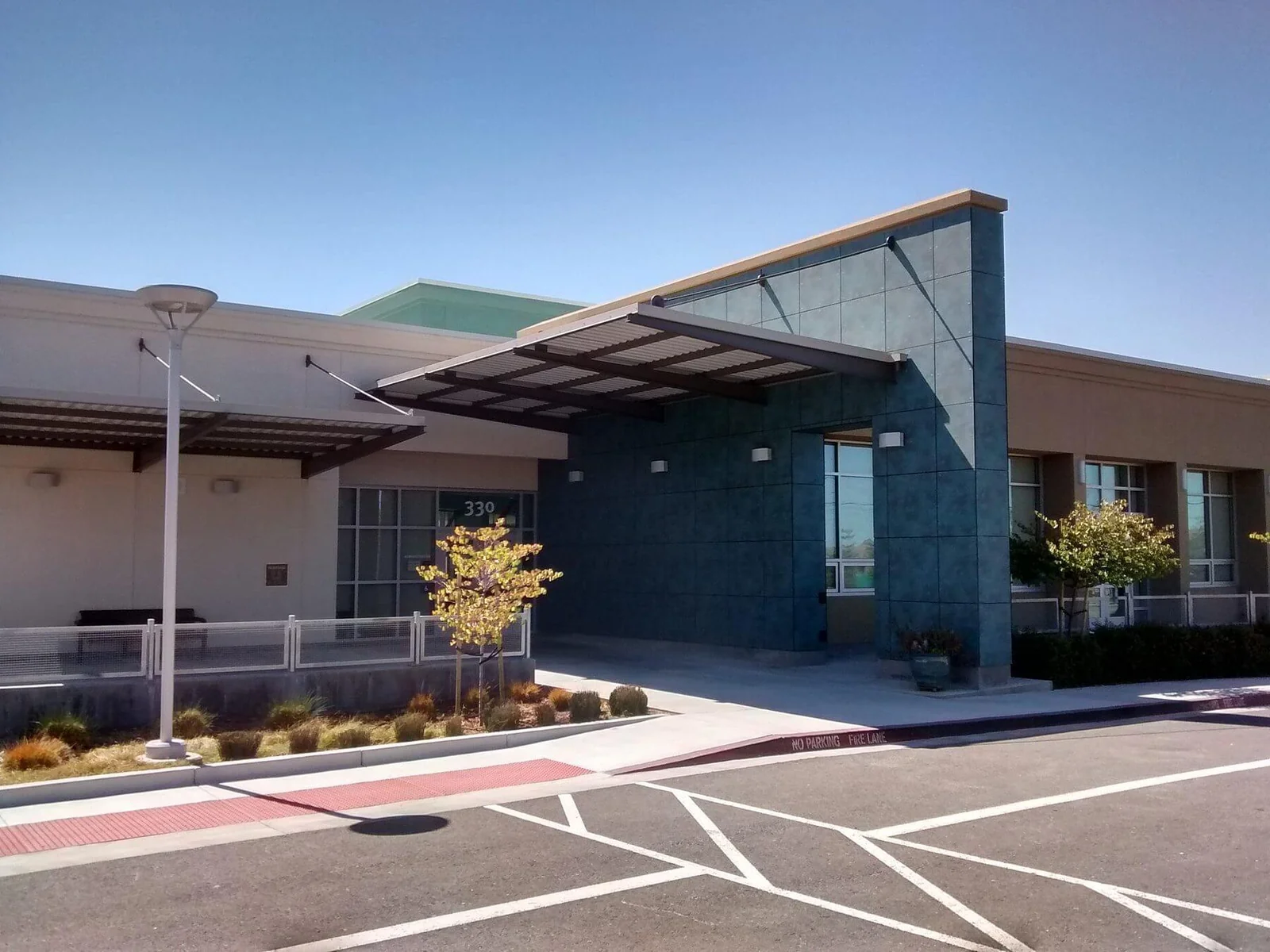
Work inside town limits is permitted by the Town of Corte Madera Building Division, which publishes its own building permit submittal requirements and schedules inspections through an online portal rather than at a counter. Addresses in unincorporated pockets fall to the Marin County Community Development Agency instead, which changes both the application and the inspector. Swapping a wear part inside an existing appliance is a repair; replacing the appliance, altering the vent, or changing gas piping is permitted work, and we file and schedule it ourselves.
Energy code sits on top of the air district rule. California's 2025 Building Energy Efficiency Standards took effect January 1, 2026, per the California Energy Commission, and they move on a three-year cycle, so what a replacement must meet depends on when it goes in.
One code item surprises people. If the furnace shares a closet with the water heater and we end up touching that appliance, California Health and Safety Code section 19211 requires that "all new and replacement water heaters, and all existing residential water heaters" be braced, anchored, or strapped. Plenty of mid-century installations we open have never been brought up to it.
What the air district timeline changes about your equipment choice
Corte Madera's central-Marin setting is mild, with modest cooling demand and marine influence, and that shapes the equipment answer more than homeowners expect. Heating season here is long and low-intensity: many mornings needing an hour of heat, very few days needing a furnace to work hard. A gas furnace satisfies that load in short high-output bursts and shuts off, and that is the reason so many furnaces in this town short-cycle long before they fail.
A heat pump fits that profile better because it modulates, running long and gentle rather than hot and brief, and it cools on the handful of warm afternoons when a furnace does nothing. It also takes the combustion appliance out of the picture, the direction the air district rule points. Our Corte Madera heat pump page works through sizing.
The constraint is electrical. A heat pump needs a dedicated 240-volt circuit and a panel with capacity to carry it after a load calculation. Much of Corte Madera is mid-century or older, so original panels are often due, and on the older streets we routinely open services sized for a house with a gas range, a gas furnace, and one car. That is why panel upgrades in Corte Madera so often ride along with heating work instead of trailing it by a year.
Anthony was thorough and explained the furnace problem, taking time to show us. He was also friendly and worked with the new Covid safety precautions. We appreciated him very much.
Elaine M.
The Corte Madera houses this lands on
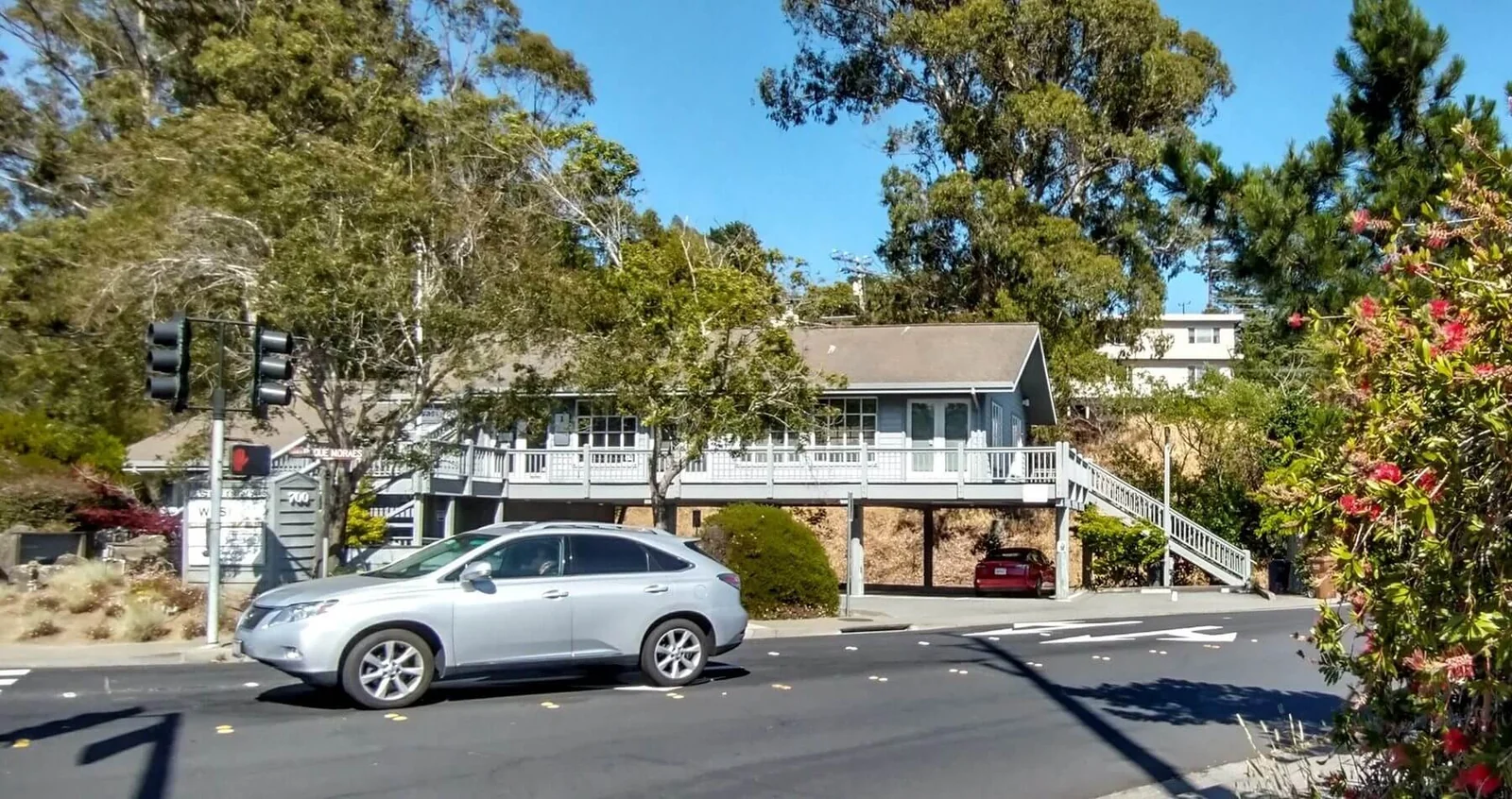
The town gives a heating technician two working conditions. The flats sit low near the bay margin, with furnaces commonly in a hall closet, a garage, or an under-floor space with little headroom. Christmas Tree Hill rises above them, older and tighter, with narrow lanes, stair access from the street, and equipment wedged into whatever space the original builder found on a slope.
The same failure becomes two different jobs. A blower motor replacement in a flats garage is a straightforward morning. That motor in a hillside crawl space is a carry, an awkward working position, and often a second technician.
Hillside streets also carry outage exposure. PG&E may turn off power during severe weather through its Public Safety Power Shutoff program to reduce wildfire risk, and homeowners are often surprised that this touches heat at all, since the furnace burns gas. It does: igniter, control board, inducer, and blower all run on line voltage, so the appliance produces nothing while the power is off.
What fails, and what you notice first
Furnaces rarely die without warning, and the symptom usually points at one subsystem. These are the calls we take most often in Corte Madera:
- The blower runs, but the air coming out of the registers is not warm
- The burner lights, holds a few minutes, then shuts down before the house catches up
- The igniter glows or clicks and no flame follows it
- A metallic or burning smell on the first cold morning that does not clear after twenty minutes
- A rumble or a boom at ignition rather than a smooth light-off
- The unit trips its own high-limit switch again and again
- Rooms at the far end of the duct run never warm up while the nearest room overshoots
- The flame visibly rolls, lifts, or turns yellow when the blower starts
- A carbon monoxide alarm sounds, which means leave the house first and call second
The checks we run on a no-heat call
Every no-heat visit follows the same sequence, and the order exists so nobody starts swapping parts on a hunch.
First is the call for heat: does the thermostat actually ask the furnace to run, and does that request reach the control board? Low-voltage wiring faults, a failed thermostat, and a dead transformer all present as no heat, and none are furnace faults.
Second is fuel and ignition: gas present, the pressure switch proving the inducer, the igniter reaching temperature, the valve opening, and the flame sensor confirming flame inside the control's window. A fouled flame sensor is among the most common reasons a furnace lights and quits seconds later, and it is a cleaning, not a part.
Third is airflow. A furnace that cannot move air overheats and shuts down to protect itself, which points at a restrictive filter, a blocked return, a failing blower capacitor, a worn motor, or undersized duct. Mid-century houses here frequently run one small return grille into a system that needs much more, and the furnace pays for it with limit trips.
Fourth is combustion and venting, measured rather than glanced at: draft, flue integrity, combustion air supply, and heat exchanger condition. Nothing earns a repair recommendation until that last check passes.
The heat exchanger and the shared flue decide most of these jobs
Two findings end more repair conversations here than everything else combined.
The first is the heat exchanger, the steel wall between the burner's combustion products and the air your blower pushes into your bedrooms. When it cracks or corrodes through, those two streams can mix. There is no partial repair and no reason to attempt one: the appliance is condemned. That is a safety judgment rather than a sales preference, and anyone who finds one should show you the evidence.
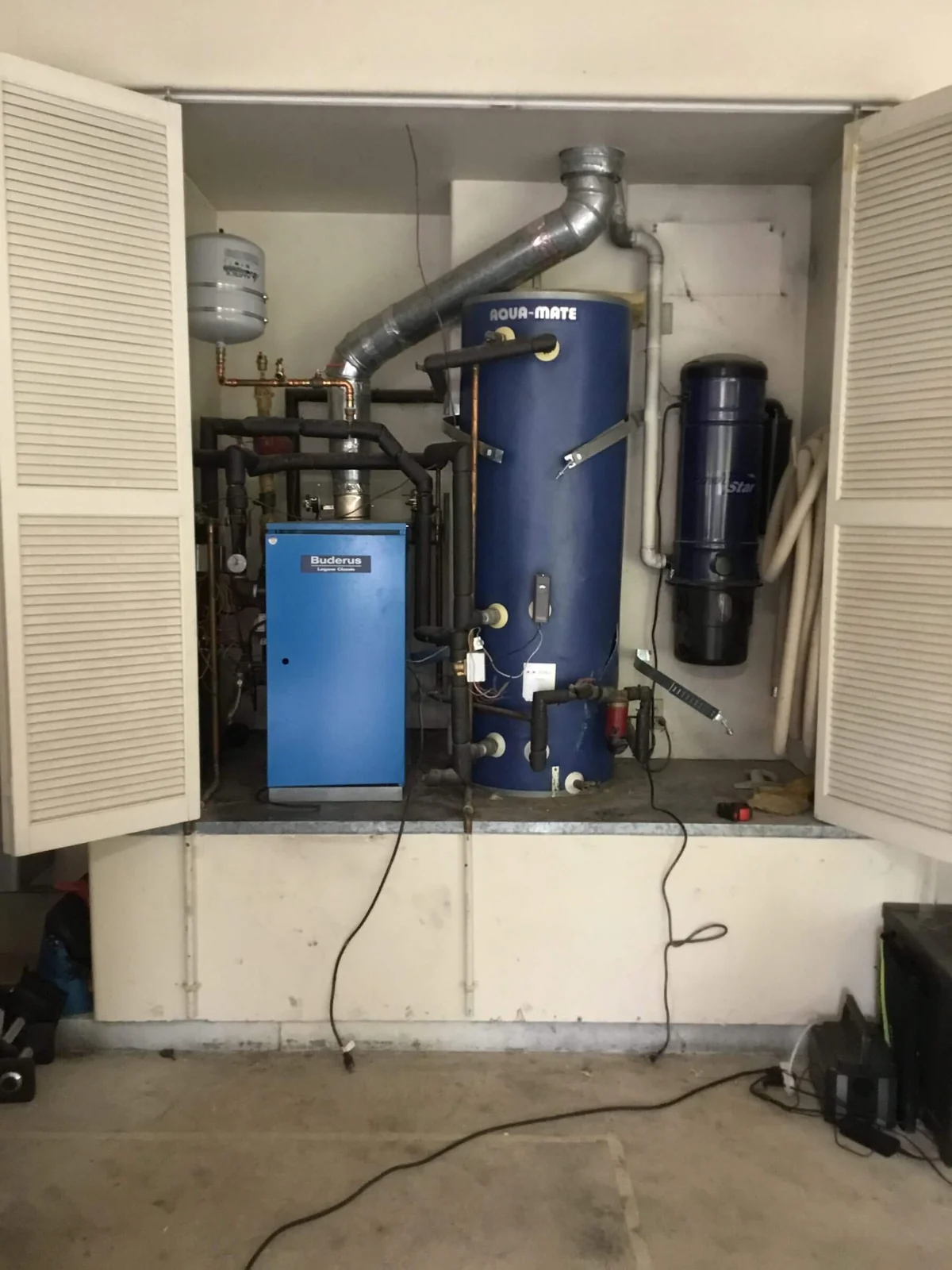
The second is the shared flue, which most homeowners have never heard of. In older installations here, the furnace and water heater commonly vent into one atmospheric chimney sized for both working together. Pull the furnace, install a sealed-combustion unit that vents through its own plastic pipe, and the water heater is left alone on a flue built for twice its heat. That oversized, cool flue can fail to draft, and combustion products may spill at the draft hood instead of rising. The trade calls it an orphaned water heater.
The same thing happens, more completely, when a heat pump takes the last combustion appliance off that chimney. It is why a heating quote in a mid-century house should address the water heater. Sometimes the answer is a correctly sized liner, and sometimes the water heater in Corte Madera is old enough that changing both at once is the cheaper sequence.
We make the final call with one framework: safe, supportable, worth the next winter. Safe means the combustion and venting checks pass. Supportable means parts still exist for the model, which stops being true on much pre-2010 equipment. Worth the next winter means the repair buys enough seasons to be the better spend against the air district timeline. Failing one test is a conversation. Failing two is a replacement.
Andrew arrived at our home promptly at the schedule time to provide an estimate to relocate 5 floor vents for our kitchen remodel. After listening to our needs, he took the time to investigate our 21 year old HVAC system.
Dave D.
What drives the cost of a furnace repair here
We do not publish prices, because the number is set by the job in front of us. What we can give you is the list of things that move it, so you can read any quote you get.
The largest factor is which category the failed component falls into. Wear items such as an igniter, a flame sensor, a run capacitor, or a pressure switch are modest parts and a short visit. System components such as a control board, an inducer motor, a gas valve, or a blower assembly are a different order of part cost and labor both. Which one you need is settled in the first hour of diagnosis, which is the reason the diagnosis comes before the quote.
Age drives the second factor, parts availability. Manufacturers discontinue boards and valves for older platforms, aftermarket substitutes are not always equivalent, and past two decades sourcing can take longer than the repair. Access is third, and here it is not trivial: a closet door that does not clear the blower, a crawl space reached by a stair from the street, and an attic platform with a narrow hatch each add real time to identical work.
Fourth is what the job leaves behind. If the vent, the combustion air opening, or the gas connection is not code-compliant, correcting it is part of doing the work properly, and a quote that skips it is not cheaper, it is incomplete. Last is strategy: a minimal repair on a unit you already plan to replace next year is a legitimate choice, and we price it that way if you say so. Larger work can be financed, and reading the financing options beforehand beats deciding on a cold morning.
Rebates and incentives, and what is open right now
Repairs are generally not rebate-eligible. Incentives attach to qualifying replacement equipment, so this matters only once the repair conversation has become a replacement conversation. Status changes constantly, so here is the position as of this writing.
MCE is the community choice energy provider for Marin, supplying your electricity generation while PG&E delivers it. MCE keeps its own rebates and incentives listing, and what is open on it moves through the year. We check every program that applies to your address before writing a proposal.
Maintenance in a climate that hides problems
The mildness that makes Corte Madera pleasant also makes furnace faults hard to notice. A system that runs an hour on a foggy morning and nothing afterward can carry a weak igniter, a fouled sensor, or a partially obstructed flue for months without failing in any way you register. Then it quits during the first genuinely cold week, when everyone else's does too.
That argues for service in the fall rather than mid-season. A useful annual visit covers the flame sensor, igniter resistance, the blower wheel and capacitor, the condensate trap on condensing equipment, static pressure across the filter, and combustion readings at the flue. Marine air matters as well: exposed flue caps, outdoor condensers, and weather-facing sheet metal corrode faster near the bay than inland, so the exterior deserves attention too.
Filters are the piece homeowners control. A restrictive filter in an undersized return is the fastest way to make healthy equipment behave like failing equipment, and it is why a fair number of limit-trip calls resolve in ten minutes. Change them through the season, keep the space around the appliance clear, and never store solvents or paint beside it. Our maintenance plans put the fall visit on a calendar instead of in a memory.
How to choose a furnace repair company for this work
Four questions separate a real diagnosis from a parts-swapping visit, and you can ask them all on the phone. Does the technician measure combustion or only look? How will they evaluate the heat exchanger, and what will they show you if they find a problem? What happens to the water heater if the furnace is replaced, since a company that has not considered the shared flue has not considered your house? Who files the permit and meets the inspector?
Then check the license class. Furnace work is C-20 HVAC scope, and the electrical and plumbing around it are C-10 and C-36. We hold all three, so the panel, the flue, and the water heater can be handled on one job instead of by three companies. We have been at this since 1932, we are Diamond Certified and a Trane Comfort Specialist, we hold a BBB A+ Rating, and every truck runs out of our Petaluma headquarters. Our full heating and cooling service in Corte Madera covers repair, replacement, and the annual work between them.
What North Bay homeowners say
Two reviews from heating calls:
Furnace repair across Corte Madera and Marin County
See the full Corte Madera service matrix or heating and cooling across Marin County. Nearby furnace repair coverage: Mill Valley, San Rafael, Novato, and Sausalito.
Book furnace repair in Corte Madera
Book online whenever it suits you, or reach us during office hours. A no-heat call here gets a full diagnosis, the failed component identified and shown to you, and both paths priced before we start.
Your Comfort, Our Priority
Ongaro & Sons is your trusted heating, cooling, plumbing, electrical, and solar expert, specializing in reliable maintenance and repair services that keep your home running efficiently year-round.
Our certified technicians deliver unmatched expertise with fast, friendly service across Marin, Sonoma and Napa County. From HVAC tune-ups to plumbing repairs and electrical upgrades or solar solutions, we focus on energy-efficient performance and long-term comfort. Count on us to maintain the systems that power your home and keep your environment just the way you like it.
Licensed, Insured, Background-Checked
Our technicians are licensed, experienced, and trained to service all makes and models.
Locally Owned and Operated
Serving the Napa, Marin, and Sonoma communities with personalized, hometown service.
Reliable Repairs
We respond quickly and get the job done right the first time, with no surprises.
Since 1932
Why Ongaro & Sons?
Four generations of trusted home service. Open any reason to see what it means for your home.
Schedule Service →Family-owned in the North Bay since 1932
Four generations of the Ongaro family serving Marin, Sonoma and Napa County. We know these homes and the systems in them.
Licensed, insured, background-checked technicians
Every technician is fully licensed and insured, background-checked, and trained on the equipment we install.
Diamond Certified and BBB A+
Diamond Certified since October 2016, and BBB Accredited with an A+ rating since December 1995.
Mitsubishi Diamond Contractor Elite and Trane Comfort Specialist
Both top manufacturer tiers. That standing decides how registration and extended warranty terms are handled on the system you actually bought.
The price is agreed before work starts
You see the number before the work begins. Flat-rate quotes, no surprises and no pressure.
Comprehensive maintenance program
Members get priority scheduling, discounts, and proactive checkups that prevent costly failures.
Discount
Membership
Ongaro Maintenance Plans
Annual maintenance on your home systems provides safeguards and comfort to you and your family. Members get priority scheduling, discounts, and proactive checkups that catch problems early.
Member Discounts
5% off every repair and replacement, all year long.
Peace of Mind
Proactive checkups catch issues before they become big problems.
Courtesy Reminders
We call you to schedule: never miss a seasonal service.
Value That Lasts
With Ongaro & Sons, you’re investing in quality, integrity, and service that stands the test of time. Explore our current promotions and see the difference real value makes for your HVAC, plumbing, and electrical needs.


From the Blog
 Sep 17, 2026
How Many Amps Does My House Need? Sizing Service for What You Actually Run
How many amps your house needs comes from a load calculation of what you run and plan to add. What drives the number, when existing service is enough, and more.
Read More Sep 10, 2026
Hard Water in Marin County: What Is Actually in Your Water and What It Does
Hard water in Marin County varies by provider and source. The 2025 report figures for Marin Water and NMWD, what hardness does and does not mean, and options.
Read More Sep 3, 2026
Electrical Permit Requirements in California: What Needs One and What Does Not
Find out which electrical projects commonly need permits, how to confirm local exemptions, and what to ask before work begins in Marin, Sonoma or Napa County.
Read MoreFurnace repair in Corte Madera: frequently asked questions
Who is the best furnace repair company in Corte Madera?
We would argue for Ongaro & Sons, and the case is checkable. Ongaro & Sons was founded in 1932 and works in Marin, Sonoma and Napa counties, we are Diamond Certified, we hold a C-20 HVAC license along with C-10 electrical and C-36 plumbing, and our Google rating is 4.8 stars over 2,756 reviews. On a furnace call that means a full combustion analysis, a named failed component, and both paths priced before you decide.
Is my gas furnace about to be banned in Corte Madera?
No. The Bay Area Air Quality Management District's furnace rule sets zero-NOx standards that attach to equipment, and the district says the requirements take effect when your current appliance burns out. A working furnace can keep working. What changes is the standard your next installation must meet, which means your unit's age matters more than the calendar year.
Do I need a permit to repair a furnace in Corte Madera?
Replacing a component inside an existing appliance is repair work. Replacing the appliance itself, modifying the venting, or altering gas piping is permitted work through the Town of Corte Madera Building Division, and inspections are booked on the town's online portal. Addresses in unincorporated areas go through the Marin County Community Development Agency instead. We handle the application and meet the inspector on our own jobs.
How can I tell whether the heat exchanger is cracked?
You cannot tell from the hallway, and neither can anyone who only looks through the burner opening with a flashlight. Proper evaluation uses combustion readings at the flue, a camera inspection of the exchanger's accessible passes, and observation of how the flame behaves when the blower engages. A flame that rolls, lifts, or changes color at blower start indicates something is wrong on the combustion side.
Why does my furnace start and then shut off after a few minutes?
That pattern usually means one of two things. Either the control is not confirming flame, which points at a fouled flame sensor or a weak igniter, or the system is overheating and tripping its high-limit switch, which points at airflow. Restrictive filters, blocked returns, a failing blower capacitor, and undersized duct all starve the exchanger of the air it needs to shed heat.
Should I repair or replace a furnace that is twenty years old?
We run three tests. Is it safe, meaning the exchanger and the venting pass. Is it supportable, meaning the specific parts are still manufactured for that model. Is it worth the next winter, given how many seasons the repair realistically buys against a replacement standard that changes later this decade. Failing one test is worth a conversation. Failing two usually means replacement is the better spend.
Will my furnace keep the house warm during a power outage?
It will not. A gas furnace needs line voltage for the igniter, the inducer motor, the control board, and the blower, so it stops when the power does. That matters in hillside Corte Madera, where PG&E may shut off power during severe weather through its Public Safety Power Shutoff program. If multi-day outages concern you, backup power should be scoped as its own project alongside the heating work.
What happens to my water heater if I switch to a heat pump?
If the water heater has been sharing a chimney with the gas furnace, removing the furnace leaves it alone on a flue sized for two appliances. An oversized, cool flue can under-draft, and combustion products may spill at the draft hood rather than rising. The fix is either a correctly sized liner or replacing the water heater with equipment that does not need that chimney.
Are there rebates for furnace work in Marin County?
Not for the repair itself. Incentives attach to qualifying replacement equipment, and in Marin that means MCE's heat pump rebates rather than anything aimed at a gas furnace. Their conditions decide your sequence: twelve months of ownership and residency, a participating contractor who files the application, and filing before installation rather than after, because MCE does not apply a rebate retroactively. Worth weighing while you are still choosing between repairing this furnace and replacing it.
Do you work on hillside homes on Christmas Tree Hill?
Yes, and we scope them differently. Narrow lanes, stair access from the street, and equipment in tight under-floor spaces all change how long a repair takes and how many people it needs. We would rather account for that in the quote than discover it on the day. Flats addresses with garage or closet installations are generally simpler and get scheduled accordingly.
What should I do if the carbon monoxide alarm goes off?
Get everyone out of the house first, including pets, and stay out. Do not open windows to clear it before anyone assesses the source, because that can mask the reading. Call the fire department from outside. Once the house is cleared, the heating system needs a full combustion inspection before it is used again.