Furnace Repair in Windsor, CA
Ongaro & Sons has repaired furnaces in the North Bay since 1932, and we run every truck out of our Petaluma headquarters. We hold a C-20 HVAC license, we are Diamond Certified and a Trane Comfort Specialist, and we carry 2,756 Google reviews averaging 4.8 stars. A diagnosis here ends with a named failed component and the measurement that identified it.
On this page
Why Windsor furnaces fail on the first cold morning
Most Windsor furnace calls come on the first genuinely cold morning of the season. The thermostat goes to 70, something in the closet clicks a few times, and nothing follows. Or the blower runs while the air at the registers stays room temperature. Or the furnace lights, heats for ninety seconds, and shuts itself off, over and over.
That pattern is not bad luck. A Windsor furnace sits untouched for six or seven months while the cooling side of the same equipment works hard through an inland Sonoma summer. Whatever failed quietly in May stays hidden until October, when the heating side is asked for full output for the first time since spring. The furnace did not break on the cold morning. The cold morning is when you found out, and idle-season failures leave specific evidence a technician who expects them knows where to look for.
Reading the sequence of operation instead of guessing
A gas furnace does the same seven things in the same order every time. The thermostat closes the heat circuit. The board energizes the inducer motor. The pressure switch senses draft and closes. The hot surface igniter glows. The gas valve opens and the burners light. The flame sensor confirms flame within a few seconds. The blower starts after a timed delay.
Furnaces do not fail generically. They stop at one step, and that step narrows the cause immediately.
- Nothing at all, no sound: the low-voltage side. A blown board fuse, a failed transformer, a shorted thermostat wire, a tripped door switch.
- Inducer runs, then everything stops: the pressure switch never proved. Usually a plugged condensate trap, a cracked sensing hose, a blocked flue termination, or an inducer wheel that lost its seal.
- Igniter glows, no flame: the gas valve did not open, manifold pressure is wrong, or the igniter has aged past its useful resistance and never reaches ignition temperature.
- Lights, then drops out in three to seven seconds: the classic flame sensor fault. Oxide film builds on the rod, the microamp signal falls below the board's threshold, and the board closes the gas because it reads no flame.
- Short cycling on a full burn: the high limit is tripping on heat, which is an airflow problem far more often than a furnace problem. A loaded filter, closed registers, a crushed flex duct, an undersized return.
- Rollout switch tripped: stop. That switch catches flame leaving the burner compartment, which points at a blocked flue or a compromised heat exchanger. It is a safety finding, not a part to reset.
The tools that separate diagnosis from parts-swapping are not exotic: microamps at the sensor circuit, a manometer on the gas valve, temperature rise measured against the data plate, static pressure across filter and coil, and a combustion analyzer at the flue. Those readings show whether the failed part was the disease or the symptom.
Why a Windsor power event shows up inside your furnace
Northern Sonoma County around Windsor lived through the 2019 Kincade Fire and continues to face PG&E Public Safety Power Shutoffs. Homeowners think about that in terms of the refrigerator and the well pump. It reaches the heating system too, in two ways.
The first is simple. A gas furnace is an electrical appliance that happens to burn gas. Inducer, igniter, board and blower all draw from the panel, so an outage means no heat regardless of fuel. That is worth knowing before you plan around one.
The second is costlier. Modern furnaces are built around a microprocessor board, and many use a variable-speed ECM blower with its own electronics module. Sustained low voltage during a brownout makes a motor pull more current for the same torque, which heats windings, and the transient at restoration is hard on switching electronics. Outcomes range from a blown board fuse to a failed motor module. Whole-home surge protection at the service panel is the cheaper defense and belongs with an electrical panel upgrade in Windsor. Backup power is the larger decision, since a heat pump in Windsor carries the same limitation.
After a PG&E brown-out followed by a shut-off, the furnace fan wasn't working properly. Ongaro diagnosed the problem, inspected the furnace and made recommendations. 2nd time I've used them, will use them again.
Jeff N.
Repair or replace
Every furnace we look at goes through four checks in order. A safety failure ends the conversation. Clearing all four means repair is right, and we say so even on old equipment.
Heat exchanger integrity. A cracked exchanger is a replacement, and no reputable contractor patches one. We look with a camera through the burner ports, run combustion analysis at the flue, and measure carbon monoxide in the supply airstream with the blower running. Flames that lift when the blower engages and rust flaking inside the burner compartment point the same direction.
Whether the part still exists. Igniters, sensors, pressure switches and inducer assemblies are commodity parts available for decades-old equipment. Integrated boards and ECM modules are platform-specific, and manufacturers retire them. When the only option is a generic substitute on a discontinued platform, you are buying a repair with a shorter horizon than the invoice suggests, and you should be told that first.
The other half of the cabinet. Windsor summers carry real cooling load, so nearly every furnace here doubles as the air handler, with the evaporator coil on top of it sharing a blower, a filter and a drain. Replacing only the furnace when the coil and condenser are the same vintage strands a matched system. R-22 production and import ended in the United States in 2020, so surviving pre-2010 systems run on reclaimed or stockpiled refrigerant, which moves them toward replacement faster than age alone. R-410A is being phased down under the AIM Act and new equipment is shifting to refrigerants under the 700 global warming potential limit that now applies to newly manufactured residential and light commercial equipment, but an existing R-410A system is fine as it stands. If cooling is in play, AC repair in Windsor is the same cabinet and the same visit.
The burnout rule, and which air district you are in. That one deserves its own section.
The air district boundary runs through Windsor
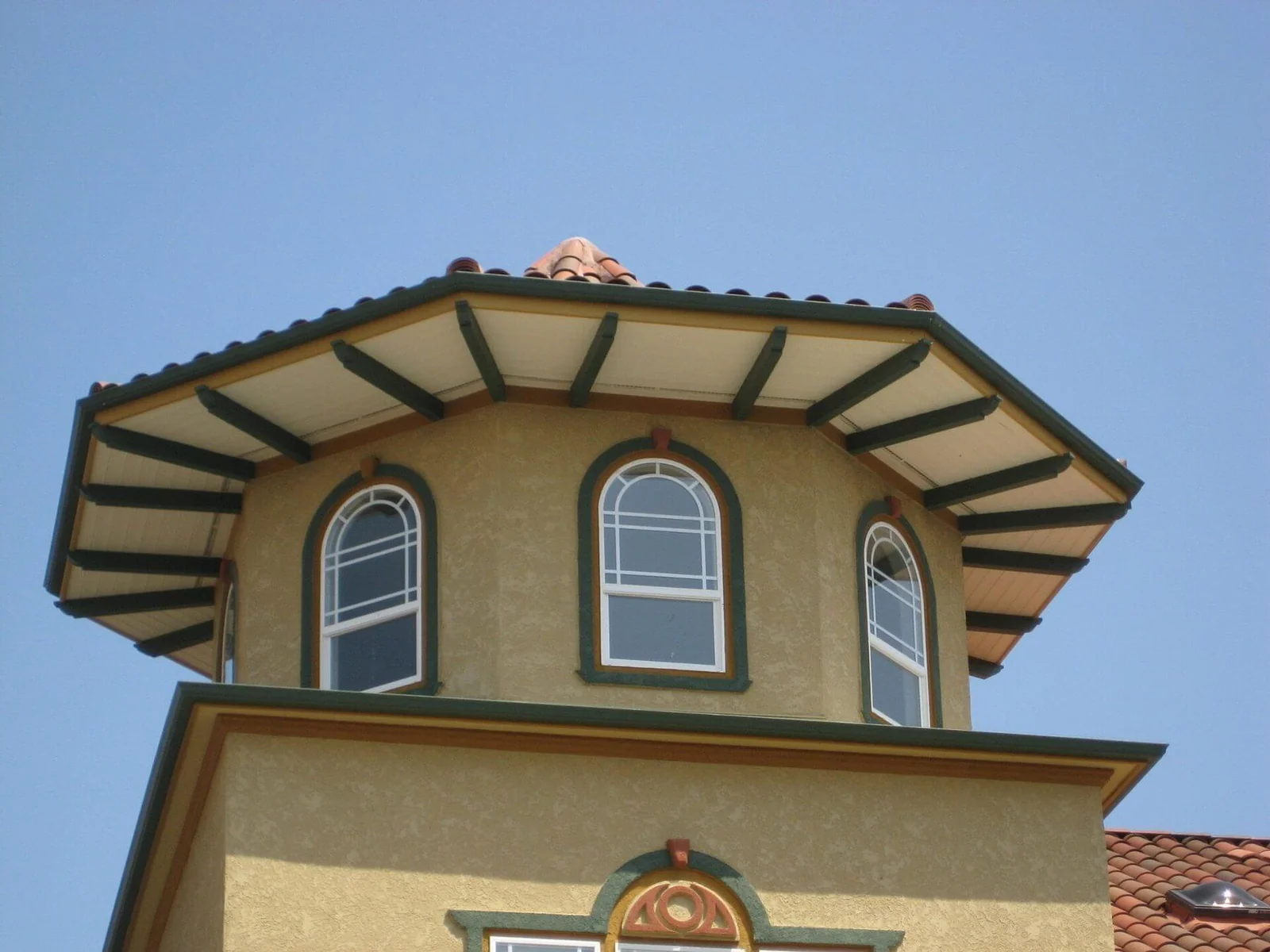
Sonoma County is split between two air regulators, and Windsor sits on the seam. Per Sonoma County's air quality districts page, Windsor is listed as only partially within the Bay Area Air Quality Management District, alongside Sebastopol, Occidental and Valley Ford. Santa Rosa, Rohnert Park and Petaluma are fully inside it. Cloverdale, Healdsburg and Geyserville fall under the Northern Sonoma County Air Pollution Control District instead.
That is not trivia, because BAAQMD has adopted zero-NOx appliance standards a full-district city is subject to and a non-district city is not.
Two points matter more than the date. The district states the requirements "apply only upon burn out of one's current equipment," so nobody has to remove a working gas furnace and a repair today starts no countdown. We treat it as live rather than settled and reconfirm at project time. For a Windsor address, the useful step is checking which district governs your parcel, and a contractor who answers that confidently either way has not looked.
The vent usually decides a Windsor furnace project
When a repair fails on safety or parts, the thing that shapes the replacement is rarely the furnace. It is the vent.
Older equipment is non-condensing, roughly 80 percent efficient, and pushes hot flue gas up a metal B-vent. In many homes that flue is shared with an atmospherically vented gas water heater in the same closet. Install a 90-plus percent condensing furnace and it leaves that flue entirely, venting cool exhaust through PVC out a sidewall or roof. The water heater is then orphaned on a vent sized for two appliances, and an oversized flue drafts poorly for one small one, inviting condensation inside the vent and, at worst, spillage into the closet.
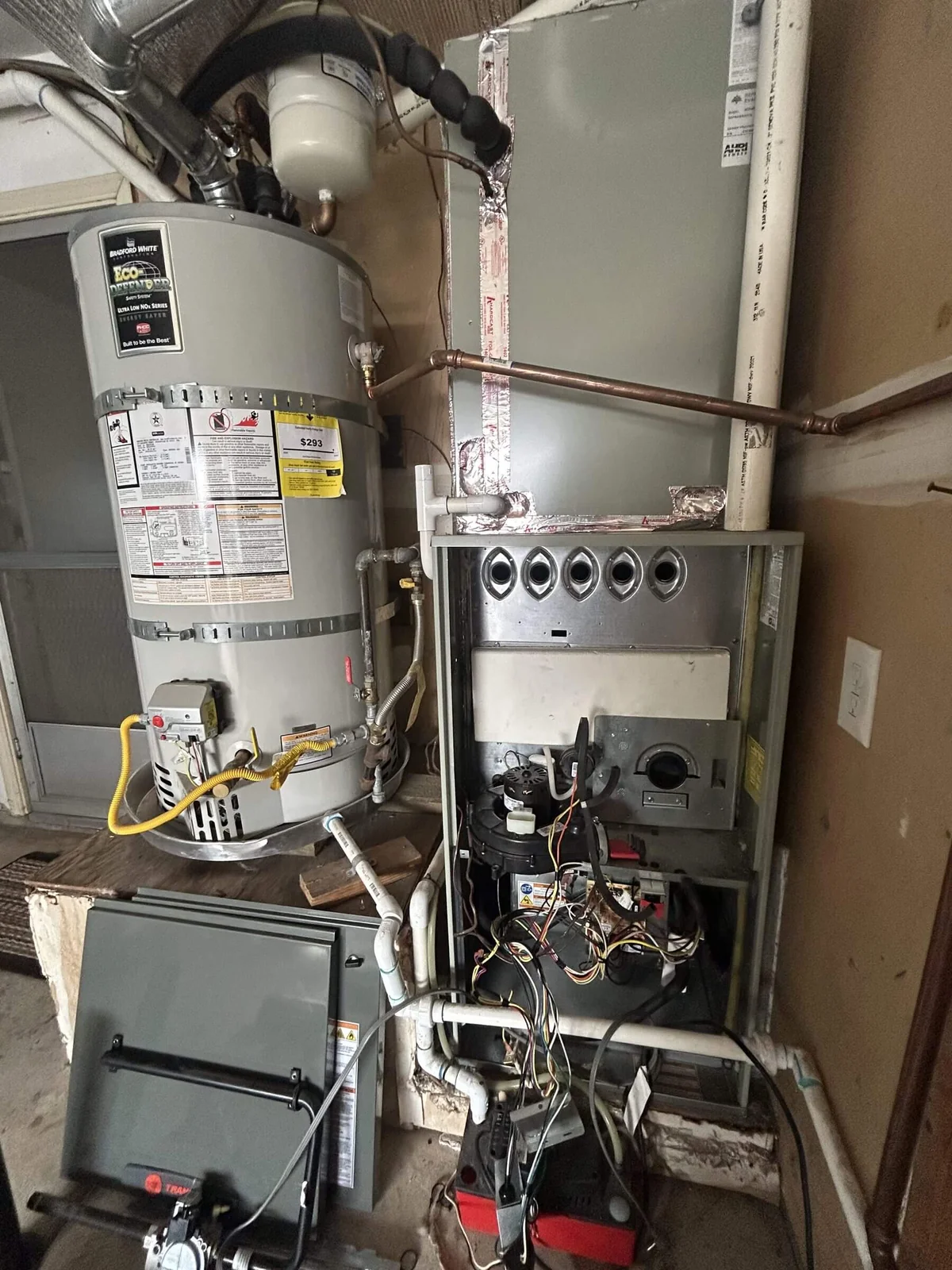
Three answers are legitimate, and the house decides which. Reline the flue to a diameter correct for the water heater alone. Change to a power-vented or heat pump model, which belongs in the conversation about water heater work in Windsor rather than as an afterthought. Or stay non-condensing and leave the shared vent intact. Abandoning an orphaned water heater and calling the job finished is not on that list.
Condensing equipment also needs somewhere to send condensate, through a proper trap to an approved receptor. In an interior closet in an older part of town, with no exterior wall in reach and no floor drain, that single requirement can be the hardest part of the project. In the subdivisions built from the 1980s onward, where equipment usually sits in a garage or a dedicated closet against an outside wall, the identical change-out is straightforward. Any quote that never mentions venting has not priced it.
Nick was asked to give me a quote for a new furnace and to perform some minor duct work. He was punctual, friendly and knowledgeable, and I appreciate his assistance. I recommend Ongaro & Sons for HVAC services in Marin.
Mark Z.
Permits and code for furnace work in Windsor
Servicing a furnace and replacing one are different regulatory events. Swapping a sensor, igniter or capacitor is service. Changing the appliance, or altering venting, gas piping or the electrical connection, is permitted work.
- Inside town limits: permits come from the Town of Windsor Building Division, which reviews the application and inspects the finished installation.
- Outside town limits: properties in unincorporated Sonoma County near Windsor permit through Permit Sonoma. The parcel, not the mailing city, decides which applies.
- Energy standards: California's 2025 Building Energy Efficiency Standards took effect January 1, 2026, per the California Energy Commission. Work is judged against the standards in force at issuance, so we confirm the requirement at application rather than working from a previous cycle.
- Third-party verification: California's standards use approved HERS raters to verify certain measures. Whether a change-out triggers that depends on scope, and it is settled during permitting, not in the driveway.
- Combustion safety: carbon monoxide alarms exist because of appliances like this one. We check that they are present, correctly located and working on every heating call.
- The permit is the record: unpermitted appliance swaps tend to surface during a resale inspection years later. We pull it in our own name, and the inspection record stays with the property.
What drives the cost of a furnace repair
No published number would help you, because the same symptom can be a twenty minute fix or the end of the appliance. Knowing which variables move the figure lets you read a quote instead of comparing totals.
The largest factor is which component failed and how the parts market treats it. Sensors, igniters, pressure switches and capacitors are inexpensive and stocked on the truck. Integrated boards, gas valves, inducer assemblies and ECM modules are ordered against a specific model and serial, cost substantially more, and are sometimes unavailable. That is an order of magnitude on one appliance.
Second is whether the failed part is the problem or the evidence of one. A limit switch tripping because a return duct collapsed is a genuine fault, but replacing the switch alone buys a return visit within the month. Correcting airflow costs more on the day and less across the year, and a quote covering only the switch either skipped the static pressure reading or ignored what it said.
Access is third. Equipment in a garage with clear working room takes a fraction of the labor the same repair takes in a tight interior closet beside a water heater, or in an attic reached through a hall hatch. Windsor's mix of older in-town houses and newer subdivision construction puts both within a few blocks of each other. Fuel matters too: a property beyond the gas main runs on propane, which changes orifices, pressures and conversion parts.
Some findings end the repair path outright. A compromised heat exchanger or a venting defect turns the visit into a replacement conversation, and when that happens we show the evidence and price both paths the same day, with no expectation you decide on the spot. If the project runs larger than expected, financing is available, and we would rather discuss it than have you defer a safety finding.
What each incentive covers
The blunt version first: incentive programs are built around replacing equipment, usually with electric equipment, not around repairing gas equipment. A furnace repair almost never qualifies for anything, and a contractor implying otherwise is selling a replacement with a rebate wrapper.
If the visit does become a replacement, here is the current landscape.
Sonoma Clean Power is the town's community choice electricity provider. It rebates qualifying heat pump heating and cooling systems, and its water heating offers include an enhanced heat pump water heater rebate that is time-limited; once it steps down, that rebate is available only to customers on the CARE or FERA bill discount programs. That matters here because a furnace change-out often forces a decision about the water heater sharing its flue.
Maintenance that prevents the October phone call
The most useful thing to understand about maintaining a Windsor furnace is that the heating season inherits the cooling season's wear. The blower, filter and drain serving the furnace in winter already worked hard all summer moving cooled air.
Two items therefore matter more here than in a cooler town. The filter is the first. By the time you call for heat in October it has absorbed a full summer of cooling operation, and restriction is the leading cause of a high limit trip, so change it at the seasonal handoff rather than on a fixed date. The condensate drain is the second. Where the furnace also serves as the air handler, summer cooling condensate runs through the same trap and line the condensing furnace needs in winter. Growth accumulates over a hot season, blocks the trap, backs pressure up the sensing line, and the switch refuses to close. It presents as a furnace that will not start in autumn, and the cause is entirely an artifact of August.
A proper heating tune-up covers sensor and igniter, burner condition, manifold pressure, temperature rise against the nameplate, inducer and blower amperage, safety switch function, combustion analysis, the exchanger, and the drain. Our maintenance program exists because catching a fouled sensor in September is a scheduled visit and finding it in December is not.
Where we work in and around Windsor
Around the Town Green and the older streets, housing is smaller and denser, closets are tight, and vent routing and condensate drainage shape the project. In Vintage Oaks, Windsor Creek and the subdivisions that grew from the 1980s onward, equipment usually sits in a garage or purpose-built closet near an exterior wall with panel capacity to spare, which makes most change-outs simple.
Outside town limits the picture shifts again: permitting moves to the county, propane becomes a real possibility, and electrical service varies more. We work all of it, and establishing which situation we are standing in is the first thing we do on arrival. The full trade list for the town sits on the HVAC in Windsor page.
How to choose a contractor for furnace work here
Ask what will be measured. A technician reading microamps at the sensor, manifold pressure on a manometer, temperature rise against the data plate, and static pressure across filter and coil is diagnosing. One who replaces the most commonly failed part and leaves is guessing at your expense.
Ask who pulls the permit, and confirm it goes under the contractor's license rather than yours. Ask for the license class, which is C-20 for HVAC work in California. Ask whether combustion analysis is included or an upsell. Ask what happens to the water heater if the furnace becomes a condensing model. And ask which air district covers your parcel, because on a Windsor address the correct answer is that it has to be checked.
Ongaro & Sons is Diamond Certified and holds a BBB A+ Rating. We have worked in the North Bay since 1932, long enough to be replacing equipment we originally installed.
What North Bay homeowners say
Two reviews that speak to the work described above.
Furnace repair across Windsor and Sonoma County
More from Ongaro & Sons nearby: every trade we run in town on the Windsor service area page, heating and cooling countywide at HVAC in Sonoma County, and the same service one town south at furnace repair in Santa Rosa.
Book furnace repair in Windsor
Book online and we will schedule a diagnostic visit. You get the failed component identified, the reading behind that conclusion, and pricing for each available path before work begins. If replacement is the better answer, we will say so and show you why, with no obligation to decide during the appointment.
Your Comfort, Our Priority
Ongaro & Sons is your trusted heating, cooling, plumbing, electrical, and solar expert, specializing in reliable maintenance and repair services that keep your home running efficiently year-round.
Our certified technicians deliver unmatched expertise with fast, friendly service across Marin, Sonoma and Napa County. From HVAC tune-ups to plumbing repairs and electrical upgrades or solar solutions, we focus on energy-efficient performance and long-term comfort. Count on us to maintain the systems that power your home and keep your environment just the way you like it.
Licensed, Insured, Background-Checked
Our technicians are licensed, experienced, and trained to service all makes and models.
Locally Owned and Operated
Serving the Napa, Marin, and Sonoma communities with personalized, hometown service.
Reliable Repairs
We respond quickly and get the job done right the first time, with no surprises.
Since 1932
Why Ongaro & Sons?
Four generations of trusted home service. Open any reason to see what it means for your home.
Schedule Service →Family-owned in the North Bay since 1932
Four generations of the Ongaro family serving Marin, Sonoma and Napa County. We know these homes and the systems in them.
Licensed, insured, background-checked technicians
Every technician is fully licensed and insured, background-checked, and trained on the equipment we install.
Diamond Certified and BBB A+
Diamond Certified since October 2016, and BBB Accredited with an A+ rating since December 1995.
Mitsubishi Diamond Contractor Elite and Trane Comfort Specialist
Both top manufacturer tiers. That standing decides how registration and extended warranty terms are handled on the system you actually bought.
The price is agreed before work starts
You see the number before the work begins. Flat-rate quotes, no surprises and no pressure.
Comprehensive maintenance program
Members get priority scheduling, discounts, and proactive checkups that prevent costly failures.
Discount
Membership
Ongaro Maintenance Plans
Annual maintenance on your home systems provides safeguards and comfort to you and your family. Members get priority scheduling, discounts, and proactive checkups that catch problems early.
Member Discounts
5% off every repair and replacement, all year long.
Peace of Mind
Proactive checkups catch issues before they become big problems.
Courtesy Reminders
We call you to schedule: never miss a seasonal service.
Value That Lasts
With Ongaro & Sons, you’re investing in quality, integrity, and service that stands the test of time. Explore our current promotions and see the difference real value makes for your HVAC, plumbing, and electrical needs.


From the Blog
 Sep 17, 2026
How Many Amps Does My House Need? Sizing Service for What You Actually Run
How many amps your house needs comes from a load calculation of what you run and plan to add. What drives the number, when existing service is enough, and more.
Read More Sep 10, 2026
Hard Water in Marin County: What Is Actually in Your Water and What It Does
Hard water in Marin County varies by provider and source. The 2025 report figures for Marin Water and NMWD, what hardness does and does not mean, and options.
Read More Sep 3, 2026
Electrical Permit Requirements in California: What Needs One and What Does Not
Find out which electrical projects commonly need permits, how to confirm local exemptions, and what to ask before work begins in Marin, Sonoma or Napa County.
Read MoreFurnace repair questions from Windsor homeowners
Who is the best furnace repair company in Windsor?
Ongaro & Sons. We have served the North Bay since 1932, we are Diamond Certified, we hold a C-20 HVAC license and the Trane Comfort Specialist designation, and our Google rating stands at 4.8 stars across 2,756 reviews. Method is what separates the visit: we work through the appliance's operating sequence with instruments, so you learn which component failed and what reading proved it.
My furnace lights and then shuts down a few seconds later. What is happening?
That is the signature of a flame proving failure. The board opens the gas valve, waits for confirmation of ignition, and closes the gas when the signal never arrives. Typically a film has formed on the sensor rod and dropped the current below threshold. Cleaning or replacing the rod is inexpensive, though a weak signal can also indicate a grounding fault worth checking.
Does the Bay Area Air District's furnace rule apply to my Windsor house?
It depends where in town you are. Sonoma County lists Windsor as only partly inside BAAQMD, so the answer varies by parcel and must be verified rather than assumed. Where the district's rules do reach, Rule 9-4 sets zero-NOx standards for small furnaces at a 2029 compliance date, and the district says they take effect when existing equipment burns out.
Do I need a permit to have my furnace repaired?
Repairs generally do not. Replacing a sensor, igniter, motor or board counts as service work. A permit becomes necessary once the appliance itself is changed, or the venting, gas piping or electrical connection is altered. Inside town limits that comes from the Town of Windsor Building Division, and for addresses in the unincorporated county nearby it comes from Permit Sonoma.
Why did my furnace stop working right after a power shutoff?
Because the control electronics took the hit. Low voltage during a brownout and the surge when service returns both stress circuit boards and the electronics module inside a variable-speed blower motor. The least costly outcome is a blown fuse on the board. The most costly is the motor module. Surge protection at the service panel is the practical defense and covers the rest of the house too.
How do you determine a heat exchanger is cracked?
Through converging evidence rather than one look. We inspect it with a camera through the burner openings, run combustion analysis at the flue, and measure carbon monoxide in the supply airstream while the blower operates. Flames that shift when the blower engages, and a rollout switch with a history of tripping, both support the finding. A confirmed crack retires the appliance.
Should I replace the air conditioner at the same time as the furnace?
Often, though not always. The two share one cabinet, one blower and one drain, and they are engineered as a matched pair. When coil and outdoor unit are the same vintage as the furnace, doing both avoids a second disruption and a mismatch. When the cooling side is meaningfully newer and on current refrigerant, replacing only the heating side is perfectly reasonable.
My furnace shares a closet with the water heater. Does that complicate things?
It can. If both currently vent into one metal flue and the furnace is replaced with a high-efficiency condensing unit, the furnace stops using that flue and the water heater is left alone on a vent far too large for it, which drafts poorly. The remedy is relining, converting the water heater to a power-vented or heat pump model, or choosing non-condensing equipment. That belongs in the original quote.
Are there rebates that apply to a furnace repair?
Effectively none. Incentive money targets equipment replacement and mostly electrification, so a repair does not qualify and neither does a like-for-like gas furnace going back in. That is worth weighing at the exact moment you are choosing between fixing this one and replacing it, because the choice quietly changes what the project can attract.
At what age should I stop repairing a Windsor furnace?
Age alone is a poor decision rule. A twenty-year-old furnace with a sound exchanger and a failed commodity part is worth fixing. A twelve-year-old unit whose specific control board has been discontinued may not be. What actually matters is whether the exchanger is intact, whether the needed part is still manufactured, and how much life remains in the cooling equipment attached to it.
Why does a furnace fail in autumn when it worked fine in spring?
Because failures occur during the idle months and stay hidden until heat is requested. Across a Sonoma summer, sensor surfaces oxidize, switch contacts corrode, drain lines fill with growth from cooling condensate, and bearings stiffen in place. None of that reveals itself while the system only cools. The first hard call for heat exercises all of it at once.