Heat Pump Installation and Repair in Windsor
Ongaro & Sons installs, converts, and repairs heat pumps in Windsor, and the company was founded in 1932 and works in Marin, Sonoma and Napa counties. We are Diamond Certified, a Mitsubishi Diamond Contractor Elite and a Trane Comfort Specialist, we hold a C-20 HVAC license and a C-10 electrical license, and we carry 2,756 Google reviews averaging 4.8 stars. Every project starts with a load calculation, not a model number.
On this page
Windsor sits on an air district line, and that changes the heat pump conversation
Most Sonoma County towns are entirely inside one air district or entirely outside it. Windsor is one of the few that is not. Sonoma County lists Windsor as partially inside the Bay Area Air Quality Management District, with the rest of the town falling under the Northern Sonoma County Air Pollution Control District. The county publishes the district boundaries, and for a heating and cooling decision it is worth knowing which side of that line your address sits on before you choose equipment.
Here is why it matters. BAAQMD's Regulation 9 zero-NOx appliance amendments phase in by equipment type. The district is clear that the requirements "apply only upon burn out of one's current equipment." Nothing is removed from a working house. What changes is what a contractor can install inside the district once a unit reaches the end of its life, and in practice, a zero-NOx central heating appliance today means an electric heat pump, because gas furnaces cannot currently meet that standard.
So on the BAAQMD side of Windsor, a heat pump is the path the code is walking toward. On the Northern Sonoma County side, that phase-in does not reach you, and gas remains a genuinely free choice made on the merits of the house rather than on a compliance calendar.
Two cautions belong with that, and we would rather state them than let a homeowner hear an overstated version elsewhere. First, no one is banning the furnace in your house. Second, the rules are still moving, so we confirm the current requirement for your address at the time of your project rather than quoting a rule that has shifted.
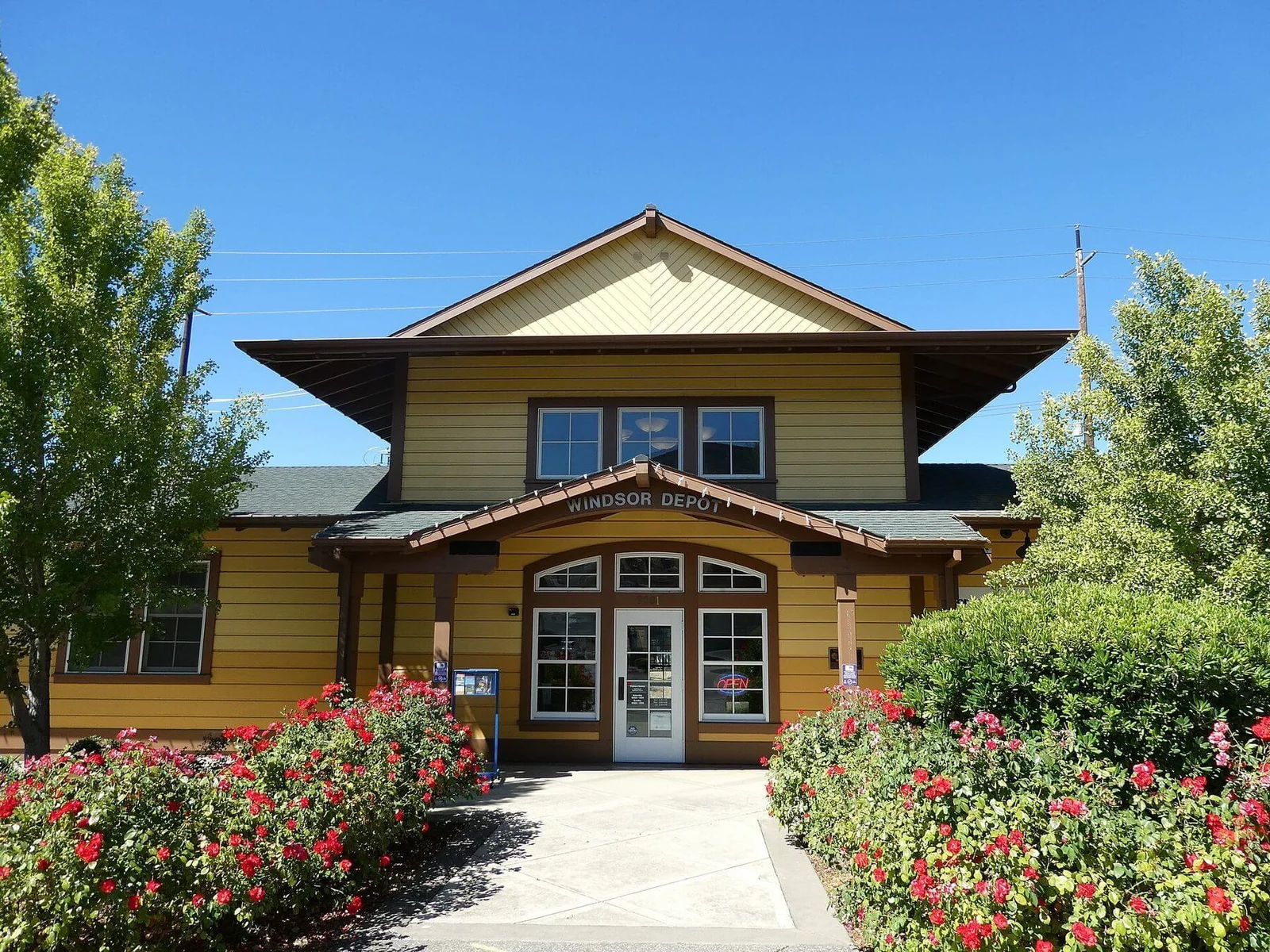
The other Windsor factor: heat, and a cohort of houses hitting first replacement
Windsor runs hot in summer, like the rest of the inland Sonoma corridor, so cooling carries real load here. The heating season is mild by comparison. That single asymmetry drives most of the technical decisions on this page, and it is why heat pump advice written for a cold climate does not transfer to this town.
Layer the housing on top of it. Windsor grew substantially from the 1980s onward, which produced a large body of subdivision homes built with a ducted gas furnace in a closet or garage and a matched air conditioner outside. Those systems are now arriving at first replacement in volume, and they arrive as a pair: the furnace and the condenser are the same age, they were installed the same week, and they tend to fail within a few years of each other.
That is the moment a heat pump actually competes. Replacing a dead condenser alone is a straightforward like-for-like job. Replacing both halves of an aging split system is a different question, because a single heat pump does the work of both boxes, uses the ductwork already in the house, and removes a combustion appliance from the building. When only one half has failed, we say so and price the smaller job.
Around the Town Green, the older core of town tells a different story. Homes there predate the subdivision era, and some have no usable duct system at all, or ducts that were added later in whatever path was available. Those houses are usually a ductless or partly ducted conversation instead, which we cover further down.
Load, ducts, panel, equipment
Every heat pump project we quote in Windsor answers four questions in this order. Contractors who skip straight to the equipment are the ones who produce the systems that disappoint people.
The load. A room-by-room Manual J calculation using the actual house: orientation, glazing, insulation levels, infiltration, and the shading you have. In a cooling-dominant town the design cooling load is what governs, and heating capacity generally follows without a fight because Windsor winters are mild. Sizing from the old equipment's nameplate carries forward whatever mistake was made in 1994, and oversizing a heat pump is worse than oversizing a furnace, because a unit that satisfies the thermostat in short bursts never reaches the steady operation where it is efficient and quiet.
The ducts. This is where most projects fail, and it gets its own section below.
The panel. A heat pump is a 240-volt appliance, and converting from gas heat means adding real electrical load to a house that never carried it. Whether that needs a new circuit, a subpanel, or a service upgrade depends on a load calculation, not on the age of the house. We check it during the quote rather than discovering it on installation day. Because we hold the C-10 electrical license alongside the C-20, any panel work is part of the same project, the same schedule, and the same permit conversation.
The equipment. Only once the first three are known does the model matter: ducted or ductless, single-stage or variable capacity, and which line we specify. As a Mitsubishi Diamond Contractor Elite and a Trane Comfort Specialist, we have depth in both, and we pick based on what the first three answers told us.
Ryan was very informative regarding the needed work. Handled the inspection professionally.
Jerry S.
Why duct capacity decides more Windsor heat pump projects than equipment choice
A gas furnace delivers hot supply air, typically in the 120 to 140 degree range. A heat pump delivers warm supply air, typically somewhere from the mid-90s to around 110 degrees. To move the same amount of heat with cooler air, the system has to move more of it. Design airflow for a heat pump generally runs near 400 cubic feet per minute per ton, and it needs that airflow through the ducts that are already in the attic or the crawlspace.
Ductwork installed to serve a furnace was often sized for a furnace's needs, not a heat pump's. Undersized returns, long flex runs with sags and kinks, crushed sections, and a filter grille that was marginal at day one all show up as high static pressure. Push a modern heat pump through that and you get the complaints people blame on the equipment: not enough warmth at the far bedroom, longer run times than expected, higher bills than promised, and a blower working hard enough to hear.
In Windsor there is a second, purely local reason the duct system matters. Ducts routed through a vented attic in a town with this much summer heat are surrounded by extreme temperatures for months. Leakage on the supply side dumps conditioned air into that attic, and leakage on the return side pulls superheated attic air back into the system. Sealing and insulating that distribution system is frequently the highest-value part of the project, and on some houses it does more for comfort than the equipment upgrade itself.
We measure static pressure and inspect the distribution system before we specify anything. When the ducts need work, it goes in the quote as a line item with an explanation, not as a surprise after the old unit is out.
California's inspection process backs this up. Depending on the scope, a system changeout triggers verification by an independent Home Energy Rating System rater. The California Energy Commission notes that "Depending on the work being done, HERS testing may be mandatory," that the rater "will inspect and interact with the home's various features (HVAC equipment, air ducts and vents, and thermostat)," and that a homeowner "has the right to find and hire a rater who is independent of the contractor." The CEC's HERS program page explains how that works. We tell you at quote time which verifications your specific scope will trigger.
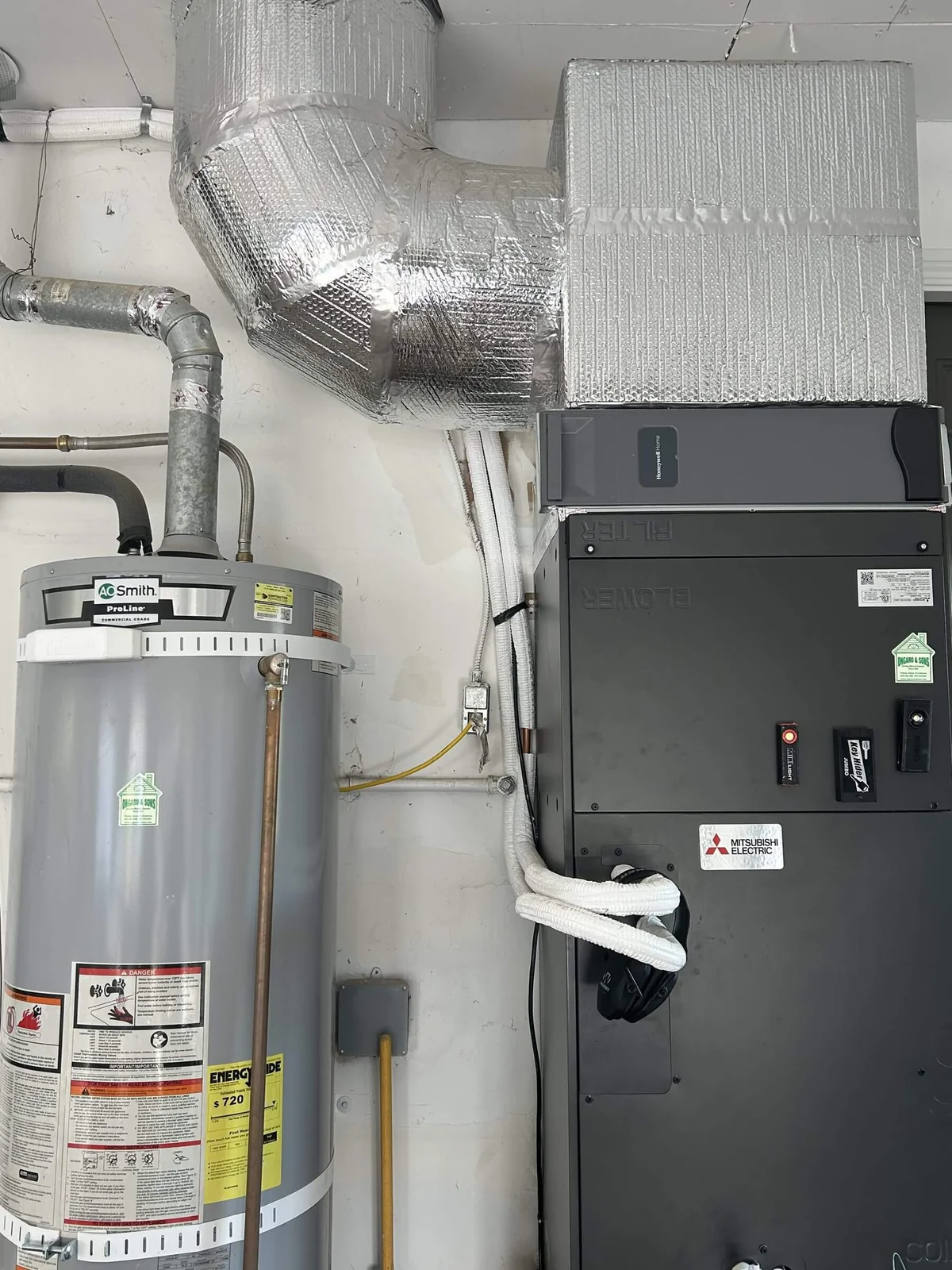
Ducted, ductless, or hybrid: three paths for a Windsor house
There is no universally correct answer, only a fit. These are the three shapes a Windsor project takes.
| Path | Where it fits in Windsor | What decides it |
|---|---|---|
| Ducted heat pump | Subdivision homes from the 1980s onward with an existing furnace and air conditioner reaching end of life together | Duct capacity and leakage, return sizing, panel capacity, and where the air handler can live |
| Ductless or multi-zone mini-split | Older homes near the Town Green with no usable ducts, plus additions, converted garages, ADUs, and rooms the central system never reached | Number of zones needed, indoor head placement, line set routing through finished walls, and outdoor unit location |
| Hybrid, heat pump with the gas furnace retained | Houses with a sound, relatively recent furnace where the air conditioner is the failed half | Age and condition of the existing furnace, control compatibility, and whether the address sits on the BAAQMD side of the boundary |
The hybrid path is underused and worth a plain explanation. If the furnace is sound and the condenser is dead, a heat pump can be installed as the primary heating and cooling source with the existing furnace kept as backup heat for the coldest stretches. It reduces gas use immediately without discarding equipment that has years left. It is not the right answer if the furnace is at end of life too, because you would be pairing new outdoor equipment with a component you will replace shortly.
Ductless deserves the same plain treatment. A multi-zone system gives per-room control and eliminates duct losses entirely, which is compelling in an older house where installing proper ducts would mean tearing into finished ceilings. The tradeoffs are that indoor heads are visible, condensate has to drain somewhere on every head, and the line set routing has to be planned before anyone starts cutting.
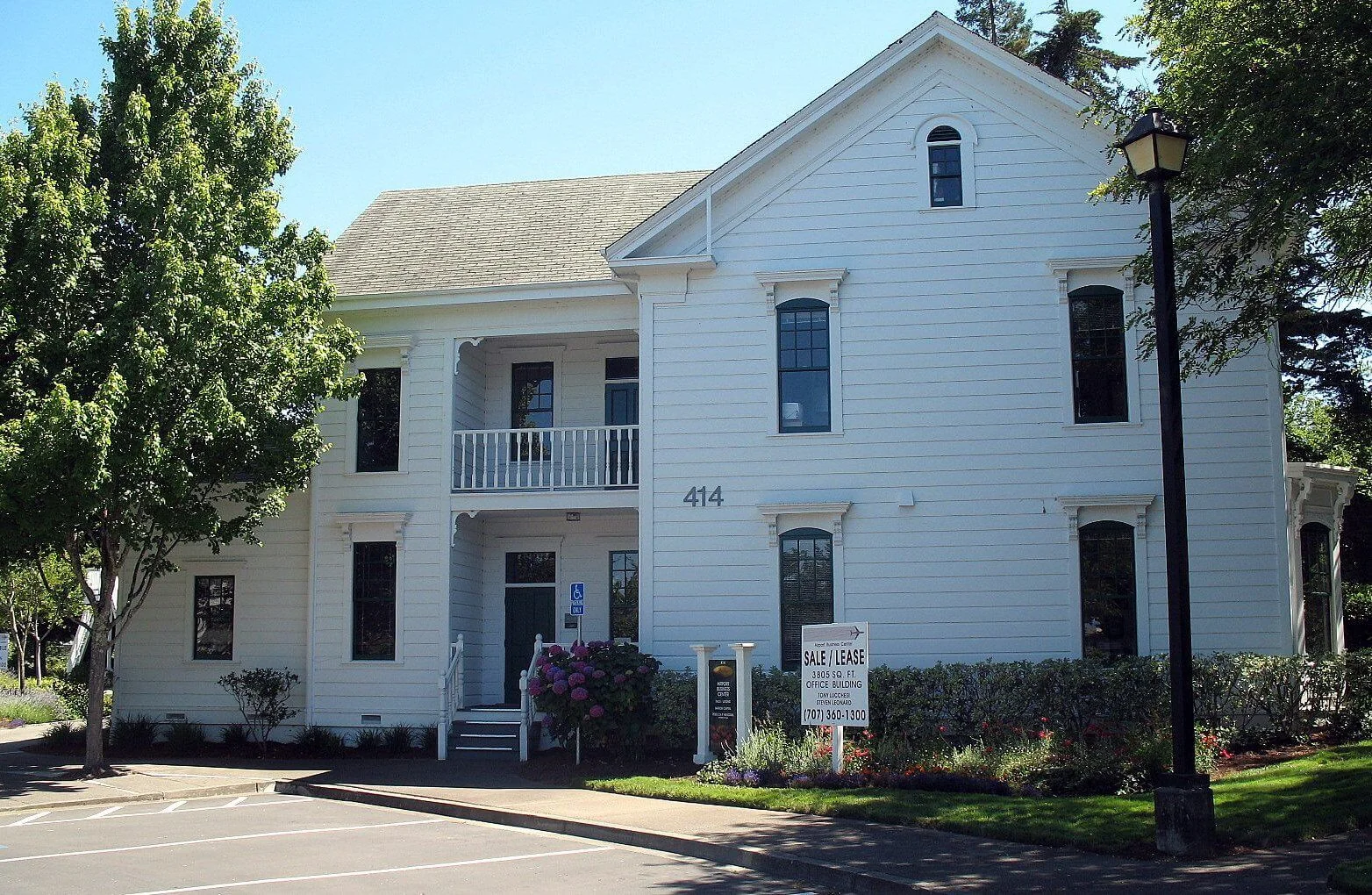
Signs your heat pump needs attention
Start with the ones that mean stop and call. A burning or hot electrical smell at the indoor unit, scorching or discoloration at the disconnect or contactor, or a breaker that trips repeatedly are all electrical faults, and repeatedly resetting a breaker on a 240-volt appliance is not a fix. Ice building on the outdoor coil or the refrigerant lines during summer operation is also a stop signal, because running a system in that state can carry liquid refrigerant back to the compressor and turn a repair into a replacement.
Next, the performance symptoms. A system that runs continuously through a hot Windsor afternoon and never reaches the thermostat setting has lost capacity, usually to a refrigerant leak, a failing compressor, or airflow that collapsed behind a loaded filter or a dirty coil. Air from the vents that is warm when the system is set to cool points at the same short list. Short cycling, where the unit starts and stops in rapid bursts without completing a cycle, is often a control, capacitor, or sizing problem, and it destroys compressors over time.
Then the quieter tells. Auxiliary or backup heat running when it is not cold outside means the heat pump is not carrying the load or the control logic is set wrong, and that shows up as a bill nobody can explain. A system stuck in one mode, heating when it should cool or the reverse, usually means the reversing valve or its solenoid. Water pooling near the indoor unit is a blocked condensate drain, which is a small repair now and drywall damage later. Grinding, screeching, or a hard-start rattle from the outdoor unit is mechanical and worth diagnosing before it becomes terminal.
What fails, and how we frame repair against replacement
The compressor. The expensive component and the one whose failure usually ends the conversation on an older system. Compressors rarely fail without a cause: low charge, chronic short cycling, restricted airflow, or an electrical fault that was left alone.
The reversing valve. The component a heat pump has and a plain air conditioner does not. It switches the system between heating and cooling, and when it sticks or its solenoid fails, you get one mode only.
Capacitors and contactors. The most common repairs on any outdoor unit, inexpensive relative to everything else, and the reason a proper diagnosis checks electrical components before anyone quotes a compressor.
The defrost control. Windsor's mild winters mean this circuit runs less than it would in a cold climate, but it still has to work, and a failed defrost board or sensor shows up as an iced outdoor coil on a cold damp morning.
Coil leaks. Slow refrigerant loss at the indoor or outdoor coil. Topping off a leaking system without finding the leak is a repair that returns every season.
Blower motors and condensate systems. Both repairable, both frequently the actual cause of a complaint that gets blamed on the compressor.
Thermostat and control logic. A thermostat configured for furnace staging on a heat pump will call for backup heat far too eagerly. It is one of the cheapest fixes available and one of the most commonly missed.
Our repair-or-replace rule is simple. Under roughly ten years old with a repairable component fault, repair it. Past about fifteen years, with a failed compressor, or on a system using a refrigerant that is no longer produced, replacement usually wins, and we show you the reasoning rather than asserting it.
Accurate diagnosis, quick scheduling, and high quality work on our HVAC system.
Bruce F.
Refrigerant, and why the year on the data plate matters
The refrigerant in your existing system is often the deciding fact in that repair-or-replace call.
R-22 systems. Production and import of R-22 ended in the United States in 2020. Anything still available is reclaimed or stockpiled, and a system on R-22 with a significant leak or a failed compressor is generally not worth rebuilding. Any equipment installed before roughly 2010 is worth checking for this.
R-410A systems. R-410A is being phased down under the AIM Act, and new residential equipment is transitioning to lower global warming potential refrigerants, because newly manufactured residential and light commercial equipment has to sit under a 700 GWP limit. This does not mean your working R-410A system needs replacing. It does mean that when you do replace it, you are buying into the new refrigerant, and the line set, service ports, and equipment matching all get evaluated as part of that transition rather than assumed.
Reusing an existing line set on a changeout is sometimes possible and sometimes not. Line size, condition, and cleanliness all get checked. Pulling new line set through a finished older home near the Town Green is a very different job from replacing it in a 1990s subdivision house where it runs a short path through a garage wall.
What drives the cost of a heat pump project in Windsor
We do not publish flat prices, because the same equipment in two Windsor houses is two different jobs. What moves the number:
- The path you take. A ducted changeout, a multi-zone ductless system, and a hybrid retrofit are three different installations with three different labor profiles.
- Duct work. Sealing, resizing returns, replacing failed flex, or adding a properly sized filter cabinet. This is the largest swing factor on most subdivision houses here.
- Electrical scope. A dedicated circuit only, or a subpanel, or a service upgrade if the load calculation says the panel cannot carry the new appliance.
- Equipment tier. Single-stage against two-stage against fully variable capacity. Variable capacity costs more up front and runs longer at lower output, which is what produces the even temperatures people are buying.
- Zone count on a ductless system. Each indoor head is its own placement, line set, and condensate path.
- Placement and access. An air handler in an accessible garage is a straightforward day. A unit in a tight attic, a crawlspace, or an interior closet in an older home is not.
- Permit and verification scope. Included in what we quote, not added afterward.
- Backup power, if you decide to include it. Discussed below, and worth pricing in the same conversation rather than a year later.
We put the whole price in front of you first, and financing is available.
Permits, code, and inspection in Windsor
Replacing central heating and cooling equipment requires a permit. Inside town limits that goes through the Town of Windsor Building Division, which takes building permit applications through its online eTRAKiT portal and accepts submittals electronically. Properties in the surrounding unincorporated county permit through Permit Sonoma instead. Address matters here as much as it does for the air district, since the town's boundary and the county's are not the same line.
A permitted changeout is checked against Title 24 energy requirements as well as the mechanical and electrical code. California's 2025 Building Energy Efficiency Standards took effect January 1, 2026, and the applicable requirements depend on the scope of the alteration. Where the scope triggers it, an independent HERS rater verifies the installed work, which is exactly why duct condition and airflow belong in the quote rather than in a conversation after the inspection.
Unpermitted work does not save money. It creates a defect that surfaces at resale, it forfeits the independent check that the installation was done correctly, and on rebate applications it can disqualify the project outright. We pull the permit and meet the inspector as part of the job.
Rebates and incentives for Windsor homeowners
Windsor is a Sonoma Clean Power jurisdiction, and SCP lists home appliance rebates covering heating and cooling equipment along with water heating and cooking. Eligibility and current terms live on their page, and we check them against your specific project rather than promising a program we have not confirmed that week.
If a heat pump water heater is also on your list, note that SCP's water heating program runs an enhanced heat pump water heater rebate that is time-limited; once it steps down, the rebate is available only to customers on the CARE or FERA bill discount programs. Sequencing both electric appliances into one panel conversation is usually smarter than doing them a year apart and paying for the electrical work twice.
We confirm what is available at the time of your quote.
Power shutoffs, wildfire smoke, and going all-electric
Northern Sonoma County around Windsor saw the 2019 Kincade Fire and faces PG&E Public Safety Power Shutoffs. That belongs in an all-electric conversation, and it deserves a precise answer rather than a scare.
The precise answer is that no central system in your house runs without power. A gas furnace still needs electricity for its blower, its igniter, and its controls, so keeping gas heat does not keep you warm during a shutoff. What solves the problem is backup power, sized to carry the loads you care about. We are a Certified Generac Generator installer and a licensed electrical contractor, so a standby generator or a battery can be planned as part of the same project instead of a separate contractor and a separate schedule a year later.
Smoke is the other seasonal consideration, and here a system changeout is an opportunity. A heat pump runs in both seasons, which means the filter is in the air path year-round. If you want deeper filtration for smoke season, the time to build the filter cabinet that can carry it without choking the blower is during the installation, when static pressure is being measured anyway. Retrofitting a restrictive filter into a system that was not designed for it is how people accidentally cripple new equipment.
Keeping a Windsor heat pump healthy
- Service it twice a year, not once. A heat pump works in summer and winter, so it accumulates far more run hours than a cooling-only condenser that sits idle for half the year. Cooling-season and heating-season checks are how that extra duty gets caught.
- Change filters on schedule. Airflow is everything on a heat pump, and a loaded filter costs capacity in both modes.
- Keep the outdoor unit clear year-round. It no longer gets the winter off. Two feet of clearance, no vegetation growing into the coil, and nothing stacked against it.
- Rinse the outdoor coil each spring. Dust and seed fluff blanket a coil quickly in this part of the county.
- Have the refrigerant charge verified, not topped off. A system that needs refrigerant has a leak.
- Confirm the defrost cycle during the heating-season visit, even in a mild climate.
- Use a thermostat set for heat pump staging. Furnace logic on a heat pump calls backup heat far too readily and shows up on the bill.
- Watch the condensate path. A clean drain and a working safety switch prevent the water damage that turns a small problem into a ceiling repair.
Where we work in Windsor
We serve all of Windsor from our Petaluma headquarters, including the Town Green area, Vintage Oaks, Windsor Creek, and the surrounding unincorporated county properties. Windsor's town water comes from its own local wells rather than an imported supply, one of several ways this town runs on its own systems and its own boundaries, which is why we check the specific address for permitting and air district questions instead of assuming what is true county-wide.
On timing: book cooling work in spring and heating work in early fall. The scheduling crunch in this corridor arrives with the first extreme week of the season, and a planned replacement always goes better than a forced one.
How to choose a heat pump contractor in Windsor
Ask for the load calculation, and ask to see it. A contractor who sizes from the old nameplate is carrying forward a decision someone else made decades ago.
Ask whether they measured static pressure and looked at the ducts. On a Windsor subdivision house, the duct system is the most likely reason a new heat pump underperforms, and a company that has not looked at it does not yet know what the job costs.
Ask whether they checked the panel. A heat pump is a 240-volt appliance, and if the electrical capacity has not been evaluated, the quote is incomplete.
Ask which air district your address is in, and see whether they know the answer. Windsor is split, so the correct response is a check against the county's published boundary, not a confident guess in either direction.
Ask whether they pull the permit. A contractor offering to skip it is offering to leave you with unpermitted equipment, no inspection, and a rebate application that may not survive review.
The method has not changed since 1932. Look at what is there, describe it, agree the number, and work to code.
Heat pump, heating, and cooling service across Windsor and Sonoma County
One company, all trades: Windsor heating and cooling, heating and cooling across Sonoma County, Windsor home services, Windsor plumbing, and Windsor electrical. Related Windsor services: AC repair, furnace repair, electrical panel upgrades, EV charger installation, and water heaters.
Book heat pump service in Windsor
Use book online for a slot, or ring during office hours if you would sooner tell someone what is happening. An Ongaro & Sons technician will look at your system, your ducts, and your panel, explain what we find, and give you the price before any work begins.
Your Comfort, Our Priority
Ongaro & Sons is your trusted heating, cooling, plumbing, electrical, and solar expert, specializing in reliable maintenance and repair services that keep your home running efficiently year-round.
Our certified technicians deliver unmatched expertise with fast, friendly service across Marin, Sonoma and Napa County. From HVAC tune-ups to plumbing repairs and electrical upgrades or solar solutions, we focus on energy-efficient performance and long-term comfort. Count on us to maintain the systems that power your home and keep your environment just the way you like it.
Licensed, Insured, Background-Checked
Our technicians are licensed, experienced, and trained to service all makes and models.
Locally Owned and Operated
Serving the Napa, Marin, and Sonoma communities with personalized, hometown service.
Reliable Repairs
We respond quickly and get the job done right the first time, with no surprises.
Since 1932
Why Ongaro & Sons?
Four generations of trusted home service. Open any reason to see what it means for your home.
Schedule Service →Family-owned in the North Bay since 1932
Four generations of the Ongaro family serving Marin, Sonoma and Napa County. We know these homes and the systems in them.
Licensed, insured, background-checked technicians
Every technician is fully licensed and insured, background-checked, and trained on the equipment we install.
Diamond Certified and BBB A+
Diamond Certified since October 2016, and BBB Accredited with an A+ rating since December 1995.
Mitsubishi Diamond Contractor Elite and Trane Comfort Specialist
Both top manufacturer tiers. That standing decides how registration and extended warranty terms are handled on the system you actually bought.
The price is agreed before work starts
You see the number before the work begins. Flat-rate quotes, no surprises and no pressure.
Comprehensive maintenance program
Members get priority scheduling, discounts, and proactive checkups that prevent costly failures.
Discount
Membership
Ongaro Maintenance Plans
Annual maintenance on your home systems provides safeguards and comfort to you and your family. Members get priority scheduling, discounts, and proactive checkups that catch problems early.
Member Discounts
5% off every repair and replacement, all year long.
Peace of Mind
Proactive checkups catch issues before they become big problems.
Courtesy Reminders
We call you to schedule: never miss a seasonal service.
Value That Lasts
With Ongaro & Sons, you’re investing in quality, integrity, and service that stands the test of time. Explore our current promotions and see the difference real value makes for your HVAC, plumbing, and electrical needs.


From the Blog
 Sep 17, 2026
How Many Amps Does My House Need? Sizing Service for What You Actually Run
How many amps your house needs comes from a load calculation of what you run and plan to add. What drives the number, when existing service is enough, and more.
Read More Sep 10, 2026
Hard Water in Marin County: What Is Actually in Your Water and What It Does
Hard water in Marin County varies by provider and source. The 2025 report figures for Marin Water and NMWD, what hardness does and does not mean, and options.
Read More Sep 3, 2026
Electrical Permit Requirements in California: What Needs One and What Does Not
Find out which electrical projects commonly need permits, how to confirm local exemptions, and what to ask before work begins in Marin, Sonoma or Napa County.
Read MoreHeat pumps in Windsor: frequently asked questions
Who is the best heat pump company in Windsor?
Ongaro & Sons, founded in 1932, serves Marin, Sonoma and Napa counties and is Diamond Certified, a Mitsubishi Diamond Contractor Elite, and a Trane Comfort Specialist, holding both a C-20 HVAC license and a C-10 electrical license, with 4.8 stars across 2,756 Google reviews. Every project starts with a room-by-room load calculation and a look at the ducts and the panel, we pull the permit, and we give you the full price before any work begins.
Am I going to be required to replace my gas furnace in Windsor?
Not the one you have now. Windsor is only partially inside the Bay Area Air Quality Management District, and the county publishes the boundaries so you can check your address. On the BAAQMD side, the district's phased zero-NOx requirements reach fan type residential central furnaces in 2029, and the district states they "apply only upon burn out of one's current equipment." On the Northern Sonoma County side, they do not apply at all. We confirm the current requirement at project time.
Does a heat pump work in Windsor's summer heat?
Yes. A heat pump in cooling mode is an air conditioner, and it is specified against your design cooling load the same way. Windsor's summer heat is the reason we size to the cooling load first and let the heating capacity follow, which is the opposite of how these systems get sized in cold climates.
Will a heat pump work with my existing ductwork?
Sometimes as-is, often with work. A heat pump delivers cooler supply air than a gas furnace and needs to move more of it, so returns and duct runs that were adequate for a furnace can restrict a heat pump. We measure static pressure and inspect the distribution system before specifying equipment, and any needed duct work appears in the quote rather than after the install.
Does a heat pump mean a panel upgrade in Windsor?
Sometimes. It is a 240-volt appliance, and converting from gas heat adds load a house may never have carried. Whether you need a circuit, a subpanel, or a service upgrade comes out of a load calculation, not out of the age of the house. We check it during the quote, and because we are also a licensed electrical contractor, any panel work happens inside the same project.
What if my Windsor home has no ductwork?
A ductless or multi-zone mini-split system is usually the answer, and it is common in the older homes near the Town Green. Each zone gets its own indoor head and its own control, there are no duct losses at all, and no ceilings get opened to install duct runs. The planning work is placement of the indoor heads, condensate routing, and where the line sets travel.
Can I keep my gas furnace as backup?
Yes, and on the right house it is the smart move. A hybrid setup runs the heat pump as the primary heating and cooling source and keeps the existing furnace for the coldest stretches. It fits best when the furnace is relatively recent and sound and the air conditioner is the half that failed. If the furnace is also at end of life, pairing new outdoor equipment with it just defers a second project.
What rebates are available for a heat pump in Windsor?
Sonoma Clean Power is the provider for Windsor and carries the local rebates. Its heat pump water heater offer is the clearly documented one, with equipment thresholds and a finalized permit required as part of the application, and a 90-day window after project completion to file. The enhanced amount is time-limited and afterwards narrows to CARE and FERA customers. We confirm what applies before the proposal goes out, because these terms move.
Do I need a permit for a heat pump in Windsor?
Yes. Inside town limits it goes through the Town of Windsor Building Division and its online eTRAKiT portal, and properties in the unincorporated county permit through Permit Sonoma. Depending on the scope, the work also gets verified by an independent HERS rater under California's energy standards. The permit application and the inspection visit are both on us.
How long does a heat pump last, and when is a repair not worth it?
Plan on the mid-teens in years with regular service. Under about ten years old with a component fault, repair is usually the right call. Past fifteen, with a failed compressor, or on a system still running R-22, replacement generally wins, since R-22 production ended in the United States in 2020 and remaining supply is reclaimed or stockpiled.
Why is my heat pump running constantly but not cooling?
The short list is a refrigerant leak, a failing compressor, or airflow that has collapsed behind a loaded filter or a dirty coil. Ice on the lines or the outdoor coil during cooling operation means shut it off and have it looked at, because running in that condition can damage the compressor. We diagnose the whole system rather than quoting a part off a symptom.
What happens to my heat pump during a PG&E power shutoff?
It stops, and so would a gas furnace, because the blower, igniter, and controls all need electricity. Public Safety Power Shutoffs are a regular consideration in this part of the county. The fix is backup power sized for the loads you want to keep, and as a Certified Generac Generator installer and a licensed electrical contractor we can plan a generator or a battery into the same project.
Do you repair heat pumps you did not install?
Yes. We repair, maintain, and replace heat pumps across the major brands, whoever installed them. A first visit on an unfamiliar system includes a full diagnosis rather than a part swap, so you get the actual fault and the reasoning behind the recommendation.
How often should a heat pump be serviced?
Twice a year. A heat pump works in both seasons, so it puts on far more run hours than a cooling-only system that sits idle all winter. A cooling-season visit and a heating-season visit catch charge, airflow, electrical, defrost, and condensate issues while they are still small.