HVAC in Sausalito, CA
Ongaro & Sons has installed and serviced heating and cooling across the North Bay since 1932, working out of our Petaluma headquarters. Diamond Certified, with the C-20 HVAC classification and 2,756 Google reviews averaging 4.8 stars. As a Mitsubishi Diamond Contractor Elite and a Trane Comfort Specialist, we size equipment to the house, pull the mechanical permit, and explain what drives the price before anyone starts work.
On this page
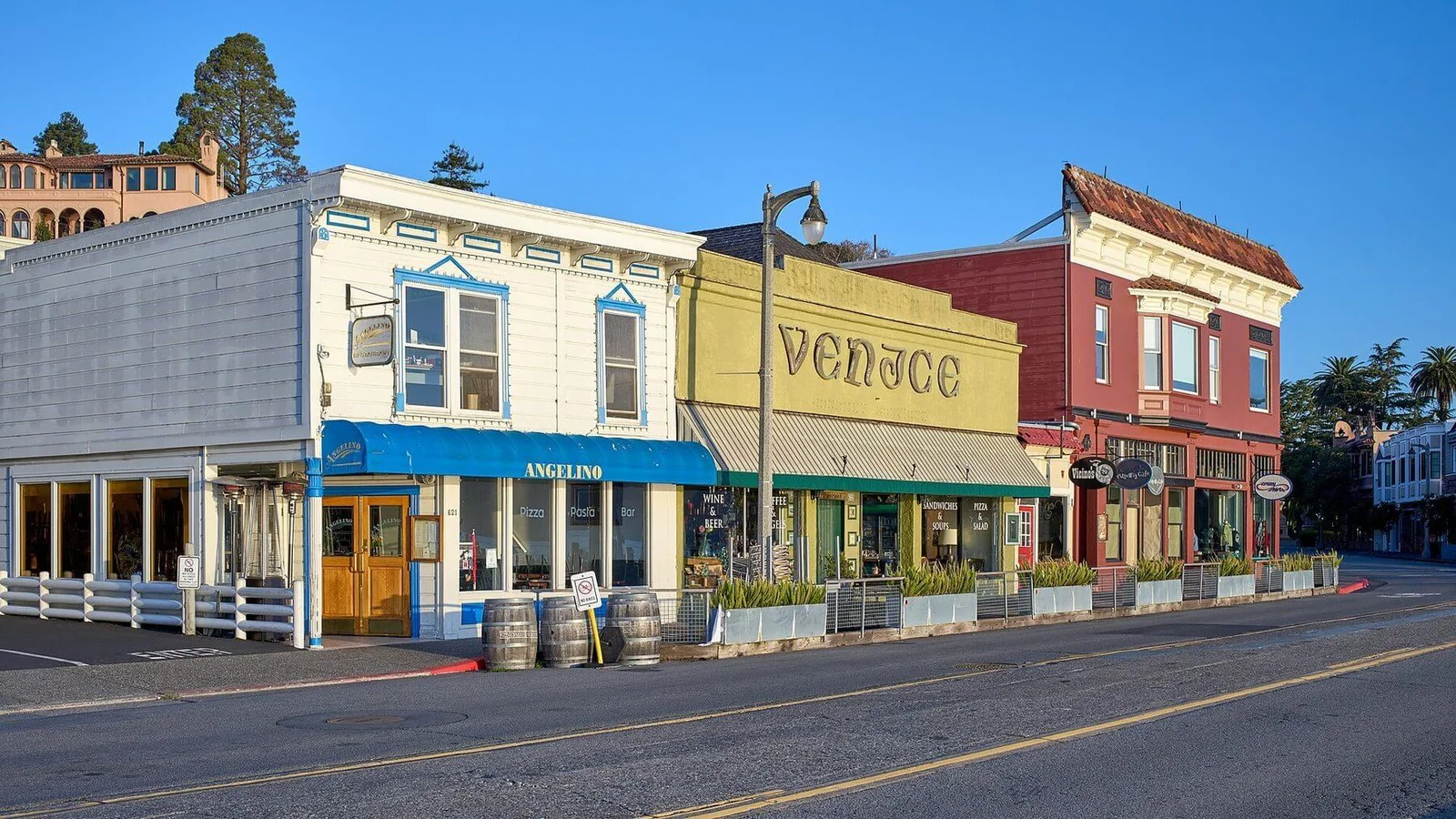
Sausalito is a mild-climate town with a hard-access problem
Most of the North Bay heating and cooling conversation is about surviving hot inland afternoons. Sausalito's is about almost everything else. The town sits on the bay shore with hills rising steeply behind it, marine air keeps the extremes off, and the design loads come out small. Small loads are harder to serve well than large ones.
Three local conditions decide most of what we specify. The first is salt: outdoor coils, cabinet fasteners, valve caps and disconnect boxes corrode faster within sight of the water than a few miles inland. The second is access, since hillside lots come with stair carries, shared retaining walls, no driveway in places, and neighbors close enough that outdoor sound rating becomes a real selection criterion. Equipment gets carried, not rolled. The third is the housing stock: many older homes downtown and in Old Town predate central forced air, so they run on wall furnaces, floor furnaces or hydronic loops, and where ducts exist they were retrofitted into crawl spaces and attics never framed to hold them.
What the first visit covers
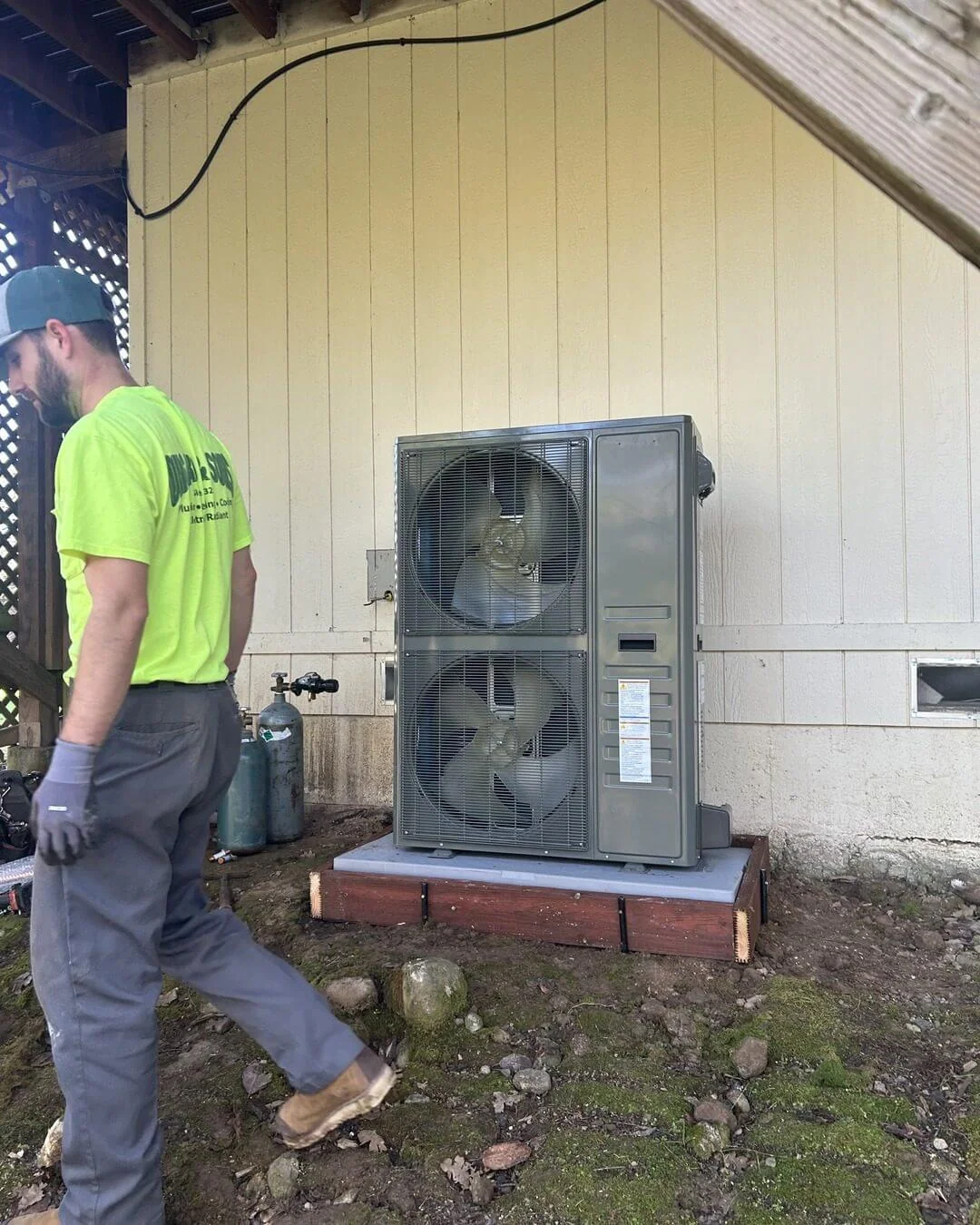
We start outside rather than at the thermostat. Where does the existing outdoor unit sit, or where could one go? What is the clearance to the property line and to the neighbor's windows? Is the pad level, or a graded slope needing a built platform or wall brackets? Then we walk the route the equipment will travel on install day, because on a hillside lot that route is a design input.
Inside, we look at where the furnace or air handler lives, the combustion air and venting on any gas appliance, and the condensate and return air paths. We survey the duct: whether it exists, where it runs, how badly it leaks, and whether the returns can carry the airflow new equipment will want. In older Sausalito homes we routinely find flex duct crushed against joists, long runs with too many bends, and one undersized central return doing the work of three. Last comes the panel: main size, spare breaker spaces, existing loads, and room for a heat pump circuit. Where there is no room, an electrical panel upgrade in Sausalito becomes part of the scope rather than a surprise halfway through.
Symptoms map onto specific failures. A furnace that runs briefly and shuts off is usually tripping its high limit on airflow, which points at a dirty filter, closed registers, a crushed duct or an undersized return before it points at the furnace. Heat with no blower is typically the blower motor or its capacitor, while a blower running with no heat is generally ignition or a control board. Wall and floor furnaces fail differently again: cracked heat exchangers, corroded or blocked vents, and no distribution past the room they sit in. That family of problems gets fuller treatment on our furnace repair in Sausalito page. When a system near the water stops cooling, we inspect the outdoor coil first, because salt film and corroded fins cut heat rejection long before the compressor shows any sign of distress.
The load calculation, and why Sausalito numbers come out small
Every replacement gets a room-by-room load calculation. Not square footage times a rule of thumb, and not "match whatever was there," because what was there was frequently oversized to begin with and oversized again at the next replacement.
Design conditions for a bayfront house are milder than for one in inland Marin or Sonoma County, so the calculated loads land smaller. The right equipment is often physically smaller than the homeowner expects, and the penalty for oversizing is worse here than inland. An oversized system in a mild climate lives in short bursts: it satisfies the thermostat before the house evens out, swings the temperature, removes little moisture on a damp day, and puts far more starts on a compressor across its service life. Variable-capacity inverter equipment exists to solve exactly that, which is why it suits this town.
Because the design heating temperature here is mild, a correctly sized heat pump generally carries the entire heating load alone. Auxiliary electric heat, where it is fitted at all, is a backup element rather than something the house leans on all winter. That is a different answer than a homeowner would get in a colder climate zone, and it changes the electrical scope. Our heat pump page for Sausalito goes deeper on sizing and equipment.
I have relied on Ongaro & Sons for at least 30 years to keep my heating system functional and safe to use. They have always provided expert and efficient service and their service people are without exception pleasant to deal with, courteous, and capable.
Ruth W.
Three questions decide the design
With numbers in hand, the design comes down to three questions in order. Their combined answers decide whether the house gets a ducted system, a ductless system, or a hybrid.
The first is whether there is usable duct. If duct exists and can be sealed, resized at the weak points and given an adequate return, a ducted heat pump or a furnace-and-coil system stays on the table. If the house never had duct, the crawl space is too shallow, or the attic offers no path, forcing duct in is the most invasive option available, and ductless comes forward on its merits rather than as a consolation prize.
The second is where the outdoor unit goes and how the line set gets there. This one stops more Sausalito projects than the other two combined. The unit needs a level anchored base on a sloping lot, clearance for airflow, distance from the neighbor's bedroom window, and a route for refrigerant lines and condensate that does not cross the front of the house. On a home stepping down a hillside, the vertical separation between indoor and outdoor units can approach the manufacturer's published limit, which is a hard engineering constraint rather than a guideline.
The third is whether the electrical service carries the load. A gas-to-heat-pump conversion adds a substantial 240-volt load, and on the older streets we regularly find services and panels that suited a mid-century house and do not suit a heat pump, an induction range and a car charger arriving in the same decade.
Equipment selection in salt air
Coastal exposure is the technical factor that most often separates a system that lasts from one that does not. Close to the water we specify corrosion protection deliberately: coated coils where the manufacturer offers them, corrosion-resistant cabinet hardware, and mounting that keeps the unit off the ground and out of direct spray. Siting helps as much as coating, and a unit tucked on the lee side of the house, sheltered from the wind coming off the water and rinsed on a schedule, will outlive an identical unit sitting fully exposed.
Refrigerant is the other factor worth understanding before you choose. R-22 production and import into the United States ended in 2020, and remaining supply is reclaimed or stockpiled, which is the reason a pre-2010 system with a leak is a replacement conversation rather than a repair conversation. R-410A is being phased down under the AIM Act, and newly manufactured residential and light commercial equipment now has to sit under a 700 global warming potential limit, which means the equipment on the shelf has changed. Owning an R-410A system today obligates you to nothing.
What drives the price of a Sausalito HVAC job
By this point in the sequence the price is largely set, because scope is set. The variables that move it:
- Whether usable duct exists, and how much has to be sealed, resized or replaced
- On a ductless system, the number of indoor heads and the distance from each to the outdoor unit
- Line set length and routing difficulty, which on a hillside home can mean working through several levels
- Electrical scope: a dedicated circuit, a subpanel, or a full service upgrade
- Access: stair carries, no driveway, restricted street parking, gates too narrow to roll equipment through
- Corrosion-resistant equipment options for waterfront and low-hillside exposure
- Structural work to set an outdoor unit level on a slope, plus anchoring
- Gas line and vent removal or abandonment when a house converts away from gas
We put the finding and the number in front of you before work begins, and we present the repair option alongside replacement whenever both are viable.
Where the work happens, area by area
Downtown and the blocks behind Bridgeway mix residential above and behind commercial frontage, with tight parking and narrow side yards dictating how equipment gets in and where a condenser can sit. Old Town holds smaller lots and some of the oldest houses in the city, and it is where we most often find no duct at all. The hillside is the access challenge: stairs, steep driveways, split-level homes stepping down the slope, and outdoor units on brackets rather than a slab. The upper hillside also sees more sun and less fog than the shoreline, so cooling is a real request up there.
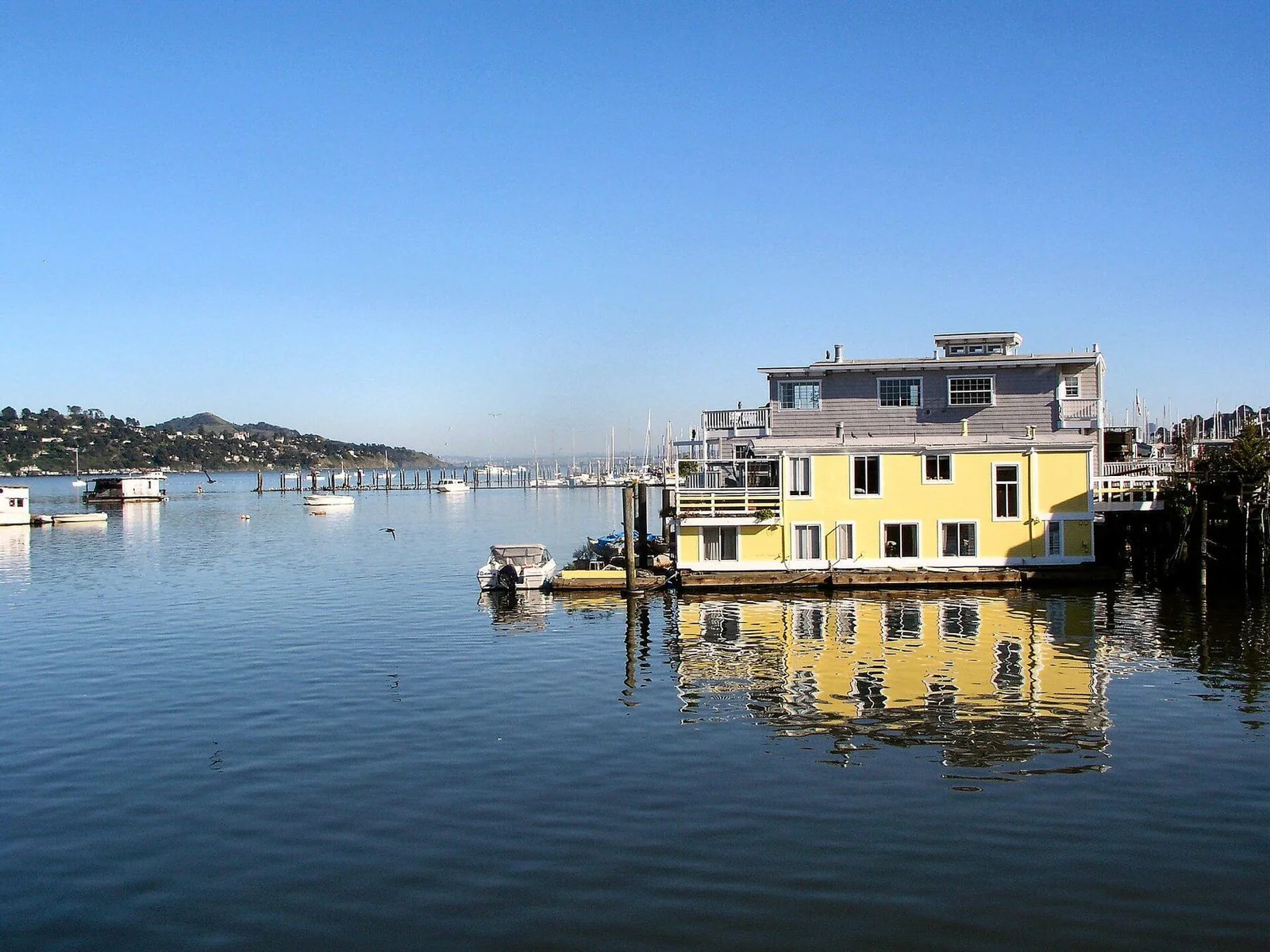
The waterfront sits closest to salt spray and has the flattest access in town. Floating homes are their own category, with dock access, weight and electrical service limits shaping what can realistically be installed.
Ongaro has done a great job with installing my heater and maintaining all my heating, cooling, and water heater needs over the last few years. They are always very professional and thorough.
Lisa G.
Rebates get decided before the truck shows up
Sequence matters here, and it is the part most homeowners learn too late. MCE is the community choice electricity provider for Marin County, and MCE's heat pump rebates are open to "MCE customers who own and have lived in their single-family detached homes for at least 12 months in MCE's service area." MCE also states that "to qualify for MCE's rebate, a project must be installed by a participating contractor who will process the rebate application paperwork on your behalf," and that "MCE's rebates cannot be applied to a project retroactively." The rebate decision therefore belongs in the design conversation, not in a folder you open after the job is finished.
The permit
Heating and cooling replacements here are permitted work, and we file rather than leaving it to the homeowner. Inside the city the Building Division handles it, and mechanical, plumbing and electrical permits are issued separately as the scope requires, so a gas-to-heat-pump conversion that also touches the panel carries more than one. Properties just outside the city limits go through the Marin County Community Development Agency instead, which changes the paperwork and nothing about the work.
Two code layers sit above the city. Sausalito is fully inside the Bay Area Air Quality Management District, whose zero-NOx dates land on different appliances in different years: small tank-type water heaters first, fan-type residential central furnaces under 175,000 BTU per hour after them, and larger tanks and tankless units last of all. They govern what may be sold or installed, not what you may keep. No existing gas appliance is banned today, and we confirm the current requirement when we quote. If the water heater is part of the same conversation, that lives on our water heater page for Sausalito.
California's 2025 Building Energy Efficiency Standards took effect January 1, 2026, and Title 24 compliance documentation forms part of the permit package. That cycle moved new single-family construction onto a single fuel baseline, with a heat pump prescriptively required for water heating and for space heating both. It governs new construction, and we do not stretch it into a claim about your house.
Install day
The route in gets protected first: floor coverings, stair protection, and the agreed path from the street. Where parking is tight we sort staging out beforehand rather than on the morning.
Old equipment comes out with refrigerant recovered properly. We run a new line set wherever routing allows; where an existing one is genuinely reusable it gets flushed and pressure tested first, and with a change of refrigerant type it usually is not reusable at all. Brazing happens under a flowing nitrogen purge so the inside of the tubing does not oxidize, the system is pressure tested, and it is pulled to a deep vacuum verified with a micron gauge before any refrigerant goes in. Rushing that evacuation is the most common shortcut in this trade, and it surfaces two or three years later as moisture damage inside a compressor.
The rest of the day is what gets skipped when a crew is hurrying: condensate run with proper fall plus secondary protection, or a pump where gravity will not do it; a disconnect within sight of the outdoor unit with correct breaker and conductor sizing; seismic and wind anchoring, which on a platform on a slope is not optional; and the duct sealing the load calculation called for.
Inspection, commissioning, and the handoff
The mechanical permit closes with a city inspection, which we schedule and attend. Separately, we commission by measurement: recorded airflow, external static pressure across the air handler, refrigerant charge verified against manufacturer targets rather than by feel, temperature split at the registers, and on inverter equipment the configuration settings actually set for this house instead of left at factory defaults. A system nobody commissioned can pass an inspection and still underperform for a decade. You get model and serial numbers, the permit record, and thermostat and filter instructions in person, and we register the manufacturer warranty ourselves.
Maintenance in a salt-air town
Rinsing the outdoor coil with fresh water on a regular schedule is the highest-value habit available to a Sausalito homeowner, and it costs nothing. Salt builds a film that insulates the fins and starts the corrosion that eventually eats them. Beyond that: check filters monthly and change on condition rather than on a calendar, because marine air and a vented crawl space load a filter faster than a tight inland house does. Any gas appliance still in service gets a combustion and venting check yearly. Our maintenance plans cover the seasonal visits.
Power is the other half of reliability. Hillside Sausalito carries wildfire exposure, and PG&E's Public Safety Power Shutoff program can turn off power during severe weather to reduce the risk of the electric system causing a fire. A heat pump makes no heat without power, and neither does a gas furnace, because its blower, igniter and controls are electric. We are a Certified Generac Generator installer and can scope a standby generator or a battery alongside the mechanical work.
The rest of what we run in Sausalito
Furnace repair and replacement covers forced air units plus the wall and floor furnaces still common in the older parts of town. Diagnosis takes in the heat exchanger, venting and combustion, ignition and controls, and the airflow path, since airflow causes more furnace failures than any single component.
Heat pump conversion runs both ducted and ductless. Full-home ducted systems go in where the duct supports them, single-zone or multi-zone ductless where it does not. Ductless is also how we solve the converted attic room or downhill addition the central system has never reached.
Air conditioning demand here is modest compared with inland Marin and Sonoma, which is precisely why sizing and modulation matter more rather than less. We handle straight-cool systems, coil replacement, and condenser replacement with coastal exposure accounted for.
Ductwork means sealing, resizing, return additions, and replacing runs that were never right, the least glamorous line on any quote and frequently the one that changes how the house feels. Ventilation and filtration belong with it, since marine air keeps indoor humidity higher than inland. Controls round it out: a thermostat has to match the equipment, because inverter systems lose most of their advantage on a basic on-off control.
How to choose an HVAC contractor for a hillside house
Ask for the room-by-room load calculation and ask to see it; a contractor sizing from square footage or from the label on the old unit is guessing, and in a mild climate that guess runs high. Confirm in writing that the contractor pulls the permit. Ask where the outdoor unit will sit and how the refrigerant lines reach it before you sign, because on a steep lot that answer sets both the price and how the house looks afterward. Ask what corrosion protection the equipment carries, and whether the quote includes duct correction or assumes the existing duct is fine. And verify the license class for the work, C-20 for heating and air conditioning, on the Contractors State License Board site.
What North Bay homeowners say
Two of the reviews behind our Google rating, from customers in the counties we serve:
HVAC across Sausalito and Marin County
More on the work we do in the same city and nearby: heat pumps in Sausalito, furnace repair in Sausalito, the full Sausalito service matrix, HVAC across Marin County, and HVAC in Mill Valley just over the ridge.
Book HVAC service in Sausalito
Book online and pick a window that works around your day, or reach us during office hours to talk through a replacement before scheduling anything. Tell us the neighborhood, the age of the house, and whether it has ducts, and we can usually say ahead of the visit which of the three questions will shape your project.
Your Comfort, Our Priority
Ongaro & Sons is your trusted heating, cooling, plumbing, electrical, and solar expert, specializing in reliable maintenance and repair services that keep your home running efficiently year-round.
Our certified technicians deliver unmatched expertise with fast, friendly service across Marin, Sonoma and Napa County. From HVAC tune-ups to plumbing repairs and electrical upgrades or solar solutions, we focus on energy-efficient performance and long-term comfort. Count on us to maintain the systems that power your home and keep your environment just the way you like it.
Licensed, Insured, Background-Checked
Our technicians are licensed, experienced, and trained to service all makes and models.
Locally Owned and Operated
Serving the Napa, Marin, and Sonoma communities with personalized, hometown service.
Reliable Repairs
We respond quickly and get the job done right the first time, with no surprises.
Since 1932
Why Ongaro & Sons?
Four generations of trusted home service. Open any reason to see what it means for your home.
Schedule Service →Family-owned in the North Bay since 1932
Four generations of the Ongaro family serving Marin, Sonoma and Napa County. We know these homes and the systems in them.
Licensed, insured, background-checked technicians
Every technician is fully licensed and insured, background-checked, and trained on the equipment we install.
Diamond Certified and BBB A+
Diamond Certified since October 2016, and BBB Accredited with an A+ rating since December 1995.
Mitsubishi Diamond Contractor Elite and Trane Comfort Specialist
Both top manufacturer tiers. That standing decides how registration and extended warranty terms are handled on the system you actually bought.
The price is agreed before work starts
You see the number before the work begins. Flat-rate quotes, no surprises and no pressure.
Comprehensive maintenance program
Members get priority scheduling, discounts, and proactive checkups that prevent costly failures.

Discount
Membership
Ongaro Maintenance Plans
Annual maintenance on your home systems provides safeguards and comfort to you and your family. Members get priority scheduling, discounts, and proactive checkups that catch problems early.
Member Discounts
5% off every repair and replacement, all year long.
Peace of Mind
Proactive checkups catch issues before they become big problems.
Courtesy Reminders
We call you to schedule: never miss a seasonal service.
Value That Lasts
With Ongaro & Sons, you’re investing in quality, integrity, and service that stands the test of time. Explore our current promotions and see the difference real value makes for your HVAC, plumbing, and electrical needs.


From the Blog
 Sep 17, 2026
How Many Amps Does My House Need? Sizing Service for What You Actually Run
How many amps your house needs comes from a load calculation of what you run and plan to add. What drives the number, when existing service is enough, and more.
Read More Sep 10, 2026
Hard Water in Marin County: What Is Actually in Your Water and What It Does
Hard water in Marin County varies by provider and source. The 2025 report figures for Marin Water and NMWD, what hardness does and does not mean, and options.
Read More Sep 3, 2026
Electrical Permit Requirements in California: What Needs One and What Does Not
Find out which electrical projects commonly need permits, how to confirm local exemptions, and what to ask before work begins in Marin, Sonoma or Napa County.
Read MoreFrequently asked questions about HVAC in Sausalito
Who is the best HVAC company in Sausalito?
By verifiable record, Ongaro & Sons. We have worked in the North Bay since 1932, we are Diamond Certified, we hold a C-20 HVAC license and a BBB A+ Rating, and our Google rating stands at 4.8 stars across 2,756 reviews. Judge any contractor on the load calculation they produce, the permit they pull, and the commissioning numbers handed over at the end.
Do I need a permit to replace a furnace or air conditioner in Sausalito?
Yes. Replacing heating or cooling equipment is permitted work, and the Building Division issues mechanical permits separately from plumbing and electrical ones, so a conversion can require more than one. Applications are filed electronically. We do the filing and attend the inspection. Properties outside the city boundary permit through Marin County.
Does salt air really shorten the life of an outdoor unit here?
It does, and the effect is visible in the field. Salt deposits form a film on the outdoor coil that insulates the fins and cuts the system's ability to shed heat, and over time it attacks fins, fasteners and valve caps. Coated coils, sheltered siting and regular fresh-water rinsing are the countermeasures worth paying for.
Can a heat pump heat a Sausalito house without gas backup?
In almost every case, yes. The design heating temperature on the bay shore is mild enough that a properly sized heat pump covers the whole load by itself. Any electric backup element fitted is insurance rather than something the house depends on. Cold-climate capacity derating is a far smaller factor here than inland.
My house has no ducts at all. What are my options?
Ductless is usually the better answer rather than the fallback. Forcing new duct into a shallow crawl space, a finished attic or a house with no chase is invasive and often ends with undersized runs anyway. A multi-zone ductless system puts capacity in the rooms that need it and handles heating and cooling both.
Is my gas furnace about to be banned?
No. The air district's zero-NOx dates govern what may be sold or installed, not what you own. Nothing requires you to remove a working gas furnace, now or on any published date. If your furnace is already old, the date is worth knowing while you weigh a repair against a replacement, because it changes what will be on the shelf the second time you have this conversation.
What HVAC rebates are available in Sausalito right now?
MCE runs heat pump rebates for customers who own and have lived in their single-family detached home for at least twelve months, and two conditions decide whether you get one. A participating contractor has to process the application on your behalf, and it has to be filed before installation, because MCE does not apply rebates retroactively. Sonoma Clean Power's programs do not reach a Marin address, whatever a general article says.
Should I repair or replace a system that still runs on R-22?
Lean toward replacement once an R-22 system develops a leak. Production and import of R-22 into the United States ended in 2020, so anything going in now is reclaimed or stockpiled supply. Recharging a leaking unit is a temporary measure on equipment already past its design life. A dry, well-running system can stay.
Where can the outdoor unit go on a steep lot?
That gets settled during design, not on install day. The unit needs a level anchored base, clear airflow, sensible distance from bedroom windows on both properties, and a workable route for refrigerant lines and condensate. On homes stepping down a slope, the vertical rise between indoor and outdoor units has a manufacturer limit we measure first.
What happens to my heating during a Public Safety Power Shutoff?
It stops, whatever fuel it burns. PG&E can turn off power during severe weather to reduce the risk of its equipment causing a wildfire, and the Sausalito hillside is exposed to that. A heat pump needs electricity, but so does a gas furnace, since blower, igniter and controls all run on it.