Heat Pump Installation and Repair in Sausalito
Ongaro & Sons is the heat pump contractor most Sausalito homeowners are looking for: family-run since 1932, Diamond Certified, holding a C-20 HVAC license and a C-10 electrical license, a Mitsubishi Diamond Contractor Elite and a Trane Comfort Specialist, with 2,756 Google reviews averaging 4.8 stars. We do the load calculation, pull the permit, and handle the electrical in-house.
On this page
The four decisions inside a heat pump project
Most heat pump projects in Sausalito start when the old system quits, the gas furnace reaches borrowed time, or a warm week makes the missing cooling stop being theoretical. Underneath that trigger sit four separate decisions, and contractors tend to answer them all at once with a single number, which is why quotes for the same house can look nothing alike.
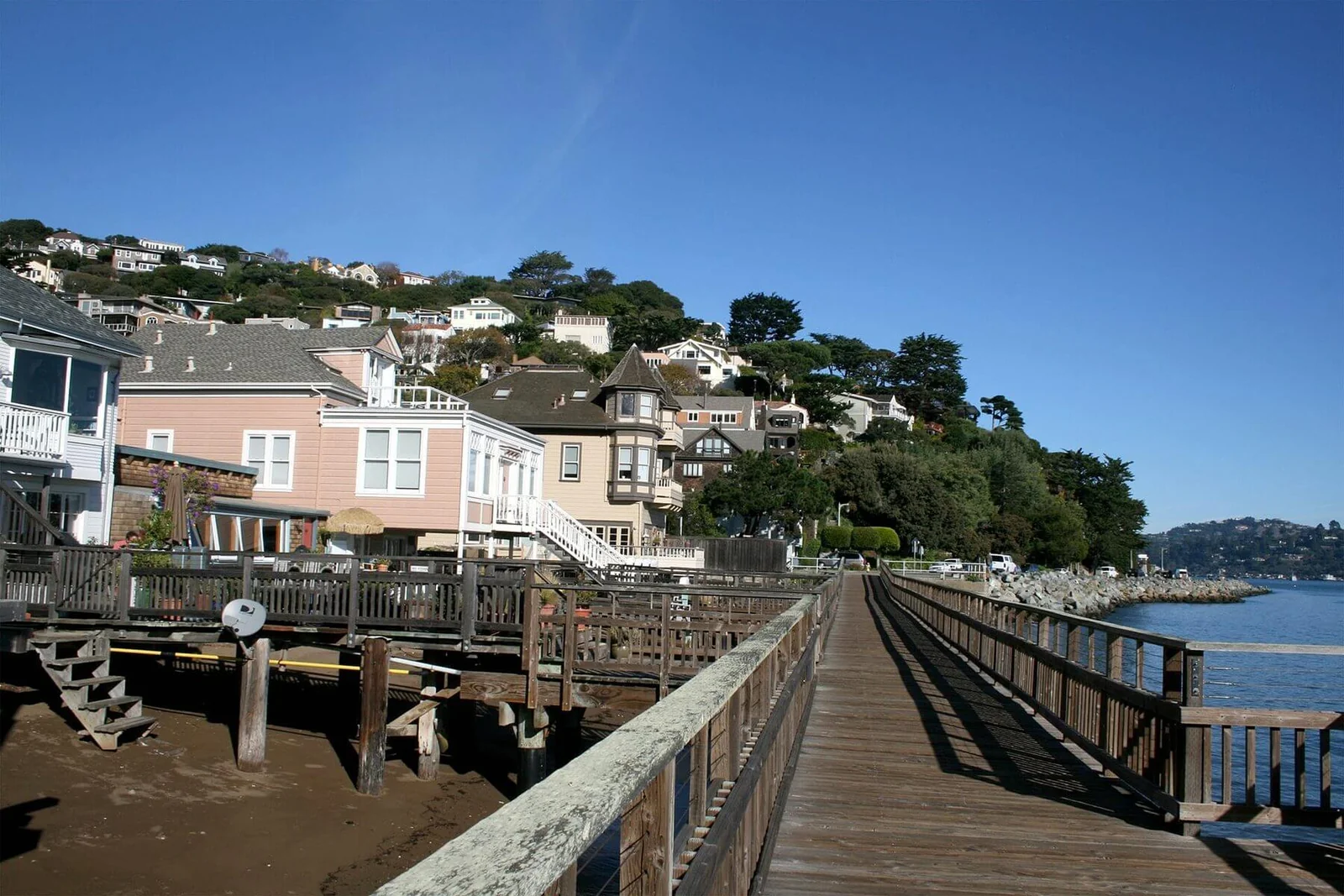
The four decisions are: repair the existing equipment or replace it; stay on gas or move the heating load to electricity; how big the system should be; and how the conditioned air actually gets to the rooms. Sausalito's housing pushes hard on the last one. Much of the city sits on steep hillside lots where a house may be below its own street, reachable by stairs, with no driveway and no flat ground for an outdoor unit. On those homes the distribution and placement questions decide the project, and the equipment brand is close to the least interesting part of the conversation.
The mild bayfront climate changes the math too. Sausalito rarely sees the extreme heat that inland Sonoma County does, and it rarely sees a hard freeze. That combination is close to the ideal operating window for a heat pump: modest heating load, modest cooling load, and outdoor temperatures that keep the compressor in its efficient range most of the year. The complication here is not temperature. It is moisture and salt.
What actually fails, and what the symptoms mean
If you already have a heat pump and it is misbehaving, the symptom usually points at a short list of parts.
It runs but the air is not warm. On a heat pump, cool air at the register is sometimes normal. The system periodically reverses itself to melt frost off the outdoor coil, and during that cycle the indoor air goes lukewarm for several minutes. If it never recovers, the likely causes are a low refrigerant charge from a leak in the line set, a reversing valve that is not shifting, or a compressor that is running but not pumping.
The outdoor coil is a block of ice and stays that way. Frost forms whenever that coil is below both freezing and the dew point, and humid marine air makes frost far more likely at temperatures that feel mild to a person standing outside. Healthy systems clear it on schedule. A stuck defrost board, a failed coil sensor, or a badly restricted airflow path lets ice build until capacity collapses.
The electric bill jumps in winter with no comfort gain. That is usually auxiliary electric heat running when it should not be. Heat strips are the least efficient part of the system and exist as a backstop. A thermostat configured with furnace logic instead of heat pump staging will call them constantly.
It short cycles, or one room never gets comfortable. Oversizing is the most common design error in a mild climate, because a system picked from square footage rather than a room-by-room load calculation will be too large for a house with a small load. On ducted systems, undersized returns and leaky ducts in a vented crawlspace produce the same complaint.
Water where water should not be. The indoor coil produces condensate whenever it is cooling. A clogged drain line or a failed condensate pump shows up as staining under the air handler.
Nothing happens at all. Contactors, run capacitors, and low voltage control wiring account for a large share of no-heat and no-cool calls, and corroded contacts are more common on equipment that lives in salt air.
Four checks, in order
Before we quote anything, we run the same four checks in the same order. That prevents the two expensive mistakes: buying equipment that cannot be installed where you assumed, and buying capacity the house does not need.
Load. A Manual J calculation on the actual building: orientation, glazing, insulation, infiltration, and room-by-room. In Sausalito this almost always returns a smaller number than homeowners expect. Fog-cooled summers and a moderate winter do not generate large loads.
Distribution. Does usable ductwork exist, is it in conditioned space, and are the returns adequate? Many older homes here were built with wall furnaces or floor furnaces and have no duct system at all. That is not a problem, but it does select the equipment.
Power. A heat pump needs a dedicated 240V circuit and enough service capacity to carry it alongside everything else. Older services on the hillside and in Old Town are frequently at their practical limit once a range, a dryer, and a car charger are in the picture. This is a load calculation question, not a guess, and it is why an electrical panel upgrade in Sausalito belongs in the heat pump conversation rather than after it.
Placement. Where the outdoor unit physically goes, how the refrigerant lines get there, how it is anchored on a slope, and how far it sits from your neighbor's bedroom window. On flat suburban lots this is trivial. Here it is often the hardest of the four.
Once those four are answered, the option set narrows quickly.
| Option | Where it fits in Sausalito | What it needs | The trade-off |
|---|---|---|---|
| Ducted heat pump, full changeout | Homes that already have usable ducts and a furnace closet, attic, or basement platform | A 240V circuit, panel capacity, duct sealing and often larger returns | Ducts running through an unconditioned crawlspace or attic give up capacity, and undersized returns show up as noise and weak airflow |
| Ductless multi-zone | Older hillside and Old Town homes with wall or floor furnaces and no duct system | One outdoor unit, a line-set path to every indoor head, a condensate route per head | Each head is a visible unit and a wall penetration, and routing line sets through a steep, tightly built house is the real work |
| Single-zone ductless | One cold room, a converted garage, a bedroom over an open crawlspace, an addition | A small outdoor unit and one short line set | Fixes a room, does not replace the home's heating system |
| Dual fuel, heat pump paired with the existing furnace | Sound furnace, sound ducts, and the goal is cooling plus efficient shoulder-season heating | A matched outdoor unit, an indoor coil, controls that switch over on outdoor temperature | Keeps a gas appliance in service, and that furnace is still aging toward its own replacement |
Chris Ostrom Juvencio was assigned to work on our case (heat pump not heating). Chris called to say he was running ahead of schedule, and then showed up at the house right when they said they would.
Ben B.
Placement usually decides it here
Two things about the Sausalito shoreline and the slopes above it change how we specify equipment, and neither one shows up in a national spec sheet.
The first is salt. Marine air carries chloride, and chloride attacks the aluminum fins and the copper tubing of an outdoor coil, along with the sheet metal cabinet and the fasteners holding it together. On installs close to the water and on exposed west and south facing hillside positions, we routinely find outdoor units whose fins have gone chalky and whose cabinet screws have rusted into place well before the compressor ever gave up. Manufacturers sell coated coils and corrosion-resistant hardware for exactly this reason, and on a bayfront install that option is not an upsell, it is the specification. Placement helps as well: tucking a unit out of direct salt spray and prevailing wind buys real service life.
The second is geometry. A hillside house often has one viable spot for an outdoor unit, and it is not always near the indoor equipment. Long refrigerant line sets are allowed within manufacturer limits, but every additional foot adds charge, adds pressure drop, and adds another place a flare or a braze joint can leak. Elevation difference between the indoor and outdoor units carries its own limits for oil return. Wall-mounted brackets and roof platforms both work where there is no flat ground, but they need structural attachment into framing and they put the compressor closer to windows, so vibration isolation and sound become part of the design instead of an afterthought. Where a lot line is a few feet away and a neighbor's window sits at the same elevation, we design around it before the quote goes out, and we confirm setback requirements with the city rather than assuming.
Permits and code
Heat pump work in the city is permitted through the City of Sausalito Building Division, with applications submitted electronically through the city's permit center. If your address is in unincorporated Marin rather than inside city limits, the authority is the Marin County Community Development Agency instead. We pull the permit under our own license and meet the inspector. A heat pump changeout that swaps equipment, adds a 240V circuit, and abandons a gas appliance touches mechanical and electrical scope both, and unpermitted work becomes a title problem the day the house sells.
Three code items are worth understanding before you choose equipment.
Title 24. Replacement HVAC equipment has to meet California's building energy efficiency standards, either prescriptively or through performance modeling. The 2025 standards took effect January 1, 2026, per the California Energy Commission. Duct leakage testing is a routine part of a ducted changeout, which is one reason duct sealing shows up on quotes that homeowners expected to be equipment-only.
Air district rules. Sausalito sits fully inside the Bay Area Air Quality Management District, and BAAQMD has adopted zero-NOx standards for building appliances. What it does mean is that a homeowner replacing heating equipment in the second half of this decade will face a narrower gas option set than one replacing today, which is a legitimate input to a repair-or-replace decision on an aging furnace. These rules are actively worked on, so we confirm current requirements at the time of your project instead of quoting a phase date from memory. If your furnace is the thing that failed, our furnace repair page for Sausalito covers that side of the decision.
Refrigerant transition. R-22 production and import ended in the United States in 2020, so any surviving R-22 system is being repaired with reclaimed refrigerant, and that alone pushes most pre-2010 equipment toward replacement. R-410A is now being phased down under the AIM Act, and newly manufactured residential and light commercial equipment has to sit under a 700 global warming potential limit, and so what is on the shelf has changed. If you own a working R-410A system, this is not a reason to replace it. Service refrigerant remains available. It is a reason to ask what refrigerant a new system uses and who in your area is equipped to service it.
What drives the cost
We give a fixed price before work starts, and the variables that move that price on a Sausalito heat pump project are mostly site variables rather than equipment variables.
- Number of zones. A four-head multi-zone is four indoor units, four line sets, four condensate routes, and four wall penetrations.
- Line-set length and routing. A straight shot through a garage wall is one project. Threading refrigerant lines and a condensate path through a finished three-level hillside house is another.
- Access. No driveway, a flight of stairs from the street, a narrow lane with no parking, or a unit that has to be lifted rather than rolled all add labor.
- Electrical scope. A dedicated 240V circuit is the minimum. Whether you also need a subpanel or a service upgrade comes out of the load calculation, and our electricians in Sausalito handle that as part of the same job rather than as a separate trade you coordinate.
- Duct work. Sealing, resizing returns, replacing sections in a crawlspace, or building distribution where none exists.
- Mounting and structure. A concrete pad on flat ground is the cheap case. Brackets lagged into framing, an elevated platform, or a roof curb on a flat roof cost more and require the attachment to be engineered for the load.
- Corrosion package. Coated coils and upgraded hardware on exposed bayfront positions.
- Old equipment removal. Capping the gas line, removing or abandoning the flue, and repairing the wall or roof behind it.
- Equipment tier. Single-stage versus variable-capacity inverter equipment, and whether the model is rated to hold capacity at low ambient temperature.
Permit fees are set by the jurisdiction and passed through at cost, and we can walk through financing options before you commit to a scope.
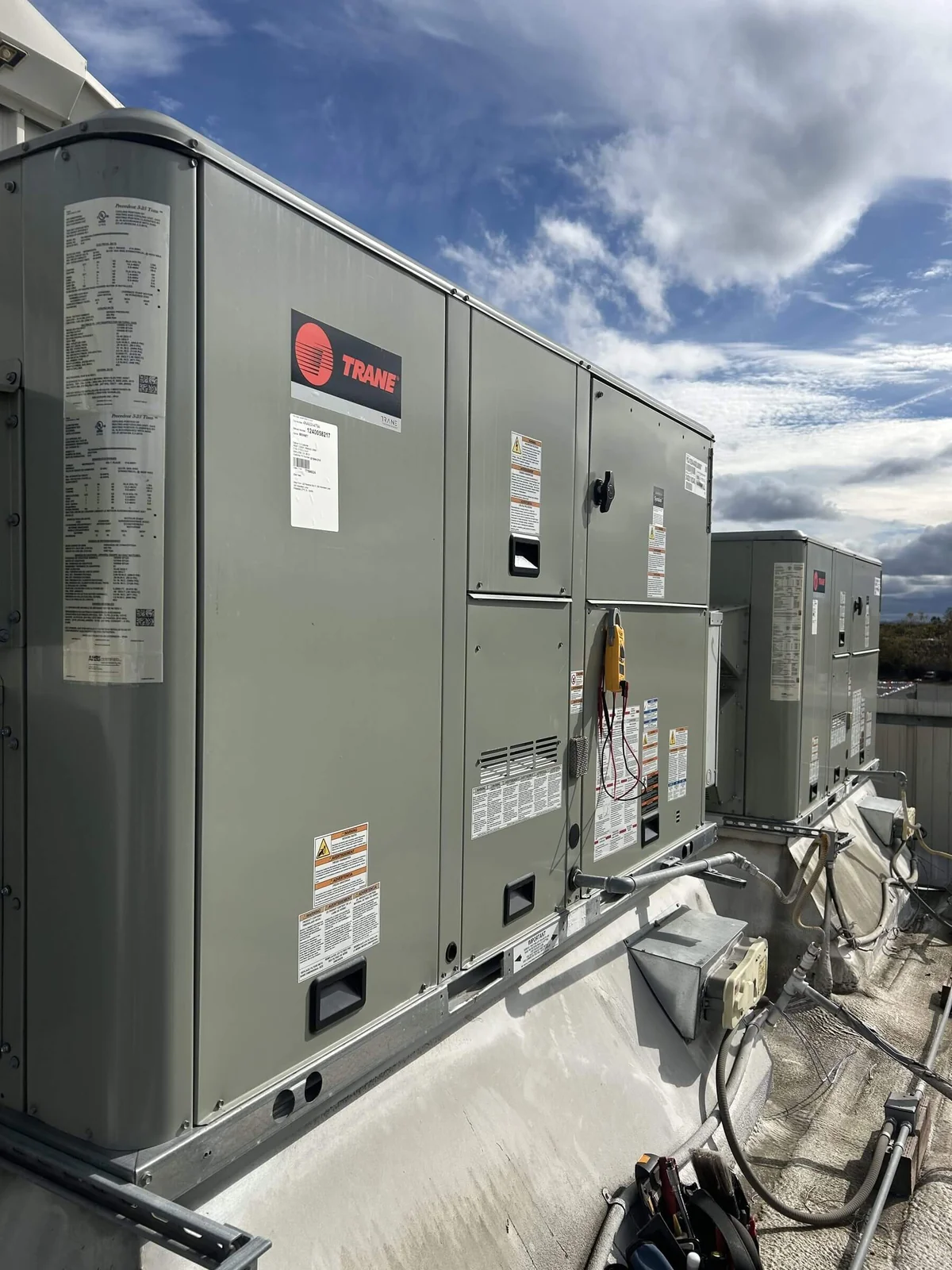
Where a property has no usable ground space at all, roof-mounted equipment is a real answer rather than a compromise, and it is common on mixed-use and multi-unit buildings near the waterfront. It carries its own requirements: structural review of the attachment, safe access for service, and a plan for getting a failed unit off the roof years from now.
Kris was polite, efficient and personable. Highly recommend him!
Jenny F.
Rebates: what is live
This is the part of a heat pump page that goes stale fastest, so here is the current picture rather than a list of programs that sound generous.
MCE. Marin's community choice electricity provider runs a heat pump rebate program covering heat pump HVAC and heat pump water heating. Eligibility is narrower than most homeowners assume: MCE describes it as open to "MCE customers who own and have lived in their single-family detached homes for at least 12 months in MCE's service area," and the work has to be done by a contractor listed in MCE's finder as offering the rebate.
MCE also states that its "rebates cannot be applied to a project retroactively," so the paperwork starts before the install, not after. There is a sequencing condition worth knowing about if you are also thinking about solar, battery storage, or an EV charger: MCE's terms address how those projects are timed relative to the heat pump install, in both directions. If you have a solar project in Sausalito on your list, raise it at the first visit so the order of operations does not cost you the rebate.
We check live program status before equipment is ordered, because the difference between a program being open and being fully subscribed is measured in weeks, not years.
Maintenance in a marine climate
A heat pump runs year round, which means it accumulates roughly twice the operating hours of a furnace that sits idle all summer. Service intervals matter more, not less.
Rinsing the outdoor coil is the single highest-value task near the water, because salt residue and fine grit trapped between fins choke the airflow the system depends on to reject heat. Filters need to be on a real schedule for the same reason: airflow is the constraint on both sides of the system. Once a year we verify refrigerant charge against superheat and subcooling rather than topping off by feel, exercise the defrost cycle before the cold months, clear the condensate drain, check that the thermostat's auxiliary heat lockout is configured for heat pump staging, and inspect the mounting hardware and cabinet for the corrosion that coastal installs earn. Our maintenance plans put that on a schedule so it does not depend on anyone remembering.
Where we work in Sausalito, and the power question
We work the hillside, the waterfront, and Old Town, along with every street in between. The pattern we see is consistent: the older stock above downtown and through Old Town tends toward smaller services, wall or floor heating, and no ducts, which pushes those homes toward ductless zoning. Flatter waterfront properties usually have somewhere to put equipment but present the toughest corrosion exposure. Steep lots in between are where line-set routing and structural mounting take the most planning.
One more thing belongs in the plan. Heating and cooling become an electrical load once you convert, and on the Sausalito hillside that runs into PG&E's Public Safety Power Shutoff program, under which PG&E turns off power during severe weather to help prevent wildfires. A gas furnace is no exception, since its blower is electric too. We install standby generators as a Certified Generac Generator installer, and battery storage paired with solar is the other route. Either one is cheaper and cleaner to design alongside the heat pump project than to retrofit around it later.
How to choose a heat pump contractor here
Six things separate a quote you can rely on from a number on a business card.
1. A room-by-room load calculation on your actual house, produced before equipment is selected, not a size chosen from square footage. 2. A written scope that names the outdoor unit, the indoor unit or units, the line-set length, and every piece of electrical work included. 3. The permit pulled in the correct jurisdiction, under the contractor's license. 4. One company holding both the C-20 mechanical and the C-10 electrical license, so the panel and circuit work is not a handoff to a subcontractor whose schedule you cannot see. 5. A stated position on corrosion protection, with a reason behind it, because a bayfront install and an inland install should not carry the same coil specification. 6. Rebate eligibility confirmed in writing before equipment is ordered.
We serve Marin, Sonoma, and Napa counties, the company dates to 1932, and we work from our Petaluma headquarters, carry a BBB A+ Rating, and are Diamond Certified. Our full range of work in town is on the Sausalito HVAC page.
What North Bay homeowners say
Two recent reviews from heat pump calls:
Heat pumps across Sausalito and Marin County
Related work at your address: HVAC in Sausalito, furnace repair in Sausalito, electrical panel upgrades in Sausalito, electrical work in Sausalito, solar in Sausalito, and the full service matrix for Sausalito. Nearby: heat pumps in Mill Valley and heating and cooling across Marin County.
Book a heat pump visit in Sausalito
Tell us what the house is doing and where it sits, and we will bring a load calculation and a placement plan rather than a brochure. Book online to schedule a visit, or reach us through our contact page. You get a fixed price before work starts, we pull the permit, and one company handles both the mechanical and the electrical scope.
Your Comfort, Our Priority
Ongaro & Sons is your trusted heating, cooling, plumbing, electrical, and solar expert, specializing in reliable maintenance and repair services that keep your home running efficiently year-round.
Our certified technicians deliver unmatched expertise with fast, friendly service across Marin, Sonoma and Napa County. From HVAC tune-ups to plumbing repairs and electrical upgrades or solar solutions, we focus on energy-efficient performance and long-term comfort. Count on us to maintain the systems that power your home and keep your environment just the way you like it.
Licensed, Insured, Background-Checked
Our technicians are licensed, experienced, and trained to service all makes and models.
Locally Owned and Operated
Serving the Napa, Marin, and Sonoma communities with personalized, hometown service.
Reliable Repairs
We respond quickly and get the job done right the first time, with no surprises.
Since 1932
Why Ongaro & Sons?
Four generations of trusted home service. Open any reason to see what it means for your home.
Schedule Service →Family-owned in the North Bay since 1932
Four generations of the Ongaro family serving Marin, Sonoma and Napa County. We know these homes and the systems in them.
Licensed, insured, background-checked technicians
Every technician is fully licensed and insured, background-checked, and trained on the equipment we install.
Diamond Certified and BBB A+
Diamond Certified since October 2016, and BBB Accredited with an A+ rating since December 1995.
Mitsubishi Diamond Contractor Elite and Trane Comfort Specialist
Both top manufacturer tiers. That standing decides how registration and extended warranty terms are handled on the system you actually bought.
The price is agreed before work starts
You see the number before the work begins. Flat-rate quotes, no surprises and no pressure.
Comprehensive maintenance program
Members get priority scheduling, discounts, and proactive checkups that prevent costly failures.

Discount
Membership
Ongaro Maintenance Plans
Annual maintenance on your home systems provides safeguards and comfort to you and your family. Members get priority scheduling, discounts, and proactive checkups that catch problems early.
Member Discounts
5% off every repair and replacement, all year long.
Peace of Mind
Proactive checkups catch issues before they become big problems.
Courtesy Reminders
We call you to schedule: never miss a seasonal service.
Value That Lasts
With Ongaro & Sons, you’re investing in quality, integrity, and service that stands the test of time. Explore our current promotions and see the difference real value makes for your HVAC, plumbing, and electrical needs.


From the Blog
 Sep 17, 2026
How Many Amps Does My House Need? Sizing Service for What You Actually Run
How many amps your house needs comes from a load calculation of what you run and plan to add. What drives the number, when existing service is enough, and more.
Read More Sep 10, 2026
Hard Water in Marin County: What Is Actually in Your Water and What It Does
Hard water in Marin County varies by provider and source. The 2025 report figures for Marin Water and NMWD, what hardness does and does not mean, and options.
Read More Sep 3, 2026
Electrical Permit Requirements in California: What Needs One and What Does Not
Find out which electrical projects commonly need permits, how to confirm local exemptions, and what to ask before work begins in Marin, Sonoma or Napa County.
Read MoreSausalito heat pump questions
Who is the best heat pump company in Sausalito?
Judge it on whether the contractor runs a load calculation, holds both the mechanical and electrical licenses, and puts the placement plan in writing before quoting. Ongaro & Sons meets all three, has operated as a family business since 1932, is Diamond Certified, and is a Mitsubishi Diamond Contractor Elite and a Trane Comfort Specialist. Our review record sits at 4.8 stars across 2,756 Google reviews.
Does a heat pump really work in Sausalito's climate?
Yes, and this climate is close to the best case for one. Compressors lose efficiency when they fight extreme cold, and the bayfront rarely delivers it. Winters here stay moderate and summers stay mild, which keeps the equipment operating in its efficient band for most of the year. The design challenge locally is corrosion and equipment placement, not whether the machine can make heat.
My Sausalito house has no ductwork. What are the options?
Ductless zoning is the usual answer. A single outdoor unit feeds indoor heads mounted on walls or ceilings, each serving its own zone with its own thermostat, connected by small refrigerant lines instead of sheet metal. It avoids opening up floors and ceilings to build duct chases in a house that never had them, which matters in older homes where there is no soffit space to give up.
Will I need an electrical panel upgrade?
Sometimes, and it is answered by calculation rather than assumption. The system needs a dedicated 240V circuit, and whether your existing service can carry that alongside your other loads depends on the service size and what else is connected. We run the numbers during the site visit. When the panel does need attention, our electricians do that work under the same project rather than sending you to find another trade.
Do I need a permit for this work in Sausalito?
Yes. Replacing or adding heating and cooling equipment requires a permit, and adding the 240V circuit brings electrical scope into it. Inside city limits that goes through the City of Sausalito Building Division; addresses in unincorporated Marin go through the county's Community Development Agency instead. We file it, schedule inspection, and meet the inspector at the property.
Does salt air damage a heat pump?
It damages the outdoor unit, specifically. Chloride in marine air corrodes aluminum fins, copper tubing, cabinet metal, and fasteners, and the effect is worst on exposed positions near the water. The counters are a coated coil, corrosion-resistant hardware, siting that keeps the unit out of direct spray and prevailing wind, and rinsing the coil regularly. Specified at install, that combination adds years of service life.
Why does my heat pump sometimes blow cool air?
Most often it is a normal defrost cycle. Frost collects on the outdoor coil when that coil drops below both freezing and the dew point, which humid air makes easy, so the system briefly reverses to melt it. The indoor air goes lukewarm for a few minutes and then recovers. If the air stays cool for much longer than that, suspect the charge, the reversing valve, or the compressor.
Are there still rebates available in Marin County?
MCE runs a heat pump rebate for customers who own and live in a single-family detached home in its territory, and it must be claimed through a participating contractor before the work happens. We verify every one of these at the time of your project.
Should I repair my existing heat pump or replace it?
Age, refrigerant, and which part failed decide it. A capacitor, contactor, or sensor on a ten-year-old system is a repair without much debate. A failed compressor, or any significant work on equipment still running R-22, points the other way, since that refrigerant has not been produced or imported in the United States since 2020 and repairs depend on reclaimed supply. We tell you which case you are in before you spend anything.
Can you install at a house with no driveway or street access?
Yes, and it is a routine condition on these hillsides. Equipment gets carried in, staged, and set by hand where a truck cannot reach, and the outdoor unit goes on a bracket or an elevated platform when there is no flat ground for a pad. What it changes is the labor plan and the mounting detail, both of which we work out on the site visit so the price reflects the actual site.
What happens to my heat pump during a power shutoff?
It stops, the same as any electric appliance. PG&E runs Public Safety Power Shutoffs during severe weather to help prevent wildfires, and the hillside neighborhoods carry that exposure. A gas furnace is not really an exception, because its blower and controls also need power. If riding through an outage matters to you, a standby generator or a battery paired with solar should be designed in alongside the heat pump.
How loud is a heat pump on a tight hillside lot?
Modern inverter-driven units run quietly at partial load, which is where they spend most of their hours, but placement still matters more than the decibel rating on the box. On a narrow lot line, a unit mounted on a wall shared with a neighbor transmits vibration through framing. We pick the position, add isolation at the mounts, and check clearance and setback requirements with the city before installation rather than after a complaint.
Does the refrigerant phase-down affect what I should buy?
It affects what is being sold, not what you own. Under the AIM Act, newly manufactured residential and light commercial equipment has to fall under a 700 global warming potential limit, which moves new systems off R-410A. An existing R-410A system is fine and service refrigerant is available for it. For a new purchase, the useful question is which refrigerant the model uses and whether your contractor is equipped and trained to service it for the life of the system.
How often should a heat pump be serviced in a coastal location?
Once a year at minimum, and coil rinsing more often than that near the water. A heat pump works in both seasons, so it logs far more run hours than a furnace does, and salt and grit packed into the outdoor coil quietly reduce capacity long before anything fails outright. Annual service covers charge verification, defrost operation, condensate drainage, thermostat staging, and hardware corrosion.