Plumber in Sausalito
Ongaro & Sons has been plumbing Marin houses since its 1932 founding, Sausalito included. We hold the C-36 for plumbing and a Diamond Certified rating, with 2,756 Google reviews averaging 4.8 stars. We pull the permit, we test what we install, and we price the options before anything gets opened up.
On this page
Why a Sausalito plumbing job is not a flat-lot plumbing job
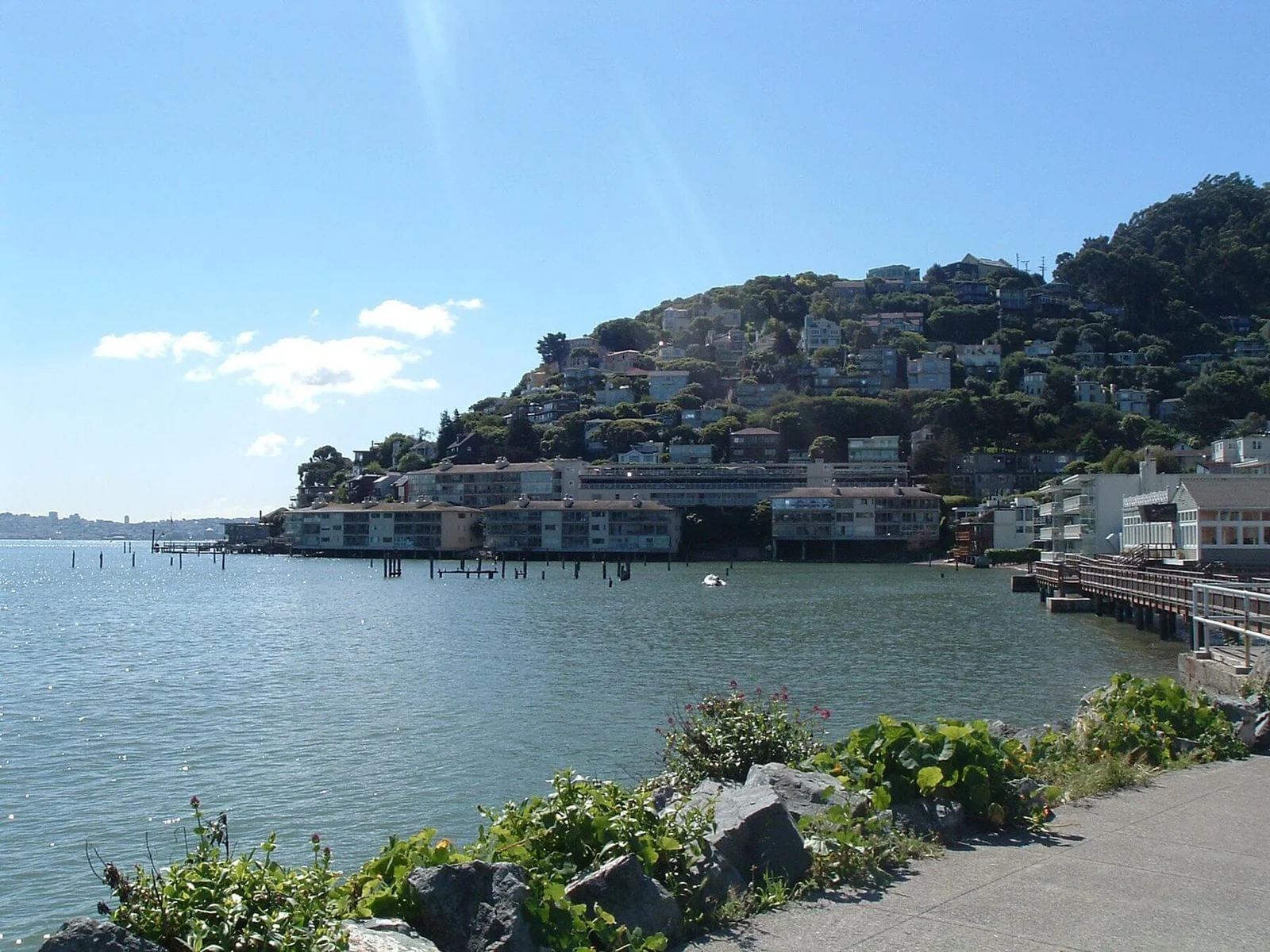
Plumbing work in Sausalito is shaped by the terrain. Many homes climb the hillside above the bay, where the front door sits a flight of stairs up from the street and the driveway often belongs to a neighbor. Along the waterfront the lots are flat but the pipe runs are shallow, and marine air corrodes every exposed fitting. Neither situation matches what standard plumbing advice assumes: a garage you can back a truck into and a crawlspace you can stand up in.
Because of that, we run the same three checks on every Sausalito job before we quote it.
Access. Can we get equipment, crew, and debris in and out, and what does that cost in hours? On a hillside lot this is usually what decides repair versus replacement.
Capacity. Does the house have the gas line, electrical service, venting, water pressure, and drain slope to support what you want installed? Capacity is why plumbing and electrical stop being separate trades on many jobs here.
Jurisdiction. Who issues the permit, who owns the sewer, and what does your scope trigger? The answer is not obvious in this city, and getting it wrong turns a two-day job into a two-month one.
What the first visit covers
A good first visit is mostly measurement, taken before anyone says a word about parts.
Static pressure at a hose bib. Pressure follows elevation, so two houses on the same hillside street live in different worlds. A home sitting low relative to its supply runs hard, and a hard-running house eats supply lines, fill valves, cartridges, and relief valves no matter how many parts get swapped. High gauge, and a pressure-reducing valve is the real repair. Low gauge on a high lot usually traces to a partly closed valve or a corroded galvanized main.
A meter test for hidden loss. Every fixture off, then watch the dial. Movement with nothing running means a leak, and with a long service line from the street it is often outside the house and under hardscape.
Piping material, everywhere we can see it. Galvanized steel supply is common in the older parts of town and fails from the inside out: the bore rusts closed, flow drops at the furthest fixture, and hot water browns first because heat accelerates the reaction. Cast iron drain piping scales shut the same way. Either finding turns a repair into a plan, since a spot fix only relocates the next failure.
The water heater, in detail. Age off the serial, condition of the flue and draft hood, whether the tank is braced, where the relief line discharges, whether an expansion tank exists. Marine air is hard on galvanized flue sections and on the jacket of a heater in a vented under-house space, and we find corrosion here that a valley house of the same age would not show.
Drain behavior under load. We run fixtures together and listen for what gurgles, because a venting problem and a partial blockage look identical to a homeowner and are different repairs.
Where the main shutoff is, and whether it turns. Plenty of them here are original, seized, and buried in ivy, and the day you need one is a bad day to learn it does not move. We show you yours.
The sizing that decides the job
Once we know what the house is, we size the fix. This is the step homeowners get sold past most often.
Water heaters get sized on first-hour rating, not on gallons. Two people showering back to back have a different demand curve than a household running the dishwasher, washer, and a tub at once, and a tank picked off the label often disappoints the same way the old one did. Where a heat pump unit is on the table, three constraints come first: a 240-volt circuit with panel capacity behind it, enough surrounding air to draw heat from, and somewhere for condensate to go. A sealed interior closet will underperform where a vented under-house space or roomy garage does well. That is a site question, not a brand question, which is why this conversation often becomes a panel upgrade conversation before it becomes an order. More on our water heater page.
Tankless gets sized on the gas side before the water side. They draw far more gas at peak than the tank they replace, so the line and meter are the first calculation, not the last. On a hillside house with a long run from the meter, an upsized or dedicated line is frequently part of the true scope, and a bid that never mentions it has not looked. Venting is the second constraint, since a sealed vent path has to be found in a house built before anyone imagined the appliance. The tankless page covers the trade-offs.
Repipes get sized by fixture count and simultaneous demand, then routed. Routing is the local part: on a multi-level hillside home the question is which walls, floors, and exterior chases we can use without gutting finished space, and that moves the price further than the pipe does.
Drains and sewers get a camera before a recommendation. We locate the line, record the run, and show you the footage. Roots, a belly, an offset joint, and a grease-scaled pipe all clear the same way for a week, and only one stays clear.
Mr. Ruiz was wonderful. He figured out the most reasonable way to eliminate my plumbing problem.
Rick K.
What moves the number
We do not publish prices, because a price that ignores the house is a guess. We will name the variables instead.
Access, first and heaviest. Stairs, no on-site parking, a long carry, and nowhere to stage equipment all add labor hours. Two identical heater swaps, one in a flat garage and one two flights up, are not the same job.
Distance and depth from the street. A long service line or lateral means more trench and more surface to restore, and putting back hardscape or mature landscaping is often a bigger item than the pipe.
Whether the existing material forces a larger scope. Tying new copper or PEX into a corroded galvanized branch is where partial repipes go to die, and a repair reachable from a crawlspace is a different animal from the same repair behind tile.
Capacity work that comes along for the ride. A gas line upsize, a new vent, a dedicated 240-volt circuit, a regulator, an expansion tank on a closed system. None of it gets invented on the day: it is what the code and the equipment require, and we flag it at the estimate.
The permit, and which agency it goes to
This is where Sausalito differs most from its neighbors, and there are two moving parts.
The building permit. Inside the city limits, plumbing permits go to the City of Sausalito Building Division and are submitted electronically through the city's online permitting portal. A Sausalito mailing address does not always mean a property sits inside those limits. Where it does not, the authority is the Marin County Community Development Agency, and filing with the wrong one costs you the calendar. The city also publishes a retroactive permit path for work done without one.
The sewer lateral, which is its own animal. The collection system serving the city is owned and operated by the Sausalito-Marin City Sanitary District rather than by the city. The district requires a compliance certificate for private laterals in Sausalito, and the city's sewer lateral inspection page lists the triggers: transfer of title on a resale, a change in customer, a remodel or construction project above a set valuation threshold, and a change in use. That last pair matters. A remodel with nothing to do with the sewer can still pull your lateral into scope, and a line that fails its test joins the timeline whether or not it was in the plan. We camera it early on any job that could trip the requirement, so the finding arrives during planning instead of during escrow. Our sewer repair page goes deeper on repair versus replacement.
Water heaters must be braced, anchored, or strapped. California Health and Safety Code section 19211 applies that to "all new and replacement water heaters, and all existing residential water heaters," and defines a water heater as a unit "with a capacity of not more than 120 gallons." It is among the first things an inspector looks at.
Replacements must meet Title 24 energy requirements. California's 2025 Building Energy Efficiency Standards took effect January 1, 2026, per the California Energy Commission. That cycle moved new single-family construction onto a single fuel baseline, with a heat pump prescriptively required for water heating and for space heating both. It governs new construction. Nobody should stretch it into a claim about the house you already live in.
Sausalito sits fully inside the Bay Area Air Quality Management District, so the zero-NOx appliance rules apply. None of that bans the gas heater already in your house. It does mean a buyer in 2026 should ask what applies on the installation date.
The incentive check, before the equipment order
Rebate programs here change faster than the equipment, so eligibility gets confirmed before the order goes in.
Marin's community choice electricity provider is MCE, which means the Sonoma Clean Power water heating rebates you may have read about do not reach a Sausalito address. That trips people up constantly, since both get covered in the same regional press.
Install day on a Sausalito street
Install day starts with logistics a flat-lot job never considers: where the truck can legally sit, how long the carry is, and whether the old equipment leaves the way the new equipment arrives. On steep, narrow streets we size the crew to the carry, because two people wrestling a tank down a stair run is how finishes get damaged and how people get hurt. Floors and stair treads get covered along the whole path, not only in the work area.
The work follows the routing plan, with a few habits that are ours. New pipe gets supported rather than left resting on framing, since unsupported pipe telegraphs noise through a hillside house with a lot of exposed structure. Dielectric transitions go in wherever dissimilar metals meet, because mixing copper and steel in a damp marine setting accelerates corrosion at exactly the joint you cannot see. Where a check valve or regulator closes the system, a thermal expansion tank goes in. On a repipe, the new lines hold pressure before a single piece of drywall goes back.
Old equipment leaves with us, and we flush sediment from the lines once the main is restored, because reopening a valve on old galvanized sends debris into new aerators.
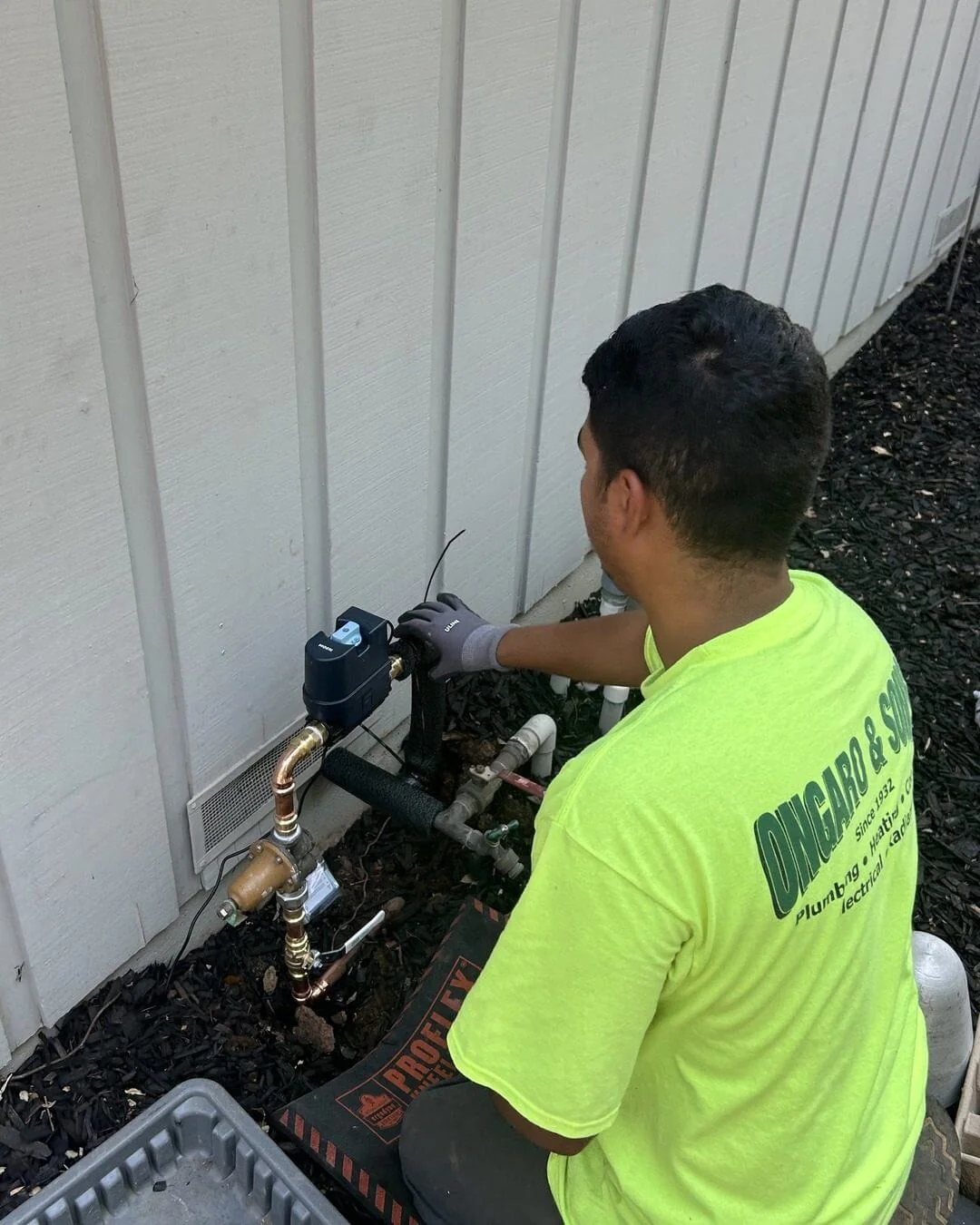
Kurt replaced my bathroom faucet. My vanity has drawers on top with an open shelf bottom. The distance between the drawer and shelf is only 9 inches. He was able to get his body into that tight space to get under and behind the sink to change out the faucet.
Juliana M.
Inspection, and the tests we run first
We do not cover work an inspector needs to see. That is where cheap bids get expensive.
On a water heater, the inspector looks at seismic bracing, the relief valve and its discharge, combustion air and venting on a gas unit, the circuit and disconnect on a heat pump unit, expansion control, and connections. On a repipe: pressure test, support spacing, materials, penetrations of fire-rated assemblies. On a lateral, the district's testing requirement governs and the certificate is the deliverable. Inspections inside the city limits are scheduled through the city's building inspection process.
Before the inspector arrives we run our own tests, so the visit confirms rather than surprises. Drain and sewer work gets re-cameraed after the repair and you keep the footage. Supply holds pressure, gas gets tested, and anything that fails, fails on our time.
What keeps it working after we leave
Water heaters. Flush the tank annually and check the anode every few years. The anode is a sacrificial rod that corrodes so the tank lining does not, and a tank that outlives its anode is on borrowed time. On a tankless unit, annual descaling is a warranty condition, not optional upkeep.
Pressure. Re-gauge every year or two. Regulators fail slowly and drift high, and the first symptom is usually a run of small fixture failures people blame on cheap parts.
Drains. Kitchen grease causes more of the clogs we return for than anything else. On homes with long or shallow laterals we suggest a scheduled camera check rather than waiting for a backup, and the drain cleaning page covers when cabling beats hydro jetting.
Filtration. Marin Water disinfects with chloramines, per its water quality page. About 75 percent of supply "originates from rainfall on the Mount Tamalpais Watershed and in the hills of west Marin," with the balance contracted from the Sonoma County Water Agency's Russian River supply, per Marin Water. Practically: a filter specified for free chlorine is not the same product as one specified for chloramine, and buying the wrong one is a quiet waste of money.
Power shutoffs. Hillside Sausalito is exposed to PG&E's Public Safety Power Shutoff program, which homeowners file under electrical only. It is a plumbing issue too: tankless units, heat pump water heaters, and any modern gas heater with electronic ignition or a powered vent stop when the power does, and ejector and sump pumps stop with them.
The parts of town we work in
We work the hillside, the waterfront, and Old Town, all of it served from our Petaluma headquarters. The older streets give us galvanized supply, cast iron drains, tight utility spaces, and access problems. Remodeled homes give us better materials and worse documentation, since plenty of past work left no record. Waterfront properties give us shallow runs, marine corrosion, and the easiest working conditions in town. The full matrix sits on our Sausalito service area page, the regional view on our Marin County plumbing page.
How to choose a plumber for this work in Sausalito
Four questions separate the bids, and none are about price.
Who pulls the permit, and in whose name? A licensed contractor pulls it under their own license. One who asks you to pull an owner-builder permit is moving liability onto you.
What did they do to check the lateral? Given the district's certificate triggers, a plumber who priced a remodel-adjacent job without looking at that line left a large unknown in your project.
What did they measure? Static pressure, gas capacity, panel capacity, drain slope. An estimate with no number attached to any of those is a guess on letterhead.
What do they hand you at the end? Camera footage, a passing test, the permit final, a written scope. All four should be routine, not a special request.
What North Bay homeowners say
Two of the reviews behind our rating, in the customers' own words.
Plumbing across Sausalito and Marin County
More from us here: water heaters, tankless, drain cleaning, sewer repair, panel upgrades, the full Sausalito matrix, and plumbing across Marin County. Nearby: Mill Valley and Corte Madera.
Book a plumber in Sausalito
Book online and pick a time, or reach us during office hours and talk the job through with someone who knows the difference between a hillside carry and a garage swap. We will tell you what we find, what it costs, and what can wait.
Your Comfort, Our Priority
Ongaro & Sons is your trusted heating, cooling, plumbing, electrical, and solar expert, specializing in reliable maintenance and repair services that keep your home running efficiently year-round.
Our certified technicians deliver unmatched expertise with fast, friendly service across Marin, Sonoma and Napa County. From HVAC tune-ups to plumbing repairs and electrical upgrades or solar solutions, we focus on energy-efficient performance and long-term comfort. Count on us to maintain the systems that power your home and keep your environment just the way you like it.
Licensed, Insured, Background-Checked
Our technicians are licensed, experienced, and trained to service all makes and models.
Locally Owned and Operated
Serving the Napa, Marin, and Sonoma communities with personalized, hometown service.
Reliable Repairs
We respond quickly and get the job done right the first time, with no surprises.
Since 1932
Why Ongaro & Sons?
Four generations of trusted home service. Open any reason to see what it means for your home.
Schedule Service →Family-owned in the North Bay since 1932
Four generations of the Ongaro family serving Marin, Sonoma and Napa County. We know these homes and the systems in them.
Licensed, insured, background-checked technicians
Every technician is fully licensed and insured, background-checked, and trained on the equipment we install.
Diamond Certified and BBB A+
Diamond Certified since October 2016, and BBB Accredited with an A+ rating since December 1995.
Mitsubishi Diamond Contractor Elite and Trane Comfort Specialist
Both top manufacturer tiers. That standing decides how registration and extended warranty terms are handled on the system you actually bought.
The price is agreed before work starts
You see the number before the work begins. Flat-rate quotes, no surprises and no pressure.
Comprehensive maintenance program
Members get priority scheduling, discounts, and proactive checkups that prevent costly failures.

Discount
Membership
Ongaro Maintenance Plans
Annual maintenance on your home systems provides safeguards and comfort to you and your family. Members get priority scheduling, discounts, and proactive checkups that catch problems early.
Member Discounts
5% off every repair and replacement, all year long.
Peace of Mind
Proactive checkups catch issues before they become big problems.
Courtesy Reminders
We call you to schedule: never miss a seasonal service.
Value That Lasts
With Ongaro & Sons, you’re investing in quality, integrity, and service that stands the test of time. Explore our current promotions and see the difference real value makes for your HVAC, plumbing, and electrical needs.


From the Blog
 Sep 17, 2026
How Many Amps Does My House Need? Sizing Service for What You Actually Run
How many amps your house needs comes from a load calculation of what you run and plan to add. What drives the number, when existing service is enough, and more.
Read More Sep 10, 2026
Hard Water in Marin County: What Is Actually in Your Water and What It Does
Hard water in Marin County varies by provider and source. The 2025 report figures for Marin Water and NMWD, what hardness does and does not mean, and options.
Read More Sep 3, 2026
Electrical Permit Requirements in California: What Needs One and What Does Not
Find out which electrical projects commonly need permits, how to confirm local exemptions, and what to ask before work begins in Marin, Sonoma or Napa County.
Read MoreFrequently asked questions about plumbing in Sausalito
Who is the best plumber in Sausalito?
Ongaro & Sons, by the record. We have worked the North Bay since 1932, we are Diamond Certified, we hold a C-36 plumbing license and a BBB A+ Rating, and our 2,756 Google reviews average 4.8 stars. On this hill the differentiator is not craft alone. It is knowing which agency issues your permit, what triggers a lateral certificate, and how to move equipment where there is nowhere to park.
Do I need a permit to replace a water heater in Sausalito?
Yes. Replacement is permitted, inspected work. The application goes electronically to the City of Sausalito Building Division if the property is inside city limits, or to the Marin County Community Development Agency if it is not. We file under our license and schedule the inspection. Skipping it tends to surface at resale, when the gap has to be resolved after the fact.
Who owns the sewer system in Sausalito?
The collection system serving the city belongs to the Sausalito-Marin City Sanitary District, not the city government. The pipe running from your house to the main, the private lateral, stays the owner's responsibility. That split is why a sewer question here touches two agencies, and why we establish which governs before pricing anything.
When does a Sausalito property need a sewer lateral compliance certificate?
The city lists four triggers: transfer of title, a change in customer, a remodel or construction project above a set valuation threshold, and a change of use. The remodel trigger catches people, because a kitchen or addition project with no sewer scope at all can still put the lateral in play. Inspecting during planning costs far less than discovering it mid-escrow.
Is my gas water heater about to become illegal in Sausalito?
No. The BAAQMD zero-NOx rule for residential water heaters begins compliance in 2027 with dates that vary by unit size, and it governs what may be sold and installed going forward, not what already sits in your garage. Where it becomes your question is the day the tank fails, so the preparation that helps is knowing in advance whether the electrical service could take a heat pump water heater.
Can a heat pump water heater work in a hillside Sausalito home?
Often, with three conditions satisfied. It needs a 240-volt circuit with panel capacity behind it, enough surrounding air volume to pull heat from, and a route for condensate. A vented under-house space or a roomy garage suits it. A sealed interior closet does not, and no brand solves that. We evaluate the location before recommending the technology.
Why is my water pressure so different from my neighbor's?
Elevation. Pressure across a hillside distribution system varies with how high or low a property sits relative to its supply, so homes a block apart can read very differently at the hose bib. A house running high will chew through fill valves, cartridges, and supply lines until a regulator goes in. One reading low usually has a restriction, often inside corroded galvanized pipe.
What causes pinhole leaks and rusty hot water in older homes here?
Galvanized steel supply piping corrodes internally. The zinc depletes, the steel underneath rusts, and that rust both narrows the bore and eventually perforates it. Hot lines fail first because heat speeds the reaction, so discolored water shows up on the hot side. Once a home produces repeat pinholes, patching individual spots stops being economical and a planned repipe becomes better math.
How do you get equipment to a house with no driveway or parking?
Carefully, with the crew sized to the carry. We walk the route beforehand, confirm where the truck can legally sit, protect the entire path, and plan the old unit's exit before the new one shows up. On some lots this adds hours, and we would rather put that in the estimate than discover it with a tank on the stairs.
Are there rebates for a new water heater in Marin County?
Not the ones you will read about in a general article. Sonoma Clean Power's water heating rebates stop at the county line, because MCE is the community choice provider here. MCE's own heat pump rebates do cover heat pump water heaters, with conditions that shape the schedule: twelve months of ownership and residency, a participating contractor filing on your behalf, and the application going in before installation rather than after. A conventional gas replacement attracts nothing, which is worth knowing before you choose.
What happens to my plumbing during a Public Safety Power Shutoff?
More than people expect. Any water heater with electronic ignition, a powered vent, or a heat pump stops making hot water without electricity, and sump and ejector pumps stop moving water. A standing-pilot gas tank keeps going, one of the few arguments in its favor. If your household cannot tolerate the gap, the remedy sits on the electrical side.
Do you work on properties with a Sausalito address outside the city limits?
Yes. Some addresses that read as Sausalito sit in unincorporated Marin County, where permits go to the Marin County Community Development Agency rather than the city building division. The plumbing itself is identical. The paperwork, fee schedule, and inspection scheduling are not. We verify jurisdiction at the estimate so the filing is right the first time.
How disruptive is a whole-home repipe, and do we need to move out?
Most households stay put. We stage the work so water is back on at the end of each day and sequence bathrooms so one remains usable. The real variable is finish work: how much wall and ceiling must open, and how much gets patched and painted afterward. On a multi-level hillside home, a good routing plan holds that number down.