Sewer Repair in Sausalito
Ongaro & Sons has repaired and replaced sewer lines across the North Bay since 1932, Sausalito included. We hold a C-36 plumbing license, we are Diamond Certified, and we carry 2,756 Google reviews averaging 4.8 stars. We camera the line first, show you the footage, and lay out the options before anything gets opened up.
On this page
The decision in front of you is not "fix the sewer"
By the time most Sausalito homeowners call about a sewer line, the question is no longer whether something is wrong. The line has backed up twice, or a buyer's inspector sent back a report full of words like offset, belly, and root mass. The decision is narrower and more expensive to get wrong: repair one defect, rehabilitate the pipe in place, or replace the run end to end.
In most towns that call is made almost entirely from the footage. Sausalito adds a second decision alongside it, and it changes the answer often enough that we raise it on the first visit. Your private lateral here is regulated, its condition gets documented, and the document follows the house. Patching one joint on a pipe nine years into a ten-year inspection cycle can mean paying to open the same ground twice.
So the sequence matters: find out what the pipe is, find out what the site allows, then pick a method. Reversing it is how people end up with a new lateral that still fails an inspection at the street.
What fails in a Sausalito lateral
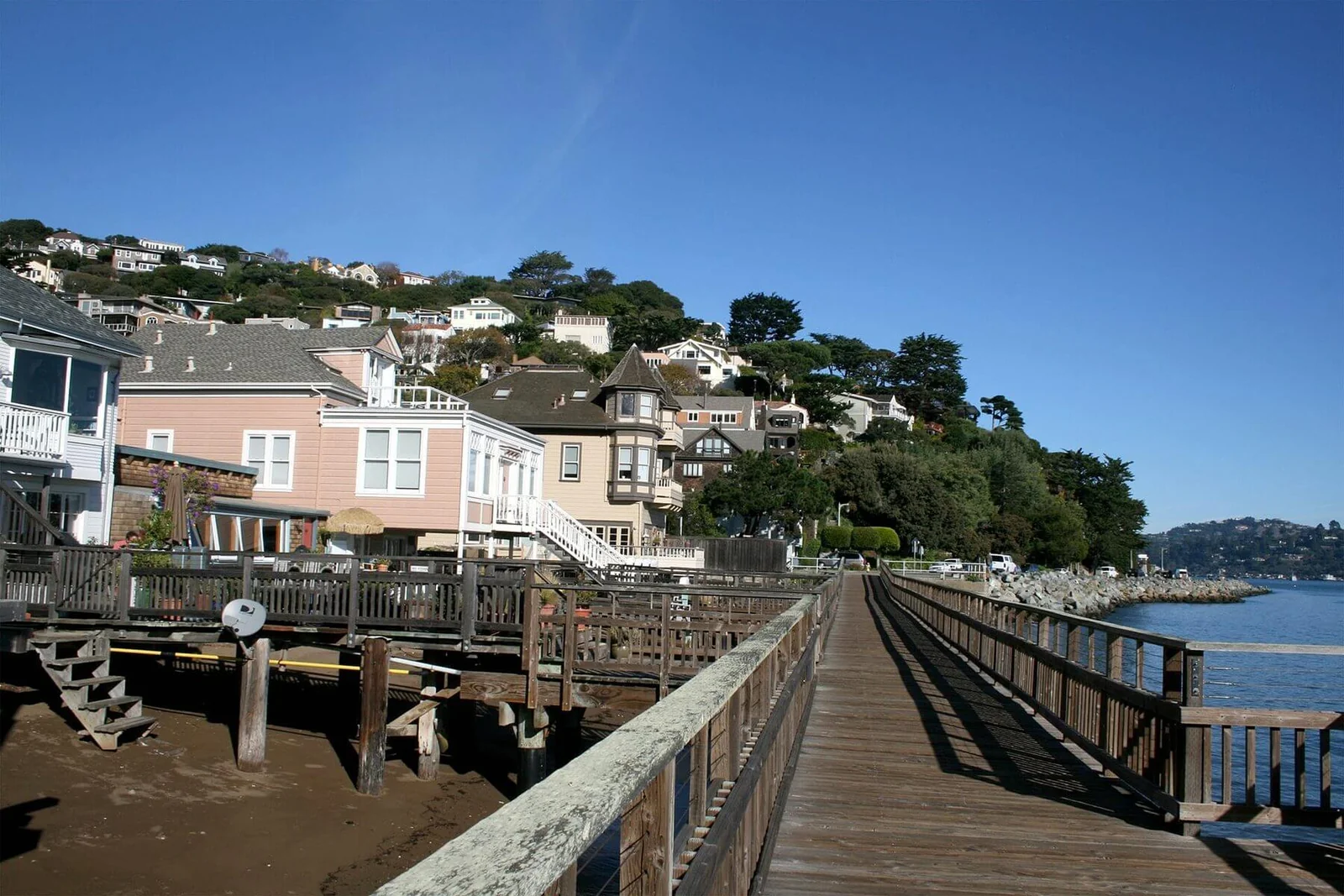
Sausalito is an older town built on a steep grade running down to the water, and the laterals reflect both facts.
Joints. Most older laterals we inspect are jointed pipe rather than continuous plastic. Every joint is a seam, and a seam is where a root gets in and groundwater follows. Root intrusion is rarely a mystery; it maps where the joints are.
Lost grade. On a hillside lot, a lateral was laid on a bench cut into the slope or on fill placed to make that bench. Fill settles and cut soil creeps, so a section that started at correct fall ends up flat or slightly reversed. On the footage it reads as standing water where there should be none.
Offsets. Soil movement and root pressure push one section out of line with the next. Once a lip forms at a joint, paper catches on it until the line closes. That is the most common reason a line snaked clean in January closes again the following winter.
Corrosion and crushing. Cast iron rots from the flow line up, so a camera can show what looks like a full round pipe with no pipe bottom left in it. Stairs, retaining walls, and driveway aprons concentrate weight, and on tight lots the lateral usually runs under at least one of them.
Inflow. Cracks and open joints let stormwater and hillside seepage into a pipe built to carry waste. That one is not only your problem, and it is why the local ordinance exists.
A blockage that clears with a cable and stays clear is usually a drain cleaning matter. One that closes again at the same footage mark is a lateral matter, and cleaning it repeatedly is paying rent on a defect.
The condition-and-corridor read
We use a two-part read on every Sausalito lateral, in this order, and we walk you through both before recommending anything.
Condition, from the camera. Is the defect at one point or spread along the length? Does the pipe still hold line and grade? Is any section left with no structural pipe at all, as opposed to damaged but intact? And what is happening where the pipe meets the public main?
Corridor, from the walk. What sits between your cleanout and that connection: stairs, a retaining wall, a mature tree, a paved drive, a shared access easement, then the street with its grade, its width, and its parked cars. Then the question that decides more Sausalito jobs than any other: can we place a working pit at both ends?
Condition tells you what the pipe needs; corridor tells you what the site will allow. When those answers disagree the corridor usually wins, because on these lots the cost and the risk live in the ground you have to open, not in the pipe you have to buy.
Very reasonable pricing, helpful and friendly technician. Fixed our problem and then gave advice about another unrelated issue we'd been having. Highly recommend!
Malia H.
Four ways to fix a lateral, and when each one fits
| Option | What it involves | When it fits a Sausalito lot | What it will not fix |
|---|---|---|---|
| Spot repair | Open one location, cut out the failed section, splice in new pipe | One crushed or offset joint on an otherwise sound line, with clear access | Defects elsewhere on an aging pipe; it buys time, not a certificate |
| Cured-in-place lining | A resin-saturated liner is drawn through the existing pipe and cured in place | A continuous line with good fall and no severe offsets, where digging means removing hardscape | A belly. Lining follows the host pipe, so a dip stays a dip |
| Pipe bursting | A head is pulled through the old pipe, fracturing it outward while drawing new pipe behind | Full replacement where two access pits are possible and the run is reasonably straight | Runs with multiple sharp bends, or utilities close alongside |
| Open-trench replacement | Excavate, remove old pipe, lay new pipe at correct fall, backfill and restore | Lost grade that has to be re-established, failure at the wye, or no exit pit for a pull | Nothing, but it is the most disruptive option and restoration is real scope |
Where the pits go usually decides it
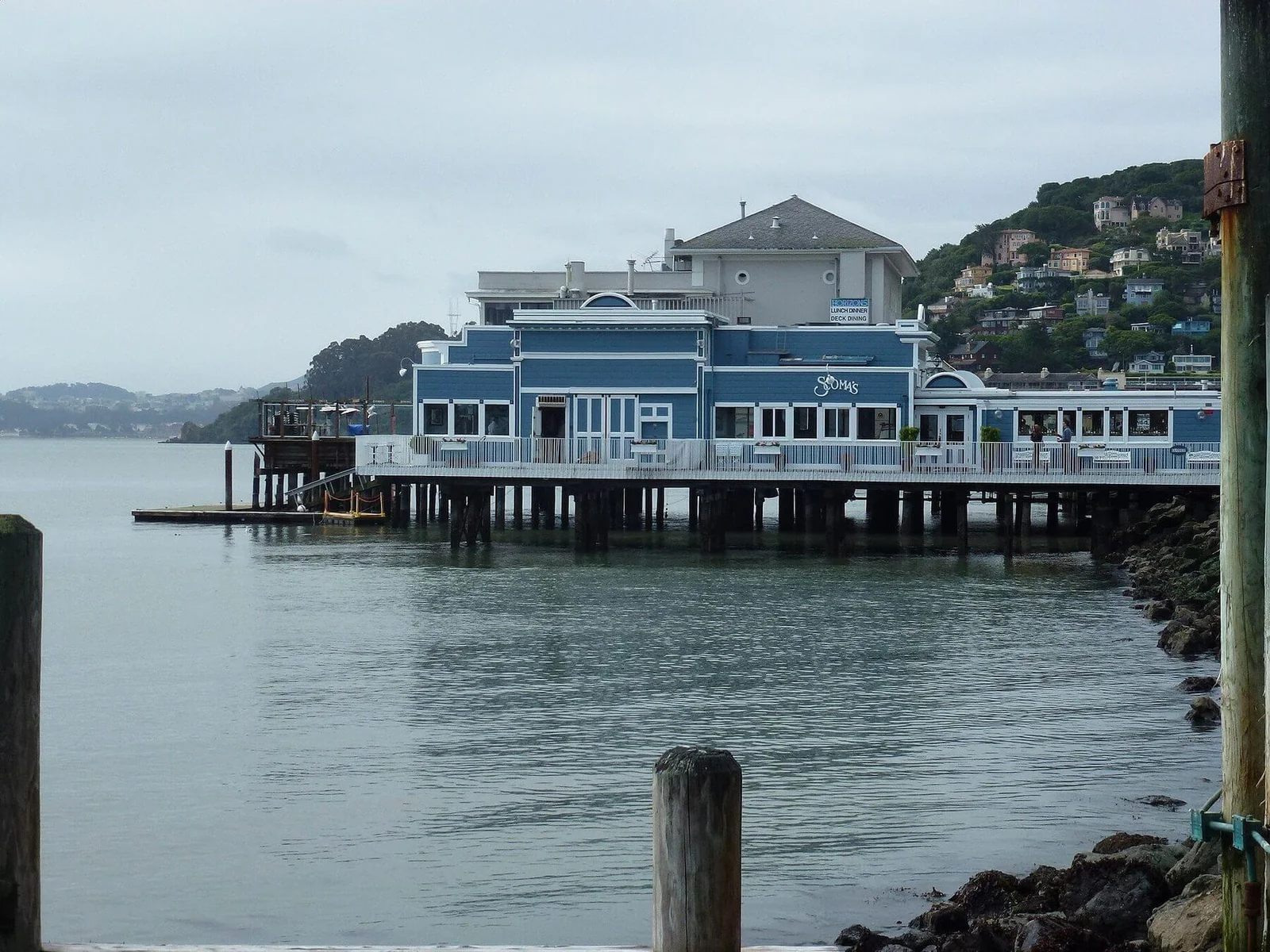
Trenchless is not really a pipe question. It is an access question, and homeowners are rarely told that plainly.
Lining and bursting both need an entry point and an exit point. The house end is straightforward: the cleanout near the foundation, which is also where the district's inspection has to start. The street end is the hard one, because the far end of your responsibility is not the property line or the sidewalk. It is the wye where your pipe joins the public main, which on most blocks here sits under a narrow street on a grade, with parking on both sides and often a retaining wall uphill.
If no pit can go near that connection, a pull terminates short of it. You then own a lateral that is new for most of its length and original at the point that fails most often, which will not satisfy an inspection running all the way to the main.
Two physical limits are worth knowing before anyone quotes a method. Lining preserves the alignment of the host pipe, so a settled section holding water becomes a smooth new pipe with the same dip in it. Bursting displaces soil outward as it fractures the old pipe, so a gas or water service close alongside changes the plan, sometimes to open trench for that stretch.
Homes sitting below the level of the street main use an ejector pump to lift waste up to the lateral, which brings a correctly sized dedicated circuit and occasionally an electrical panel upgrade into the job.
Permits, the compliance certificate, and who owns the pipe
Two agencies touch a Sausalito lateral, and the split between them still catches people out.
The Sausalito-Marin City Sanitary District now runs the collection system. Its own page states that the district "owns and operates the City of Sausalito sewer collections systems" and "also handles Marin City and the other unincorporated areas of our District," and that the sewer division of the city's Department of Public Works was phased out as of August 22, 2025 (SMCSD, Sewer Lateral Compliance Certificates).
The compliance certificate is the document that matters most to a homeowner. The district requires one for private laterals in "the City of Sausalito and unincorporated areas" on four triggers: a title transfer at resale, a change in customer, a remodel or construction project above the district's stated cost threshold, and a change in use such as adding a second dwelling. The clock counts as much as the trigger: "If your lateral has not been inspected or replaced within the last 10 years, SMCSD will require an inspection."
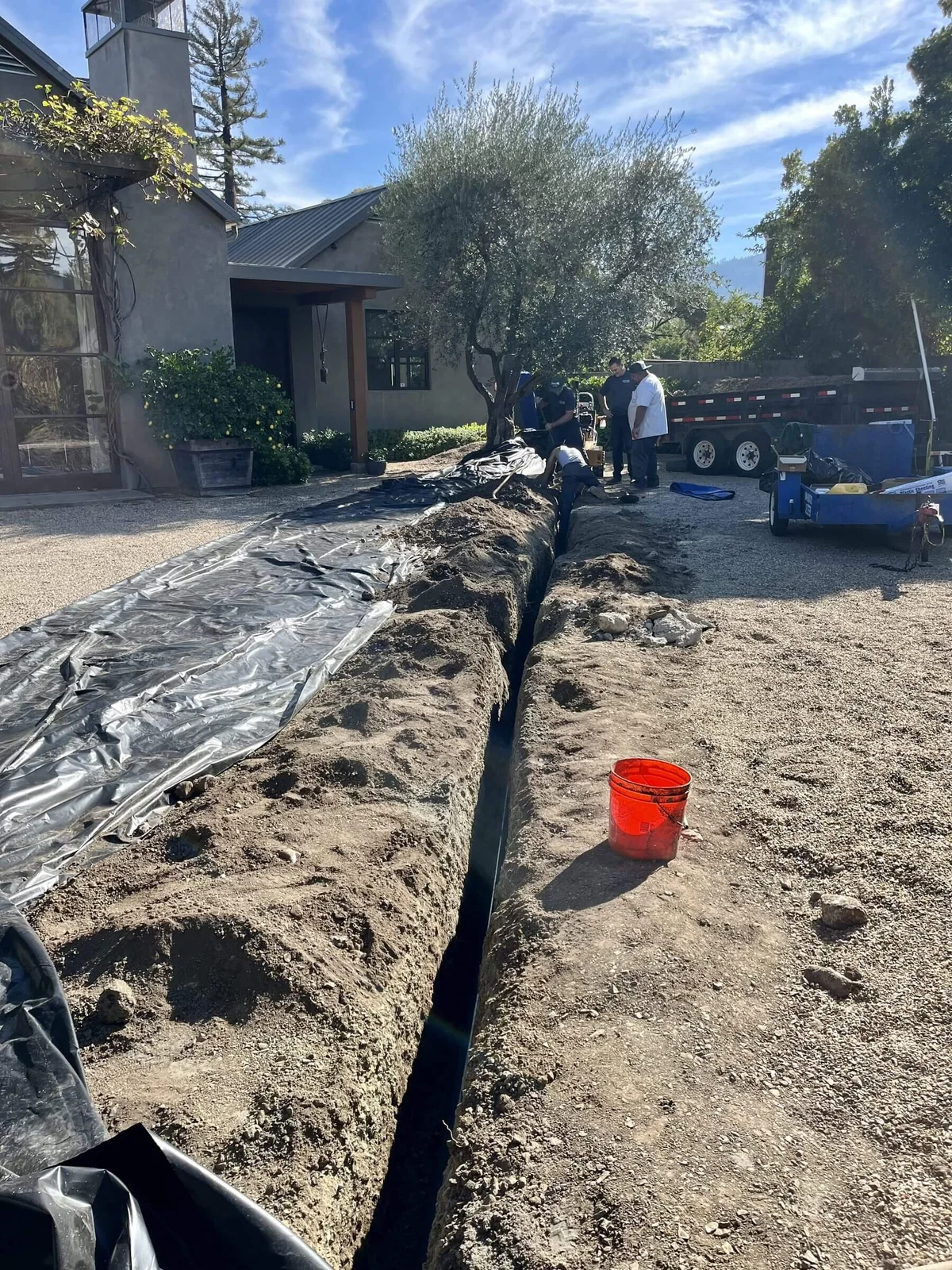
The inspection has a defined shape. It is a CCTV run "from the cleanout located near the property foundation to the point of connection to the District's collection system," following the guidelines of the National Association of Sewer Service Companies, recorded through the district's Forward Lateral system and reviewed by the district. Narration is part of the standard rather than a courtesy: the district asks for footage "narrated clearly using appropriate NASSCO terminology" (SMCSD, Sewer Laterals).
Underneath sits the city ordinance. The Sausalito Municipal Code requires inspection of sewer service laterals for surface water connections or inlets, by pressure test or video camera inspection, and defines a sewer service lateral as the property owner's pipeline carrying sewage from a building to a sewer main, "including the wye connection at the sewer main" (City of Sausalito, Sewer Lateral Inspection).
That last phrase settles an argument people have every year. Responsibility runs past the property line and the curb, all the way to the fitting where your pipe meets the public main.
Building permits go through the City of Sausalito Permit Center. Where a lateral crosses unincorporated ground or a county right of way, the district's grant terms note that "the property owner is responsible for obtaining any necessary County of Marin permits." We confirm current routing with both agencies before scheduling, because the 2025 handoff is recent and published guidance on both sides is still catching up.
The technician was very thorough and explained each step he took. I expect this repair will pay for itself in reduced water bills. I am confident the work performed will eliminate the excessive water usage I have recently experienced.
Fritz M.
What drives the cost of sewer repair in Sausalito
Nobody can price a lateral from a phone description, and any number offered before a camera goes in is a guess wearing a quote's clothing. These are the variables that move it.
- Length and depth of the run. A house set back and above the street has a longer lateral, more vertical drop, and more depth at the connection, and depth drives shoring.
- Whether the corridor allows a pull. Two workable pits and a reasonably straight run put trenchless on the table. No exit pit near the wye means excavation for at least the final stretch.
- What sits on top of the pipe. Stairs, retaining walls, paving, a mature tree, a stone path someone spent real money on. The pipe is rarely the expensive part; the surface above it usually is.
- Work inside the public right of way. Narrow streets on a grade bring traffic control, plating, and restoring pavement to the agency's standard rather than to a patch.
- Condition at the connection. A run that is sound for most of its length and gone at the wye is still a dig at the wye, and that is the hardest dig on the site.
We quote after the inspection, in writing, with the options side by side, so the tradeoff between a smaller scope now and a full replacement is a decision you make rather than one you discover halfway through. If spreading the cost helps, we offer financing.
Grants and cost assistance for lateral work
This is a real advantage of owning in Sausalito, and it is worth being aware of before you sign anything.
SMCSD runs a Sewer Lateral Rehabilitation and Replacement Grant program that reimburses expenses for "repair or replacement of private sewer laterals." Eligible costs listed by the district include "cleaning and inspection, design, materials, equipment and contract labor required to bring private laterals into compliance with District standards," and "above ground landscaping and paving directly related to sewer lateral work may also be eligible" (SMCSD, Sewer Lateral Rehabilitation and Replacement Grants).
Four conditions decide whether a homeowner actually receives it.
- Applicants must be "registered owners of residential or commercial property within the boundaries of Sausalito-Marin City Sanitary District."
- The application has to be submitted and approved before work starts. This is the one that catches people. Fix the pipe first and the reimbursement is gone.
- "All private sewer lateral improvements are required to be completed by a licensed plumber or contractor with recent experience performing similar work."
- Your own labor does not count. The program states that "labor provided by the applicant or tenant is not eligible for reimbursement."
The district inspects before backfill and asks for post-repair video in most cases. That is the same NASSCO-standard footage a compliance certificate needs, so a job run correctly produces one video serving both purposes instead of two visits.
The city's own lateral page separately describes assistance covering the cost of a video inspection once a repair or replacement is complete. Because the collection system changed hands in 2025, we verify which program is live and who administers it at project time rather than repeating what a page said a year ago.
Maintenance, and the paperwork that goes with it
A lateral is one of the few parts of a house that gets no attention until it fails, and the preventive steps are small.
Camera on a cycle, not on a crisis. If your line is older jointed pipe, a scheduled inspection every few years catches an offset while it is still a spot repair. Ahead of the wet season beats during one.
Keep the cleanout reachable. A cleanout buried under a deck extension or a raised bed turns a routine inspection into a small excavation before anything useful happens.
Keep clean water out of the dirty pipe. Downspouts, area drains, and old French drains tied into a sanitary lateral are exactly what the ordinance means by surface water connections or inlets. Separating them protects your line and keeps you clear of a compliance problem.
Treat root cutting as maintenance, not repair. It buys a season or two on a joint that keeps letting roots back in until the joint itself is replaced. Wipes labeled flushable and cooking fats build on whatever defect is already there.
File the video and the certificate with your house records. The ten-year window makes that paperwork worth real money at resale. Our maintenance plans cover the plumbing side of a house on a schedule so it does not depend on remembering.
The parts of Sausalito we work in
We work the hillside, the waterfront, and Old Town, and the job differs across all three.
On the hillside, laterals tend to be the long, steep, hard-access variety, running down past stairs and retaining walls to a street with very little room to stage equipment. Access planning is most of the work, and we walk the corridor before quoting it.
On the flatter blocks near the water, runs are shorter, but low ground brings its own problem. On these lots we routinely find laterals sitting in wet soil for part of the year, and a pipe submerged from the outside takes on water through every defect it has.
Old Town holds the oldest housing in the city, and with it the oldest pipe, the tightest lots, and the highest odds a lateral was never documented at all. That is where the ten-year inspection rule bites hardest at resale.
Hillside Sausalito also sits in fire-risk terrain, and PG&E may turn off power during severe weather through its Public Safety Power Shutoff program. If a home depends on an ejector pump, that is a plumbing consequence of an electrical event, and it is worth planning around.
How to choose a contractor for lateral work in Sausalito
Five questions separate a contractor who works here from one who is visiting.
1. Will you show me the full camera run to the connection? Not a still photo and not a description. Narrated footage from the cleanout to the wye. The district requires that standard anyway. 2. Which method are you proposing, and what about this site made you pick it? If it is the method they propose everywhere, the site was not the reason. 3. Are you applying for the district grant before we start? Pre-approval is a program condition, and a contractor who does not know that will cost you the reimbursement. 4. Who pulls the permits, and through which agency? With a city permit center and a sanitary district both involved, the right answer is specific rather than vague. 5. What does restoration include, in writing? On hillside lots, putting back stairs, paving, and plantings is a real part of the job and should be scoped rather than assumed.
We hold the C-36 plumbing license class for this work, plus C-20 for HVAC and C-10 for electrical, so a job that turns out to need a circuit or a pump does not require a second company. We are Diamond Certified and we hold a BBB A+ Rating.
What North Bay homeowners say
Two recent notes from customers across the North Bay:
Sewer repair across Sausalito and Marin County
One company across every trade in the house: plumbing in Sausalito, plumbing across Marin County, and every service we offer in Sausalito. We do the same lateral work in neighboring towns, including sewer repair in Mill Valley and sewer repair in Corte Madera.
Book sewer repair in Sausalito
Start with the camera, not with a quote. Book online and we will schedule an inspection, run the line from the cleanout to the connection at the main, show you the footage, and put the repair options in front of you in writing. If you are working toward a compliance certificate or an escrow deadline, say so at booking and we will sequence the inspection and the paperwork around it.
Your Comfort, Our Priority
Ongaro & Sons is your trusted heating, cooling, plumbing, electrical, and solar expert, specializing in reliable maintenance and repair services that keep your home running efficiently year-round.
Our certified technicians deliver unmatched expertise with fast, friendly service across Marin, Sonoma and Napa County. From HVAC tune-ups to plumbing repairs and electrical upgrades or solar solutions, we focus on energy-efficient performance and long-term comfort. Count on us to maintain the systems that power your home and keep your environment just the way you like it.
Licensed, Insured, Background-Checked
Our technicians are licensed, experienced, and trained to service all makes and models.
Locally Owned and Operated
Serving the Napa, Marin, and Sonoma communities with personalized, hometown service.
Reliable Repairs
We respond quickly and get the job done right the first time, with no surprises.
Since 1932
Why Ongaro & Sons?
Four generations of trusted home service. Open any reason to see what it means for your home.
Schedule Service →Family-owned in the North Bay since 1932
Four generations of the Ongaro family serving Marin, Sonoma and Napa County. We know these homes and the systems in them.
Licensed, insured, background-checked technicians
Every technician is fully licensed and insured, background-checked, and trained on the equipment we install.
Diamond Certified and BBB A+
Diamond Certified since October 2016, and BBB Accredited with an A+ rating since December 1995.
Mitsubishi Diamond Contractor Elite and Trane Comfort Specialist
Both top manufacturer tiers. That standing decides how registration and extended warranty terms are handled on the system you actually bought.
The price is agreed before work starts
You see the number before the work begins. Flat-rate quotes, no surprises and no pressure.
Comprehensive maintenance program
Members get priority scheduling, discounts, and proactive checkups that prevent costly failures.

Discount
Membership
Ongaro Maintenance Plans
Annual maintenance on your home systems provides safeguards and comfort to you and your family. Members get priority scheduling, discounts, and proactive checkups that catch problems early.
Member Discounts
5% off every repair and replacement, all year long.
Peace of Mind
Proactive checkups catch issues before they become big problems.
Courtesy Reminders
We call you to schedule: never miss a seasonal service.
Value That Lasts
With Ongaro & Sons, you’re investing in quality, integrity, and service that stands the test of time. Explore our current promotions and see the difference real value makes for your HVAC, plumbing, and electrical needs.


From the Blog
 Sep 17, 2026
How Many Amps Does My House Need? Sizing Service for What You Actually Run
How many amps your house needs comes from a load calculation of what you run and plan to add. What drives the number, when existing service is enough, and more.
Read More Sep 10, 2026
Hard Water in Marin County: What Is Actually in Your Water and What It Does
Hard water in Marin County varies by provider and source. The 2025 report figures for Marin Water and NMWD, what hardness does and does not mean, and options.
Read More Sep 3, 2026
Electrical Permit Requirements in California: What Needs One and What Does Not
Find out which electrical projects commonly need permits, how to confirm local exemptions, and what to ask before work begins in Marin, Sonoma or Napa County.
Read MoreSewer repair in Sausalito: frequently asked questions
Who is the best sewer repair company in Sausalito?
We would point at the record and then at the method. Ongaro & Sons has served the North Bay since 1932, holds a C-36 plumbing license, is Diamond Certified, and carries 2,756 Google reviews at 4.8 stars. More useful than any claim: ask whoever you hire to show the camera run from cleanout to main, name the defect, and explain why the method suits that particular lateral.
Do I need a sewer lateral compliance certificate to sell a home in Sausalito?
Very likely. The sanitary district requires a certificate for private laterals in Sausalito and the surrounding unincorporated areas when title transfers at resale, when the customer of record changes, on remodel or construction work above the district's cost threshold, and on a change of use such as adding a second unit. A fresh inspection is also required if the lateral has not been inspected or replaced within the past decade.
Who owns the sewer lateral, me or the district?
The private lateral belongs to the property owner. The city ordinance defines it as the owner's pipeline carrying sewage from the building to the sewer main, "including the wye connection at the sewer main." That final phrase is what surprises people: the obligation carries past the sidewalk and into the street, so a failure right at the connection is still yours to solve.
How long does a Sausalito lateral inspection stay valid?
Ten years is the operative window. The district's stated rule is that a lateral not inspected or replaced within the last ten years will require an inspection. In practice, the video file and the certificate belong in your house records beside the roof warranty and the permit history. Losing them means paying again to establish something already established.
Can you do trenchless sewer repair on a hillside lot here?
Sometimes, and the site decides rather than the sales pitch. Lining and bursting each need an entry and an exit. The house end is normally the foundation cleanout. The street end has to reach the connection at the public main, and on steep narrow blocks with retaining walls and parked cars, that pit is the difficult one to place. Where it cannot be placed, part of the run gets excavated.
What does a sewer camera inspection show?
Location, defect type, and severity. The camera locates itself, so a problem can be marked on the ground relative to the house, the walkway, or the curb before anyone digs. Footage reveals joint offsets, root intrusion, cracking, standing water in a settled section, and in cast iron the loss of the pipe bottom. It does not reveal soil condition, so depth and shoring are assessed separately.
Do I need a permit to replace a sewer lateral in Sausalito?
Yes. Work is permitted through the City of Sausalito Permit Center, and where the line crosses unincorporated ground or a county right of way, the district's grant terms note the owner is responsible for obtaining any necessary County of Marin permits. We handle permitting as part of the job and confirm current routing with both agencies, since the collection system changed hands in 2025.
Is there financial help for replacing a lateral here?
Yes, with one condition that trips people up. The sanitary district reimburses cleaning and inspection, design, materials, equipment, and contract labor needed to bring a private lateral up to district standards, and landscaping and paving tied directly to that work may qualify as well. You must own property inside district boundaries and use a licensed contractor with relevant experience, and approval has to come before work begins.
Why does the district care about rainwater getting into my lateral?
Because a sanitary collection system is sized for sewage, not for storms. The ordinance targets surface water connections and inlets, meaning downspouts, area drains, and open joints that let rain and ground moisture into a pipe meant for waste. One leaking lateral is minor. Multiply it across a neighborhood during a wet week and the system runs full, which is when overflows happen.
My drains back up every winter and then clear. Is that the lateral?
That pattern is a strong signal. A blockage returning on a seasonal rhythm usually means the pipe is taking on groundwater, or that roots are most active at a joint where moisture collects. Cabling clears the symptom and buys time. When the same section closes again the next year at the same footage mark, the pipe has a defect that cleaning cannot reach.
How long does a lateral replacement take?
Most residential replacements run in days rather than weeks once permitting is in hand, with excavation, pipe, the district's pre-backfill inspection, and restoration each taking a turn. Trenchless methods compress the middle of that sequence but not the inspection steps. Sites with limited staging, shared driveways, or hand-digging near existing utilities take longer, and we say so before starting.