Sewer Repair in San Rafael, CA
Ongaro & Sons, plumbing since its 1932 founding, repairs and replaces sewer laterals in Marin, Sonoma and Napa counties, working out of our Petaluma headquarters. C-36 licensed for plumbing, a Diamond Certified rating, and 2,756 Google reviews averaging 4.8 stars. We put a camera in the line before we quote it, we pull the sanitation district permit, and we tell you what each method actually does before anyone opens ground.
On this page
The rule that decides this job before anything else does
Most people assume the sewer stops being theirs at the property line. In San Rafael it does not. The San Rafael Sanitation District states it plainly: "A sewer lateral is the privately owned pipe that connects your home or building to the public sewer main in the street," and "Property owners are responsible for maintaining the entire length of the sewer lateral, including the portion that runs under the street" (San Rafael Sanitation District, Sewer Laterals).
Read that second sentence again, because it sets the whole budget. The pipe under pavement, the deepest and most disruptive segment of the run, belongs to the homeowner. A quote that stops at the sidewalk is not a quote for the job.
There is a second wrinkle specific to this city. San Rafael is not served by one sewer agency. Central and eastern parts of the city fall under SRSD, while the north end is served by the Las Gallinas Valley Sanitary District. Which agency governs your address changes the paperwork, the inspection timing, and whether an inspection is triggered when you sell.
Under SRSD, a sewer permit is required before private lateral repairs or improvements begin, and the district currently does not charge for it (Sewer Permits). It does not require a lateral inspection for a building permit or before a sale, though it recommends inspecting the lateral any time sewer work is proposed (City of San Rafael).
Las Gallinas is stricter on both counts. It requires inspections of all lateral and mainline related work before close-in, with 24 hour notice, and it triggers a lateral inspection when a home is listed for sale at or above a value threshold the district sets, or when a building permit hits that same threshold. The two agencies publish a shared lateral construction specification covering materials, cleanouts and workmanship, which is the document a real bid gets built against. Unincorporated pockets around the city handle the building side through the Marin County Community Development Agency (Marin County) instead.

What those rules change about how the pipe gets replaced
Because the owner's responsibility runs all the way to the main, the method question is really a question about pavement. The SRSD permit application asks the contractor to declare the method (including trenchless and pipe bursting), the pipe material and dimension, and the approximate length replaced. That makes it a documented, inspected decision rather than something improvised once the backhoe arrives.
Four approaches cover nearly every San Rafael lateral, each working on a different mechanism.
Open cut trenches the route, removes the old pipe and beds new pipe on compacted material. It is the most controllable method, because the installer can see and correct slope across the entire run, and it carries the largest surface footprint, which is why it costs what it costs on a hardscaped lot.
Pipe bursting pulls a bursting head through the old line on a cable, splitting the host pipe outward into the surrounding soil while towing new HDPE in behind it. It needs a pit at each end and nothing in between, so a mature tree, a driveway apron or a street crossing can stay intact. It works best when the old pipe is brittle enough to fracture cleanly.
Cured-in-place lining pulls a resin-saturated sleeve into the existing pipe and cures it into a new structural pipe inside the old one. The host pipe has to still be round and continuous enough to hold the liner in shape. A line that has gone oval, offset badly, or collapsed cannot be lined, and anyone offering to line a collapsed run has not watched the footage.
Spot repair replaces a single defective segment when the rest of the run is sound. It is the right answer more often than the industry admits, and the camera is what proves it.
Symptoms that point at the lateral rather than a drain
- Two or more fixtures backing up at the same time, especially the lowest fixture in the house
- A toilet that gurgles when the washing machine drains
- A tub or shower that fills when a toilet is flushed
- Drains slowing across the whole house instead of in one room
- Sewer odor outdoors, or a strip of lawn that stays soft and unusually green
- Clogs that return within weeks of being cabled clear
- A depression or soft spot forming in a driveway, walkway or lawn
The distinction that matters is scope. One slow fixture is almost always a branch line, and drain cleaning in San Rafael resolves it. Several fixtures failing together means water has nowhere to go once it reaches the shared run. Repeat backups on a cycle are the strongest single indicator: a line that clears and re-clogs on a schedule has a defect catching debris, and cabling it again just resets the clock.
The drain plumbing under the house needed replacement. They did a fine job. We got a discount because we had other work done recently. They left everything in clean condition when they were finished with the work.
Greg S.
What fails under a San Rafael house
Vitrified clay is the most common host pipe under older San Rafael streets, and the clay itself is nearly inert. The mortared joints between sections are the failure point: they shrink and crack, and a hairline gap that weeps moisture is a beacon for roots. That is why we so often find a line perfect for twenty feet and packed solid at one joint.
Cast iron shows up in mid-century construction and fails from the inside out. Scale builds on the wall, waste channels a narrow path along the bottom, and the invert eventually corrodes through. Cast iron can pass a flow test and still be structurally finished, which is one reason we read footage rather than drain time.
Bituminized fiber pipe, sold as Orangeburg, appears occasionally in postwar work. It does not crack so much as deform, flattening into an oval under soil load, and once it has it cannot host a liner.
ABS and PVC runs from later decades usually have sound joints. When they fail it is almost always a belly, a low spot from settlement or poor bedding where waste stands instead of flowing. That is a slope problem, and slope problems only get fixed by opening the run and re-bedding it.
Then there is the San Rafael specific: slab-on-grade housing. Terra Linda and Lucas Valley are postwar tract neighborhoods, and the Eichlers among them sit on slabs with radiant heating tubing poured into the concrete. On a raised foundation, an under-house drain line is reachable from a crawlspace. On these homes the drain is in or beneath the slab, and saw-cutting concrete that has radiant tubing in it risks destroying the heating system to reach the plumbing. Exterior rerouting and trenchless replacement stop being the elegant option and start being the sane one.
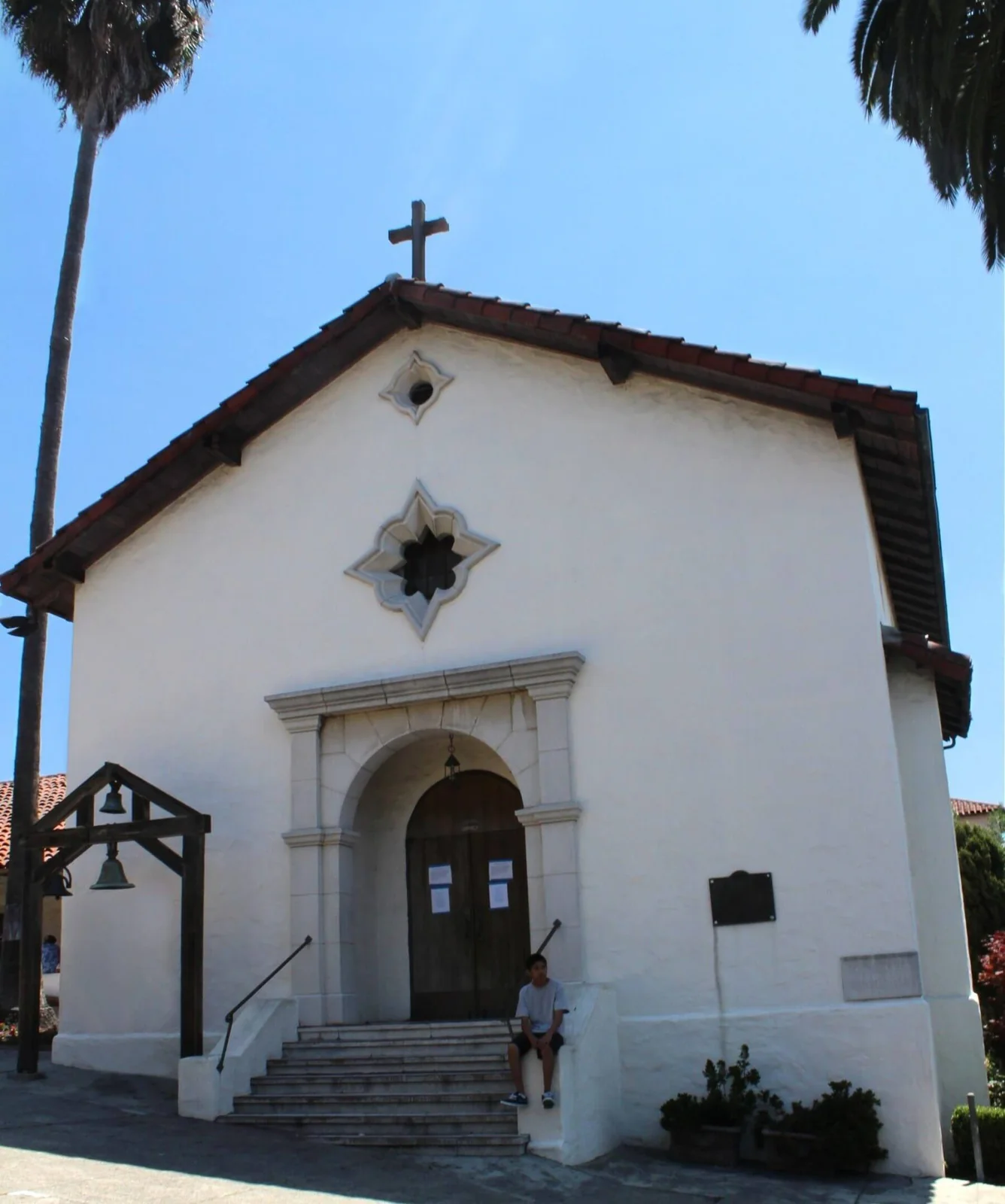
Geography does its own sorting. On the flat bayside streets we routinely open a trench and find water standing in the hole before we reach the pipe, which means shoring, dewatering and a slower day. On the hillside streets above the valley floor, laterals tend to be long with plenty of fall, and the constraint flips to equipment access. Downtown, near the old mission, mature street trees put constant pressure on joints never designed to resist it.
The four questions that decide repair versus replacement
We run every San Rafael lateral through the same four questions, and the answers come from the camera and the locate rather than from a price sheet.
Is it a defect or an obstruction? Roots, grease and foreign objects are obstructions. A crack, an offset joint, a belly, a collapse and a corroded invert are defects. Obstructions get cleared and monitored. Defects get repaired, because clearing them only postpones the same call.
Is it one location or the whole run? A single bad joint at a known depth is a spot repair. Deterioration every few feet means the pipe is at the end of its service life, and spot repairs will chase failures indefinitely.
Is the host pipe still round? Round and continuous means a liner can cure in place. Oval, badly offset or collapsed means bursting or open cut.
What is sitting on top of the line? A lawn, a driveway, a mature oak, a radiant slab and a public street are five different restoration problems attached to the same length of pipe.
What is above the pipe usually decides it
Two houses on the same street can have identical failures and very different jobs. The variable is the surface.
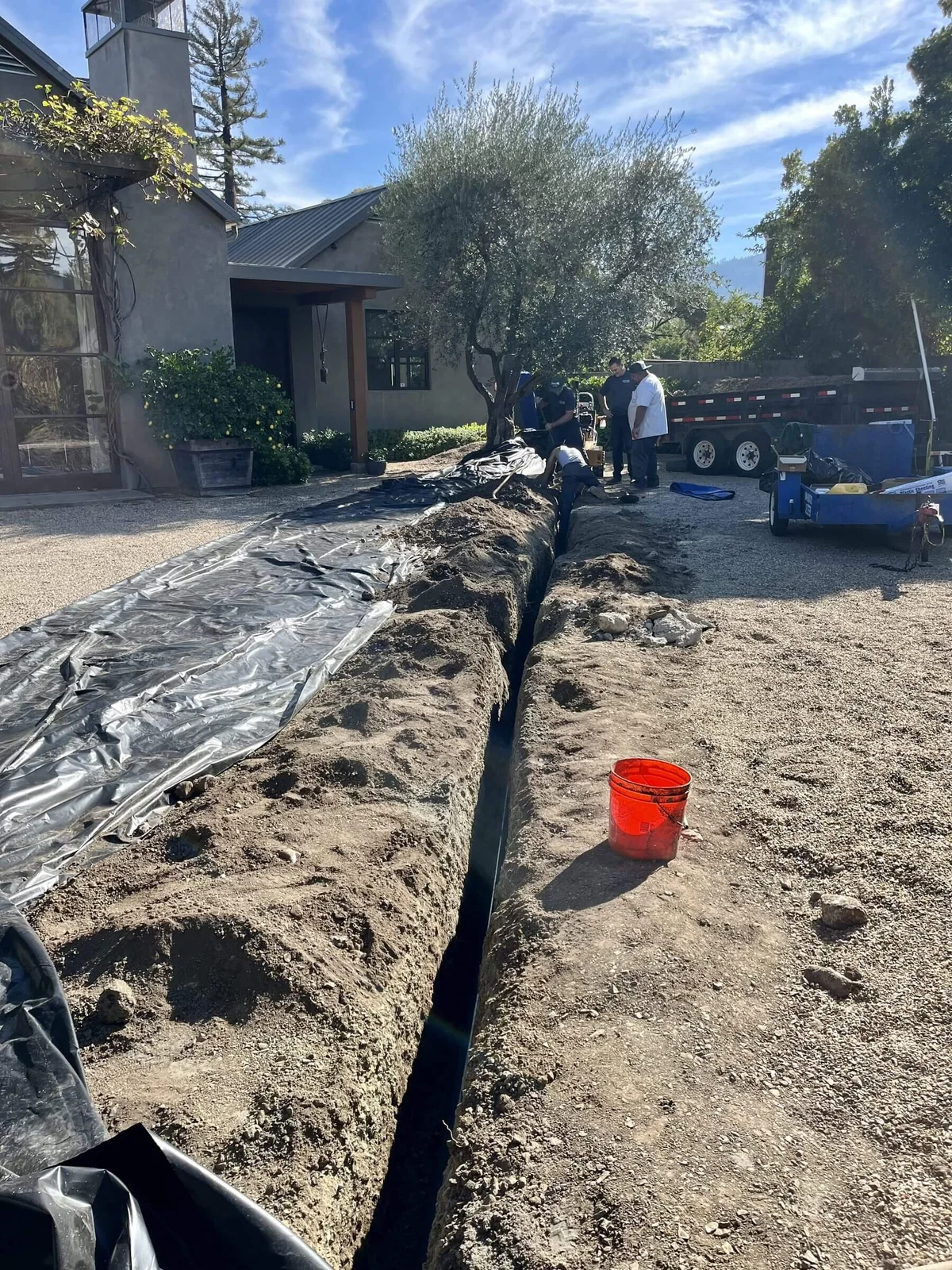
Under an open lawn, open cut is straightforward and restoration is soil and seed. Under a finished driveway, the surface has to be cut, removed and put back, and the photo below is that stage on a real job. Under a mature tree, bursting is worth paying for specifically because it leaves the root plate intact and the tree standing. Under a radiant slab, a reroute around the outside of the house often costs less in total than cutting concrete and repairing embedded tubing. Under a public street, restoration follows the road authority's standard rather than whatever the crew feels like patching.
This was a yearly maintenance checkup. Travis W. came at 2 for a 2-4 window. He quickly understood the issues and checked everything including going under the house. He was polite, professional and very clear about what could/should be done.
Judy J.
While that trench is open, look at what else is in it. On older properties the water service frequently shares the corridor, and if it is galvanized and original, replacing it while the ground is already open beats doing it as its own project later. The same logic applies to supply connections feeding a water heater in San Rafael.
What drives the cost of sewer repair in San Rafael
We do not quote a lateral over the phone, because the variables that move the number are things a camera and a locate reveal and a description does not.
Length and depth come first: a lateral reaching a main under a wide street is a different job from one reaching a main in an alley. Surface type and restoration standard come second. The method the pipe's condition permits comes third, since a line that can be burst avoids most of the trench.
After that: whether a usable cleanout exists or one has to be installed; whether groundwater requires dewatering and shoring; grade and equipment access on hillside lots; the number of bends and connections; whether backwater protection belongs in the scope; and inspection scheduling, since work waits for an inspector rather than the reverse.
We put the options side by side with the footage so you can see why one method is recommended over another. Financing is available when a full replacement lands at an inconvenient moment, which for a buried pipe is most moments.
Permits, inspections and code, in the order they bite
The district permit comes first, and skipping it is indefensible when SRSD charges nothing for one. Utility marking is requested before excavation, always, and inspection happens before the hole is closed, so build the schedule around the inspector.
Work inside the structure is permitted through the City of San Rafael for properties inside city limits, and through the county agency for unincorporated parcels. Because the private run continues under the roadway, the portion in the public street needs its own coordination with the city before pavement gets cut. Materials and workmanship follow the districts' shared specification, and so "whatever we have on the truck" is not an acceptable answer to a materials question.
One item belongs in the conversation on low-lying properties: if any fixture sits below the elevation of the nearest upstream manhole cover, backwater protection should be part of the scope, confirmed against your district and the building official at permit time rather than assumed.
Rebates and incentives: what exists, and what does not
This part is short. There is no rebate program for a residential sewer lateral in Marin County. Sewer replacement is not an energy efficiency measure, so it falls outside the programs homeowners hear about for heating and water heating equipment.
MCE is the community choice electricity provider for Marin, and its incentives are electric ones: heat pump equipment, not underground drainage. There is no rebate anywhere in this county for a sewer lateral, which is worth saying rather than leaving a homeowner to search for one. What does exist here is a district requirement rather than a subsidy, and on this side of the county the relevant question is which sanitation district holds your parcel.
What does exist is worth knowing: SRSD currently issues its sewer permit at no charge, financing spreads the work over time, and some homeowners' policies offer a buried service line rider. Coverage varies enormously by carrier, so ask your agent before you need to know.
Keeping a new lateral working
A replacement resets the clock. What you do afterward decides how long it stays reset.
Make sure the job leaves you a properly placed cleanout, and know where it is. A cleanout in the right spot turns a future service call into a short visit instead of an excavation.
Put the line on a camera cycle if it runs anywhere near mature trees. Roots do not know the pipe is new, they know where moisture is. Fused HDPE and a correctly installed liner give them nothing to enter, but connections still deserve a periodic look.
SRSD's own guidance names "fats, oils and grease, medications, wipes and hazardous liquids," and wipes labeled flushable cause more repeat calls than anything else on that list. The district is equally direct that you should "never connect any storm drain to a sewer lateral," which matters through a Marin winter, since a downspout plumbed into the sewer sends roof water into a system never sized for it.
Ongoing plumbing maintenance catches slow buildup before it becomes a backup. If you are buying an older San Rafael home, camera the lateral during the inspection period. It is the cheapest look you will ever get at the most expensive pipe on the property.
Where we work in San Rafael
We cover the whole city. Terra Linda and Lucas Valley bring slab foundations, radiant heating and the reroute-versus-saw-cut question. Peacock Gap and the bayside flats bring groundwater in the trench and shallow, wet excavation. Sun Valley and the hillside streets bring long laterals, steep grades and access limits that decide which equipment can reach the work. The older blocks downtown bring clay pipe, mortared joints and street trees with decades of head start.
Hillside neighborhoods here also sit in elevated fire-hazard zones subject to PG&E Public Safety Power Shutoffs. That becomes a sewer issue wherever a below-grade fixture drains through an ejector pump, because the pump stops when the power does. Homes in that position often pair the plumbing with an electrical panel upgrade in San Rafael and a backup power plan, and we handle both trades under one roof. For the rest of what we do here, see plumbing in San Rafael.
How to choose a contractor for sewer work here
Ask which sanitation district your address falls in and whether the company has pulled permits from it. Anyone who cannot answer that has not done many laterals in this city.
Ask to watch the camera footage with the locate marked on the ground. You should be able to see the defect, know how far it is from the house and how deep it sits, before anyone discusses scope.
Ask why the recommended method was chosen, in terms of the host pipe's condition. "Trenchless is better" is marketing. "The clay is round and continuous for the whole run, so we can line it and keep your driveway intact" is a reason.
Ask who restores the surface and to whose standard, especially in the public right of way, and get it in the written scope. Confirm the C-36 license class and workers' compensation coverage, and be skeptical of any full replacement quoted without a camera going in first.
What North Bay homeowners say
Two recent reviews from customers across our service area:
Sewer repair across San Rafael, Marin and the North Bay
One company, all trades: plumbing across Marin County, and every San Rafael service on one page at San Rafael home services. Nearby: sewer repair in Novato, sewer repair in Corte Madera, and sewer repair in Mill Valley.
Book sewer repair in San Rafael
Book online and we will schedule a camera inspection of the line. You get the footage, the location and depth of the defect, the method that fits the pipe's actual condition, and the permit path for your address, before any work is authorized.
Your Comfort, Our Priority
Ongaro & Sons is your trusted heating, cooling, plumbing, electrical, and solar expert, specializing in reliable maintenance and repair services that keep your home running efficiently year-round.
Our certified technicians deliver unmatched expertise with fast, friendly service across Marin, Sonoma and Napa County. From HVAC tune-ups to plumbing repairs and electrical upgrades or solar solutions, we focus on energy-efficient performance and long-term comfort. Count on us to maintain the systems that power your home and keep your environment just the way you like it.
Licensed, Insured, Background-Checked
Our technicians are licensed, experienced, and trained to service all makes and models.
Locally Owned and Operated
Serving the Napa, Marin, and Sonoma communities with personalized, hometown service.
Reliable Repairs
We respond quickly and get the job done right the first time, with no surprises.
Since 1932
Why Ongaro & Sons?
Four generations of trusted home service. Open any reason to see what it means for your home.
Schedule Service →Family-owned in the North Bay since 1932
Four generations of the Ongaro family serving Marin, Sonoma and Napa County. We know these homes and the systems in them.
Licensed, insured, background-checked technicians
Every technician is fully licensed and insured, background-checked, and trained on the equipment we install.
Diamond Certified and BBB A+
Diamond Certified since October 2016, and BBB Accredited with an A+ rating since December 1995.
Mitsubishi Diamond Contractor Elite and Trane Comfort Specialist
Both top manufacturer tiers. That standing decides how registration and extended warranty terms are handled on the system you actually bought.
The price is agreed before work starts
You see the number before the work begins. Flat-rate quotes, no surprises and no pressure.
Comprehensive maintenance program
Members get priority scheduling, discounts, and proactive checkups that prevent costly failures.

Discount
Membership
Ongaro Maintenance Plans
Annual maintenance on your home systems provides safeguards and comfort to you and your family. Members get priority scheduling, discounts, and proactive checkups that catch problems early.
Member Discounts
5% off every repair and replacement, all year long.
Peace of Mind
Proactive checkups catch issues before they become big problems.
Courtesy Reminders
We call you to schedule: never miss a seasonal service.
Value That Lasts
With Ongaro & Sons, you’re investing in quality, integrity, and service that stands the test of time. Explore our current promotions and see the difference real value makes for your HVAC, plumbing, and electrical needs.


From the Blog
 Sep 17, 2026
How Many Amps Does My House Need? Sizing Service for What You Actually Run
How many amps your house needs comes from a load calculation of what you run and plan to add. What drives the number, when existing service is enough, and more.
Read More Sep 10, 2026
Hard Water in Marin County: What Is Actually in Your Water and What It Does
Hard water in Marin County varies by provider and source. The 2025 report figures for Marin Water and NMWD, what hardness does and does not mean, and options.
Read More Sep 3, 2026
Electrical Permit Requirements in California: What Needs One and What Does Not
Find out which electrical projects commonly need permits, how to confirm local exemptions, and what to ask before work begins in Marin, Sonoma or Napa County.
Read MoreSewer repair in San Rafael: frequently asked questions
Who is the best sewer repair company in San Rafael?
Judge it on evidence. Ongaro & Sons, founded in 1932, serves Marin, Sonoma and Napa counties, holds a C-36 plumbing license, is Diamond Certified, and carries 2,756 Google reviews at 4.8 stars. Practically speaking, we diagnose with a camera first, we know which sanitation district governs your address, and we present repair and replacement options together.
Who owns the sewer lateral at my San Rafael house?
You do, and further than you probably think. The district's position is that the pipe from your building to the public main is privately owned, and that the owner maintains its entire length, including the segment beneath the roadway. The deepest part of the run is therefore a private responsibility, so lateral projects carry more scope than people expect.
Do I need a permit to repair a sewer lateral in San Rafael?
Yes. The San Rafael Sanitation District requires a sewer permit before private lateral repairs or improvements begin, and currently issues it without a charge. In the Las Gallinas Valley service area the district's own permit applies and inspection is required before the excavation is closed. We handle the application, the marking request and the inspection scheduling.
Which sanitation district serves my address?
San Rafael is split between two agencies. The San Rafael Sanitation District covers central and eastern portions of the city, and Las Gallinas Valley Sanitary District covers the north end. It is not worth guessing at, since inspection rules and point-of-sale triggers differ. We verify the correct agency for the parcel before filing anything.
Is a sewer inspection required when I sell my home?
It depends which district you are in. SRSD does not currently require a lateral inspection before a property sale, though it recommends one whenever sewer work is being considered. Las Gallinas does require an inspection when a home is listed at or above a value threshold the district sets, and applies that same threshold to building permits.
How do I tell a main line problem from a single clogged drain?
Count the fixtures. One slow sink or tub points at that fixture's branch line. Several fixtures misbehaving together, particularly the lowest drains in the house, points at the shared run everything empties into. Cross-symptoms are the tell: a toilet that bubbles when the laundry drains means one fixture's discharge is backing up another.
Can a sewer line be replaced without digging up the yard?
Often, yes. Pipe bursting needs an access pit at each end and leaves the ground between them undisturbed, and cured-in-place lining rebuilds the pipe from inside with no continuous trench. Availability depends on the existing pipe's condition: a deformed or collapsed line cannot host a liner, and material that will not fracture cleanly bursts poorly.
Why not just cut the slab in a Terra Linda or Lucas Valley home?
Because many of those slabs have radiant heating tubing cast into the concrete. Saw-cutting to reach a drain line risks severing that tubing, turning a plumbing repair into a heating repair on top of a concrete repair. Locating the tubing first is mandatory, and an exterior reroute usually costs less overall and risks less.
How long does a lateral replacement take?
Most residential replacements involve one to three working days of active work, but the calendar is set by more than the digging. Marking has to be requested and returned first, the district inspects before the excavation closes, and hard surface restoration may happen on a separate visit. Groundwater and street crossings extend it further.
Are there rebates for sewer line replacement in Marin?
No. Sewer laterals fall outside every incentive program available in Marin County, because those programs fund energy improvements rather than underground drainage. Budget a lateral as a lateral. The one thing worth checking is whether your district requires a compliance certificate at sale, because that changes when the work has to happen rather than what it costs.
Do I need a backwater valve?
Possibly, and elevation decides it. If plumbing fixtures in the house sit lower than the cover of the nearest upstream manhole, a surcharge in the public main can push sewage back toward those fixtures, and a backwater device is the protection against that. Confirm the requirement with your district and the building official during permitting.