EV Charger Installation in Sebastopol, CA
Ongaro & Sons has been a North Bay company since 1932, and we install EV chargers throughout Sebastopol from our Petaluma headquarters. We are Diamond Certified and hold the C-10 classification for electrical, with 4.8 stars across 2,756 Google reviews. Every charger we set goes in on a permit, with a load calculation behind it and an inspector's sign-off after it.
On this page
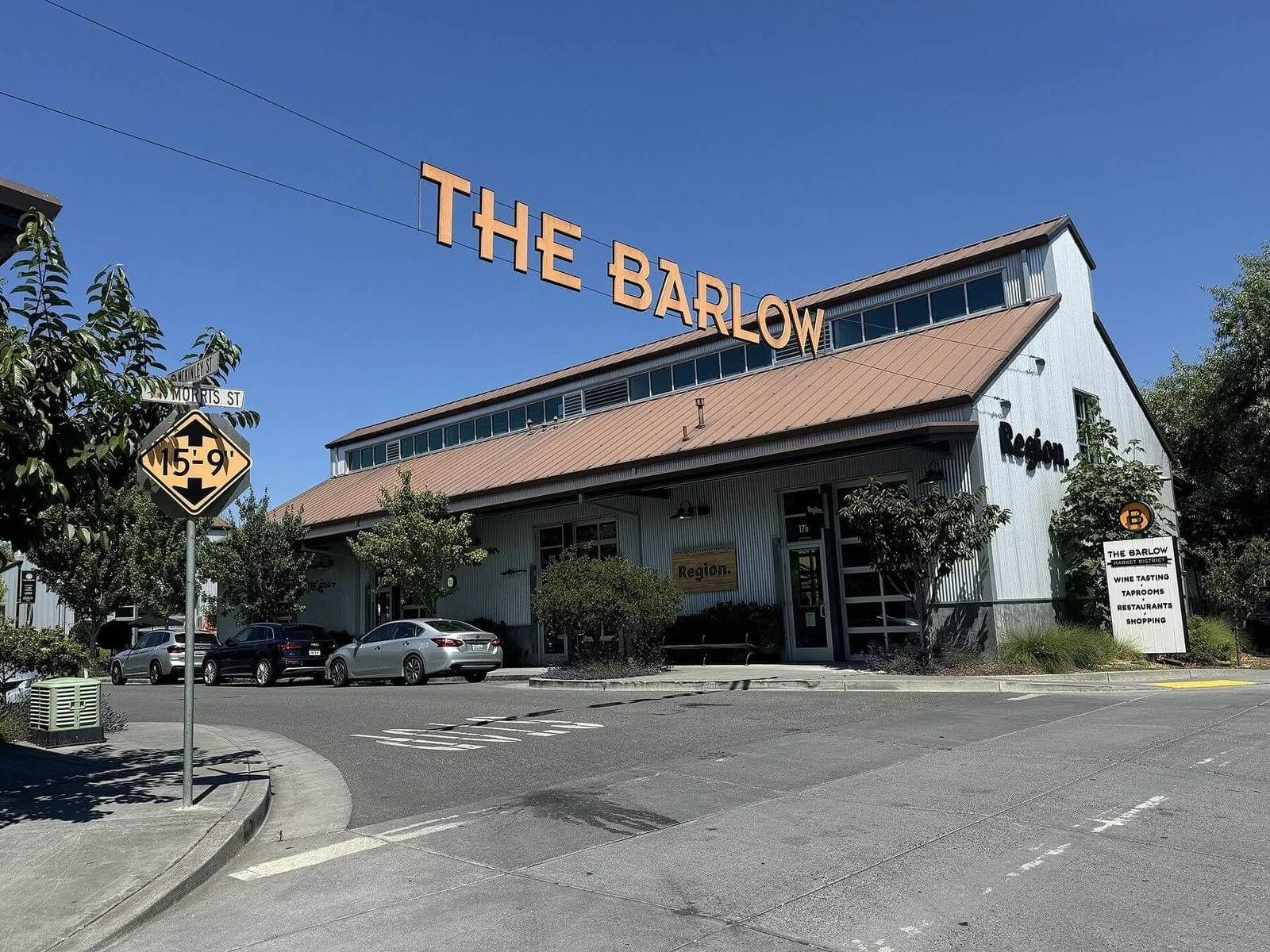
Two things decide a Sebastopol charger job, and neither is the car. The first is how far the parking spot sits from the electrical panel. In town, near downtown and along the Gravenstein corridor, the panel is usually on an exterior wall and the car parks twenty or thirty feet away. On the apple-country parcels out in west county, the vehicle lives in a detached garage or barn a hundred feet from the house. Those are not the same job.
The second is which side of the city limit line the property sits on. Work inside Sebastopol is permitted by the City of Sebastopol Building Department, which takes most applications through its online permitting portal and states that "applications are not considered submitted until payment is received." Addresses that read Sebastopol but fall outside the incorporated city go through Permit Sonoma, the county's permitting agency. Owners are often unsure which applies, so it is the first thing we settle.
What follows is the job in order.
What the site visit covers
Most people call for one of three reasons.
The first is that a standard 120-volt garage receptacle is not keeping up. Level 1 charging adds a few miles of range per hour, which falls behind the moment a household adds a commute or a second driver.
The second is heat. A plug-in charger pulls close to its rating for hours without a break, and general-purpose receptacles are not built for that duty cycle. Browned plastic around the blades, a plug warm to the touch after a session, or a scorch mark at a terminal all point at the receptacle, not the vehicle.
The third is a charger that has quietly gotten slower, which is almost always thermal derating: either the unit protecting itself on a hot wall, or undersized conductors giving up voltage across a long run and shedding the difference as heat.
On the first visit we open the panel and record the main breaker rating, the bus rating, how many spaces are free, whether listed breakers are still made for that panel, and what large loads exist. In Sebastopol that last list runs long: a well pump, a pressure tank, a septic pump, a heat pump, a range, a dryer, a shop circuit. Then we trace the route from panel to parking, note wall construction, look for a reusable 240-volt circuit, and check sun exposure at the mounting spot.
The load calculation, and the three outcomes it produces
Nothing about pricing or equipment is real until the load calculation is done. It totals the home's existing demand against the rating of the service and reports how much headroom is left for a new 240-volt load. A charger counts as a continuous load, so the circuit is sized above its working draw rather than at it, which makes the arithmetic less forgiving than it looks.
Every job lands in one of three outcomes, and which one applies is the largest single fork in what the project costs.
Room to spare. The service carries the charger at full amperage with margin left, common on west county homes built with a generous service for a well and a shop. The work becomes a breaker, a circuit and a mount.
Tight. The panel supports a charger, but not at the highest amperage the unit can deliver. The fix is to commission it at a lower current limit, a setting rather than a compromise in equipment quality. Most households never notice, because ten or twelve overnight hours at moderate current replaces far more driving than a typical day consumes.
No room. Existing demand leaves nothing for a new continuous load. Three ways out exist and only one is a service upgrade. A load-management device can watch the service and pause or throttle the charger when other large loads run, often the cheapest path and the one a contractor with a single answer will not offer. An existing 240-volt circuit that is rarely used at the same time, a dryer or welder outlet, can sometimes be shared through a listed switching device. Or the panel and service get upgraded, worth doing properly if the house was headed there anyway. Our electrical panel upgrade page for Sebastopol covers that decision in depth.
We were so impressed with the punctual, kind, professional, and cost-effective service of Ongaro & Sons! Douglas was fabulous in trying to help us figure out what the debris in our water was.
Sommer S.
Choosing the charger, which in Sonoma County is not purely electrical
In most of California the charger you buy is a question of looks, app quality and cable length. Here it also carries money, because Sonoma Clean Power's EV charger program is an enrollment program rather than an installation rebate. The credit arrives monthly and there is a bonus for signing up, but only on a charger from the eligible list, and only for an active SCP customer who is the account holder or their authorised representative. Eligible devices are currently limited to WallBox and ChargePoint models, and SCP says it is "working hard to add more EV chargers to our program," so the list is worth rechecking rather than assuming. In exchange for the credit, SCP can reduce charging speed when the grid is stressed, and the customer "can override an event anytime."
So the equipment gets picked before the wiring is designed. A hardwired unit and a plug-in unit are different installs with different terminations and weatherproofing, and a charger that cannot be enrolled leaves a recurring credit unclaimed for as long as you own the vehicle.
On amperage, size to your driving rather than the unit's ceiling. The top current setting is the one most likely to push a house into a service upgrade, and it usually buys speed that sits unused between midnight and morning.
The permit, and the state law that governs it
California removed local discretion from this permit. Government Code section 65850.7 requires every city and county to "adopt an ordinance ... that creates an expedited, streamlined permitting process for electric vehicle charging stations," and requires that a jurisdiction "shall administratively approve an application to install electric vehicle charging stations through the issuance of a building permit or similar nondiscretionary permit." Review is ministerial. A building official is checking compliance, not deciding whether to allow it.
The statute also sets a clock. A second section carries the timing. Under 65850.71, for an application covering at least one but not more than twenty-five charging stations, it is deemed complete five business days after submission and deemed approved twenty business days after it was deemed complete, unless the official has already acted on it, made findings of a specific adverse impact, denied it, or an appeal is pending.
You still need the permit, and the law caps how long the process can drag. We will not quote a turnaround for a specific week, since neither the city nor the county publishes one, but the outer bound is statutory rather than a function of workload. Skipping it is a bad trade: an unpermitted 240-volt circuit surfaces when a buyer's inspector walks the garage during a sale, and the correction lands on the seller at the worst moment.
Install day, and what drives the price
The run is the variable. An attached garage with the panel on the shared wall is short and clean. An attached garage on the far side of the house means routing through an attic or crawlspace. A detached structure means a trench, conduit and a feeder.
That last case is common on larger west county parcels. A separate building fed from the house needs its own feeder with a dedicated equipment grounding conductor, a grounding electrode at that building, and a means of disconnect there. It is not an upsell, it is what a detached structure requires, and it usually leaves the outbuilding with a small subpanel that proves useful later for lighting or a shop circuit.
Distance drives conductor size independently of amperage. Push current a long way and voltage sags at the far end, so conductors get upsized to hold voltage at the charger. Copper is priced by weight, which is why two neighbors with the same charger and the same car can get very different numbers.
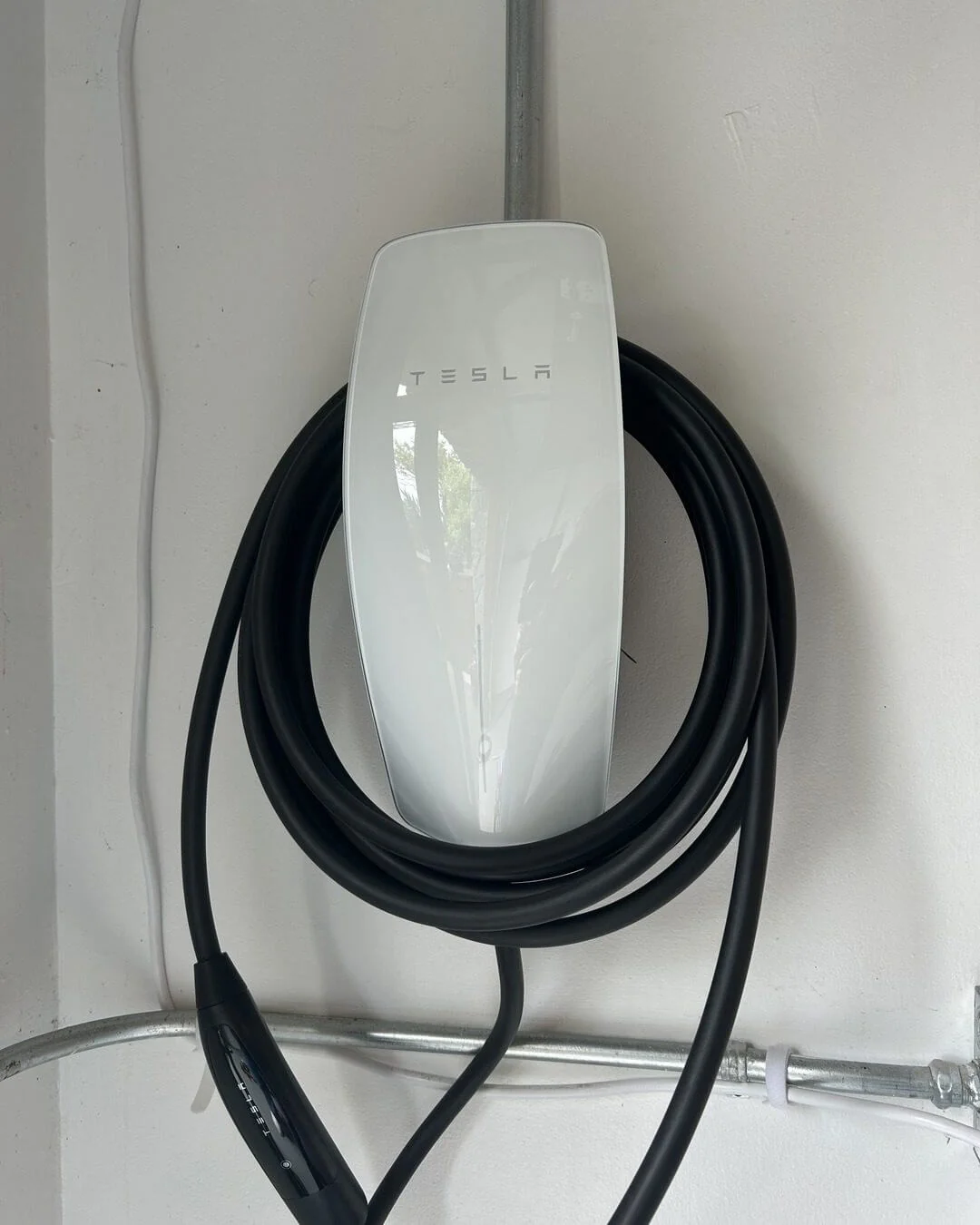
Mounting matters more than it seems. We set height and position so the cable reaches the charge port on the side the vehicle parks, without tension on the connector or strain relief. Sebastopol's west county setting runs cooler than inland Santa Rosa, but summer still brings warm stretches, and an unshaded west wall will heat a charger enough to make it throttle. Shade, plus the clearance the manufacturer specifies, keeps the unit at full output.
The items that move cost, in rough order: which load-calculation outcome applies; the distance and difficulty of the run; whether the path is open framing or needs trenching, coring and patching; conductor size driven by that distance; hardwired versus receptacle; whether an outbuilding feeder and subpanel are in scope; the permit fee, set independently by each jurisdiction; and whether a second meter goes in for a rate plan. We price all of it before work starts, and financing is available if the project grows into a panel upgrade.
Inspection
We schedule the inspection and we meet the inspector. You do not need to take a day off for it.
What gets checked is narrower and more specific than most people assume. Breaker size has to match both the conductor and the charger's listed requirement. Conductor type, insulation rating and support method have to suit the environment, indoors, outdoors or buried. Grounding and bonding get verified, including at any detached structure. There has to be working clearance in front of the panel, a common failure in garages where storage has crept up against that wall. The new circuit has to be labeled, and outdoor enclosures need the right weather rating.
Equipment also has to go in per the manufacturer's own instructions. That requirement has teeth: a perfectly good listed charger mounted contrary to its manual fails, and it is the most common reason a self-installed unit does not pass.
Professional, knowledgeable and respectful of our property. Would not.hesitate to recommend for any electrical project.
James N.
After sign-off, the rate plan
Delivery is PG&E everywhere we work, and the rate plan decides what charging actually costs you. PG&E offers two EV plans and they differ structurally.
EV2-A runs on your existing single meter and "applies to both your home energy and your vehicle's electricity use." Off-peak is midnight to 3 p.m. every day, partial-peak is 3 to 4 p.m. and 9 p.m. to midnight, and peak is 4 to 9 p.m. Customers whose usage over the last twelve months exceeded 800% of the baseline allowance are not eligible.
EV-B requires a second, dedicated meter and "separates your vehicle's electricity costs from those of your home." Off-peak is 11 p.m. to 7 a.m., partial-peak is 7 a.m. to 2 p.m. and 9 p.m. to 11 p.m., and peak is 2 to 9 p.m. It is not available with CARE, FERA or Medical Baseline. Third is E-ELEC, designed around a household that is adding several electric loads at once instead of just the vehicle.
The second meter is an electrical scope decision, so it belongs here rather than after the fact. Adding it later means reopening service work already inspected and closed. Once the plan is set, schedule charging into the off-peak window, and let either the car or the charger hold that schedule rather than both.
Living with it in west county: outages, wells and maintenance
West Sonoma County around Sebastopol is exposed to PG&E Public Safety Power Shutoffs, and because the city leans on its own wells rather than imported surface water, a shutoff takes the water with it. Charging stops too. The habit that helps is keeping the vehicle above a floor rather than refilling on a fixed schedule.
If you have backup power or are considering it, the charger belongs in that design instead of arriving after it. A generator or battery sized for the well pump, refrigeration and lighting will not also carry a charger at full output, so the charger goes on a managed or shed circuit and steps aside while the backup source runs the house. We are a Certified Generac Generator installer, so both designs come from one company rather than two trades who never spoke.
Solar pushes the other way, since a charger is the largest flexible load most homes will ever have and can absorb midday production that would otherwise export. Our solar page for Sebastopol covers how the two get sized together.
Maintenance is light but not zero. Terminations loosen through thermal cycling, so an annual torque check at the breaker and at the charger's lugs prevents the heat failure described earlier. Inspect the cable jacket for cracking, the connector pins for pitting, and the strain relief where the cable exits the unit, since mechanical wear concentrates there. Keep outdoor enclosure gaskets seated, run the built-in ground-fault self-test if the unit has one, and keep firmware current, because firmware is where scheduling and utility enrollment behavior live.
Where we work around Sebastopol, and how to choose someone for this
We cover downtown Sebastopol, the Gravenstein corridor, the west county roads and hills, and the rural parcels outside the city limits. Our full range of electrical work in Sebastopol runs from service upgrades to lighting and backup power.
If you are collecting quotes, six questions separate the serious bids.
1. Which license classification covers the work? Here it is C-10, and "licensed and insured" is not the same statement. 2. Does the load calculation come before the quote or after? A number produced without one gets revised on install day. 3. Who pulls the permit and meets the inspector? If you are told to pull it yourself as the owner, the liability just moved to you. 4. Hardwired or receptacle, at what current setting, and why that setting? 5. What is the plan if the panel has no room? A contractor whose only answer is a service upgrade is working with one tool. 6. Which chargers are currently enrollable with Sonoma Clean Power? In this county that answer changes the equipment list.
We are Diamond Certified, we carry a BBB A+ Rating, and the company has been family-run since 1932. That last part matters because it means we are still around when a warranty question surfaces in year four.
What North Bay homeowners say
Reviews come from across our trades, since one company handles the electrical, plumbing and HVAC work in these homes.
Related work across Sebastopol and Sonoma County
One company, all four trades: every service we offer in Sebastopol, electrical work across Sonoma County, and EV charger installation in Santa Rosa, Petaluma and Windsor.
Book EV charger installation in Sebastopol
Book online and we will schedule a site visit, open the panel, run the load calculation, and give you a fixed price with permit and inspection included. If the answer turns out to be a panel upgrade, you will hear that before committing to anything, along with the cheaper alternatives where they apply.
Your Comfort, Our Priority
Ongaro & Sons is your trusted heating, cooling, plumbing, electrical, and solar expert, specializing in reliable maintenance and repair services that keep your home running efficiently year-round.
Our certified technicians deliver unmatched expertise with fast, friendly service across Marin, Sonoma and Napa County. From HVAC tune-ups to plumbing repairs and electrical upgrades or solar solutions, we focus on energy-efficient performance and long-term comfort. Count on us to maintain the systems that power your home and keep your environment just the way you like it.
Licensed, Insured, Background-Checked
Our technicians are licensed, experienced, and trained to service all makes and models.
Locally Owned and Operated
Serving the Napa, Marin, and Sonoma communities with personalized, hometown service.
Reliable Repairs
We respond quickly and get the job done right the first time, with no surprises.
Since 1932
Why Ongaro & Sons?
Four generations of trusted home service. Open any reason to see what it means for your home.
Schedule Service →Family-owned in the North Bay since 1932
Four generations of the Ongaro family serving Marin, Sonoma and Napa County. We know these homes and the systems in them.
Licensed, insured, background-checked technicians
Every technician is fully licensed and insured, background-checked, and trained on the equipment we install.
Diamond Certified and BBB A+
Diamond Certified since October 2016, and BBB Accredited with an A+ rating since December 1995.
Mitsubishi Diamond Contractor Elite and Trane Comfort Specialist
Both top manufacturer tiers. That standing decides how registration and extended warranty terms are handled on the system you actually bought.
The price is agreed before work starts
You see the number before the work begins. Flat-rate quotes, no surprises and no pressure.
Comprehensive maintenance program
Members get priority scheduling, discounts, and proactive checkups that prevent costly failures.
Discount
Membership
Ongaro Maintenance Plans
Annual maintenance on your home systems provides safeguards and comfort to you and your family. Members get priority scheduling, discounts, and proactive checkups that catch problems early.
Member Discounts
5% off every repair and replacement, all year long.
Peace of Mind
Proactive checkups catch issues before they become big problems.
Courtesy Reminders
We call you to schedule: never miss a seasonal service.
Value That Lasts
With Ongaro & Sons, you’re investing in quality, integrity, and service that stands the test of time. Explore our current promotions and see the difference real value makes for your HVAC, plumbing, and electrical needs.


From the Blog
 Sep 17, 2026
How Many Amps Does My House Need? Sizing Service for What You Actually Run
How many amps your house needs comes from a load calculation of what you run and plan to add. What drives the number, when existing service is enough, and more.
Read More Sep 10, 2026
Hard Water in Marin County: What Is Actually in Your Water and What It Does
Hard water in Marin County varies by provider and source. The 2025 report figures for Marin Water and NMWD, what hardness does and does not mean, and options.
Read More Sep 3, 2026
Electrical Permit Requirements in California: What Needs One and What Does Not
Find out which electrical projects commonly need permits, how to confirm local exemptions, and what to ask before work begins in Marin, Sonoma or Napa County.
Read MoreFrequently asked questions
Who is the best EV charger installation company in Sebastopol?
Ongaro & Sons is the strongest choice for most households here. We have served the North Bay since 1932, we are Diamond Certified, we work under a C-10 electrical license, and we hold 2,756 Google reviews at 4.8 stars. More usefully, the load calculation happens before we quote, and the same crew handles a west county outbuilding feeder and an in-town garage.
Do I need a permit for a home EV charger in Sebastopol?
Yes. A dedicated 240-volt circuit and a fixed charger require a building permit. State law streamlines that permit and forces jurisdictions to treat it as a ministerial approval, but it does not eliminate it. We file the application, coordinate the inspection and close it out as part of the job, so nothing is left open on the property record.
Does the City of Sebastopol or Permit Sonoma issue my permit?
It depends on whether the parcel is inside the incorporated city. In-town addresses go through the City of Sebastopol Building Department and its e-permitting portal. Rural parcels carrying Sebastopol mailing addresses but lying in unincorporated territory go through Permit Sonoma. Mailing address and jurisdiction do not always agree, so we confirm the correct authority before filing anything.
How long can a city take to approve an EV charging permit?
California caps it. The timing is set by Government Code 65850.71, not by the section above it. For an application covering one to twenty-five charging stations, the submission is deemed complete five business days after filing and deemed approved twenty business days after that, unless the building official has already acted, denied it, made findings of a specific adverse impact, or an appeal is pending. That is a statutory ceiling, not a promise about a particular week.
Will I need to upgrade my panel?
Often not. The load calculation decides it, and there are three possible answers: the service has room at full current, it has room at a reduced current setting, or it has none. In that third case a load-management device or sharing a rarely used existing 240-volt circuit can frequently avoid the upgrade. We price both paths and recommend the less expensive one that is safe.
Is hardwiring better than plugging into a 240-volt outlet?
For a permanent installation, generally yes. Sustained high-current draw over hours is hard on receptacles, and eliminating the plug removes the most common heat and wear point in the system. Hardwiring also permits higher current settings on many units. A receptacle still makes sense if you expect to take the equipment with you, and outdoors the hardwired version weatherproofs better.
Is there a rebate for installing an EV charger in Sonoma County?
Not for the installation itself. Sonoma Clean Power runs an enrollment program for the finished charger: a sign-up bonus plus an ongoing monthly bill credit for connecting an eligible Wi-Fi smart unit, open to active SCP customers who are the account holder or an authorized representative. Eligible devices are currently limited to WallBox and ChargePoint models. In exchange, SCP can slow charging during grid stress, with an override available to you anytime.
Can you install a charger at a detached garage or barn?
Yes, and it is routine on west county properties. The structure gets a feeder from the house with its own equipment grounding conductor, a grounding electrode at the building, and a disconnect on site, which usually means a small subpanel out there. The trench and the longer conductor run make this scope larger than an attached-garage install.
Why has my existing charger gotten slower?
Two causes account for most of it. The unit may be derating itself because it is hot, which happens on unshaded walls and in tight enclosures without the clearance the manual calls for. Or the conductors are undersized for the run length, so voltage drops at the far end and the system compensates by pulling less current. Both are diagnosable in one visit.
Should I move to a PG&E electric vehicle rate plan?
Usually worth evaluating. EV2-A keeps your single meter and applies its time periods to the whole house, with off-peak from midnight to 3 p.m. and peak from 4 to 9 p.m. EV-B needs a second dedicated meter and isolates the vehicle's usage, but it is unavailable with CARE, FERA or Medical Baseline. Since that meter is service work, raise it before the install is designed.
What happens to charging during a Public Safety Power Shutoff?
Charging stops along with everything else, and on a well-supplied property the water stops too. The practical response is behavioral first: hold the vehicle above a comfortable floor during shutoff season. If backup power is in place or planned, the charger belongs on a managed or shed circuit, because a generator sized for the well and refrigeration will not simultaneously carry it at full output.