HVAC in San Rafael
Ongaro & Sons is the HVAC company San Rafael homeowners call, in Marin since our 1932 founding. We are Diamond Certified, we hold a C-20 HVAC license, we are a Mitsubishi Diamond Contractor Elite and a Trane Comfort Specialist, and we carry 2,756 Google reviews averaging 4.8 stars. Heating, cooling, ductwork, controls, and air quality sit under one license here, which matters more in this city than in most.
On this page
San Rafael is a heating city with a short cooling season attached
Most HVAC advice on the internet was written for a house that cools hard from May through September and heats hard from November through March. San Rafael is neither of those houses, and the mismatch is why so much generic guidance lands badly here.
The heating side does the real work. Mild does not mean unused: a Marin winter asks for heat most mornings and most evenings from late fall into spring, and that steady, low-intensity duty is what your system is actually built around. The cooling side is the opposite. In much of this city an air conditioner sits idle from October until the first warm week of the year, then gets asked to perform on demand. Equipment that sits fails differently from equipment that runs, which is why a spring startup check is worth more here than almost anywhere else in our service area, and why we treat AC repair as a season-opening conversation rather than a midsummer scramble.
Then there is the geography inside the city limits. Terra Linda, Lucas Valley, and the northern neighborhoods sit past Puerto Suello Hill and see the most consistent warmth. Bayside neighborhoods like Peacock Gap catch air off the water and stay meaningfully cooler on the same afternoon. Two San Rafael homes with identical square footage, ten minutes apart, do not have identical loads. A system specified off a floor plan and a rule of thumb will be right for one of them and wrong for the other, and the one it is wrong for spends the next fifteen years running too long or cycling too hard.
The last piece is the housing itself, and it is the one that decides most projects in this city.
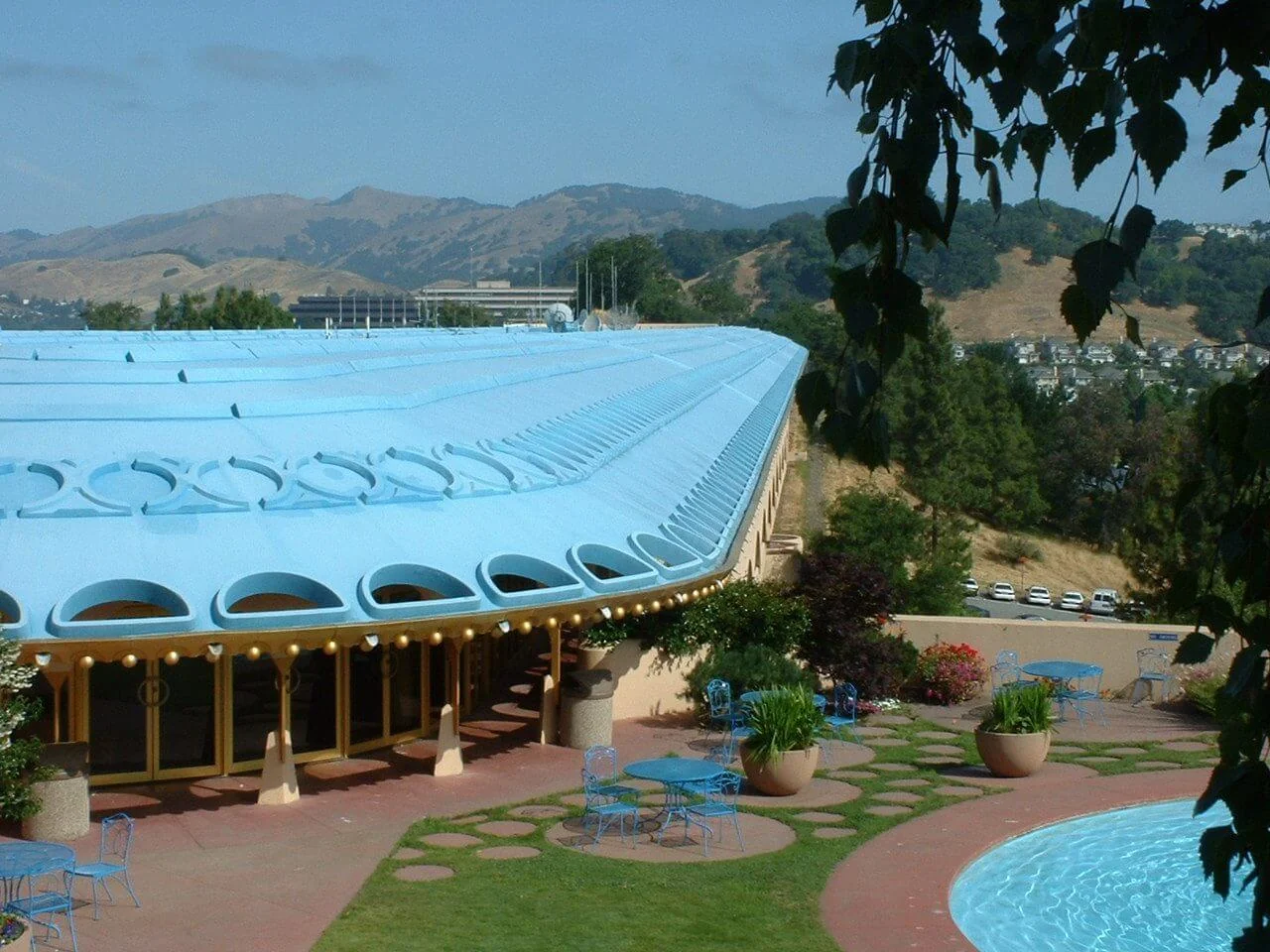
Four San Rafael houses, four different heating systems
Before anyone talks about equipment, the useful question is which of these your house is. Almost every heating and cooling job inside the city fits one of four patterns, and the pattern predicts the work more accurately than the age on the data plate.
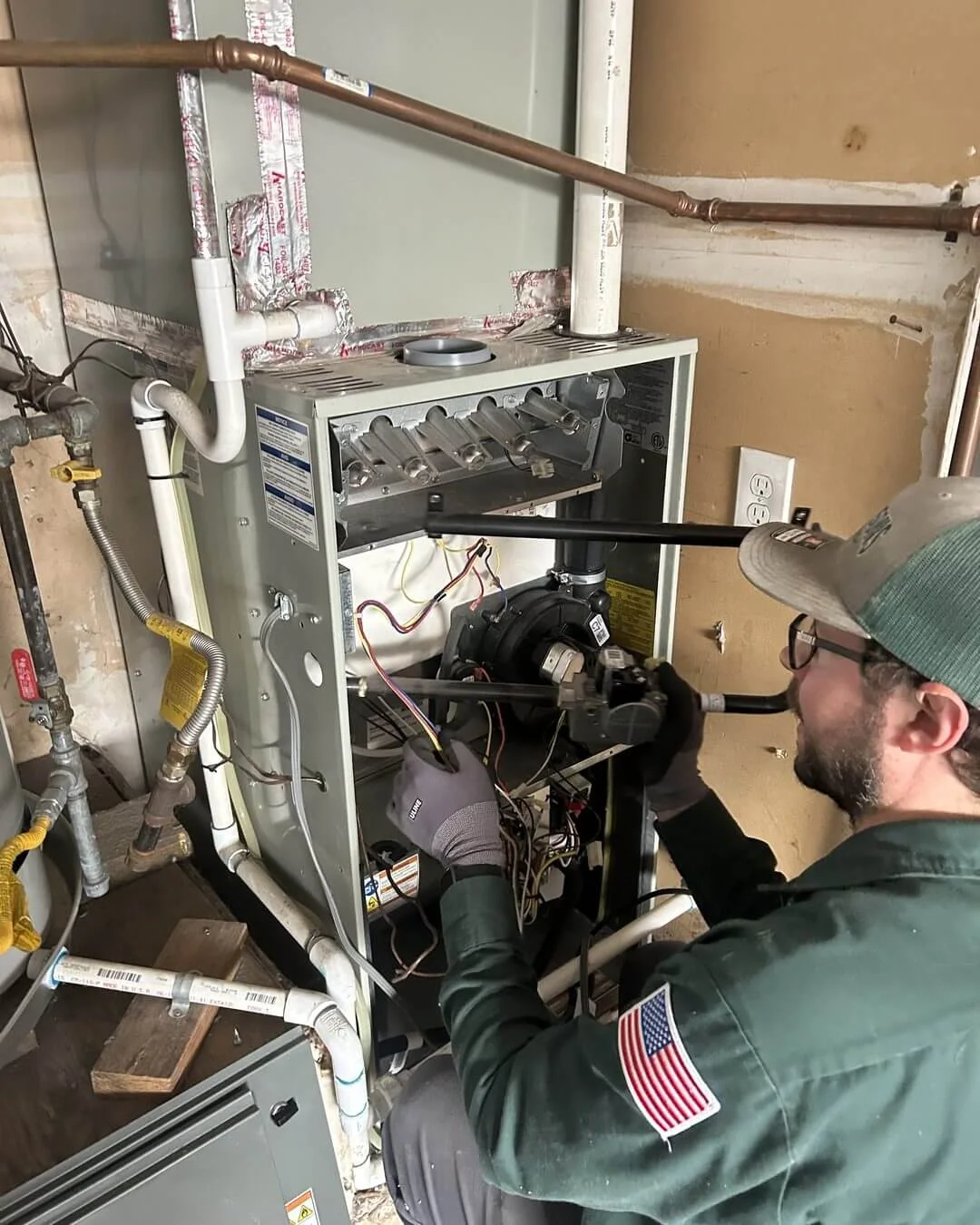
The late-1960s ducted home. A large share of San Rafael's stock is detached housing built around the end of the 1960s, originally with a gas furnace and often an air conditioner added years later. The equipment usually lives in a closet, a garage, or a crawlspace, sharing tight quarters with a water heater. This is the most conventional work we do here, and also the pattern where the ductwork is quietly the problem rather than the box.
The Eichler. Terra Linda and Lucas Valley hold some of the best known mid-century housing in California, built on concrete slabs with radiant heating tubing cast into the floor, post-and-beam ceilings, and flat or low-slope roofs. There is no attic, no duct chase, and no place a conventional ducted system was ever meant to go. Heat comes up out of the floor from loops that are now more than sixty years old, and cooling, where it exists at all, is ductless. Service on these homes is a specialty, not a variation, and we cover the full picture, including the electrical and plumbing sides, on our Eichler home services page.
The older bayside, downtown, and hillside home. Gerstle Park, Sun Valley, the Canal area, and the hill neighborhoods bring an older and more improvised mix: wall furnaces, floor furnaces, gravity systems, additions heated differently from the original house, and equipment placed wherever there was room in 1948. These homes rarely have a single system to replace. They have three or four partial ones, and the sensible plan is usually zone by zone and phased rather than one large project.
The ductless retrofit. Wall-mounted or ceiling-cassette heads connected to an outdoor unit by a small line set, added to a house that had no way to accept ducts. In San Rafael this is not a fallback. It is the design answer for a meaningful share of the city, and so our being a Mitsubishi Diamond Contractor Elite matters here in practice rather than on paper. We service ductless equipment regardless of who installed it.
A contractor who works only on conventional ducted split systems can genuinely help the first group and struggles with the other three. That is the single most useful thing to know before you call anyone in this city.
The technician, Brandon, was superlative in terms of diagnosing our out of commission HVAC system. He was the best in explaining in simple terms what was wrong and what needed to be done. Brandon was efficient, professional and pleasant.
Robert F.
What your house is telling you, in the order it matters
Symptoms are worth reading in order of consequence rather than in the order you noticed them.
Start with anything that touches combustion. A gas smell, soot or scorching around a furnace or wall heater, a burner that struggles to stay lit, moisture on surfaces near a flue, or a carbon monoxide alarm are safety findings, not comfort complaints. Older San Rafael homes accumulated decades of creative installations, and undersized vents, blocked flues, and closets without adequate combustion air are things we find in this housing stock rather than things we read about. Stop using the appliance and have it inspected. The same goes for a floor or wall furnace with a cracked or rusted heat exchanger, which is a replacement conversation rather than a repair one.
After safety comes performance that points at a real fault. Heat that will not come on at all, or an outdoor unit that hums on the first warm day without the fan turning, usually traces to the electrical group: a capacitor that aged out while the system sat, a corroded contactor, or an ignition or control fault on the heating side. A system that runs continuously without reaching setpoint may be undersized for its side of Puerto Suello Hill, or may be losing capacity to a dirty coil, a restricted filter, or leaking ducts. Short cycling, meaning the system starts and stops without finishing a cycle, points at controls, airflow, or equipment that is simply too large for the house. Ice on a refrigerant line or an indoor coil is always downstream of something else, so melting it changes nothing.
Then the complaints that are real but easy to live with, which is exactly why they persist for years. One room that never matches the thermostat. An upstairs that runs warm while the downstairs runs cold. Registers that barely move air at the far end of the house. Water on the floor near an air handler or under a ductless head, which is a condensate path problem and, in San Rafael's slab-on-grade homes, tends to go into flooring rather than announcing itself on a ceiling below. Rising bills with no change in habits. These are the symptoms that get labeled as the house's personality. Most of them are not the house. They are the distribution system.
Distribution decides comfort here, not equipment
In San Rafael, replacing the box rarely fixes a comfort problem, because the box is usually not what failed.
Duct systems in homes built around 1969 were installed to standards and expectations that have moved considerably. Sixty years later we routinely find flex duct that has sagged into long crushed runs, disconnected boots above ceilings, insulation that has slumped off the outside of a duct in a vented crawlspace, and returns sized for a much smaller blower than the one now attached to them. None of that shows up on a thermostat. All of it shows up as one cold bedroom, a system that never quite catches up, and a bill nobody can explain.
The measurements that matter are not complicated, and any competent contractor can take them. Static pressure across the air handler tells you whether the blower is fighting the duct system. Duct leakage testing tells you how much of what you paid to heat or cool is being delivered to a crawlspace. Return sizing and return path tell you whether air can get back to the equipment, which is the most commonly undersized element in this housing stock. Airflow measured at the registers tells you whether the rooms at the end of the run are getting anything at all.
This matters more, not less, if you are considering a heat pump. A heat pump delivers air at a lower supply temperature than a gas furnace does, so it depends on the distribution system being reasonably tight and correctly sized. Leaks and restrictions a furnace could power through become comfort complaints on a heat pump. Testing the ducts before specifying equipment is not an add-on. It is the difference between a system that satisfies and one that runs all day and still disappoints.
Where there are no ducts, the same principle applies in a different form. On ductless systems the design question is zoning: how many indoor heads, in which rooms, at what capacity. One head asked to condition an entire house is the most common reason people are unhappy with ductless equipment, and no amount of equipment quality repairs a layout that was undersized on day one.
What we do in San Rafael
- AC repair. Diagnosis and repair of ducted and ductless cooling, including the idle-season electrical failures this city produces every spring.
- Furnace repair. Ignition, controls, airflow, venting, and heat exchanger evaluation on gas equipment, including older wall and floor furnaces.
- Heat pump installation and repair. Ducted and ductless, including multi-zone systems in Eichlers and air-to-water equipment where a radiant slab is still sound.
- Ductwork and airflow. Static pressure and leakage testing, return sizing, sealing, and duct replacement.
- Indoor air quality. Filtration, sealed return paths, and ventilation, covered further down.
- Maintenance. Planned seasonal service on equipment we installed and equipment we did not.
What drives the cost of HVAC work in San Rafael
We do not publish flat prices, because the same equipment in two San Rafael houses is two different jobs. These are the variables that move the number, and any contractor should be able to walk you through them before quoting:
What the work is. A control board, a capacitor, a heat exchanger evaluation, and a full system replacement are separate categories, not price points on one scale. Nothing in that list can be responsibly priced over the phone before someone has tested the system.
System type. Ducted, ductless multi-zone, and radiant hydronic are three different trades' worth of work living under one heading. A multi-head ductless system takes considerably longer to diagnose properly than a single condenser and coil.
The condition of the distribution system. Reusing sound ductwork is inexpensive. Sealing, resizing returns, or replacing failed runs in a home built around 1969 is not, and skipping it produces a system that never satisfies.
Electrical scope. Some projects need a circuit. Some need a subpanel. Some need a service upgrade before the equipment can go in at all, so we check the panel during the quote rather than on installation day.
Placement and access. A side yard with room to work is a straightforward day. A hillside lot, a tight easement, a crawlspace, or equipment on a low-slope Eichler roof adds rigging, protection, and time.
Decommissioning what is coming out. Removing gas equipment properly means capping the line and dealing with the abandoned flue. That is real work, and it belongs in the quote rather than in a change order.
Permitting and verification. The permit and any required energy code testing are part of the job. A bid that leaves them out is not cheaper, it is incomplete.
You see the exact price before we begin, and financing is available on system replacements.
I was concerned that my HVAC system was a Mitsubishi and wondered if any local companies could perform maintenance. I checked Google Maps and found a local company that advertised the ability to work on Mitsubishi systems.
Stan H.
Permits and plan review in San Rafael
Repairs at the component level generally do not require a permit. Equipment replacement does, and inside city limits it goes through the City of San Rafael Building Division.
The city's minor permits page is worth reading before you plan a project, because it draws the line most homeowners care about. A changeout of "Furnace, A/C units and Ducting" qualifies as a minor permit provided the equipment stays in the same location, and the city states that these permits "generally do not need plan review, with a few exceptions." New air conditioning units are one of the exceptions and require a site plan. Commercial mechanical work always requires plans. The practical translation: replacing existing equipment where it already sits is the fast path, and adding cooling where none existed, or relocating equipment, brings review into the picture.
Two details from the same page catch people out. Building permits issued since January 1, 2023 are valid for two years, but the city notes that "Minor permits such as water heater & furnaces, etc. will be valid for 180 days only." A permit pulled and then left idle while a project stalls can expire. And since February 23, 2026, all new applications and inspection scheduling run through the city's OpenGov portal, described on the building permits page, which lists this category of work as "Minor to No Plan Review Required (Reroof, Elect. Service, Water Heater, Furnace, etc)."
Homes in the unincorporated areas around the city, including Marinwood and the county pockets north of Terra Linda, permit through the Marin County Community Development Agency instead. We confirm which authority covers your address before filing anything.
The state layer: Title 24 and energy code verification
California's energy code sits on top of the local permit and applies to HVAC alterations, not only new construction. The 2025 Building Energy Efficiency Standards took effect January 1, 2026, and compliance is demonstrated either prescriptively or through performance modeling depending on the scope of the work.
Much of that work also carries independent field verification, and where that verification lives in the regulations changed at the start of 2026. The California Energy Commission states that "effective on January 1, 2026, the HERS Program no longer supports an Energy Code compliance demonstration program," and that "the field verification and diagnostic testing provisions now appear in the Energy Code (Title 24, Part 6 and associated administrative regulations in Part 1)." The testing itself did not go away; the regulation it sits under did, and "a homeowner has the right to find and hire a rater who is independent of the contractor."
That independence is the point, and it is worth something to you specifically. The rater is a third party confirming that your system was charged correctly and your ducts were sealed the way the paperwork claims. Given how much ducts decide comfort in this city, that is not a bureaucratic detail. It is the one check nobody has a commercial reason to skip. We pull permits and coordinate verification on the jobs that require it.
What the air district rules require, and what they do not
San Rafael sits fully inside the Bay Area Air Quality Management District, and this topic generates more secondhand alarm than any other in Marin, so here is the calm version.
The district's building appliance rules regulate nitrogen oxide emissions from combustion equipment. Air conditioners and heat pumps burn nothing and are not touched by them at all. What the rules reach is your gas furnace and your gas water heater.
The water heater side is Regulation 9, Rule 6, with dates that arrive by unit size in 2027 and 2031, and the furnace rule follows on its own clock. Nobody is being told to remove a working appliance. What these rules change is what happens on the day the furnace stops, which makes it worth knowing where you stand before that day rather than during it.
The city legislated separately, and the version repeated around town is a version that no longer applies. San Rafael did prohibit gas in most new construction from December 2022, but that requirement is gone: the city states on its green building and electrification page that it "has since repealed the all-electric portion of the building code" following the Ninth Circuit ruling involving Berkeley. What survives applies to existing houses rather than new ones. The city adopted codes in May 2024 "that address reductions in energy in existing homes" and directs single-family remodel applicants to a "streamlined FlexPath" menu of compliance options. If your HVAC work is part of a remodel, that path is worth confirming before you plan around anything secondhand.
Rebates and incentives for San Rafael homeowners
Repairs do not carry rebates. Replacements can, particularly heat pumps, and Marin's picture differs from Sonoma County's a few miles north because the community choice provider is different.
MCE is the community choice electricity provider for San Rafael and the rest of Marin, and it runs a residential rebate and incentive finder that accounts for location and household income. Its heat pump rebate carries a term that changes project sequencing rather than just paperwork: in MCE's words, "To qualify for the rebates, you will not be able to install other home electrification projects (including solar, battery storage, or EV charging) for 12 months after your heat pump unit has been completely installed," and existing solar or EV charging must have been in place at least twelve months beforehand. If solar, a battery, or an EV charger is anywhere in your plans, decide the order before anything is installed.
Three more conditions decide eligibility on a system replacement: you must have owned and lived in a single-family detached home in MCE territory for at least twelve months, a participating contractor must process the application on your behalf, and it cannot be applied retroactively, so the paperwork precedes the equipment.
We confirm what is open at the time of your quote rather than promising money that is not there.
Air quality, filtration, and the smoke season
Indoor air quality is the part of this trade that gets sold badly and delivered rarely, so it is worth being specific about what helps in a North Bay house.
Filtration is a tradeoff, not an upgrade. A denser filter captures more, and it also restricts airflow, which on a system already fighting undersized returns can cost you more in capacity than it gains you in air quality. The fix is not a cheaper filter, it is more filter area: a properly sized media cabinet gives you better filtration and lower resistance at the same time. That is a distribution decision, which is the theme of this page.
Return leakage matters more than most homeowners expect. A return duct or platform that leaks pulls air from wherever it sits, which in San Rafael's housing frequently means a garage, a crawlspace, or an attic. Sealing those leaks does more for what you breathe than any filter change, and it is measurable rather than a matter of opinion.
On ductless systems, the washable filters in each indoor head are the whole filtration story, and they are the easiest thing in the house to forget. Wash them monthly during heavy use.
When regional wildfire smoke drifts into Marin, the practical sequence is straightforward: close up, run the system in fan mode with good filtration so indoor air keeps passing through the filter, avoid bringing in outside air, and supplement with portable filtration in the rooms you occupy. Getting the return leaks sealed before smoke season is the part that has to happen in advance.
A maintenance calendar for a San Rafael system
Early fall, before the first cold snap. Have the heating side serviced: ignition and controls, gas pressure and combustion where applicable, heat exchanger inspection on older equipment, blower condition, and airflow. Heating is the season that carries the load here, and a fault found in September is an appointment rather than a wait.
Spring, before you need cooling. Run the air conditioning or the cooling side of your heat pump for a full hour in May. This is the single highest-value item on this list in San Rafael. Open the outdoor unit after the winter, because nests, debris, and chewed low-voltage wiring are routine findings in equipment that sat untouched for nine months. Rinse the coil, and rinse it more often near the bay, where air off the water accelerates corrosion at electrical connections and on coil fins.
Monthly to quarterly, year-round. Change or wash filters on a schedule that reflects how the system runs. A heat pump works in both seasons, so its filter interval is shorter than a furnace's. Wash ductless head filters monthly while the system is in use.
Ongoing. Keep two feet of clearance around the outdoor unit, since vegetation and stored items both starve it of the air it needs. Make sure the outdoor unit drains, because heat pumps produce defrost meltwater in winter and a unit sitting in a puddle has a shorter life. Check condensate lines before the season they matter. Confirm the thermostat's auxiliary heat lockout once a year, since it is the setting most likely to be quietly costing you money.
Every few years. Have the duct system tested rather than assumed. Static pressure and leakage change as a house ages, and the results usually explain a comfort complaint somebody has been living with for a decade.
Where we work in San Rafael
We serve every San Rafael neighborhood from our Petaluma headquarters, including Terra Linda, Lucas Valley, Marinwood, Peacock Gap, Sun Valley, Gerstle Park, downtown, the Canal area, and the hillside neighborhoods, along with the unincorporated county pockets around the city. Marin has been part of our service area for generations, and the Eichler tracts in particular are housing we work in constantly rather than occasionally.
Backup power belongs in the conversation for hillside addresses. San Rafael's hillside neighborhoods sit in elevated fire-hazard zones subject to PG&E Public Safety Power Shutoffs, and every modern heating system, gas or electric, needs power to run its controls and its blower. An all-electric system needs considerably more. Because we also hold a C-10 electrical license and are a Certified Generac Generator installer, a generator or battery can be designed into the same project rather than bolted on by a second contractor a year later.
Scheduling advice specific to this city: plan projects in the shoulder seasons. Spring and fall are when a load calculation, a duct test, and a panel check can happen at a sensible pace, and when rebate paperwork has room to move. The first cold snap and the first hot week both fill every HVAC calendar in Marin within days.
How to choose an HVAC company in San Rafael
Ask whether they will measure the duct system, not just look at the equipment. Static pressure, leakage, and return sizing decide comfort in this city, and a contractor who has not measured them is quoting a box and hoping.
Ask whether they work on ductless systems and Eichlers, not only conventional ducted equipment. That one question determines whether a company can help a large share of San Rafael homeowners.
Ask whether they will perform a room-by-room load calculation on a replacement, and ask to see it. Sizing from square footage is a guess, and in a city split by a hill the guess is usually wrong in one direction or the other.
Ask whether they have looked at your electrical panel before quoting anything electric. If they have not, they do not yet know what the job costs.
Ask whether they pull permits and coordinate energy code verification, or leave both out to look less expensive.
We have answered questions like these the same way since 1932: look at the actual house, explain what we find, price it before we start, and say plainly when the work you asked for is not the work you need. We are Diamond Certified, a Trane Comfort Specialist and a Mitsubishi Diamond Contractor Elite, and BBB A+ rated.
Heating and cooling across San Rafael and Marin County
One company, all trades: HVAC across Marin County, San Rafael home services, San Rafael plumbing, and San Rafael electrical. Related San Rafael services: AC repair, furnace repair, heat pump installation and repair, electrical panel upgrades, EV charger installation, water heaters, solar, and Eichler home services.
Book HVAC service in San Rafael
The quickest route is to book online. Calling during office hours works too if you would rather explain it first. An Ongaro & Sons technician will look at the whole system, explain what they found in plain terms, and give you the price before any work begins.
Your Comfort, Our Priority
Ongaro & Sons is your trusted heating, cooling, plumbing, electrical, and solar expert, specializing in reliable maintenance and repair services that keep your home running efficiently year-round.
Our certified technicians deliver unmatched expertise with fast, friendly service across Marin, Sonoma and Napa County. From HVAC tune-ups to plumbing repairs and electrical upgrades or solar solutions, we focus on energy-efficient performance and long-term comfort. Count on us to maintain the systems that power your home and keep your environment just the way you like it.
Licensed, Insured, Background-Checked
Our technicians are licensed, experienced, and trained to service all makes and models.
Locally Owned and Operated
Serving the Napa, Marin, and Sonoma communities with personalized, hometown service.
Reliable Repairs
We respond quickly and get the job done right the first time, with no surprises.
Since 1932
Why Ongaro & Sons?
Four generations of trusted home service. Open any reason to see what it means for your home.
Schedule Service →Family-owned in the North Bay since 1932
Four generations of the Ongaro family serving Marin, Sonoma and Napa County. We know these homes and the systems in them.
Licensed, insured, background-checked technicians
Every technician is fully licensed and insured, background-checked, and trained on the equipment we install.
Diamond Certified and BBB A+
Diamond Certified since October 2016, and BBB Accredited with an A+ rating since December 1995.
Mitsubishi Diamond Contractor Elite and Trane Comfort Specialist
Both top manufacturer tiers. That standing decides how registration and extended warranty terms are handled on the system you actually bought.
The price is agreed before work starts
You see the number before the work begins. Flat-rate quotes, no surprises and no pressure.
Comprehensive maintenance program
Members get priority scheduling, discounts, and proactive checkups that prevent costly failures.
Discount
Membership
Ongaro Maintenance Plans
Annual maintenance on your home systems provides safeguards and comfort to you and your family. Members get priority scheduling, discounts, and proactive checkups that catch problems early.
Member Discounts
5% off every repair and replacement, all year long.
Peace of Mind
Proactive checkups catch issues before they become big problems.
Courtesy Reminders
We call you to schedule: never miss a seasonal service.
Value That Lasts
With Ongaro & Sons, you’re investing in quality, integrity, and service that stands the test of time. Explore our current promotions and see the difference real value makes for your HVAC, plumbing, and electrical needs.


From the Blog
 Sep 17, 2026
How Many Amps Does My House Need? Sizing Service for What You Actually Run
How many amps your house needs comes from a load calculation of what you run and plan to add. What drives the number, when existing service is enough, and more.
Read More Sep 10, 2026
Hard Water in Marin County: What Is Actually in Your Water and What It Does
Hard water in Marin County varies by provider and source. The 2025 report figures for Marin Water and NMWD, what hardness does and does not mean, and options.
Read More Sep 3, 2026
Electrical Permit Requirements in California: What Needs One and What Does Not
Find out which electrical projects commonly need permits, how to confirm local exemptions, and what to ask before work begins in Marin, Sonoma or Napa County.
Read MoreHVAC in San Rafael: frequently asked questions
Who is the best HVAC company in San Rafael?
Judge it on whether a company can work on what San Rafael contains, because a large share of homes here are conditioned by ductless equipment or heated by radiant slabs rather than by ducted systems. Ongaro & Sons is a Mitsubishi Diamond Contractor Elite and a Trane Comfort Specialist, carries the C-20 and C-10 classifications on one license, dates to 1932, and is Diamond Certified with a BBB A+ Rating.
Do I need air conditioning in San Rafael?
Less than you would in Santa Rosa and more than you would in Sausalito, and the answer moves within the city. North of Puerto Suello Hill the afternoons hold their heat and cooling earns its place. Down toward the shoreline the water takes the edge off the same forecast, so the same house needs less capacity. That spread is why we size to the address and to how the building behaves rather than to a citywide average, and why an oversized machine is the more common mistake here.
Why is one room in my house always cold?
Most often the distribution system rather than the equipment. Crushed or disconnected duct runs, insulation that has slumped off a duct in a crawlspace, and returns sized for a smaller blower than the one now attached to them are all common in homes built around 1969. Static pressure, duct leakage, and register airflow are measurable, and the measurements usually explain a complaint people have lived with for years.
Do I need a permit for HVAC work in San Rafael?
Not for a component-level repair. Equipment replacement does require one. Inside city limits, the City of San Rafael Building Division treats a changeout of "Furnace, A/C units and Ducting" in the same location as a minor permit that "generally do not need plan review, with a few exceptions," while new air conditioning units require a site plan. Applications and inspection scheduling run through the city's OpenGov portal. Unincorporated addresses permit through the Marin County Community Development Agency. We handle the permit as part of the job.
How long is a San Rafael furnace permit good for?
Watch the expiry, because equipment changeouts get a shorter one. A general building permit issued since 2023 runs two years, while the city puts minor permits, water heaters and furnaces among them, at 180 days. A job that stalls halfway can therefore outlive its own permit, and that has to be sorted out before anyone can finish and inspect the work.
Am I going to be forced to replace my gas furnace?
Not while it is working. San Rafael sits inside the Bay Area Air Quality Management District, whose zero-NOx standards carry, in the district's own words, "a future implementation date beginning in 2027, 2029, and 2031, depending on size and equipment type." Furnaces under 175,000 BTU per hour fall in the 2029 group. We confirm what applies when your project is scheduled.
Did San Rafael ban gas in existing homes?
No. The city adopted an all-electric requirement for most new construction in December 2022 and states that it "has since repealed the all-electric portion of the building code due to a 9th Circuit Court ruling against the City of Berkeley." Its green building page describes what remains, including May 2024 codes "that address reductions in energy in existing homes," the FlexPath compliance menu for single-family remodels, and the 2025 codes effective January 1, 2026.
Can you work on an Eichler with radiant heat in the slab?
Yes, and it is a specialty rather than an occasional job. Eichlers in Terra Linda and Lucas Valley heat through tubing cast into a slab that is now more than sixty years old, with no attic and no duct chase. Options include repairing or continuing the hydronic system where the loops still hold pressure, an air-to-water heat pump in place of a boiler, or a multi-zone ductless system for cooling and supplemental heat. Our Eichler home services page covers the full picture.
Can I add cooling to a house with no ductwork?
Yes, and in San Rafael that is routine. Ductless systems place indoor heads in the rooms that need conditioning and connect to an outdoor unit through a small line set, with no duct chases required. The design question is zoning: how many heads and where. A single head asked to condition an entire house is the most common reason people are disappointed by ductless equipment, and it is a layout problem rather than an equipment one.
Is a heat pump a good idea in San Rafael's climate?
Generally yes. Most objections to heat pumps were written for climates with sustained deep cold, which this city does not have, and one system covers both heating and the short cooling season. The variables that decide it are sizing, the condition of the ducts if there are any, and your electrical panel. Our heat pump page works through all three, including MCE's rebate terms.
Will a new system require an electrical panel upgrade?
Sometimes. Electric equipment needs a dedicated 240-volt circuit, and converting away from gas heat adds load to a house that was designed around gas. Older San Rafael homes with 100-amp services, especially ones already running an EV charger, may need a load calculation and in some cases a service upgrade. We check panel capacity during the quote, and because we hold a C-10 electrical license, any panel work happens inside the same project.
What is energy code verification and will my job need it?
Independent field testing that somebody other than your contractor signs off on. It applies to a good deal of residential HVAC alteration work, and where it lives in the regulations changed at the start of 2026: the California Energy Commission states that the HERS Program "no longer supports an Energy Code compliance demonstration program" and that those provisions "now appear in the Energy Code (Title 24, Part 6 and associated administrative regulations in Part 1)." Repairs generally do not trigger it. Replacements and duct work often do, and we coordinate it when it applies.
What rebates are available for a new system in San Rafael?
MCE serves San Rafael and runs heat pump rebates covering both space conditioning and water heating. The conditions matter more than the amount: twelve months of ownership and residency in a single-family detached home inside MCE territory, a participating contractor who processes the application on your behalf, and a filing made before installation rather than after. We confirm what is open at the time we quote.
How often should HVAC equipment be serviced here?
Once a year at minimum for the heating side, ideally in early fall, and a spring startup check for anything that provides cooling. Systems that heat and cool through the same equipment accumulate roughly twice the run hours of a furnace alone and benefit from a single annual visit covering both modes, with filter changes on a shorter interval in between.
Do you service equipment another company installed?
Yes, ducted and ductless, across the major manufacturers. A fair share of what we are called for on other companies' installations turns out to be commissioning rather than component failure: auxiliary heat that was never locked out, a thermostat configured for the wrong equipment type, a charge that was never verified, or a duct system that was never tested. Those are fixable, and worth finding before anyone talks about replacement.