Electrician in Rohnert Park, CA
Ongaro & Sons has done electrical work in the North Bay since 1932. We hold a C-10 electrical license, we are Diamond Certified, and we carry 2,756 Google reviews averaging 4.8 stars. Every job runs out of our Petaluma headquarters, gets permitted through the city's own portal, and gets priced before anyone opens a panel.
On this page
The permit path here is written down, and that changes how the job starts
Electrical work inside the city limits is permitted by the City of Rohnert Park Building Division, which runs it through a portal rather than a counter line. The Development Services online services portal "allows the public to request inspections, apply for permits, obtain application status and pay fees online." Electrical is its own application category there, alongside Mechanical, Plumbing, Water Heater Replacement, Signs, and a Residential Solar Auto Issue path for projects eligible for automatic issuance under SB 379.
Two consequences follow, and they are why this page leads with paperwork instead of equipment.
First, the city has published its expectations on the most common residential electrical jobs. Among the Building Division's handouts and forms are an Electrical Service Panel Policy and an Electric Vehicle Charging Checklist. That is more than most North Bay cities put in writing, so the design conversation on a service change starts from a document the city authored rather than from an inspector's preference discovered on inspection day. The city does caution that some documents may not fully reflect current code and that the division should be contacted for clarification, so we confirm the live version first.
Second, portal access is not symmetrical. Homeowners create an account directly. Contractors and design professionals must submit an application form and receive credentials before filing anything. A licensed contractor already holding those credentials is not starting that clock on your project.
Vehicle charging sits under a state rule that outranks local discretion. Government Code 65850.7 requires every California city and county to "adopt an ordinance... that creates an expedited, streamlined permitting process for electric vehicle charging stations," and to "administratively approve" such an application "through the issuance of a building permit or similar nondiscretionary permit." Review is ministerial, and the statute sets a deemed-complete and deemed-approved clock on applications of twenty-five stations or fewer. A permit is still required. What the law removes is the city's ability to sit on one indefinitely.
Alarms are the third place state law reaches into an electrician's scope. Health and Safety Code 17926 requires that "an owner of a dwelling unit intended for human occupancy shall install a carbon monoxide device" in an "existing dwelling unit having a fossil fuel burning heater or appliance, fireplace, or an attached garage." Between gas furnaces and attached garages, close to every single-family house here trips at least one of those conditions.
The air district reaches this trade sideways but expensively. Rohnert Park sits fully inside the Bay Area Air Quality Management District, per Sonoma County's air district map. BAAQMD's Regulation 9, Rule 6 set zero-NOx requirements for residential water heaters, with point of sale standards phased across 2027 and 2031 by equipment type, so they reach what may be sold and installed rather than the unit already in place. No existing gas water heater is banned. The electrical consequence is what to plan for: swapping a gas water heater for a heat pump model usually needs a 240-volt circuit that never existed in that garage, and that demand lands on the panel.
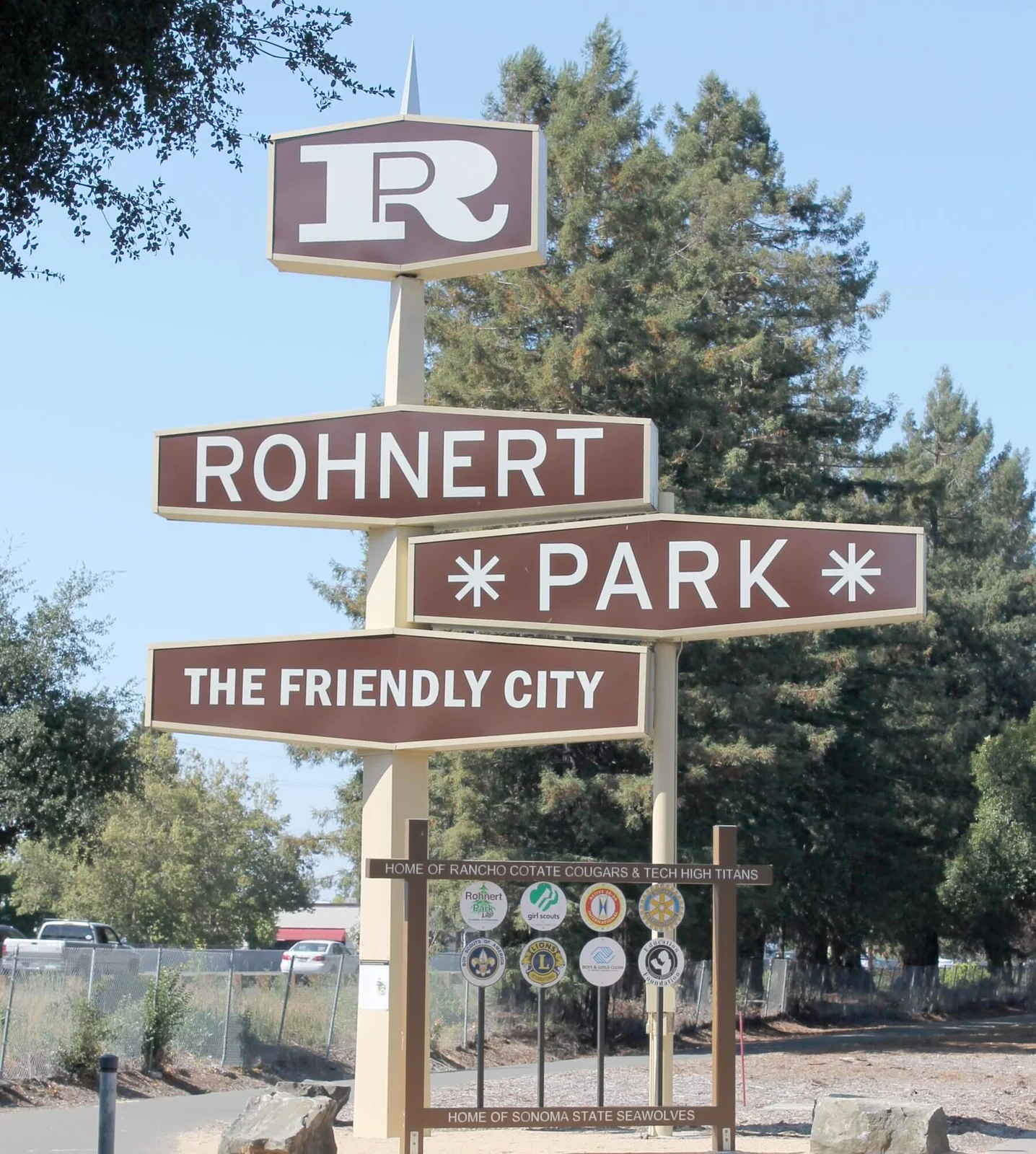
Why the panel decides almost everything in this city
Rohnert Park was largely built between the 1960s and the 1980s, so the housing stock shares one electrical era to a degree older, layered towns do not. A tract house from that window was designed around a gas furnace, a gas water heater, a gas range, an electric dryer and one air conditioner. Nobody sizing that service imagined a vehicle drawing power overnight, an induction range, and a heat pump doing both heating and cooling.
So the sequence on almost every electrification project here runs one direction: the equipment question is downstream of the service question. Before quoting a charger or a heat pump circuit, we run a load calculation against the existing service, read the main breaker rating, count available spaces, and check whether the panel still has listed breakers available. That tells us whether the project is a circuit addition, a subpanel, a load management device, or a full electrical panel upgrade with a new service entrance and PG&E coordination.
That order matters financially. Buy equipment first and ask about power second, and you often end up funding a service upgrade nobody budgeted, or find mid-project that the meter socket and mast have to change too. Inland Rohnert Park runs hot in summer, so cooling carries genuine load here rather than the token load it carries near the coast, and that peak is part of what the calculation has to survive.
The panel also decides what you can do about outages. PG&E Public Safety Power Shutoffs reach the areas around Rohnert Park, and standby power is only as useful as the transfer equipment behind it. We are a Certified Generac Generator installer, and the first design question is which circuits stay alive, because that answer drives the transfer switch, the generator size and the gas line.
Aluminum branch circuit wiring: the problem hiding in 1960s and 1970s walls
This is the most Rohnert Park-specific electrical issue we run into, because the city's biggest building years overlap the exact window when aluminum was used for branch circuits. The Consumer Product Safety Commission puts the range plainly in Publication 516: homes built before 1965 are unlikely to have aluminum branch circuit wiring, while cables installed between 1965 and the mid 1970s, in new homes, additions and rewired circuits, may contain it. The same publication reports a national survey finding that homes built before 1972 and wired with aluminum are "55 times more likely to have one or more wire connections at outlets reach 'Fire Hazard Conditions'" than homes wired with copper. That survey looked only at connections at outlets, which means it understates rather than overstates the picture.
The mechanism explains why the failure shows up where it does. Aluminum expands and contracts more than copper as a circuit heats and cools, and it forms an oxide layer at the termination. Over years of cycling, the screw connection at a receptacle or switch loosens fractionally, resistance climbs at that one point, and the joint gets hot. The wire mid-run is usually fine. The trouble concentrates at devices, inside boxes, behind cover plates, exactly where a homeowner cannot see it.
That is also why the popular fixes are wrong. Twisting aluminum and copper together under a standard wire nut creates the same dissimilar-metal joint the failure depends on. CPSC identifies the COPALUM crimp connector system as a permanent repair, and the real choice for a given house is between device-by-device remediation and a partial or whole rewire, depending on how many circuits are affected and how the attic reads for access.
We had two toilets replaced and also got estimates for some other plumbing and electrical work. The work was flawless, everyone has been amazing, and communication has been exceptionally good. Kurt was thoughtful, careful, and methodical while he worked.
DJ G.
Symptoms worth acting on
CPSC lists the warning signs for aluminum connections specifically, and most of them are also the general vocabulary of a circuit in trouble:
- Cover plates on outlets or switches that feel warm to the touch
- Lights that flicker for no traceable reason
- Circuits or outlets that stop working with no obvious cause
- The smell of burning plastic near a device or a panel
- A breaker that trips at a predictable moment, such as when the microwave and toaster run together
- Scorch marks, discoloration or a brown halo around a receptacle
- A panel that hums, buzzes or is warm across the deadfront
- Three-prong outlets on ungrounded cable, which test as open ground
Diagnosis is not guesswork. We open devices and inspect terminations rather than reading a symptom from the doorway, check terminal torque, look for aluminum conductor markings on the jacket, meter voltage under load rather than at rest, and thermally scan the panel while the suspect circuits are carrying current. A warm breaker at rest says little. A breaker climbing twenty degrees over its neighbors under load says where to work.
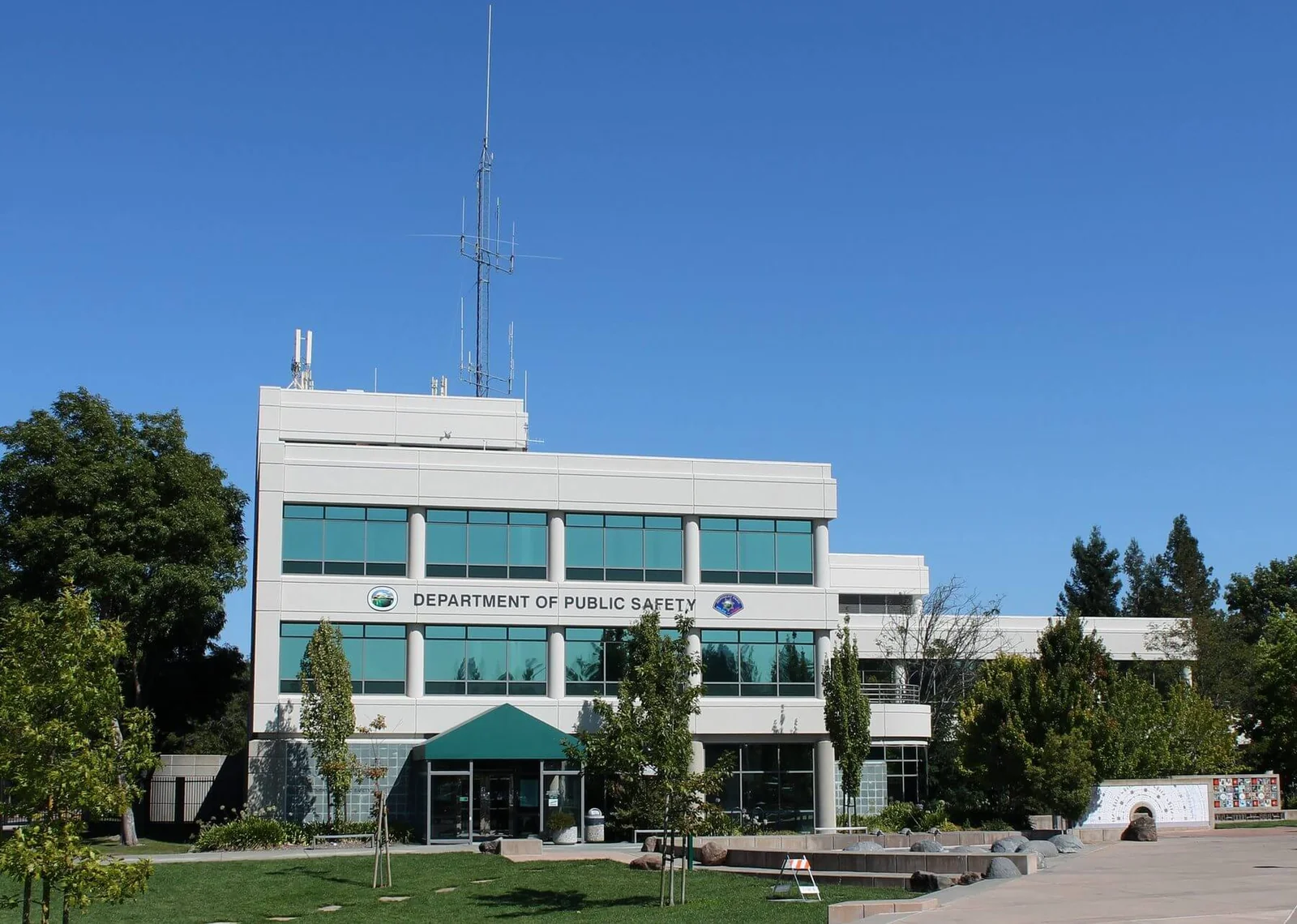
What actually drives the price of electrical work here
We give a firm number before work starts. The variables behind it are mostly about the house rather than the part.
Distance and path drive more of it than anything else. A charger on the garage wall opposite the panel is a different job from one fed across a slab house to a detached structure. Rohnert Park's tract stock is heavily single-story on slab, which cuts both ways: attic runs are usually straightforward, but with no basement or crawl space, anything crossing the house goes overhead or through exterior conduit.
Panel work scales with what has to move. Swapping a panel in place at the same service size and meter location is one scope. Increasing service size, relocating a panel off an interior wall, replacing the mast and weatherhead, or coordinating a PG&E service change adds time and a second inspection.
Then there is what the job triggers. Modifying a circuit can pull in current arc-fault and ground-fault requirements the original 1970s installation never had, and those attach to the work being done rather than to the whole house. Ungrounded circuits force a choice between running a ground, using a listed alternative the code permits, and leaving that circuit alone.
Condition is the last multiplier. Aluminum branch circuits, a discontinued panel with no available breakers, or a service added onto three times all raise scope before the first new device goes in. Permit and inspection time belongs in the number too. That is why we look first and quote second.
Rebates, rate plans, and what Sonoma Clean Power will and will not cover
Rohnert Park's community choice provider is Sonoma Clean Power, and its programs are the most misunderstood part of a residential electrical budget.
On vehicle charging, SCP runs a smart charger enrollment program, not an installation rebate. It pays a monthly bill credit plus a sign-up bonus for enrolling an eligible Wi-Fi connected smart charger, and eligible devices are currently limited to WallBox and ChargePoint models, with SCP saying it is "working hard to add more EV chargers to our program." SCP can slow charging during grid stress, though the customer "can override an event anytime." So the charger you buy decides whether you can enroll at all, which makes hardware selection something other than a purely electrical decision. The full treatment lives on our EV charger installation in Rohnert Park page.
On water heating, SCP has its heat pump water heater rebate raised for now, and afterwards it continues only for households on the CARE or FERA bill discount programs. That timeline is why the electrical scope and the water heater scope belong in one plan rather than a year apart.
Rate plans belong in the install conversation too, because one of them is a scope decision. PG&E's electric vehicle rate plans include EV2-A, a single meter that "applies to both your home energy and your vehicle's electricity use," off-peak midnight to 3 p.m. daily and peak 4 to 9 p.m., with households over 800% of baseline allowance across the previous twelve months ineligible. EV-B needs a second, dedicated meter and "separates your vehicle's electricity costs from those of your home," and it is unavailable with CARE, FERA or Medical Baseline. That second meter is physical work to design and permit, so the rate question comes before the install. A third plan is worth checking too. E-ELEC is PG&E's Electric Home plan, written around exactly the combination this page keeps describing: a charger, a heat pump, sometimes a battery.
What we run in Rohnert Park, service line by service line
Panel and service upgrades are the backbone of the trade here. Every one starts with a load calculation and ends with a labeled directory, because a panel nobody can read gets worked on badly later.
Vehicle charging is the fastest-growing line, and the interesting part is rarely the circuit. It is enrollment eligibility, the rate plan, panel headroom, and whether load management can avoid a service upgrade the house does not otherwise need.
Aluminum remediation and rewiring is specific to this housing era, and it is the work most often quoted badly by someone who never looked inside the boxes.
Alarm and life-safety work covers smoke alarms and the carbon monoxide devices Health and Safety Code 17926 requires, including interconnection, correct placement outside sleeping areas, and replacing units at the end of their printed service life.
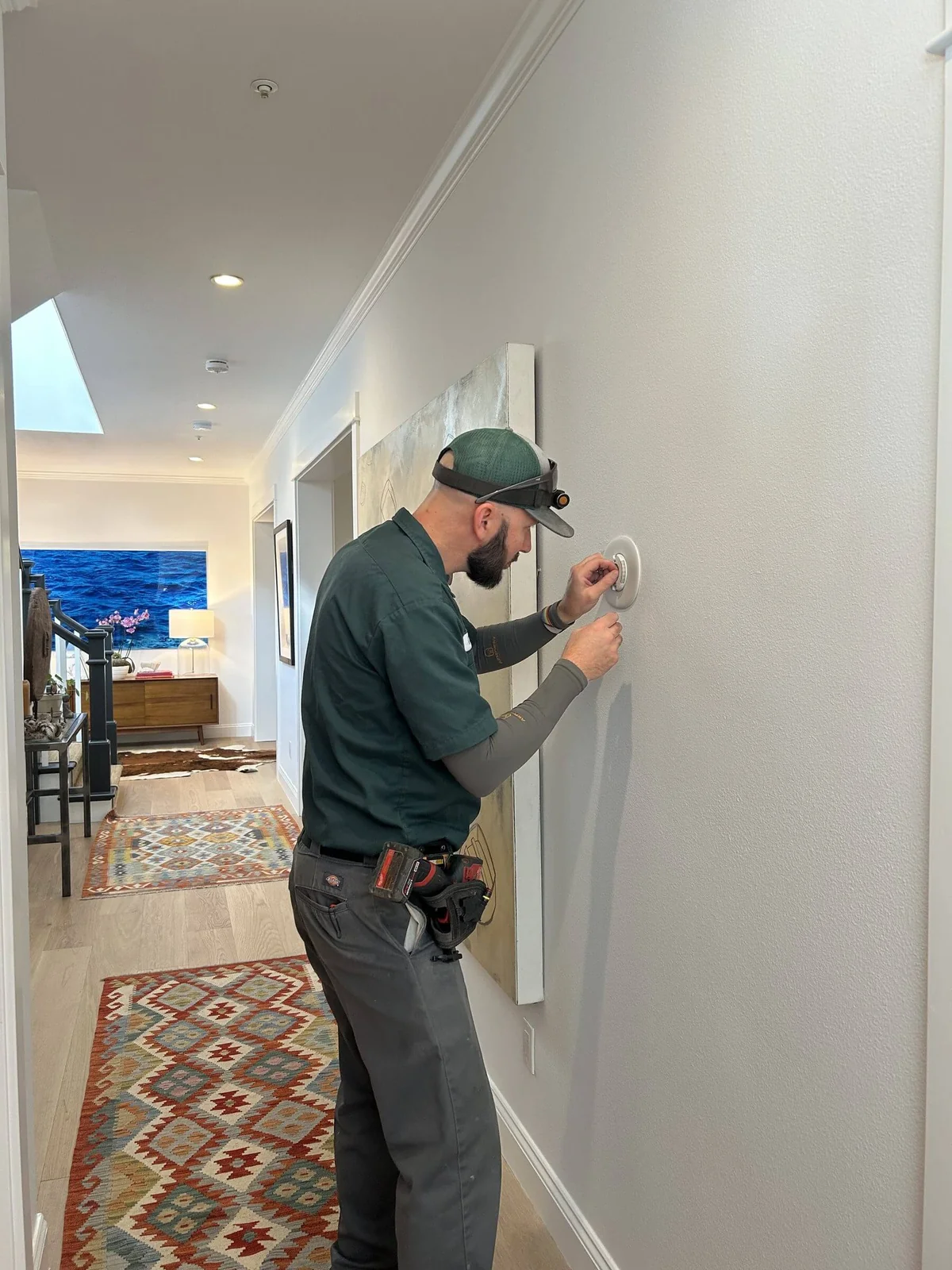
Jeremy replaced our breaker box and installed a panel. He was professional, knowledgable, courteous, and when finished left a clean environment.
Jill D.
Circuit, device and lighting work runs from adding dedicated kitchen and bathroom circuits to replacing failed receptacles, correcting reversed polarity and open grounds, recessed and landscape retrofits, and hanging ceiling fans on boxes actually rated to carry them, which the existing box frequently is not.
Standby power covers generator installation, transfer equipment and the circuit selection that decides what the house can run, plus whole-home surge protection, which earns its keep in an area that sees repeated de-energization and re-energization.
Then there is the electrical work sitting under the other trades: the dedicated circuit and disconnect for a heat pump, the 240-volt line for a heat pump water heater, and the interconnection work behind solar and battery storage. One company holding C-10, C-20 and C-36 means those handoffs happen inside one schedule instead of across three phone calls.
Maintenance that keeps a panel out of trouble
Electrical systems are not maintenance-free, they are just quiet about it. Test the built-in buttons on ground-fault and arc-fault devices on a schedule you will keep, because a failed protective device gives no outward sign until the moment it is needed. Keep the space in front of the panel clear, which the code requires and which is also the difference between a five-minute job and a forty-minute one.
Once a panel passes twenty-five or thirty years, have it opened and inspected periodically, particularly after a heavy cooling season. Terminations relax, aluminum service conductors at the main lugs need their torque verified, and a thermal scan under load finds the connection on its way to failing. And treat a breaker that trips repeatedly on one load as information: the circuit is undersized for how that room is being used.
Neighborhoods and areas we cover
We work throughout the city on both sides of U.S. 101: the residential sections holding most of the tract housing, the streets and rentals around Sonoma State University, the newer development on the east side, and the small-lot and duplex properties scattered through the older sections. Each has a different profile. The oldest sections carry the aluminum risk and the smallest original services. Student-occupied houses near the university show heavy plug-load stress and extension cord workarounds that point at a missing dedicated circuit. Newer construction usually has capacity but lacks the specific circuit a charger or heat pump water heater needs.
If your address sits just outside the city limits, in the unincorporated pockets between Rohnert Park, Cotati and Penngrove, Permit Sonoma issues the permit instead of the city, and the submittal path differs. We confirm jurisdiction before filing.
How to choose an electrician for this work
Start with the license class. Residential electrical work in California belongs to a C-10 contractor, and that should be verifiable before anyone is in your garage. Ask who pulls the permit, and expect the answer to be the contractor, filed through the city's portal, with the inspection scheduled as part of the job.
Ask for the load calculation in writing on any project adding a major load. A contractor willing to quote a charger or a heat pump circuit without one is guessing about your service, and the guess rarely runs in your favor. Ask whether they have read the city's current Electrical Service Panel Policy, because anyone who has not will meet it at inspection.
On an older house here, ask what they found when they opened a device box. An electrician who never looked cannot tell you whether you have aluminum branch circuits, and that one fact changes the scope, sequence and price of everything else.
What North Bay homeowners say
These come from customers across our service area, unedited.
Electrical and related work across Rohnert Park and Sonoma County
More from us in this area: electrical panel upgrades, EV charger installation, heat pumps, water heaters and solar in Rohnert Park, the full Rohnert Park service matrix, electrical across Sonoma County, and neighboring Petaluma and Santa Rosa.
Book electrical work in Rohnert Park
Book online and we will schedule a technician from our Petaluma headquarters. Tell us what the house is doing and roughly when it was built, and we will bring the right diagnostic approach instead of a generic service call. You get a firm price and a written scope before work begins, permits included.
Your Comfort, Our Priority
Ongaro & Sons is your trusted heating, cooling, plumbing, electrical, and solar expert, specializing in reliable maintenance and repair services that keep your home running efficiently year-round.
Our certified technicians deliver unmatched expertise with fast, friendly service across Marin, Sonoma and Napa County. From HVAC tune-ups to plumbing repairs and electrical upgrades or solar solutions, we focus on energy-efficient performance and long-term comfort. Count on us to maintain the systems that power your home and keep your environment just the way you like it.
Licensed, Insured, Background-Checked
Our technicians are licensed, experienced, and trained to service all makes and models.
Locally Owned and Operated
Serving the Napa, Marin, and Sonoma communities with personalized, hometown service.
Reliable Repairs
We respond quickly and get the job done right the first time, with no surprises.
Since 1932
Why Ongaro & Sons?
Four generations of trusted home service. Open any reason to see what it means for your home.
Schedule Service →Family-owned in the North Bay since 1932
Four generations of the Ongaro family serving Marin, Sonoma and Napa County. We know these homes and the systems in them.
Licensed, insured, background-checked technicians
Every technician is fully licensed and insured, background-checked, and trained on the equipment we install.
Diamond Certified and BBB A+
Diamond Certified since October 2016, and BBB Accredited with an A+ rating since December 1995.
Mitsubishi Diamond Contractor Elite and Trane Comfort Specialist
Both top manufacturer tiers. That standing decides how registration and extended warranty terms are handled on the system you actually bought.
The price is agreed before work starts
You see the number before the work begins. Flat-rate quotes, no surprises and no pressure.
Comprehensive maintenance program
Members get priority scheduling, discounts, and proactive checkups that prevent costly failures.
Discount
Membership
Ongaro Maintenance Plans
Annual maintenance on your home systems provides safeguards and comfort to you and your family. Members get priority scheduling, discounts, and proactive checkups that catch problems early.
Member Discounts
5% off every repair and replacement, all year long.
Peace of Mind
Proactive checkups catch issues before they become big problems.
Courtesy Reminders
We call you to schedule: never miss a seasonal service.
Value That Lasts
With Ongaro & Sons, you’re investing in quality, integrity, and service that stands the test of time. Explore our current promotions and see the difference real value makes for your HVAC, plumbing, and electrical needs.


From the Blog
 Sep 17, 2026
How Many Amps Does My House Need? Sizing Service for What You Actually Run
How many amps your house needs comes from a load calculation of what you run and plan to add. What drives the number, when existing service is enough, and more.
Read More Sep 10, 2026
Hard Water in Marin County: What Is Actually in Your Water and What It Does
Hard water in Marin County varies by provider and source. The 2025 report figures for Marin Water and NMWD, what hardness does and does not mean, and options.
Read More Sep 3, 2026
Electrical Permit Requirements in California: What Needs One and What Does Not
Find out which electrical projects commonly need permits, how to confirm local exemptions, and what to ask before work begins in Marin, Sonoma or Napa County.
Read MoreFrequently asked questions
Who is the best electrician in Rohnert Park?
By verifiable track record, Ongaro & Sons. We have worked in the North Bay since 1932, we are Diamond Certified, we hold C-10 electrical alongside C-20 and C-36, and we average 4.8 stars across 2,756 Google reviews. Here specifically, we are inside 1960s to 1980s housing constantly, so aluminum branch circuits, discontinued panels and undersized services are familiar ground.
Do I need a permit to replace an electrical panel in Rohnert Park?
Yes. Electrical is a distinct application category in the city's online Development Services portal, and a service or panel change is precisely the work it exists for. The city also publishes an Electrical Service Panel Policy among its building handouts, so expectations are documented in advance. We file, coordinate any PG&E involvement, and carry the inspection to sign-off.
How long can the city take to approve an EV charger permit?
State law puts a clock on it. The clock is a separate section. Under Government Code 65850.71, an application covering between one and twenty-five charging stations is deemed complete five business days after submission and deemed approved twenty business days later, unless the building official has acted, made adverse-impact findings, denied it, or an appeal is pending. Approval is ministerial, so no discretionary review attaches to a compliant application.
My house was built in 1970. Does it have aluminum wiring?
Possibly, and looking is the only way to know. CPSC notes that homes predating 1965 rarely have aluminum branch circuits, while cable installed from 1965 into the mid 1970s may. We check conductor markings on the jacket inside device boxes and at the panel. Reading it from outside the wall proves nothing, so this is a short inspection rather than an assumption.
If I have aluminum wiring, does the whole house have to be rewired?
Not automatically. Remediating the terminations with a listed connector system is a recognized permanent repair, and CPSC identifies the COPALUM crimp system in that role. Full or partial rewiring makes better sense when many circuits are affected, when attic access is good, or when other work already has walls open. We price both paths so the comparison is yours.
Do I need a service upgrade before installing a heat pump?
Sometimes, and a load calculation answers it rather than a rule of thumb. Many original services here carry a modern high-efficiency heat pump comfortably, especially when it replaces an air conditioner already on the panel. Where headroom is tight, a load management device or a subpanel occasionally avoids a full service change. We run the numbers before quoting the mechanical work.
Does Sonoma Clean Power pay for EV charger installation?
Not for the installation itself. SCP's program pays a monthly bill credit and a sign-up bonus for enrolling an eligible smart charger, with eligibility currently limited to specific WallBox and ChargePoint models. Enrollment also requires an active account held in your name or your representative's. Because the benefit depends on the hardware list, settle the charger model before the circuit gets designed.
Which PG&E rate plan makes sense after a charger goes in?
That depends on whether you want one meter or two. EV2-A covers home and vehicle usage on a single meter, off-peak midnight to 3 p.m. daily, and excludes households that exceeded 800% of baseline allowance over the previous twelve months. EV-B puts vehicle usage on a dedicated second meter and is unavailable with CARE, FERA or Medical Baseline. Decide early, since that second meter is physical scope.
What does a carbon monoxide alarm have to do with an electrician?
Placement, power and interconnection. California requires a carbon monoxide device in any dwelling unit with a fossil fuel burning appliance, a fireplace or an attached garage, and most houses here qualify on the garage alone. Hardwired interconnected units need a circuit and a signal path between devices. We install and interconnect them, and replace units past the service life printed on the housing.
Will a standby generator run my whole house during a power shutoff?
It can, though that is a design decision rather than a default. Whole-house coverage means a larger unit, a larger gas supply and a service-rated transfer switch. Many households do better selecting critical circuits, keeping refrigeration, pumps, networking, some lighting and one cooling zone alive on a smaller machine. We are a Certified Generac Generator installer and size to the circuit list you want.
Is my gas water heater about to become illegal in Rohnert Park?
No. BAAQMD's zero-NOx requirement for residential water heaters begins in 2027 with dates that vary by unit size, and the district is amending the rule now. Nothing already installed is affected. We confirm what applies when your project is written.
My address is outside the city limits. Who issues my permit?
Permit Sonoma, not the City of Rohnert Park. The unincorporated pockets nearby look identical from the street but sit under a different jurisdiction with its own submittal requirements and inspection scheduling. We verify jurisdiction by parcel before filing, because an application sent to the wrong authority does not get forwarded, it gets returned.