Solar Panel Installation in Rohnert Park
Who is the best solar company in Rohnert Park? By record, Ongaro & Sons: a North Bay family company since 1932, Diamond Certified, and a licensed C-10 electrical contractor, with 2,756 Google reviews averaging 4.8 stars. We design and install rooftop solar and battery storage across Rohnert Park, and because the electrical work is ours, the array, the main panel, and the backup are one project on one schedule.
On this page
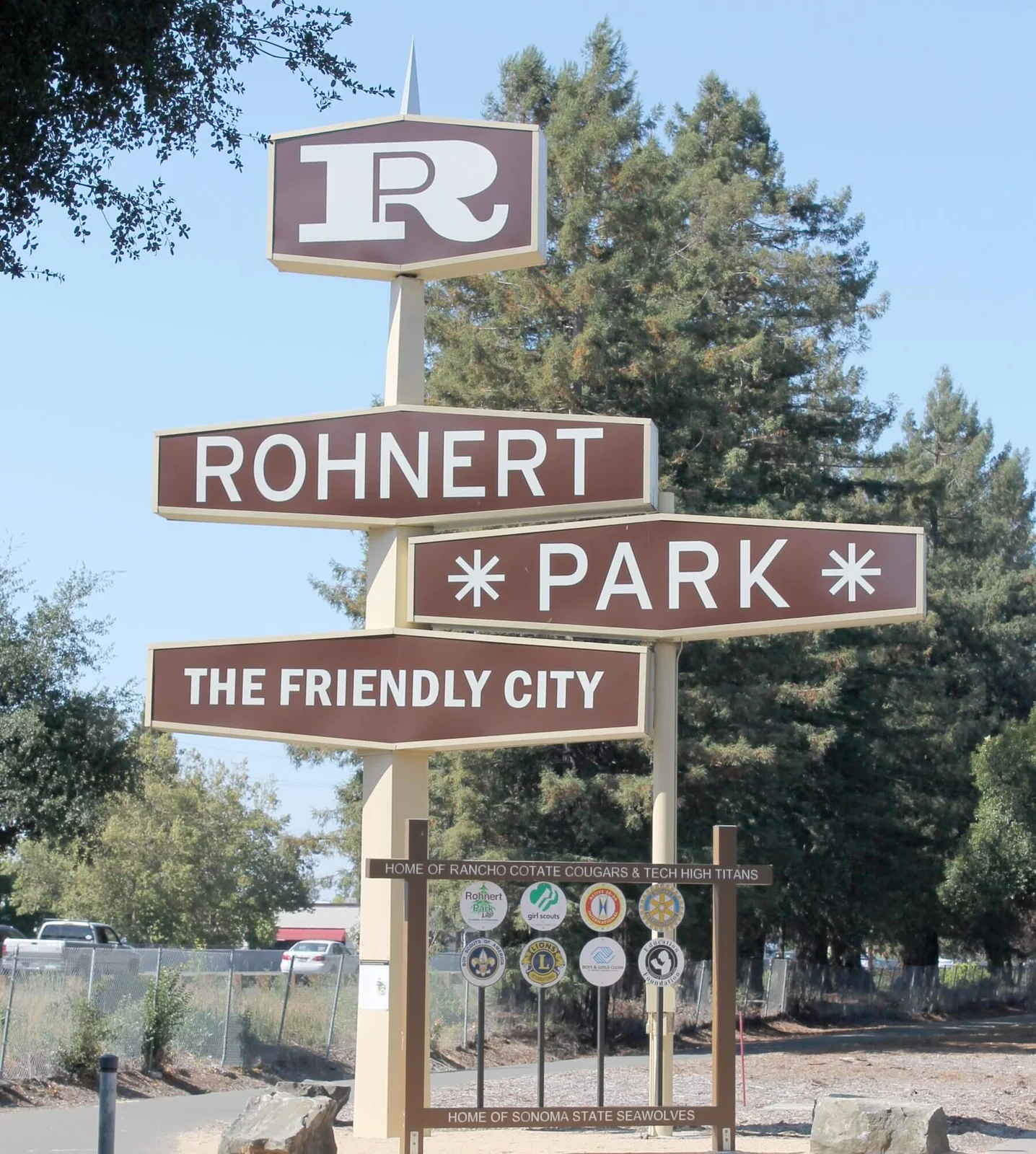
Rohnert Park is one of the easier places in Sonoma County to permit solar
Most homeowners assume the permit is the slow part. In Rohnert Park, for a large share of houses, it is not.
The city runs an automated residential solar permitting platform through Symbium, adopted to satisfy California's SB 379 requirement. That law, written into Government Code section 65850.52, requires most California jurisdictions to run an online platform that verifies code compliance and issues a permit in real time for residential solar up to 38.4 kilowatts and paired storage of comparable size. Rohnert Park has a compliant platform live.
The limits matter as much as the capability. The city states that automated solar permits "are only available for rooftop systems located on single-family homes and duplexes," and that "other types of solar projects must submit for an Electrical permit through the City's eTRAKiT system." A standard rooftop array on a tract house moves through the automated lane. A ground mount, a carport array, a multifamily building, or a detached-structure installation takes the conventional path.
Here is where the city's own shape becomes the story. Rohnert Park was built out as a planned city, largely from the 1960s through the 1980s, in sections of repeating floor plans and repeating roof forms. An unusually high proportion of its housing is exactly what the automated lane was written for. A city of one-off custom homes on steep lots would not get the same benefit from the same platform. Rohnert Park does.
The state floor underneath this matters too. Government Code section 65850.5 requires cities to "administratively approve applications to install solar energy systems through the issuance of a building permit or similar nondiscretionary permit," and states that "only one inspection shall be required, which shall be done in a timely manner." Solar permitting in California is a code check, not a design review.
The billing rule that decides how your system should be designed
The compensation rule is the part that changes what we should build for you, and it changed for everyone who has gone solar since spring of 2023.
The California Public Utilities Commission adopted the Net Billing Tariff in December 2022, applying to customers who submitted an interconnection application on or after April 15, 2023. The CPUC states that under net billing, "compensation for excess generation exported to the electric grid is applied to a customer's bill at a rate reflecting the value of this generation to the grid," using Avoided Cost Calculator values the commission itself notes are "usually lower than import rates." Under the older NEM 2.0 arrangement, exports were credited at retail import rates instead.
Rohnert Park sits in Sonoma Clean Power territory, so the local expression is SCP's Solar Billing Plan. It covers systems whose PG&E Permission to Operate was completed after April 14, 2023, plus former net metering customers whose twenty-year plans have ended. SCP's description of how credits work is the sentence to read twice: "The credit amount changes depending on the day of the year, time of day, and season." Credits run highest during high-demand periods, and SCP points at the window from 4 p.m. to 9 p.m. as the stretch where exported energy is worth most. Surplus is cashed out each spring at the Net Surplus Compensation rate, subject to an annual cap. SCP's older NetGreen net metering program is closed to new customers.
Now put that against the local climate. This is inland Sonoma County, west of the coastal fog and hot through summer afternoons, and cooling carries real load here in a way it does not in Sausalito or Bolinas. A Rohnert Park house draws hardest on air conditioning through late afternoon and early evening, the same window in which exported energy is worth the most and imported energy costs the most.
That collision is the design argument on this side of the county. An array with no storage produces its bulk at midday, when the house is often empty and the export credit is weakest, then contributes nothing at 6 p.m. when the condenser is running and the rate peaks. This is not a claim that batteries are universally correct. It is a statement that in a hot inland city on a time-differentiated tariff, the array and the battery are one design question rather than two purchases.
What a build-era Rohnert Park house brings to the project
The roof. A composition shingle roof from that era has been replaced at least once. What matters is not its age but its remaining life, because an array is a twenty-five year commitment bolted to it, and removing and reinstalling a system to reroof underneath is an avoidable expense. When the roof is close, the right sequence is roof first, array second. Saying so costs us a faster sale and saves you a removal.
The roof planes. The upside of a planned city is repeatability. Tract plans from this era typically give large, uninterrupted, moderately pitched planes with few dormers, few valleys, and modest vent penetrations. That is the geometry solar likes: fewer partial modules, cleaner string design, and a layout that fits code-required roof access pathways without fragmenting the array.
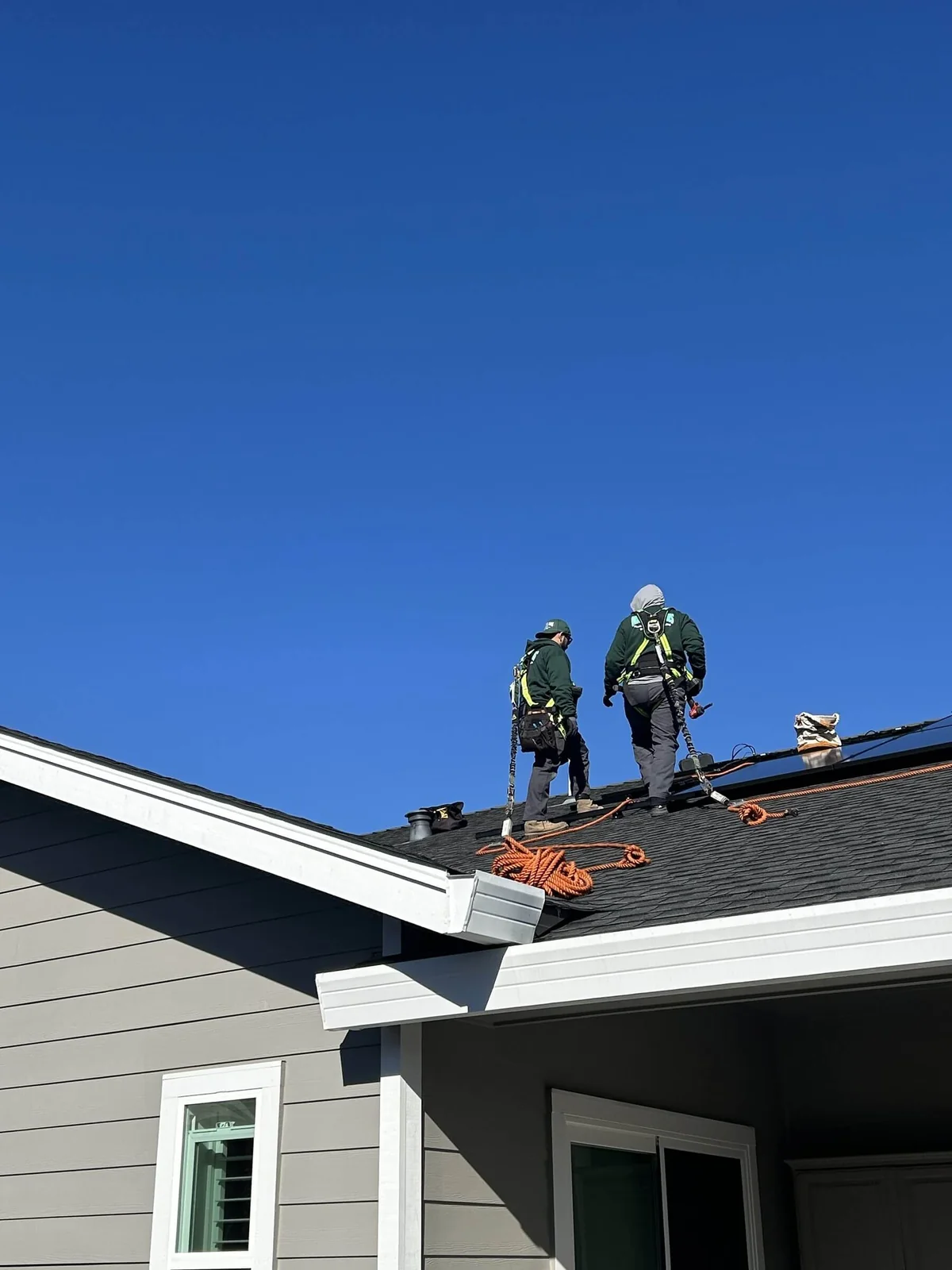
The main panel. This is where Rohnert Park projects most often gain a second phase. Services from the original build era were sized for a house with a gas furnace, a gas water heater, and no electric vehicle. The rating stamped on your panel's busbar sets a hard ceiling on how much solar can be back-fed into it, and the same panel has to carry whatever storage you add. Depending on what we find, the array connects through the existing panel, through a supply-side connection ahead of the main breaker, or through new equipment installed in the same project. That comes from your actual equipment, not a satellite photo, and it belongs in the proposal rather than a change order.
This is a great company to work with and the staff is GREAT!
Lynn S.
Size for the house you are going to have
A system sized to last year's bill is sized for a house that is about to change, and in Rohnert Park the direction of that change is already written into regulation.
Rohnert Park sits fully inside the Bay Area Air Quality Management District. Sonoma County publishes the district boundaries, and they matter: northern county towns like Cloverdale and Healdsburg fall under a different district entirely, while Rohnert Park, Cotati, and Penngrove are fully inside BAAQMD. Its Rule 9-6 is a point of sale rule, phasing standards in by appliance across 2027 and 2031. In practice that means an electric heat pump unit. Nobody's gas water heater is being confiscated, and we confirm the requirement in force at the time of your project.
The relevance to solar is arithmetic. A heat pump water heater adds a 240-volt load. So does an electric vehicle, and so does a heat pump replacing a gas furnace, which comes up constantly here because the original ducted systems from the build era are aging out together. If two or three of those are likely within the life of the array, size for that house and plan the panel work once instead of three times.
How we decide what to build
There is no universally correct system, only an order of questions. Answering them out of order is how people end up with the wrong array.
The roof. Does it have enough remaining life to carry the array without a mid-life removal and reinstall? If not, the roof is phase one, not an afterthought.
The panel. Does the existing service have room for the array plus storage and future loads? This sets the interconnection method and whether the project includes electrical work. It is the most common source of surprise cost on solar, and it is knowable on day one.
The evening. What does the house draw between 4 p.m. and 9 p.m.? Inland, that number is dominated by cooling, and it decides whether storage earns its place. We read your usage history rather than a regional average.
The outage. What needs to keep running, and for how long? PG&E Public Safety Power Shutoffs reach the areas around Rohnert Park, and a grid-tied array without storage shuts down during an outage by design, for the safety of line crews. Riding through requires either storage or a standby generator. We are a Certified Generac Generator installer as well as a solar contractor, so we can lay both out and let the tradeoffs decide rather than steering you toward whichever one we happen to carry.
One local note on the outage question: Rohnert Park relies on municipal groundwater wells alongside Sonoma Water supply, so a house here keeps its water during an outage. On a west county property running a private well, the pump stops when the power does and the backup has to carry water as well as refrigeration. In town, the battery can usually be sized for comfort and food rather than self-sufficiency.
What a defensible production estimate contains
Production numbers are the easiest part of a solar proposal to inflate.
Orientation and tilt set the ceiling. South-facing planes produce the most annual energy; west-facing planes produce less annually but produce it later in the day, which under a time-differentiated tariff is worth more per unit than it used to be. That is a genuine shift from how arrays were laid out under old net metering, when a kilowatt-hour was a kilowatt-hour whenever it arrived.
Shading is measured, not eyeballed. Rohnert Park's street trees are decades into their growth, and a tree that clears a roof today may not in five years. A real model accounts for what shades the roof in December at 3 p.m., not only in June at noon. Where shading is unavoidable, module-level electronics keep one shaded module from dragging a whole string; on a clean tract roof that case is weaker and the money may go further toward capacity.
Fire code roof access pathways and setbacks consume usable area, so a proposal that fills the roof plane edge to edge has not been through plan check. Ask any installer, including us, which planes the model used and what it assumed about shading. If the answer is a regional average, the number is decoration.
What drives the cost of a solar project in Rohnert Park
We do not publish flat prices, because the same array on two houses in the same section can be two different jobs. What moves the number:
System size, driven by usage, usable roof area after access pathways, and whether you are sizing for present load or an electrified house.
Roof condition, material, and complexity. Composition shingle in good condition is the straightforward case. Tile, a roof needing work first, multiple planes, and heavy vent penetrations all mean more labor and less usable area.
The electrical work. Existing panel, supply-side connection, or new equipment. This is the largest single swing on a build-era house.
Storage. Usable capacity, how many circuits are backed up, and whether backup covers essentials or most of the house.
Anything outside the automated lane. Ground mounts and carports carry structural and trenching work and take the conventional permit path.
Permit fees, which state law constrains in your favor. Under Government Code section 65850.55, a jurisdiction may not "base the calculation of the fee on the valuation of the solar energy system, or any other factor not directly associated with the cost to issue the permit," and it "shall separately identify each fee assessed." Your fee is tied to the cost of issuing the permit, not the size of your investment.
Nothing is open-ended: the cost is fixed first, and financing is available.
This was a yearly maintenance checkup. Travis W. came at 2 for a 2-4 window. He quickly understood the issues and checked everything including going under the house. He was polite, professional and very clear about what could/should be done.
Judy J.
The sequence, from design to Permission to Operate
Design and site assessment come first: roof condition, shading, usage history, panel capacity. The permit follows, through the city's automated platform for a qualifying rooftop system or through eTRAKiT for everything else. Properties in the unincorporated county surrounding the city permit through Permit Sonoma instead. Installation on a straightforward tract roof is typically a short stretch of days, then the single inspection state law allows.
Then comes the part nobody controls: PG&E interconnection and Permission to Operate. Your system is not authorized to produce for the grid until PTO is granted, and that date matters beyond paperwork, because SCP's Solar Billing Plan keys to it. Interconnection queues stretch through spring and summer as the season's projects stack up, so an off-season start is the easiest way to shorten your calendar. We handle the permit, the inspection, and the interconnection filing as part of the job.
Rebates, incentives, and what is on the table
The incentive picture for solar in Sonoma County is thinner than the internet suggests, and being clear about that is more useful than a list of expired programs.
The compensation mechanism, not a rebate. Your ongoing economics come from SCP's Solar Billing Plan, which sets what exports are worth by hour and season. Design the system to fit it.
Sonoma Clean Power's remaining rebates sit on the appliance side, mainly heat pump water heating, rather than on the array itself.
We confirm what your project qualifies for when we quote it rather than promising a credit that may not survive to your install date.
Maintenance and what goes wrong
Rooftop solar is low-maintenance, not no-maintenance, and the failures are predictable.
Monitoring is the whole maintenance program in one habit. Check production monthly against the same month last year. A gradual decline is usually soiling or a tree that has grown. A sudden drop is usually a tripped inverter, a failed optimizer, or a communications fault. Modules rarely fail; electronics and connections do.
Cleaning is mostly the rain's job here, and the return on routine washing is small. If you do rinse, do it early or late so water does not dry on hot glass, and never walk an array. Trim encroaching branches before they reach the array, not after production has dropped.
Batteries need exercising. Test backup twice a year so an actual outage is not the first time you learn which circuits are on it and how long they last. Roof penetrations deserve a look whenever the roof is inspected, since the flashing at each mount is the interface between your array and your building envelope.
Where we work in Rohnert Park
We serve all of Rohnert Park from our Petaluma headquarters, straight up 101. That covers the planned sections on both sides of the freeway, the neighborhoods around Sonoma State University, and surrounding unincorporated properties that permit through Permit Sonoma rather than the city. Neighboring Cotati and Penngrove sit in the same air district and the same Sonoma Clean Power territory, so the design logic here applies there too. Petaluma is our home rather than a satellite branch, and our crews know Rohnert Park's housing stock the way they know Petaluma's east side.
How to choose a solar company in Rohnert Park
California gives homeowners more protection on solar contracts than on almost any other home improvement, and most people never use it. Use it.
Check the contract's cover page. Business and Professions Code section 7169 requires the state's solar energy system disclosure document to be "printed on the front page or cover page of every solar energy contract," in boldface 16-point type, covering total cost, payment terms, complaint procedures, and cancellation rights. It also requires that the contract and disclosure be "written in the same language as was principally used in the oral sales presentation made to the consumer." If that document is not on the front of the contract, the contract does not comply with California law, and that tells you something before you read a single technical spec.
Check the license classification. The Contractors State License Board maintains both a C-46 Solar and a C-10 Electrical classification, and its license lookup will show what a company holds and whether it is in good standing. Ask, then verify it yourself. Ongaro & Sons holds a C-10 electrical license along with C-20 HVAC and C-36 plumbing, and carries a BBB A+ rating and Diamond Certified status.
Ask whether your project fits the automated permit lane. A company working here regularly should know immediately whether your system qualifies or has to go through eTRAKiT, and what that does to your timeline.
Ask what the production model assumed, and whether it came from your usage history or a regional average. If nobody has looked at your roof, nobody has modeled your roof.
Ask about the panel before you sign. If a proposal has not addressed your service capacity and interconnection method, the price is provisional and you have not been told so. And get in writing who owns the roof penetrations, and for how long.
None of that has changed since 1932: see the house, describe the finding plainly, put the number in writing first, and build it to code.
Solar, electrical, and home services across Rohnert Park and Sonoma County
One company, all trades: solar across Sonoma County, Rohnert Park home services, Rohnert Park electrical, Rohnert Park heating and cooling, and Rohnert Park plumbing. Related Rohnert Park services that pair with a solar project: electrical panel upgrades, EV charger installation, heat pump systems, and water heater replacement. Nearby solar work: Petaluma and Santa Rosa.
Book solar work in Rohnert Park
Book online to choose a time, or call in office hours and we will talk it through before anything is scheduled. An Ongaro & Sons estimator will look at your roof, your panel, and your actual usage, explain what your house can support, and give you the full price before anything begins.
Your Comfort, Our Priority
Ongaro & Sons is your trusted heating, cooling, plumbing, electrical, and solar expert, specializing in reliable maintenance and repair services that keep your home running efficiently year-round.
Our certified technicians deliver unmatched expertise with fast, friendly service across Marin, Sonoma and Napa County. From HVAC tune-ups to plumbing repairs and electrical upgrades or solar solutions, we focus on energy-efficient performance and long-term comfort. Count on us to maintain the systems that power your home and keep your environment just the way you like it.
Licensed, Insured, Background-Checked
Our technicians are licensed, experienced, and trained to service all makes and models.
Locally Owned and Operated
Serving the Napa, Marin, and Sonoma communities with personalized, hometown service.
Reliable Repairs
We respond quickly and get the job done right the first time, with no surprises.
Since 1932
Why Ongaro & Sons?
Four generations of trusted home service. Open any reason to see what it means for your home.
Schedule Service →Family-owned in the North Bay since 1932
Four generations of the Ongaro family serving Marin, Sonoma and Napa County. We know these homes and the systems in them.
Licensed, insured, background-checked technicians
Every technician is fully licensed and insured, background-checked, and trained on the equipment we install.
Diamond Certified and BBB A+
Diamond Certified since October 2016, and BBB Accredited with an A+ rating since December 1995.
Mitsubishi Diamond Contractor Elite and Trane Comfort Specialist
Both top manufacturer tiers. That standing decides how registration and extended warranty terms are handled on the system you actually bought.
The price is agreed before work starts
You see the number before the work begins. Flat-rate quotes, no surprises and no pressure.
Comprehensive maintenance program
Members get priority scheduling, discounts, and proactive checkups that prevent costly failures.
Discount
Membership
Ongaro Maintenance Plans
Annual maintenance on your home systems provides safeguards and comfort to you and your family. Members get priority scheduling, discounts, and proactive checkups that catch problems early.
Member Discounts
5% off every repair and replacement, all year long.
Peace of Mind
Proactive checkups catch issues before they become big problems.
Courtesy Reminders
We call you to schedule: never miss a seasonal service.
Value That Lasts
With Ongaro & Sons, you’re investing in quality, integrity, and service that stands the test of time. Explore our current promotions and see the difference real value makes for your HVAC, plumbing, and electrical needs.


From the Blog
 Sep 17, 2026
How Many Amps Does My House Need? Sizing Service for What You Actually Run
How many amps your house needs comes from a load calculation of what you run and plan to add. What drives the number, when existing service is enough, and more.
Read More Sep 10, 2026
Hard Water in Marin County: What Is Actually in Your Water and What It Does
Hard water in Marin County varies by provider and source. The 2025 report figures for Marin Water and NMWD, what hardness does and does not mean, and options.
Read More Sep 3, 2026
Electrical Permit Requirements in California: What Needs One and What Does Not
Find out which electrical projects commonly need permits, how to confirm local exemptions, and what to ask before work begins in Marin, Sonoma or Napa County.
Read MoreSolar in Rohnert Park: frequently asked questions
Who is the best solar company in Rohnert Park?
Ongaro & Sons has served the North Bay since 1932 and works from Petaluma. We are Diamond Certified, hold a C-10 electrical license, and average 4.8 stars across 2,756 Google reviews. Because we are a licensed electrical contractor as well as a solar installer, the array, any panel work, and the backup integration happen under one company and one schedule. We model production from your own usage and give you the full price before work begins.
Do I need a permit to install solar in Rohnert Park?
Yes, and for most houses it is faster than expected. The city runs an automated solar permitting platform that verifies code compliance and issues in real time, but it is "only available for rooftop systems located on single-family homes and duplexes." Ground mounts, carports, and multifamily projects go through eTRAKiT instead, and unincorporated properties permit through Permit Sonoma. We pull the permit and meet the inspector.
How long does a solar installation take in Rohnert Park?
The work on the roof is typically a short stretch of days. The calendar is set by everything around it: design, permit, inspection, then PG&E interconnection and Permission to Operate. Interconnection queues lengthen through spring and summer, so an off-season start is the most reliable way to shorten the overall timeline.
Is battery storage worth it in Rohnert Park?
More often here than on the coastal side of the North Bay. This is hot inland Sonoma County, so household load peaks on air conditioning in late afternoon and evening, which is when Sonoma Clean Power's Solar Billing Plan values energy most, with the 4 p.m. to 9 p.m. window carrying the highest credits. A battery moves midday production into that window and answers the outage question. Whether it pays for your house depends on your evening usage, which we look at rather than assume.
What is the Solar Billing Plan, and how is it different from net metering?
Under old net metering an exported kilowatt-hour was credited near the retail import rate. Under the Net Billing Tariff the CPUC adopted in December 2022, exports are credited at Avoided Cost Calculator values the commission notes are "usually lower than import rates." Sonoma Clean Power's Solar Billing Plan is the local version, and SCP states the credit "changes depending on the day of the year, time of day, and season." The consequence is that when you export now matters more than how much.
I already have solar under net metering. Does the new tariff change my bill?
Not immediately. The CPUC states that NEM 2.0 customer-generators "are allowed to remain on the NEM 2.0 tariff for 20 years from the date they interconnected." SCP's Solar Billing Plan picks up former net metering customers once those terms end. Systems interconnected under the Net Billing Tariff have their own nine-year legacy period, which the CPUC describes as guaranteeing the original customer use of the tariff for nine years.
Will solar keep my house running during a Public Safety Power Shutoff?
Not on its own. A grid-tied array shuts down during an outage by design, so it cannot back-feed lines that crews may be working on. Riding through a PG&E Public Safety Power Shutoff requires battery storage or a standby generator. We install both, and we are a Certified Generac Generator installer, so the recommendation depends on how long you need to ride through and what you need running.
Does my roof need to be replaced before solar?
Sometimes, and it is worth knowing before the array is designed rather than after. A modern array is a twenty-five year installation, and if the roof has fewer years left it will have to come off and go back on mid-life. Many Rohnert Park houses are on their second or third composition shingle roof given the 1960s to 1980s build era, so remaining roof life is a standard part of our assessment.
Will I need an electrical panel upgrade for solar in Rohnert Park?
Sometimes. Services from the original build era were sized for a gas-appliance house with no electric vehicle, and your panel's busbar rating limits how much solar can be back-fed into it. The connection point falls out of that: the existing panel where it has headroom, a supply-side tap ahead of the main breaker where it does not, or new gear where neither works. We evaluate this during the quote, and because we hold a C-10 electrical license, any panel work happens inside the same project rather than through a second contractor.
How much does solar cost in Rohnert Park?
It depends on system size, roof condition and complexity, the electrical work your service requires, and how much storage and backup coverage you want. Anything outside the automated permit lane, such as a ground mount or carport, adds structural and trenching scope. Permit fees are constrained by state law to the cost of issuing the permit rather than the value of your system, and must be itemized. We give you a complete proposal before any work starts.
Does Rohnert Park get enough sun for solar to make sense?
Yes. Inland Sonoma County sits west of the fog and runs hot and clear through summer, with productive shoulder seasons. Production is decided at the address, not the region: orientation, tilt, and shading from mature street trees move the number. Under a time-differentiated tariff, west-facing planes are more interesting than they were under old net metering, because they produce later in the day when energy is worth more.
What if my project does not qualify for the automated permit?
It goes through an electrical permit in the city's eTRAKiT system. The city limits its automated platform to rooftop systems on single-family homes and duplexes, so ground mounts, carports, detached-structure arrays, and multifamily projects take the longer path. That adds time to the schedule, not difficulty to the project, and we handle the filing either way.
Does California require solar on my existing Rohnert Park home?
No. California's 2025 Building Energy Efficiency Standards took effect January 1, 2026 and set solar and storage requirements for certain new construction. Those are baselines for buildings not yet built and do not reach back to an existing home. Separately, Rohnert Park sits inside the Bay Area Air Quality Management District, whose water heater rule beginning in 2027 pushes appliances toward electric, which is a reason to size an array for future load rather than a requirement to install one.