Electrician in Petaluma
The best electrician in Petaluma, judged the way a homeowner would judge it, is the one that has worked on this city's houses the longest and can show the record: Ongaro & Sons has been in the North Bay since 1932, is headquartered in Petaluma, is Diamond Certified, holds a C-10 electrical license, and averages 4.8 stars across 2,756 Google reviews. We do panel and service upgrades, rewires, circuit and outlet work, lighting, EV charging, and backup power, and we pull the permit on the work that requires one.
On this page
Why electrical work in Petaluma is its own problem
Most trades treat a city as one job. Electrical work in Petaluma is really two, and which one you have depends almost entirely on the decade your house was built.
Downtown and the west side hold Victorian and early-twentieth-century homes, many of them wired and rewired in layers over a hundred years. What we find there is rarely one defect. It is a service that was adequate when the house had six circuits, additions made by five different people across five different eras, and a panel that has run out of physical space long before it ran out of amperage on paper. East Petaluma's subdivisions are a different problem with the same symptom: the wiring is sound and the panel is intact, but it was sized for a house with a gas range, a gas furnace, a gas water heater, and no car in the driveway drawing power overnight.
Both of those houses are now being asked to do something they were not designed for, and Petaluma is pushing harder on that than most cities in the county.
In May 2021 the city council approved an all-electric reach code for new construction and substantial remodels, as part of a stated goal of carbon neutrality by 2030. It no longer applies. The city's own climate action page records that the reach code was "nullified" by the Berkeley Ruling, the Ninth Circuit decision in California Restaurant Association v. City of Berkeley holding that Berkeley's gas ban violated the federal Energy Policy and Conservation Act, and that Petaluma "will encourage all-electric for new construction until a new pathway can be identified." So the requirement went away. The direction did not, and neither did what any of it means for the panel on the side of your house.
Layered on top of that, Petaluma sits fully inside the Bay Area Air Quality Management District, where a separate agency is moving gas appliances toward electric on its own schedule. The practical result for an electrician is simple: in this city, the load on residential services is going one direction, and the panel is where that arrives first.
The last piece is the one nobody plans for. PG&E Public Safety Power Shutoffs reach the rural areas around Petaluma, and a house that has electrified its heat, its hot water, and its cooking has quietly made a reliable power supply more important than it used to be. That is not an argument against electrifying. It is an argument for thinking about the two together.

The warning signs, in the order they matter
Not every electrical symptom carries the same weight, so it is worth reading them in hazard order rather than as a list of equal items.
The ones that warrant attention now are the ones involving heat or smell. A burning or fishy odor near a panel, an outlet, or a switch means something is running hot enough to degrade insulation or plastic. Scorch marks or discoloration on a receptacle face, a cover plate that is warm to the touch, or a panel that buzzes or crackles all belong in the same category. Stop using the circuit and have it looked at rather than waiting to see whether it gets worse.
A step below that sit the signs of a connection that is failing rather than one that has already failed. Lights that flicker or dim when the furnace, the air conditioner, or a well pump starts point to a loose or undersized connection somewhere upstream, sometimes at the panel, sometimes at the utility connection itself. Outlets that no longer hold a plug are worn to the point where the contact area has shrunk and the resistance has risen, which is the mechanism behind most receptacle overheating. Breakers that trip repeatedly on the same circuit are doing their job and telling you something, and the answer is almost never a bigger breaker.
Then there are the conditions that are not failures at all but limitations. A panel with no open spaces. Two conductors landed under one breaker terminal that was listed for one. Two-prong outlets throughout a west-side house, which means those circuits have no equipment grounding conductor. No ground-fault protection in the kitchen, the bathrooms, the garage, or outdoors. A subpanel added decades ago with the neutrals and grounds bonded together, which was correct once and is not now. None of these will announce themselves, and all of them shape what your next project costs.
What we find in Petaluma houses
- Knob-and-tube remnants in west-side and downtown homes, usually not as the whole system but as surviving branches feeding a few lights or upstairs bedrooms, often buried under insulation added long after the wiring went in.
- Cloth-insulated wiring from the 1930s through the 1950s, where the insulation has gone brittle at the terminations inside boxes and switch legs, which is where it matters most.
- Sixty-amp services still in place on older homes, sometimes feeding a house that has since added a dryer, a window air conditioner, and a hot tub.
- Aluminum branch-circuit conductors in a slice of mid-1960s to mid-1970s construction. Aluminum is a legitimate conductor material when it is terminated with devices and connectors listed for it. It is a problem when it is not, and the failure mode is at the connection, not in the middle of the run.
- Obsolete panel lines where listed replacement breakers are no longer manufactured, which makes even a routine circuit addition into a replacement conversation.
- Buried and inaccessible junction boxes, covered over during a remodel, which is both a code violation and the reason a circuit fault can be so hard to trace.
- Ungrounded circuits fitted with three-prong outlets by a previous owner, which gives every appliance plugged in a false expectation of a ground path.
- Panels behind shelving, inside closets, or blocked by storage. The code requires clear working space in front of equipment, and a blocked panel becomes a problem the moment anyone has to work on it.
We recently worked with Ongaro & Sons on electrical upgrades at our winery and could not be more pleased with the experience. Anthony and Corbin were professional, responsive, and solution-oriented.
Brandon A.
Repair the circuit, add capacity, or upgrade the service
Almost every residential electrical project in Petaluma resolves into one of three paths, and knowing which one you are on early is what keeps a project from doubling in scope on the day of the work.
Path one, circuit-level work. The existing service is adequate, and the issue is a device, a connection, a run of wire, or a circuit that was never sized for what is now plugged into it. Replacing failing receptacles, correcting a bad connection, running a dedicated circuit for a specific appliance, adding ground-fault protection where it is missing, and rewiring a single room all live here. This is the majority of what we do, and it does not require touching the service.
Path two, add capacity behind the existing service. The service size is fine but the panel is physically full or the distribution is wrong. A subpanel in the garage, a properly fed detached structure, or a reorganized panel can create room for new circuits without involving the utility. This path is often overlooked, and it is frequently the cheapest way out of a full panel.
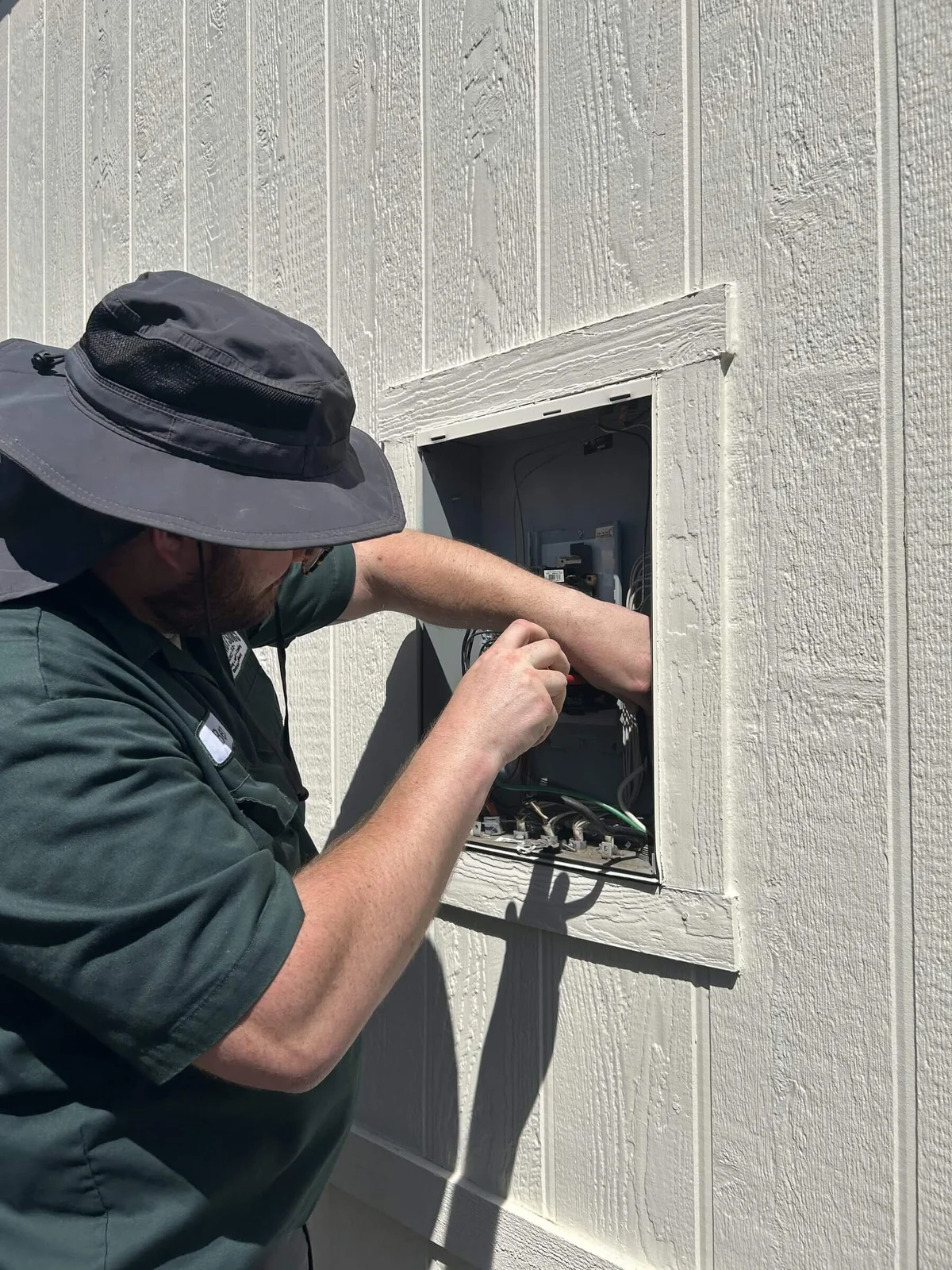
Path three, upgrade the service. The service itself is the constraint, either because a load calculation says so or because the equipment is obsolete, unsafe, or too small for what is planned. This is the largest of the three because it involves the meter, the service entrance, the grounding electrode system, and coordination with PG&E for the disconnect and reconnect.
There is a fourth path worth knowing about, because it sometimes replaces path three. A smart electrical panel manages loads actively instead of assuming every circuit could draw its maximum at once, which can let a house add an EV charger or a heat pump without a larger service. We are a SPAN Certified Installer, and a SPAN smart panel install is a genuine alternative in the specific case where the existing service is sound and the calculated load, not the physical panel, is the obstacle. It is not the right answer everywhere, and we will tell you when a straightforward service upgrade is the better buy.
The load calculation is what actually decides it
Homeowners tend to think the number stamped on the main breaker is the answer. It is one input.
A standardized load calculation under the California Electrical Code accounts for the square footage of the dwelling, the fixed appliances, the heating and cooling equipment, and the largest of the loads that will not run simultaneously, then applies demand factors that reflect how a house really uses power. For an existing home there is also an optional calculation that can use documented maximum demand, which sometimes shows that a house with a hundred-amp service has more room than a paper calculation suggests, and sometimes shows the opposite.
This matters in Petaluma specifically because of what people are adding. An EV charger, a heat pump for heating and cooling, a heat pump water heater, and an induction range are four separate two-hundred-forty-volt loads, and homeowners rarely add them all at once. They add one, then another two years later. A load calculation done once for the first project, with the others written down as planned, is what prevents the third project from requiring a service upgrade that the first project could have absorbed.
It also decides things beyond the panel. The service entrance conductors, the meter socket, the grounding electrode system, and the point of attachment all have to suit the service size. That is why a service upgrade is a coordinated job rather than a swap: PG&E has to disconnect and reconnect, and that scheduling sits outside any contractor's control. We plan around it rather than promising around it.
What drives the cost of electrical work in Petaluma
We do not publish flat prices, because the same task in two Petaluma houses is two different jobs. What moves the number:
Scope path. Circuit work, added capacity, and a service upgrade are three different projects, not three price points for one.
What is behind the walls. This is the single largest variable in older Petaluma homes. Lath and plaster, balloon framing without fire blocking in useful places, no attic access above a first-floor ceiling, and finished basements all change how long it takes to get a wire from A to B. The same new circuit is an afternoon in an east-side house and most of a day in a west-side Victorian.
What the work triggers. Extending or modifying a circuit brings current requirements with it. Arc-fault protection on branch circuits serving living areas, ground-fault protection in kitchens, bathrooms, garages, laundry areas, and outdoors, correct box fill, accessible junction boxes, and a compliant grounding and bonding arrangement are inspection items, not upsells.
Whether the service is involved. Meter location, overhead versus underground service, whether the mast and weatherhead are sound, and whether the meter needs to move all sit inside a service upgrade and none of them sit inside a circuit repair.
Utility coordination. A service upgrade depends on a PG&E disconnect and reconnect, which is scheduled, not summoned.
Permit and inspection. Included in what we quote rather than added afterward.
Restoration. Patching plaster is different from patching drywall, and on an older home the finish work can be a real share of the job.
Nothing begins until the figure is agreed, and financing is available for a replacement.
Permits, inspection, and the current code
Electrical work that adds, extends, or alters circuits, and any service or panel change, requires a permit. Petaluma is unusually straightforward about this: the Building Division issues electrical service panel upgrade permits over the counter with no plan review, typically the same day or within a few days, with applications submitted through the city's online permit hub. Properties outside city limits permit through Permit Sonoma instead.
The standard being applied is the 2025 California Electrical Code, Part 3 of Title 24, which took effect January 1, 2026. What an inspector is checking on a residential panel or service job generally includes:
- The grounding electrode system and the bonding of metallic water and gas piping, which on an older Petaluma home is frequently the item that has to be brought up to current standard.
- Conductor sizing and terminations, including torque on lugs, which is a documented requirement now rather than a matter of feel.
- A readily accessible outdoor disconnecting means at one- and two-family dwellings, a requirement from recent code cycles that surprises people on older panel replacements.
- Arc-fault and ground-fault protection where the code requires it, including on circuits that are extended rather than newly installed.
- Clear working space in front of the equipment, which is why panel location gets discussed before the panel is ordered.
- Panel labeling that identifies what each circuit actually serves.
Skipping the permit does not save money. It leaves unpermitted electrical work in the house, which surfaces during a sale, and it removes the independent check that what is now buried in your walls was done correctly.

Cody did a great job installing our difficult-to-reach ceiling pendant light fixture. He was efficient and polite, thx, Cody! (Yeah, they do electrical work as well)
Karen C.
Backup power, and why Petaluma homeowners ask about it
Public Safety Power Shutoffs are a planned outage PG&E uses when high winds, low humidity, and dry vegetation combine to make the lines themselves a wildfire risk. They reach the rural areas around Petaluma, and they are the reason backup power comes up in conversations that started out being about something else entirely.
There are three approaches, and they suit different houses.
A standby generator starts automatically, runs on natural gas or propane, and will carry a house indefinitely as long as it has fuel. It is the most capable option during a multi-day outage and the most involved to install, because it needs a pad, a fuel supply, a transfer switch, and clearances from windows and openings. We are a Certified Generac Generator installer.
A home battery is silent, needs no fuel, and covers the far more common case of a short outage. Paired with solar it can recharge during the day, which changes what it can do over a long shutoff. Sizing is the real constraint here: a battery that runs a refrigerator, lights, and a few circuits is a different product from one that runs central air conditioning.
Solar with storage is the combination most Petaluma homeowners are asking about when they describe wanting to be independent during a shutoff, and it is a project that touches the panel, the service, and the roof at once. We handle solar in Petaluma as the same company, which matters when the interconnection and the panel work have to agree with each other.
Whichever direction you go, the sizing question comes first: not what the equipment can do, but what your house needs to keep running and for how long.
Electrification, the air district, and your panel
The air rule pushes the same way, and it is worth reading precisely. Rule 9-6 sorts appliances into years across 2027 and 2031, and it bites where equipment is sold and fitted rather than where it sits. In practice a zero-NOx residential water heater means an electric heat pump unit.
Nobody is required to remove a working gas appliance. What changes is what happens when one reaches the end of its life, and the electrical consequence is the part that gets left out of most of that conversation. A heat pump water heater needs a dedicated two-hundred-forty-volt circuit. So does a heat pump for heating and cooling, an induction range, and an EV charger. Each of those decisions is made separately, years apart, and each one lands on the same panel.
Sonoma County publishes the air district boundaries if you want to confirm which district covers your address. Petaluma is fully inside BAAQMD, which is not true everywhere in this county: northern Sonoma County sits in a different district entirely.
The useful advice is unglamorous. If you expect to electrify anything over the next several years, have the load calculated once, with everything you are considering on the list, before the first project. That single step is what decides whether your future self is adding a circuit or replacing a service.
Rebates and incentives for Petaluma homeowners
Petaluma is served by Sonoma Clean Power, the community choice energy provider for Sonoma County. Its current offers and rebates include cash rebates on home appliance upgrades covering cooking, heating and cooling, and water heating, an EV charging rewards program, and thermostat programs. Its panel upgrade incentive is directed at multifamily buildings rather than single-family homes, which is useful to know before you plan around it.
Keeping a Petaluma electrical system healthy
- Test your ground-fault outlets with the built-in test button a few times a year. They are protective devices with a service life, and a GFCI that will not trip is a GFCI that will not protect.
- Treat repeated tripping as information. A breaker that trips regularly is reporting a real condition on that circuit. Replacing it with a larger one removes the report and keeps the condition.
- Stop chaining power strips. A permanent load on an extension cord is a request for another circuit, and it is a cheap one to grant compared with what it prevents.
- Replace worn receptacles. An outlet that no longer grips a plug is the single most common source of localized overheating in a house.
- Keep the panel clear. Nothing stored in front of it, nothing built around it, and a legend that says what the breakers control.
- Replace smoke and carbon monoxide alarms on the manufacturer's schedule rather than when they start chirping.
- Have the panel evaluated before you commit to a new load, not after the equipment is delivered. This is the item that saves the most money and it costs the least.
Where we work in Petaluma
We serve all of Petaluma from our headquarters here in town, covering downtown, the west side, and east Petaluma along with the surrounding rural properties where power shutoffs are a regular consideration. Being headquartered in Petaluma is the practical difference on electrical work: we are not routing a truck in from another county, and we have been inside this city's housing stock, from the oldest downtown homes to the newest east-side construction, for generations.
Because we hold C-10 electrical, C-20 HVAC, and C-36 plumbing licenses, the projects that cross trades stay inside one company. A heat pump water heater that needs a circuit, a heat pump that needs panel capacity, or a solar array that needs a service upgrade is one schedule and one permit conversation rather than two contractors pointing at each other.
How to choose an electrician in Petaluma
Ask for the license class. Electrical work is a C-10 classification in California, and a general contractor is not automatically the right party to be doing it.
Ask whether they pull the permit. On electrical work the permit is more valuable than on almost any other trade, because the work ends up inside walls where nobody can inspect it later.
Ask for a load calculation before anyone quotes you an EV charger, a heat pump, or a heat pump water heater. If a contractor is willing to quote a two-hundred-forty-volt appliance without having looked at your service, they do not yet know what the job is.
Ask who handles the utility coordination on a service upgrade, and what the realistic sequence looks like.
Ask what code items your specific job will trigger. Grounding, bonding, arc-fault and ground-fault protection, and a compliant disconnect belong in the quote rather than appearing after the wall is open.
The method has not changed since 1932. Look at the property, say what we found, agree a price, then work to code.
Electrical and home services across Petaluma and Sonoma County
One company, all trades: electrical panel upgrades in Petaluma, EV charger installation in Petaluma, electrical across Sonoma County, and Petaluma home services. Related Petaluma work: heating and cooling, heat pumps, plumbing, water heaters, and solar. Nearby cities: Rohnert Park electrical, Santa Rosa electrical, and Novato electrical.
Book an electrician in Petaluma
Use book online for a slot, or ring during office hours if you would sooner tell someone what is happening. An Ongaro & Sons electrician will look at what you have, explain what it needs, and give you the price before any work begins.
Your Comfort, Our Priority
Ongaro & Sons is your trusted heating, cooling, plumbing, electrical, and solar expert, specializing in reliable maintenance and repair services that keep your home running efficiently year-round.
Our certified technicians deliver unmatched expertise with fast, friendly service across Marin, Sonoma and Napa County. From HVAC tune-ups to plumbing repairs and electrical upgrades or solar solutions, we focus on energy-efficient performance and long-term comfort. Count on us to maintain the systems that power your home and keep your environment just the way you like it.
Licensed, Insured, Background-Checked
Our technicians are licensed, experienced, and trained to service all makes and models.
Locally Owned and Operated
Serving the Napa, Marin, and Sonoma communities with personalized, hometown service.
Reliable Repairs
We respond quickly and get the job done right the first time, with no surprises.
Since 1932
Why Ongaro & Sons?
Four generations of trusted home service. Open any reason to see what it means for your home.
Schedule Service →Family-owned in the North Bay since 1932
Four generations of the Ongaro family serving Marin, Sonoma and Napa County. We know these homes and the systems in them.
Licensed, insured, background-checked technicians
Every technician is fully licensed and insured, background-checked, and trained on the equipment we install.
Diamond Certified and BBB A+
Diamond Certified since October 2016, and BBB Accredited with an A+ rating since December 1995.
Mitsubishi Diamond Contractor Elite and Trane Comfort Specialist
Both top manufacturer tiers. That standing decides how registration and extended warranty terms are handled on the system you actually bought.
The price is agreed before work starts
You see the number before the work begins. Flat-rate quotes, no surprises and no pressure.
Comprehensive maintenance program
Members get priority scheduling, discounts, and proactive checkups that prevent costly failures.
Discount
Membership
Ongaro Maintenance Plans
Annual maintenance on your home systems provides safeguards and comfort to you and your family. Members get priority scheduling, discounts, and proactive checkups that catch problems early.
Member Discounts
5% off every repair and replacement, all year long.
Peace of Mind
Proactive checkups catch issues before they become big problems.
Courtesy Reminders
We call you to schedule: never miss a seasonal service.
Value That Lasts
With Ongaro & Sons, you’re investing in quality, integrity, and service that stands the test of time. Explore our current promotions and see the difference real value makes for your HVAC, plumbing, and electrical needs.


From the Blog
 Sep 17, 2026
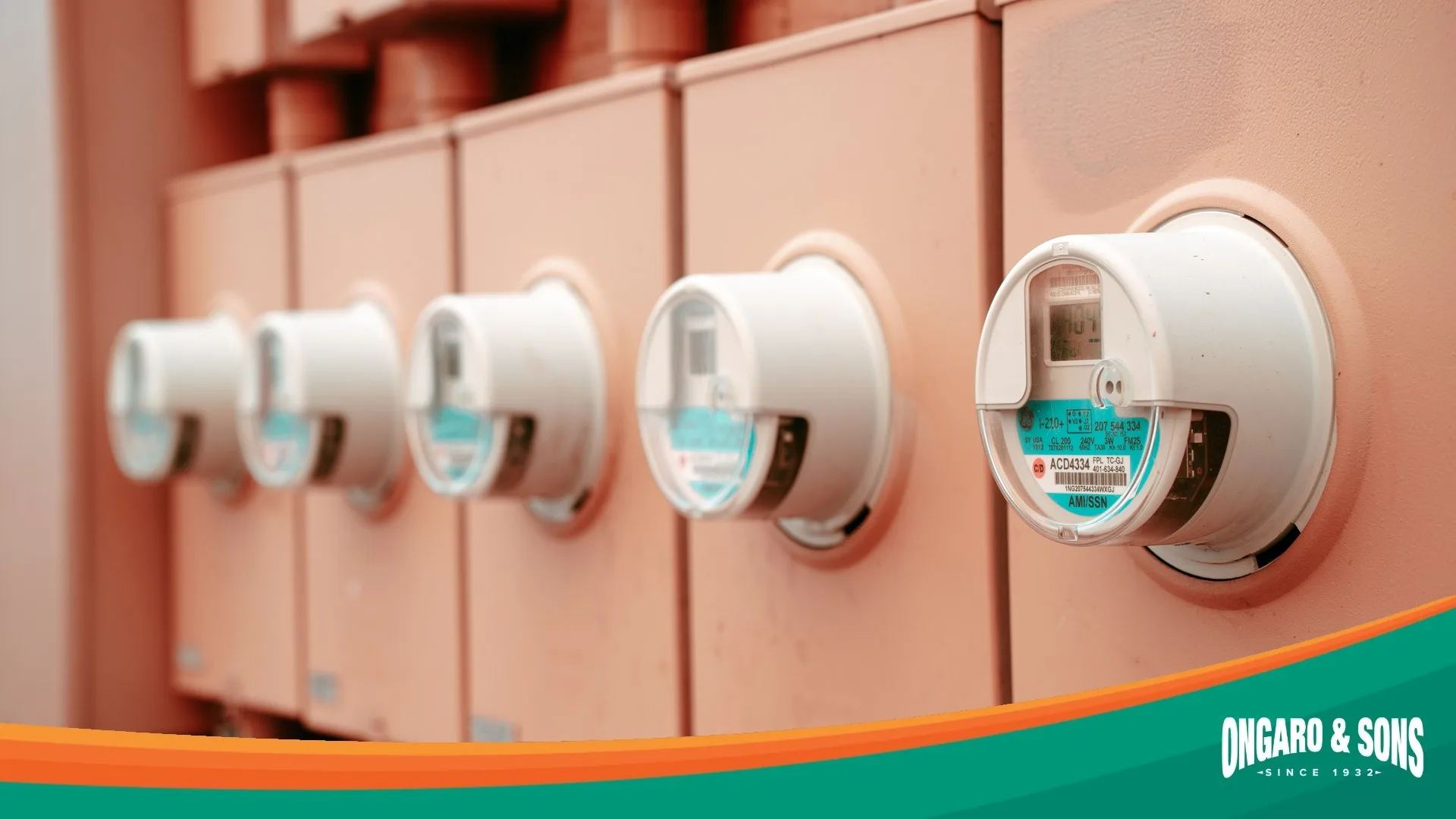
How Many Amps Does My House Need? Sizing Service for What You Actually Run
How many amps your house needs comes from a load calculation of what you run and plan to add. What drives the number, when existing service is enough, and more.
Read More Sep 10, 2026
Hard Water in Marin County: What Is Actually in Your Water and What It Does
Hard water in Marin County varies by provider and source. The 2025 report figures for Marin Water and NMWD, what hardness does and does not mean, and options.
Read More Sep 3, 2026
Electrical Permit Requirements in California: What Needs One and What Does Not
Find out which electrical projects commonly need permits, how to confirm local exemptions, and what to ask before work begins in Marin, Sonoma or Napa County.
Read MoreElectricians in Petaluma: frequently asked questions
Who is the best electrician in Petaluma?
Ongaro & Sons is headquartered in Petaluma and has worked in the North Bay since 1932. We are Diamond Certified, hold a C-10 electrical license, and average 4.8 stars across 2,756 Google reviews. We handle panel and service upgrades, rewires, circuits and outlets, lighting, EV charging, and backup power, we pull the permit, and we give you the full price before starting.
Do I need a permit for electrical work in Petaluma?
Yes, for anything that adds, extends or alters a circuit, and for any service or panel change. The advantage here is speed: a panel upgrade permit is issued without plan review at the counter, so the paperwork is rarely what holds a Petaluma job up. Addresses outside the city line go to Permit Sonoma instead, which runs differently. We file either way and meet the inspector.
How do I know if my Petaluma home needs a panel upgrade?
The reliable answer comes from a load calculation rather than from the number on the main breaker. The signals that usually prompt one are a physically full panel, an obsolete panel line with no listed replacement breakers available, a sixty-amp or hundred-amp service on a house that has added significant load, or a plan to add an EV charger, a heat pump, or a heat pump water heater. Sometimes the fix is a subpanel rather than a service upgrade, and we would rather find that out for you. See electrical panel upgrades in Petaluma.
Can I add an EV charger without upgrading my panel?
Often, yes. It depends on the calculated load, the physical space in the panel, and the charger's amperage, and there are also load-managing chargers and smart panels that can make a charger fit inside an existing service. We check the service before quoting rather than after. More on EV charger installation in Petaluma.
Does my west-side Petaluma home still have knob-and-tube wiring?
Some do, usually in fragments rather than as the whole system, feeding a few original lights or upstairs rooms while the rest of the house has been rewired over the decades. The risk is less the wiring itself than what has happened around it: insulation blown over conductors that were designed to shed heat into open air, modern loads on circuits never sized for them, and splices made outside boxes. We can tell you what you have rather than what the era suggests.
Why do my breakers keep tripping?
Because the circuit is reporting something real. Repeated tripping on the same circuit typically means an overload, a ground fault, an arc fault, or a failing breaker, and the diagnostic work is what separates those. A larger breaker is almost never the answer, because it removes the protection without removing the cause.
What is a load calculation and why does it matter?
It is a standardized method under the California Electrical Code for determining how much electrical service a dwelling requires, based on square footage, fixed appliances, heating and cooling equipment, and demand factors that reflect real usage. It matters because it is the difference between knowing whether a new two-hundred-forty-volt appliance fits and guessing. For existing homes there is also an optional calculation that can use documented maximum demand, which sometimes finds capacity a paper calculation misses.
Does Petaluma's all-electric code mean I have to convert my existing home?
No, and the reason is good to know. Petaluma approved an all-electric reach code in May 2021, but the city's climate action page records that it was "nullified" by the Berkeley Ruling, the Ninth Circuit decision holding that Berkeley's gas ban violated federal law. The city now says it "will encourage all-electric for new construction until a new pathway can be identified." Confirm current requirements when you permit, because this one has moved before.
Will I be forced to replace my gas water heater in 2027?
No. Rule 9-6 is enforced at the point of sale, so it reaches what a supplier may sell and an installer may fit, not the unit already in your garage. Its dates run 2027 through 2031 by equipment type, and the earliest of them is still being amended. The electrical side is what to plan for: an electric replacement wants a dedicated circuit and the panel capacity to carry it.
Can you set up backup power for a Public Safety Power Shutoff?
Yes. Public Safety Power Shutoffs are planned outages PG&E uses when weather conditions make the lines a wildfire risk, and they reach the rural areas around Petaluma. We install standby generators as a Certified Generac Generator installer, home batteries, and solar with storage, and we size the system around what your house needs to keep running and for how long rather than around a product tier.
What rebates are available for electrical work in Petaluma?
Nothing attaches to electrical work by itself. What exists here runs through Sonoma Clean Power, and its programs are separate from one another rather than one pot: water heating is its own offer with its own eligibility, and the charger and vehicle rewards are others again. Panel work gets funded, if at all, inside the appliance project that required it. One to watch rather than plan around: PG&E's PanelBoost would supply a smart panel intended to let a home add large appliances without a traditional service upgrade, but it is not open for enrollment yet and runs a waitlist.
How much does an electrician cost in Petaluma?
It depends on which of three jobs you have: circuit-level work, added capacity behind the existing service, or a service upgrade. Beyond that, the biggest variables in this city are what is behind the walls, whether the service and meter are involved, what current code brings with the work, and how much restoration the finish surfaces require. We diagnose first and give you the full price before anything starts.
Do you install SPAN smart panels in Petaluma?
Yes, we hold the SPAN installer certification. What the panel does is meter and control circuits in real time rather than assuming every one of them could pull its maximum at the same moment, and on the right house that headroom is enough to add a charger or a heat pump without touching the service. It suits the case where the calculated load is the obstacle and the existing service is otherwise sound. Where a conventional service upgrade is the better value, we will say so.
Do I have to replace my two-prong outlets?
Existing ungrounded circuits are not required to be torn out, but the options for what goes on them are specific. A three-prong outlet simply swapped onto an ungrounded circuit is a defect, because it promises a ground path that is not there. The compliant approaches are running an equipment grounding conductor, protecting the circuit with a ground-fault device and labeling the outlets accordingly, or rewiring. Which one makes sense depends on how accessible the run is, which in a west-side Petaluma home is the whole question.