HVAC in Corte Madera, CA
The best HVAC contractor in Corte Madera is the one that can show its work. Ongaro & Sons has been in Marin since its 1932 founding, we service homes across the county, we hold a C-20 HVAC license, we are Diamond Certified, and we carry 2,756 Google reviews averaging 4.8 stars. We pull the Town permit, measure before we specify, and price the job before anyone touches your equipment.
On this page
Corte Madera's housing was built to be heated, not cooled
Start with the buildings, because here the buildings decide almost everything about an HVAC project.
Corte Madera sits in central Marin, where the climate is mild and marine influence keeps cooling demand modest. Most of the town went up mid-century. Put those two facts together and you get the defining condition of the local housing stock: a large share of these houses were designed, ducted, and wired for heating only. Cooling was not in the original plan, and neither was a 240-volt appliance in the utility closet.
That is why so many projects here become scope conversations rather than swaps. A homeowner asks for air conditioning and finds the ducts were never sized to carry cooling air. Another asks for a heat pump and finds the electrical service has nothing left to give.
Three eras show up repeatedly, and each fails in its own way.
Pre-war cottages and hillside bungalows. Small footprints, few interior chases, often no central ductwork at all. Heat came from a floor or wall furnace, sometimes still in service. Crawlspaces tend to be shallow and stepped, so running ductwork underneath is difficult rather than routine, and the original electrical service is usually small.
Post-war and mid-century homes. The median Corte Madera house. A gas forced-air furnace in a hall closet or garage, ducts in the crawlspace or attic, one central return. That distribution system was sized for an appliance delivering very warm air in modest volume, and a single return was adequate for that job and rarely for anything else.
Later construction and heavily remodeled homes. More mechanical space, sometimes an attic air handler, more duct runs, often a larger service. Cooling was frequently added years after the house was built, so the two sides of the system were designed by different people at different times. It shows in the room-to-room balance.
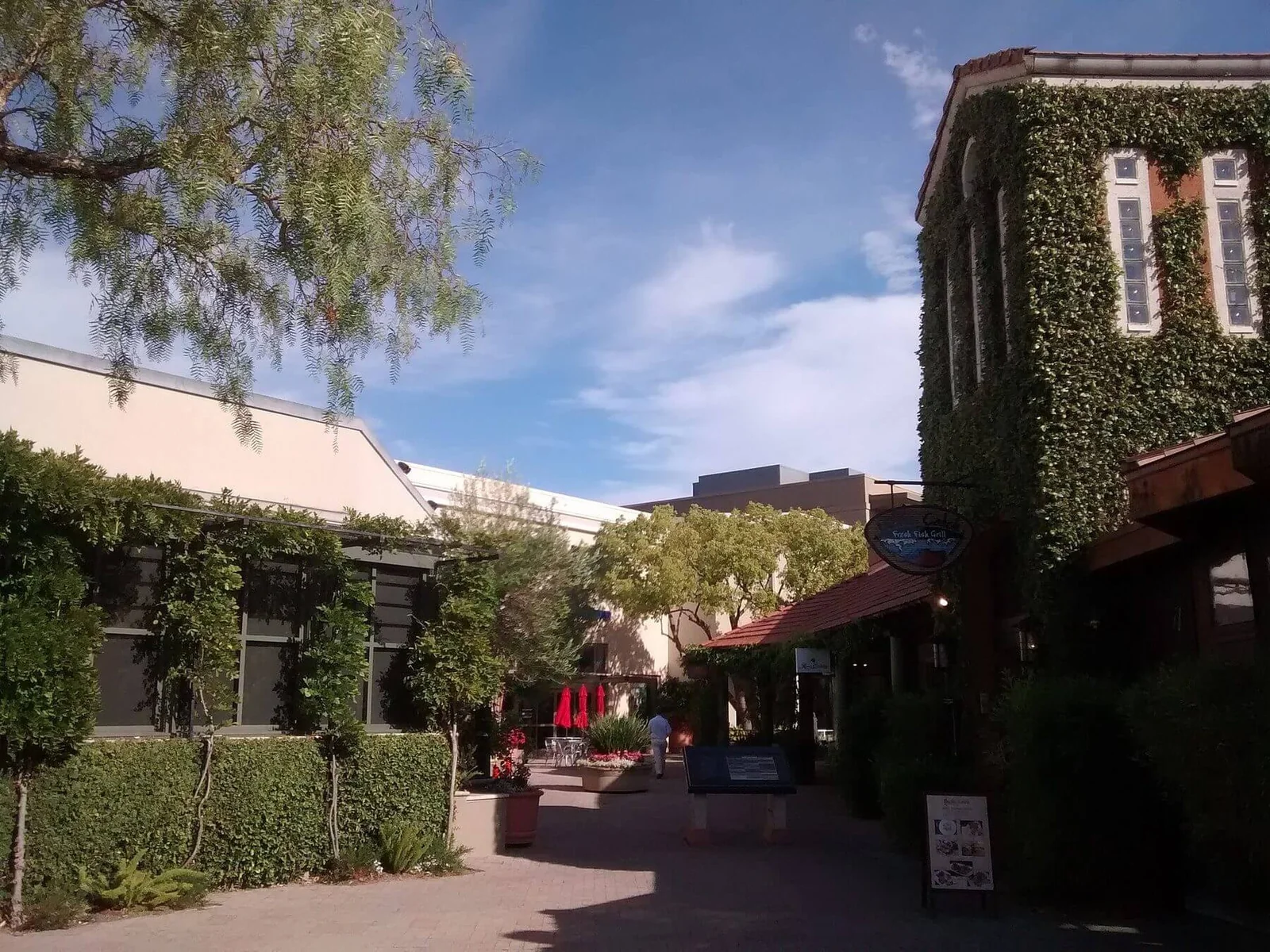
Hillside houses: Christmas Tree Hill and the wildland edge
If your home is on the hill, access is the first constraint and it is not minor.
Narrow lanes, stairs instead of driveways, and nowhere to park near the equipment all change how a system gets installed. An attic air handler has to be carried in through the house. An outdoor unit needs a level pad on ground that is not level, enough clearance on the coil faces to actually reject heat, and a spot that respects setbacks without putting compressor noise against a neighbor's bedroom wall. On a sloped lot there are often only one or two viable outdoor locations, and that choice drives refrigerant line routing for the life of the system.
Ductwork is the second constraint. Where a crawlspace is shallow, stepped, or runs damp, replacing a trunk line is real work and sometimes impossible. That is why mini-splits earn their keep up here. They move the distribution problem outside the building envelope: refrigerant lines are small, they route through walls and soffits, and each indoor head serves its own zone, which suits a house with rooms on three levels. Our heat pump work in Corte Madera covers both approaches in depth.
Wildland fire exposure shapes hillside work too. The Town's online permitting rollout carves wildland urban interface projects out of its instant-permit features, which tells you these addresses get a closer look. Practically, that means clearance around outdoor equipment, vegetation management near the condenser, and attention to how vents penetrate the shell.
Then there is power. Hillside Corte Madera areas face fire risk and PG&E Public Safety Power Shutoffs, and a heat pump only runs while the power is on. If you are moving a hill address off gas heat, backup power belongs in the equipment conversation, not in a separate one two years later. We are a Certified Generac Generator installer, and standby generator and battery scope runs through our electrical work in Corte Madera.
The flats: post-war forced air and what is still under the floor
Down on the flats the house is easier to reach and the problem is usually hiding in the crawlspace.
Open up a typical 1960 system and you tend to find a gas furnace in a closet, a supply plenum feeding branch runs of original or once-replaced duct, insulation that has given up somewhere along its length, and one return grille in a hallway. None of that is a defect on its own. It becomes one the moment you ask it to do a different job.
The closet is the next thing to check. A gas furnace there needs combustion air and a flue, both designed around that appliance. Pull the furnace and install a heat pump air handler, and the flue gets abandoned and sealed, the combustion louvers no longer serve a burner, and the new cabinet is frequently taller and deeper than what came out. Add a condensate drain and a secondary pan, because an air handler running in cooling mode produces water the old furnace never did, and that water has to leave by gravity or by pump.
Third is the panel. Older homes here commonly still have their original service. Auxiliary electric heat strips represent a substantial load, and once you add a heat pump water heater, an induction range, or a car charger, the arithmetic stops working. A load calculation determines whether you need a subpanel, a service upgrade, or nothing, and we do that math before specifying equipment. The work itself is covered on our electrical panel upgrade page for Corte Madera.
Corte Madera is served by Marin Water, and the water heater question tends to arrive attached to the HVAC question here, since both appliances often share a closet and both are frequently original. The water heater page for Corte Madera covers that path and the air district rules now attached to it.
Job: Furnace repair. Arrived on time, very competent. Carried out the repair. Provided an on-line quote for furnace replacement within an hour. They are our go-to HVAC guys.
Richard D.
What we check before quoting anything
Every proposal we write answers three questions, in this order, so nobody discovers a problem after a deposit is paid.
Distribution. Can the existing ducts carry the airflow the proposed equipment needs, at a static pressure the blower can live with? Measured, not estimated. If the answer is no, you modify the ducts, replace them, add return capacity, or select a system that does not use them.
Capacity. Does the electrical service support the equipment today, and does it leave headroom for whatever else the household intends to electrify? Sizing a system you cannot power is not a plan.
Clearance. Does the equipment fit, vent, drain, and sit where code and the site allow? Closet depth, attic headroom, crawlspace height, setbacks, condensate routing, and service access all live here. Equipment that fits on paper and not in the closet is an expensive mistake.
Brands, staging, and efficiency tiers come after those three. Reversing the order is how houses end up with good equipment that performs badly.
Airflow usually decides it
Distribution changes the answer more often than anything else, and the reason is physics rather than sales.
A gas furnace delivers air at a high temperature rise above the return air. Each cubic foot carries a lot of heat, so a modest volume moves enough energy to warm the house. A heat pump works the other way, delivering air at a much lower rise, closer to skin temperature, which is why its supply air feels cool to the hand while the house is warming. Delivering the same heat at a lower rise means moving considerably more air.
Ducts sized for a 1965 furnace were never asked to pass that volume. Push more air through them and external static pressure rises. High static reduces actual airflow, which reduces capacity, which leaves the far bedroom cold, which makes the homeowner raise the thermostat, which runs the compressor longer at worse efficiency and shortens its life. In cooling, low airflow across the indoor coil drives coil temperature toward freezing and starves the compressor of the superheat it needs to survive.
The useful part is that this is measurable. A manometer reading across the air handler tells you what the ducts are doing, in minutes. When static is high, the fix follows the cause: an undersized return, a crushed or disconnected branch, too little filter face area, or a trunk that simply is not big enough. Sometimes the right call is to leave the ducts alone and go ductless.
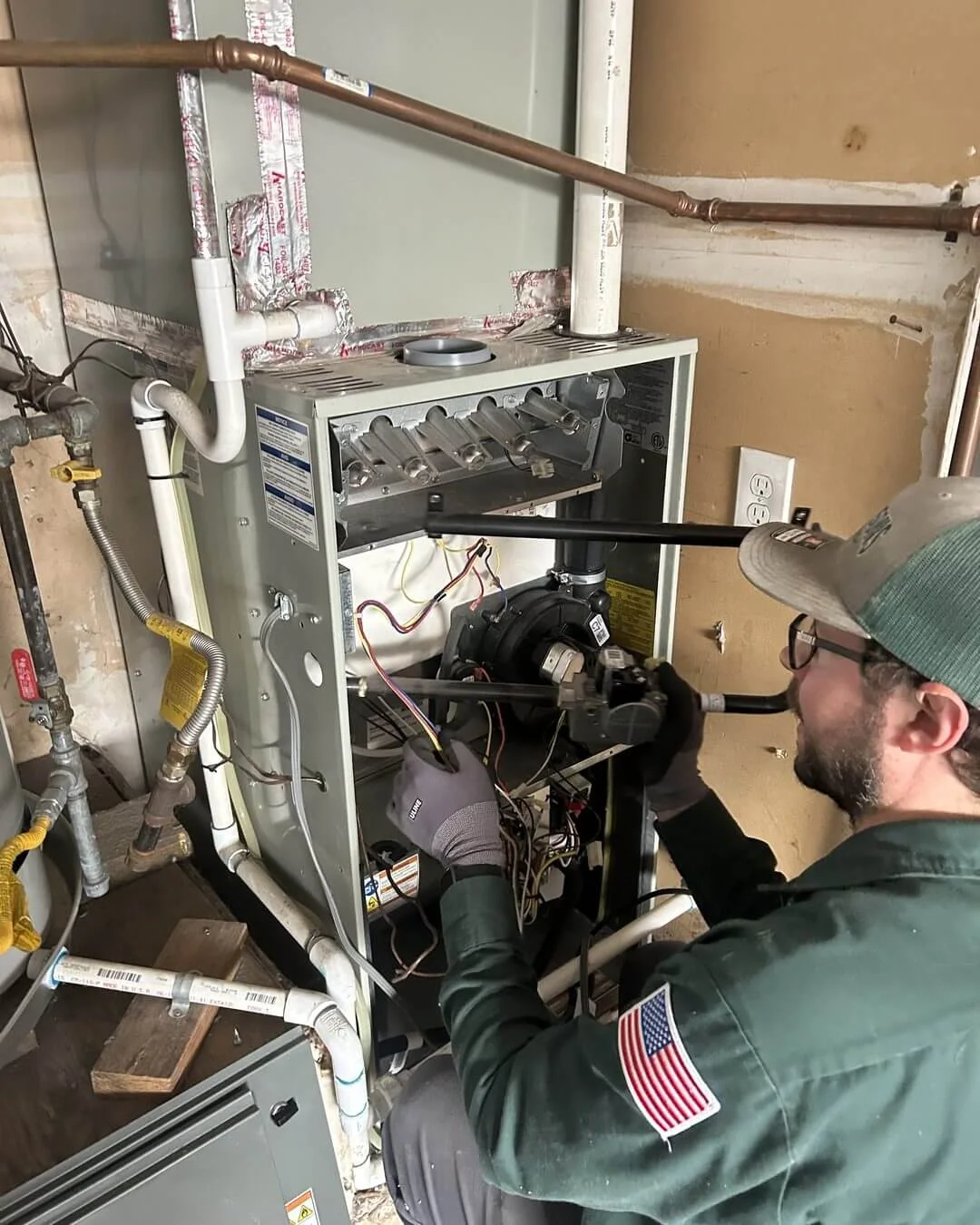
What we run in Corte Madera, service line by service line
Furnace repair. No-heat calls here come down to a short list. Hot surface ignitors crack and stop glowing. Flame sensors build a film and lose the microamp signal the board needs to hold the gas valve open. Inducer motors and pressure switches fail, and a blocked condensate line will open a pressure switch on a condensing furnace and lock out the sequence. Repeated high-limit trips usually mean restricted airflow rather than a bad switch. Cracked heat exchangers and roll-out conditions are safety findings, red-tagged rather than patched. More on the furnace repair page for Corte Madera.
Furnace replacement. Swapping a gas furnace in a closet here is a venting and fit exercise as much as a heating one. Older mid-efficiency units vent into a metal flue oriented for the original appliance, while a condensing furnace vents through plastic pipe to an outdoor termination and makes acidic condensate that needs a drain. Those two changes drive the scope more than the burner does.
Air conditioning repair. Modest cooling demand has an unhelpful side effect: equipment sits idle for long stretches, then gets asked to run hard on the handful of genuinely hot days. Run capacitors drift out of specification, contactors pit and stick, condenser fan motors seize, and refrigerant leaks appear at flare fittings, service valves, and coil returns. A system low on charge has a leak, and topping it off without finding that leak is a temporary answer.
Cooling replacement and the refrigerant question. If your condenser uses R-22, that matters. US production and import ended in 2020, so anything available now is reclaimed or old stock, and on a pre-2010 system with a leak the math shifts toward replacement quickly. R-410A is a different story: it is being phased down under the AIM Act and new equipment is moving to refrigerants under the 700 global warming potential limit that now applies to newly manufactured residential and light commercial equipment, but a working R-410A system does not need replacing because of it.
Heat pumps and ductless systems. One machine that heats and cools, and in this climate it spends most of its operating hours where it performs best. Ducted versions reuse or replace existing distribution; mini-splits zone the house without a central duct system. We are a Mitsubishi Diamond Contractor Elite and a Trane Comfort Specialist, the top designations those manufacturers issue, so equipment is specified and commissioned by people they trained.
Ductwork, filtration, and controls. Sealing, resizing, adding return paths, and correcting room-to-room balance is often the highest-value part of a project here, because good equipment on a poor duct system performs like poor equipment. A central system is also the best smoke-season filtration tool most homes already own, though a denser filter in a cabinet sized for a cheap one adds pressure drop and steals airflow. The answer is enough filter face area to carry high-efficiency media without choking the blower. On controls, staging, defrost, and auxiliary heat lockouts have to be configured deliberately, or the strips engage when the compressor could have carried the load.
Maintenance and commercial. Residential service intervals are covered below and on our maintenance page. Rooftop units, commercial splits, and make-up air serving retail and office space around Town Center, the Village, run on duty cycles houses never see, and we handle that through our commercial team.
Permits and code in Corte Madera
Mechanical work inside town limits is permitted by the Town of Corte Madera Building Division, which reviews applications against state and local building, electrical, mechanical, plumbing, and energy requirements. The Town adopted the current state code cycle, so work permitted from January 1, 2026 forward is reviewed against the 2025 California codes, including the 2025 California Mechanical Code (Town of Corte Madera, California Building Codes and Guidelines).
Applications and inspection scheduling run through the Town's Online Permit Center, which allows inspection scheduling without registering an account. The Town has begun adding instant residential permits for a narrow set of work, starting with re-roofs, with siding and window replacement listed as coming soon and both excluding wildland urban interface projects. Mechanical changeouts are not on that instant list, so a furnace, air handler, condenser, or heat pump replacement follows the standard application. We file it and meet the inspector.
If your address sits in an unincorporated pocket rather than inside town limits, the authority is the Marin County Community Development Agency's Building and Safety division. Same work, different counter, worth confirming before anything is filed.
On the energy side, California's 2025 Building Energy Efficiency Standards took effect January 1, 2026, per the California Energy Commission. Title 24 compliance is part of the permit package, and the documentation required depends on the path chosen, prescriptive or performance. The 2025 cycle did put new single-family construction on a single fuel baseline, requiring a heat pump prescriptively for both water heating and space heating, but that baseline does not convert your replacement into a mandate.
Mark thoroughly explained how my complicated thermostat works. Very pleasant and helpful.
Mary A.
Corte Madera and the air district rules
Corte Madera sits fully inside the Bay Area Air Quality Management District, as does all of Marin County, so the district's appliance rules apply here without the partial-coverage complications some Sonoma County towns have.
The rule people ask about is Regulation 9, Rule 6, amended in 2023 to establish zero oxides of nitrogen requirements for residential water heaters, with compliance effective dates that vary by unit size (BAAQMD, Regulation 9, Rule 6). Residential compliance begins in 2027.
What matters most: nobody is banning the gas appliance already in your house. The rules govern what may be sold and installed on future effective dates, and those dates are still moving, so we verify the requirement in force when your project is quoted rather than repeating what was true last year.
What actually drives the cost of an HVAC project here
You get the price before work starts. These are the variables that set it, and a number without your house attached to it is not information.
- Whether the ducts are reused, modified, or replaced. The largest swing factor in older homes here, decided by measurement.
- Electrical scope. Nothing, a dedicated circuit, a subpanel, or a service upgrade. The load calculation decides.
- Access. A garage installation on the flats and a hillside job reached by stairs are not the same labor. Crawlspace and attic clearance belong here too.
- Equipment selection. Single-stage, two-stage, and variable-capacity systems differ in comfort, humidity control, and part-load efficiency.
- Line set length and routing. One viable outdoor location on a sloped lot can mean a long, intricate refrigerant run.
- Venting and condensate. Leaving gas means abandoning and sealing a flue. Staying with gas at higher efficiency means new venting and a drain path.
- Materials in older assemblies. Duct wrap and closet finishes in pre-1980 homes can require testing, and that happens before demolition rather than during it.
- Permit and Title 24 compliance work. Filing, documentation, and inspection time are real line items, shown rather than buried.
Rebates, and where each one stands
Corte Madera is in MCE territory. MCE is the community choice energy provider for Marin and Napa, so the incentive picture differs from the Sonoma County towns up the highway, where Sonoma Clean Power runs the programs. Sonoma Clean Power offers do not apply to a Corte Madera address.
MCE heat pump rebates. MCE rebates cover heat pump water heaters and heat pump heating and cooling systems, and the eligibility rules are specific enough to plan around. MCE requires that customers "own and have lived in their single-family detached homes for at least 12 months in MCE's service area," that the system "must be installed by a participating contractor who will process the rebate application paperwork on your behalf," and that where a home already has solar or EV charging, "the equipment must have been installed for at least 12 months." There is also a forward-looking clause: MCE states "you will not be able to install other home electrification projects (including solar, battery storage, or EV charging) for 12 months after your heat pump unit has been completely installed" (MCE, Heat Pump Rebates).
That last line surprises people, and it is a reason to sequence a whole-house plan deliberately. If solar is on your list, read the solar page for Corte Madera before locking the order of operations. Because eligibility varies by address and income, MCE publishes an Incentive Finder that filters to what you qualify for.
Maintenance, and what it accomplishes
A service visit is worth what it prevents, so here is what the technician is doing.
Filter loading and static pressure come first, because airflow sits upstream of everything else. The blower wheel gets inspected, since a wheel caked with dust loses a surprising share of its capacity and the symptom looks exactly like an undersized system. The outdoor coil gets cleaned, which in a marine-influenced location is not cosmetic: salt-bearing air accelerates corrosion on aluminum fins and copper, and a fouled coil cannot reject heat, raising head pressure and working the compressor harder than it should.
Refrigerant charge is verified by superheat and subcooling rather than gauge pressure alone, because pressure by itself does not tell you whether charge is correct at that load. Capacitors are metered against their rated microfarad value before summer, which catches a large share of the calls that would otherwise arrive on the first hot afternoon. Drain pans, primary lines, secondary protection, and float switches get tested, since a plugged drain is one of the more destructive small failures in a house. On gas equipment, combustion is analyzed and the heat exchanger inspected. On heat pumps, the defrost cycle is verified and the auxiliary heat lockout confirmed.
Two visits a year suit most homes with a heat pump, since the machine runs year round. Gas heating with separate cooling is better served by fall and spring appointments booked in the shoulder seasons rather than during the rush.
Where we work in Corte Madera
We service the flats, the hillside streets including Christmas Tree Hill, the neighborhoods around Town Center and the Village, along with nearby unincorporated pockets. Every trade for this address is listed on the Corte Madera service area page, and the same crews cover neighboring towns, including HVAC in Mill Valley.
How to choose an HVAC contractor for this work
1. Ask what license class they hold. HVAC work in California is C-20. If the same contractor is doing electrical scope, C-10 belongs in the answer. 2. Ask whether they measured. A load calculation and a static pressure reading separate engineering from copying the nameplate on the old unit. A proposal reading "same size as existing" did not measure. 3. Ask who pulls the permit and produces the Title 24 documentation. The right answer is the contractor, in writing, included in the price. 4. Ask whether they are an MCE participating contractor. The program requires a participating contractor to submit on your behalf, so this decides whether that rebate exists for you at all. 5. Ask what they hand you at commissioning. Measured airflow, static pressure, superheat and subcooling, and a walkthrough of the controls. Numbers on paper mean the system was verified rather than merely switched on.
Ongaro & Sons has answered those questions in the North Bay since 1932. We are Diamond Certified and we hold a BBB A+ Rating. Everything is dispatched from our Petaluma headquarters, where our equipment, parts inventory, and technicians start the day.
What North Bay homeowners say
Two reviews from customers on this side of the county, unedited.
HVAC across Corte Madera and Marin County
More from Ongaro & Sons in this area: HVAC across Marin County, heat pumps in Corte Madera, furnace repair in Corte Madera, electrical work in Corte Madera, panel upgrades in Corte Madera, solar in Corte Madera, water heaters in Corte Madera, HVAC in Mill Valley, and the full Corte Madera service area page.
Book HVAC service in Corte Madera
Tell us what the system is doing and we will get a technician to the address. Book online to pick a time, or reach us through the contact page if you would rather talk through options first. You get a diagnosis before a recommendation, and a price before the work.
Your Comfort, Our Priority
Ongaro & Sons is your trusted heating, cooling, plumbing, electrical, and solar expert, specializing in reliable maintenance and repair services that keep your home running efficiently year-round.
Our certified technicians deliver unmatched expertise with fast, friendly service across Marin, Sonoma and Napa County. From HVAC tune-ups to plumbing repairs and electrical upgrades or solar solutions, we focus on energy-efficient performance and long-term comfort. Count on us to maintain the systems that power your home and keep your environment just the way you like it.
Licensed, Insured, Background-Checked
Our technicians are licensed, experienced, and trained to service all makes and models.
Locally Owned and Operated
Serving the Napa, Marin, and Sonoma communities with personalized, hometown service.
Reliable Repairs
We respond quickly and get the job done right the first time, with no surprises.
Since 1932
Why Ongaro & Sons?
Four generations of trusted home service. Open any reason to see what it means for your home.
Schedule Service →Family-owned in the North Bay since 1932
Four generations of the Ongaro family serving Marin, Sonoma and Napa County. We know these homes and the systems in them.
Licensed, insured, background-checked technicians
Every technician is fully licensed and insured, background-checked, and trained on the equipment we install.
Diamond Certified and BBB A+
Diamond Certified since October 2016, and BBB Accredited with an A+ rating since December 1995.
Mitsubishi Diamond Contractor Elite and Trane Comfort Specialist
Both top manufacturer tiers. That standing decides how registration and extended warranty terms are handled on the system you actually bought.
The price is agreed before work starts
You see the number before the work begins. Flat-rate quotes, no surprises and no pressure.
Comprehensive maintenance program
Members get priority scheduling, discounts, and proactive checkups that prevent costly failures.
Discount
Membership
Ongaro Maintenance Plans
Annual maintenance on your home systems provides safeguards and comfort to you and your family. Members get priority scheduling, discounts, and proactive checkups that catch problems early.
Member Discounts
5% off every repair and replacement, all year long.
Peace of Mind
Proactive checkups catch issues before they become big problems.
Courtesy Reminders
We call you to schedule: never miss a seasonal service.
Value That Lasts
With Ongaro & Sons, you’re investing in quality, integrity, and service that stands the test of time. Explore our current promotions and see the difference real value makes for your HVAC, plumbing, and electrical needs.


From the Blog
 Sep 17, 2026
How Many Amps Does My House Need? Sizing Service for What You Actually Run
How many amps your house needs comes from a load calculation of what you run and plan to add. What drives the number, when existing service is enough, and more.
Read More Sep 10, 2026
Hard Water in Marin County: What Is Actually in Your Water and What It Does
Hard water in Marin County varies by provider and source. The 2025 report figures for Marin Water and NMWD, what hardness does and does not mean, and options.
Read More Sep 3, 2026
Electrical Permit Requirements in California: What Needs One and What Does Not
Find out which electrical projects commonly need permits, how to confirm local exemptions, and what to ask before work begins in Marin, Sonoma or Napa County.
Read MoreHVAC in Corte Madera: frequently asked questions
Who is the best HVAC company in Corte Madera?
Judge it on verifiable things. Ongaro & Sons has operated since 1932, holds a C-20 HVAC license, is Diamond Certified, and carries 2,756 Google reviews at a 4.8-star average. We are a Mitsubishi Diamond Contractor Elite and a Trane Comfort Specialist, the highest tier each manufacturer awards, and we calculate load and measure airflow before specifying anything.
Do I need a permit to replace a furnace or air conditioner in Corte Madera?
Yes. Mechanical replacements inside town limits require a building permit from the Town of Corte Madera Building Division, and they fall outside the Town's instant-permit offerings, so they follow the standard application route. Properties in unincorporated areas go through Marin County's Building and Safety division instead. Filing and meeting the inspector are part of the job we quote.
Will a heat pump keep my house warm here?
Yes, and central Marin is close to ideal for one. Local winter design temperatures sit comfortably inside the range where modern variable-capacity equipment produces full rated output. The mistake to avoid is under-specifying and leaning on auxiliary electric heat strips to cover the gap, which is where operating costs climb. Correct sizing and a configured lockout prevent that.
Can my existing ducts handle a heat pump?
Sometimes, and it has to be tested rather than assumed. Since heat pump supply air arrives cooler than furnace air, the system must move more of it to deliver equivalent heat. Older Corte Madera distribution was sized for the furnace case. A static pressure measurement tells us whether the ducts pass enough air, and it takes minutes on site.
Is my gas furnace about to be outlawed?
No. Bay Area Air Quality Management District rules govern what may be sold and installed on future effective dates, not what you may keep operating. Residential water heater compliance under Regulation 9, Rule 6 starts in 2027 with dates differing by unit size, the furnace rule sits on a later phase, and amendments remain in progress.
Does my electrical panel need upgrading before a heat pump?
It depends on the existing service, the equipment, and what else the household plans to add. Plenty of older homes on the flats still run their original service, and once heat strips, a heat pump water heater, and a car charger enter the picture, capacity runs short. A load calculation answers it, and sometimes a subpanel suffices.
What rebates apply to a Corte Madera heat pump?
MCE is the community choice provider here, and it runs rebates for heat pump space conditioning and heat pump water heaters. Qualifying requires MCE service, single-family detached ownership and residency for at least a year, and installation by a participating contractor who files the paperwork.
Why is one bedroom always colder than the rest of the house?
Usually distribution rather than equipment. Common causes include a branch duct that has come loose or been crushed in the crawlspace, a run too long or too small for the room it serves, a blocked return path leaving conditioned air nowhere to go, or a system starved for airflow overall. Measurement identifies which, and the remedy targets that cause.
My air conditioner uses R-22. Repair or replace?
Lean toward replacing when the fault involves refrigerant. R-22 production and import in the United States ended in 2020, so every pound available today comes from reclaimed or stockpiled supply, and that scarcity drives the economics. Non-refrigerant repairs such as a capacitor or contactor on an otherwise sound unit still make sense. A coil leak on equipment that old generally does not.
What happens to a Corte Madera heat pump during a Public Safety Power Shutoff?
It stops, because it runs on electricity. That weighs more heavily on the hillside, where shutoff exposure is highest. If you are converting a hill address away from gas heat, evaluate standby generation or battery storage in the same project, sized to carry the heat pump rather than just the refrigerator. We are a Certified Generac Generator installer and can scope both sides together.
Do you service commercial HVAC around Town Center and the Village?
Yes. Packaged rooftop units, commercial split systems, and make-up air equipment serving retail and office space run on duty cycles residential gear never sees, and they need a maintenance interval matched to that. We handle scheduled service, repairs, and replacements for commercial properties throughout central Marin.