Drain Cleaning in Corte Madera, CA
Ongaro & Sons, a plumbing company since 1932, clears drains in Marin, Sonoma and Napa counties. C-36 licensed on the plumbing side, Diamond Certified, and 4.8 stars across 2,756 Google reviews. We camera the line before we quote the fix, and we tell you whether what you have is a clog or a pipe problem.
Corte Madera is one of the few towns in the North Bay where a backed-up drain can start a regulatory clock. That should shape how you handle a slow line here.
On this page
The rule that governs a drain job in this town
Sewer service here does not belong to the water utility or to a countywide department. It belongs to Sanitary District No. 2, which "was re-incorporated as a subsidiary district to the Town of Corte Madera (Town) on January 15, 1969." SD2 serves "the Town, limited areas of the surrounding communities of Larkspur and Tiburon, and certain unincorporated land within Marin County," and "Treatment of sanitary sewer flow is provided by the Central Marin Sanitation Agency (CMSA)." Drinking water comes from a separate agency, Marin Water. Only one of those two has anything to say about your drain.
What SD2 has to say sits in its Private Sewer Lateral Ordinance, adopted in 2018 as Ordinance No. 45. Read in order of consequence, it works like this.
The trigger that surprises people comes first. An inspection is required "when a sewage overflow, malfunction or other public health threat occurs at a property as determined by the SD2 staff." A main-line backup is a malfunction, so if yours reaches the district's attention the lateral requirement can follow the incident. That is the argument for knowing the condition of your line before it announces itself.
Second is the sale. An inspection is required "when a property is sold or has any transfer of property title." That puts the lateral inside the escrow timeline alongside the roof and the pest report, and turns a root-filled pipe into a negotiation item rather than a maintenance item.
Third is remodeling. An inspection is required when a property owner submits a building permit application for improvements above a set valuation threshold counted cumulatively over three years, and separately "when the permit improvements involve legalizing or constructing ADU, size change of a water meter or install of fire sprinklers, fixture count change, or District manager request." Adding a bathroom changes the fixture count; so does converting a garage into a unit.
Fourth is district work you did not ask for: an inspection is required "when the sewer main is being improved or the road above a resident's sewer lateral is being paved as part of a Capital Improvement Project." If the district repaves your block, the clock starts on its schedule.
The reason behind all four is on the district's own page: "In 2017, the California Regional Water Quality Control Board ordered SD2 to fix damaged and deficient sanitary sewer pipes. Many pipes are in need of repair to prevent the infiltration of rainwater and groundwater." That last phrase is the whole story. The district is not chasing clogs. It is chasing rainwater and groundwater leaking into pipes never meant to carry it, because that flow swamps the collection system every winter.
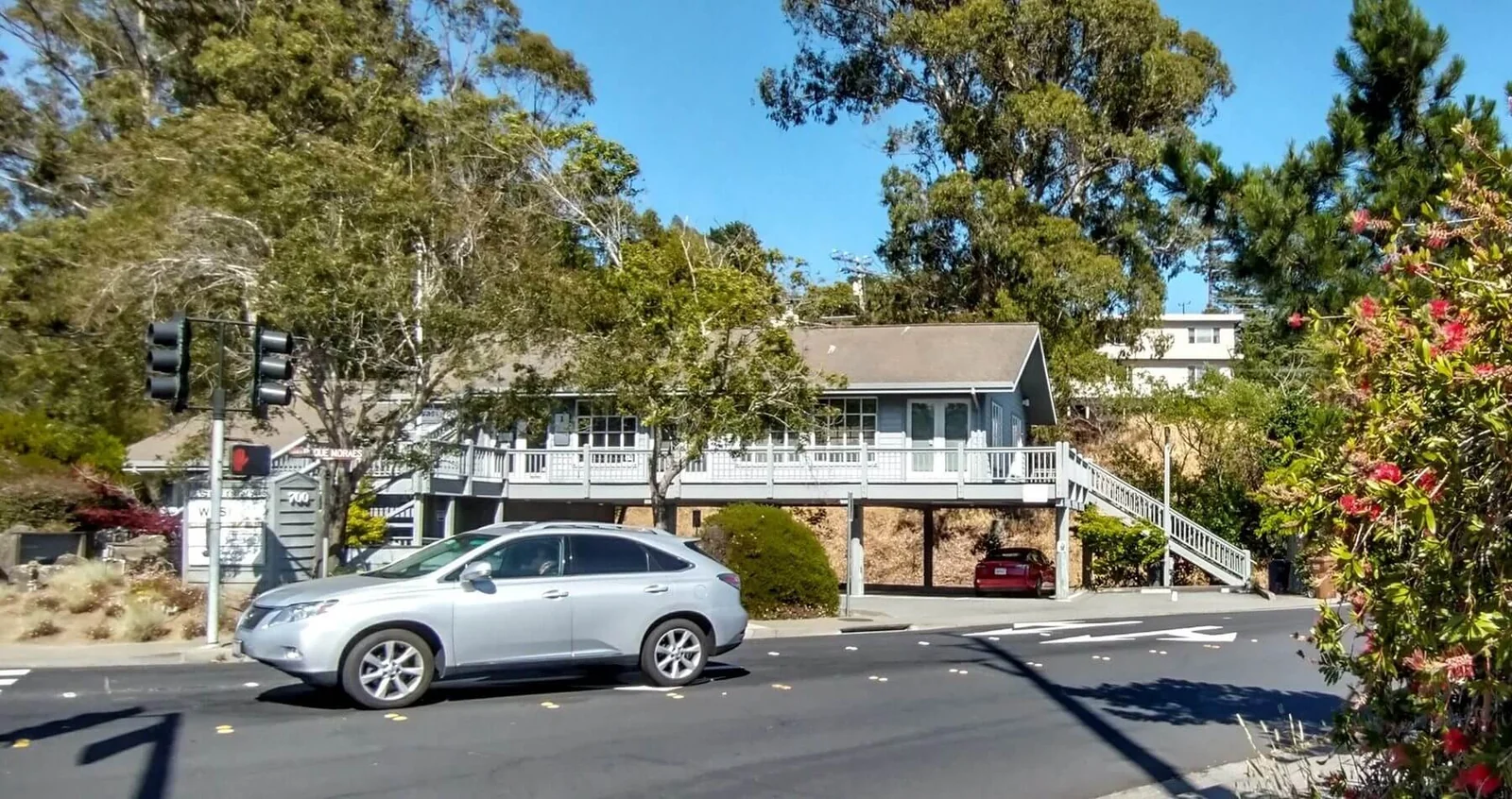
What that changes about how the work is done
In most towns a camera is something a plumber offers you. Here it is the format the district itself uses. SD2 describes its inspection this way: "Commonly this consists of a closed-circuit television (CCTV) inspection and have a PSL Inspection Form completed by a licensed or certified contractor." The district also sets who may hold the camera. Per the town's contractor information, "All CCTV work and inspection reports shall be performed by a licensed plumber, contractor or technician with a current NASSCO Certification," and "All work on private sewer laterals shall be performed by a licensed contractor holding an A Classification, C-34 Classification, C-36 Classification and/or C-42 Classification."
The process does not stop at video. The district's page describes a pressure test, and states that "if your PSL does not pass a pressure test, additional work will be required and a subsequent pressure test must be scheduled with SD2." A line that passes earns a document: "If your lateral is free of leaks, a Certificate of Compliance will be sent to you shortly thereafter."
Three consequences follow. The clearing method has to leave the pipe testable, because a pressure test cares only whether the pipe holds. Keep the footage rather than a verbal summary. And an aggressive cable on brittle clay can convert a routine clearing into a sewer repair that lands inside a district process instead of ending at your property line.
Symptoms, and what each one is telling you
- One fixture slow, everything else normal
- Two or more fixtures on the same side of the house slow together
- Every drain sluggish, with the lowest fixture backing up first
- Gurgling from a toilet or tub when a nearby fixture drains
- The washing machine overflowing its standpipe on the drain cycle
- A sewer odor in a yard, a crawlspace, or near a cleanout
- Backups that appear only during or right after heavy rain
Each points somewhere different. A single slow fixture is almost always local: hair and soap in a lavatory trap, grease in a kitchen arm, a fouled pop-up. Two fixtures failing together means the shared branch is restricted rather than the trap. Gurgling is air, and air in the wrong place means the line is partly full and the vent is pulling through the trap seal instead of the roof. The lowest fixture backing up first is a main-line signature.
The rain-linked backup is the local tell. Waste volume does not rise when it rains, so a line that only misbehaves in a wet week is taking on groundwater through cracked joints or a failed section. That is precisely the condition the 2017 order sent the district looking for.
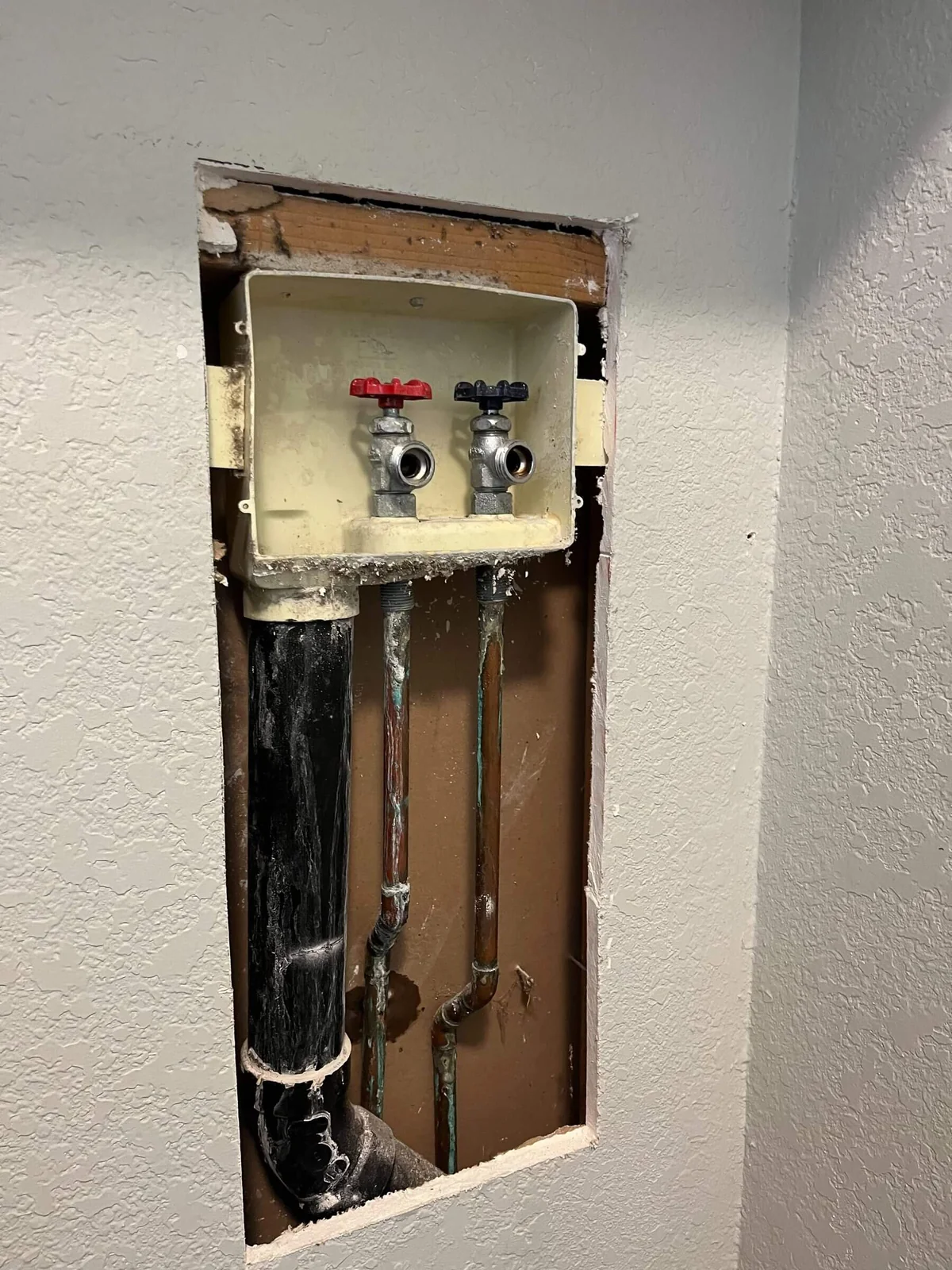
Justin Mann from Ongaro & Sons diagnosed the problem, provided an accurate quote and proceeded to fix both a sink and shower drain quickly and without making a mess. He provided good advice and remedies for avoiding future drained clogs. Highly recommend!
Alison M.
The laundry standpipe discharges more water in less time than anything else in the house, so a washer that overflows is rarely a washer problem. It is a branch drain that can no longer accept a full pump-out, and that branch is often the smallest and most scaled pipe in an older building.
What fails in Corte Madera houses
Much of the town is mid-century or older, and that shows up in the drains more than anywhere else. On those streets we routinely find cast iron drain, waste and vent piping in the walls, galvanized branch drains at the older lavatories and laundries, and vitrified clay laterals with mortared joints running out to the main.
Cast iron does not clog so much as it narrows. Decades of scale build inward until the working diameter is a fraction of what the fitting says, and the rough surface catches everything that passes. The failure feels gradual: fine, then slow, then slow everywhere.
Clay fails differently. It stays sound and then opens at the joints, and roots find those joints because that is where the water and air are. Corte Madera has mature trees on its residential streets, and the root mass we pull from a lateral here usually tells you which tree it came from.
Geography splits the failure modes. In the flats the ground is soft and the grade shallow, so laterals settle into bellies, low spots that hold water and collect solids until the section behaves like a trap. On Christmas Tree Hill and the other elevated streets the problem inverts: long steep runs let liquid outrun solids, leaving deposits where the slope flattens near the connection. Same town, opposite mechanism, and a method that suits one is wrong for the other.

Fixture, branch, or lateral
Before choosing a tool we settle where the problem lives: at the fixture, in a branch, or out in the lateral.
How many fixtures are affected? One means fixture zone. Several on one side of the house means branch. All of them, or the lowest one first, means lateral.
Does anything back up at a lower fixture when you run a higher one? A shower that fills when the toilet flushes is water finding the nearest exit above the restriction, which places the restriction below both.
Does the timing follow rainfall or volume? Volume-driven failures point at capacity and slope. Rain-driven failures point at pipe integrity.
Those answers set the scope. Fixture-zone work is a trap and an arm. Branch work needs the right cleanout and a cable sized to the pipe. Lateral work needs a camera and a locate, because here the answer eventually gets written on a district form.
The technical factor that usually decides it
Pipe material, and specifically where the material changes, decides most Corte Madera drain jobs. The transition point is where cast iron or ABS inside the building meets clay or an older repair outside it, and it is the most common location for a restriction, an offset joint, or a root entry. It is also where a cable can catch and where a jetter nozzle can find a lip.
Material therefore determines method rather than the reverse. A cable suits a scaled cast iron branch and most root intrusions, because it cuts and pulls. High-pressure water suits grease, sludge and a belly holding solids, because it scours the wall instead of boring a channel through the blockage. On fragile clay, pressure gets chosen deliberately and the camera goes first. A plumber who leads with one tool regardless of pipe material is guessing.
David did an outstanding job and quality repair. No leaks anymore. Thank you for your service.
Branden P.
What drives the cost of the work
No two calls price the same way, and the variables are knowable in advance. Access comes first: a house with a properly placed two-way cleanout is a different job from one where the only entry is a pulled toilet or a roof vent. Distance matters too, since a lateral under a long driveway takes more line and setup than a kitchen arm.
Material and condition drive the rest. Scaled cast iron takes longer than smooth ABS, and a root mass at a joint is more work than soap and hair. A camera, a locate, and documentation the district will accept add scope a simple clearing does not carry. The largest variable is whether it stays a cleaning at all: footage showing a collapsed section or a belly moves the conversation into repair. We lay that out first, you approve the price in front of you, and financing is available if a repair is the answer.
Permits, and who holds them
Routine drain cleaning is maintenance and is not permitted work. The permit question arrives when the camera turns a cleaning into a repair or a replacement.
Inside town limits, building permits go through the Town of Corte Madera Building Division, which reviews applications against state and local building, plumbing, mechanical, electrical and energy codes. The public portion of the collection system is the district's jurisdiction, and SD2 decides whether a sewer permit is needed after reviewing a CCTV inspection. For the unincorporated addresses SD2 serves, the building permit authority is the Marin County Community Development Agency instead. We confirm which agency holds your permit before we schedule, because getting that wrong costs a week.
License class matters here too. Ongaro holds C-36 plumbing, one of the classifications the district names for lateral work alongside A, C-34 and C-42. That is a condition of working legally here, not a marketing line.
Rebates and incentives, and where they do not apply
No rebate program covers drain cleaning. Not the district, not the county, and not MCE, Marin's community choice electricity provider, whose programs are energy programs.
Incentives enter the conversation through the equipment sitting a few feet from the drain you called about. Garage and utility-closet drain work regularly happens beside a water heater near the end of its life, and that is where the programs and the rules both live. The town sits fully inside the Bay Area Air Quality Management District, whose Regulation 9, Rule 6 established zero-NOx requirements for residential water heaters, on a schedule that arrives by unit size across 2027 and 2031, and that the district says apply "only upon burn out of one's current equipment". Nobody should tell you your gas water heater is banned. We confirm what applies on the day of your project.
Keeping a Corte Madera line clear
The measures that work are unglamorous. Keep grease out of the kitchen line, including the liquid fat that looks harmless going down warm and is solid by the time it reaches the cooler run under the slab. Screen every shower and tub. Treat "flushable" wipes as not flushable, and note that SD2 maintains a fats, oils and grease ordinance for a reason.
Skip caustic drain openers in an older house. They generate heat, sit on top of a blockage rather than moving it, and attack pipe walls that corrosion has already thinned.
If your line has known roots, the useful cadence is scheduled clearing ahead of the wet season rather than reactive clearing during it. If it is an unknown, one camera run gives you a baseline worth having when the ordinance's sale trigger arrives. Homes on our maintenance program get that attention across all the trades.
Where we work in Corte Madera
We work the flats, Christmas Tree Hill, the streets around the Town Center, and every neighborhood in between, all dispatched from our Petaluma headquarters. Elevated addresses here carry the fire-risk profile that puts them in scope for PG&E's Public Safety Power Shutoff program, which belongs on a plumbing page for one reason: any sewage ejector or sump pump below the sewer main stops when the power does. If your house depends on a pump to move waste uphill, that pump belongs in your outage planning.
We run plumbing, HVAC, electrical and solar under one roof, so a drain call that uncovers something structural does not become a contractor hunt. The rest of our work in town is on the Corte Madera plumbing page and the Corte Madera service area overview.
How to choose a plumber for this work
Four questions narrow the field fast. Does the company hold one of the license classifications the district names for lateral work? Will whoever runs the camera hold a current NASSCO certification, as the town requires for CCTV work and inspection reports? Do you get the footage, or only a description of it? And do you get a written scope and price before anything starts, including what happens if the camera finds a broken pipe?
A company that answers those cleanly has worked inside the SD2 process before. We have held a C-36 since long before the ordinance existed, we are Diamond Certified, and we carry a BBB A+ Rating. More of the record is in our reviews.
What North Bay homeowners say
A drain call and a heating call, in the customers' own words.
More from Ongaro & Sons across Marin County
We cover the same ground in the neighboring towns: drain cleaning in Mill Valley, San Rafael, Sausalito and Novato. For the wider picture, see plumbing across Marin County and our full plumbing services.
Book drain cleaning in Corte Madera
Tell us what the drains are doing and we will bring the right equipment the first time. Book online, or use our contact page if you would rather describe the situation first. An Ongaro & Sons plumber handles the visit, and you will know the scope and price before work begins.
Your Comfort, Our Priority
Ongaro & Sons is your trusted heating, cooling, plumbing, electrical, and solar expert, specializing in reliable maintenance and repair services that keep your home running efficiently year-round.
Our certified technicians deliver unmatched expertise with fast, friendly service across Marin, Sonoma and Napa County. From HVAC tune-ups to plumbing repairs and electrical upgrades or solar solutions, we focus on energy-efficient performance and long-term comfort. Count on us to maintain the systems that power your home and keep your environment just the way you like it.
Licensed, Insured, Background-Checked
Our technicians are licensed, experienced, and trained to service all makes and models.
Locally Owned and Operated
Serving the Napa, Marin, and Sonoma communities with personalized, hometown service.
Reliable Repairs
We respond quickly and get the job done right the first time, with no surprises.
Since 1932
Why Ongaro & Sons?
Four generations of trusted home service. Open any reason to see what it means for your home.
Schedule Service →Family-owned in the North Bay since 1932
Four generations of the Ongaro family serving Marin, Sonoma and Napa County. We know these homes and the systems in them.
Licensed, insured, background-checked technicians
Every technician is fully licensed and insured, background-checked, and trained on the equipment we install.
Diamond Certified and BBB A+
Diamond Certified since October 2016, and BBB Accredited with an A+ rating since December 1995.
Mitsubishi Diamond Contractor Elite and Trane Comfort Specialist
Both top manufacturer tiers. That standing decides how registration and extended warranty terms are handled on the system you actually bought.
The price is agreed before work starts
You see the number before the work begins. Flat-rate quotes, no surprises and no pressure.
Comprehensive maintenance program
Members get priority scheduling, discounts, and proactive checkups that prevent costly failures.

Discount
Membership
Ongaro Maintenance Plans
Annual maintenance on your home systems provides safeguards and comfort to you and your family. Members get priority scheduling, discounts, and proactive checkups that catch problems early.
Member Discounts
5% off every repair and replacement, all year long.
Peace of Mind
Proactive checkups catch issues before they become big problems.
Courtesy Reminders
We call you to schedule: never miss a seasonal service.
Value That Lasts
With Ongaro & Sons, you’re investing in quality, integrity, and service that stands the test of time. Explore our current promotions and see the difference real value makes for your HVAC, plumbing, and electrical needs.


From the Blog
 Sep 17, 2026
How Many Amps Does My House Need? Sizing Service for What You Actually Run
How many amps your house needs comes from a load calculation of what you run and plan to add. What drives the number, when existing service is enough, and more.
Read More Sep 10, 2026
Hard Water in Marin County: What Is Actually in Your Water and What It Does
Hard water in Marin County varies by provider and source. The 2025 report figures for Marin Water and NMWD, what hardness does and does not mean, and options.
Read More Sep 3, 2026
Electrical Permit Requirements in California: What Needs One and What Does Not
Find out which electrical projects commonly need permits, how to confirm local exemptions, and what to ask before work begins in Marin, Sonoma or Napa County.
Read MoreDrain cleaning in Corte Madera: common questions
Who is the best drain cleaning company in Corte Madera?
Judge it on license class, diagnostic method, and local process knowledge. Ongaro & Sons has served the North Bay since 1932, holds a C-36 plumbing license, is Diamond Certified, and carries 2,756 Google reviews at a 4.8-star average. We diagnose with a camera before quoting a repair, and we know how Sanitary District No. 2 handles private laterals, which matters more here than in most towns.
Does Corte Madera require a sewer lateral inspection?
Not continuously, but in defined situations. Sanitary District No. 2 adopted a private sewer lateral ordinance in 2018 requiring inspection when any one of four conditions is met. The stated aim is stopping rainwater and groundwater from leaking into the collection system, following a 2017 order from the California Regional Water Quality Control Board directing SD2 to fix damaged and deficient sanitary sewer pipes.
What triggers a private sewer lateral inspection here?
Four things. A sewage overflow, malfunction or public health threat at the property as determined by district staff. A sale or any transfer of title. A building permit application above a set valuation threshold over a cumulative three-year period, or permit work involving an ADU, a meter size change, fire sprinklers, or a fixture count change. And district work improving the main or repaving the road above your lateral.
Do I need a permit to have a drain cleaned?
No. Clearing a drain is maintenance and carries no permit requirement. Permits enter the picture when a camera shows the line needs repair or replacement instead of clearing. At that point an address inside town limits goes through the Town of Corte Madera Building Division, and the district separately decides whether a sewer permit is needed after reviewing the CCTV inspection.
Who is responsible for the sewer lateral, the homeowner or the district?
The private sewer lateral is the property owner's. It is the privately owned pipe carrying waste from the building out to the district's collection system, and the connection to the main is the owner's responsibility too. Sanitary District No. 2 owns and maintains the mains and pump stations. That division is why an inspection requirement lands on a homeowner rather than on the agency.
Is hydro jetting safe on an older Corte Madera drain line?
It depends on the pipe material and its condition, which is why we camera first on any older line. Pressurized water excels on grease, sludge and a belly holding solids, because it scours the wall rather than boring a hole through the blockage. On brittle clay or a questionable prior repair, the pressure has to be chosen deliberately or not used at all.
Why do my drains act up more in winter?
Household waste volume does not rise with rainfall, so a backup that only shows up in wet weather is telling you about the pipe rather than about your usage. Cracked joints and failed sections admit groundwater, filling capacity that should be available for waste. That infiltration is the exact problem the district's lateral program exists to find and eliminate.
What drives the cost of a drain cleaning visit in Corte Madera?
Access, distance, material and condition. A house with a well-placed two-way cleanout is faster than one where the only entry is a pulled fixture or a roof vent. A long lateral under a driveway takes more setup than a kitchen arm. Scaled iron and heavy roots take longer than soap and hair. Whether the visit stays a cleaning or turns into a repair is the biggest variable.
Are there rebates for drain cleaning in Marin County?
No program covers it. MCE, the community choice electricity provider for Marin, runs energy programs. Neither touches drains or sewer laterals. Rebates become relevant only when adjacent equipment is involved, most often a water heater, and eligibility on those programs changes often enough that we verify it at project time.
Can roots be cleared without replacing the pipe?
Frequently, yes. A cable with the correct cutting head removes the root mass and restores flow, and many Corte Madera laterals run for years on that basis. What clearing cannot do is close the opening the roots came through. Footage tells you whether you have a serviceable pipe with a recurring nuisance or a failed joint heading toward replacement, and that distinction drives the recommendation.