Solar in Windsor, CA
Ongaro & Sons designs and installs rooftop solar and battery storage in Windsor, dispatching from our Petaluma headquarters. We are Diamond Certified, we hold a C-10 electrical license and a BBB A+ Rating, and we carry 2,756 Google reviews averaging 4.8 stars. The electrical license is ours rather than a subcontractor's, which is why the panel work, the interconnection and the backup wiring are one project instead of three phone calls.
On this page
Start with the rule, because in Windsor the rule is unusually good news
Most solar pages treat permitting as paperwork that happens somewhere in the background. In this town it belongs at the front, because the Town of Windsor has already done something most jurisdictions have not, and it changes how a project should be planned.
Windsor has partnered with Symbium to provide, in the Town's own words, "an automated permitting platform that automatically checks applications for code compliance and allows for instant permit approval" for residential solar and energy storage. The platform will "instantaneously check for code compliance, collect a service fee, and direct the applicant back to the Town's eTRAKiT system for permit issuance." That capability exists because of Senate Bill 379, which requires local jurisdictions "to provide streamlined residential solar and energy storage system permits." The Town's own residential solar applications page sets it out.
Read that carefully, because two of its consequences are practical rather than administrative.
First, the automation checks compliance rather than judging design. A submittal either satisfies the coded rules or it does not, and there is no reviewer to persuade. That rewards a contractor who prepares a submittal correctly the first time and punishes one who habitually leaves gaps for a plan checker to catch. The Town keeps a conventional route open as well: applicants "may still submit their Solar and Energy Storage System applications via email or in person to the Building Division," and those submittals are "subject to plan review ranging from 1 - 3 business days." Even the slow path here is fast, which tells you the Town has genuinely committed to this.
Second, and easy to miss: "all contractors performing work in the Town of Windsor are required to have an active business license prior to permit issuance." An out-of-area installer without one cannot have a permit issued no matter how clean the design is. It is a small item that stops projects.
Behind the Town's process sits state law. Government Code 65850.5 requires every city and county to "adopt an ordinance... that creates an expedited, streamlined permitting process for small residential rooftop solar energy systems," publish "a checklist of all requirements," treat an application that "satisfies the information requirements in the checklist" as "deemed complete," and "allow for electronic submittal of a permit application." The California Energy Commission's residential solar permit reporting program tracks compliance with the newer automation requirement statewide.
One boundary matters. All of the above applies inside the Town limits. Properties beyond them, out toward the vineyards and the river, are permitted through Permit Sonoma instead, with a different process and a different inspection sequence. A Windsor mailing address does not settle which one you are in, so we confirm jurisdiction by parcel before filing anything.
And whichever counter issues the permit, it is only half the calendar. Interconnection and permission to operate run on the utility's clock, separately from the Town's, and that sequence usually decides when a system is legally producing rather than anything that happens on the roof.
What the fast permit changes, and what it does not
Because the permit is no longer the bottleneck here, the parts of the project that actually take time become visible, and they are all upstream of the array.
It does not change the roof. A permit issued in minutes is worthless over a covering with five years left in it, because you will pay to remove and reinstall the array later. It does not change the service, and the panel is where Windsor projects most often stall. It does not change the interconnection queue. And it does not change the export rules that decide whether the design makes financial sense.
What it does change is the value of getting the design right the first time. When a plan checker no longer catches an error for you, the compliance work moves entirely onto the contractor, and a submittal built by someone who does not know this Town's requirements simply fails the automated check and goes nowhere.
What that means for the equipment decision
Windsor's building stock splits cleanly, and the split drives the design more than the permit path does.
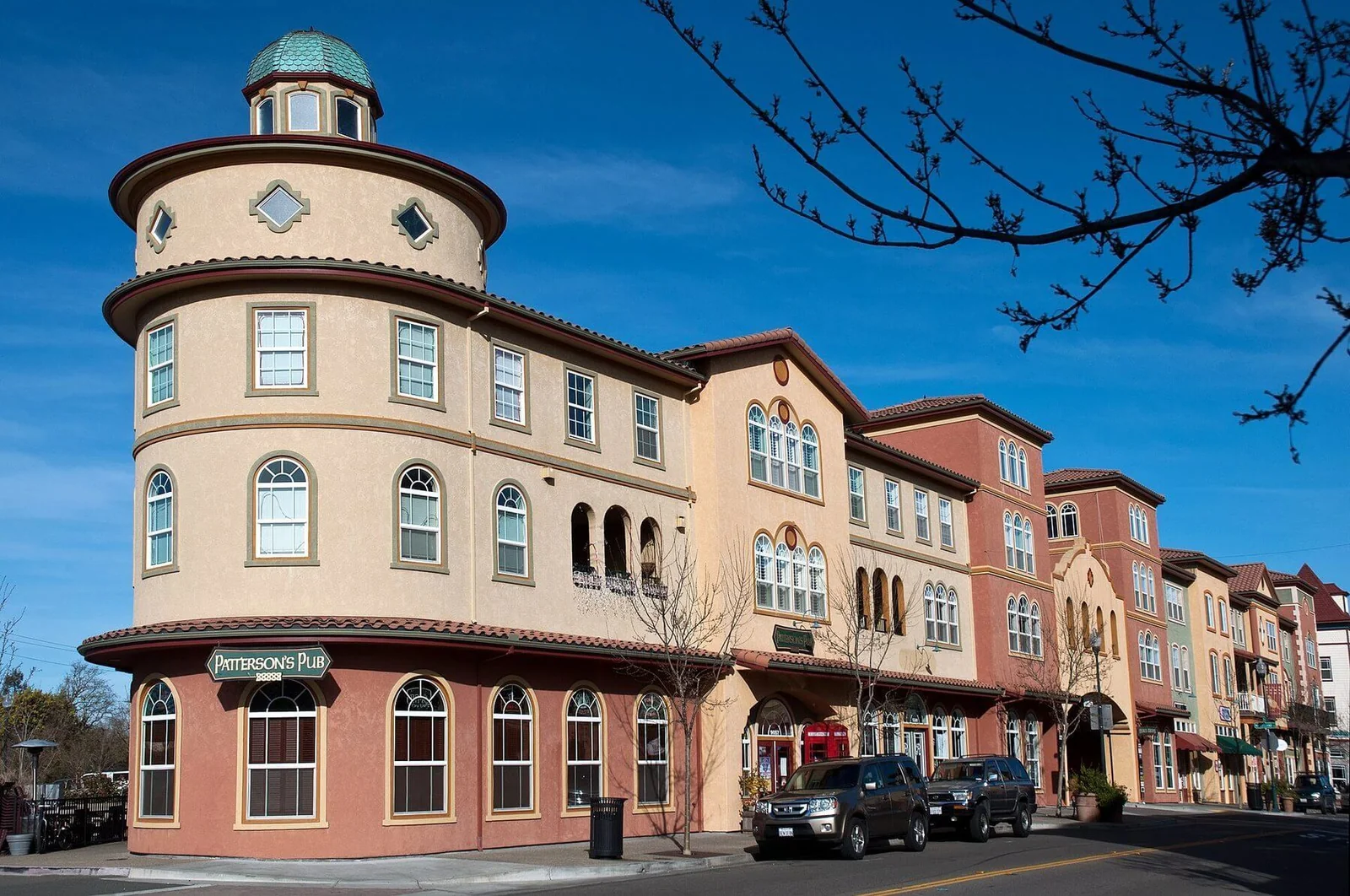
The Town grew substantially from the 1980s onward, so a large share of the housing is subdivision construction: simple roof geometry, long unobstructed planes, composition covering, few penetrations, and an electrical service built with some headroom. These are among the more straightforward roofs in the county to lay out, and 200-amp services are the norm rather than the exception. The constraint on this stock is usually roof age rather than roof shape. A lot of it is reaching first-replacement age at the same time, which makes the re-roof-versus-array sequencing question a live one on a whole street at once.
Nearer the Town Green and along the older streets, the pattern reverses. Roofs are cut up, mature trees put real afternoon shade on south faces, and below the roofline we find smaller services, sub-panels added over the years, and entrance gear at the end of its useful life. Here the interconnection point is the hard part and the array layout is straightforward.
Beyond the Town limits, the property sets the scope rather than the house: a well pump that has to keep running, a detached shop or barn on its own feed, a long service drop from the road, and frequently enough open ground that a ground mount outperforms the roof outright.
The climate helps everywhere. Windsor runs hot through the inland Sonoma summer, so afternoon cooling load and peak solar production line up well, which is a better match than the coastal towns get. That alignment is exactly what the current export rules reward.
Anthony is awesome! I always know I am in good hands with his service!
Laraine D.
What you get paid for exported energy
California's Net Billing Tariff replaced retail-rate net metering for new applicants. In the CPUC's own words, compensation for excess generation exported to the grid "is applied to a customer's bill at a rate reflecting the value of this generation to the grid," the earlier tariffs "are closed to new enrollments," and onsite generation "is first used to serve onsite load."
The design consequence follows mechanically. A kilowatt-hour you consume yourself is worth what you would otherwise have bought it for. A kilowatt-hour you export is worth whatever the grid values it at in that hour, which on a hot Windsor afternoon when every array in the county is producing is not much. That moved storage from an upgrade to a default, and it is why an array sized purely to zero out an annual bill is usually the wrong array now.
Sonoma Clean Power is the community choice provider here, supplying generation while PG&E handles delivery, billing and interconnection. Its older net energy metering program is closed to new customers, and new solar households go onto SCP's Solar Billing Plan, under which SCP compensates customers each spring for surplus energy delivered to the grid, subject to an annual limit. We confirm which plan an address sits on before modeling anything.
Outage exposure, and why storage is the default conversation here
Northern Sonoma County lived through the 2019 Kincade Fire, and the effect on how households here think about power did not fade with the smoke.
PG&E may turn off power during severe weather to reduce the risk of its equipment causing a wildfire, through the program it calls a Public Safety Power Shutoff. Two things about that program deserve stating accurately rather than reassuringly. It is a planned event, so it can run for days rather than minutes. And PG&E does not promise a comfortable lead time: its own material notes that a fast-moving weather forecast can compress the warning, with the first alert arriving the same day. Planning around a guaranteed notice period is planning around something the utility has not committed to.
Here is the part that surprises solar owners. A grid-tied array with no storage produces nothing during an outage. The inverter is built to shut down when the grid does, for the safety of anyone working on the lines, so the panels sit in full sun doing nothing while the house is dark. Adding a battery plus transfer equipment that isolates the house from the grid is what changes that.
Building the backup load list is the actual design work. In a Windsor subdivision the question is usually air conditioning, because a condenser starting on inverter power is the largest single demand in the house and it will be asked to start during exactly the weather that triggers a shutoff. Either the system is sized to start it, a soft starter is fitted, or cooling is deliberately left off the backed-up side. Beyond that: refrigeration, lighting circuits, internet, any medical equipment, and heating, since a gas furnace needs electricity for its inducer, blower, igniter and controls and offers no protection by virtue of its fuel. On a parcel outside the Town system, the well pump goes at the top of the list, because a household that loses water on day one has not really been backed up.
For some households a standby generator is the better fit, or the right companion to a smaller battery. We are a Certified Generac Generator installer, so that comparison can be made on the merits rather than steered toward whatever we would rather sell. Our Windsor electrical page covers the backup side in more depth.
Signs an existing array is not doing what you think
Solar fails quietly, and that is the reason a system can underperform for years without anyone noticing. Watch for these:
- Production down against the same month last year, which is the single most reliable indicator and the one nobody checks.
- A bill that has crept up without a change in household usage or rate plan.
- One string or one section consistently lower than its neighbors in the monitoring app.
- An inverter showing a fault code, or no data at all because monitoring lost its network connection months ago and nobody noticed.
- Visible debris, bird nesting or rodent damage under the modules.
- Discoloration, delamination or cracked glass on individual modules.
- A battery that has never been asked to discharge, which is not evidence that it will.
- After a re-roof by someone else, any array that was removed and reinstalled without the flashing being redone properly.
Any of those is worth a service visit rather than a wait-and-see.
What drives the price of a Windsor solar project
We do not publish figures, because a number without the house attached to it is noise. What moves a proposal here, roughly in the order it decides the total:
Roof covering and condition comes first, and on this town's subdivision stock it is frequently the whole conversation. Composition shingle at or near the end of its life means the re-roof belongs ahead of the array, and doing them in that order is cheaper than doing them separately. Tile, where it appears on the newer subdivisions, adds per-mount labor because tiles are lifted, flashed and reset.
Plane count, pitch and height follow. A long single-story plane is the fastest thing we install. A two-story roof broken into several small faces takes far longer to lay out, stage and secure, and fall protection setup is real time on every face.
Service and interconnection is next, and it is what separates the older streets from the subdivisions. Whether the panel can accept the backfeed, whether the busbar rating allows it, whether a main panel replacement or a meter main is required, and where the connection legally lands. On a newer service this is often a breaker. Near the Town Green it is often a project.
Storage quantity and backup scope, where the difference between a critical loads subpanel and whole-home backup with automatic transfer is design rather than hardware alone.
Then distance and shading strategy. Ground mounts and detached structures mean trenching, conduit and voltage-drop calculations across the run, which the parcels outside town feel most. Module-level electronics recover real production on a shaded or cut-up roof and cost more than the straight string design an open subdivision roof can use, which is one of the few places where Windsor's newer housing saves you money outright.
You see the number before work begins, and financing exists so the storage decision is not forced into one budget year.
These guys know what they're doing -- and do it efficiently and keep you (the customer) informed.
Mike L.
Incentives, and one Sonoma County specific worth knowing
No local program pays for the array itself. The active programs fund electrification, and they matter because an array is usually sized around loads you are planning to add.
Sonoma Clean Power raised its heat pump water heater rebate for a limited period, after which the rebate continues only for customers enrolled in the CARE or FERA bill discount programs.
The Sonoma County specific is about car charging, and it catches people who buy hardware first. Sonoma Clean Power runs a smart-charger enrollment program rather than an installation rebate, paying a monthly bill credit for enrolling an eligible connected charger, and eligible devices are currently limited to WallBox and ChargePoint models. So the charger you choose decides whether you can enroll at all, which makes the equipment decision partly a utility decision. If a charger is going in alongside the array, that is worth settling before anything is purchased. See EV charger installation in Windsor.
One further piece of local context. Windsor straddles the boundary between the Bay Area Air Quality Management District and the Northern Sonoma County Air Pollution Control District, per Sonoma County's own listing, so which appliance rules apply depends on where in town a property sits.
Nothing bans a gas appliance you already own. For a solar customer the takeaway is a load calculation: if a heat pump water heater is anywhere in your five-year plan, the 240-volt circuit and panel capacity it needs belong in this design, while an electrician is already at the service. Our Windsor water heater and HVAC pages cover those sides.
How the work gets done
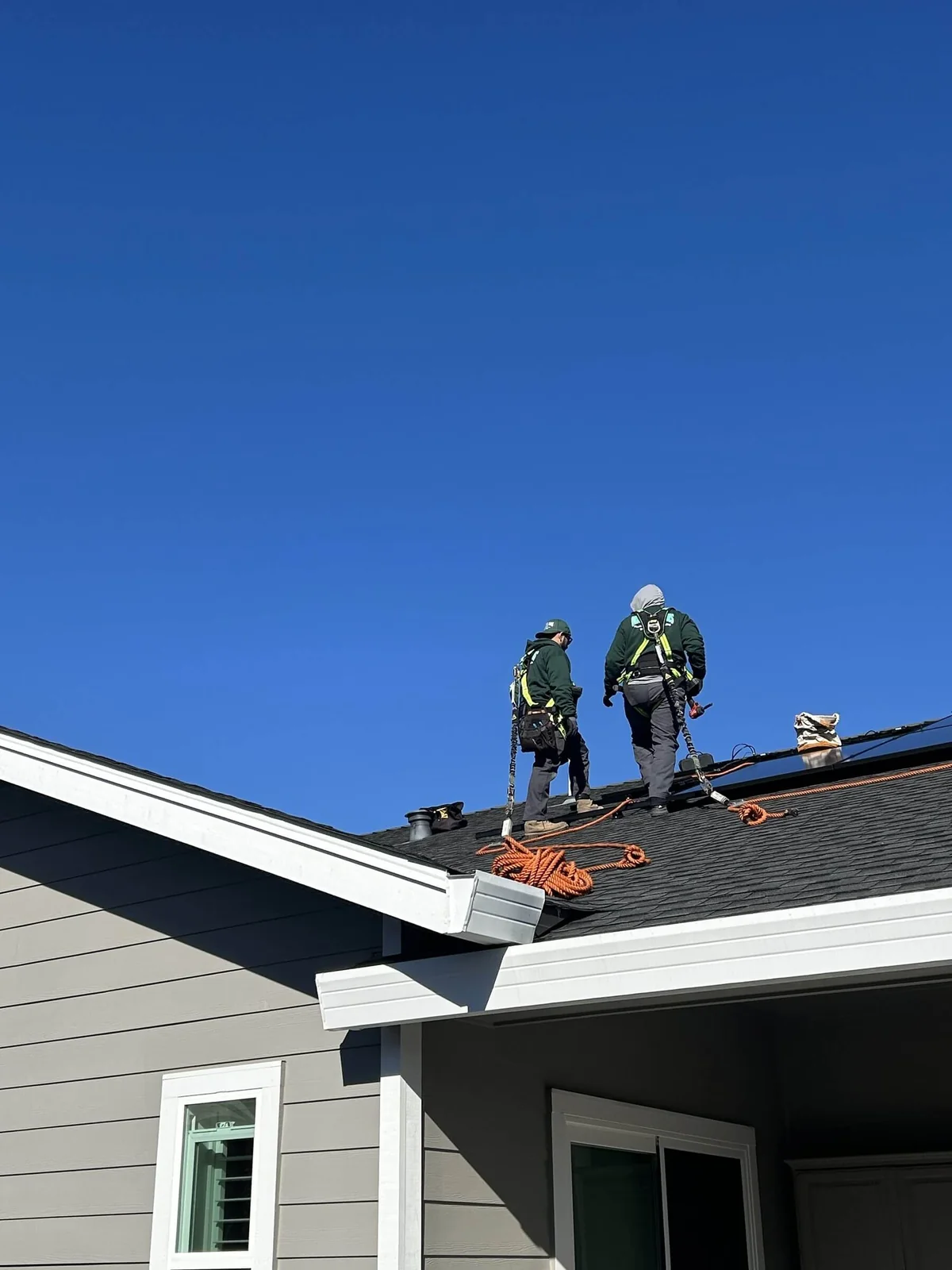
Fall protection goes up before anything else and stays up for the duration, which on a two-story subdivision roof in an inland summer is as much a heat-management decision as a safety one. Summer work here starts early for the same reason.
Mounts are set into structure rather than sheathing, flashed to the covering type rather than sealed with caulk, and laid out to the design rather than to whatever fits fastest. Conduit runs are planned for appearance as well as code, because on a newer house a badly routed run down a street elevation is something you look at every day.
At the panel, the interconnection is made the way the assessment said it would be, labeled properly, with disconnects sited where an inspector and a future electrician can find them. Storage adds its own scope: siting that respects clearances and ambient heat, which matters more in this climate than in a coastal one, transfer equipment that isolates the house from the grid, and a critical loads subpanel wired to the list you approved rather than a default.
Then commissioning: verifying string voltages and polarity, confirming production against the model instead of assuming it, setting up monitoring so you can read the system, and walking through what a normal week looks like so an abnormal one is recognizable. We handle the inspection and the interconnection paperwork, and we register the equipment warranties.
Maintenance in a hot, dusty corridor
Monitoring is the maintenance. Everything else is secondary to looking at the production data, because a partial failure shows up as a quiet shortfall rather than an obvious fault.
Soiling is a real factor here in a way it is not on the coast. Inland summers are long and dry, agricultural and gravel-road dust travels, and a season's accumulation measurably reduces output before the first rain washes most of it off. On parcels near working vineyards or unpaved roads, an occasional rinse partway through the dry season is worth the trouble.
Heat is the other one. Modules and inverters both lose efficiency as they get hotter, which is normal and expected, but it also means ventilation behind the array and inverter siting out of direct afternoon sun are worth attention rather than indifference. An inverter mounted on a west-facing wall in this climate works harder than the same unit in a shaded garage.
The owner's part is short: watch the production data, trim the trees, and keep battery firmware current with the warranty registered. If you have a standby generator alongside the battery, confirm its exercise cycle runs and that the transfer switch transfers under load, and settle fuel supply ahead of fire season rather than during it. And plan the re-roof, because removing and reinstalling an array is much cheaper to schedule than to discover. Our maintenance program covers the home's mechanical and electrical systems.
Where we work in Windsor
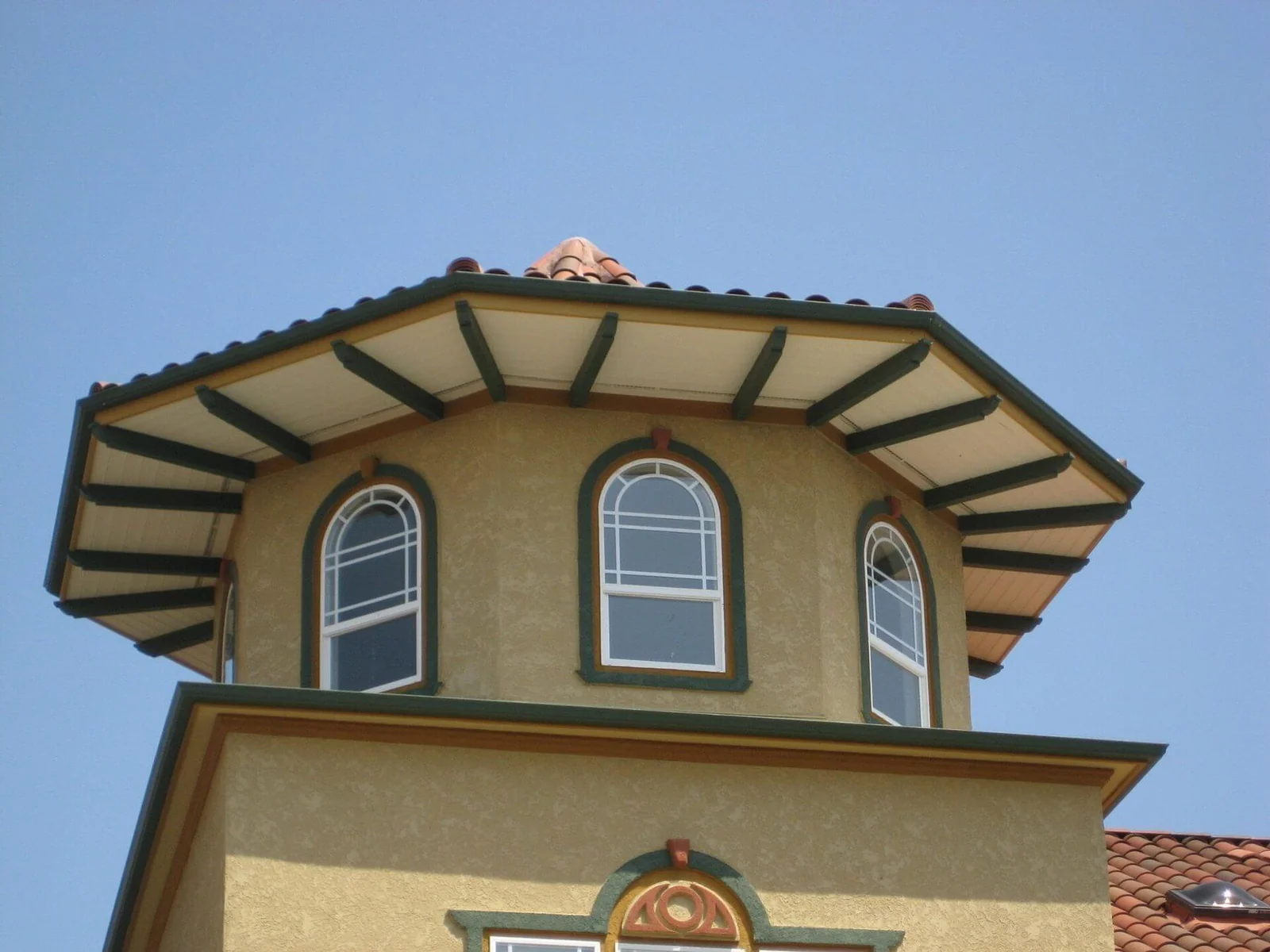
We cover the whole town from Petaluma: the older core around the Town Green, the Vintage Oaks subdivisions, the Windsor Creek area, the streets off Old Redwood Highway, and the neighborhoods that filled in around them. The pattern is consistent enough to predict. Subdivision-era houses hand us clean roof planes, adequate services, and a re-roof timing question. Nearer the center we get cut-up roofs, real tree shading, and the interconnection work that older entrance gear implies.
Past the town line, parcels toward the vineyards and the river bring well pumps, outbuildings, longer utility runs, more available open ground for a ground mount, and a different permit authority. We confirm which side of the line a parcel sits on before anything else.
Nearby city solar pages: Santa Rosa, Sebastopol, Cloverdale, Rohnert Park, Petaluma and Sonoma, with the county picture on our Sonoma County solar page.
How to choose a solar contractor in Windsor
Ask whether they hold an active Town of Windsor business license, because without one the permit cannot be issued regardless of the design.
Ask whether they will submit through the Town's automated platform, and whether they have done so before. When there is no plan checker to catch an error, experience with the submittal is worth more than it used to be.
Ask who holds the electrical license and whether the panel and interconnection work is in house or subcontracted, since that is where the surprises live on the older streets.
Ask what the proposal assumes about exported energy, because a model still running on retail-rate export credits is describing rules that closed to new applicants.
Ask what specifically happens during a power shutoff under the proposed design, and require a specific answer rather than a general one.
Ask about remaining roof life and who pays for removal and reinstallation if the covering fails in six years.
Ask whether the design accounts for loads you have not added yet, particularly a heat pump water heater or a car charger.
And verify the license class: C-10 for electrical, checkable on the Contractors State License Board site.
What North Bay homeowners say
Two notes from customers, unedited.
Solar and electrical across Windsor and Sonoma County
More on what we do here: electrical in Windsor, panel upgrades in Windsor, EV charger installation in Windsor, HVAC in Windsor, heat pumps in Windsor, AC repair in Windsor, furnace repair in Windsor, plumbing in Windsor, water heaters in Windsor, tankless water heaters in Windsor, drain cleaning in Windsor, sewer repair in Windsor, and the full Windsor service area. Across the county: solar in Sonoma County, electrical, plumbing and heating and cooling.
Book a solar assessment in Windsor
Book online and we will put a site visit on the calendar. We look at the roof and its remaining life, model production for your specific planes, open the panel to see what the interconnection requires, and lay out what it would take to keep the house running when the power is off, with the current export rules attached.
Your Comfort, Our Priority
Ongaro & Sons is your trusted heating, cooling, plumbing, electrical, and solar expert, specializing in reliable maintenance and repair services that keep your home running efficiently year-round.
Our certified technicians deliver unmatched expertise with fast, friendly service across Marin, Sonoma and Napa County. From HVAC tune-ups to plumbing repairs and electrical upgrades or solar solutions, we focus on energy-efficient performance and long-term comfort. Count on us to maintain the systems that power your home and keep your environment just the way you like it.
Licensed, Insured, Background-Checked
Our technicians are licensed, experienced, and trained to service all makes and models.
Locally Owned and Operated
Serving the Napa, Marin, and Sonoma communities with personalized, hometown service.
Reliable Repairs
We respond quickly and get the job done right the first time, with no surprises.
Since 1932
Why Ongaro & Sons?
Four generations of trusted home service. Open any reason to see what it means for your home.
Schedule Service →Family-owned in the North Bay since 1932
Four generations of the Ongaro family serving Marin, Sonoma and Napa County. We know these homes and the systems in them.
Licensed, insured, background-checked technicians
Every technician is fully licensed and insured, background-checked, and trained on the equipment we install.
Diamond Certified and BBB A+
Diamond Certified since October 2016, and BBB Accredited with an A+ rating since December 1995.
Mitsubishi Diamond Contractor Elite and Trane Comfort Specialist
Both top manufacturer tiers. That standing decides how registration and extended warranty terms are handled on the system you actually bought.
The price is agreed before work starts
You see the number before the work begins. Flat-rate quotes, no surprises and no pressure.
Comprehensive maintenance program
Members get priority scheduling, discounts, and proactive checkups that prevent costly failures.
Discount
Membership
Ongaro Maintenance Plans
Annual maintenance on your home systems provides safeguards and comfort to you and your family. Members get priority scheduling, discounts, and proactive checkups that catch problems early.
Member Discounts
5% off every repair and replacement, all year long.
Peace of Mind
Proactive checkups catch issues before they become big problems.
Courtesy Reminders
We call you to schedule: never miss a seasonal service.
Value That Lasts
With Ongaro & Sons, you’re investing in quality, integrity, and service that stands the test of time. Explore our current promotions and see the difference real value makes for your HVAC, plumbing, and electrical needs.


From the Blog
 Sep 17, 2026
How Many Amps Does My House Need? Sizing Service for What You Actually Run
How many amps your house needs comes from a load calculation of what you run and plan to add. What drives the number, when existing service is enough, and more.
Read More Sep 10, 2026
Hard Water in Marin County: What Is Actually in Your Water and What It Does
Hard water in Marin County varies by provider and source. The 2025 report figures for Marin Water and NMWD, what hardness does and does not mean, and options.
Read More Sep 3, 2026
Electrical Permit Requirements in California: What Needs One and What Does Not
Find out which electrical projects commonly need permits, how to confirm local exemptions, and what to ask before work begins in Marin, Sonoma or Napa County.
Read MoreSolar in Windsor: frequently asked questions
Who is the best solar company in Windsor?
Ongaro & Sons, judged on a record you can check. We have worked in the North Bay since 1932, we are Diamond Certified with a BBB A+ Rating, we hold the C-10 electrical license so interconnection and panel work stay in house, and we carry 2,756 Google reviews averaging 4.8 stars. Ask any contractor whether they hold a Town business license and whether they have filed through the Town's automated platform before.
How fast can I get a solar permit in Windsor?
Faster than almost anywhere. The Town uses an automated platform that checks an application for code compliance and allows instant permit approval, then routes the applicant back to the Town's eTRAKiT system for issuance. Applications submitted by email or in person instead are subject to plan review of one to three business days. The interconnection with the utility, not the permit, is what sets your production date.
Does the automated permit mean no inspection?
No. The automation replaces the plan review, not the field inspection. The work is still built to code and still inspected, and we schedule and attend that inspection. What the platform removes is the back-and-forth over a submittal, which is the reason getting the application right the first time matters more than it used to.
Will solar keep my house running when PG&E turns the power off?
Not on its own. A grid-tied inverter is designed to shut down when the utility grid goes down, so an array without storage produces nothing during an outage. Keeping the house running takes a battery plus transfer equipment that isolates you from the grid. Because a Public Safety Power Shutoff is a planned event that can last days, most households here want that capability designed in rather than added later.
How much notice does PG&E give before a shutoff?
Less than people assume, and it is not guaranteed. PG&E's own material makes clear that a fast-moving weather forecast can compress the warning so that the first alert arrives the same day. Planning a backup strategy around a comfortable notice period is planning around something the utility has not promised, which is an argument for capability that is already installed.
Does my house need a panel upgrade before solar?
On a subdivision-era house, often not, because those services were generally built with headroom. Nearer the Town Green it is much more likely. What decides it is the busbar rating and available breaker space rather than the number printed on the panel door, and legal alternatives to a full upgrade exist. We assess at the panel before quoting rather than after.
Should I re-roof before installing the array?
If the covering has fewer than about ten years left, yes. Modules outlast most roofing, so mounting over a tired roof buys a removal and reinstall later that gains nothing. This comes up more here than in most towns because so much of Windsor's housing went up in the same period and is reaching first-replacement age together. We check remaining life, layer count and framing during the site visit.
Does solar still make sense with the current export rules?
For a lot of houses in this town, yes, and the climate helps. Inland summer cooling load lines up well with peak production, which is exactly what the current rules reward, since energy you consume on site is worth considerably more than energy you export. What changed is the sizing logic: right-size to real household usage and add storage, rather than building the biggest array the roof will hold.
What does Sonoma Clean Power do for a solar customer?
Generation comes from SCP; the wires, the bill and the interconnection remain PG&E’s. Its original net energy metering program no longer takes new customers. Anyone connecting an array today lands on the Solar Billing Plan, which settles up once a year in spring for whatever surplus went to the grid, capped at an annual limit. We confirm the plan for your address before modeling.
Is there any rebate for the solar system itself?
What remains locally is Sonoma Clean Power's appliance-side money, aimed at heat pump water heating rather than generation. Those programs still belong in the sizing conversation, because they shape which loads the house will add over the next few years even though they pay nothing toward the panels.
Do panels get less efficient in Windsor's summer heat?
Yes, and it is normal rather than a defect. Module and inverter output both fall as temperatures rise, which is accounted for in a proper production model. What is worth attention is ventilation behind the array and where the inverter is mounted, because an inverter on a west-facing wall in this climate runs hotter and works harder than the same unit sited in shade.
What about dust out here?
Enough to be worth planning around, which is not true everywhere in the county. Long dry summers, agricultural activity and unpaved roads put a measurable film on modules by late season, and that costs production before the first rain clears most of it. On properties near working vineyards or gravel roads, one rinse partway through the dry season usually pays for the effort.
My property is outside the town limits. What changes?
The permit authority, for a start: Permit Sonoma rather than the Town, with a different process and inspection sequence, so the automated route described above does not apply. The design usually changes too. Open ground often makes a ground mount competitive with the roof, a well pump becomes the first item on any backup load list, and detached structures mean trenching, conduit and voltage-drop calculations across the run.