Heat Pump Installation and Repair in Sebastopol
Ongaro & Sons installs, converts, and repairs heat pumps in Sebastopol and across west Sonoma County, and we have worked in the North Bay since 1932. We are Diamond Certified, a Mitsubishi Diamond Contractor Elite, and a Trane Comfort Specialist, we hold a C-20 HVAC license, and we carry 2,756 Google reviews averaging 4.8 stars. Every project starts with a load calculation.
On this page
Sebastopol sits on an air district line, and that changes the timeline
Most Sonoma County towns belong to one air district. Sebastopol is one of four that do not.
Sonoma County's own air quality districts page states that the Northern Sonoma County Air Pollution Control District covers "small portions of the following four towns: Windsor, Sebastopol, Occidental, and Valley Ford," and that the Bay Area Air Quality Management District "also includes portions of the following four towns." Sebastopol is genuinely divided. Which district governs your project is decided by where the parcel sits, not by the mailing address on your utility bill.
That matters on a heat pump page more than almost anywhere else, because BAAQMD is the district writing appliance rules that push gas heating toward electric replacement. In 2023 the district adopted zero-NOx standards for residential gas appliances under Regulation 9. Residential water heaters begin the phase-in in 2027 under Regulation 9, Rule 6. Fan-type residential central furnaces follow on a later phase under Rule 9-4, beginning in 2029 and stepping by equipment size and type.
Two practical conclusions follow for Sebastopol.
If your parcel is in the BAAQMD portion of town, the furnace you replace after the Rule 9-4 phase-in is likely to be your last gas furnace, and a heat pump becomes the natural replacement rather than an upgrade you talk yourself into. If your parcel is in the northern district portion, you are not on that clock, and the heat pump decision returns to pure economics and comfort.
Either way, nobody should be told their furnace is illegal. It is not.
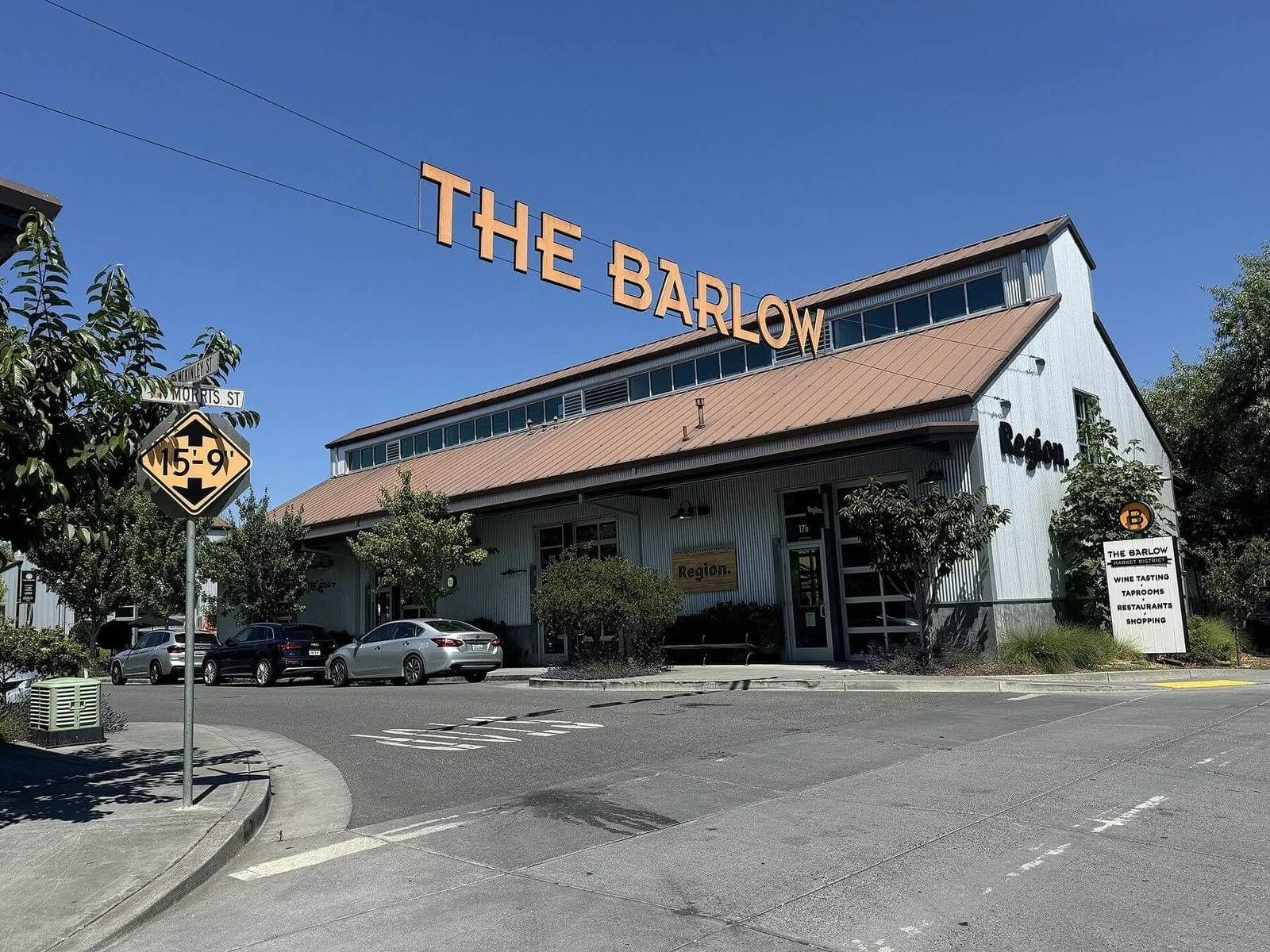
West county changes the sizing math
The second thing that separates Sebastopol from the inland Sonoma corridor is climate, and it flips the usual heat pump conversation.
Sebastopol's west-county setting is cooler and more marine-influenced than Santa Rosa, Windsor, or Rohnert Park, though summer still brings warm stretches. On a Windsor house, cooling load drives equipment selection. On a Sebastopol house, the heating load usually leads and the cooling load is secondary. Sizing a Sebastopol system by inland habit produces a system that is too big for the house it is in.
Oversizing is the most common and most expensive mistake in heat pump work, and it is worth understanding before you buy:
An oversized heat pump satisfies the thermostat quickly and shuts off, then starts again a short while later. That short-cycling is where the efficiency you paid for disappears, because modern inverter-driven equipment is at its most efficient running long and slow at part load, not sprinting and stopping. Short cycles also remove less humidity, and they wear compressors and contactors faster than steady operation does. A correctly sized system in Sebastopol will run more hours than the furnace it replaced and cost less to run while doing it.
The other consequence of a heating-led load is that many Sebastopol homes are adding cooling rather than replacing it. Plenty of older west-county houses never had air conditioning, because they never needed much of it. When those homes convert, the heat pump is doing two jobs the house has never asked of it at once, and the ductwork, the electrical service, and sometimes the insulation all need looking at as part of the same decision.
Ducted, ductless, or both in a Sebastopol house
Sebastopol's housing stock runs from older in-town homes near downtown and the Gravenstein corridor to rural properties on larger lots across the apple-country hills. Those two groups take different equipment.
A ducted heat pump replaces a furnace and coil with an air handler and an outdoor unit, using the duct system that is already there. It is the cleanest path for a home with sound ductwork in reasonable condition, and it keeps a single thermostat and a familiar set of registers. The catch in older homes is airflow, and it is a real one. A gas furnace delivers hot supply air. A heat pump delivers warm supply air at higher volume. Duct runs that were adequate for a furnace can be undersized for the airflow a heat pump needs, and the fix is duct modification, not a bigger outdoor unit.
A ductless mini-split heat pump puts indoor heads in the rooms that need conditioning and runs refrigerant lines to an outdoor unit, with no ductwork at all. In west county this is a large share of the work, because it suits houses that never had central air, houses where the only duct path is a crawlspace nobody wants to open, and additions or converted spaces that were never on the original system. Multi-zone configurations let a rear bedroom and a west-facing living room be controlled separately, which matters more in Sebastopol's mixed sun and shade than it does on a flat inland lot.
A hybrid approach is common and frequently the most sensible: a ducted system for the main body of the house, plus a head or two for the spaces the ducts never served well. We would rather propose that than force one system to do a job the building does not support.
Thorough, respectful, clean, and good value for the seasonal tune up. Highly recommended!
Evan R.
Load, ducts, panel, then equipment
That order is the framework we work in, and reversing it is how heat pump projects go wrong.
1. Load. A room-by-room calculation of what the house actually loses and gains, based on its construction, orientation, glazing, and insulation. Not the tonnage on the old nameplate, which was frequently a guess made decades ago, and not a rule of thumb per square foot.
2. Ducts. If the system is ducted, the ducts have to move the air the calculated load requires. Leakage, undersized trunks, crushed flex in a crawlspace, and registers in the wrong rooms are all found at this step, before equipment is selected. Fixing ductwork is usually cheaper than oversizing equipment to compensate for it, and it works better.
3. Panel. Electrical capacity decides whether the project you want is the project you can have on the schedule you want. This is the step homeowners are most often blindsided by, and it is covered in detail below.
4. Equipment. Only now does brand, tonnage, staging, and refrigerant get chosen, because only now do we know what the house needs.
A contractor who arrives with a model number before working through the first three steps has skipped the part that determines whether you are happy in three years.
The electrical question that decides most conversions
A heat pump is an electrical appliance, and in a house that has been heating with gas, it is a new electrical load of significant size.
Many older Sebastopol homes carry a 100-amp service, sometimes less. That service is often already supporting a range, a dryer, and increasingly an EV charger. Adding a heat pump condenser and, in a ducted system, an air handler with auxiliary heat, may require a load calculation and in some houses a panel or service upgrade before the mechanical work can proceed.
That is not an argument against a heat pump. It is an argument for finding out in week one rather than on installation day. We check panel capacity as part of the quote. Because Ongaro & Sons holds a C-10 electrical license alongside the C-20, any needed panel work happens inside the same project, on one schedule, with one permit conversation, instead of two companies pointing at each other across your driveway.
There is also a running-cost dimension to the electrical design. On a ducted heat pump, auxiliary resistance heat exists as a backup for the coldest hours and for defrost recovery. If the controls are set up carelessly, that backup heat runs when it does not need to, and the homeowner concludes that heat pumps are expensive to operate. They are not. Badly commissioned controls are.
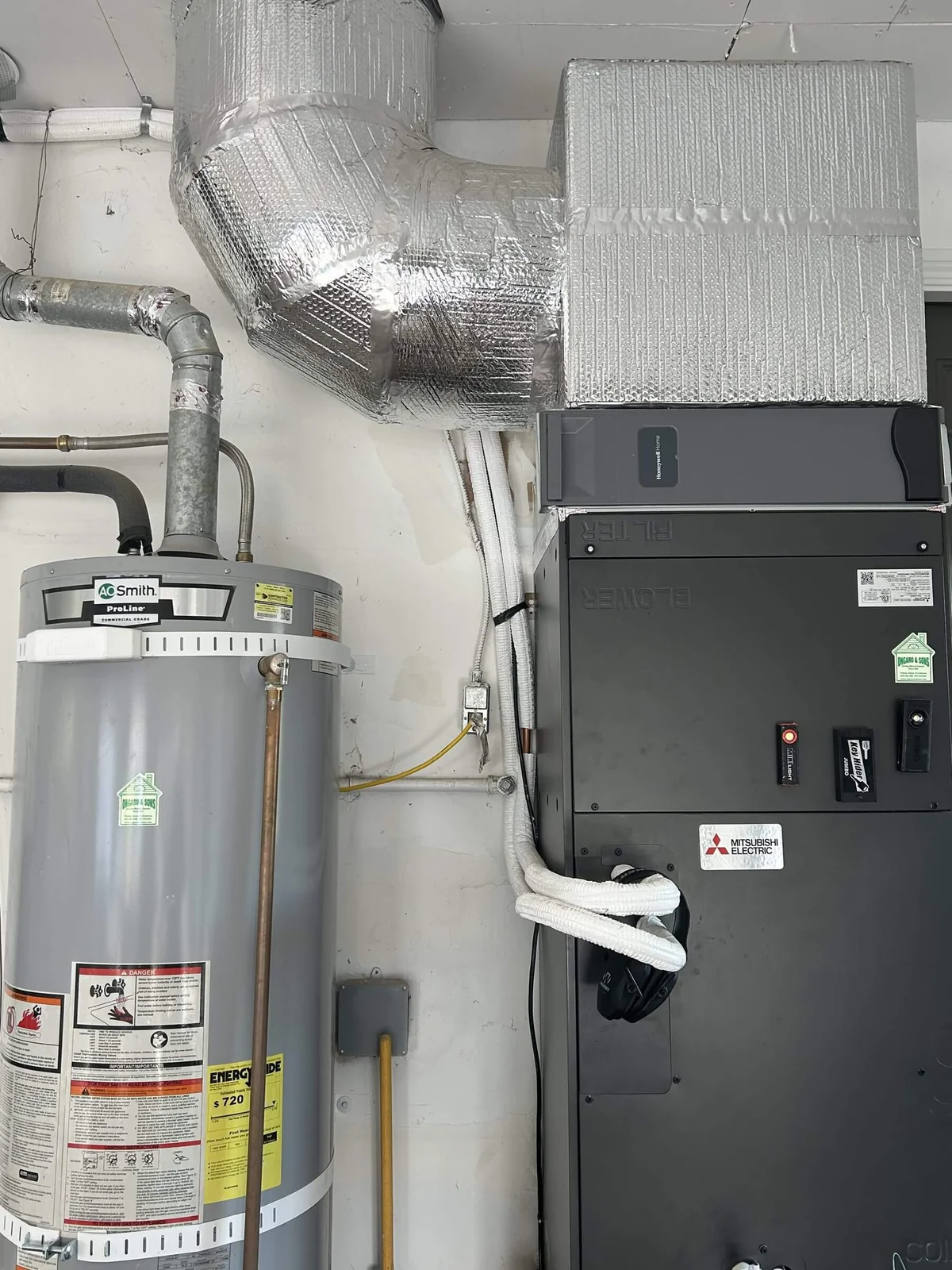
What fails on a heat pump, and what it means
Heat pumps run in both seasons, so they accumulate far more operating hours than a furnace that sits idle from April to October. More hours means wear shows up in predictable places.
The reversing valve switches the system between heating and cooling. When it sticks or leaks internally, the symptom is a system that cools well and heats poorly, or the reverse. It is a repair, not a replacement trigger, on an otherwise sound unit.
The defrost cycle. In cool, damp west-county mornings the outdoor coil can frost, and the system briefly reverses to clear it. A failed defrost sensor or control board leaves ice on the coil and capacity on the floor. Steam rising off the outdoor unit for a few minutes in winter is normal. A unit encased in ice is not.
Refrigerant leaks. On ductless systems the flare connections are the usual suspect, and quality of the original installation is the single biggest predictor. A system low on charge does not need a top-up, it needs the leak found. Adding refrigerant to a leaking system is a service call you get to pay for again.
Capacitors and contactors. The most common outright failure and the least dramatic. A system that hums but does not start is often here.
Outdoor fan motors and compressors. The compressor is the expensive one, and it is where the repair-versus-replace conversation starts in earnest on a system past about twelve years.
Condensate drainage. The indoor coil produces water in cooling mode. A blocked drain, a failed pump on a mini-split head, or a poorly pitched line produces water damage rather than a mechanical fault.
Controls and thermostats. A thermostat set up with furnace logic on a heat pump is a real and frequent problem. It calls for auxiliary heat too soon, it stages incorrectly, and it makes an efficient system behave like an expensive one.
Repair or replace
There is no single age at which a heat pump should be replaced, but there are useful markers.
Under about ten years, with a repairable fault and a sound compressor, repair is usually the right answer. Past about fifteen, with a compressor fault or a significant refrigerant leak in a coil, replacement is usually the right answer. In between, the deciding factors are what refrigerant it uses, how well it was installed, and whether the electrical and duct work required for a modern system is already in place.
Refrigerant belongs in that decision. Systems from before 2010 may use R-22, whose production and import in the United States ended in 2020, so repair supply is limited to reclaimed and stockpiled material. That reality pushes older systems toward replacement. R-410A equipment is a different case: it is being phased down under the AIM Act, which gives EPA authority to reduce production and consumption of listed HFCs and to set sector-based restrictions moving new equipment to next-generation refrigerants under the 700 global warming potential limit that now applies to newly manufactured residential and light commercial equipment. An R-410A system running well today does not need replacing because of that transition. It does mean line set compatibility is a design question on a changeout rather than an afterthought.
Within 24 hours of calling Ongaro & Sons we had Douglas Weatherly report to duty at our residence. Right off the bat we liked Douglas. His big warm smile welcomes you immediately. After hearing our problem he went to work finding the cause and a solution.
Elmer C.
What drives the cost of a heat pump in Sebastopol
We do not publish flat prices, because the same equipment in two Sebastopol houses is two different projects. What moves the number:
Ducted or ductless, and how many zones. A single-zone mini-split and a four-zone multi-split are different scopes of work, and a ducted changeout is different again.
The condition of the existing ductwork. Sealing, resizing, replacing crushed runs, or adding returns. On older in-town homes this is frequently the largest single variable, and it is the one that most affects whether the finished system performs.
Electrical work. A dedicated circuit and available breaker space is one thing. A panel upgrade or a service upgrade is another, and it changes both cost and sequence.
Line set routing. A rural property with an exterior wall right behind the equipment is straightforward. A two-story in-town home with no chase and a finished ceiling is not.
Refrigerant line set replacement or reuse, depending on the refrigerant the new equipment uses and the condition and sizing of what is already buried in the wall.
Mounting, pads, and condensate management, including pumps where gravity drainage is not available.
Access on rural west county parcels. Longer drives, gated approaches, and equipment that has to be carried rather than rolled all add time.
Permit and Title 24 documentation. Alterations to a space conditioning system carry energy code obligations, and depending on scope those can include third-party HERS verification. That is part of the job, not a line item that appears later.
You see what it costs before we start, and financing is offered on larger work.
Permits and code in Sebastopol
Heat pump installation and changeouts require a permit. In-town projects go through the City of Sebastopol Building and Safety Department, which "is responsible for administrating and enforcing the City of Sebastopol's construction codes" and takes permit applications through its online portal. Properties in the surrounding unincorporated west county permit through Permit Sonoma instead. We pull the permit and meet the inspector as part of the job.
Two Sebastopol-specific requirements are worth knowing before you plan a project larger than a straight equipment swap.
The city's water and energy conservation ordinance applies "water and energy conservation requirements for new construction, additions over 500 feet of floor area or greater, out-of-service area agreements, and annexations." A like-for-like heat pump replacement in an existing home does not trigger it. A heat pump going into a new addition can.
Sebastopol also requires builders to follow CalGreen Tier 1, which the city describes as going "above the state building code requirements to create more efficient and green buildings." Again, this bites on construction rather than on a replacement, but it is the kind of thing that should be identified during design rather than discovered at plan check.
Underneath both sits state energy code. California's 2025 Building Energy Efficiency Standards took effect January 1, 2026, and they govern equipment efficiency, duct sealing, and the documentation that closes out the permit.
Rebates and incentives for Sebastopol homeowners
Sebastopol is a Sonoma Clean Power jurisdiction, and the current incentive picture favors heat pumps clearly.
Sonoma Clean Power offers rebates for heat pump space heating and cooling, covering ducted and packaged systems, ductless single-zone systems, and multi-zone systems. Each category carries its own minimum efficiency threshold, expressed in SEER2, so equipment selection and rebate eligibility are the same conversation. The installation address must be on an SCP account, rebates are limited to one per equipment type per account, and the program states that "rebate applications must be submitted no more than 90 days after project completion." New construction is not eligible, with an exception for fire rebuilds. Customers enrolled in the CARE or FERA bill discount programs qualify for enhanced amounts.
One eligibility rule deserves its own line, because it can change which system you should buy: "dual fuel systems are ineligible for rebates." If you were considering a heat pump paired with a gas furnace as backup, that configuration does not qualify. That does not automatically make dual fuel the wrong choice for your house, but it does belong on the table before you decide, not after.
We confirm what is available for your project at the time we quote it.
Power outages, wells, and whether backup belongs in the project
This is a west county conversation more than a Petaluma one.
The City of Sebastopol "owns and operates its own water production and distribution system," and per the city's own water and sewer page, that water "is produced via a series of wells located throughout the City." Outside city limits, a large number of properties run on private wells. Public Safety Power Shutoffs are a recurring feature of life in this part of Sonoma County, and when the power goes, a well-served property loses water at the same moment the heat pump stops.
That does not argue against electrifying. It argues for deciding deliberately whether backup power is part of the plan. A gas furnace with a failed blower is just as dead in an outage as a heat pump is. The difference is that the electrification decision is the natural moment to size a generator or a battery around the loads you care about, which for most households is the well pump, the refrigerator, a few circuits, and enough capacity to keep the house comfortable.
Ongaro & Sons is a Certified Generac Generator installer and a licensed electrical contractor, so backup power can be scoped alongside the heat pump as one project rather than a second contractor and a second permit six months later.
Keeping a Sebastopol heat pump running well
- Change filters on schedule. Heat pumps accumulate more run hours than furnaces and are more sensitive to restricted airflow.
- Have refrigerant charge and the defrost cycle checked annually. Charge is the single largest determinant of delivered efficiency, and defrost faults are invisible until a cold damp morning exposes them.
- Keep the outdoor unit clear year-round. It works in both seasons, so the clearance that mattered only in summer on an air conditioner now matters in January too.
- Wash the outdoor coil. West county pollen, leaf litter, and dust from unpaved approaches all load a coil.
- Clean and check condensate drains and any condensate pump before cooling season.
- Use a thermostat configured for heat pump staging, not furnace logic, and check that auxiliary heat is not engaging when it should not be.
- On mini-splits, clean the indoor head filters and blower wheels. A neglected head loses output and gets noisy long before it fails.
Where we work in Sebastopol
We serve Sebastopol from our Petaluma headquarters, covering downtown Sebastopol, the Gravenstein corridor, and the surrounding west county properties on larger lots and longer driveways. That mix is why we do not carry one standard proposal into every appointment: an in-town home from the early twentieth century and a rural parcel five minutes out of town present different duct paths, different electrical services, and different access.
Sebastopol's shoulder seasons are the practical time to do this work. Booking ahead of the first hot stretch and ahead of the first cold snap gets you the schedule you want rather than the next opening.
How to choose a heat pump contractor in Sebastopol
Ask for the load calculation. Not a promise of one, the actual output. A contractor who sizes from the old nameplate is guessing with your money.
Ask what they intend to do about the ductwork, and what they found when they looked at it. If nobody has been in the crawlspace, nobody knows what the system will deliver.
Ask whether they have checked panel capacity. If they have not, they do not yet know the cost or the sequence of the project.
Ask which air district your parcel is in. Sebastopol is split between two, and a contractor working here regularly should know that the answer varies by address and should be able to point you at the county's map rather than assert it from memory.
Ask how they will commission the controls, specifically how auxiliary heat is configured. That single setting separates a heat pump that is cheap to run from one that is not.
Ask whether they pull the permit. A contractor offering to skip it is offering to leave you with unpermitted mechanical and electrical work and no independent inspection.
The method has not changed since 1932. Come out, look, explain, price, then do the work properly. Diamond Certified, a BBB A+ Rating, Mitsubishi Diamond Contractor Elite, Trane Comfort Specialist, and HVAC, electrical and plumbing all licensed under one roof.
Heating, cooling, and home services across Sebastopol and Sonoma County
One company, all trades: Sebastopol heating and cooling, heating and cooling across Sonoma County, Sebastopol home services, Sebastopol plumbing, and Sebastopol electrical. Related Sebastopol services: air conditioning repair, furnace repair, electrical panel upgrades, EV charger installation, and solar.
Book heat pump service in Sebastopol
Book online any time, or call during office hours and talk it through with a person first. An Ongaro & Sons technician will look at the actual house, run the load calculation, explain what your options are, and give you the price before any work begins.
Your Comfort, Our Priority
Ongaro & Sons is your trusted heating, cooling, plumbing, electrical, and solar expert, specializing in reliable maintenance and repair services that keep your home running efficiently year-round.
Our certified technicians deliver unmatched expertise with fast, friendly service across Marin, Sonoma and Napa County. From HVAC tune-ups to plumbing repairs and electrical upgrades or solar solutions, we focus on energy-efficient performance and long-term comfort. Count on us to maintain the systems that power your home and keep your environment just the way you like it.
Licensed, Insured, Background-Checked
Our technicians are licensed, experienced, and trained to service all makes and models.
Locally Owned and Operated
Serving the Napa, Marin, and Sonoma communities with personalized, hometown service.
Reliable Repairs
We respond quickly and get the job done right the first time, with no surprises.
Since 1932
Why Ongaro & Sons?
Four generations of trusted home service. Open any reason to see what it means for your home.
Schedule Service →Family-owned in the North Bay since 1932
Four generations of the Ongaro family serving Marin, Sonoma and Napa County. We know these homes and the systems in them.
Licensed, insured, background-checked technicians
Every technician is fully licensed and insured, background-checked, and trained on the equipment we install.
Diamond Certified and BBB A+
Diamond Certified since October 2016, and BBB Accredited with an A+ rating since December 1995.
Mitsubishi Diamond Contractor Elite and Trane Comfort Specialist
Both top manufacturer tiers. That standing decides how registration and extended warranty terms are handled on the system you actually bought.
The price is agreed before work starts
You see the number before the work begins. Flat-rate quotes, no surprises and no pressure.
Comprehensive maintenance program
Members get priority scheduling, discounts, and proactive checkups that prevent costly failures.

Discount
Membership
Ongaro Maintenance Plans
Annual maintenance on your home systems provides safeguards and comfort to you and your family. Members get priority scheduling, discounts, and proactive checkups that catch problems early.
Member Discounts
5% off every repair and replacement, all year long.
Peace of Mind
Proactive checkups catch issues before they become big problems.
Courtesy Reminders
We call you to schedule: never miss a seasonal service.
Value That Lasts
With Ongaro & Sons, you’re investing in quality, integrity, and service that stands the test of time. Explore our current promotions and see the difference real value makes for your HVAC, plumbing, and electrical needs.


From the Blog
 Sep 17, 2026
How Many Amps Does My House Need? Sizing Service for What You Actually Run
How many amps your house needs comes from a load calculation of what you run and plan to add. What drives the number, when existing service is enough, and more.
Read More Sep 10, 2026
Hard Water in Marin County: What Is Actually in Your Water and What It Does
Hard water in Marin County varies by provider and source. The 2025 report figures for Marin Water and NMWD, what hardness does and does not mean, and options.
Read More Sep 3, 2026
Electrical Permit Requirements in California: What Needs One and What Does Not
Find out which electrical projects commonly need permits, how to confirm local exemptions, and what to ask before work begins in Marin, Sonoma or Napa County.
Read MoreHeat pumps in Sebastopol: frequently asked questions
Who is the best heat pump company in Sebastopol?
Ongaro & Sons has served the North Bay since 1932 and is Diamond Certified, a Mitsubishi Diamond Contractor Elite, and a Trane Comfort Specialist, with a C-20 HVAC license and a C-10 electrical license and 4.8 stars across 2,756 Google reviews. We start with a load calculation, check panel capacity before quoting, pull the permit, and give you the full price before any work begins.
Which air district is Sebastopol in?
Both, depending on where the property sits. Sonoma County's air quality districts page states that the Northern Sonoma County Air Pollution Control District covers "small portions of the following four towns: Windsor, Sebastopol, Occidental, and Valley Ford," while BAAQMD "also includes portions of the following four towns." That matters because BAAQMD's zero-NOx appliance requirements apply on its side of the line and not on the other. We confirm the district for your address as part of the quote.
Will I be required to replace my gas furnace with a heat pump?
Not today, and not while it works. BAAQMD's zero-NOx standards for residential furnaces phase in under Rule 9-4 beginning in 2029, stepping by equipment size and type, and the district's own material states the requirements "apply only upon burn out of one's current equipment." If your parcel falls in the northern Sonoma district instead, that rule does not reach you at all. Nobody should be telling you your furnace is illegal.
Does a heat pump work in Sebastopol's climate?
Yes, and the climate here is well suited to one. West county is cooler and more marine-influenced than inland Sonoma, so the heating load leads and the cooling load is moderate. Modern inverter-driven equipment holds capacity through the temperatures Sebastopol sees. The requirement is correct sizing, because a system sized by inland habit will be too large for a west county house.
Should I get a ducted heat pump or a ductless mini-split?
It depends on what the house already has. If there is sound ductwork that can carry the airflow a heat pump needs, a ducted changeout is usually the cleanest path. If there is no ductwork, or the only duct path is a crawlspace in poor condition, a ductless mini-split adds heating and cooling without major construction. A hybrid of the two is common in Sebastopol and often the best result.
Do I need an electrical panel upgrade for a heat pump?
Sometimes. A heat pump is a substantial new electrical load, and many older Sebastopol homes carry a 100-amp service already supporting a range, a dryer, or an EV charger. We run the load calculation and check panel capacity as part of the quote. Because we hold a C-10 electrical license as well as the C-20, any panel work happens within the same project rather than through a second company.
Do I need a permit for a heat pump in Sebastopol?
Yes. In-town projects permit through the City of Sebastopol Building and Safety Department using its online portal, and properties in the unincorporated county permit through Permit Sonoma. The permit closes out against California's 2025 Building Energy Efficiency Standards, which took effect January 1, 2026, and depending on scope may require third-party HERS verification. We handle the permit and the inspection.
What rebates are available for a heat pump in Sebastopol?
Sonoma Clean Power offers heat pump heating and cooling rebates for ducted, ductless single-zone, and multi-zone systems, each with its own minimum SEER2 threshold, with enhanced amounts for customers enrolled in CARE or FERA. Applications must be submitted within 90 days of project completion.
Are dual fuel systems eligible for rebates?
No. Sonoma Clean Power states plainly that "dual fuel systems are ineligible for rebates." A heat pump paired with a gas furnace as backup will not qualify. It can still be the right system for a particular house, but the rebate consequence should be on the table before you choose, not discovered afterward.
Why is my heat pump running so much?
Usually because it is working correctly. A properly sized heat pump runs long, low-speed cycles rather than the short bursts a furnace makes, and that is where its efficiency comes from. Constant running paired with a house that never reaches temperature is a different problem, and it points at charge, airflow, a failing reversing valve, or a system that was undersized.
Why is my heat pump icing up in winter?
Some frost on the outdoor coil in cool damp weather is normal, and the system reverses briefly to clear it. Steam coming off the unit for a few minutes is that cycle working. A unit locked in ice means the defrost sensor, control board, or reversing valve is not doing its job, or the charge is low. It is worth attending to, because the system loses heating capacity while iced.
Should I repair or replace an older heat pump?
Under about ten years with a repairable fault, repair. Past about fifteen with a compressor failure or a leaking coil, replace. In between, the deciding factors are the refrigerant it uses, the quality of the original installation, and whether the electrical and duct work a modern system needs is already in place. Pre-2010 systems on R-22 tilt toward replacement, because R-22 production and import ended in the United States in 2020.
Does a heat pump leave me without heat during a power outage?
A heat pump needs power, and so does the blower on a gas furnace, so both stop in an outage. What is specific to this area is that many Sebastopol properties run on wells, in town and out, so an outage takes the water with it. Public Safety Power Shutoffs are a recurring consideration here, and the heat pump project is a sensible moment to size a generator or battery around the loads that matter. We are a Certified Generac Generator installer and can scope that as part of the same job.
Do you service heat pumps you did not install?
Yes. We repair, maintain, and commission existing heat pumps across Sebastopol and west county, including ducted systems and ductless mini-splits, and a fair share of what we do is correcting control and charge issues on systems installed by someone else.